Reviewed · SUSHI MAKING CLASSES
Sushi Making Tokyo! Popular Maki Sushi & Japanese Sushi(+Recipe!)
Making sushi in Tokyo is more rewarding when you do more than sit at a restaurant counter. This 1-hour-50-minute Asakusa class teaches you two essential styles: rolled maki sushi and hand-shaped nigiri, the form often treated as Japan’s classic sushi standard.
In This Article
- Key points at a glance
- Two sushi traditions in one Asakusa lesson
- What the 1-hour-50-minute class feels like
- Maki sushi is the easier place to begin
- Nigiri shows why sushi takes skill
- Fresh ingredients and a proper meal improve the value
- Asakusa gives the class a useful Tokyo setting
- Family groups and food restrictions
- What the instructors add to the experience
- Booking, timing, and cancellation details
- Who should book this sushi class
- Should you book Sushi Making Tokyo?
- FAQ
- Where does the sushi-making class take place?
- How long does the experience last?
- What types of sushi will I learn to make?
- Is the class taught in English?
- Is food included in the price?
- Does the activity include hotel pickup and drop-off?
- Can children take part?
- What is the cancellation policy?
I like the fresh ingredients and the fact that your finished sushi becomes lunch, not just a demonstration. I also like the friendly, hands-on teaching, with instructors such as Ken, Sato, Momo, Yuto, Kento, and Momo praised for keeping the session lively and clear. The main consideration is group size: the class can accept up to 40 people, so the amount of individual help may depend on the day.
Key points at a glance
- Two sushi styles in one class: Make both maki sushi and nigiri sushi rather than focusing on only one format.
- A meal is included: The ingredients you work with become a filling meal at the end.
- Central Asakusa location: The class takes place near Kaminarimon, a practical base for exploring one of Tokyo’s best-known sightseeing districts.
- English instruction: The class is designed for international visitors, with English-speaking instructors.
- Suitable for families: A ten-year-old participant enjoyed making sushi, and non-raw-fish choices can be available.
- Recipe included: You can take the method home and keep practicing after your Tokyo visit.
Two sushi traditions in one Asakusa lesson
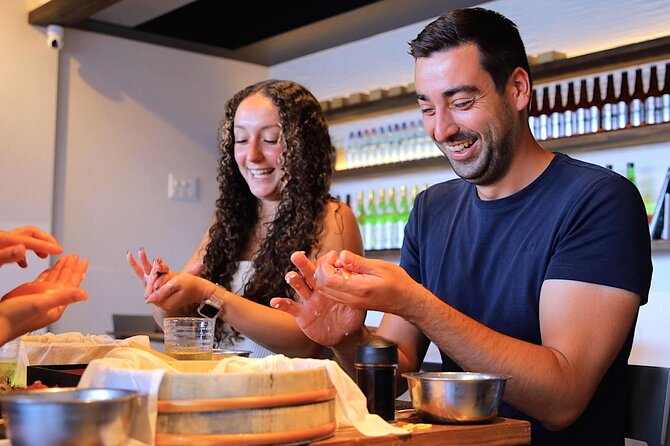
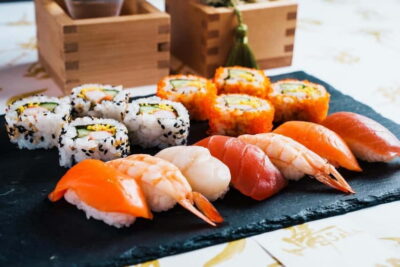
The clever part of this class is its pairing of maki sushi and nigiri sushi. Maki is the familiar rolled form, with ingredients enclosed in rice and seaweed. It is approachable, visual, and fun to assemble, especially if you are new to Japanese cooking.
Nigiri is more demanding. You shape a small portion of sushi rice and place a topping over it, so the size, pressure, and form all matter. One participant found nigiri harder than expected, which is useful to know before booking. The challenge is not a flaw. It gives the class a real cooking lesson instead of reducing sushi to a simple craft project.
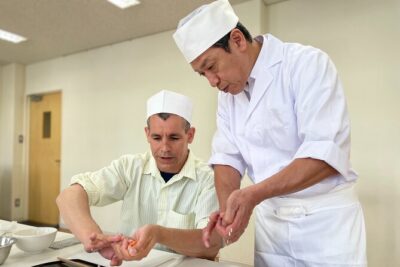
You are not just watching an instructor prepare a finished plate. The point is to practice the basic movements yourself, with the teaching broken into manageable steps. If you have used a sushi-making kit at home but never felt sure where to begin, the recipe and guided practice give you a better starting point.
The class also introduces a little sushi history. Nigiri is presented as a central Japanese sushi style and as a form with an important place in sushi’s development. That short cultural context helps you understand why different sushi shapes exist, rather than treating them all as interchangeable rolls.
A few more Tokyo tours and experiences worth a look
What the 1-hour-50-minute class feels like
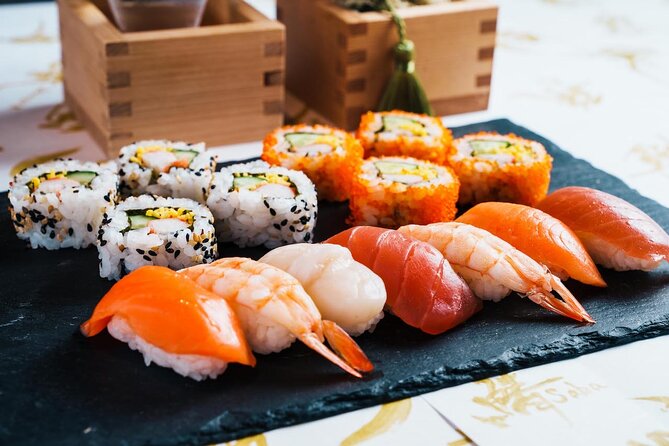
The timing is well suited to a Tokyo day. At just under two hours, this is long enough to learn and eat, but short enough to fit before or after sightseeing in Asakusa. You should expect a compact session rather than a full-day cooking program.
The class begins with instruction from an English-speaking teacher, followed by preparation and hands-on work. The ingredients and cooking-class meal are included, so you do not need to arrange lunch separately. This matters in central Tokyo, where a casual meal can quickly become another expense and decision during a busy sightseeing day.
The teaching style appears energetic and practical. Ken, Sato, Momo, Yuto, Kento, and Matti have each been identified in connection with particularly enjoyable sessions. The useful distinction here is that the class is not built around a single formal lecture. You get explanations, demonstrations, and time to make the sushi yourself.
One participant noted that an instructor spoke a little quickly. If you need extra time with English instructions, ask the teacher to repeat or slow down. That is a small but practical point, especially when learning a hand movement while also listening to directions.
Maki sushi is the easier place to begin
Maki sushi gives you a forgiving introduction to the class. The filling is rolled with rice and seaweed, and the finished piece is cut into portions. Its shape is easy to recognize, and the process gives beginners an immediate sense of progress.
I like this part for families and first-time cooks because the result is visible. You can see how the ingredients come together and understand the basic relationship between rice, filling, and seaweed. Maki is also familiar to many people outside Japan, so you may already have a general idea of what you are making.
That familiarity can be useful, but the class adds more than a restaurant meal does. You learn how the roll is assembled and gain a method you can repeat at home. The recipe is an important extra here. Without written guidance, a short class can fade into a pleasant memory. With a recipe, you have something practical to refer to later.
Do not expect every roll to look perfect on your first try. The value is in learning the process, eating what you make, and gaining enough confidence to practice again.
Nigiri shows why sushi takes skill
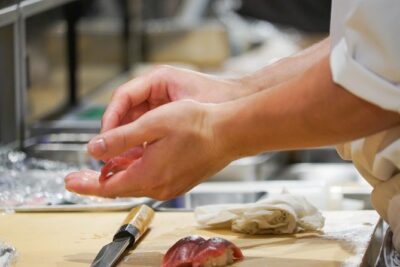
Nigiri is the more revealing half of the experience. It looks simple on a plate, but small differences in rice shape and handling affect the result. The class breaks the work into steps, giving you a chance to understand why a neat piece of nigiri requires control.
This is where the class feels most useful for adults who already enjoy sushi. Maki can be a fun introduction, but nigiri explains more about the technique behind the food you order in Japan. You may not leave as a sushi master, but you should leave with a clearer sense of the craft.
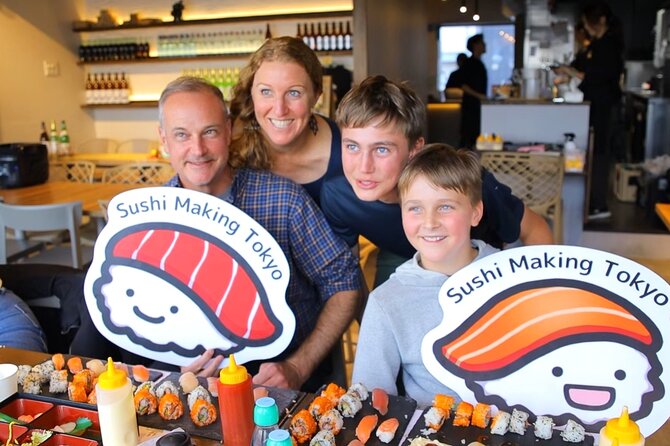
The instructors’ teaching style is especially important here. A ten-year-old was able to take part, so the class can work for younger cooks, but children may need help during the more precise parts. The activity is hands-on rather than passive, which makes it a good choice for families who want something all ages can share.
You should also keep your expectations sensible. This is a short class, not professional sushi training. It teaches basic techniques and gives you guided practice. If you want advanced fish-cutting skills or a long study of sushi preparation, this is not the right format.
Fresh ingredients and a proper meal improve the value
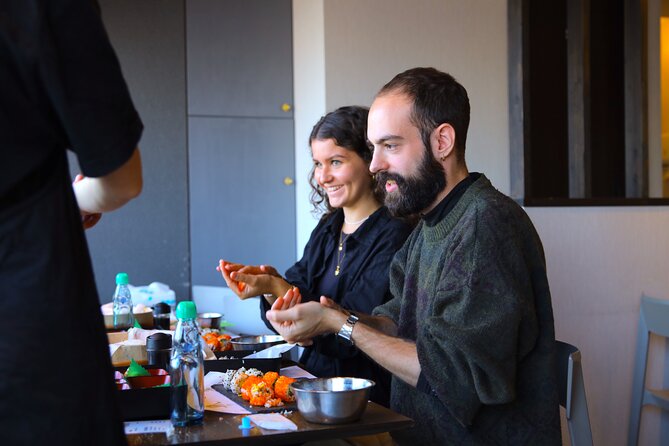
At $63.28 per person, the class costs more than simply buying a few rolls at a casual sushi shop. The comparison is not quite fair, though. You are paying for instruction, ingredients, an English-speaking instructor, and a meal, as well as the time spent learning a skill.
The fresh ingredients are one of the strongest reasons to consider the price reasonable. Good ingredients make a noticeable difference when you are eating the sushi you just prepared. The meal also makes the experience feel complete rather than like a short demonstration followed by another search for food.
Portion size appears generous enough to serve as a filling lunch. That makes the price easier to justify on a sightseeing day, particularly if you value activities that combine food and learning. You are buying both the meal and the memory, but the recipe gives the experience some use after you return home.
For strict budget travelers, the cost may still feel high. If you mainly want to eat sushi, a restaurant will offer more variety for the money. Book this class when you want to understand how sushi is made and take part in the process.




Asakusa gives the class a useful Tokyo setting
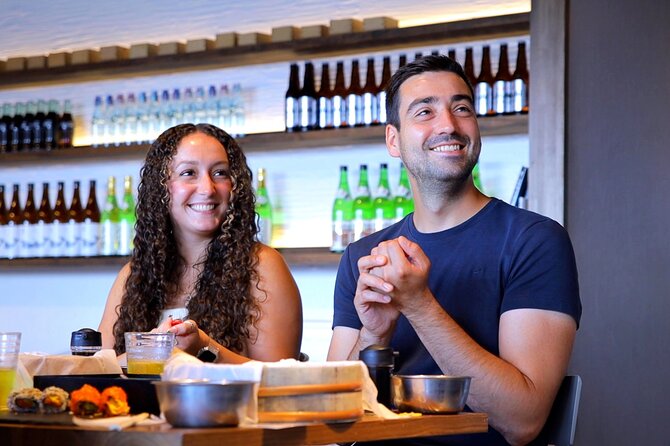
The meeting point is at Sushi Making Tokyo, 2-chōme-1-13 Kaminarimon, Taito City, Tokyo 111-0034. The location is in Asakusa, a well-known sightseeing area with a strong connection to Tokyo’s older cultural identity.
That setting adds practical value. You can pair the class with a day in Asakusa instead of crossing the city for a stand-alone activity. The class is near public transportation, and the address is close to the Kaminarimon area, making it a convenient addition to a neighborhood visit.
The cooking class itself does not include hotel pickup or drop-off. You need to make your own way to the meeting point and allow enough time to arrive. Since the activity runs on a fixed schedule, arriving early is wise. One couple arrived a few minutes late and felt badly about it, so do not treat the short duration as a reason to cut your transport timing close.
Asakusa can fill a morning or afternoon with temples, shopping streets, and food stops, but none of those additional sights are included in this activity. Think of the cooking class as one part of your Asakusa plan.
Family groups and food restrictions
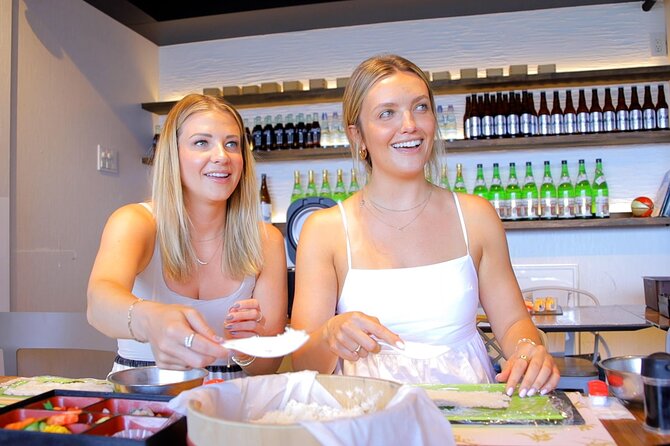
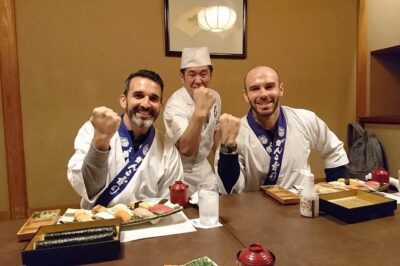
This class works particularly well for families because everyone can make and eat something together. A ten-year-old enjoyed the process, and the session offers options that do not use raw fish, allowing more members of a family to participate.
That flexibility is valuable, but you should raise dietary needs before the class. Gluten-free accommodation has been possible for at least one participant, yet it should not be treated as an automatic guarantee. Ask the provider in advance so the staff can confirm what can be arranged.
The activity is also suitable for couples, friends, and solo visitors who like social cooking. The maximum group size is 40, so the atmosphere can vary. Some sessions may feel intimate and easy to follow, while a full class may offer less personal attention. The practical question is not simply whether you like group activities. It is how much direct help you want while shaping the sushi.
Service animals are allowed, and the location is near public transportation. The available information does not provide a full breakdown of kitchen accessibility, seating, or other mobility details, so contact the provider if you have specific access requirements.
What the instructors add to the experience
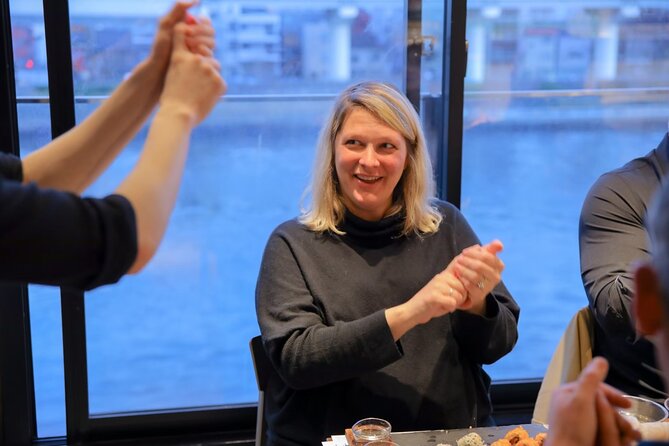
The staff is a major part of the class. The teaching team has been described through names including Ken, Sato, Momo, Yuto, Kento, and Matti, and the strongest pattern is a warm, energetic approach.
That matters because cooking classes can easily become either too technical or too shallow. Here, the instructors use humor and encouragement while explaining the food. You get a bit of history, practical instruction, and enough time to try the techniques yourself.
Yuto has been singled out for technical sushi instruction and a good pace. Ken has been praised for his friendly manner, though you may occasionally want him to speak more slowly. These details give you a fair picture: the class is lively and approachable, but language pace can vary by instructor and session.
The staff also appears willing to help individual participants. That is useful when a roll goes wrong or nigiri refuses to hold its shape. Sushi is less forgiving than it looks, so patient guidance can make the difference between frustration and a good lunch.
Booking, timing, and cancellation details
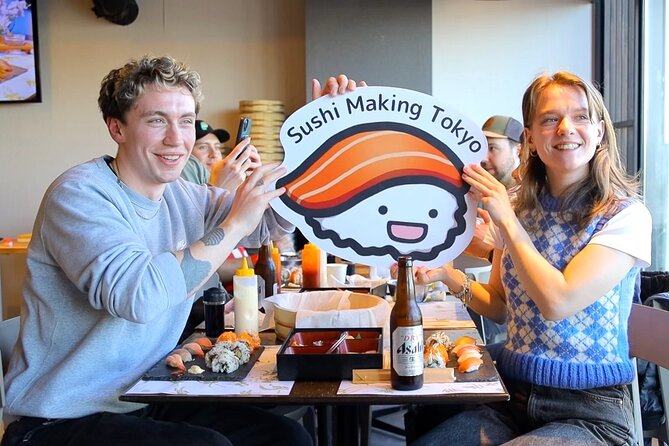
The experience is booked an average of 36 days in advance, so reserve early if your Tokyo dates are fixed. You receive confirmation at the time of booking, and the ticket is mobile, which keeps the meeting process simple.
The class requires a minimum number of participants. If that minimum is not reached and the provider cancels, you can be offered another date or experience, or receive a full refund.
You can cancel for a full refund up to 24 hours before the start time. Cancellations or changes made within 24 hours are not accepted for a refund. The cut-off uses Tokyo local time, so check the clock carefully if you are arranging plans from another time zone.
Who should book this sushi class
I would recommend it to you if you want an activity that combines lunch, culture, and a skill you can repeat at home. It is especially well suited to first-time visitors, families, couples, and anyone who wants more contact with Japanese food than simply ordering from a menu.
It is also a good match if you are curious about the difference between maki and nigiri. The class makes that contrast clear: one is rolled and familiar, the other is hand-shaped and more exacting.
I would hesitate only if you dislike structured group activities, need a very quiet lesson, or want advanced sushi training. A class of up to 40 may not provide constant one-on-one teaching, and the session is too short for professional-level technique.
Should you book Sushi Making Tokyo?
Book it if you want to make your own lunch in Asakusa, learn two important sushi styles, and leave with a recipe rather than only photographs. The fresh ingredients, included meal, English instruction, and friendly teaching make the $63.28 price fair for an experience-focused visit.
Skip it if your only goal is the cheapest sushi in Tokyo or if you prefer a private, highly technical lesson. For everyone else, this is a practical way to turn a famous Japanese food into something you understand and can try again at home.
FAQ
Where does the sushi-making class take place?
The class meets at Sushi Making Tokyo, 2-chōme-1-13 Kaminarimon, Taito City, Tokyo 111-0034, Japan, in the Asakusa area.
How long does the experience last?
The cooking class lasts approximately 1 hour and 50 minutes.
What types of sushi will I learn to make?
You will learn to make maki sushi, also called roll sushi, and nigiri sushi.
Is the class taught in English?
Yes. An English-speaking instructor is included.
Is food included in the price?
Yes. The cooking-class ingredients and the meal are included.
Does the activity include hotel pickup and drop-off?
No. Hotel pickup and drop-off are not included. You must travel to the meeting point in Asakusa.
Can children take part?
Yes. The class has been enjoyed by a ten-year-old participant, and the activity can include options without raw fish.
What is the cancellation policy?
You can cancel up to 24 hours before the start time for a full refund. Changes or cancellations made less than 24 hours before the start time are not accepted for a refund.
More Sushi Making Classes in Tokyo
More tours in Tokyo we've reviewed












Sushi Making Classes, compared.
 ★ 5.0Sushi Making Tokyo Roll and Authentic Japanese Sushi ClassFrom $59
 ★ 4.9Tokyo: Roll and Authentic Sushi Making Class in AsakusaFrom $581h 40m
 ★ 4.9Tokyo: Sushi Making Class in a Happi Coat near a Famous SpotFrom $421h 30m
 ★ 5.0Tokyo Sushi Making Class in Tsukiji with Professional ChefFrom $49
 ★ 5.0Tokyo Night Foodie Tour in Shinjuku – Seasonal Sushi, Wagyu BeefFrom $111
 ★ 5.0Tsukiji Fish Market Guided Tour and Sushi Making with Pro ChefFrom $104