Reviewed · TOKYO
Tokyo : Authentic Soba Noodle Making Experience
Making soba in a real soba shop gives this two-hour Tokyo activity more substance than a quick cooking demonstration. You work with natural ingredients, follow each step with a Japanese soba master, then eat the noodles you made yourself.
In This Article
- Key points at a glance
- Why making soba feels different from a standard cooking class
- Meeting in Nishinippori at 2:30 pm
- Meeting Nori and chef Ken
- Working with natural ingredients and professional equipment
- Following each step instead of watching from the side
- Eating the soba you made
- Vegetarian and allergy information
- Is $156.76 a fair price?
- Who will get the most from this class?
- Booking, cancellation, and practical planning
- Should you book this Tokyo soba class?
- FAQ
- How long does the soba-making activity last?
- What time and where does the class start?
- Where does the activity finish?
- Is the class conducted in English?
- Can vegetarians participate?
- Can people with food allergies join?
- What is included in the price?
- Can I cancel for a refund?
I like the small maximum of six people, which gives the English-speaking guide room to help. I also like that guide Nori and chef Ken are named by the operator, and that the class uses professional cooking equipment instead of a simplified tourist setup. The main drawback is the price: at $156.76 per person, this is a costly two-hour activity, especially if you are traveling alone.
Key points at a glance
- Make soba in a working shop: You use the master’s workspace and cooking equipment rather than only watching a staged display.
- Eat what you prepare: The soba you make is included, giving the class a satisfying finish.
- Small group of six: The limited size should make it easier to follow instructions and ask for help.
- English support is provided: An English-speaking guide helps you keep up with the techniques and explanations.
- Vegetarians can join: Tell the operator about dietary restrictions in advance, but buckwheat, wheat, and soy allergies rule out participation.
- Afternoon timing: Meet at the McDonald’s at 2-chōme-18-7 Nishinippori at 2:30 pm, then return to the same meeting point.
Why making soba feels different from a standard cooking class
Soba is not simply another noodle dish. It is a traditional Japanese food with its own techniques, ingredients, and working rhythm. This class gives you the useful part of that tradition: you handle the ingredients, use the equipment, and try to reproduce the process under guidance.
I like that the focus stays on doing rather than watching. You are not just seated while a chef prepares a perfect bowl. You follow instructions and take part in the work, which makes the final meal more meaningful, even if your noodles are not quite as neat as the master’s.
The class also offers a practical look at Japanese food culture. You learn about soba-making while standing in the place where the food is prepared. That setting matters. It gives the activity a more ordinary, working feel than a classroom designed only for visitors.
Still, you should keep your expectations realistic. Two hours is enough for a guided introduction, not for mastery. One participant found the process more technique-heavy than expected and came away with tips to try again. That is a good way to view the class: a hands-on first lesson, not professional training.
If you're still narrowing it down, here are other tours in Tokyo we've reviewed.

Meeting in Nishinippori at 2:30 pm
The meeting point is the McDonald’s at 2-chōme-18-7 Nishinippori, Arakawa City, Tokyo 116-0013. The location is near public transportation, and the activity begins at 2:30 pm.
That afternoon start can fit well after a morning in Tokyo. You do not need to give up your whole day, and the activity finishes back at the meeting point. Since the exact route from your hotel is not provided, allow enough time to reach Nishinippori and find the specified meeting place without rushing.
A fixed public meeting point also keeps the start simple. You are not asked to find a private residence or navigate an unclear restaurant entrance on your own. After meeting the guide, the group proceeds to the soba workspace.
The group size is capped at six people. That is one of the strongest practical features here. Soba-making involves handwork and instruction, so a small group should give you a better chance to see each step, receive corrections, and work without feeling lost in a crowd.
Meeting Nori and chef Ken
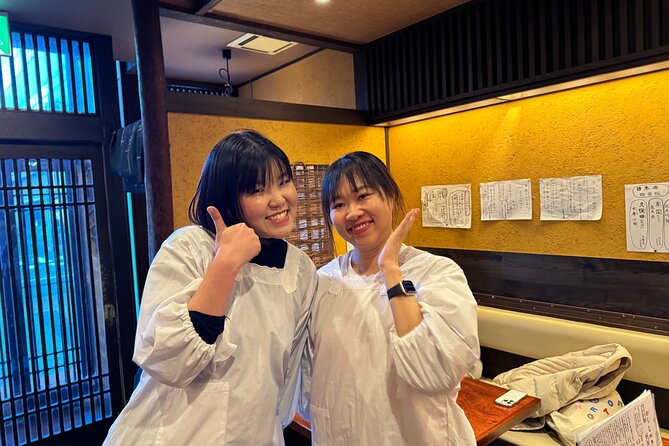
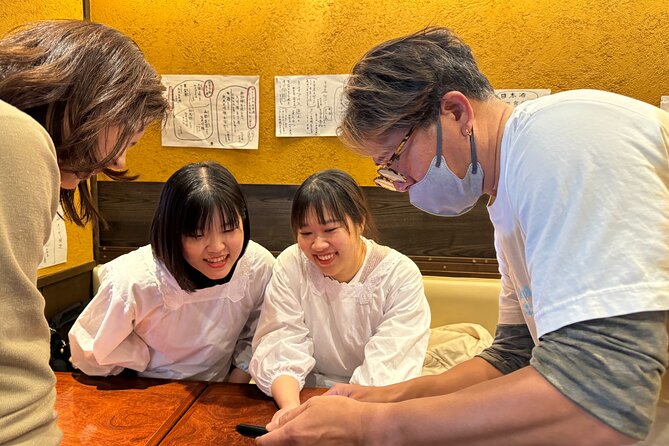
The English-speaking guide is there to support communication, while the soba master and professional cook lead the food preparation. Guide Nori and chef Ken are specifically associated with the class, and the personal connection between guide and chef helps give the lesson a human touch.
You should expect guidance through each stage rather than a lecture about Japanese cuisine. The class description asks you to follow the instructions and use the provided equipment. That means careful listening matters, especially if this is your first time making soba.
The English support is important because noodle-making can involve small but significant movements. You want to understand not only what to do, but also when to stop, how to handle the ingredients, and how to prepare the noodles for eating. The guide helps make those instructions accessible.
Do not assume the guide replaces the chef. The useful arrangement is that the chef brings the cooking skill, while the guide helps you understand and take part. That division should work well for people who want a cultural activity but are not comfortable trying a Japanese cooking lesson without language support.
Working with natural ingredients and professional equipment
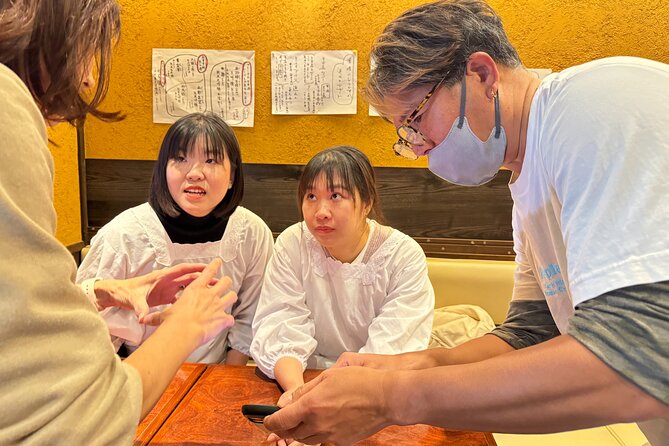
Ingredients used to make the soba are included, as is use of the cooking equipment. You are given access to the master’s workplace and professional cooking tools, which makes the lesson feel more grounded in real food preparation.
The value here is not just the ingredients themselves. Flour and cooking tools are inexpensive compared with the tour price, but access to an experienced cook’s workspace gives you a chance to see how the process is organized. You can learn through your hands, not only through photographs or explanation.
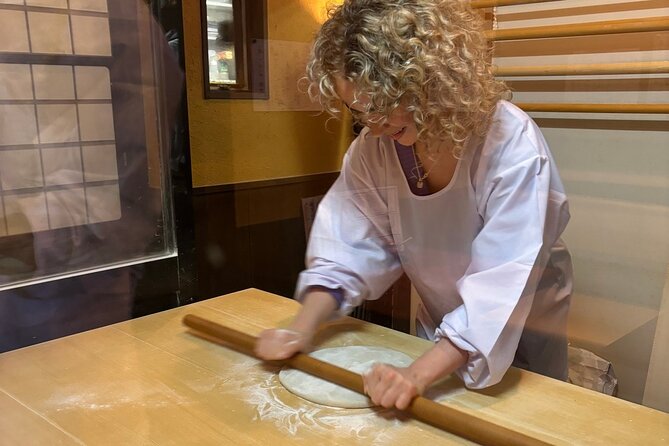
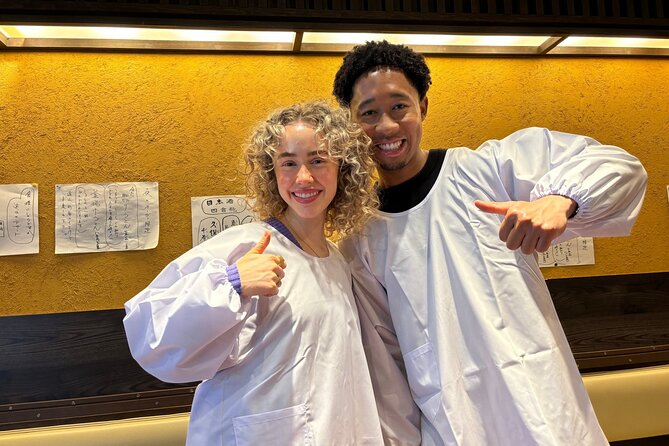
The class uses buckwheat flour and flour, so your clothing may get messy. An apron is prepared, but you should still wear clothes you do not mind getting dirty. This is a small point, but it matters. A cooking activity is more enjoyable when you are not worried about protecting your best vacation outfit.
Photos and videos are allowed, so you can record the process. Be sensible about when you use your phone. Put it away when the chef is explaining a technique or when you need both hands, then take pictures during natural pauses.
Following each step instead of watching from the side
The central part of the class is the guided preparation of the noodles. You use the ingredients and equipment, follow the chef’s steps, and work toward a bowl you can eat at the end.
The instructions do not provide a detailed minute-by-minute schedule, so the exact pace may vary. With a maximum of six people, the session should have enough room for individual help. You might find that some parts feel easy while other techniques demand more attention than expected.
That uneven pace is part of the appeal. Soba-making looks simple when you see a skilled cook do it, but the work involves more technique than many first-time participants expect. The class lets you feel that difference for yourself.
I would treat mistakes as part of the lesson. Your noodles may not look like the chef’s, and that is fine. The point is to learn the method, notice the small details, and gain enough understanding to try again later. One participant specifically valued learning tips for a future attempt.



Eating the soba you made
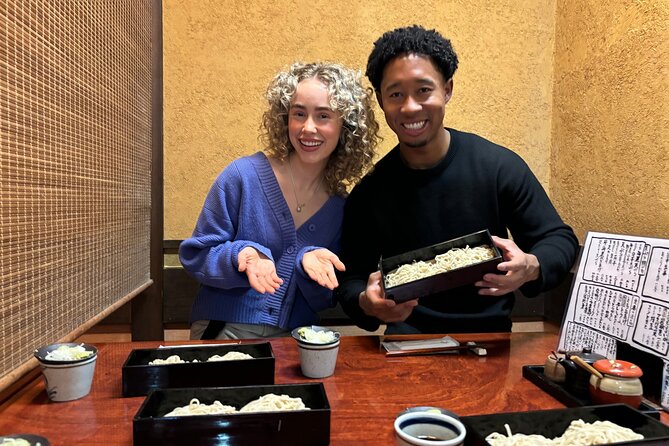
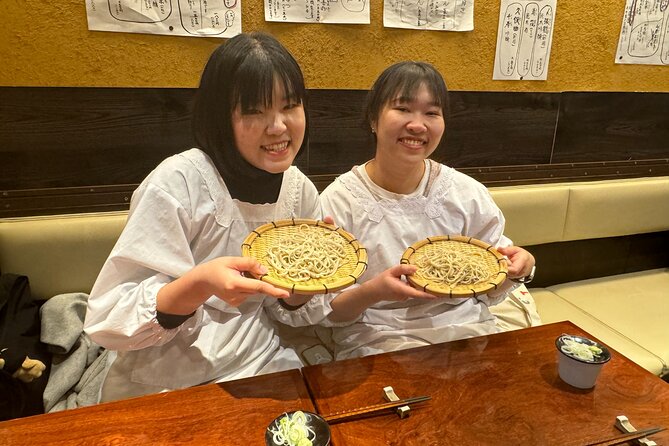
The best payoff comes at the end, when you try your own handmade soba at the shop. The soba you prepare is included in the activity, so there is no separate charge for the main result of the class.
That final bowl gives the two hours a clear purpose. You do not leave with only a certificate, a recipe, or a quick taste supplied by someone else. You eat the food that came from your own work.
Additional food and drinks are not included. If you order anything beyond the soba you make, you pay for it separately. The supplied details do not specify a full menu or the cost of extras, so plan on the included noodles being the main meal connected to the booking.
This is also the point where the class becomes a meal rather than only a lesson. If you want a more complete lunch or dinner, you should make separate plans before or after the activity.
Vegetarian and allergy information
Vegetarians are welcome, but you should tell the operator about dietary restrictions in advance. That advance notice gives the staff a chance to understand your needs before the class begins.
The allergy rule is strict. Anyone allergic to buckwheat, wheat, or soybeans cannot participate. Soba is made with buckwheat, and the activity also handles wheat flour, so this is not a suitable choice for people with those allergies.
Do not rely on simply avoiding a dish at the end. The class involves handling the ingredients and working in the preparation area. If any of the listed allergies applies to you, choose another Tokyo food activity.
The provided information does not explain every possible dietary substitution. Vegetarians are accepted, but you should ask about any other restriction before booking rather than expecting changes on arrival.
Is $156.76 a fair price?
The cost is $156.76 per person, which puts this firmly in the special-activity category. For two hours of food preparation, it is more expensive than eating soba at a restaurant or taking a basic cooking lesson.
The price becomes easier to understand if you value several parts at once: an English-speaking guide, a Japanese soba master, access to a professional workspace, included ingredients, use of equipment, a small group, and the chance to eat your own noodles. You are paying for instruction and setting, not just for a bowl of food.
That value will make the most sense for people who want a focused cultural activity and enjoy learning by doing. If your main goal is simply to taste excellent soba, spending $156.76 on a restaurant meal will be a poor comparison. If you want to understand how the dish is made and take part in the process, the cost is more defensible.
Group discounts are available, though the supplied details do not state the discount amount. If you are booking for several people, check the final total carefully. The maximum group size is six, so a larger party may need separate arrangements or another date.
The fact that the activity is often booked 88 days in advance suggests that planning ahead is sensible. Availability can change, so do not wait until the last day of your Tokyo stay if this class is important to your plans.
Who will get the most from this class?
I would recommend this activity to you if you enjoy food, small-group instruction, and local traditions that require active participation. It suits solo participants, couples, families, or friends who want to spend an afternoon doing something more focused than sightseeing.
It is especially useful after you have already seen Tokyo’s famous sights and want time with a specific part of Japanese food culture. The class does not try to cover every Japanese dish. It concentrates on soba and gives you a chance to learn one craft properly within a short visit.
It may also suit people who usually avoid cooking classes because they worry about language. An English-speaking guide is provided, and the group is small. You still need to listen and participate, but you are not left to guess what the chef means.
I would skip it if you dislike hands-on activities, have a strict food allergy involving buckwheat, wheat, or soy, or want a long, elaborate meal. The two-hour format is compact, and the price is high for anyone who does not care about the making process.
Booking, cancellation, and practical planning
Confirmation is provided when you book, and mobile tickets are available. The activity requires a minimum number of participants. If that minimum is not reached and the class is canceled, you will be offered another date or experience, or receive a full refund.
You can cancel for a full refund up to 24 hours before the 2:30 pm start time. Cancellations or changes made less than 24 hours before the start are not accepted for a refund, and the cut-off follows Tokyo local time.
Plan to arrive dressed for kitchen work. The apron helps, but flour can still make a mess. Since photos and videos are allowed, bring a phone or camera if you want a record, but keep it from getting in the way of the cooking.
Should you book this Tokyo soba class?
Book it if you want more than a meal. The strongest reasons are the real soba-shop setting, the small group, English support, and the simple pleasure of eating noodles you made yourself. The class also gives you a closer look at a traditional food without requiring a full-day commitment.
Think twice if the price is your main concern. At $156.76, this is not a budget food stop. You are paying for access, guidance, equipment, and participation, so the value depends on how much you enjoy learning the craft.
For a food-focused afternoon in Tokyo, I think this is a good pick for the right person. Arrive ready to work, wear clothes that can get dirty, mention dietary needs ahead of time, and judge the class by the hands-on lesson rather than by the size of the final bowl.
FAQ
How long does the soba-making activity last?
The activity lasts approximately two hours.
What time and where does the class start?
The class starts at 2:30 pm at the McDonald’s at 2-chōme-18-7 Nishinippori, Arakawa City, Tokyo 116-0013, Japan.
Where does the activity finish?
The activity ends back at the meeting point.
Is the class conducted in English?
An English-speaking guide is provided to support you during the soba-making activity.
Can vegetarians participate?
Yes, vegetarians are welcome. You should tell the operator about dietary restrictions in advance.
Can people with food allergies join?
People allergic to buckwheat, wheat, or soybeans cannot participate.
What is included in the price?
The price includes the ingredients used to make soba, use of the cooking equipment, and the soba you prepare.
Can I cancel for a refund?
You can cancel at least 24 hours before the local start time for a full refund. Cancellations or changes made less than 24 hours before the start are not refunded or accepted.
More tours in Tokyo we've reviewed
Tokyo, compared.
 ★ 5.0Mt Fuji and Hakone 1-Day Bus Tour Return by Bullet TrainFrom $163
 ★ 5.01-Day Tokyo Bus TourFrom $129
 ★ 4.6Tokyo: teamLab Planets TOKYO Digital Art Museum Entry TicketFrom $251 day
 ★ 4.0Mt Fuji & Hakone Cruise, Drum Show Bullet Train 1 Day from TokyoFrom $149
 ★ 5.0Tokyo: Shinjuku Food Tour (13 Dishes at 4 Local Eateries)From $86
 ★ 4.4Tokyo Mt Fuji 5th St & Hakone Cruise Bus Tour w/Bullet TrainFrom $15410 hours