Reviewed · SUSHI MAKING CLASSES
Tokyo: Toyosu Market Tour with Tuna Cutting and Sushi Making
Toyosu Market is normally off-limits to tourists, which makes this four-hour experience unusual from the start. You will see more than 500 fish buyers at work, then follow a tuna block from market purchase to neatly cut portions and handmade sushi. It is a rare look at the supply chain behind your restaurant meal.
In This Article
- Key points at a glance
- Why Toyosu changes the usual Tokyo food tour
- Seeing tuna before it becomes sushi
- Tsukiji Outer Market for one hour
- The 90-minute sushi lesson in Azabujuban
- What the small group adds
- Is $309 a fair price?
- The practical points that matter
- Who will enjoy this most?
- A good way to plan the day
- Should you book the Toyosu tuna tour?
- FAQ
- Where does the tour begin?
- Where does the tour finish?
- How long does the experience last?
- Is Toyosu Market open to tourists?
- Can I take photographs inside Toyosu Market?
- Is transportation included in the price?
- Can I request food accommodations?
I like the small group of no more than six people, and I like that the tour does not stop at watching. You buy tuna, learn how to cut it, and eat what you prepare. The main drawback is the price: at $309 per person, this is a serious splurge, especially since transportation and personal purchases are extra.
Key points at a glance
- Restricted Toyosu access: Enter a part of the fish market that is not generally open to tourists, with an English-speaking guide.
- Tuna from market to plate: See a large block cut into individual portions, then eat the tuna in several forms.
- Hands-on sushi class: Work with a sushi chef to make nigiri, rather than simply sitting down to a sushi lunch.
- Tsukiji shopping stop: Get one hour for free shopping, sightseeing, and a look around the Outer Market.
- Small-group format: The group is limited to six people, useful in a working market and during the kitchen lesson.
- A full four hours: The schedule combines market visits, transport, a Tsukiji stop, and a 90-minute class in Azabujuban.
Why Toyosu changes the usual Tokyo food tour
Most visitors know sushi at the counter. Far fewer see the work that comes before it. This tour gives you a look at that process in Toyosu, Tokyo’s huge wholesale fish market, where more than 500 fish buyers carry out their business.
The important point is access. Toyosu is not generally open to tourists, so you are not just wandering through a public food hall. You enter with a guide and observe a working market. That makes the experience less polished than a standard cooking class, but far more useful if you want to understand where restaurant tuna begins.
Your meeting point is in front of the gate at Shijomae Station. I would arrive with comfortable shoes and a little time to find the correct station exit. The market visit lasts about 45 minutes, long enough to see the operation without turning the whole morning into a long walk through an industrial facility.
Photography is prohibited inside Toyosu Market. That rule matters. Keep your phone ready for directions, but do not assume you can photograph the market floor. One part of the experience may allow questions or pictures around a vendor, but you should follow your guide’s instructions and ask before taking any photo.
A few more Tokyo tours and experiences worth a look
Seeing tuna before it becomes sushi
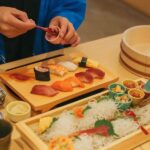
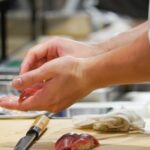
The tuna lesson is the heart of the tour. You will see a block of tuna cut into individual portions, a specialized task that even young sushi chefs are not allowed to handle. That detail gives the demonstration real weight. It is not just a chef showing off knife skills for a class. It is an introduction to a job that carries responsibility in the sushi trade.
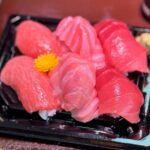
The tour then takes the process one step further. The tuna purchased at Toyosu becomes the ingredient for your meal and your sushi lesson. You can watch the cutting, learn what the portions are for, and then taste the result in several ways.
The supplied details do not specify the exact tuna cut, grade, or quantity. That is worth keeping in mind if you are expecting a formal tasting menu. The appeal is the connection between market purchase, preparation, and lunch, not a promised list of luxury cuts.
I like this format because it gives context to a familiar food. Sushi can seem simple when it arrives on a plate: fish, rice, and perhaps a little wasabi. Here, you see that the quality of the final piece depends on careful cutting and handling long before the chef shapes the nigiri.
Tsukiji Outer Market for one hour
After Toyosu, the group travels by bus or coach for about 15 minutes to Tsukiji Outer Market. You then have roughly an hour to walk, browse, shop, and take in the area.
Tsukiji Outer Market is a different experience from Toyosu. Toyosu is the working wholesale market visited with a guide. Tsukiji is the public-facing stop, where you can enjoy free shopping and sightseeing. The contrast helps explain how Tokyo’s seafood culture reaches ordinary shoppers and diners.
The tour does not list a fixed shopping route or included purchases. Your personal spending is extra, so bring money only if you want to buy something. One hour is enough for a look around, but it is not a leisurely half-day shopping session. If a particular shop or food item matters to you, keep an eye on the meeting time.
This stop also gives the morning some breathing room. The Toyosu visit is structured and guided. Tsukiji lets you look around at your own pace before the next transfer. Still, remember that the schedule is tight. You should not count on visiting every lane or trying every snack in the market.
The 90-minute sushi lesson in Azabujuban
From Tsukiji, you use public transportation for about 30 minutes to reach Azabujuban. The final class takes place at Sanpia Azabujuban and lasts approximately 90 minutes.
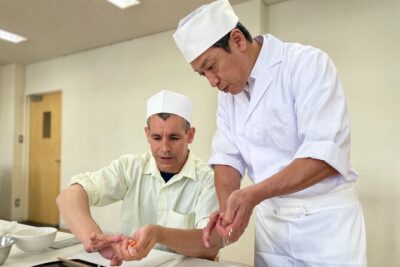
This is not a demonstration where you sit quietly and watch the chef do everything. You have the chance to work with the sushi chef, cut the tuna you purchased, and make sushi yourself. The chef also gives a lecture, so the class connects technique with the larger story of the fish market.
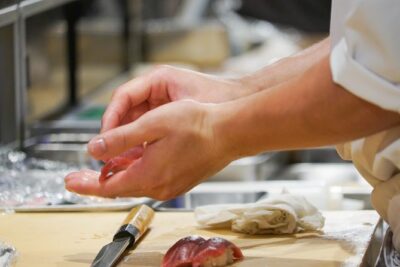
The key hands-on task is making nigiri. You will handle the rice and tuna under the chef’s direction, then eat the pieces you made. The precise number of sushi pieces and the full menu are not specified, so I would view the lunch as a practical lesson with food included, rather than a fixed restaurant-style menu.
That distinction is useful when deciding if the class suits you. If you want a refined sushi dinner with a long list of courses, this is not the right product. If you want to understand how tuna is portioned and try making sushi under a professional’s direction, the lesson is a much better fit.
The experience finishes at Sanpia Azabujuban. Since you arrive there after the class, plan the rest of your day from that neighborhood rather than assuming you will return to Toyosu or Tsukiji.
What the small group adds
The group is limited to six participants. That is a strong feature here. Toyosu is a working market, and a large crowd would make it harder to hear the guide, stay together, or ask questions without getting in the way.
A small group also helps during the sushi lesson. You should have a better chance to see the chef’s demonstration and get attention while cutting tuna or shaping nigiri. The available feedback points to guides named Amy and Risako, both praised for making the market visit clear and enjoyable. Guide assignments can vary, but the English-language format is fixed.
The tradeoff is that a small-group tour has less anonymity. You share the pace and meal with up to five other people. If you want complete freedom to linger in Tsukiji or skip the hands-on work, an independent visit would give you more control.
Other shopping tours in Tokyo
Is $309 a fair price?
At $309 per person, this is expensive for a four-hour Tokyo activity. You are paying for more than lunch, but the value depends on how much you care about access and instruction.
The price includes an English guide, the sushi and tuna lunch, and the sushi chef’s lecture. It also combines three different parts of Tokyo: the restricted Toyosu visit, Tsukiji Outer Market, and the Azabujuban class. Transportation between stops is part of the schedule, but transportation fees are not included, so budget for those separately.
I would compare the price with what you would otherwise pay for three separate experiences: a guided market visit, a tuna-focused food lesson, and a sushi-making class. You would also lose the direct link between the tuna purchased at the market and the food you eat at the end.
Still, the cost will feel high if your main goal is simply to eat sushi. Tokyo offers cheaper meals and cooking classes. This tour earns its price through access, a very small group, and the unusual chance to work with market-bought tuna. It is best for someone who sees food as a way to understand a place, not just as lunch.
The practical points that matter
The tour lasts four hours, but the schedule includes several transfers. The listed timing is 45 minutes at Toyosu, 15 minutes by bus or coach, one hour at Tsukiji, 30 minutes by public transport, and 90 minutes for the class. Wear shoes you can walk in comfortably, since the day includes market walking and station transfers.
Smoking is not allowed. Children under six, pregnant women, and wheelchair users should not book this activity. The information also asks you to report allergies or foods you cannot eat in advance. That is especially important for a tuna and sushi meal, since the included food is central to the experience.
The tour offers free cancellation up to 24 hours before the start time and allows you to reserve now and pay later. Starting times vary, so check availability before planning other Tokyo sights around it.
The market access is the biggest practical limitation. Photography is prohibited inside Toyosu, and you need to follow market rules rather than treating the area like a normal sightseeing attraction. If you want a photo-heavy tour, this may disappoint you. If you want a closer look at the market’s work, the restriction is a fair part of the setting.
Who will enjoy this most?
I would recommend this tour to adults and families with children aged six and over who already enjoy seafood and want more than a standard sushi meal. One family found that the children had fun while seeing a great deal during the day, which fits the activity’s mix of observation and hands-on work.
It also suits food-focused visitors who want to connect a restaurant dish with its source. The guide explains how tuna reaches the sushi counter, and the chef shows how the fish is cut and shaped. That makes the experience useful for first-time Japan visitors and repeat visitors who have already eaten plenty of sushi but never seen the preparation behind it.
The tour is less suitable for people who dislike raw fish, have serious food restrictions that cannot be managed, or prefer a relaxed schedule. You move between three locations and have only an hour at Tsukiji. It is also not designed for wheelchair users, pregnant women, or children under six.
A good way to plan the day
Book this as a main food activity, not as a quick add-on between major sights. The meeting point is Shijomae Station, and the tour ends at Sanpia Azabujuban, so allow time to reach the starting point and continue from the final location.
Do not plan a long Tsukiji shopping list. The one-hour stop is best treated as a chance to browse and get a feel for the area. Your most structured time is at Toyosu and in the sushi class, while Tsukiji provides the looser middle section.
I would also avoid booking a demanding museum or timed attraction immediately afterward. The class ends at a different location, and public transportation is involved. Keeping the rest of the day flexible makes the tour easier to enjoy.
Should you book the Toyosu tuna tour?
Book it if you want rare market access, a small English-speaking group, and a direct path from tuna purchase to sushi lunch. The best parts are highly specific: watching a tuna block become portions, learning that this is a specialized professional task, and then making nigiri with the same food.
Skip it if $309 feels too steep for four hours, if you want unrestricted photography, or if you mainly want a cheap sushi meal. The food is included, but the real value is the behind-the-scenes access and the lesson.
For the right person, this is a memorable way to understand Tokyo’s sushi culture. You do not just look at a finished plate. You see the market, meet the process, handle the ingredients, and eat the result.
FAQ
Where does the tour begin?
It begins in front of the gate at Shijomae Station.
Where does the tour finish?
The tour finishes at Sanpia Azabujuban after the sushi class.
How long does the experience last?
The experience lasts four hours.
Is Toyosu Market open to tourists?
Toyosu Market is not generally accessible to tourists, but this tour provides access with an English-speaking guide.
Can I take photographs inside Toyosu Market?
No. Photography is prohibited inside the market.
Is transportation included in the price?
Transportation fees are not included. The schedule uses a bus or coach between Toyosu and Tsukiji, followed by public transportation to Azabujuban.
Can I request food accommodations?
You should tell the tour provider in advance about allergies or foods you cannot eat. The activity includes tuna, sushi, and a lunch prepared with the chef.
More Markets in Tokyo
More Shopping Tours in Tokyo
More Sushi Making Classes in Tokyo
More tours in Tokyo we've reviewed
Sushi Making Classes, compared.
 ★ 5.0Sushi Making Tokyo Roll and Authentic Japanese Sushi ClassFrom $59
 ★ 4.9Tokyo: Roll and Authentic Sushi Making Class in AsakusaFrom $581h 40m
 ★ 4.9Tokyo: Sushi Making Class in a Happi Coat near a Famous SpotFrom $421h 30m
 ★ 5.0Sushi Making Tokyo! Popular Maki Sushi & Japanese Sushi(+Recipe!)From $63
 ★ 5.0Tokyo Sushi Making Class in Tsukiji with Professional ChefFrom $49
 ★ 5.0Tokyo Night Foodie Tour in Shinjuku – Seasonal Sushi, Wagyu BeefFrom $111