Reviewed · SUMO EXPERIENCES
Ultimate Sumo Tournament: Tokyo, Osaka, Nagoya, Fukuoka
Sumo is easy to watch and surprisingly hard to understand. A bout may last seconds, yet the ceremony, ranking system, training customs, and tiny technical choices carry centuries of meaning. This experience puts you inside an official 15-day tournament and gives you an English-speaking guide to explain what is happening.
In This Article
- Key points to know before booking
- Why a sumo guide changes the afternoon
- Tokyo at Ryogoku Kokugikan
- Osaka’s March tournament at EDION Arena
- Nagoya’s July basho at IG Arena
- Fukuoka’s November finale
- What the four-hour schedule feels like
- The chanko dinner option
- The off-season morning stable visit
- Is $184.38 a fair price?
- Who will enjoy this most
- My booking verdict
- FAQ
- Where do the official sumo tournaments take place?
- How long is the tournament experience?
- What type of seats are included?
- Is an English-speaking guide included?
- Are tournament tickets included?
- Is transportation from my hotel included?
- Can I add a chanko hot pot dinner?
- Can I bring food and drinks into the arena?
- What happens during the off-season?
I especially like the reserved tournament seat, since tickets can disappear quickly through the official system. I also like the headset commentary, which lets you hear guides such as Hiro, Myoko, Taku, Yumi, and Izumi over the arena noise. The main consideration is price: at $184.38 per person, this is not a cheap way to spend an afternoon, and the standard seats are on the second floor.
Key points to know before booking
- Official basho in four cities: Attend in Tokyo, Osaka, Nagoya, or Fukuoka, depending on the month.
- Four hours at the arena: The experience includes a reserved seat and guided explanations of sumo customs, wrestlers, rankings, and techniques.
- Two seating levels: Standard tours use second-floor B or C chair seats; private tours include S or A seats closer to the ring.
- Headsets make a difference: You can follow the guide while matches, announcements, and crowd noise fill the arena.
- Optional chanko dinner: Add a sumo-style hot pot meal after the tournament, with a vegetarian request available.
- Off-season option: On dates without a tournament, the experience changes to morning practice at a stable near Warabi Station, with chanko lunch.
Why a sumo guide changes the afternoon
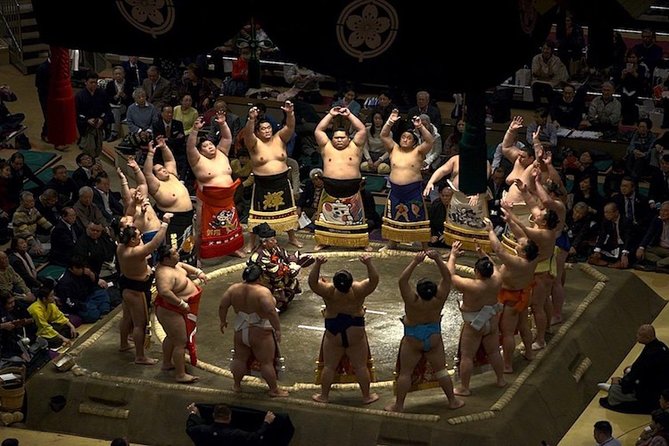
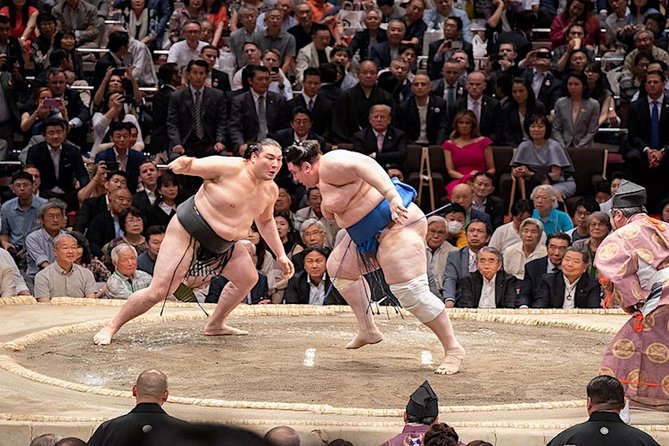
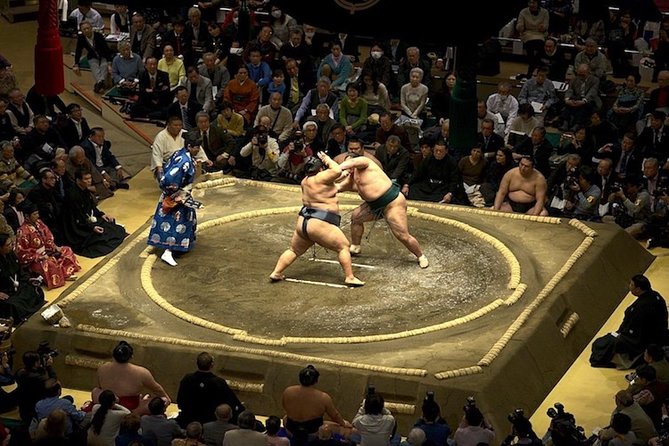
A sumo tournament is not simply two large men pushing each other out of a ring. Before the clash, wrestlers perform ritual movements, stamp their feet, scatter salt, and face an opponent within a strict structure. The audience follows rankings, stable affiliations, winning records, and techniques that are difficult to identify at first glance.
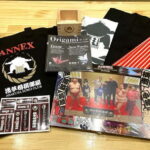
Your guide supplies the missing pieces. The tour includes an information pamphlet and a banzuke, the official ranking table, so you can see where each wrestler sits in the sumo order. Guides explain famous wrestlers, match styles, ring rituals, and the cultural meaning behind the sport.
This is most useful during the higher-division bouts, when the action becomes faster and the arena grows louder. A guide such as Hiro has been praised for giving short explanations before each match, then offering commentary through a receiver as the bout unfolds. That format lets you watch the ring instead of constantly checking your phone for names and rankings.
The guiding style can vary. The tour is designed around live commentary, but one guide may explain nearly every match while another may give a short introduction and leave you more time to watch on your own. If you want a full lecture on every ritual, make that clear at the start. If you prefer a balance of explanation and independent viewing, the headset format works well.
A few more Tokyo tours and experiences worth a look
Tokyo at Ryogoku Kokugikan
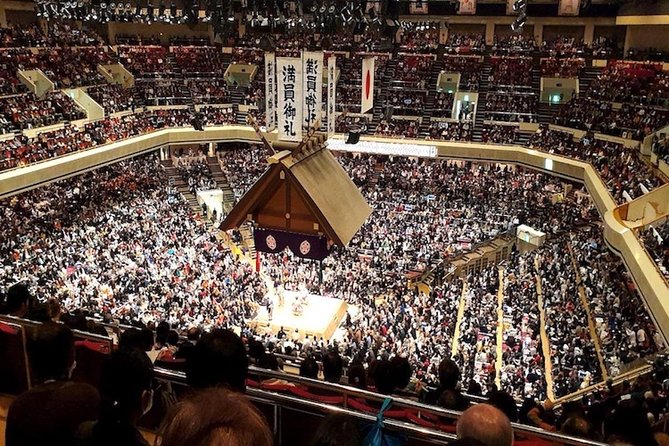
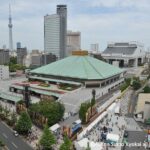
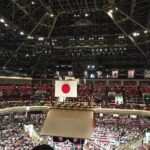
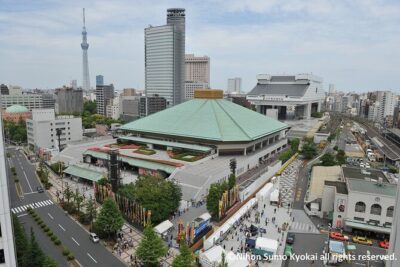
Tokyo’s Ryogoku Kokugikan is the natural home for a sumo afternoon. It hosts three of Japan’s six official tournaments, in January, May, and September. The building also includes a Sumo Museum, though congestion can make it difficult for a group to walk through together.
The Tokyo schedule begins around 2:00 p.m. and lasts about four hours. Your guide meets you at a location provided in the tour details, usually sent at least one week before the date. Hotel pickup is not included, so you need to make your own way to the meeting point and arena.
Expect some waiting before you take your seats. The group may need to wait until matches already underway finish before entering or gathering everyone. This is worth knowing if you are planning a tightly timed afternoon.
Standard seats are B-class or C-class chair seats on the second floor. B seats are generally in rows 7 to 11, while C seats are farther back. They give you a useful view of the full ring and the arena rituals, but they are not ringside. A standard group can include up to 20 people sitting in the same area with the guide.
Private tours use S-class or A-class seats closer to the ring. These cost more, but the difference matters if you care about seeing the wrestlers’ expressions, footwork, and physical details. For most first-time visitors, second-floor seats still provide a clear view, especially when paired with commentary.
The arena can run warm, so light clothing is sensible. Outside food and drinks are not allowed, but vendors inside sell refreshments and food. One useful small tip: an earbud or earplug may help if the headset volume feels too loud. The headset is meant to cut through the arena noise, and the lowest setting can still feel strong.
Osaka’s March tournament at EDION Arena
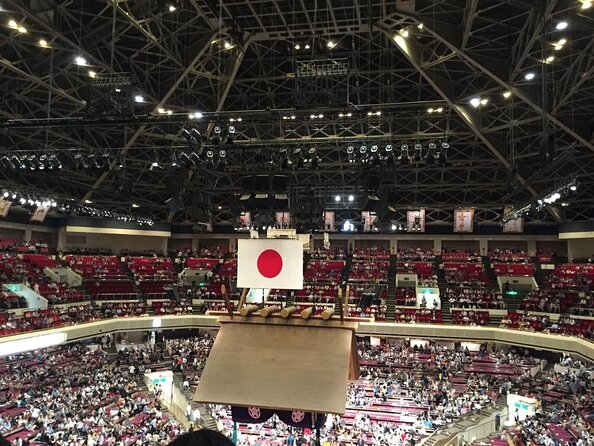
Osaka hosts the March tournament at EDION Arena Osaka. This is one of the six official basho, and the tour follows the same basic four-hour pattern: meet the guide, receive your sumo materials and headset, enter with your reserved ticket, and follow the matches with explanations.
The Osaka date is fixed by the annual tournament calendar, so you need to plan your Japan trip around it. The March basho lasts 15 days, with its opening and closing dates falling on Sundays. The exact dates change each year, but the month remains March.
The value here is access. Official sumo tickets are difficult to secure, particularly if you are unfamiliar with the sales process or booking late. This experience handles the ticket arrangement and seating allocation, then gives you a guide who can explain the event in English.
The listing information does not promise the same guide in every city or on every date. Names connected with especially well-received tours include Myoko, Hiroshi, Shunsuke, and Seizo, but guide assignment can change. The important point is that the experience is built around an English-speaking local sumo expert, not simply a ticket handoff.
Nagoya’s July basho at IG Arena
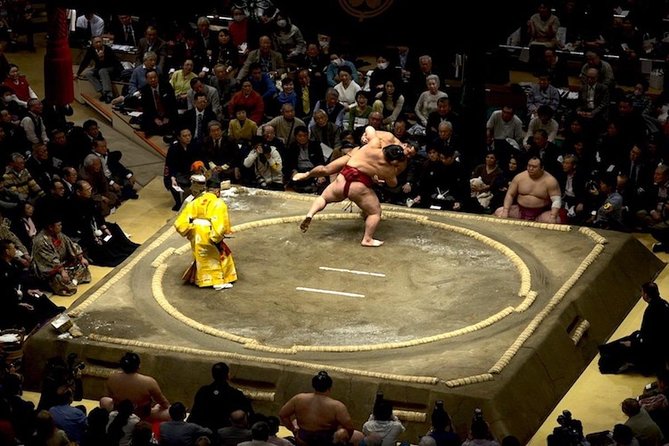
Nagoya’s official tournament takes place in July at IG Arena. The four-hour guided visit gives you the same core features as Tokyo and Osaka: a reserved tournament ticket, ranking information, headset commentary, and explanations of sumo culture.
July can be a useful choice if your Japan plans do not fit the Tokyo tournament months. The tour does not include transport from your hotel, so allow time to reach the meeting point and arena on your own. The precise meeting instructions arrive by email at least one week before the event.
For a first visit, listen for explanations of the wrestler rankings and match techniques. Sumo bouts move quickly. A wrestler may win by forcing an opponent out, making him touch the ground, or using a technique that is over before you have identified it. A guide can tell you what just happened and why it mattered.
The group format is practical for couples, families, and solo visitors who want structure without paying for a fully private outing. If you want the closest available seats and more personal attention, the private option uses S-class or A-class seating.
Fukuoka’s November finale
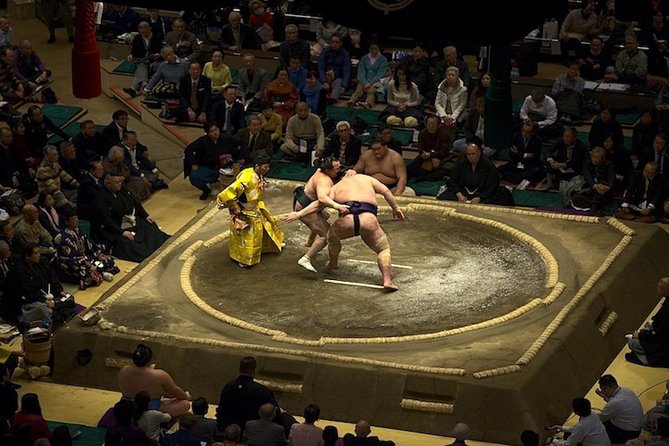
Fukuoka hosts the November tournament at Fukuoka Kokusai Center. It is the final official basho of the year and follows the same 15-day format. The event gives you a chance to see sumo during the year-end competition, with the guide explaining the rituals and bouts through the audio system.
This option makes sense for an autumn itinerary that includes Kyushu. It is not a general year-round attraction, since official tournaments occur only in January, March, May, July, September, and November. Check the exact date before building your schedule.
The Fukuoka tour includes the reserved seat and guide service, but not hotel transport or meals unless you select the dinner add-on. As with the other cities, arena food is available for purchase, but outside food and drinks are prohibited.

What the four-hour schedule feels like
The advertised start time is 2:00 p.m., and the arena portion lasts about four hours. The exact flow can vary, but plan for several distinct parts:
- Meet the guide at the location listed in your final tour instructions.
- Receive the pamphlet, banzuke ranking chart, and audio headset.
- Walk toward the arena and learn basic information about the building and event.
- Take your reserved seat and follow the afternoon matches.
- Listen to commentary before and during bouts, with free time to buy food, drinks, or souvenirs.
- Visit the Sumo Museum if conditions allow, or receive instructions to visit it independently if the group is too large.
One practical point matters here: the tour may not mean four hours of nonstop guiding. There can be free time, waiting, shopping, restroom breaks, and periods when you simply watch the wrestling. That is a strength if you want to enjoy the event at your own pace, but a weakness if you expect a tightly scripted tour.
The guide may also ask you to visit the museum alone if it is too crowded for the full group. That is not a substitute for a guided museum visit, so set your expectations accordingly.
The chanko dinner option
Chanko nabe is the classic food associated with sumo stables. It is a hot pot built around broth, vegetables, and usually chicken or pork. Large quantities can be prepared at once, which suits the needs of wrestlers after training.
Adding dinner gives the day a second cultural layer. You are not just watching sumo from the stands. You are also eating a dish linked directly to the wrestlers’ daily routine. The meal does not include drinks, and it is an optional add-on selected at checkout.
Vegetarian food is possible, but you must request it in the special requirements field. Traditional chanko broth commonly uses chicken or pork, and the restaurant may substitute the broth. Once the dinner request is accepted, changes cannot be made one week before the tour date.
The dinner is particularly worthwhile if you want a full afternoon rather than only a seat at the tournament. It also makes the $184.38 base price easier to judge if the meal is important to you, though you should check the final price after adding it.
The off-season morning stable visit
No official tournament takes place outside the six annual basho. On an off-season date, the experience changes completely. Instead of entering an arena with a tournament ticket, you visit a sumo stable near Warabi Station, about 30 minutes from Tokyo Station.
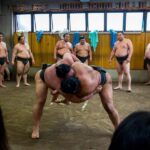
The morning practice runs from 8:00 a.m. to noon and lasts about three hours as a guided experience. You watch wrestlers train at an authentic stable while the guide explains what you are seeing through an audio headset. Chanko lunch follows the practice session.
This option is more intimate than a stadium event, but it is not a substitute for a tournament. The off-season stable visit does not include a sumo tournament seat ticket because no basho is taking place. Read the date and option carefully before booking, especially if your main goal is to watch official matches.
The stable group is listed as eight to 16 people. The meeting point is near Warabi Station, and directions are sent one week before the date. You need to arrange your own transportation.
Is $184.38 a fair price?
At $184.38 per person, the price is high for a four-hour activity. But the comparison is not simply between this tour and a cheap afternoon attraction. The fee includes a reserved tournament seat, ticket arrangement, seating allocation, an English-speaking guide, a headset, and sumo reference material.
The ticket is the key value. Official seats may sell out very quickly, and securing them as an international visitor can be frustrating. If the tour gets you into a tournament that you could not otherwise attend, the extra cost may be reasonable.
The standard option is the better value for most people. You receive the cultural explanation and the live event, but sit in second-floor B or C chair seats. Pay for the private option if sitting closer to the ring is central to your plans or if you want a smaller, more personal format.
Book early. The operator recommends about three months ahead, or at least one month before your travel date. Group tickets are released by the Sumo Association roughly four to seven weeks before the tournament. If tickets cannot be obtained, you are notified within four weeks and offered another date or a full refund.
The booking is non-refundable and cannot normally be changed. That makes early planning useful, but it also makes careless date selection expensive. Confirm the city, tournament month, seating type, and dinner choice before paying.
Who will enjoy this most
I would choose this for a first-time sumo spectator, especially if you know little about the sport. The guide turns a series of fast bouts into a story you can follow. It also suits families, since the headset makes explanations easier to hear and the event offers a strong cultural experience beyond standard sightseeing.
It is a good fit for anyone who tried and failed to obtain official tickets. The reserved seat removes much of the uncertainty, while the guide helps you understand the customs that are easy to miss.
You may want to skip it if you already follow professional sumo closely and prefer complete independence. You may also find the price hard to justify if you only want to sit in the arena without commentary. Standard seats are not close to the ring, and guide quality can vary in delivery even though the tour provides an expert English-speaking host.
My booking verdict
I would book this if an official basho matches your dates. The combination of a real tournament, reserved seating, and clear headset commentary solves the two biggest problems for newcomers: getting a ticket and knowing what you are watching.
Choose the standard group tour for the best balance of cost and content. Upgrade to private seating for a closer view. Add the chanko dinner if you want the day to end with food tied directly to sumo culture. If your date falls outside tournament season, book the stable visit only if you understand that it replaces the competition rather than supplementing it.
FAQ
Where do the official sumo tournaments take place?
They take place in Tokyo, Osaka, Nagoya, and Fukuoka. Tokyo hosts tournaments in January, May, and September, Osaka in March, Nagoya in July, and Fukuoka in November.
How long is the tournament experience?
The guided tournament visit lasts about four hours. The listed start time is 2:00 p.m.
What type of seats are included?
Standard group tours use second-floor B-class or C-class chair seats. B seats are generally in rows 7 to 11 or nearby. Private tours use S-class or A-class seats closer to the ring.
Is an English-speaking guide included?
Yes. An English-speaking local sumo expert is included, along with an audio headset for commentary inside the arena.
Are tournament tickets included?
A reserved sumo tournament seat ticket is included for the official tournament options. The off-season stable visit does not include a tournament ticket because no tournament is taking place.
Is transportation from my hotel included?
No. Hotel pickup and transportation are not included. The meeting point and directions are sent in the tour details, at least one week before the date.
Can I add a chanko hot pot dinner?
Yes. The dinner is optional and must be selected at checkout. Drinks are not included, and you can request a vegetarian option in the special requirements field.
Can I bring food and drinks into the arena?
No. Outside food and drinks are not allowed. Food and drinks are available for purchase from vendors inside the arena.
What happens during the off-season?
The experience becomes a morning sumo stable visit near Warabi Station, about 30 minutes from Tokyo Station. It runs from 8:00 a.m. to noon and includes guided practice viewing, a headset, and chanko lunch.
More Sumo Experiences in Tokyo
More tours in Tokyo we've reviewed












Sumo Experiences, compared.
 ★ 4.8Tokyo: Sumo Show Experience with Chicken Hot Pot and a PhotoFrom $1032 hours
 ★ 4.8Tokyo: Sumo Show and Dining ExperienceFrom $7990 minutes - 2 hours
 ★ 5.0the SUMO showFrom $89
 ★ 5.0Tokyo Sumo Entertainment Show with Chicken Hot Pot and PhotoFrom $106
 ★ 4.6Tokyo: Sumo Tournament Tour with Chair Seat TicketsFrom $141
 ★ 5.0Tokyo Grand Sumo Tournament Viewing Tour with TicketsFrom $124