Reviewed · TSUKIJI MARKET TOURS
Tokyo: Tsukiji Fish Market Food and Culture Walking Tour
Tsukiji is best understood with your appetite switched on. This three-hour walk takes you through the market’s narrow lanes, where Wagyu beef sizzles on skewers, omelets are cut into neat blocks, seafood is prepared before you, and seasonal fruit looks almost too perfect to touch. The final stop is usually sushi or a seafood bowl, depending on the day.
In This Article
- Key points to know before you book
- Why Tsukiji works better with a guide
- Starting at Tsukiji Honganji Temple
- The first 30 minutes in Tsukiji’s outer market
- Wagyu skewers and the first tastings
- Seafood, sushi, and the final bowl
- What the food tells you about Japan
- Crowds, weather, and the pace of the walk
- Is the $96 price fair?
- Who will enjoy this market morning
- Booking advice and final verdict
- FAQ
- How long does the Tsukiji food tour last?
- Where does the tour begin?
- Where does the tour finish?
- What food is included?
- Is sushi guaranteed?
- Is the fish wholesaler market open every day?
- Are all tastings available on closed market days?
- Does the tour accommodate vegetarian or vegan diets?
- Is the tour suitable for wheelchair users?
- Can I cancel for a refund?
I like the small groups of two to eight people, which make it easier to hear your guide and ask questions in crowded lanes. I also like the mix of eating and explanation: you learn why Japanese cooks shop here, how to behave at a shrine, and what you are actually looking at on the stalls.
The main catch is the schedule. The fish wholesaler market and some shops close on Wednesdays, Sundays, public holidays, and other market-closure days. Vegetarian, vegan, halal, and gluten-free visitors will not be well served, and the market’s crowds, weather, and moderate walking can make this a demanding morning.
Key points to know before you book
- Meet at Tsukiji Honganji Temple: The tour begins at the temple’s main gate, a useful landmark beside the market.
- Eat across several stops: The included tastings feature high-grade Wagyu skewers, Japanese omelet, fried fish cake, seasonal fruit, and either sushi or a seafood bowl.
- Expect a guide-led market walk: Guides such as Shun, Miki, Nazu, Luna, and Robert have been praised for friendly explanations and practical help with vendors.
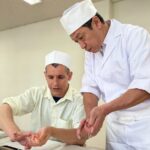
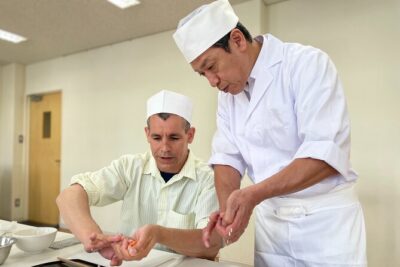
- The final meal is more than a snack: A sushi chef may demonstrate how fish is cut before serving the group a sashimi bowl or sushi.
- Plan around closing days: Wednesdays, Sundays, public holidays, and other closure days can mean fewer open stalls and missing tastings.
- Set aside three hours: You will walk, stop to eat, browse, and finish back near Tsukiji Station and the temple.
Why Tsukiji works better with a guide
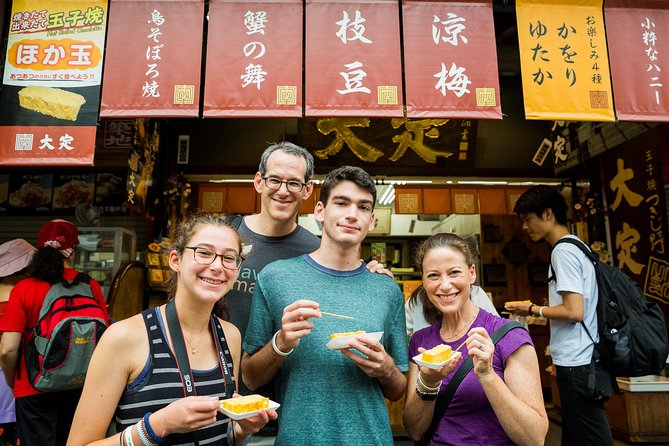
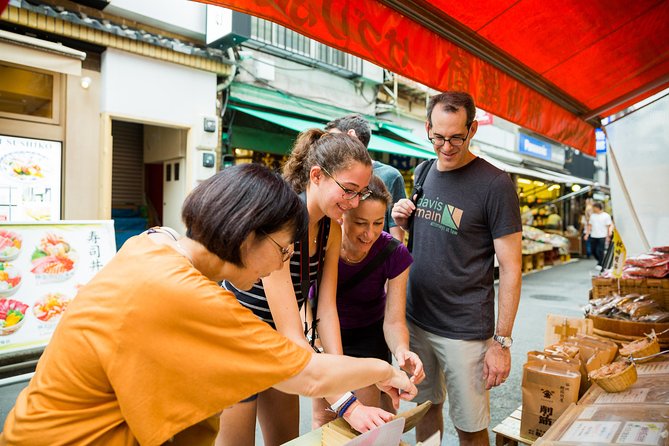
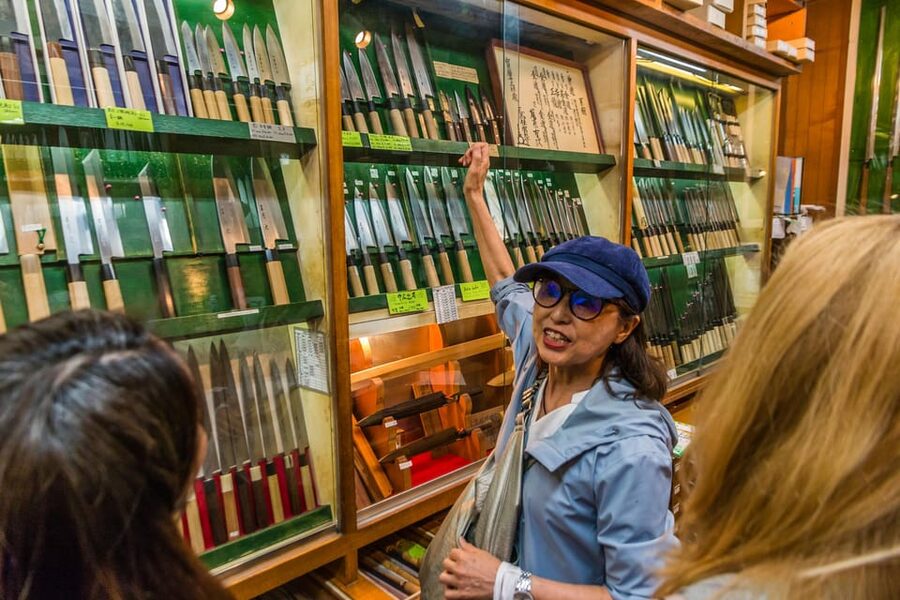
Tsukiji’s outer market is not a single hall with a clear route. It is a web of food shops, cooking stores, seafood counters, snack stalls, and busy passages. You can certainly wander alone, but the choices can come fast, and many stalls are aimed at local shoppers rather than first-time visitors.
A guide gives the market some order. You are shown where to pause, what is worth tasting, and how to move through the lanes without blocking shopkeepers or other customers. This matters most during busy morning periods, when umbrellas, food trays, and small groups can make the walk feel tight.
The best part is the context. Your guide explains why top chefs come here for fresh ingredients and how the market fits into Tokyo’s food culture. You are not just ticking off sushi and beef. You begin to see the market as a working place where restaurants and households buy food.
The English-speaking guides vary, but the names praised most often include Shun, Miki, Nazu, Luna, Robert, Yuki, Yoshiko, and Keiko. Guides are assigned by availability, so you cannot count on a particular person unless the operator confirms it. The useful pattern is clear, though: the guides are expected to lead the route, explain the food, help with vendor interactions, and answer questions about Japanese customs.
A few more Tokyo tours and experiences worth a look

Starting at Tsukiji Honganji Temple
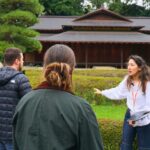
The meeting point is the main gate of Tsukiji Honganji Temple. This is a practical place to begin because the temple sits directly beside the market area and is easier to identify than a small stall or shop entrance.
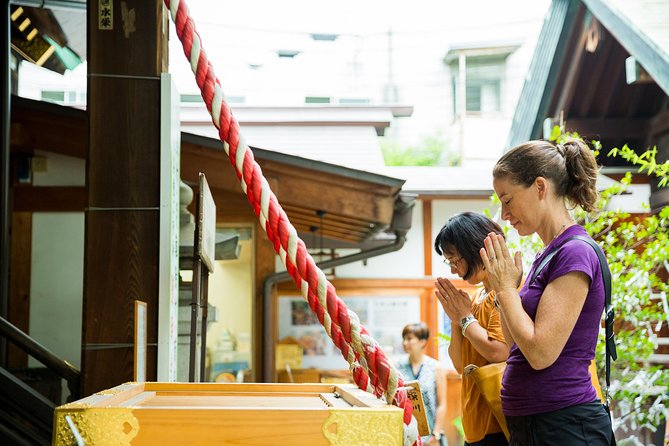
The temple also gives the tour a calm opening before you enter the crowded food lanes. Several guides use the first part of the meeting to explain the temple and the development of the surrounding area. You may also learn basic shrine or temple etiquette, including the cleansing ritual mentioned by one participant, although the exact presentation can depend on your guide.
Do not confuse this meeting point with the fish market itself. Arrive at the temple gate before the stated start time, with comfortable shoes and a little patience if you are navigating Tokyo’s train system. One person managed to join after getting lost on the trains, but that should not be your plan. The group may already be moving.
The first 30 minutes in Tsukiji’s outer market
The formal market walk begins with an introduction to the outer area. This first section is short, but it helps you read the scene before the food stops begin.
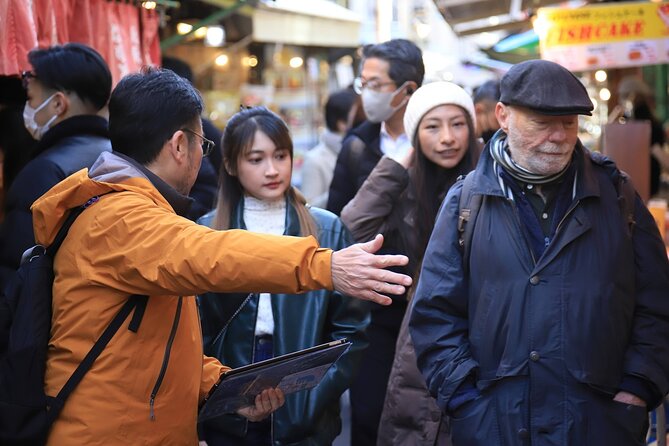
You will pass stalls and shops connected with fish, shellfish, prepared foods, fruit, and Japanese cooking. The market is compact in some places and surprisingly spread out in others, with narrow passages that can feel crowded even when the walk is relaxed.
This is a good moment to ask your guide how to spot quality ingredients or what local shoppers buy for home cooking. The guide can also help you understand which foods are meant to be eaten immediately and which are better suited to take home.
A downside is that the outer market is still a functioning commercial district. Shopkeepers are working, not performing for a tour group. You will need to stay close, avoid stopping in the middle of a lane, and accept that a stall may be too busy for a long explanation.
Wagyu skewers and the first tastings
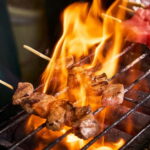
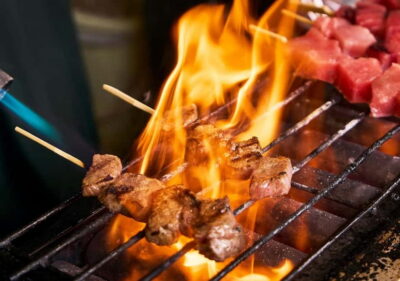
The food begins with a strong opener: a high-grade Wagyu beef skewer. This is one of the most praised parts of the tour, and it gives you a clear taste of why the price is not simply paying for a walk around a market.
The beef is served as a handheld bite, making it easy to eat while standing or moving between stalls. Some people enjoyed it so much that they returned after the tour to buy another. The exact shop and serving can vary, but the experience is built around trying premium food without having to guess which stall is worth your money.
The other tastings make the route more varied. Japanese omelet, or tamagoyaki, brings a soft, slightly sweet contrast to the beef. Fried fish cake adds a savory snack, and seasonal fruit gives the group something fresh between richer bites.
The included food is not a full restaurant meal at every stop. Think of it as a series of market samples that build toward the final seafood dish. You may still choose to buy extra items, such as oysters, tea, matcha ice cream, squid, sea urchin, or additional fruit. Those purchases are separate from the tour price.
Seafood, sushi, and the final bowl
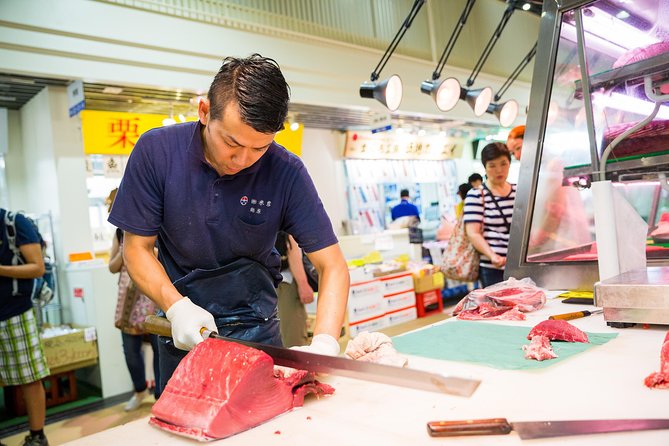
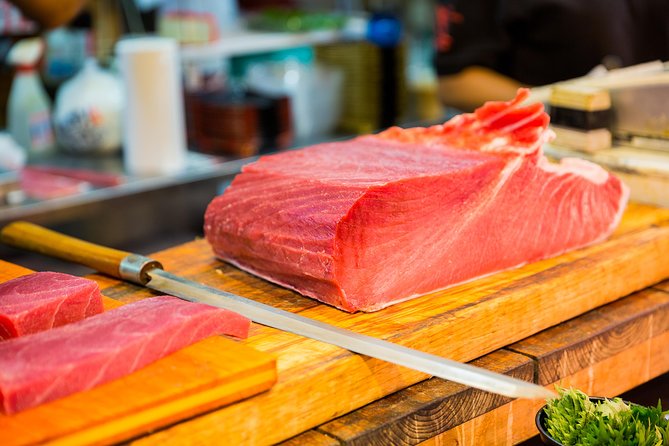
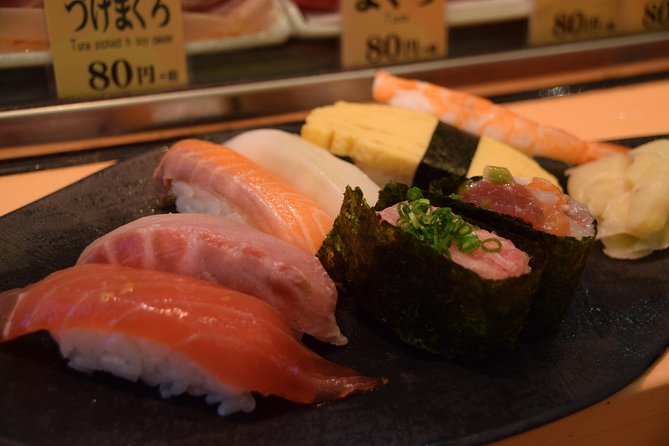
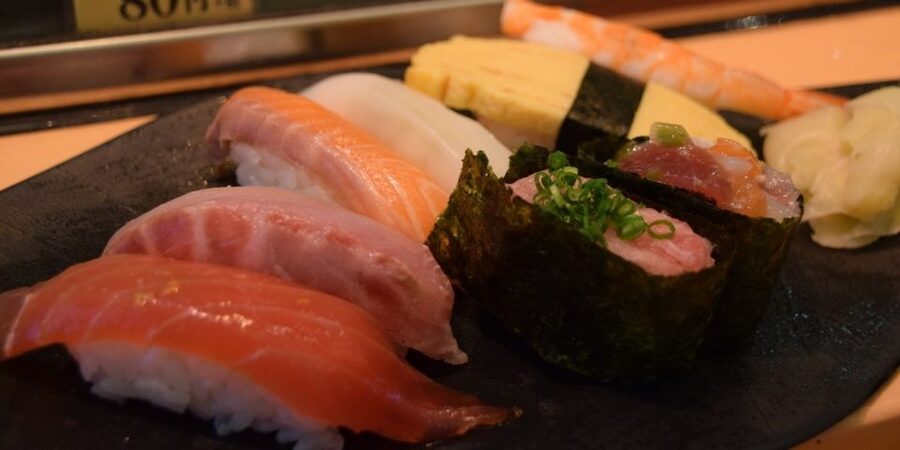
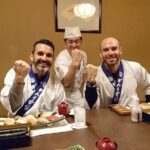
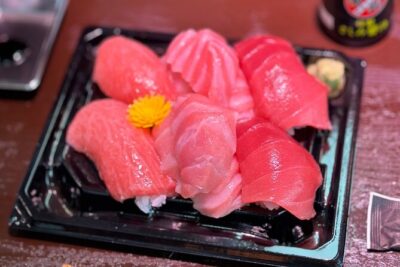
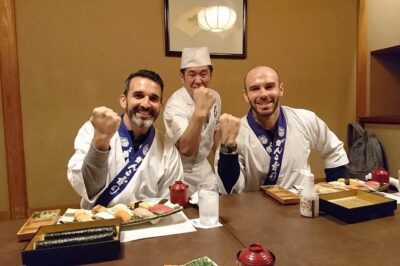
The tour ends with the most substantial food stop. Depending on the day and time, you receive sushi or a seafood bowl. Several guides have included a sashimi bowl served after a demonstration by a sushi chef, who shows how the fish is cut and prepared.
This closing stop gives the tour a proper finish. Instead of rushing from one snack to another, you sit down to eat fresh seafood and see some of the skill behind the dish. The chef presentation is particularly useful if you are curious about how fish becomes the neat slices arranged in a bowl.
The exact dish is not fixed. Some days bring sushi, while others bring a seafood bowl. If the planned restaurant closes unexpectedly, an alternative meal is provided. That flexibility is sensible, but you should not book this experience expecting one guaranteed menu item.
By the time you reach the final stop, you may already have eaten plenty. One person described the lunch as arriving after so many tastings that they were no longer very hungry. I see that as a benefit if you enjoy grazing, but it means the last dish may feel like a finishing course rather than your main meal of the day.
Other walking tours we've reviewed in Tokyo



What the food tells you about Japan
The tour works best when you pay attention to the link between food and daily life. A fish stall is not just a place to take a photograph. It shows how seafood is selected, displayed, prepared, and sold in a city where freshness matters greatly.
Your guide can explain the role of market shopping in professional kitchens and point out ingredients you might miss on your own. You also get a chance to ask about unfamiliar items before buying them. That is useful when a tray of seafood, a pale omelet, or a brightly colored fruit gives you no obvious clue about how it should be eaten.
The market’s appeal is not limited to sushi. Wagyu, fish cakes, fruit, tea, eggs, and prepared snacks all form part of the experience. The variety keeps the walk from becoming a one-note seafood tasting.
Still, the cultural detail may vary with the guide. Some people received a fuller explanation of the old inner and outer markets, the temple, and the area’s development. Others found the food guidance stronger than the historical material. If history is your main reason for booking, treat this as a food tour with cultural background, not a dedicated history lecture.
Crowds, weather, and the pace of the walk
Three hours sounds easy, but Tsukiji requires steady walking and frequent pauses. The tour is not designed for wheelchair users or people with mobility impairments, and the moderate walking can be tiring if you have trouble standing or moving through tight spaces.
Morning crowds are another factor. An early Saturday start can be especially busy, and rain makes the lanes harder to manage. Umbrellas, crowds, and surrounding noise can also make it difficult to hear every word from your guide.
A midweek visit can be more comfortable if it falls on an open market day. Do not assume every Wednesday is suitable, though. The fish wholesaler market is closed on Wednesdays, Sundays, and other designated closure days, and some tastings cannot be served when their shops are shut.
Wear comfortable shoes and practical clothes. Bring a camera if you want photographs, but keep it ready to put away when a passage becomes crowded. The tour is more enjoyable when you stay aware of the people working around you.
Is the $96 price fair?
At $96 per person, this is not a cheap way to buy lunch. You are paying for a guided route, several tastings, an English-speaking local guide, and the convenience of having someone choose the stops and explain the food.
The value depends on how you would use the market without help. If you are confident ordering unfamiliar dishes, comfortable with crowds, and happy to research stalls in advance, you can spend less on a self-guided visit. You will also have more control over what you eat.
I think the price is easier to justify for a first visit to Tokyo, especially if you want to try premium Wagyu and fresh seafood without guessing. The small group size matters here. A group of four, for example, allows more questions and makes it easier to move as one unit than a large coach tour.
The food alone should not be your only measure of value. The guide saves you time, reduces the stress of choosing stalls, and helps with the social rules of a working market. On the other hand, sake or beer may cost extra, so allow for that if you want a drink. Infant meals are not included, and dietary restrictions are not accommodated.
Who will enjoy this market morning
I would recommend this tour to first-time visitors who want a friendly introduction to Japanese food and do not want to spend their first market visit decoding menus and stall signs. It also suits people who enjoy trying many small portions rather than sitting down for one long meal.
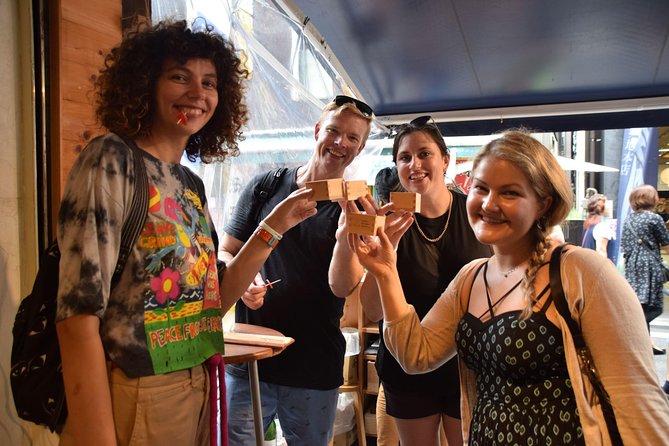
It is a good choice for couples, families with older children, and small groups of friends. The group limit of eight keeps the outing personal, while guides can often adjust the pace when someone needs more time at a stall.
Food-focused visitors will get the most from it. You can ask about ingredients, buy extra snacks, and return to a favorite stall after the official route ends. The tour also works well early in a Tokyo itinerary, since it gives you ideas for other foods and markets to seek out later.
I would not choose it for vegans, vegetarians, or anyone needing halal or gluten-free food. It is also a poor fit for visitors who dislike seafood, cannot walk for several hours, or want a quiet, formal tasting menu. The market is noisy, crowded, and practical rather than polished.
Booking advice and final verdict
Book this tour if you want a guided food introduction with real market atmosphere, a small group, and enough tastings to replace breakfast and perhaps lunch. The Wagyu skewer and final sushi or seafood bowl are the strongest anchors, while the omelet, fish cake, and fruit fill out the route.
Before choosing your date, check that the market is open. Avoid closure days if you want the broadest range of vendors and all listed tastings. If you can choose your start time, a less crowded midweek morning may be easier than a busy Saturday, though opening schedules still matter.
I would book it for a first Tokyo visit, especially if you value help with ordering and want cultural explanations along with food. I would skip it if you prefer to roam independently or have strict dietary needs. For everyone else, $96 buys a well-organized start in Tsukiji, not just a meal, and the small group format makes that guidance useful.
FAQ
How long does the Tsukiji food tour last?
The tour lasts three hours, including the guided market walk, food tastings, and the final sushi or seafood bowl.
Where does the tour begin?
Meet your English-speaking guide at the main gate of Tsukiji Honganji Temple.
Where does the tour finish?
The tour returns to Tsukiji Honganji Temple and the area near Tsukiji Station.
What food is included?
The included menu features high-grade Wagyu beef skewers, fresh fish bowl or sushi depending on the day, Japanese omelet, seasonal fruit, and fried fish cake.
Is sushi guaranteed?
No. Depending on the day and time, the final meal is either sushi or a seafood bowl.
Is the fish wholesaler market open every day?
No. The fish wholesaler market is closed on Wednesdays, Sundays, and other designated market-closure days.
Are all tastings available on closed market days?
No. Japanese omelet, fish cake, and seasonal fruit cannot be served when the relevant shops are closed.
Does the tour accommodate vegetarian or vegan diets?
No. Vegetarian and vegan requests cannot be accommodated. The tour is also unsuitable for halal and gluten-free dietary requests.
Is the tour suitable for wheelchair users?
No. The tour is not suitable for wheelchair users or people with mobility impairments, and it involves a moderate amount of walking.
Can I cancel for a refund?
You can cancel up to 24 hours in advance for a full refund. The reserve-now, pay-later option allows you to book without paying immediately.
More Food Experiences in Tokyo

More Walking Tours in Tokyo
More Tsukiji Market Tours in Tokyo
More tours in Tokyo we've reviewed












Tsukiji Market Tours, compared.
 ★ 5.0Tokyo Tsukiji Fish Market Food and Culture Walking TourFrom $99
 ★ 5.0Tokyo: Tsukiji Fish Market Food and Walking tourFrom $30
 ★ 4.9Tokyo: Tsukiji Fish Market Guided Walking TourFrom $222 hours
 ★ 5.0Tokyo Sushi Making Class in Tsukiji with Professional ChefFrom $49
 ★ 5.0Tsukiji Fish Market Guided Tour and Sushi Making with Pro ChefFrom $104
 ★ 5.0Tsukiji Fish Market: Street Food & Culture Walking TourFrom $33