Reviewed · TSUKIJI MARKET TOURS
Tokyo : Tsukiji Fish Market Tour with Fresh Sashimi Tasting
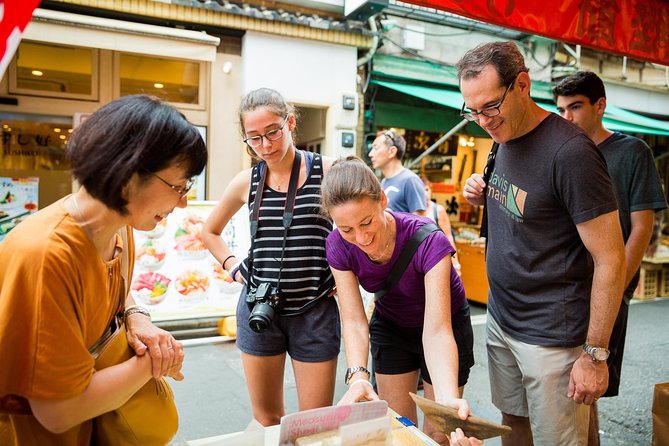
Tsukiji Outer Market is a food maze with roughly 400 shops, and this 90-minute tour gives you a practical way through it. Your guide leads you past working stalls, explains what you are seeing, and buys several samples for you to try, including fresh sashimi.
In This Article
- Key points at a glance
- Why Tsukiji still deserves a morning
- What the 90-minute walk covers
- Fresh sashimi and the tasting experience
- The value of having a local guide
- Small groups, narrow lanes, and the pace
- Finding the meeting point in Tsukiji
- Is $39.64 a fair price?
- Who will get the most from this tour?
- Booking, timing, and cancellation
- Should you book the Tsukiji Market tour?
- FAQ
- How long does the Tsukiji Fish Market tour last?
- Where does the tour begin?
- Where does the tour end?
- Does the tour include sashimi?
- How many people can join the tour?
- Are there different start times?
- Is the tour available by mobile ticket?
- Can I cancel for a full refund?
I like the small group limit of seven, which makes it easier to stay together in narrow lanes. I also like the language help. A guide can point out foods and shops you might pass by, then suggest dishes you may not think to order yourself. The main drawback is time: some of the market walk can feel rushed.
Key points at a glance
- About 400 shops to sort through: The guide helps you make sense of Tsukiji’s maze-like Outer Market.
- Fresh sashimi and other samples: Tastings are part of the walk, with several foods included during the visit.
- Small groups of up to seven: This is a more manageable size for narrow market lanes.
- Two morning tour choices: You get some flexibility when fitting the experience into a Tokyo day.
- Meeting point near Tsukiji: The tour begins at 4-chome, Tsukiji, and ends at Namiyoke Shrine.
- A 90-minute introduction: It works best as a first look at Tsukiji, not as a long, leisurely market morning.
Why Tsukiji still deserves a morning
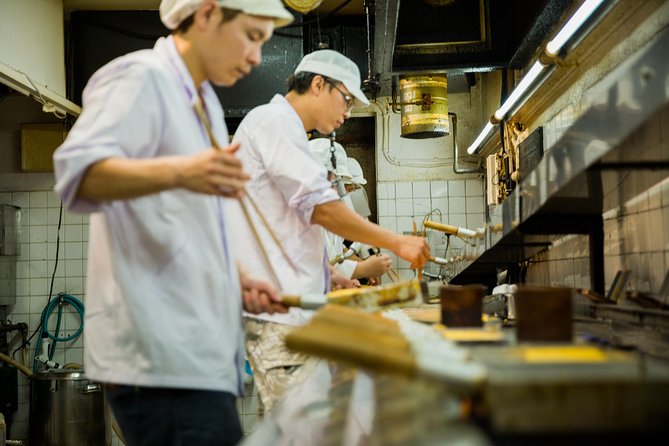
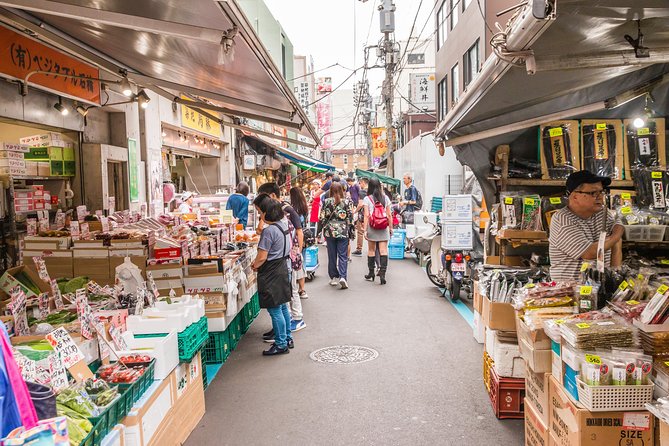
The famous wholesale tuna auction moved to Toyosu, but Tsukiji’s Outer Market remains a major food stop in central Tokyo. This is where you find a dense mix of seafood shops, knife sellers, cooking supplies, small restaurants, and stalls offering ready-to-eat bites.
The appeal is not a grand monument or a polished food hall. It is the close-up look at how Japanese food is sold and prepared. You move through narrow lanes where vendors are working, shoppers are choosing ingredients, and the best stalls may be easy to miss if you do not know what you are looking at.
That setting also requires some care. The market is a working place, not simply a sightseeing attraction. A guide helps you keep out of the way, choose sensible paths, and understand where it is appropriate to stop. You get more from the visit when you watch your pace and give sellers room.
A few more Tokyo tours and experiences worth a look


What the 90-minute walk covers
The tour begins with a short introduction to Tsukiji Jogai Market, the Outer Market. This opening matters because the area can feel confusing right away. The lanes do not offer a simple route from one sight to the next, and many shops look similar until someone explains what each one sells.
From there, the guide takes you through selected parts of the market and points out places you would be less likely to find alone. The exact stops can vary, but the purpose is clear: help you see the food side of Tsukiji without wandering at random.
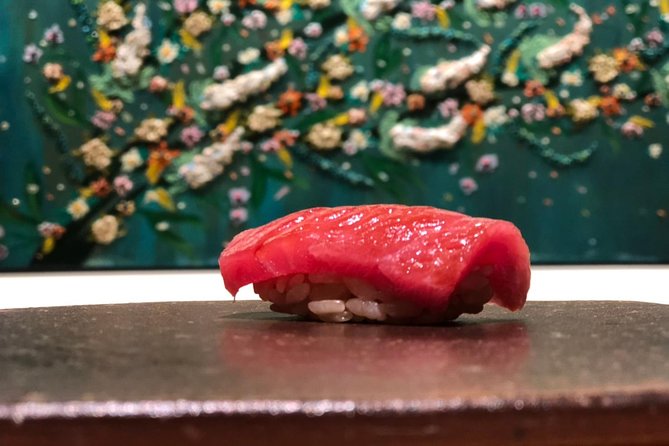
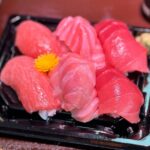
The tasting portion gives the walk its main flavor. Fresh sashimi is the headline sample, and the experience also includes several other market foods. You may be offered items you would not choose without help, which is one of the better reasons to book a guide rather than simply arrive and browse.
You should think of this as a guided introduction, not a full market crawl. Ninety minutes passes quickly, especially when the group pauses to taste food or listen to explanations. One guide-led visit was described as too rushed for the time available, so plan to return on your own if you want to shop, eat a full meal, or examine the stalls at length.
The stated end point is Namiyoke Shrine, at 6-chome, Tsukiji. That gives the walk a clear finish and places you at another useful point for continuing around the neighborhood.
Fresh sashimi and the tasting experience
The sashimi is the central food moment, and it is also where freshness matters most. You are not simply hearing about seafood in the abstract. You are given a chance to taste what makes Tsukiji a major food destination.
The other samples are important, too. A strong guide can make the difference between trying a familiar bite and trying something you would never have selected from a sign you could not read. Shinobu, for example, was singled out for recommending foods and pointing out dishes that might otherwise have been skipped.
The tour provider buys several items for the group to taste near the end of the walk. That is convenient and removes some of the uncertainty of ordering in a busy market. It also makes the $39.64 price easier to assess, since you are paying for food as well as guiding.
Still, this is not a substitute for a long seafood lunch. The number and type of samples are not listed in advance, so you should not book it expecting a fixed tasting menu. If you have allergies, strong food restrictions, or do not eat raw fish, the available choices may be less useful to you. The supplied details do not specify dietary accommodations, so ask before booking if that affects your decision.
The value of having a local guide
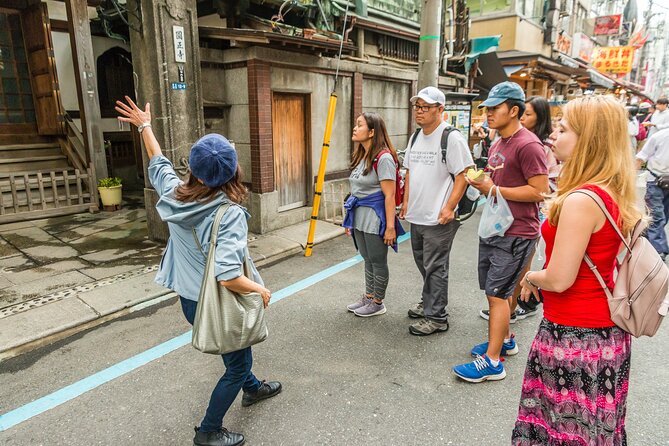
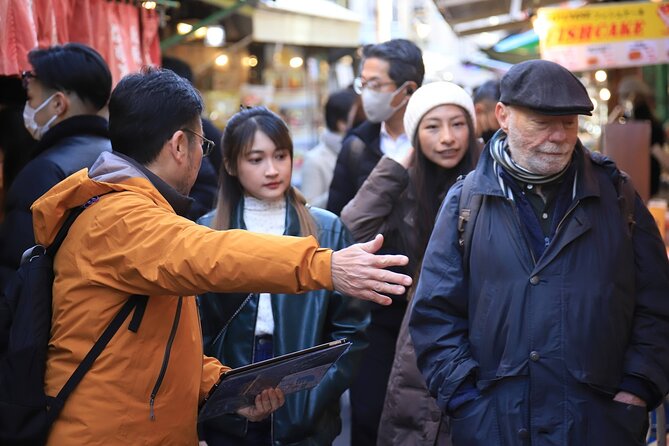
The strongest reason to book is navigation. Four hundred shops create plenty of choice, but choice is not the same as a good plan. Without help, you can spend your whole visit looking at signs, stopping in the wrong places, or missing the parts of the market that interest you most.
The guide also helps with the language barrier. That can matter when you want to understand a food, ask what it is, or decide whether a stall is meant for quick eating or shopping. You do not need a long cultural lecture to benefit from this service. A few clear explanations at the right stall can change the whole visit.
The personal side depends on the guide assigned to your group. Monami was described as kind and sweet, while Tadashi was praised for explaining Japanese culture along with the market. Ted was valued for helping with the language, and K K was noted for explaining the market’s background while walking through many shops.
Those different impressions point to a practical truth: the tour format is consistent, but the feel of the morning can vary by guide. Some guides may be warm and conversational. Others may be more functional, getting you from place to place and handling the tastings without much extra discussion.
Small groups, narrow lanes, and the pace
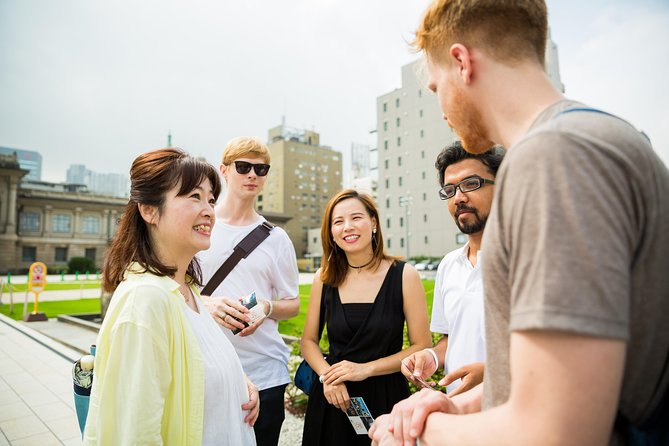
A maximum of seven people is a useful feature here. Tsukiji’s lanes are not ideal for a large tour, especially when people stop to look at food or listen to an explanation. A small group lets the guide keep everyone together without blocking as much of the market.
The size does not guarantee a slow pace, though. The tour has only an hour and a half to cover the market, explain what you are seeing, and arrange tastings. If your group asks many questions or stops often, the guide may need to move along quickly.
I would wear comfortable shoes and arrive ready to walk and stand. The supplied details do not promise seating or a fixed meal, and the experience is built around moving through the market. Keep your bags manageable, too. Narrow market lanes are easier to handle when you are not carrying bulky luggage.
The two morning options are helpful for scheduling, but the exact start times are not provided here. Check the booking details carefully before you commit to a hotel breakfast, another tour, or a visit to Toyosu the same day.
Other shopping tours in Tokyo


Finding the meeting point in Tsukiji
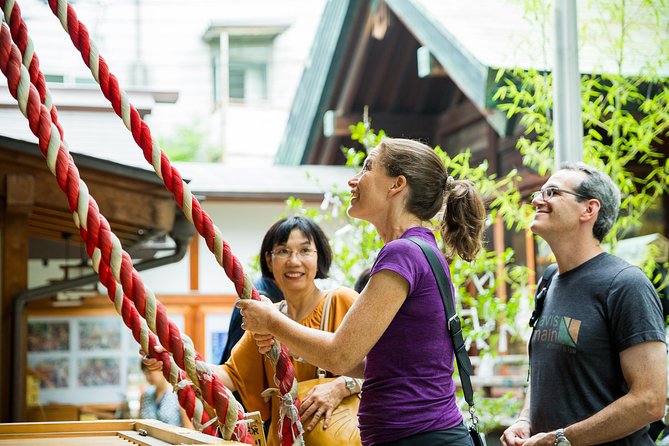
The tour starts at Japan, 104-0045 Tokyo, Chuo City, Tsukiji, 4-chome 75, Tsukiji Kyu Building. It ends at Namiyoke Shrine, 6-chome 20-37 Tsukiji, Chuo City.
This is the one logistical point I would treat seriously. The general Tsukiji Market area is not precise enough for a meeting appointment, and one participant had trouble finding the guide after a taxi was directed toward the wider market. Use the exact address and map pin from your confirmation rather than telling a driver only that you are going to Tsukiji Fish Market.
The area is near public transportation, and most people can take part. Confirmation is provided when you book, and the ticket is mobile, so keep the voucher easy to open on your phone.
After the tour, Namiyoke Shrine gives you a clear place to orient yourself. You can continue around Tsukiji, find a meal, or use nearby transport. The tour does not include admission to a separate attraction, since the market walk itself is free to enter.
Is $39.64 a fair price?
At $39.64 per person, this sits in a reasonable range for a short guided food walk in Tokyo. The cost covers the guide, the language assistance, the route through the Outer Market, and several tastings. The small group limit adds value, since you are not being moved through the lanes in a large crowd.
The value is highest if this is your first visit to Tsukiji or your first morning in Japan. You get an efficient introduction, a chance to sample sashimi, and advice on what to try. That can save you from spending your limited time guessing which stalls are worth your attention.
The value is lower if you are already comfortable navigating Japanese markets, can communicate easily in the local language, and prefer to choose every dish yourself. In that case, the tour may feel like a quick escort through places you could reach alone.
I would also allow extra time and money after the tour. The 90-minute route is enough for an overview, but it is not enough for every shop, a relaxed breakfast, and serious browsing. Think of the price as an orientation and tasting fee, then decide if you want to stay in the area.
Who will get the most from this tour?
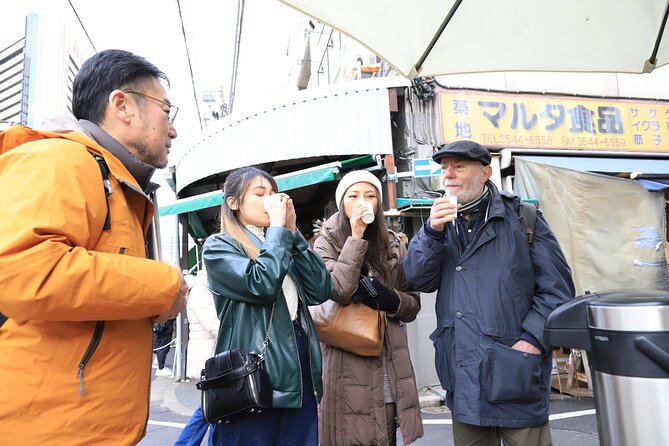
I would recommend it to first-time Tokyo visitors who want an easy introduction to Japanese food culture. It is also a good choice for anyone nervous about ordering seafood, reading unfamiliar signs, or getting in the way in a working market.
Families and couples may appreciate the limited group size, especially if they want a guide who can answer questions without the distance of a large tour. Food-focused visitors should find the sashimi and extra samples useful, though serious food fans may want more free time afterward.
This is less suitable for someone seeking the old wholesale auction experience. The tour visits Tsukiji Outer Market, not the wholesale market at Toyosu, and its focus is shops, tastings, and local guidance.
It is also not ideal if you dislike a set pace. The tour must keep moving, and one hour and 30 minutes leaves little room for lingering. If you prefer to stop at every stall, buy ingredients, and sit down for a full meal, use the tour as a starting point rather than your entire Tsukiji plan.
Booking, timing, and cancellation
The tour is commonly booked about 32 days ahead, so I would reserve early if your Tokyo dates are fixed. That is especially sensible if you need one of the two morning choices or want to keep the rest of your day organized.
Free cancellation is available when you cancel at least 24 hours before the local start time. Cancellations or changes made less than 24 hours ahead are not accepted for a refund.
The experience provider is Japan Wonder Travel. The booking confirmation should be your main reference for the start time, exact meeting instructions, and mobile ticket details.
Should you book the Tsukiji Market tour?
Book it if you want fresh sashimi, several guided tastings, and help finding your way through a market with about 400 shops. The strongest parts are the small group, the language support, and the chance to try foods you might not order alone.
Skip it if you already know Tsukiji well or want a slow, self-directed food morning. The short duration can feel rushed, and the guide’s style may be more practical than personal.
For most first-time visitors, I think the tour earns its price as a compact introduction. Just use the exact meeting address, keep your expectations focused on the Outer Market, and leave time afterward for the stalls and dishes you discover.
FAQ
How long does the Tsukiji Fish Market tour last?
The tour lasts approximately 1 hour and 30 minutes.
Where does the tour begin?
It begins at Japan, 104-0045 Tokyo, Chuo City, Tsukiji, 4-chome 75, Tsukiji Kyu Building.
Where does the tour end?
The walk ends at Namiyoke Shrine, 6-chome 20-37 Tsukiji, Chuo City, Tokyo 104-0045.
Does the tour include sashimi?
Yes. Fresh sashimi is included among the food samples offered during the market visit.
How many people can join the tour?
The maximum group size is seven travelers.
Are there different start times?
Yes. Two morning tour options are available, although the specific times must be checked in the booking details.
Is the tour available by mobile ticket?
Yes. The experience includes a mobile ticket.
Can I cancel for a full refund?
Yes, if you cancel at least 24 hours before the experience start time. Cancellations or changes made less than 24 hours in advance are not refunded or accepted.
More Markets in Tokyo
More Shopping Tours in Tokyo
More Tsukiji Market Tours in Tokyo

More tours in Tokyo we've reviewed












Tsukiji Market Tours, compared.
 ★ 5.0Tokyo Tsukiji Fish Market Food and Culture Walking TourFrom $99
 ★ 5.0Tokyo: Tsukiji Fish Market Food and Walking tourFrom $30
 ★ 4.9Tokyo: Tsukiji Fish Market Guided Walking TourFrom $222 hours
 ★ 5.0Tokyo Sushi Making Class in Tsukiji with Professional ChefFrom $49
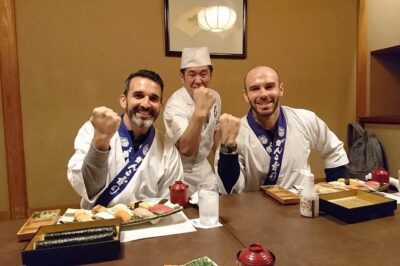 ★ 5.0Tsukiji Fish Market Guided Tour and Sushi Making with Pro ChefFrom $104
★ 4.7Tokyo: Tsukiji Fish Market Food and Culture Walking TourFrom $963 hours
★ 5.0Tsukiji Fish Market Guided Tour and Sushi Making with Pro ChefFrom $104
★ 4.7Tokyo: Tsukiji Fish Market Food and Culture Walking TourFrom $963 hours