Reviewed · PRIVATE DRIVERS
Customizable Private Tokyo Tour with an English-speaking Driver
Tokyo is easiest to sample when someone else handles the traffic, parking, and long cross-city transfers. This private day tour lets you shape a nine-hour route around the places you care about, from Tsukiji’s food stalls and Senso-ji Temple to Shibuya Crossing and the city’s great towers.
In This Article
- Key points to know before booking
- Why a private car helps in sprawling Tokyo
- Tsukiji and Asakusa: Tokyo’s best opening pair
- The Imperial Palace offers a quieter pause
- Skytree and Tokyo Tower offer two different views
- Ginza and Omotesando show Tokyo’s polished side
- Harajuku combines youth style with forest quiet
- Shibuya Crossing is quick, famous, and worth timing well
- Odaiba and the Miyazaki clock are optional extras
- What the guide does well, and where expectations matter
- How to plan a realistic nine-hour route
- Who gets the best value from this Tokyo tour?
- Should you book this private Tokyo day?
- FAQ
- How long is the private Tokyo tour?
- How many people can join the private tour?
- What is included in the $320 price?
- Are Tokyo Skytree and Tokyo Tower tickets included?
- Is this a walking tour with an English-speaking guide?
- Can the tour pick me up or drop me off at an airport?
- Is Odaiba guaranteed to be part of the route?
- Can I customize the itinerary?
- What is the cancellation policy?
I like the private vehicle for up to four people, especially in hot, rainy, or tiring weather. I also like the chance to blend old Tokyo with its modern side, then adjust the day with a driver such as Sam, Jack, David, or Jack, who can suggest practical changes as you go.
The tradeoff is important: this is mainly a driver-led sightseeing day, not a walking tour with a guide beside you at every attraction. Most explanations come while you are in the car, and seeing every listed stop in depth would be unrealistic in nine hours.
Key points to know before booking
- Nine hours in a private car: You avoid changing trains, finding exits, and arranging taxis between distant Tokyo neighborhoods.
- You choose the emphasis: Focus on temples and gardens, modern landmarks, shopping districts, food, photography, or a mix.
- Excellent for a first Tokyo look: The route can connect Tsukiji, Asakusa, the Imperial Palace, Harajuku, Shibuya, Ginza, and more in one day.
- A driver rather than a full walking guide: Expect useful commentary between stops, with independent exploration once you get out.
- Two tower admissions cost extra: Tokyo Skytree and Tokyo Tower tickets are not included in the $320 group price.
- Odaiba depends on the clock: It requires about 40 minutes from the previous stop, so the driver includes it only if time remains.
Why a private car helps in sprawling Tokyo
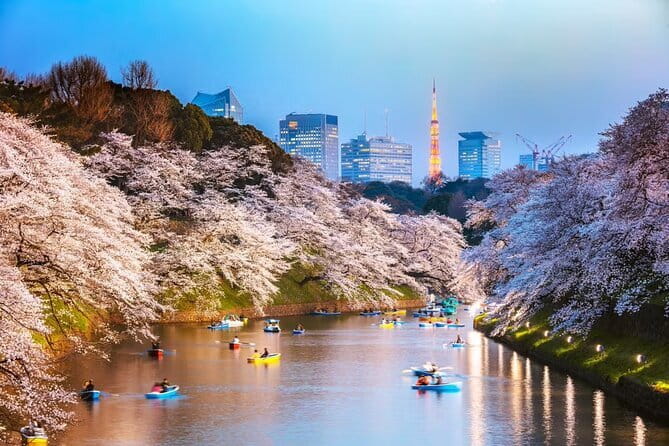
Tokyo’s rail system is fast and excellent, but it can still eat up time. Stations are large, transfers can be confusing, and several of the sights on this route sit far apart. With a private vehicle, you can move from Asakusa in the northeast to Shibuya in the west, then continue toward Tokyo Bay without repeatedly descending into stations.
The $320 price covers the whole group, not each person, up to four people. Split four ways, that is $80 per person before any extra admission fees. For a couple, the cost is less attractive than using trains, but the value improves if you prize convenience, have limited time, or want to avoid a long day of route planning.
The vehicle is air-conditioned and includes fuel, parking, tolls, and WiFi. Those details matter in Tokyo, where summer heat, sudden rain, and traffic can make an ambitious sightseeing day tiring. You are not paying each time the car stops, and you do not need to arrange parking at every major district.
Your driver picks you up and returns you according to the agreed plan, but airport and cruise-port arrangements need special attention. Pickup or drop-off at Haneda, Narita, or Yokohama costs ¥10,000 each way, and the Yokohama fee may be due in cash at the end. If you are connecting from a cruise or heading to an airport, confirm the extra charge before you commit.
Other private tours in Tokyo

Tsukiji and Asakusa: Tokyo’s best opening pair
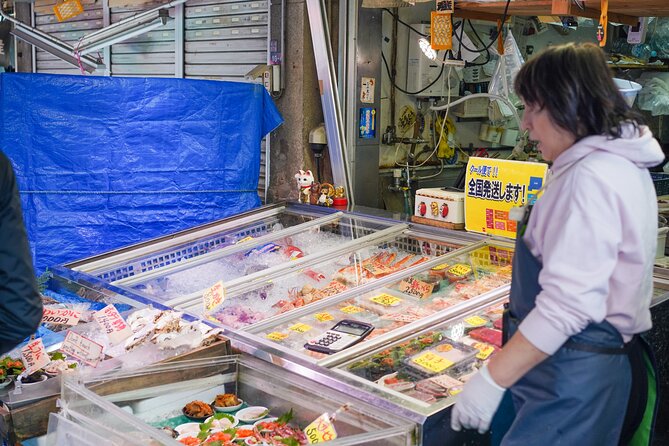
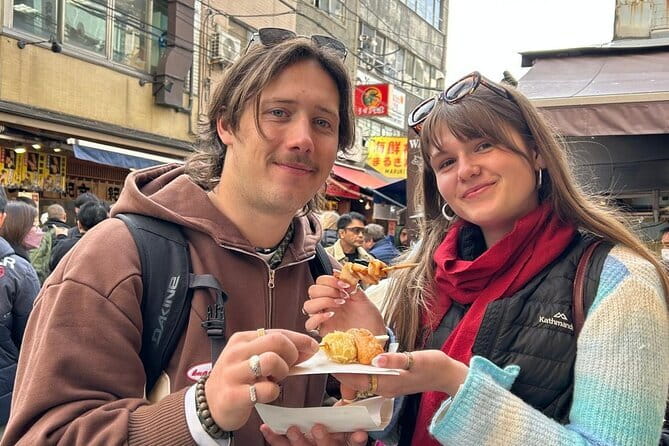
Tsukiji Outer Market makes a strong first stop because it gets you into Tokyo’s food culture right away. The market is known as Japan’s Food Town, with wholesale and retail shops, small eateries, traditional ingredients, and newer food ideas packed into its lanes.
You have about an hour here. That is enough for a look around and perhaps a snack, but not enough for a slow food crawl if the market is crowded or you stop often. Admission is free, though you pay for anything you eat or buy.
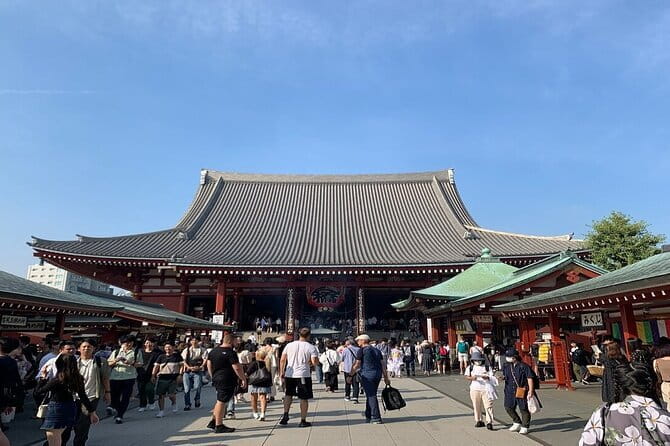
Next comes Senso-ji, Tokyo’s most famous Buddhist temple and one of the city’s essential sights. Walk through Kaminarimon, the Thunder Gate, with its huge red lantern, then continue along Nakamise Street toward the temple grounds. The street is lined with traditional shops and snack sellers, making the approach part of the experience.
The temple itself is more than 1,400 years old, and the hour allotted here gives you time to take in the gate, shopping street, temple buildings, and surrounding atmosphere. Your driver may explain the site before you enter or while you are back in the car. If you want detailed guidance on rituals, architecture, or Buddhist practice, ask how much walking commentary is available before the day begins.
The Imperial Palace offers a quieter pause
The Imperial Palace provides a change of pace after Tsukiji and Asakusa. It has been the official residence of Japan’s emperors since 1868, with moats, gardens, and formal grounds in the center of the capital.
The inner palace is not generally open to the public, so do not book this stop expecting a palace interior visit. The East Gardens offer the more realistic public experience, with seasonal flowers and a peaceful setting. You get about an hour, and admission is free.
Check the day of the week when planning. One party arrived on a Monday and found the Imperial Palace closed, though the rest of the day could still be adjusted around temples and other sights. This is exactly where the private format helps, but it is still wise to have a backup plan.
The palace stop is most useful for travelers who want a little greenery and historical context between Tokyo’s commercial districts. If you care more about shopping or observation decks, you may prefer to shorten this visit and use the time elsewhere.
Skytree and Tokyo Tower offer two different views
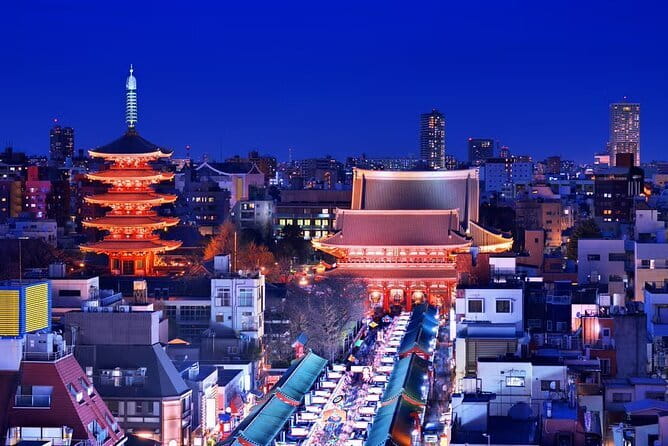
Tokyo Skytree is the bigger visual statement, rising 634 meters above the city. Its enclosed observation decks sit at 350 and 450 meters, with the lower level offering a full circular view and the upper level featuring a spiraling glass corridor.
On a clear day, you may see Mount Fuji from the lower deck. Weather matters, so the view can be less rewarding on a hazy or rainy day. Admission is not included, and you should treat the one-hour stop as a choice that uses a meaningful share of the day.
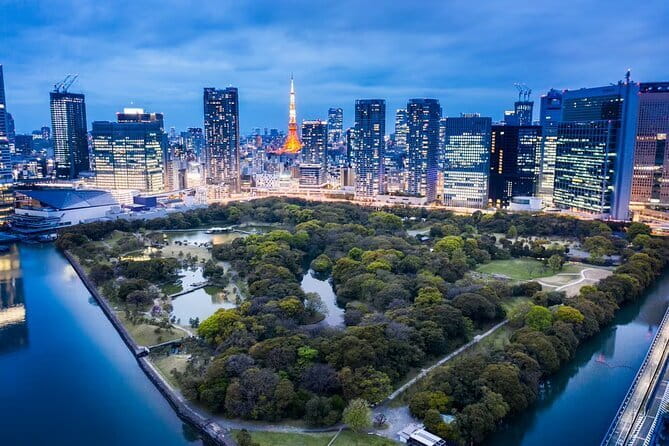
Tokyo Tower tells a different story. Built in 1958, the 333-meter red-and-white structure became a symbol of Japan’s postwar recovery and rapid modernization. Its observation decks provide another way to see Tokyo, but tickets are also extra.
The itinerary allows only 30 minutes at Tokyo Tower. That works for photographs and a quick look, but it may not be enough for a relaxed observation-deck visit once entry lines and elevator time are considered. I would choose one tower unless you have a strong reason to see both. Skytree gives you greater height, while Tokyo Tower gives you a classic Tokyo image and a sense of the city’s postwar story.
Ginza and Omotesando show Tokyo’s polished side
Ginza is Tokyo’s premier luxury shopping district, with department stores, designer boutiques, Japanese crafts, restaurants, and major retail complexes. Ginza Six has more than 240 stores, rooftop gardens, and art installations. Mitsukoshi Ginza combines a long department-store tradition with modern shopping.
The scheduled 30 minutes is a quick orientation rather than a serious shopping session. Use it to see the streets, enter a department store, or identify a place to return later. If you hope to shop for luxury goods or Japanese crafts, ask to spend longer here and cut a less important stop.
Omotesando Hills offers another polished urban setting, but its appeal is as much architectural as commercial. Designed by Tadao Ando and opened in 2006, the complex contains fashion stores, galleries, cafes, and restaurants in a sleek multi-level building along the tree-lined Omotesando Avenue.
Again, 30 minutes is short. You can appreciate the interior and avenue, but you will not have time to browse thoroughly. Ginza and Omotesando overlap for some shoppers, so I would normally select one based on your interests rather than trying to give both equal attention.
A few more Tokyo tours and experiences worth a look

Harajuku combines youth style with forest quiet
Takeshita Street is the lively, colorful side of Harajuku. The narrow shopping street is known for youth fashion, playful accessories, unusual boutiques, kawaii goods, and crepes loaded with toppings.
You have 30 minutes, which is enough to feel the energy and grab a quick snack. It is not enough for careful shopping, and the street can feel crowded. If your group includes teens or anyone interested in Japanese youth culture, this stop deserves priority.
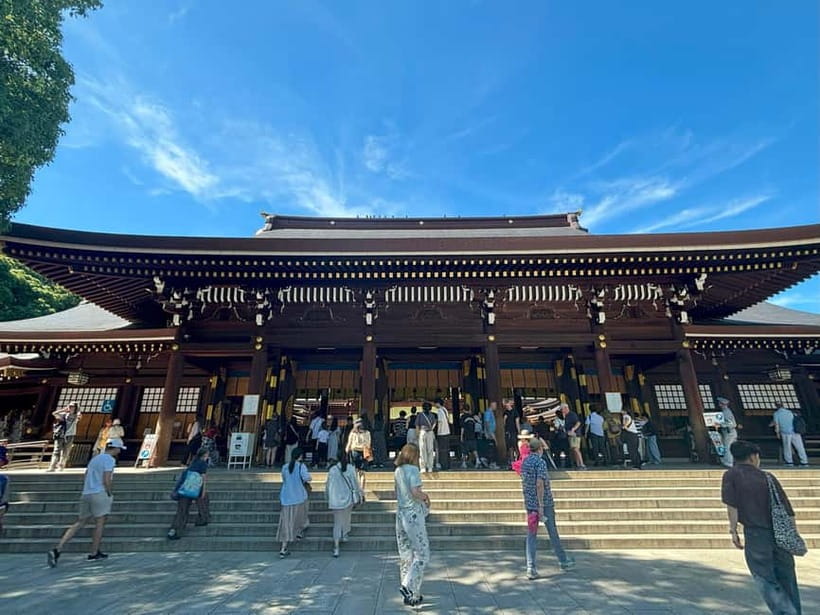
Meiji Jingu gives you the opposite experience just a short distance away. The shrine is dedicated to Emperor Meiji and Empress Shoken and sits in a forest planted with more than 100,000 trees. Wide paths, traditional torii gates, and the calm shrine grounds create a welcome break from Harajuku’s commercial noise.
The planned hour is better suited to Meiji Jingu than the half-hour at Takeshita Street. You can walk through the grounds, observe shrine customs, and enjoy the setting without paying admission. Together, these stops make one of the day’s strongest pairings: modern youth culture followed by a quiet Shinto shrine.
Shibuya Crossing is quick, famous, and worth timing well
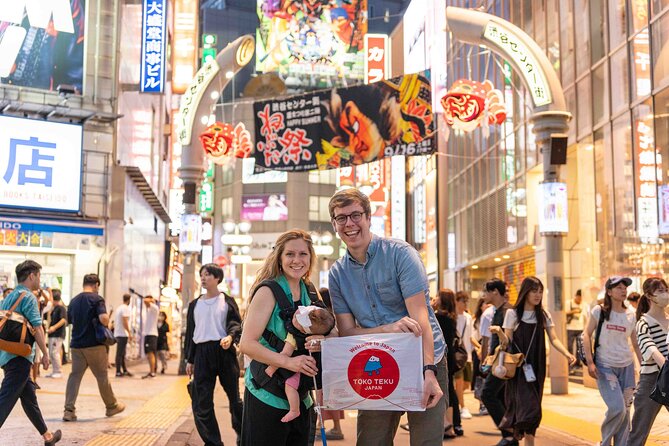
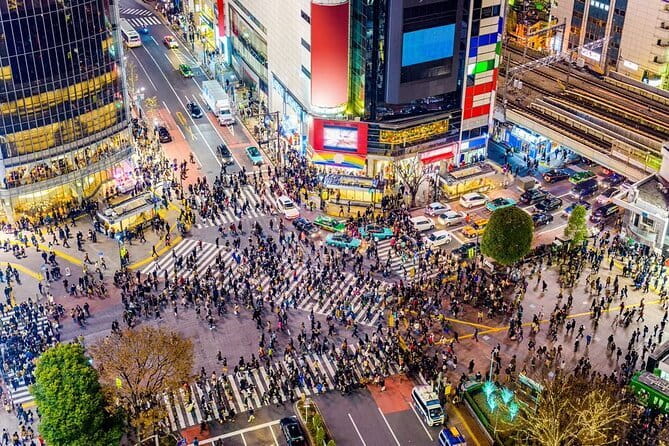
Shibuya Crossing is one of Tokyo’s signature scenes. When the traffic stops, pedestrians cross from several directions at once beneath huge signs and screens. The crossing is free to see, and 30 minutes is usually enough for photographs, a walk around the nearby streets, and a look at the district’s shopping centers.
The attraction is more about the moment and the surrounding city energy than a formal visit. Your driver can drop you near the action, then wait while you explore. Ask where the best photo point is for your group, since the crossing itself changes character according to time of day and traffic.
Do not expect a long guided explanation here. This is a photo and orientation stop, not a museum visit. Still, it is one of the easiest places to feel Tokyo’s modern pace in a short time.
Odaiba and the Miyazaki clock are optional extras
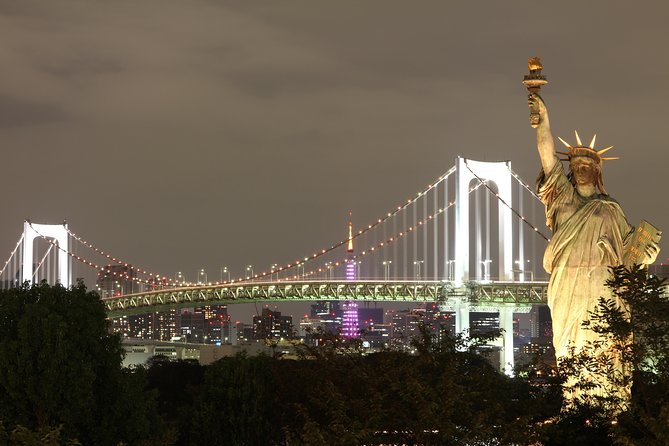
Odaiba Marine Park sits on a man-made island in Tokyo Bay, with waterfront parks, shopping, entertainment, futuristic buildings, and views connected with attractions such as teamLab Borderless and the Rainbow Bridge.
The route allows about an hour, but there is a catch: Odaiba takes roughly 40 minutes to reach from the previous stop. The driver takes you there only if the schedule still permits it. If Odaiba is a priority, say so when setting the itinerary and be prepared to remove another stop.
The Nippon Television Giant Clock is a brief, unusual photo stop in Minato. The 30-meter public clock was designed with Hayao Miyazaki and features animated characters and moving parts that appear at set times. The display connects Japanese animation with public art and modern technology.
You have 30 minutes here. Confirm the timing of the movement if this is a must-see, since the attraction is most interesting when its characters are in motion. It is a good choice for animation fans, but an easy cut if your main goals are temples, markets, or observation decks.
What the guide does well, and where expectations matter
The driver’s biggest contribution is practical. You can get between major districts without studying routes, finding platforms, or searching for a taxi. Several strong days have included drivers named Sam, Jack, David, Ali, Alim, Bek, and John, with specific praise for punctuality, friendly service, flexible routing, local suggestions, and help with tasks such as collecting JR rail passes.
You should understand the guide role clearly. Insights are given mostly while you are in the vehicle between destinations. Once you leave the car, you may be exploring on your own rather than receiving a continuous walking tour.
That arrangement suits you if you like freedom, photographs, shopping, and short visits. It may disappoint you if you want a specialist guide explaining every building, shrine ritual, and historical detail in person. Ask for more commentary if that matters, and build in fewer stops so the driver has time to walk with you.
The private format also makes adjustments easier. A driver can suggest which sights to drop, add a cherry-blossom photo stop when conditions are right, or help with practical errands. The day works best when you arrive with three or four priorities, not a demand to see every item for the full stated time.
How to plan a realistic nine-hour route
The listed stops add up to more than nine hours before traffic, meals, parking, and walking are considered. Tokyo traffic can stretch the day, and Odaiba alone may require a long transfer. Think of the itinerary as a menu rather than a promise to complete every stop.
A sensible first-day plan might include:
- Tsukiji Outer Market
- Senso-ji Temple
- The Imperial Palace or one observation tower
- Meiji Jingu and Takeshita Street
- Shibuya Crossing
- Ginza or Omotesando
You can swap in Tokyo Tower, Skytree, Odaiba, or the Miyazaki clock according to your interests. If you want both towers, serious shopping, and Odaiba, accept that several other places will become quick drive-by or photo stops.
There is also an upgrade for a scenic boat trip, allowing you to see Tokyo from the water. The supplied details do not specify its duration, route, or price, so ask for those particulars before choosing it. A boat ride could be a pleasant change from the car, but it will reduce time at land-based sights.
Who gets the best value from this Tokyo tour?
I would recommend this experience most strongly to first-time visitors with only one full day, families who want to reduce walking, older travelers, small groups, and anyone dealing with heat or rain. It is also useful for a cruise stop or an airport connection, provided you confirm luggage space, timing, and the separate Yokohama or airport fee.
A group of four gets the clearest price advantage. Couples should compare the $320 cost with trains and taxis, then decide how much they value a private vehicle and a driver who waits while they explore.
Independent rail users may prefer to choose fewer neighborhoods and spend longer in each. Tokyo’s trains make that approach practical, and a self-guided day gives you more control over meal stops and shopping time. This tour is for covering ground, not for lingering at every place.
Most people can participate, service animals are allowed, and the experience is private to your group. Confirmation arrives at booking. Free cancellation is available up to 24 hours before the start time, while late cancellations and late changes are not accepted. Poor weather or failure to meet the minimum number of participants can lead to a new date or a full refund.
Should you book this private Tokyo day?
Book it if your goal is to see many sides of Tokyo in one day without wrestling with transport. The private car, air conditioning, included parking and tolls, and flexible routing can turn a complicated day into a manageable one, particularly for four people sharing the cost.
Do not book it expecting a traditional walking guide or deep time at every attraction. Before paying, send your preferred priorities to Hello Japan, confirm the airport or Yokohama surcharge if relevant, and ask which attractions the driver can accompany you into.
My practical choice would be Tsukiji, Senso-ji, Meiji Jingu, Shibuya Crossing, and one tower, with either Ginza or Takeshita Street added to match your interests. That gives you food, old Tokyo, shrine culture, modern city life, and a memorable view without turning the day into a race.
FAQ
How long is the private Tokyo tour?
The experience lasts approximately nine hours.
How many people can join the private tour?
The price covers one private group of up to four people.
What is included in the $320 price?
The price includes an air-conditioned vehicle, an English-speaking driver, fuel, parking fees, toll fees, and WiFi on board.
Are Tokyo Skytree and Tokyo Tower tickets included?
No. Admission to Tokyo Skytree and Tokyo Tower is not included in the tour price.
Is this a walking tour with an English-speaking guide?
No. The service includes an English-speaking driver, and insights are given mostly while traveling between destinations. A walking guide is not included.
Can the tour pick me up or drop me off at an airport?
Pickup or drop-off at Haneda, Narita, or Yokohama is available for an additional ¥10,000 JPY each way.
Is Odaiba guaranteed to be part of the route?
No. Odaiba is included only if time allows, since it takes about 40 minutes to reach from the previous stop.
Can I customize the itinerary?
Yes. The tour is designed around the sights and interests you choose, with the driver able to offer suggestions and adjustments during the day.
What is the cancellation policy?
You can cancel at least 24 hours before the experience start time for a full refund. Cancellations or changes made less than 24 hours ahead are not accepted for a refund. If poor weather or an insufficient number of participants causes cancellation, you will be offered another date or a full refund.
More Private Drivers in Tokyo
More Private Tours in Tokyo
More tours in Tokyo we've reviewed












Private Drivers, compared.
 ★ 5.0Mt Fuji Private Tour with English Speaking DriverFrom $415
 ★ 5.0Mt Fuji Private Day Trip from Tokyo with English speaking driverFrom $464
 ★ 4.5Mt. Fuji & Hakone Private Day Tour with English-Speaking DriverFrom $453
 ★ 4.5Haneda Airport (HND) Private Transfer to Central TokyoFrom $104
 ★ 4.5Mt. Fuji, Hakone Full-Day Private Tour with English Driver GuideFrom $495
 ★ 5.0Mt. Fuji Day Trip from Tokyo with English Speaking Driver GuideFrom $497