Reviewed · TSUKIJI MARKET TOURS
Tsukiji Fish Market Small-Group Food Walking Tour
Tsukiji is still one of Tokyo’s best places to eat your way through Japanese food culture, but you need to know what you are seeing. The wholesale fish market moved to Toyosu in 2018. This tour focuses on the Tsukiji Outer Market, where narrow lanes still hold seafood shops, food stalls, knife sellers, cookware stores, and small restaurants.
In This Article
- Key points at a glance
- What Tsukiji is today
- Meeting at Tsukiji Station
- Eating through the Outer Market
- The included seafood lunch
- Temples, shrines, and the market’s older story
- A Tokyo view near the end
- What the small group changes
- Is $87.37 a fair price?
- Who should book this food walk?
- My verdict on the Tsukiji food tour
- FAQ
- Where does the Tsukiji food tour begin?
- Where does the tour end?
- How long does the experience last?
- Is lunch included?
- Does the tour visit the old wholesale fish market?
- What other places are included besides the market?
- How many people can join the tour?
- Are vegan or allergy-free options available?
I like the mix of eating and context here. You may try tamagoyaki, tuna nigiri, grilled eel, scallops, crab, or local snacks, then learn why the market matters at a Buddhist temple and Shinto shrine. I also like the small group size, capped at seven, and the included seafood lunch. The main drawback is simple: if you expect the giant wholesale auction floor, this is not that tour.
Key points at a glance
- The market is Tsukiji Outer Market: You will see active food streets and specialty shops, not the wholesale market that moved to Toyosu.
- Lunch and tastings are included: Come hungry, since the food may include sushi, tamagoyaki, grilled seafood, and several smaller bites.
- Guides shape the experience: Guides such as Kazu, Yuki, Hitomi, Mark, and Tiger have been praised for their food tips, local knowledge, and friendly manner.
- Culture is part of the walk: The route includes a Japanese Buddhist temple, a Shinto shrine, market history, and a city view.
- Small groups help in tight lanes: With no more than seven people, it is easier to stay together and ask questions.
- Diet needs require care: Vegan choices are not available, and allergy-free meals cannot be guaranteed.
What Tsukiji is today
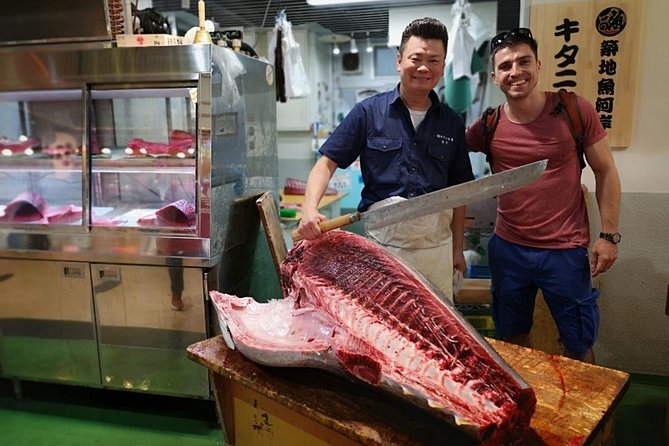
The name Tsukiji still carries a powerful image: tuna auctions, forklifts, huge fish, and buyers inspecting the morning catch. That wholesale operation now runs at Toyosu, so this experience should be understood as a food walk through the older outer-market district.
That change is important. The Outer Market remains a working collection of shops and places to eat, but it is not the same thing as the former inner market. You will find seafood vendors and fresh food sellers, yet much of the area also caters to home cooks and people looking for a quick meal, kitchen tools, seasonings, dried goods, and souvenirs.
I think this makes the tour more useful for most first-time visitors. The outer streets are easier to explore on foot and offer more direct chances to taste food. A guide can also help you read the market’s rhythm, since the lanes are tight, signs compete for attention, and some spots are not designed for people to stop and snack in a large crowd.
A few more Tokyo tours and experiences worth a look
Meeting at Tsukiji Station
The tour begins at Tsukiji Station, Exit 1, at 3 Chome-9 Tsukiji. Your guide waits there, and the meeting portion is brief before you head into the market.
Arrive early. One practical tip is to look around for other people who seem to be waiting for the same food walk, since the meeting point can feel busy and easy to second-guess. You receive confirmation when you book, and a mobile ticket makes it simple to keep the details on your phone.
The tour lasts about three hours. That is enough time for a proper meal, several tastings, and the cultural stops without turning the morning into an all-day march. Wear comfortable shoes, and bring water in summer. Tokyo can be intensely hot and humid, and the market’s close quarters can make the heat feel stronger.
Eating through the Outer Market
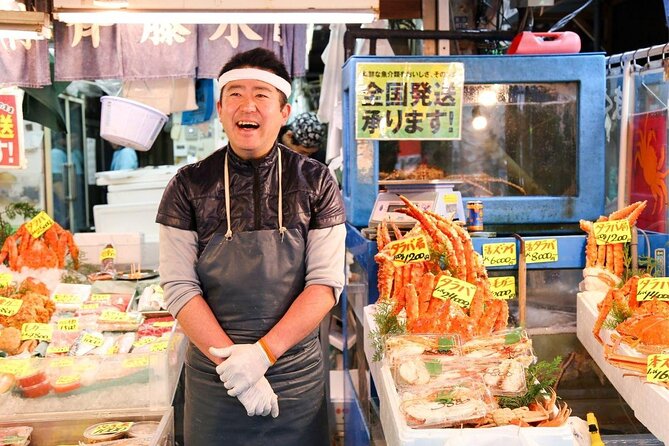
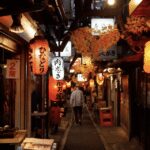
The first real pleasure is simply walking into the market with a plan. Tsukiji Outer Market has around 460 shops selling fish, produce, meat, dried foods, seasonings, cooking utensils, and tableware. You are not just looking at seafood behind glass. You are moving through a neighborhood built around Japanese cooking.
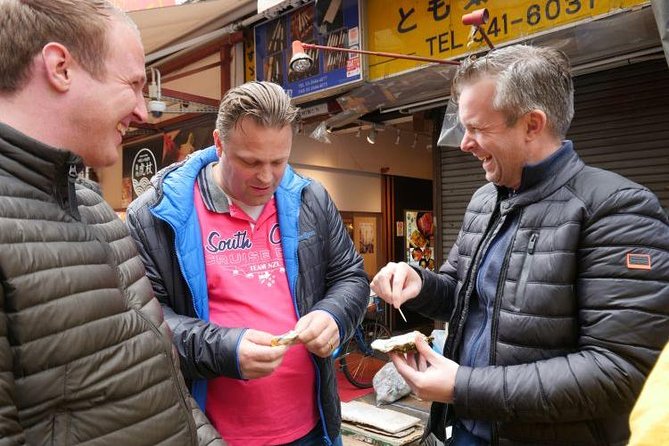
The guide leads you to selected stalls rather than leaving you to make every choice alone. That matters because the market can be confusing, especially if you do not know the difference between familiar and unfamiliar seafood. A guide can identify what you are seeing and explain how it is eaten.
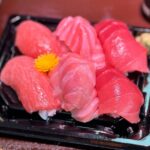
Food stops have included tamagoyaki, the sweet Japanese rolled omelet, tuna nigiri, grilled eel, scallops on a stick, crab legs, dried stingray meat, and other small snacks. The exact selection can change, and you should not treat a particular food as guaranteed. Still, the range is one of the tour’s strong points. You get more than one polished sushi dish and a chance to test several textures and flavors.
Some tastings are quick. A stall may hand you one item to try, while another stop may offer a larger portion. This is not a sit-down tasting menu with a printed sequence. It is a market walk, so the food comes in the same informal way it does for local shoppers.
That setting is part of the appeal, but it also creates limits. The lanes are narrow, and signs may ask you not to stop and eat in certain areas. You may need to keep moving, eat carefully, or wait until the group reaches a better spot. If you want plenty of time to photograph every stall, shop at leisure, and pause over each bite, three hours may feel short.
The included seafood lunch
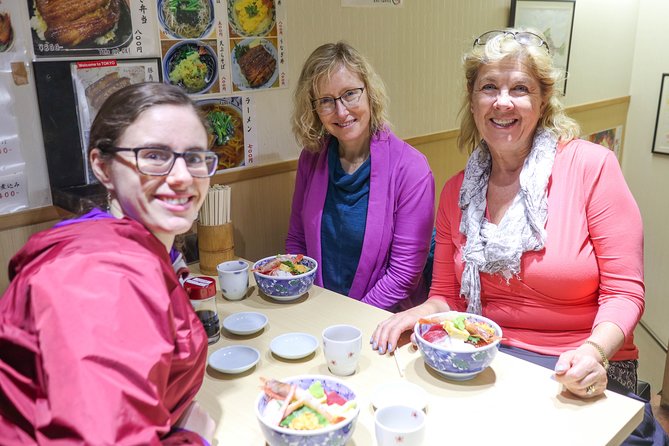
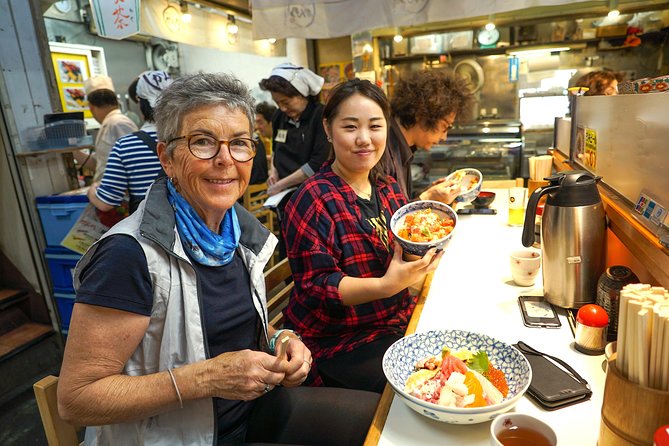
The meal is more substantial than the small samples. A fresh seafood lunch is included at a local restaurant, and some people have been able to choose what they want for the sit-down meal. The experience may involve eating in a small booth, which gives lunch a more intimate, local feel than a large tourist restaurant.
The lunch gives the tour a proper finish to the food portion. You can sample unusual items earlier, then sit down with a fuller dish and take a breath. It also helps the price make sense, since you are paying for a meal as well as the guide and tastings.
Come with an appetite. The tour can include several small bites before lunch, and you may want to buy something extra at the market. You are not required to shop, but the area sells plenty of Japanese ingredients, utensils, tableware, and food products that are hard to find outside Japan.
The main caution is dietary flexibility. Vegan options are not available. The operator cannot guarantee allergy-free food because the dishes are prepared in kitchens it does not control, and substitutions may not be possible at every stop. One guide, Kazu, went out of his way to help a person with coeliac disease, but that should be viewed as individual assistance rather than a promise of a gluten-free tour.
If you have a serious allergy or strict diet, contact the operator before booking and be prepared for the possibility that some stops will be replaced or skipped. The tour makes efforts to compensate with other stops, but it cannot make every dish safe for every person.
Temples, shrines, and the market’s older story
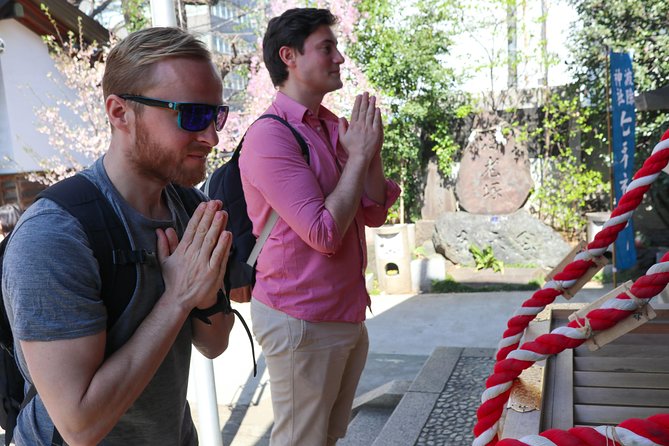
Food is the headline, but the religious stops give the walk more shape. Tsukiji is not only a row of seafood stalls. The area also connects to important Japanese religious traditions, and the tour includes a Buddhist temple and a Shinto shrine.
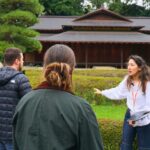
The Buddhist stop offers a chance to learn about the building and Japan’s religious customs. The Shinto shrine adds a different cultural setting. You do not need a background in Japanese religion to appreciate the contrast, and the stops provide a welcome pause from the food lanes.
This is also where the guide’s ability matters most. The best guides on this route, including Kazu, Yuki, Hitomi, Mark, and Tiger, have been praised for explaining food and local history in a lively way. The experience can be much more than a sequence of snacks when the guide explains what the market means to Tokyo and how Japanese food connects with daily life.
There is some variation from guide to guide. One poor experience involved very little explanation and fewer tastings than expected, while the strongest experiences combined facts, humor, food advice, and easy conversation. A small group makes it easier to ask for more detail if you want it. It also means the quality of your particular guide has a real effect on the morning.
Other walking tours we've reviewed in Tokyo



A Tokyo view near the end
The route includes a city view, with descriptions of a lookout over Tokyo Bay. This is a nice change of pace after the crowded market lanes. You get a broader sense of Tokyo rather than spending the whole tour with your attention fixed on food counters.
The view is not the main reason to book this experience, and it should not replace a dedicated observation deck in your plans. Its value is that it rounds out the outing. In a few hours, you move from seafood stalls to religious sites and then to a wider look at the city.
The tour ends at Shiodome Tower, at 1 Chome-6-3 Higashishinbashi. That location is useful for continuing your day in Tokyo, though the experience does not return you to Tsukiji Station. Keep the ending point in mind when planning your next stop.
What the small group changes
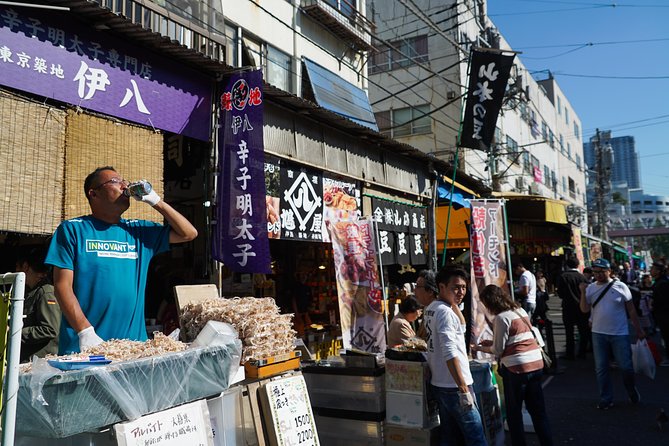
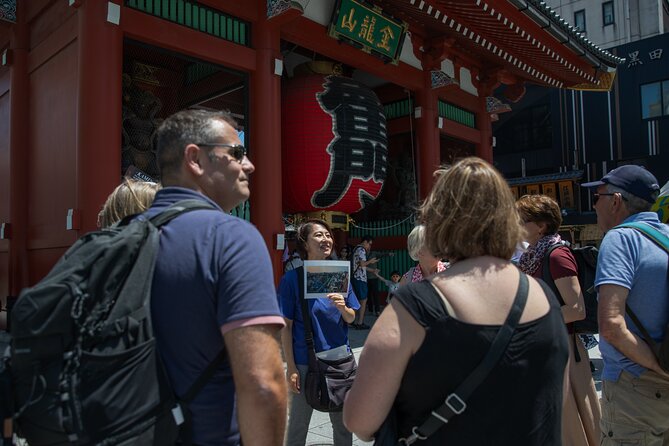
The maximum group size is seven. That is a good fit for Tsukiji, where a large party would block lanes and make it hard to hear. You can stay closer to the guide, ask about unfamiliar seafood, and move through shops without the heavy feel of a bus tour.
The group may be smaller. One couple found themselves with only one other pair, which made the outing feel almost private while still keeping the social ease of a shared tour. You should not book it expecting a private experience, but the cap keeps the group personal.
A small group cannot solve every market problem. You may still need to wait at a popular stall, and the route may adjust around queues or shop conditions. One planned takoyaki stop was skipped because the line was too long. That kind of change is normal for a working market, but it means the tour is not a fixed restaurant crawl with every food item guaranteed.
Is $87.37 a fair price?
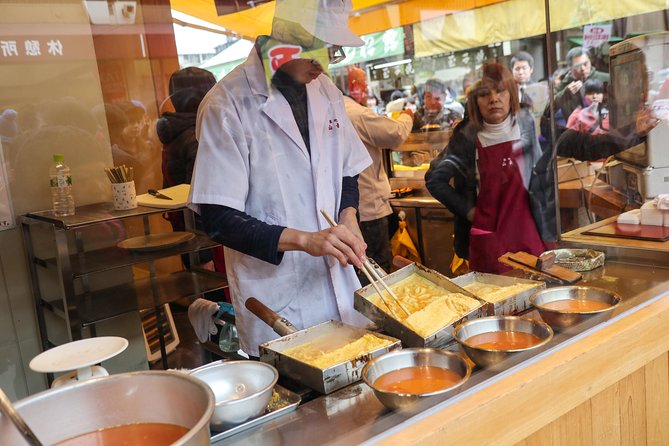
At $87.37 per person, this is not the cheapest way to walk around Tsukiji. You can enter the Outer Market freely and buy food on your own. If you are comfortable choosing dishes, navigating crowded lanes, and researching the market beforehand, a self-guided visit will cost less.
The price becomes easier to justify if you value structure. You receive about three hours with a guide, several food samples, a seafood lunch, cultural stops, and help finding worthwhile places in a district that can be confusing at first. You also avoid spending part of your morning guessing which stalls are suitable for a first visit.
I see the tour as good value for first-time food-focused visitors who want a single organized introduction. It is less appealing for someone who has already explored Tsukiji, wants the wholesale market at Toyosu, or prefers to eat only at carefully chosen restaurants.
The tour is often booked about 40 days ahead, so do not leave it until the last minute if your Tokyo schedule is fixed. Free cancellation is available up to 24 hours before the start time. Changes or cancellations inside that window are not accepted for a refund.
Who should book this food walk?
You should consider booking if you enjoy trying unfamiliar food but want a guide to explain what you are eating. It suits couples, small families, solo visitors, and friends who want a social morning without joining a large group.
It is also useful for people who want more than a meal. The shrine, temple, market background, and city view give you several ways to understand Tsukiji. Guides such as Yuki and Mark have been praised for making the walk both informative and lighthearted, while Kazu has been especially helpful with food recommendations and individual needs.
You should think twice if your main goal is to watch the famous tuna auction or see the old wholesale floor. That requires a different plan centered on Toyosu. You may also want to skip this tour if you are vegan, have severe food allergies, or dislike eating in narrow, crowded market streets.
My verdict on the Tsukiji food tour
I would choose this tour for a first visit to Tokyo’s Tsukiji Outer Market, especially if you want to taste several foods without making every decision yourself. The strongest part is the combination of fresh seafood, a proper lunch, and a guide who can put the market into cultural context.
Go in with accurate expectations. You are visiting the active outer market, not the former wholesale center. Bring water, wear a hat in summer, arrive early at Exit 1, and keep an open mind about changing food stops.
If that sounds like your kind of morning, the small group and included meal make the $87.37 reasonable. If you want the inner market experience, a quiet restaurant meal, or complete control over ingredients, spend your time and money elsewhere.
FAQ
Where does the Tsukiji food tour begin?
It begins at Tsukiji Station, Exit 1, at 3 Chome-9 Tsukiji, Chuo City, Tokyo.
Where does the tour end?
The tour ends at Shiodome Tower, 1 Chome-6-3 Higashishinbashi, Minato City, Tokyo.
How long does the experience last?
The tour lasts approximately three hours.
Is lunch included?
Yes. A fresh seafood lunch at the market is included, along with food samples at several shops and stalls.
Does the tour visit the old wholesale fish market?
No. The inner wholesale market moved to Toyosu in 2018. This experience focuses on Tsukiji Outer Market and nearby food areas.
What other places are included besides the market?
The route includes a Japanese Buddhist temple, a Shinto shrine, information about Japanese religion and market history, and a city view.
How many people can join the tour?
The tour has a maximum of seven travelers.
Are vegan or allergy-free options available?
Vegan options are not available. Allergy-free meals cannot be guaranteed, and substitutions may not be possible at every food stop.
More Food Experiences in Tokyo


More Walking Tours in Tokyo
More Tsukiji Market Tours in Tokyo
More tours in Tokyo we've reviewed


Tsukiji Market Tours, compared.
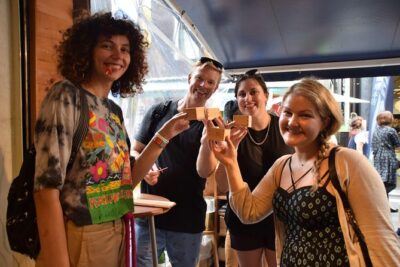 ★ 5.0Tokyo Tsukiji Fish Market Food and Culture Walking TourFrom $99
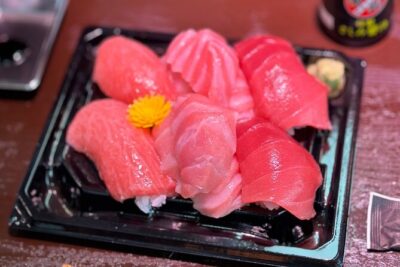 ★ 5.0Tokyo: Tsukiji Fish Market Food and Walking tourFrom $30
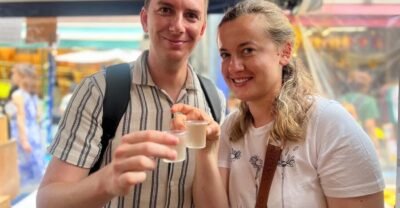 ★ 4.9Tokyo: Tsukiji Fish Market Guided Walking TourFrom $222 hours
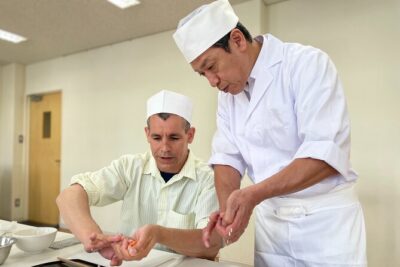 ★ 5.0Tokyo Sushi Making Class in Tsukiji with Professional ChefFrom $49
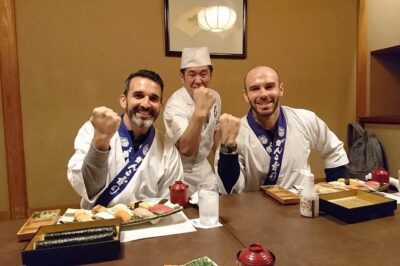 ★ 5.0Tsukiji Fish Market Guided Tour and Sushi Making with Pro ChefFrom $104
★ 4.7Tokyo: Tsukiji Fish Market Food and Culture Walking TourFrom $963 hours
★ 5.0Tsukiji Fish Market Guided Tour and Sushi Making with Pro ChefFrom $104
★ 4.7Tokyo: Tsukiji Fish Market Food and Culture Walking TourFrom $963 hours