Reviewed · TSUKIJI MARKET TOURS
Tokyo: Tsukiji Fish Market Sushi Making Class with Pro Chef
The most memorable part of this Tsukiji sushi class is watching a professional chef prepare fish before you touch a grain of rice. In a traditional building above the market, you learn how knives, fish, rice, wasabi, and hand pressure come together. I like the direct contact with a sushi master, and I like that you eat five pieces of sushi you make yourself, plus extra sushi prepared by the chef. The catch is the classroom is on the third floor with stairs only, and the class is basic rather than a full professional training course.
In This Article
- Key points to know before booking
- Why Tsukiji is the right place for a sushi lesson
- Entering the traditional classroom above the market
- The fish demonstration and Japanese knives
- Making four nigiri and one maki roll
- The chef’s sushi, wasabi, soup, and tea
- The people make the lesson work
- What the 90-minute to four-hour timing means
- Food restrictions and practical limits
- Is this sushi class worth $63?
- Should you book the Tsukiji sushi-making class?
- FAQ
- How long does the sushi-making experience last?
- What sushi will I make?
- Is the food included?
- Is the class taught in English?
- Can I join a market tour as well?
- Can vegetarians or vegans join?
- Is the classroom wheelchair accessible?
I also like the setting. You are in Tsukiji’s outer fish market, not in a generic cooking studio, so the market can become part of your morning. English-speaking hosts such as Yuko, AJ, Satoko, and Shoko help explain the food and customs, while chefs including Tanaka, Kate, Ike, and Koro lead the hands-on work. Dietary restrictions are a real limitation, especially for vegans, vegetarians, halal, kosher, and gluten-free diners.
Key points to know before booking
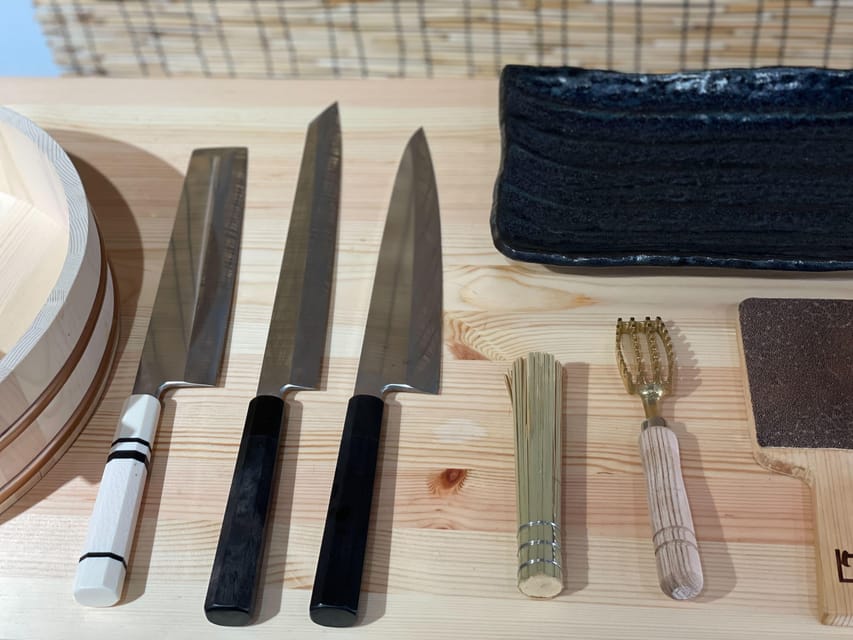
- Watch a real fish preparation demonstration: The chef explains how fish is broken down for sushi and shows the Japanese knives used for the job.
- Make five pieces yourself: The class includes four different nigiri sushi and one maki roll, with ingredients supplied from Tsukiji.
- Eat alongside the chef’s work: Your sushi is served with additional sushi made by the master, traditional dashi soup, and green tea.
- Expect a small, hands-on lesson: Small groups make it easier to ask questions and receive help with shaping rice, placing fish, and rolling maki.
- Pair it with Tsukiji market time: Some options include a market walk, while the class itself does not automatically include guidance through the market.
- Plan for stairs and food restrictions: The room is on the third floor, and the activity is not suitable for wheelchair users, vegans, or vegetarians.
Why Tsukiji is the right place for a sushi lesson
Tsukiji is no longer Tokyo’s main wholesale fish market. That role moved to Toyosu, but Tsukiji’s outer market remains a popular food district filled with seafood shops, prepared foods, kitchenware, and small places to eat.
That makes the location useful rather than merely decorative. You can look at the ingredients and food culture around you, then learn how one of Japan’s best-known dishes is put together. If you book an option with a market walk, a guide such as Tack, Sean, or Tadashi may explain fish, other foods, nearby shrines, and local customs before the class.
The market tour is not included with every version, so check the option carefully. The class information specifically says there is no general guidance through the market. If you want both activities, choose the option that includes the walk and allow extra time.
I would schedule this early in your Tokyo day. Tsukiji is an easy place to continue exploring after the lesson, and a morning sushi class gives you lunch without needing another major plan. Just remember that the activity can run past its planned end time, so do not book a tight museum entry or train connection afterward.
A few more Tokyo tours and experiences worth a look


Entering the traditional classroom above the market
The teaching room is in a Japanese-style building in the center of Tsukiji’s outer market. It is described as a local, tucked-away space rather than a polished modern cooking school. That setting helps the lesson feel connected to the neighborhood.
The room is on the third floor, and there is no elevator mentioned. You need to manage stairs comfortably. The activity is not suitable for wheelchair users or people with mobility impairments, and children under four are not accepted.
The group size can make a big difference. Several people describe small classes of around six participants, with enough room for questions and individual help. Other bookings may have groups of one to four people. A smaller group is especially useful here because sushi shaping depends on small corrections. You want the chef to notice if you are squeezing the rice too hard or using too much force with the fish.
An English-speaking host interprets throughout the lesson. The exact host varies by date, but names connected with the class include Yuko, AJ, Satoko, Shoko, Micky, Hiro, and Yugo. The host keeps the instructions clear and adds cultural background, while the sushi chef focuses on technique.
The fish demonstration and Japanese knives
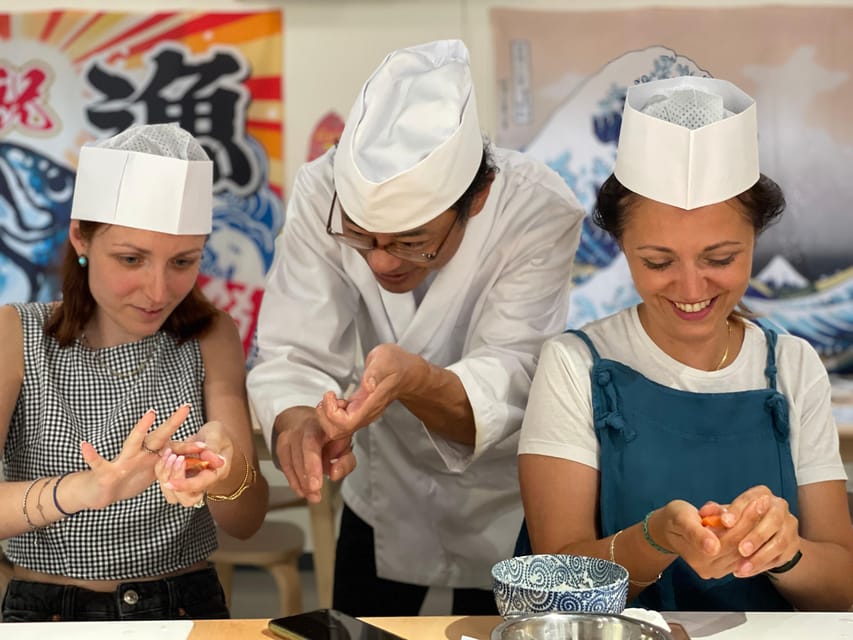
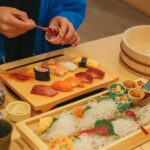
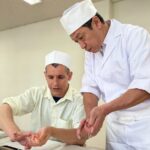
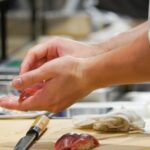
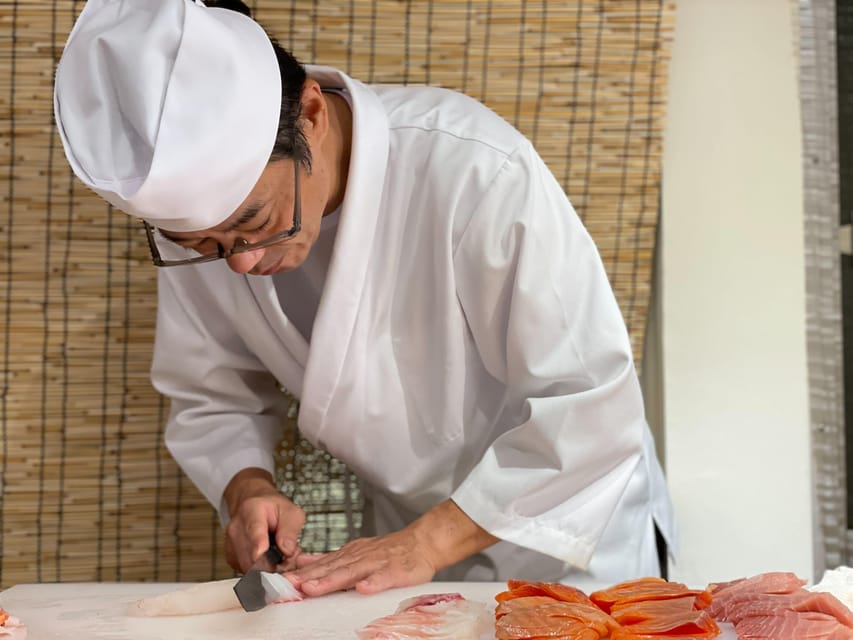
The class begins with a fish disassembly demonstration. You see the chef prepare fish for sushi and sashimi, step by step, rather than receiving only a finished fillet.
This is one of the most useful parts for anyone who eats sushi but has never thought about how it reaches the counter. The chef explains the role of Japanese knives and shows how careful cutting affects the final texture. Some sessions also include instruction on preparing fish for sashimi, which adds a useful bonus beyond the listed nigiri and maki work.
The point is not to turn you into a fishmonger in 90 minutes. It is to show the precision behind a simple-looking piece of sushi. A slice of fish may seem effortless when served, but its thickness, angle, and grain all matter.
Pay attention here even if you mainly want to roll sushi. The demonstration gives context to the pieces you later make. It also lets you see the chef’s speed and control before the slower teaching portion begins.
Making four nigiri and one maki roll
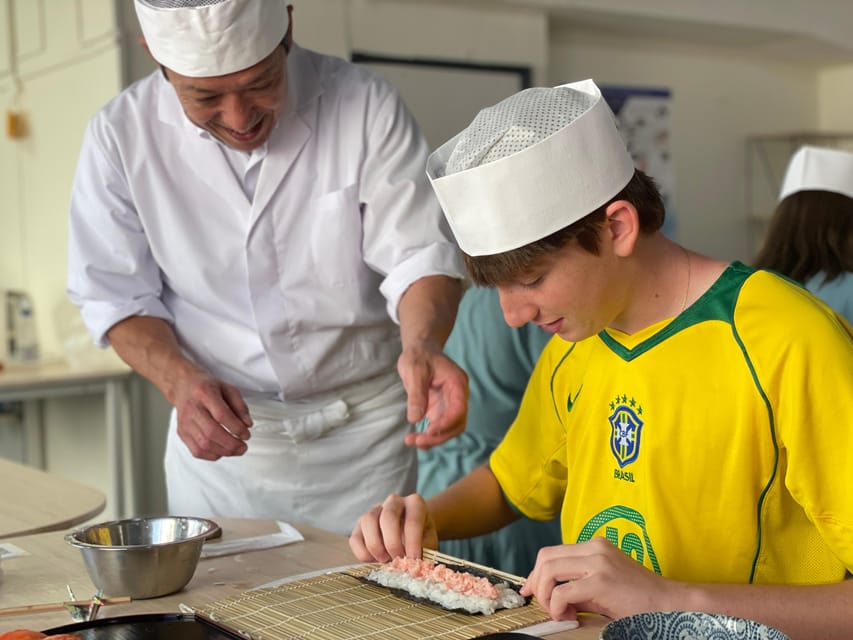
After the demonstration, the chef explains what sushi means and how different styles are made. You then work through nigiri and maki, with help at each stage.
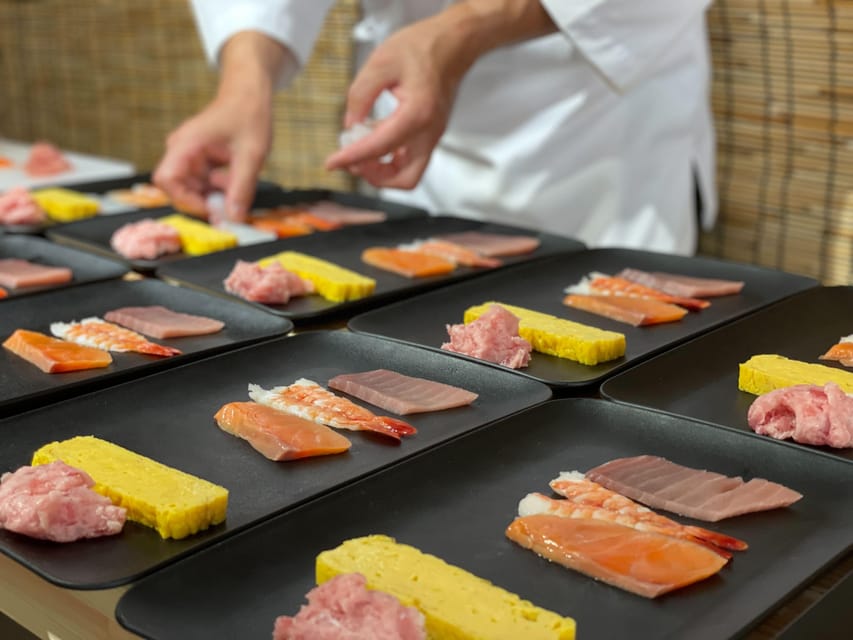
The listed food portion includes four different nigiri sushi and one maki sushi. Nigiri is the hand-shaped rice topped with fish or another ingredient. Maki is the rolled style, usually formed with seaweed around rice and fillings.
The lesson uses fresh ingredients sourced from Tsukiji, along with proper utensils and tableware from local shops. That matters because the tools are part of the method. Sushi is not only about ingredients. Rice temperature, hand moisture, knife use, rolling pressure, and presentation all affect the result.
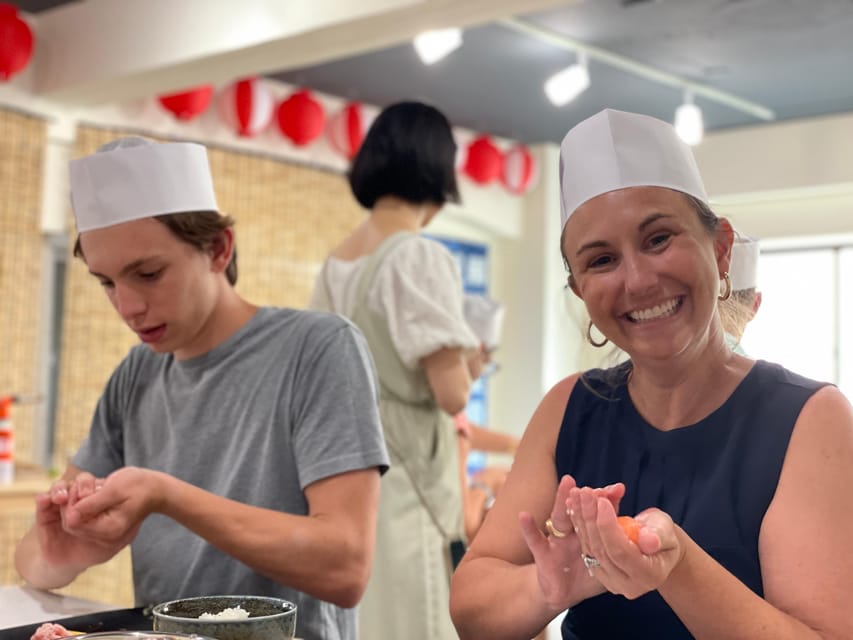
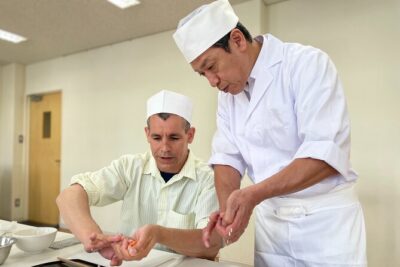
The chef shows you the correct steps, then lets you try. You should expect an approachable introduction, not a demanding test. People with no cooking experience can follow along, and the host helps translate questions and instructions.
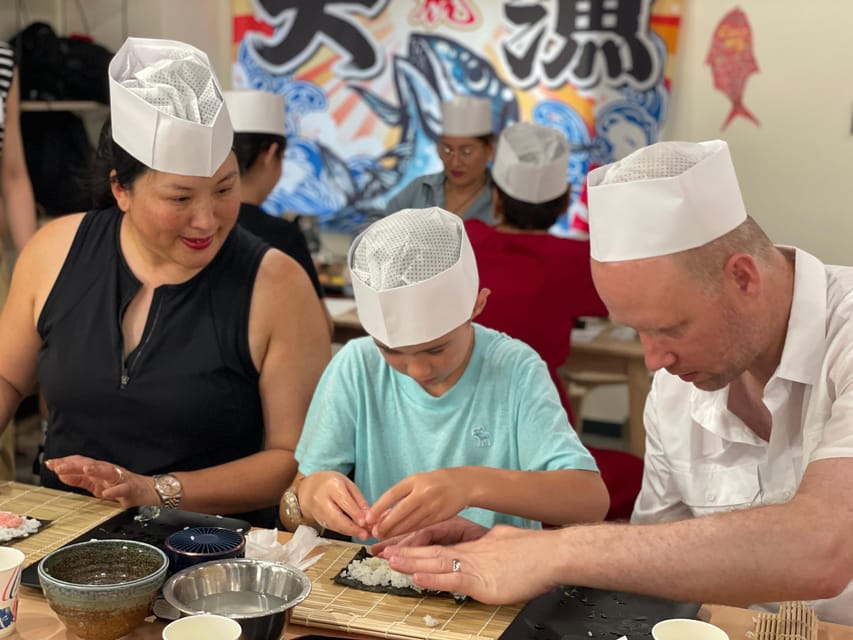
This is also a good class for families with older children. Children around seven or eight and up may enjoy the hands-on work if they can listen and pay attention. One family especially appreciated the friendly help given to a curious 10-year-old. The official age restriction only excludes children under four, but the practical issue is attention span and comfort with the activity.
The result will probably not look exactly like the chef’s sushi. That is part of the fun. You get to compare your pieces with the master’s, see where your hand pressure differed, and eat the evidence.
The chef’s sushi, wasabi, soup, and tea
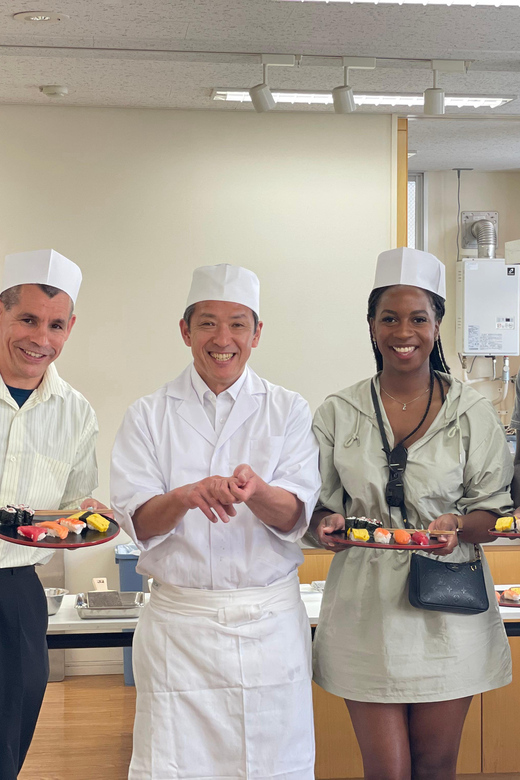
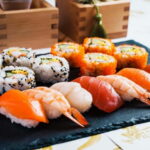
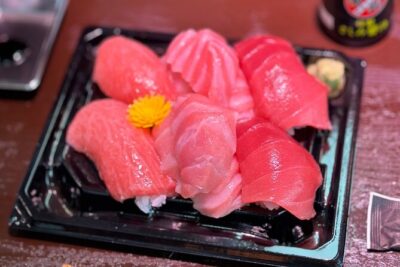
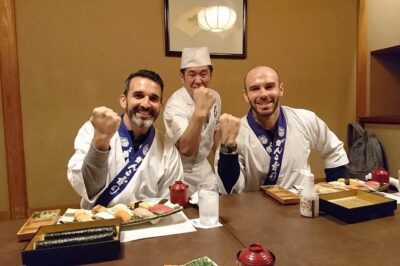
Once you have made your pieces, it is time to eat. You receive the sushi you prepared, along with extra sushi made by the professional chef.
This comparison is valuable. You can see how a master shapes rice quickly without crushing it, places the fish cleanly, and uses wasabi with control. The chef may also prepare wasabi fresh, allowing you to notice how it differs from the familiar green paste found in many restaurants.
Traditional dashi soup and fine green tea accompany the meal. These additions make the class feel like a complete Japanese food experience rather than a quick demonstration followed by a snack.
The food is a major reason the activity earns its price. At $63 per person, you are paying for instruction, an English-speaking host, ingredients, utensils, the meal you make, the chef’s additional sushi, soup, tea, and the setting. It is not the cheapest way to eat sushi in Tokyo, but it is fair value if you want a lesson and a meal in one.
If you only want to eat excellent sushi, a restaurant may be simpler and possibly less expensive. If you want to understand how sushi is made and take part in the process, the class offers more for the money.
A few more Tokyo tours and experiences worth a look
The people make the lesson work
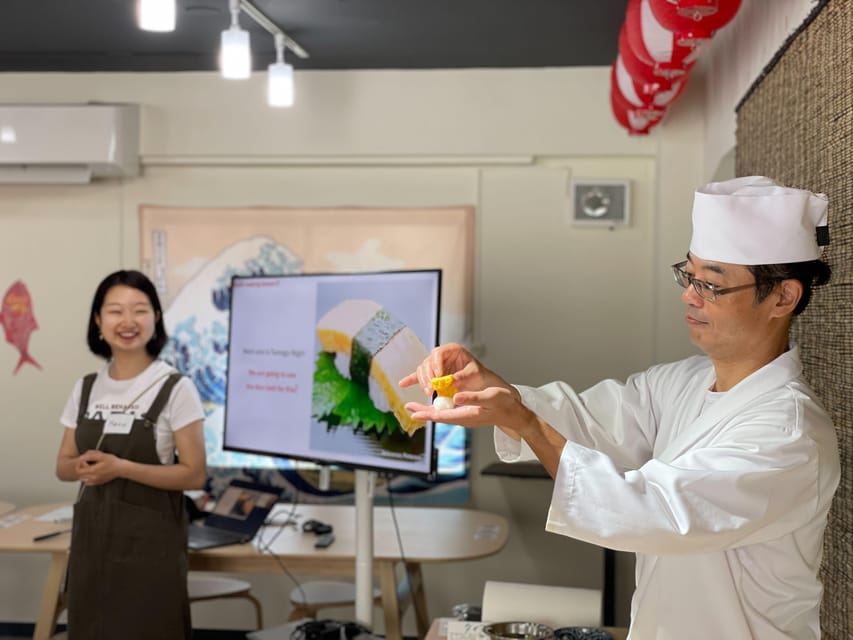
The chefs and hosts vary, but the strongest pattern is clear: the class depends on patient teaching and good interpretation.
Chef Tanaka is described as an excellent teacher, while Chef Kate is repeatedly associated with clear explanations, warmth, and strong technique. Ike is noted for making the steps easy to understand, and Koro is praised for creating a friendly session. Other chef names include Kana and Ishii.
On the hosting side, Yuko appears in several sessions and helps keep explanations calm and clear. AJ is associated with positive energy and personal attention. Satoko is described as patient, while guides such as Tack and Tadashi add useful context during market walks.
You should not book expecting one particular chef unless your booking specifically confirms that person. Staff assignments can change. The important point is that the activity includes both a professional chef and an English-speaking host, so you are not left trying to follow a Japanese-only demonstration.
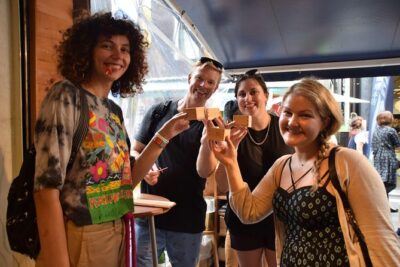
The class suits solo visitors as well as couples, families, and small groups. Solo participants can ask direct questions and meet other people, while a family can share a meal built by everyone’s own hands.
What the 90-minute to four-hour timing means
The duration is listed as 90 minutes to four hours because the available options differ. The sushi-making portion is commonly described as around 90 minutes to an hour and a half. Options with a Tsukiji walking tour take longer.
Check the start time and duration before booking. You do not want to assume that every version includes a market walk, shrine visits, or food explanations. Some descriptions of the experience include a guide through the market, while the general inclusions say market guidance is not included.
The class may also finish later than scheduled. If you have a dinner reservation, timed ticket, or day trip departure, leave a generous buffer. This is particularly important if you add the walking portion.
The meeting point can vary by option, so read the booking details rather than relying on a general Tsukiji address. Arrive with enough time to locate the host, since the classroom is in a traditional building and not necessarily obvious from the street.
Food restrictions and practical limits
You must report ingredient allergies when booking. The staff may try to accommodate allergy-related requests, but the information says this may not always be possible.
The activity does not accommodate vegetarian, vegan, halal, kosher, or gluten-free requests as a standard matter. One participant received help with gluten-free needs, but that should not be treated as a guarantee. Contact the provider before booking if an allergy is involved, and do not assume substitutions will be available.
You should also expect to use raw seafood. The class is designed around sushi and includes fish preparation, nigiri, and maki. It is not a suitable choice for someone who avoids raw fish unless the provider confirms an alternative.
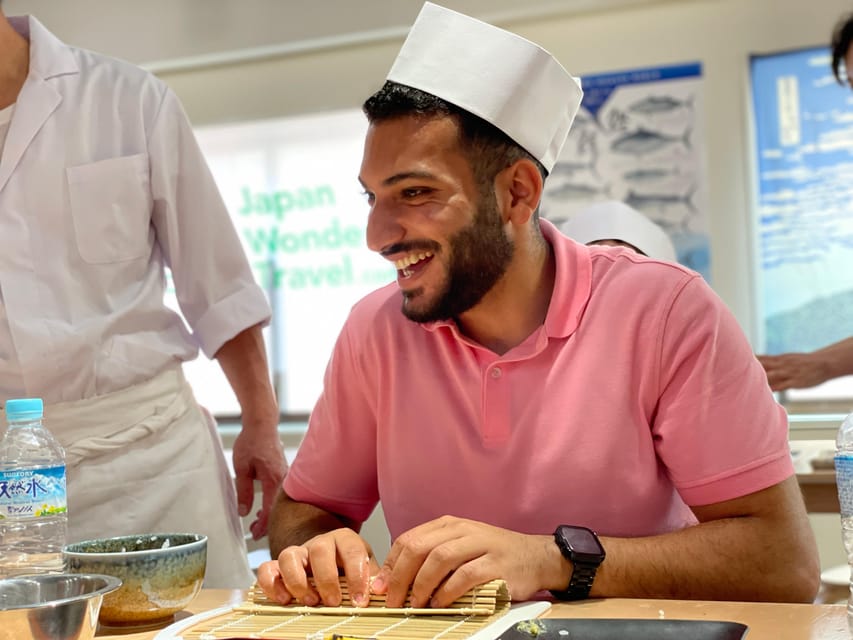
The included hat is a small but practical touch for a food workshop. Extra food and drinks are not included, so budget separately if you plan to continue eating through Tsukiji afterward.
Cancellation is flexible: you can cancel up to 24 hours before the activity for a full refund, and a reserve-now, pay-later option is available. These terms help if your Tokyo schedule is still shifting.
Is this sushi class worth $63?
For the right person, yes. The price combines a professional demonstration, hands-on instruction, fresh market ingredients, five pieces of sushi you make yourself, extra sushi from the chef, soup, tea, and an English-speaking host.
The value is strongest if you are curious about Japanese food and want more than a restaurant meal. You will leave with a better sense of why sushi looks simple but takes skill, plus enough basic technique to try making nigiri and maki at home.
The value is weaker if you are looking for an advanced chef course. This is an introduction. You will shape sushi, learn the basic process, and handle proper tools, but the session is not long enough to cover every fish, rice style, knife cut, or professional service technique.
It is also not the best choice if your priority is a guided market tour. Select a longer option if the market walk matters to you, and confirm what is included before paying.
Should you book the Tsukiji sushi-making class?
Book it if you eat sushi, enjoy hands-on activities, or want a food-focused morning in Tokyo. It works particularly well for couples, small groups, families with attentive older children, and solo visitors who want a social activity with a clear purpose.
I would choose the market-walk option if this is your first visit to Tsukiji and you want help understanding the area. If you already know the market, the 90-minute class may be enough, leaving you free to explore independently.
Skip it if you need wheelchair access, avoid seafood, follow a strict vegetarian or vegan diet, or require guaranteed halal, kosher, or gluten-free food. Also skip it if you need to reach another appointment immediately afterward.
For everyone else, this is a practical way to connect Tokyo’s famous sushi culture with the people, tools, and basic movements behind it. You make the food, compare it with the chef’s work, then walk back into Tsukiji with a sharper eye and a full stomach.
FAQ
How long does the sushi-making experience last?
The available options last from 90 minutes to four hours. The shorter version focuses on the sushi class, while longer options may include a Tsukiji market walk. Check the exact option and start time when booking.
What sushi will I make?
You will make four different nigiri sushi and one maki sushi. The chef guides you through the preparation and shaping process step by step.
Is the food included?
Yes. The sushi you make is included, along with additional sushi prepared by the master, tea, and soup. Extra food and drinks are not included.
Is the class taught in English?
Yes. An English-speaking host interprets and guides the session, while the professional sushi chef demonstrates and teaches the techniques.
Can I join a market tour as well?
Some options include a guided walk through Tsukiji, but market guidance is not included with every version. Check the option details before booking.
Can vegetarians or vegans join?
No. The activity is not suitable for vegans or vegetarians. Halal, kosher, and gluten-free requests are also not accommodated as standard.
Is the classroom wheelchair accessible?
No. The classroom is on the third floor of a traditional building with stairs only. The activity is not suitable for wheelchair users or people with mobility impairments.
More Shopping Tours in Tokyo
More Sushi Making Classes in Tokyo
More Tsukiji Market Tours in Tokyo
More tours in Tokyo we've reviewed












Tsukiji Market Tours, compared.
 ★ 5.0Tokyo Tsukiji Fish Market Food and Culture Walking TourFrom $99
 ★ 5.0Tokyo: Tsukiji Fish Market Food and Walking tourFrom $30
 ★ 4.9Tokyo: Tsukiji Fish Market Guided Walking TourFrom $222 hours
 ★ 5.0Tokyo Sushi Making Class in Tsukiji with Professional ChefFrom $49
 ★ 5.0Tsukiji Fish Market Guided Tour and Sushi Making with Pro ChefFrom $104
★ 4.7Tokyo: Tsukiji Fish Market Food and Culture Walking TourFrom $963 hours
★ 5.0Tsukiji Fish Market Guided Tour and Sushi Making with Pro ChefFrom $104
★ 4.7Tokyo: Tsukiji Fish Market Food and Culture Walking TourFrom $963 hours