Reviewed · GO-KARTS
Go Karting Tokyo Uptown Experience|7 Top Destinations in 120 Mins
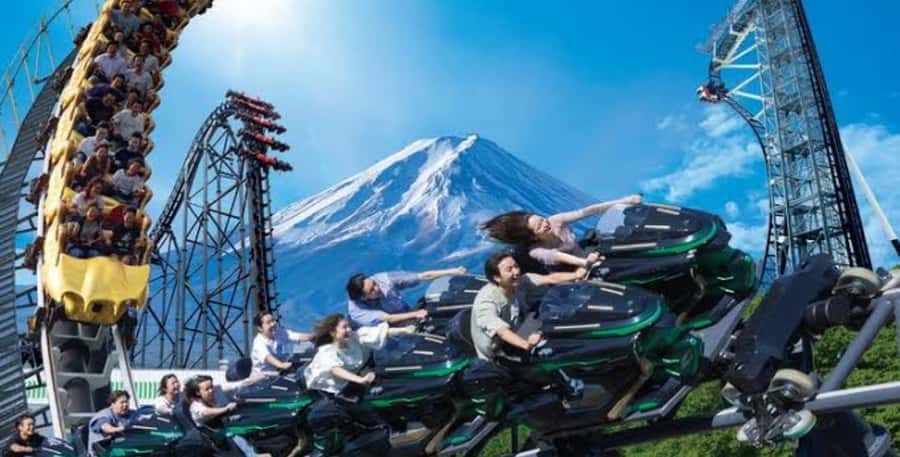
Tokyo sightseeing usually means packed trains and busy sidewalks. This tour gives you a different view: you drive through the city in a go-kart, dressed in a costume, while a guide leads you past seven major sights in about 1 hour 40 minutes. The route includes Tokyo Skytree, the Sumo Stadium area, Tokyo Station, the Imperial Palace, Tokyo Tower, Ginza, and Kabukiza Theater.
In This Article
- Key points before you book
- Tokyo sightseeing from behind a go-kart wheel
- Starting in Higashiyotsugi, Katsushika City
- Tokyo Skytree and the Sumida side of town
- Ryogoku and the Sumo Stadium area
- Tokyo Station and Marunouchi architecture
- The Imperial Palace and Tokyo’s royal center
- Tokyo Tower and the city’s postwar symbol
- Ginza, from polished avenues to nightlife
- Kabukiza Theater and classical stage tradition
- Costumes, photos, and the social side of the ride
- What the $117.27 price really covers
- Driving documents, weather, and other practical points
- Who will enjoy this Tokyo drive most
- Should you book the Kartzilla Tokyo route?
- FAQ
- How long does the go-kart tour last?
- Which Tokyo sights are included on the route?
- What is included in the price?
- Is food included?
- Where does the tour start and finish?
- What driving documents do I need?
- What happens if the weather is poor?
I like two things right away. The small group, capped at 10 people, should feel more personal than a large bus tour, and the guide takes photos and videos as you go. I also like the practical package: kart rental, fuel, insurance, costume, water, and a guide are included. The main catch is serious, not small: you need the correct original driving documents, and poor weather can cancel the outing.
Key points before you book
- Seven sights in one short route: See Tokyo Skytree, Ryogoku, Tokyo Station, the Imperial Palace, Tokyo Tower, Ginza, and Kabukiza Theater without changing trains.
- Small group of up to 10: The limited size makes it easier to follow the guide and ask questions.
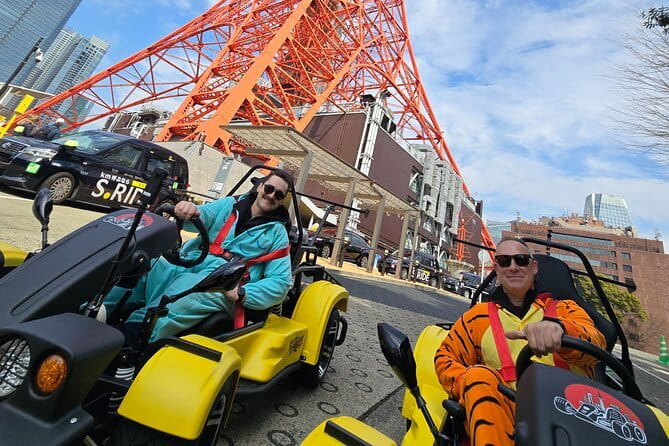
- Costume and camera moments included: Costumes come with the booking, and the guide captures photos and videos along the way.
- Driving papers are essential: Most drivers need their local license and an International Driving Permit issued under the 1949 Geneva Convention.
- About $117.27 per person: The price covers the kart, fuel, insurance, guide, costume, water, and photo and video service, but not food or transport to the meeting point.
- Weather can change the plan: This is an outdoor driving activity, so rain or other poor conditions may lead to a new date or a full refund.
Tokyo sightseeing from behind a go-kart wheel
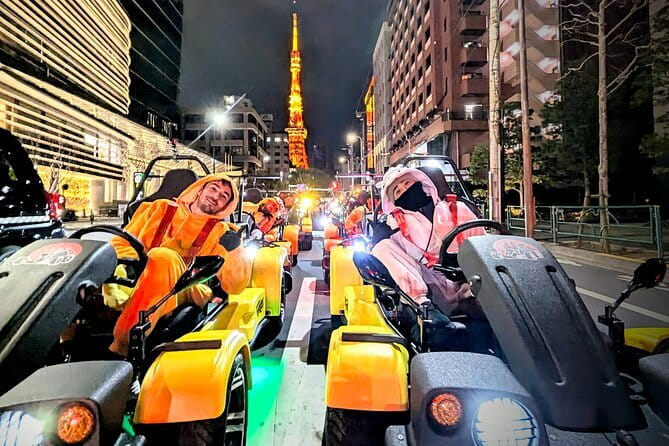
The appeal is simple. Instead of watching Tokyo pass through a train window or peering from a bus, you move through the city at street level. You get a sense of how the districts connect, from the older sumo quarter around Ryogoku to the polished avenues of Ginza.
This is not a stop-and-stroll sightseeing tour. The listed sights are route highlights, and the activity is built around driving past them rather than spending long periods inside each one. If you want museum visits, palace gardens, or a full Kabuki performance, you need separate plans.
The short format is useful on a first Tokyo visit. You can get your bearings fast, see several districts, and note places worth returning to on foot or by train. The guide leads the way, which matters in a city where lanes, major roads, and rail lines can make even a simple route feel complicated.
The tour is limited to 10 participants. That is small enough to avoid the feel of a large coach group, though the exact number in your departure can vary. The guide also takes photos and videos, so you are not forced to choose between watching the road and trying to document every moment yourself.
If you're still narrowing it down, here are other tours in Tokyo we've reviewed.
Starting in Higashiyotsugi, Katsushika City
The meeting point is in Higashiyotsugi, Katsushika City, at 1-chōme202 小島貸事務所, Tokyo 124-0014. The activity ends back at this same location.
That start point is not beside Tokyo Tower, Ginza, or the Imperial Palace. You should plan your route there carefully and allow enough time. The meeting point is near public transportation, but pickup and drop-off are not included.
At the start, you receive the go-kart, costume, and tour briefing. Fuel and insurance are included, as is water. You should arrive with your original driving documents and passport ready. The paperwork is not a minor formality. If you cannot provide the required original local license and International Driving Permit, the tour can be canceled with no refund.
For drivers from Switzerland, Germany, France, Belgium, Monaco, and Taiwan, a Japanese translation of the driving license may allow you to drive instead of an IDP. The operator asks people who need help with that translation to make contact a month ahead. US Forces in Japan personnel need a SOFA Driving License.
This requirement is one of the most important booking checks. Do it before paying, not the night before departure.
Tokyo Skytree and the Sumida side of town
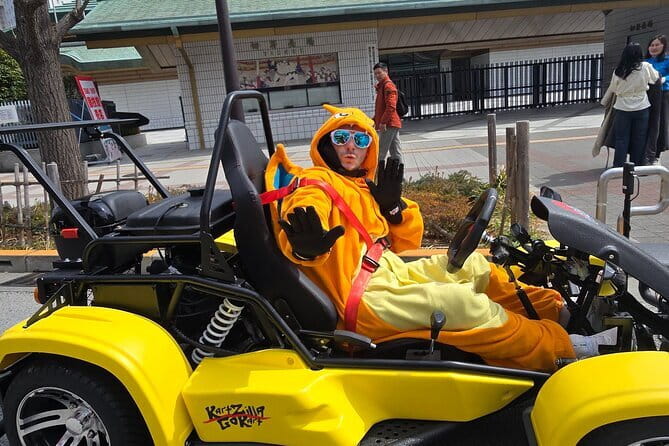
Tokyo Skytree is the first major landmark described on the route. At 634 meters, it is the world’s tallest broadcasting and communication tower and the third tallest structure in the world. Its size makes it easy to pick out above the surrounding city.
Seeing Skytree from street level gives you a useful sense of scale. From a go-kart, you are not simply looking at a tower from an observation deck. You are approaching it through the urban streets of Sumida City, where the tower helps you understand the direction and shape of eastern Tokyo.
The drawback is time. The tour does not promise a ticket to Skytree or time inside the tower. If you want the observation decks, shopping, or the wider Tokyo Solamachi complex, plan another visit. Here, Skytree is a visual anchor and a photo stop along the driving route.
Ryogoku and the Sumo Stadium area
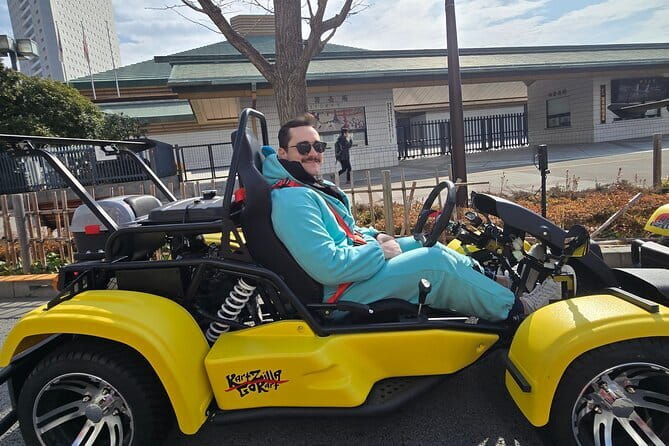
The route continues through Ryogoku, the district associated with Tokyo’s sumo culture. The Sumo Stadium is the focus here, giving the drive a strong connection to one of Japan’s most recognizable traditional sports.
Ryogoku helps balance the route. Tokyo can sometimes feel like a city of glass towers and giant shopping streets, but this district points toward older customs and the public spectacle of sumo. Even a short pass through the area adds cultural context to the ride.
You should not expect a sumo match or a stadium tour to be included. The experience takes you through the area, with the stadium as a central landmark. If you are especially interested in sumo, use this route to mark Ryogoku for a longer visit later.
Tokyo Station and Marunouchi architecture
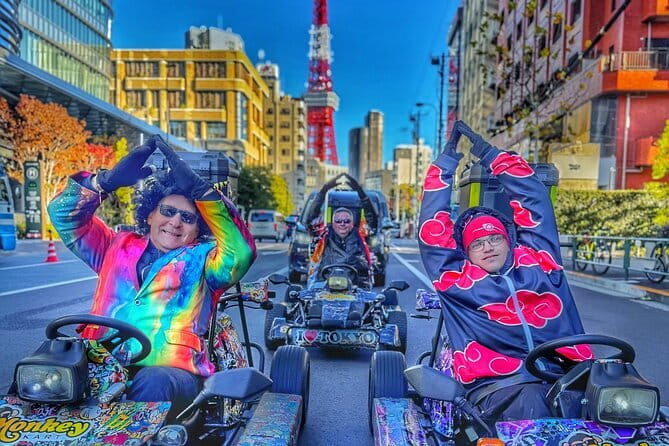
The go-kart route then heads through Tokyo Station and the Marunouchi district. Tokyo Station dates to the early 20th century and is presented as an example of architectural design in the center of the capital.
This part of the route shows another side of Tokyo. Around Ryogoku, the emphasis is tradition. Around Marunouchi, it is grand urban architecture, business streets, and the movement of people around one of Japan’s key transport hubs.
Tokyo Station can be difficult to appreciate when you are rushing through its underground passages to catch a train. Passing through the district by road gives you a cleaner look at the area above ground. Still, the tour is not a guided interior visit, and the busy setting may limit how long you can look at any single building.

The Imperial Palace and Tokyo’s royal center
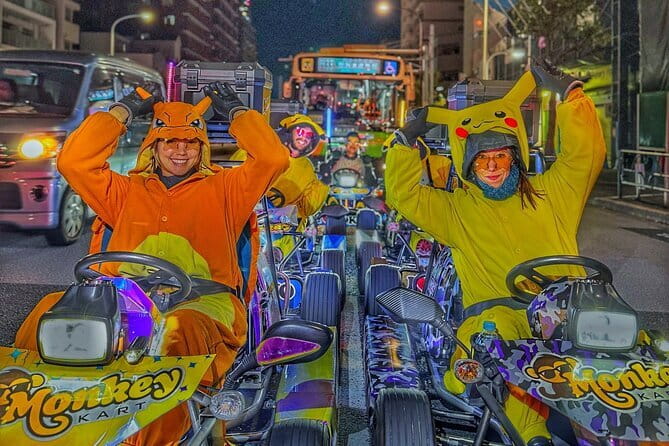
The Imperial Palace is next. The grounds are linked to Edo Castle, which was constructed in 1457 by Ota Dokan. Today, the palace is the residence of the Japanese Emperor and Empress.
This is a valuable historical pause in a route otherwise filled with modern Tokyo. The palace area connects the city’s present-day government and business center with the earlier Edo period, when Tokyo was known as Edo and the castle shaped the city’s growth.
Again, keep your expectations in line with the format. You are driving past the palace area, not booking a palace entry or a guided tour of the grounds. The value here is seeing how a major historic site sits within the capital’s modern streets.
For me, this is one of the strongest reasons to use the tour early in a Tokyo stay. You get a quick mental map of the central districts, then you can return by train or on foot when you have time for a slower look.
Tokyo Tower and the city’s postwar symbol
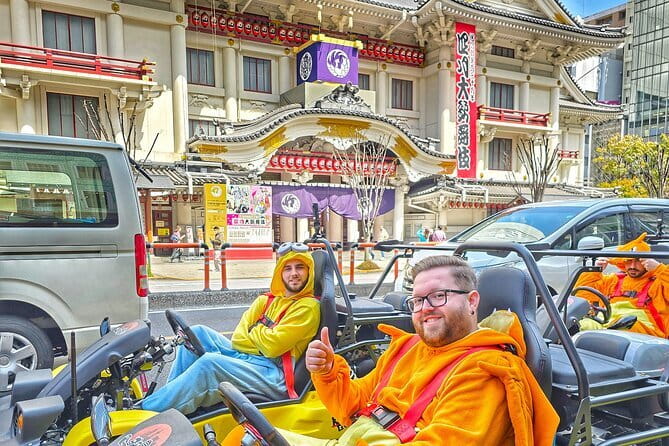
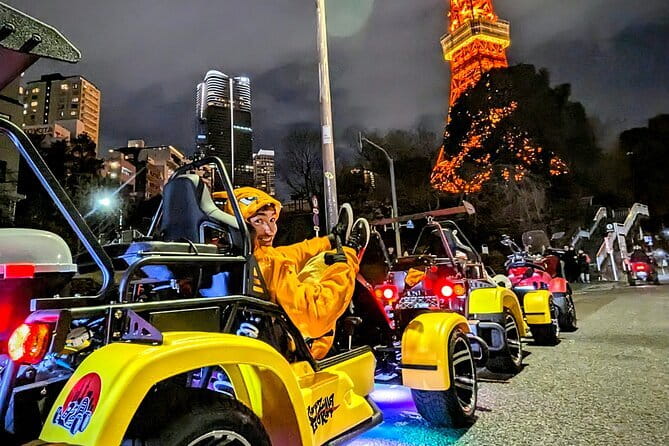
Tokyo Tower rises 333 meters above the city, nearly three meters higher than the Eiffel Tower. It is one of Tokyo’s best-known landmarks and a symbol of the city’s rebuilding and economic recovery after the war.
The tower is especially effective as a drive-by sight because its orange and white frame is easy to spot among the buildings. The route lets you compare it with Tokyo Skytree, which represents a later chapter of the city’s communications and engineering story.
The two towers give the tour a useful visual contrast. Skytree reaches higher and dominates the eastern skyline, while Tokyo Tower has a more established place in Tokyo’s popular image. You will not visit both observation decks as part of this activity, but seeing both on one route helps you understand how Tokyo’s skyline has changed.
Ginza, from polished avenues to nightlife
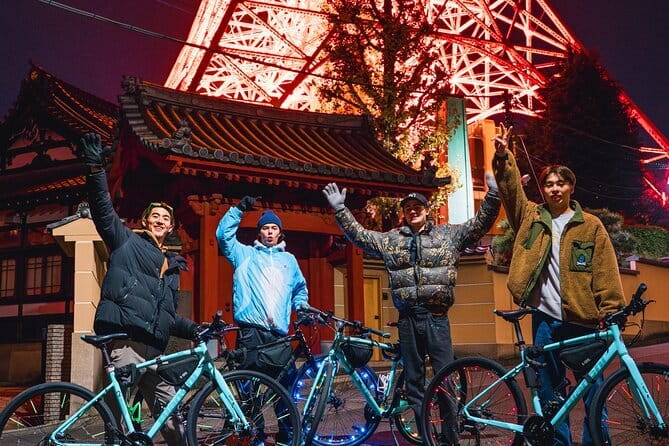
Ginza is Tokyo’s upscale shopping, dining, and entertainment district. Its streets are lined with boutiques, art galleries, restaurants, nightclubs, and cafes.
From a go-kart, you see Ginza as a public city space rather than as a shopping list. The area’s polished streets and grand storefronts create a sharp contrast with the sumo quarter and the palace district. It is a good place to notice Tokyo’s mix of luxury, design, food, and evening entertainment.
The tour does not include food, shopping, or time at a cafe. That keeps the route moving, but it means you will want to return if Ginza interests you. I would treat this section as an introduction, then come back on foot when you can stop, browse, and eat.
Kabukiza Theater and classical stage tradition
Kabukiza Theater provides the final cultural note on the route. It is closely linked with Kabuki, Japan’s classical dance-drama tradition, known for stylized acting, elaborate makeup, and detailed costumes.
The theater adds more than another famous building. It points to a performance tradition that has its own visual language and long place in Japanese culture. Even if you do not attend a performance, seeing Kabukiza helps connect Tokyo’s modern commercial center with older stage arts.
The activity does not include a Kabuki ticket or an interior theater tour. If you want to attend a show, you will need a separate booking. For this go-kart trip, Kabukiza is a landmark and a reminder that Ginza is not only about luxury stores and restaurants.
Costumes, photos, and the social side of the ride
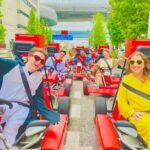
Costumes are included, which gives the outing its playful character. They also make the photos more distinctive than ordinary street snapshots. You can expect the guide to capture photos and videos during the route, so you have a record of the experience without needing to handle your phone while driving.
An Insta360 camera data card is not included, though one is available for purchase. This matters if you specifically want footage from that camera rather than the standard photo and video service. Ask about the card before departure if that recording option is important to you.
One named guide associated with the experience is Satar. A direct note about Satar describes him as especially helpful for a last-minute kart activity and says he offered useful local information. The tour team also presents safety and a memorable ride as key goals.
Because the activity is limited to 10 people, the guide should be easier to hear and follow than on a large group outing. Still, you are sharing the road with normal Tokyo traffic, so the experience is more about enjoying the city while driving than racing or performing stunts.
What the $117.27 price really covers
At $117.27 per person, this is not a cheap way to move around Tokyo. You can see many of these districts by train for far less money, and public transportation will give you more time at each individual sight.
The price makes more sense when you count the bundle. You receive:
- Go-kart rental
- Fuel
- Insurance
- Tour guide
- Costume
- Photos and video
- Water
You are paying for a guided outdoor activity, not simple transportation. The guide, costume, small group, and camera service are the parts that separate this from building your own sightseeing route.
The value is strongest if you want one memorable activity during a Tokyo visit and care about seeing several landmarks in a short time. It is weaker if your main goal is detailed sightseeing, shopping, palace access, or low-cost transport.
Food is not included. Neither is transport to or from the meeting point. Add those costs when planning your day, especially because the starting location is in Katsushika City rather than beside the central landmarks.
Driving documents, weather, and other practical points
Confirmation arrives at booking, and the mobile ticket makes the entry process convenient. Most travelers can participate, but driving eligibility is the key condition.
You need an original local driving license and an International Driving Permit issued under the 1949 Geneva Convention, unless you qualify under the listed national exceptions. Bring your passport as well. A missing or incorrect document can cancel the tour without a refund.
The activity depends on good weather. If conditions are poor, the operator offers another date or a full refund. You can cancel for a full refund if you do so at least 24 hours before the start time. Changes or cancellations inside that 24-hour window are not accepted, and late cancellations are not refunded.
The advertised duration is approximately 1 hour 40 minutes. The route title also refers to 120 minutes, so I would keep roughly two hours free rather than scheduling a tight connection immediately afterward. That gives you breathing room for the meeting point and the return.
Who will enjoy this Tokyo drive most
I would recommend this experience to you if you want a fun first look at Tokyo, enjoy unusual city tours, and already have the required driving paperwork. It suits couples, friends, and small groups who want shared photos and a story to take home.
It is also a good fit for repeat visitors who have already seen the major sights in the usual way. A go-kart route gives familiar landmarks a new setting and lets you connect districts that may otherwise feel scattered across the train map.
I would be more cautious if you dislike driving in cities, need lots of time at each sight, or are booking mainly for cultural depth. The route introduces the Sumo Stadium area, the Imperial Palace, and Kabukiza Theater, but it does not replace a proper visit to any of them.
Families and groups should also check the driving requirements for every participant. The tour is described as suitable for most people, but the supplied information does not provide a specific child age policy or vehicle accessibility details. Do not assume those details without confirming them first.
Should you book the Kartzilla Tokyo route?
Book it if you want street-level sightseeing with a playful twist, have the right documents, and value a small group with photos included. The route packs seven famous places into a short outing, and Satar’s positive mention suggests the guide can add useful local context as well as lead the drive.
Skip it if you want the lowest-cost way to get around, plan to spend serious time inside the attractions, or cannot guarantee good weather and valid driving papers. For the right person, the $117.27 price buys more than a kart rental: it buys a lively introduction to Tokyo’s districts and a set of photos that ordinary train travel cannot provide.
FAQ
How long does the go-kart tour last?
The activity lasts approximately 1 hour 40 minutes. The route title also refers to 120 minutes, so allow about two hours in your schedule.
Which Tokyo sights are included on the route?
The route includes Tokyo Skytree, the Sumo Stadium area in Ryogoku, Tokyo Station and Marunouchi, the Imperial Palace, Tokyo Tower, Ginza, and Kabukiza Theater.
What is included in the price?
The price includes the go-kart rental, guide, costume, fuel, insurance, photos and video, and water.
Is food included?
No. Food is not included in the activity price.
Where does the tour start and finish?
The meeting point is at Japan, 124-0014 Tokyo, Katsushika City, Higashiyotsugi, 1-chōme202 小島貸事務所. The tour returns to the same meeting point.
What driving documents do I need?
Most drivers need their original local driving license, an International Driving Permit issued under the 1949 Geneva Convention, and a passport. Nationals of Switzerland, Germany, France, Belgium, Monaco, and Taiwan may drive with a Japanese translation of their license. US Forces in Japan personnel need a SOFA Driving License.
What happens if the weather is poor?
The activity requires good weather. If it is canceled because of poor conditions, you can choose another date or receive a full refund.
More tours in Tokyo we've reviewed












Go-Karts, compared.
 ★ 5.0Flagship 2-Hours Official Street Go-Kart Tour – Tokyo Bay ShopFrom $642 hours to 2 hours 30 minutes (approx.)
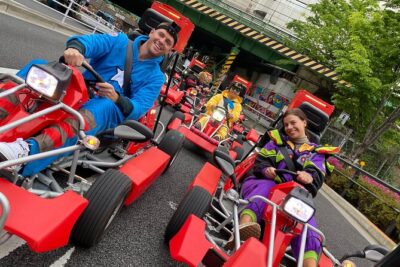 ★ 5.0Official Street Go-Kart in ShibuyaFrom $76
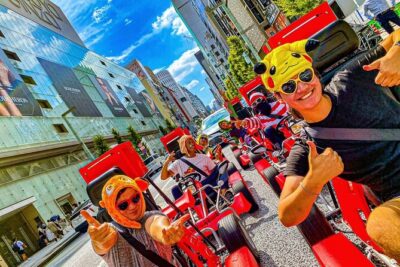 ★ 5.0Official Street Go-Kart Tour – AkihabaraFrom $61
 ★ 5.0Tokyo Go Kart: Asakusa, Skytree, and Akihabara **IDP MUST**From $99
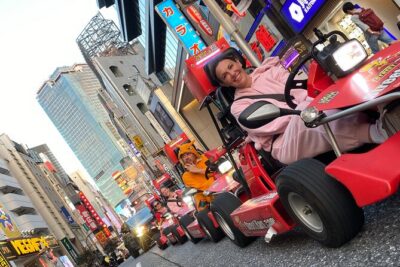 ★ 5.0Shibuya Official Street Go-Kart in Shibuya AnnexFrom $69
 ★ 4.6Tokyo: Asakusa and Skytree Go-Kart Tour and Photo ShootFrom $67