Reviewed · MT FUJI DAY TRIPS
In 2026, 2-Day Mt. Fuji Climbing Tour with Mountain guide
This two-day Mt. Fuji climb turns one of Japan’s hardest daydreams into a planned mountain outing. You start early from Shinjuku, ride to the Subaru Line 5th Station, climb with a local guide, sleep at a mountain lodge, and aim for the summit before coming back down.
In This Article
- Key points to know before booking
- Why this Mt. Fuji climb is worth considering
- Leaving Shinjuku at 6:30 a.m.
- Starting high at the Subaru Line 5th Station
- The two-day climb and the mountain lodge
- The summit attempt and views over the Kanto plains
- Coming down, eating, and using the bath
- Guides, language, and group support
- Who will get the most from this $470 experience
- Practical advice for making the climb better
- Should you book this Mt. Fuji tour?
- FAQ
- Where does the Mt. Fuji climbing tour begin?
- Where does the tour end?
- How long does the Mt. Fuji tour last?
- Is transportation included?
- Are meals included?
- Is a mountain guide included?
- Do I need mountaineering experience?
- Is the summit guaranteed?
- Is equipment rental included?
I like two things here. First, the dinner, lodge stay, transport, and post-climb bath take care of the awkward pieces that can distract from the hike. Second, guides such as Shin have earned praise for looking after international climbers and keeping the group moving with regular breaks. The main caution is communication: the mountain guide is Japanese, and English instructions may be limited.
Key points to know before booking
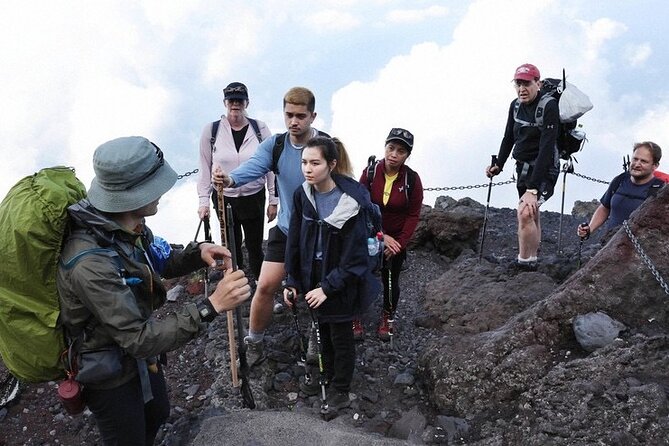
- The climb begins at the Subaru Line 5th Station, not at the foot of Mt. Fuji, giving you a practical starting point for the two-day ascent.
- A mountain lodge dinner and overnight stay are included, along with lunch after reaching the 5th Station and a bath after the descent.
- The summit is not guaranteed, since weather and mountain conditions can prevent the final ascent.
- This is a physical challenge, but no mountaineering skills are required. You should have moderate fitness.
- The group may include up to 49 people, so this is organized group hiking rather than a private mountain experience.
- English support can be uneven, although WhatsApp communication and individual help from staff such as Shin may make the arrangements easier.
Why this Mt. Fuji climb is worth considering
Mt. Fuji is easy to admire from Tokyo and much harder to climb. From a distance, its smooth cone looks almost friendly. On the trail, altitude, uneven ground, cold air, crowds, and fatigue make the mountain a serious undertaking.
This tour is designed for someone who wants the achievement without arranging every moving part alone. You meet at Tochomae Station at 6:30 a.m., travel by air-conditioned vehicle, receive lunch after arriving at the 5th Station, and then follow the mountain schedule set by the guides.
That structure matters. A climb of this sort is not simply a walk with a nice view. You need transport, food, a sleeping place, a plan for the ascent, and help if the weather changes. This outing puts those pieces under one booking.
The price is $470 per person. That is a substantial cost, but it includes transport, lunch, dinner, the mountain lodge, the guide, and a bath after descending. Rentals are available for an extra charge if you need equipment. I see the price as reasonable for people who value convenience and do not want to assemble separate reservations, though it will feel expensive if you already have mountain gear and can arrange the logistics yourself.
A few more Tokyo tours and experiences worth a look
Leaving Shinjuku at 6:30 a.m.
The meeting point is Tochomae Station at 2-chōme-8-1 Nishishinjuku. That puts the start in the Shinjuku area, with good access to Tokyo’s public transport network.
An early meeting is useful because the climb takes most of two days and the drive to the mountain uses a good part of the morning. You should arrive ready to go, with your personal essentials packed and your footwear already comfortable. The tour provides an air-conditioned vehicle, which is welcome after the city start and during the ride toward Mt. Fuji.
The group can reach 49 people. That size makes the tour easier to operate, but it also affects your expectations. You should not expect the quiet, personal rhythm of a private hike. The group may move at different speeds, and the guides need to balance safety, rest stops, and the overall timetable.
Communication deserves attention at this stage. The Japanese mountain guide leads the climb, while a tour guide is listed as being available at the 5th Station. English instructions may not always be complete. Some people have had to rely on other participants to understand what was happening, while others found WhatsApp communication useful before the trip.
I would save every message, check meeting details carefully, and ask questions before departure. If you need detailed English explanations at every stage, this may not be the best match. If you are comfortable with a more practical, group-based arrangement, the limits may be manageable.
Starting high at the Subaru Line 5th Station
The tour reaches the Mt. Fuji Subaru Line 5th Station, the trailhead used for the Yoshida route. The listed stop lasts about 1 hour and 30 minutes, although the full climbing schedule extends well beyond that time.
Starting here is one of the tour’s practical advantages. You do not begin at the base of the mountain, which would add a great deal of time and effort. The 5th Station gives you a chance to adjust to the setting, organize your gear, and prepare for the climb ahead.
Lunch is included after arrival at the 5th Station. That is a small but important detail. You begin the main hike with food in you rather than trying to find a meal while managing a group schedule.
Admission to the stop is not included, according to the tour details. That wording is worth checking when you book, since the main package includes transport and meals but does not list every possible mountain fee. Rental equipment is also extra.
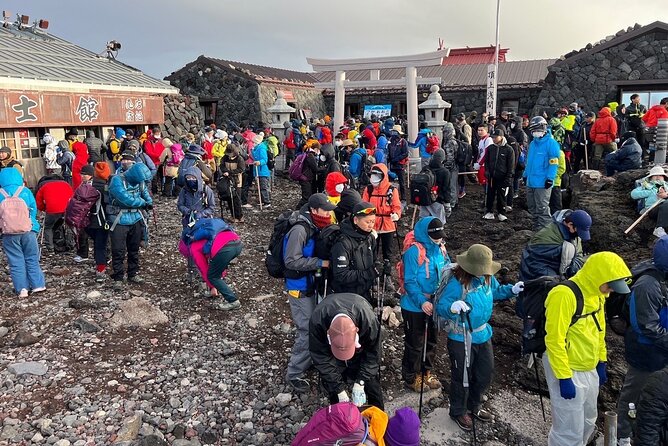
The 5th Station can feel like a busy transition point during the climbing season. You may find plenty of activity there, so use the time well. Eat, adjust layers, check water and personal items, and listen closely to the instructions before the group heads higher.
The two-day climb and the mountain lodge
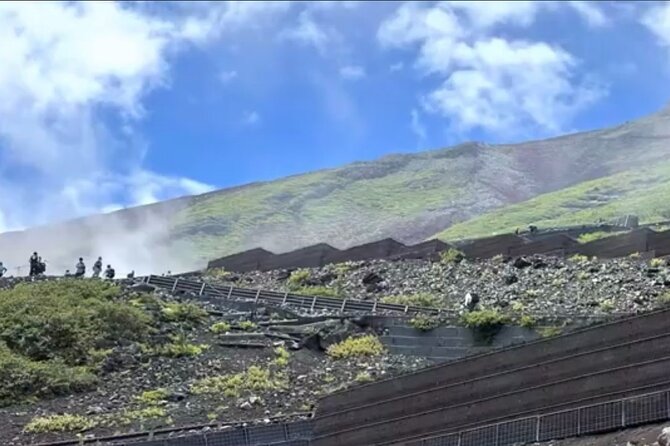
The physical work begins after lunch. You do not need technical mountaineering skills, but you do need moderate fitness and patience. The climb is described as moderately challenging, and that is a fair way to frame it: accessible to a fit first-time mountain hiker, but not easy.
The altitude makes the effort different from an ordinary uphill walk. You may need to slow down, take the scheduled breaks, and accept that progress can feel gradual. One helpful feature is the regular rest pattern. The guides have been praised for allowing plenty of breaks and helping the group stay together.
A good attitude is more useful than speed. You are not trying to race the mountain. A steady pace gives you a better chance of reaching the lodge in reasonable shape and enjoying the experience instead of spending the whole climb fighting the clock.
Dinner at the mountain lodge is included. So is the overnight stay. Sleeping on a volcano is never going to resemble a city hotel, but having a reserved place to rest is a major advantage. You avoid the stress of searching for a hut after a long climb, and you can focus on eating, resting, and preparing for the summit attempt.
The lodge is also where the schedule may feel most basic. Conditions on a high mountain are practical rather than luxurious. One person described the sleeping arrangements as good for a volcano, which is the right standard. Come for shelter and recovery, not comfort in the Tokyo sense.
The climb can be crowded during the official hiking season and holiday periods. That may slow the pace and reduce the feeling of solitude. On the other hand, the busy trail can make the route easier to follow, particularly for first-time climbers.
The summit attempt and views over the Kanto plains
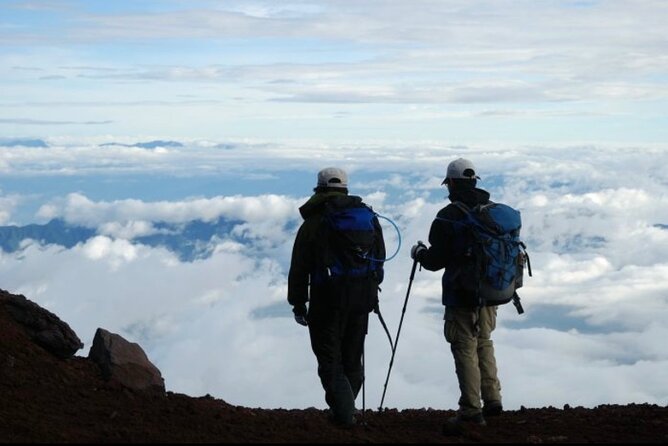
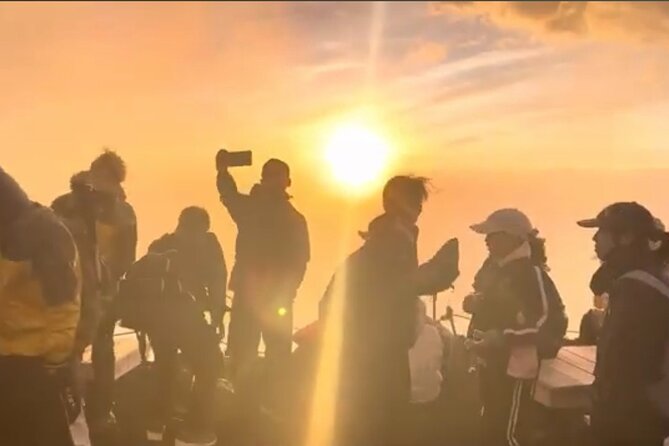
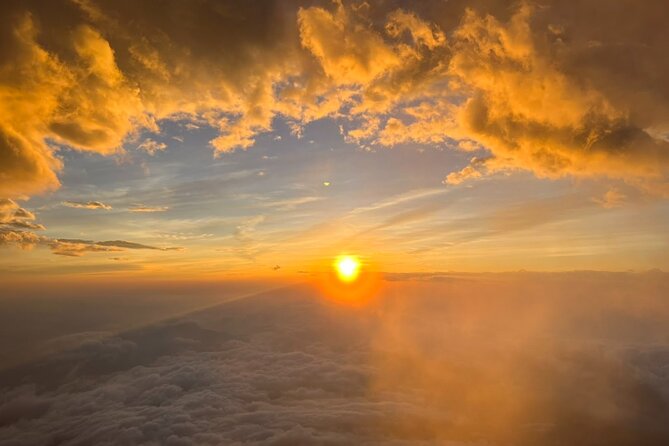
The main prize is the summit, with views toward the Kanto plains when the weather cooperates. On a clear day, the height gives you a memorable look across the broad region around Tokyo. The reward is not only the view. Reaching the top after a long, tiring ascent gives the whole trip its sense of purpose.
There is an important condition: the summit is not guaranteed. Weather can stop the group from reaching the top, and one account describes a climb that ended below the summit. This is not a minor detail. Mt. Fuji’s conditions can change, and a responsible guide should put safety before the advertised goal.
You should book this with the mindset of attempting the summit, not purchasing a guaranteed summit view. If the weather turns, the tour may still provide a worthwhile mountain experience, but the emotional value will be different. This is also why a clear forecast does not remove all uncertainty.
The guide’s role matters most here. A good guide manages the group, points out the next stage, and helps less confident climbers continue safely. Several people praised the guides for making sure the group reached the top, while one serious complaint described an injured participant being left behind and having to pay separately for another mountain hut.
That conflicting experience is worth taking seriously. If you become injured or cannot continue, ask clearly what the procedure is and stay in direct contact with the guide. Do not assume the group will automatically provide a private escort or cover extra accommodation. The supplied information does not promise that kind of individual rescue service.
Other guided tours in Tokyo


Coming down, eating, and using the bath
The descent is often harder on tired legs than people expect. You have already spent hours climbing, and loose or uneven ground can make the way down feel repetitive and demanding. Keep your pace controlled and follow the guide’s instructions.
After the descent, the tour includes lunch and bathing at a rest facility. This is one of the package’s strongest features. A hot bath after Mt. Fuji can feel less like a luxury and more like basic human repair.
The bathing stop also gives the day a proper finish. You can wash off the trail dust, change clothes, eat, and recover before returning to Tokyo. The meal and bath received especially warm praise, with the facilities described as a welcome part of the outing.
The tour ends at Shinjuku Station, at 3-chōme-38-1 Shinjuku. Returning to a central Tokyo station is useful if you are staying in the area or continuing by train. The exact end time is not provided, so avoid booking a tight evening reservation or long-distance connection on the same day.
Guides, language, and group support
The listed mountain guide is Japanese, and the tour guide waits at the Yoshida 5th Station. That arrangement can work well for a climb, but it is not the same as having a fully English-speaking guide beside you at every moment.
Shin is specifically praised for taking care of a non-Japanese participant. Communication through WhatsApp has also been helpful for some people before the climb. Those details suggest that personal attention may depend partly on which staff member is handling your group and how clearly you ask for help.
At the same time, you should not book this expecting long explanations in English about every turn, safety issue, or schedule change. English and Japanese communication can be limited. Bring patience, pay attention to visual directions, and stay near the group.
This matters more on a mountain than it would on an ordinary sightseeing tour. If you have medical concerns, ask about them before booking. If you are injured during the climb, tell the guide at once and make sure you understand the plan before the group moves on.
Who will get the most from this $470 experience
I would consider this tour for an active visitor who wants Mt. Fuji to be a central part of a Japan trip but does not want to handle the transport, meals, lodge, and route planning alone.
It is a good fit if you:
- Have moderate physical fitness
- Can manage a two-day hiking commitment
- Want a guided attempt at the summit
- Value included meals, transport, and a bath afterward
- Are comfortable in a group of up to 49 people
- Can manage some communication in a Japanese-led setting
I would hesitate if you want guaranteed summit access, private guiding, polished English explanations, or a quiet trail. The experience is also a poor match if you are looking for a gentle sightseeing excursion. The phrase physical challenge should be taken seriously.
The tour is useful for families with older children or teenagers who are fit enough for the climb, though the details provided do not set a minimum age. One parent described completing it with a son, but your own group should judge fitness and stamina carefully.
Practical advice for making the climb better
Treat the 6:30 a.m. start as a real start, not a suggestion. Build in time to reach Tochomae Station, since a late arrival could create stress before a demanding day.
Use the 5th Station stop to eat the included lunch and sort out your belongings. Keep the items you need during the climb easy to reach. If you plan to rent equipment, remember that rentals cost extra.
Do not save all your energy for the summit. The lodge, the overnight rest, and the descent are all part of the challenge. Take breaks, follow the group pace, and avoid treating the first part of the climb as a test of speed.
Keep your expectations flexible. Crowds may appear during the climbing season, weather may block the summit, and communication may take extra effort. Those are not reasons to dismiss the trip, but they are reasons to book it with open eyes.
The cancellation terms are strict. The booking is non-refundable and cannot be changed for any reason, so check your dates, fitness, and Japan itinerary before paying.
Should you book this Mt. Fuji tour?
I would book it if you want a supported, all-in-one attempt at climbing Mt. Fuji and you place real value on the lodge, meals, transport, guide, and post-hike bath. The summit views can be wonderful, and the climb itself can become one of your strongest Japan memories.
I would skip it if you need dependable English guiding, a small group, or certainty that you will stand on the summit. The 3.7 rating reflects a mixed experience, with strong praise for the guides and amenities but serious concerns about organization, language, and support when things go wrong.
The best reason to choose this tour is convenience with a genuine physical challenge. The best reason to hesitate is that the mountain remains unpredictable, and the service may feel less polished than the price suggests. For a fit, flexible visitor who understands those limits, it can be a practical way to take on Japan’s highest peak.
FAQ
Where does the Mt. Fuji climbing tour begin?
The tour begins at Tochomae Station, 2-chōme-8-1 Nishishinjuku, Shinjuku City, Tokyo. The start time is 6:30 a.m.
Where does the tour end?
The tour ends at Shinjuku Station, 3-chōme-38-1 Shinjuku, Shinjuku City, Tokyo.
How long does the Mt. Fuji tour last?
The experience lasts approximately two days.
Is transportation included?
Yes. An air-conditioned vehicle is included for the tour transportation.
Are meals included?
Yes. Lunch after arrival at the 5th Station and dinner at the mountain lodge are included.
Is a mountain guide included?
Yes. A Japanese mountain guide is included, and a tour guide is available at the Yoshida 5th Station.
Do I need mountaineering experience?
No mountaineering skills are required, but you should have a moderate level of physical fitness. The climb is described as moderately challenging.
Is the summit guaranteed?
No. The summit may not be reached if conditions such as weather prevent the final ascent.
Is equipment rental included?
No. Rental equipment is available if needed, but it costs extra.
More 2-Day Experiences in Tokyo

More Guided Tours in Tokyo
More Mt Fuji Day Trips in Tokyo

More tours in Tokyo we've reviewed












Mt Fuji Day Trips, compared.
 ★ 5.0Mt Fuji and Hakone 1-Day Bus Tour Return by Bullet TrainFrom $163
 ★ 4.0Mt Fuji & Hakone Cruise, Drum Show Bullet Train 1 Day from TokyoFrom $149
 ★ 4.4Tokyo Mt Fuji 5th St & Hakone Cruise Bus Tour w/Bullet TrainFrom $15410 hours
 ★ 4.5From Tokyo: Mount Fuji Full-Day Sightseeing TripFrom $6810 hours
 ★ 4.7Tokyo: Mt. Fuji Tour, Hakone Ropeway, Owakudani, Lake AshiFrom $5410 hours
 ★ 4.4Tokyo:Mt.Fuji,Kawaguchiko Oishi Park,Arakurayama Sengen ParkFrom $5410 hours