Reviewed · MT FUJI DAY TRIPS
Mt fuji & Hakone customizable day tour w/ English speaking driver
The best thing about this private Mt. Fuji and Hakone day tour is control. You ride with your own English and Japanese-speaking driver, leave from your Tokyo hotel, and choose the mix of mountain views, shrines, volcanic scenery, art, shopping, and lakes that suits your group. I especially like the clean air-conditioned vehicle and the chance to avoid a packed bus.
In This Article
- Key points to know
- A private start from Tokyo, with Fuji as the day’s prize
- Six ways to shape the day
- The Fuji 5th Station: high altitude, big views, uncertain access
- Oshino Hakkai and Iyashi no Sato: slower Fuji scenery
- Lake Kawaguchiko and Oishi Park: the easiest Fuji photos
- Chureito Pagoda: the famous view earns its fame
- Kachi Kachi Ropeway: a weather-sensitive viewpoint
- Owakudani and Hakone Ropeway: volcanic ground and open views
- Lake Ashi and Hakone Shrine: the calm side of Hakone
- Hakone Open-Air Museum and Gotemba shopping
- What the driver adds to the experience
- What you pay, and what remains extra
- Weather, packing, and who should book
- Should you book this Mt. Fuji and Hakone tour?
- FAQ
- How long does the tour last?
- How many people can join the private tour?
- Is hotel pickup included?
- Are attraction tickets included?
- Is the Subaru Line toll included?
- Is food included?
- What happens if the weather is bad?
I also like the generous vehicle package: fuel, highway tolls, a WiFi hotspot, and meet-and-greet service are included. Drivers such as Anique, Ali, and Adnan have been praised for being punctual, careful, and helpful. The catch is simple: ten hours is not enough for every listed stop, and Tokyo traffic can eat a large part of the day.
Key points to know
- Six planned routes: Choose a Fuji-focused day, a Hakone day, a shopping trip, or a combination of both.
- Hotel pickup in Tokyo: The usual departure is 8:00 AM, with return around 6:00 PM.
- Private vehicle for up to five: You do not share the ride with another group.
- Great photo variety: See Fuji from Chureito Pagoda, Lake Kawaguchiko, Oishi Park, and possibly the 5th Station.
- Extra costs matter: Attraction tickets, food, and the Subaru Line toll are not all covered.
- Weather shapes the day: Clear skies make a major difference to Mt. Fuji views and some ropeway rides.
A private start from Tokyo, with Fuji as the day’s prize

This is a long day, but it solves a common Japan sightseeing problem. Mt. Fuji and Hakone sit outside Tokyo, and reaching both by public transport means juggling trains, buses, cable cars, and timed connections. Here, you are picked up at your hotel and driven between stops in one private car.
The standard Tokyo schedule begins at 8:00 AM and ends around 6:00 PM. That sounds spacious until you account for the drive from Tokyo toward the Fuji area, the return journey, traffic, meal time, and queues at popular attractions. I would think of this as a chance to enjoy four or five well-chosen stops, not a contest to collect every place in the brochure.
The private format is the real value for a family or small group. At $530 per group of up to five, the cost works out to $106 per person if five people share it, before admission fees and meals. That is not a cheap solo outing, but it can compare well with separate transport, especially when you value hotel pickup and a driver who waits while you explore.
The vehicle is air-conditioned, modern, and described as clean and well kept. A WiFi hotspot is provided, and fuel, highway tolls, and fuel surcharge are included. One child seat may be available for the vehicle, so families should confirm this before setting out.
A few more Tokyo tours and experiences worth a look
Six ways to shape the day

The operator provides six broad route ideas, but you can also send your own preferences through the booking messages. This is useful because Mt. Fuji and Hakone appeal to different tastes.
The first route concentrates on the Fuji region. It links Oshino Hakkai, Chureito Pagoda and Arakurayama Shrine, Lake Kawaguchiko, lunch, the Kachi Kachi Ropeway, Lake Saiko, and Iyashi no Sato. It is a strong choice if your main goal is classic Fuji scenery and traditional-looking villages.
The second combines Lake Kawaguchiko or Lake Ashi with Gotemba Premium Outlets. Pick this if shopping matters as much as mountain views. The outlets can take two hours, so this route gives you less time for small villages and shrines.
The third adds Mt. Fuji 5th Station to the Fuji-focused route. It is a good match for anyone who wants to reach the high mountain road, but it leaves less room for lingering at the lakeside.
The fourth pairs the 5th Station with Kawaguchiko or Lake Ashi and Gotemba shopping. This is the most ambitious of the Fuji and shopping combinations, so you should expect short visits.
The fifth links Mt. Fuji and Hakone: the 5th Station, a quick Fuji-area photo stop, lunch, Owakudani Valley, Lake Ashi, and Hakone Shrine. It covers the two headline areas, but it is also the route most likely to feel rushed from Tokyo.
The sixth stays in Hakone. It includes Owakudani, the Hakone Ropeway, lunch, the Hakone Open-Air Museum, Lake Ashi with a pirate ship cruise, and Hakone Shrine. If you care more about hot springs, volcanic ground, art, and the lake than about standing near Fuji itself, this may be the smartest use of ten hours.
The Fuji 5th Station: high altitude, big views, uncertain access
Mt. Fuji 5th Station sits at about 2,300 meters, or roughly 7,500 feet, on the Subaru Line. It is the highest point in several of the suggested routes and offers views across forests and nearby mountains. On a clear day, it gives you a strong sense of the mountain’s scale.
The stop is planned for about 30 minutes. That is enough for photos and a short look around, but not enough for a leisurely visit. The weather can change quickly at this height, and cloud may cover the summit even when Tokyo is clear.
There is also a specific extra charge here. The Subaru Line toll is not included and ranges from 2,100 to 3,460 JPY per vehicle, paid at the toll gate. The 5th Station itself also has an admission charge listed as excluded. Ask your coordinator if road conditions or seasonal access affect the plan before departure.
Oshino Hakkai and Iyashi no Sato: slower Fuji scenery

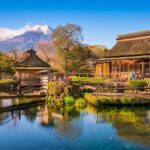
Oshino Hakkai is a small village known for eight clear spring ponds fed by Mt. Fuji snowmelt. Traditional thatched-roof houses, greenery, and water give it a different feel from the large viewing platforms around Kawaguchiko.
The planned visit is only 30 minutes, which makes this more of a scenic pause than a full village visit. You will need to keep an eye on the clock if you want photos, food, and a proper look at the ponds. Admission is not included.
Saiko Iyashi no Sato Nemba offers another traditional setting. This open-air cultural village uses thatched-roof houses against a Fuji backdrop and presents an older farming way of life. It is a good stop for visitors who want something more cultural than another lookout.
Again, the suggested time is about 30 minutes. The village admission fee is not included, and the route that features it lists an additional charge of 500 JPY for adults and 250 JPY for children for the Kachi Kachi Ropeway area details. Confirm the exact cost with the driver or coordinator, since several attractions have separate payments.
Lake Kawaguchiko and Oishi Park: the easiest Fuji photos

Lake Kawaguchiko is one of the most reliable places to frame Mt. Fuji with water in the foreground. The northern shore, especially around Oishi Park, gives you broad views with seasonal flowers. Lavender is a noted feature in summer, while other plantings change through the year.
I like this part of the day because it does not require a hard climb or a complicated ride. You can step from the car, take in the view, and move on. The drawback is that Fuji may disappear behind cloud, so the quality of the stop depends heavily on the sky.
Lake Kawaguchiko is allotted about 30 minutes, and Oishi Park another 30. That is enough for a focused photo stop. If you want a lakeside meal, a long walk, or time in nearby shops, ask for a shorter list of other stops.
A few more Tokyo tours and experiences worth a look
Chureito Pagoda: the famous view earns its fame

Chureito Pagoda is the classic five-story pagoda and Mt. Fuji photograph. It sits on a hillside in Fujiyoshida, with the mountain rising behind it. The view is especially well known during cherry blossom season and in autumn.
The visit is planned for 45 minutes, and that time needs to include the hillside approach. The stop may be harder for anyone with walking trouble. One useful strength of this private service is that a driver can adapt the pace and route for older people or those who need more care. Anique was specifically praised for helping seniors with walking difficulties and keeping the day comfortable.
Admission to the pagoda stop is included, according to the supplied details. Still, the shrine and surrounding grounds can be busy at peak times, and the famous photo angle may require patience.
Kachi Kachi Ropeway: a weather-sensitive viewpoint

The Mt. Fuji Panoramic Ropeway, also called the Kachi Kachi Ropeway, rises to an observation area at about 1,075 meters. From above, you can look toward Mt. Fuji and Lake Kawaguchiko.
The ride is scheduled for about an hour, but admission is not included. This is one of the places where weather matters most. If clouds block Fuji, you may still get a good look at the lake and nearby hills, but the main reason for the ride is reduced.
Because the cable car is a fixed attraction with its own queues and operating conditions, it can consume more time than the short stop listed on paper suggests. I would keep it if Fuji is visible and skip it if your group would rather spend that hour at the lake or in a village.
Owakudani and Hakone Ropeway: volcanic ground and open views

Owakudani Valley is Hakone’s dramatic volcanic stop. Steam rises from hot springs and sulfur vents, and the ground has a rough, active feel. The famous black eggs, cooked in the sulfurous waters, make a fun local snack, and trying one is a memorable small part of the visit.
The listed stop is about 30 minutes, with admission not included. Bring cash for small purchases, and carry water. One useful tip from the experience details is to pack an umbrella and a handheld fan as well, especially on hot or changeable days.
The Hakone Ropeway crosses the volcanic area and provides views toward Owakudani, Lake Ashi, and, on clear days, Mt. Fuji. It is planned for about 45 minutes and also requires a separate ticket. The ropeway makes sense if you want to see Hakone from above, but its value falls if wind, cloud, or operating interruptions limit the ride.
Lake Ashi and Hakone Shrine: the calm side of Hakone

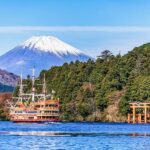
Lake Ashi is a crater lake with Mt. Fuji views on clear days. A boat cruise is part of the Hakone-focused route, including a pirate ship journey between Togendai and Motohakone. The lake stop is listed at about 45 minutes, with admission included in the supplied details, though the cruise and other transport charges should be confirmed before booking.
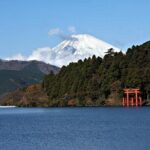
Hakone Shrine sits in forest near the lake and is known for its red torii gate in the water. The setting is quieter than the main resort roads, though the gate is a popular photo spot. The shrine visit is planned for 40 minutes and its admission is listed as excluded.
This pair of stops works well because the lake offers open views while the shrine gives you shaded paths and a spiritual setting. I would not try to add every Fuji lookout on the same day if Lake Ashi and the shrine are priorities.
Hakone Open-Air Museum and Gotemba shopping
The Hakone Open-Air Museum places sculptures among mountain surroundings. It is a good choice if your group wants art and fresh air rather than another viewpoint. The visit is scheduled for 40 minutes, but the museum admission is not included, and that short window means you will see only part of its grounds.
Gotemba Premium Outlets is a very different stop. With more than 200 stores, it includes luxury labels, Japanese brands, and a view toward Mt. Fuji. The planned two-hour visit suits shoppers, but it takes a large bite out of the day.
I would choose the outlets only if someone in your group genuinely wants to shop. If not, those two hours could pay for a longer lake stop, the open-air museum, or a more relaxed lunch.
What the driver adds to the experience
The driver is more than a person behind the wheel, but this is not presented as a formal walking tour with a specialist at every site. Drivers speak English and Japanese, and the company describes them as licensed guides with long driving experience in Japan.
That distinction matters. You get help with timing, transport, and local orientation, but you should tell the coordinator exactly how much guiding you want. Names associated with particularly positive service include Anique, Ali, and Adnan. Ali was praised for being friendly and helpful, Adnan for professional service during a holiday traffic day, and Anique for safe driving and care with older visitors.
Traffic is the weak link. A Culture Day holiday created delays for one group, even though the driver remained punctual and the mountain views were clear. I would avoid filling the day with distant stops, especially during Japanese holidays, weekends, or peak blossom periods.
What you pay, and what remains extra
The $530 group price covers up to five people, so the value improves sharply with a full car. It includes the air-conditioned vehicle, fuel, highway tolls, fuel surcharge, WiFi hotspot, meet-and-greet service, and the English and Japanese-speaking driver.
You still pay for food and drinks and several attraction tickets. The excluded items include Oshino Hakkai, the Subaru Line 5th Station, Kachi Kachi Ropeway, Owakudani Valley, Hakone Open-Air Museum, Hakone Shrine, and Hakone Ropeway. The Subaru Line road toll is a separate cost of 2,100 to 3,460 JPY per vehicle.
The tour is priced for convenience and flexibility, not for the lowest possible transport cost. If you are comfortable with public transport and want only one destination, a train and bus plan may cost less. If five people want different things and you value a private return to your hotel, the price is easier to justify.
The service runs for ten hours for Tokyo pickup and drop-off. Extra time costs 5,000 JPY per hour, paid directly to the driver. That rule is important. Do not assume a late return is free because a stop took longer than expected.
Weather, packing, and who should book
Good weather is essential for the best Fuji views. If bad weather or another unavoidable problem affects the experience, the stated policy is a new date or a full refund. I would still check the forecast, carry water, bring cash, and pack sun and rain protection.
This tour suits families, small groups, older people who want help with transport, and anyone who dislikes changing trains and buses. It is also useful for a group with mixed interests, since one person can prioritize shrines while another chooses a ropeway, museum, or shopping.
It is less suitable if you want a slow rural day, a long hike, or detailed guided time at every attraction. The vehicle makes the day easy, but the distance between Tokyo, Fuji, and Hakone means you must accept some road time.
Should you book this Mt. Fuji and Hakone tour?
Book it if your group can share the $530 cost, wants hotel pickup, and values a private car more than the absolute lowest price. I would choose Route 1 or Route 6 for a clearer focus, and Route 5 only if everyone accepts short stops and possible traffic delays.
Before paying, send a realistic list of priorities and ask the coordinator to confirm driving time, attraction fees, the 5th Station road toll, child-seat availability, and the planned return. If Fuji views are your main goal, make the weather forecast part of your decision. Done with sensible expectations, this is a practical way to see a wide sweep of Japan’s most famous mountain region in one day.
FAQ
How long does the tour last?
The tour lasts about ten hours when you are picked up and dropped off in Tokyo. The usual Tokyo schedule is pickup at 8:00 AM and return around 6:00 PM.
How many people can join the private tour?
The price covers one private group of up to five people. No other group shares your vehicle or activity.
Is hotel pickup included?
Yes. Hotel pickup and drop-off are offered for Tokyo departures. Pickup times for Fuji, Hakone, or Kanagawa locations are generally around 9:30 to 10:00 AM, with earlier return times for those areas.
Are attraction tickets included?
Some admission costs are included, but several are not. Separate payment is required for attractions including Oshino Hakkai, Mt. Fuji 5th Station, Kachi Kachi Ropeway, Owakudani Valley, Hakone Open-Air Museum, Hakone Shrine, and Hakone Ropeway.
Is the Subaru Line toll included?
No. The Subaru Line toll for the 5th Station must be paid at the toll gate. It ranges from 2,100 to 3,460 JPY per vehicle.
Is food included?
No. Food and drinks are not included. Lunch is shown as part of the suggested routes, but you pay for it yourself.
What happens if the weather is bad?
Good weather is required for the experience. If bad weather or another unavoidable circumstance affects the tour, the stated arrangement is a new date or a complete refund.
More Private Drivers in Tokyo

More Hakone Day Trips in Tokyo
More Mt Fuji Day Trips in Tokyo

More tours in Tokyo we've reviewed












Mt Fuji Day Trips, compared.
 ★ 5.0Mt Fuji and Hakone 1-Day Bus Tour Return by Bullet TrainFrom $163
 ★ 4.0Mt Fuji & Hakone Cruise, Drum Show Bullet Train 1 Day from TokyoFrom $149
 ★ 4.4Tokyo Mt Fuji 5th St & Hakone Cruise Bus Tour w/Bullet TrainFrom $15410 hours
 ★ 4.5From Tokyo: Mount Fuji Full-Day Sightseeing TripFrom $6810 hours
 ★ 4.7Tokyo: Mt. Fuji Tour, Hakone Ropeway, Owakudani, Lake AshiFrom $5410 hours
 ★ 4.4Tokyo:Mt.Fuji,Kawaguchiko Oishi Park,Arakurayama Sengen ParkFrom $5410 hours