Reviewed · TSUKIJI MARKET TOURS
Tsukiji Food and Toyosu Market with Government-Licensed Guide
Tokyo’s old and new fish markets tell two very different stories. Toyosu Market is clean, organized, and built for wholesale trade, while Tsukiji Outer Market is crowded, colorful, and made for eating and browsing. A private guide helps you make sense of both without wrestling with the market maze alone.
In This Article
- Key points to know before booking
- Why seeing Toyosu and Tsukiji together makes sense
- Starting at Toyosu, Tokyo’s modern wholesale market
- Crossing Tokyo by public transport
- Entering Tsukiji Outer Market
- Namiyoke Inari Shrine and the Tsukiji story
- A calm finish at Tsukiji Hongwanji Temple
- The guides make the difference
- What the $109.01 price really buys
- Timing, walking, and who will enjoy it most
- Should you book the Toyosu and Tsukiji tour?
- FAQ
- How long is the tour?
- Where does the tour start?
- Where does the tour finish?
- Is hotel pickup included?
- Is transportation included in the price?
- Is food included?
- Does this tour include the tuna auction?
- Is the tour private?
- Can I cancel for a full refund?
I like the personal format, since your guide can adjust the pace and explain what you are seeing. I also like the mix of food culture and local history, including Namiyoke Inari Shrine and the distinctive Tsukiji Hongwanji Temple. The main catch is that food, transport, and any entrance fees cost extra, and Toyosu can feel quiet if you arrive late.
Key points to know before booking
- Toyosu opened in 2018: You see the modern replacement for Tokyo’s former wholesale fish market.
- Tsukiji is the eating market: Expect food stalls, seafood, sushi, meat, shopping, and tight crowds.
- Your guide is the main value: Guides such as Toyo, Suzuki, Show, Kazu, Mina, and Koji have helped visitors navigate food stalls, trains, shrines, and restaurant choices.
- It is private: Only your party joins, so you can ask questions and shape the visit more easily.
- Bring cash and an appetite: Food and drinks are not included, and many market purchases are made on your own.
- The tuna auction is not included: You need the separate morning tuna auction tour for that experience.
Why seeing Toyosu and Tsukiji together makes sense
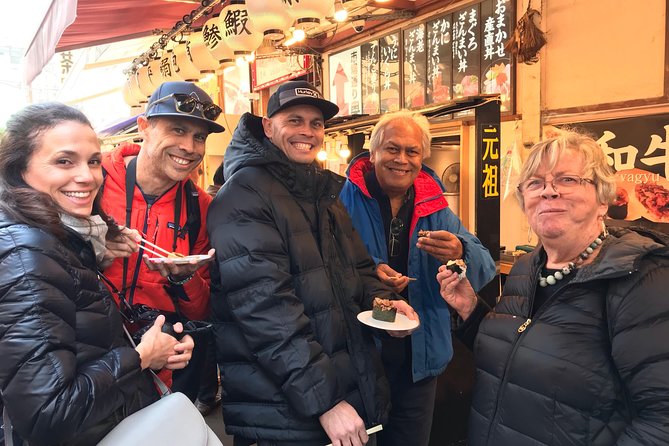
If you visit only Tsukiji, you see Tokyo’s lively food-shopping side but miss the modern wholesale operation that replaced the old inner market. If you visit only Toyosu, you see the efficient new facility but miss the human-scale stalls, snacks, and small shops that make the Tsukiji area so fun.
This tour connects the two. You learn that they are not simply duplicate markets. Toyosu is about distribution and wholesale commerce, while Tsukiji’s outer market serves shoppers and people looking for a meal.
That contrast gives the four hours a useful shape. At Toyosu, your guide can explain how the market works and point out the auction viewing areas. At Tsukiji, the lesson becomes practical: which stalls sell what, how to move through the narrow lanes, and where you might spend your food budget.
The private setup matters here. You can stop to ask what a particular fish is, ask about Japanese food customs, or request help finding sushi, grilled eel, sea urchin, tuna, crab, wagyu, or souvenirs. Several guides have also adjusted the outing for families, including groups with teenagers.
A few more Tokyo tours and experiences worth a look
Starting at Toyosu, Tokyo’s modern wholesale market
The published meeting point is Toyosu Market at 6-6-1 Toyosu, Koto City. The tour normally begins here and later finishes around Tsukiji Outer Market, although some guides have arranged hotel meetups or changed the order for a particular group. Confirm the exact meeting plan before you set out.
Toyosu opened on October 11, 2018, on a man-made island in Tokyo Bay. It took over the wholesale business from the older Tsukiji Market. The buildings are modern and functional, and the whole place feels more controlled than Tsukiji’s outer lanes.
You should expect roughly one hour at Toyosu. That is enough for an introduction to the market, the auction viewing areas, and the way the buildings are laid out. It is not a long back-of-house visit, and the standard tour is not the early-morning tuna auction experience.
The auction distinction is important. This tour does not include the tuna auction. A separate Toyosu Market Morning Tuna Auction and Tsukiji Food Tour is offered for that purpose. The auction begins very early, at about 5:30 a.m., and must be requested ahead of time according to the tour information.
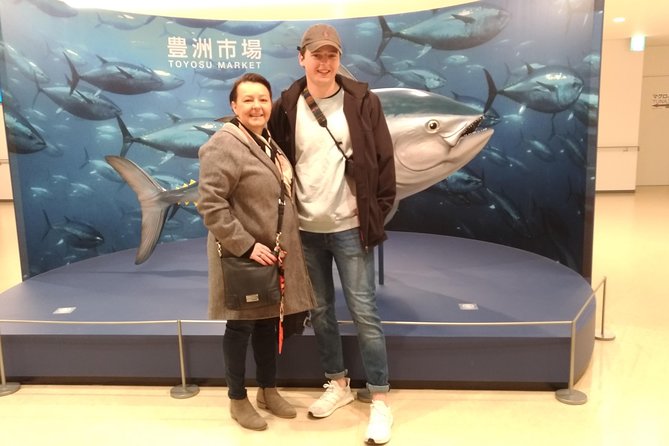
At other times, you may see designated viewing areas or educational material that explains the auction process. One guide also pointed out a replica of an exceptionally large tuna sold at auction. That sort of explanation can make Toyosu more interesting than simply looking through a window at a large industrial building.
Toyosu also includes more than seafood. One itinerary variation included the fruit and vegetable building, known as Block 5, which can be worth seeing if it is open and fits your timing. Your guide may also point out restaurants and shops in the complex.
The biggest weakness is timing. At around noon, some stalls may already be closed, leaving you with a clean but quiet market building and less to see. Book this tour early if Toyosu is a priority, and ask your guide what will be operating on your chosen day.
Crossing Tokyo by public transport
The transfer between Toyosu and Tsukiji is handled on public transport with your guide. Transport fees are not included, so you pay those separately. The tour does not provide a private vehicle.
That arrangement is practical because the trip is a walking and public transport experience, not a chauffeured sightseeing tour. You get a small taste of moving around Tokyo as residents do, and your guide can help with the route and ticket details.
If Tokyo’s train system worries you, this assistance can be worth a lot. Guides have helped people recharge IC cards such as Suica and have led groups through major stations. One group even enjoyed seeing a very busy station during rush hour before continuing by train and monorail toward Toyosu.
The public transport section also adds city views. One guide used the monorail ride to show both Tokyo Bay and central Tokyo. That is a pleasant bonus, though you should remember that trains and monorails add time and a separate cost.
The exact route can vary. The published tour lists Toyosu first, but several guide arrangements began at a hotel, visited Tsukiji first, or added other Tokyo sights. Treat the stated Toyosu meeting point and four-hour duration as your firm baseline, and confirm any custom plan before booking.
Entering Tsukiji Outer Market
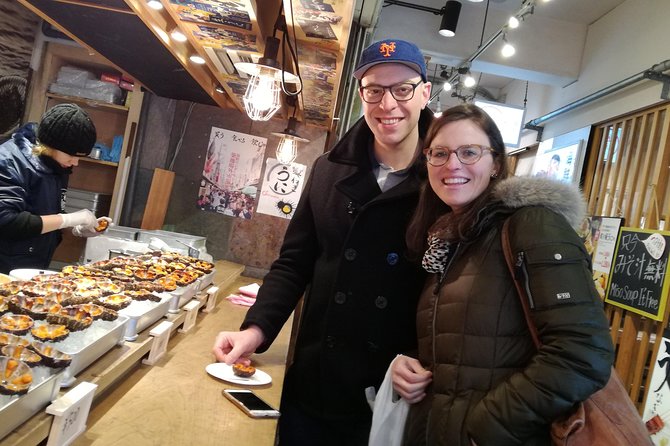
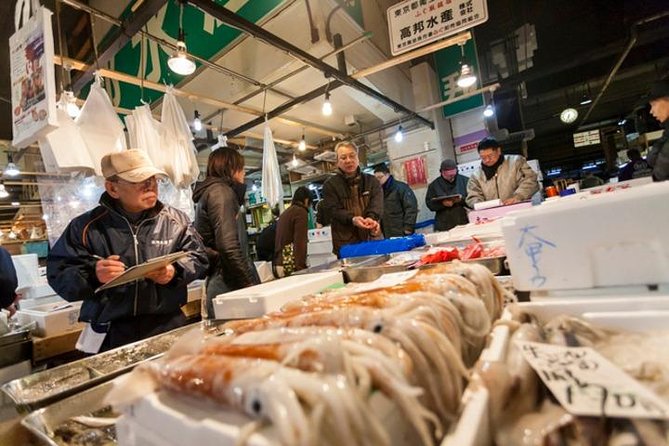
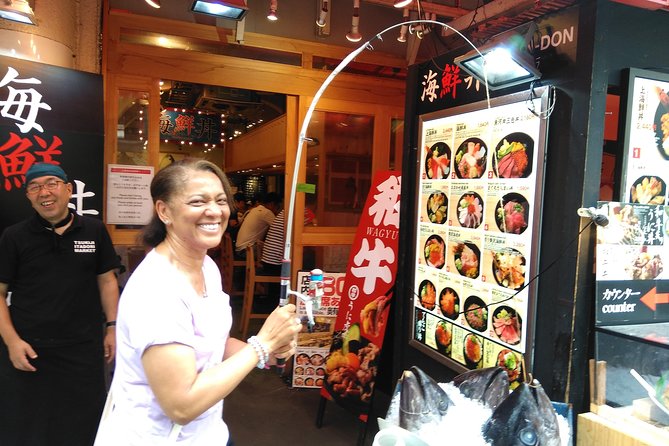
Tsukiji is where the tour becomes more hands-on. The market lanes are crowded and packed with seafood, produce, prepared foods, kitchen goods, restaurants, and small shops. You may find sushi, grilled eel, sea urchin, tuna, crab, wagyu, and other Japanese foods, but each purchase is your responsibility.
Your guide’s help is especially useful here. Tsukiji can be confusing because it combines wholesale-style shops, retail stalls, restaurants, and food counters in a tight area. A guide can steer you toward the sections that match your interests rather than letting you spend the entire visit searching.
I would set aside money for sampling. Food and drinks are not included, and some of the most enjoyable moments come from choosing something at a stall and eating it soon after. Bring cash, especially if you want to try several small portions or buy meat and seafood.
Do not expect a long sit-down meal during the walking portion. Four hours includes Toyosu, the transfer, Tsukiji, a shrine, and a temple. One practical approach is to finish at Tsukiji and stay for breakfast or lunch at your own expense.
The ending location is around Tsukiji Outer Market, which makes that plan easy. Some guides have recommended or escorted groups to sushi restaurants, including Daiwa Sushi, while others have helped find specific souvenirs or favorite local food spots. Restaurant choices and meals are not guaranteed inclusions, so think of these as guide assistance rather than part of the fixed package.
Tsukiji is also the busier half of the tour. The crowds, narrow paths, and food smells are part of its appeal, but they can be tiring. Stay close to your guide, wear comfortable shoes, and avoid carrying bulky luggage.
Namiyoke Inari Shrine and the Tsukiji story
The 15-minute stop at Namiyoke Inari Shrine adds meaning to the market district. The shrine is associated with protecting reclaimed land from waves, a fitting connection for an area built near the water.
This is a short visit, not a full shrine tour. Its value comes from the way it connects geography, religion, and the market’s past. Your guide can explain why a place devoted to protection sits beside a district shaped by the sea and seafood trade.
I like this stop because it prevents the tour from becoming only a food crawl. You get a small piece of local belief and an explanation of how the neighborhood developed. It also offers a pause from the tight market lanes.
A few more Tokyo tours and experiences worth a look


A calm finish at Tsukiji Hongwanji Temple
Tsukiji Hongwanji Temple is scheduled for about 30 minutes. It is a Buddhist temple with distinctive construction, and it gives you a chance to discuss Japanese Buddhism and temple customs.
Some guides have included a short period of quiet reflection or meditation here. That can be a welcome change after the noise and movement of the markets. You do not need to be religious to appreciate the contrast.
The temple visit also helps explain why Tsukiji is more than a place to buy fish. The market, shrine, and temple sit within a neighborhood where commerce, worship, and daily life have long overlapped.
The guides make the difference
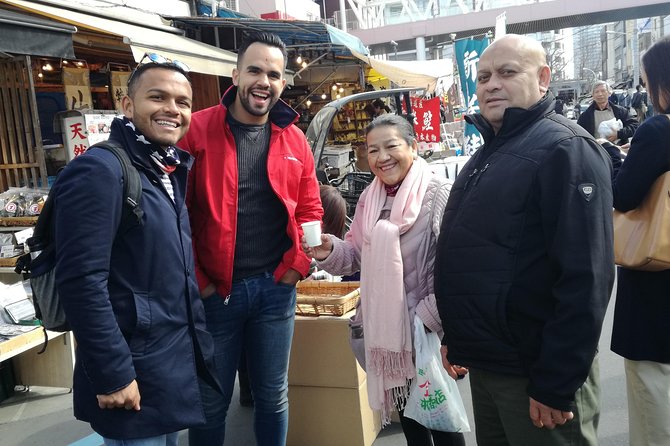
The guide roster can vary, so you may be paired with someone such as Toyo, Yasuho Suzuki, Yoshii, Show, Kazu, Mina, Mami, Koji, Shuji, Hiro, Lily, Emi, or Kenji Kasama. The strongest part of the experience is likely to be the person leading you, not a fixed set of attractions.
The guides are licensed local English speakers, and their roles go well beyond reciting facts. They explain Japanese history and food customs, help you use public transport, interpret market practices, and adjust the route to your interests.
Before the tour, it is worth telling the guide what matters most. You might care about sushi, tuna, cooking ingredients, Japanese religion, photography, family-friendly stops, or shopping. Families have had routes adjusted for teenagers, while solo visitors have used the extra time to ask about restaurants for later in the trip.
A good guide can also save you from poor choices. In Tsukiji, the value is not just knowing that food is available. It is getting help with the right stalls, understanding what you are buying, and finding a restaurant that suits your budget and appetite.
There is one serious practical warning: one booking had a no-show and resulted in a refund after communication problems. That appears to be an exception in an otherwise strong record, but you should still read the meeting instructions carefully, arrive at the exact place, and keep the provider’s contact details handy.
What the $109.01 price really buys
At $109.01 per person, this is not a cheap market walk. The price becomes easier to justify if you are a small private group and want a guide to handle the route, explain the food, and answer questions.
You still pay separately for public transport, food, drinks, and any entrance charges not listed as included. If you plan to eat sushi, buy premium seafood, or sample wagyu, your final spending can rise quickly.
For a solo visitor, the price may feel high compared with exploring Tsukiji alone. For a family or group, the private format spreads the cost across several people and gives you control over the pace. Group discounts may also be available.
The tour is strongest for people who want context and help, not just a quick look at market buildings. If you are already comfortable navigating Tokyo and know exactly where you want to eat, you may prefer to visit independently and spend the money on lunch.
Timing, walking, and who will enjoy it most
The experience lasts about four hours and involves walking through two market areas, a public transport transfer, a shrine, and a temple. Most travelers can participate, and service animals are allowed, but the tour is not a vehicle-based outing.
I would choose an early start. Toyosu is more likely to be active, and you can finish at Tsukiji in time for a meal. A noon start may still work for Tsukiji, but Toyosu’s shops and stalls may be winding down.
Wear shoes suited to walking and come ready for changing conditions between indoor market buildings, station platforms, and outdoor streets. The tour is private, so you can ask for a slower pace, but four hours still passes quickly.
This experience suits:
- First-time Tokyo visitors who want an introduction to Japanese food culture
- Families that need help with trains, food choices, and pacing
- People who want both modern Toyosu and old Tsukiji in one morning
- Solo visitors who prefer company and interpretation in crowded market lanes
- Food-focused visitors who want help locating seafood, sushi, meat, and snacks
It may not suit you if you want a long tuna auction visit, a private car, a fully included meal, or a quiet museum-style tour.
Should you book the Toyosu and Tsukiji tour?
Book it if you want a private guide, market context, and practical help choosing where to eat. The best version starts early, uses the Toyosu to Tsukiji contrast well, and leaves you at Tsukiji with time to buy lunch.
Skip it if you mainly want the tuna auction, since that is a separate experience, or if you are happy to navigate markets and trains alone. Also check the meeting details carefully, because the standard plan begins at Toyosu, while some guides arrange hotel pickups or reverse the route.
For most first visits, the tour offers a useful introduction to Tokyo’s food world. Just budget for transport and food, bring cash, and treat the guide as the main reason to pay the premium.
FAQ
How long is the tour?
The experience lasts approximately four hours.
Where does the tour start?
The listed starting point is Toyosu Market at 6-6-1 Toyosu, Koto City, Tokyo 135-0061, Japan.
Where does the tour finish?
The listed end point is Tsukiji Outer Market in the Tsukiji area of Tokyo.
Is hotel pickup included?
The official details describe pickup and drop-off on foot within a designated area of Tokyo. Some guide arrangements have included meeting at a hotel lobby, so confirm your exact meeting plan before the tour.
Is transportation included in the price?
No. Public transport between the markets is arranged with the guide, but transportation fees are not included.
Is food included?
No. Food, drinks, and personal purchases are separate expenses. You can stay afterward for breakfast or lunch at your own cost.
Does this tour include the tuna auction?
No. This is not the tuna auction tour. A separate Toyosu Market Morning Tuna Auction and Tsukiji Food Tour is available for that experience.
Is the tour private?
Yes. Only your group participates, and separate tour groups cannot be combined.
Can I cancel for a full refund?
Yes, if you cancel at least 24 hours before the experience start time. Cancellations or changes made less than 24 hours before the start are not accepted for a refund.
More Guided Tours in Tokyo

More Food Experiences in Tokyo
More Tsukiji Market Tours in Tokyo
More tours in Tokyo we've reviewed












Tsukiji Market Tours, compared.
 ★ 5.0Tokyo Tsukiji Fish Market Food and Culture Walking TourFrom $99
 ★ 5.0Tokyo: Tsukiji Fish Market Food and Walking tourFrom $30
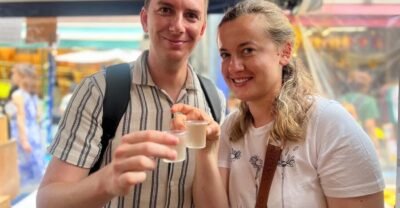 ★ 4.9Tokyo: Tsukiji Fish Market Guided Walking TourFrom $222 hours
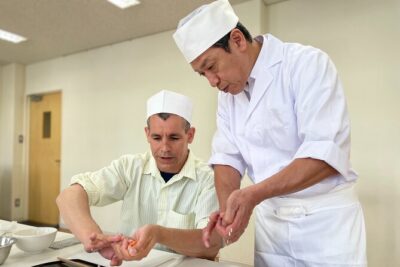 ★ 5.0Tokyo Sushi Making Class in Tsukiji with Professional ChefFrom $49
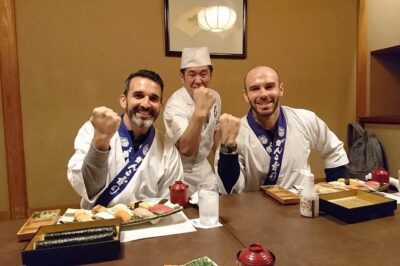 ★ 5.0Tsukiji Fish Market Guided Tour and Sushi Making with Pro ChefFrom $104
★ 4.7Tokyo: Tsukiji Fish Market Food and Culture Walking TourFrom $963 hours
★ 5.0Tsukiji Fish Market Guided Tour and Sushi Making with Pro ChefFrom $104
★ 4.7Tokyo: Tsukiji Fish Market Food and Culture Walking TourFrom $963 hours