Reviewed · ASAKUSA TOURS
Asakusa: 1400-year history exploration
Asakusa’s story begins beside the Sumida River and winds through one of Tokyo’s oldest temple districts. This small-group walking tour links the river, Kaminarimon Gate, Nakamise-dori, Sensoji Temple, Asakusa Shrine, and the old Rokku entertainment quarter in a single afternoon.
In This Article
- Key points at a glance
- Why Asakusa makes a strong first Tokyo walk
- Starting beside the Sumida River
- Asakusa Culture Tourist Information Center and the city from above
- Kaminarimon Gate and the 250-meter Nakamise approach
- Hozomon Gate and the main Sensoji grounds
- Sensoji Temple, Buddhism, and the two fishermen
- Asakusa Shrine and the meeting of Buddhist and Shinto traditions
- Denboin Street and the old Rokku entertainment quarter
- What the $91.17 price buys you
- Timing, comfort, and who should book
- Booking and cancellation details
- Should you book the Asakusa 1,400-year history exploration?
- FAQ
- How long does the Asakusa history tour last?
- Where does the tour start and finish?
- What places are included on the walking route?
- Are food samples included?
- How large is the tour group?
- Is the tour suitable for children?
- What happens if I need to cancel?
I like the mix of serious history and simple pleasures: you learn how Sensoji began with two fishermen, then stop for Japanese sweets such as melon pan, rice dumplings, rice crackers, or sweet puffed rice. I also like the group size, capped at eight, and the earphone system, which helps you hear the guide while moving through crowded streets.
The main drawback is the pace. Three and a half hours is a long time for an area you can walk through quickly on your own, and Asakusa can be noisy and packed, especially near Sensoji. If you prefer a brisk photo stop, this tour may feel slow. If you want context, questions answered, and help finding good places to eat and shop, the extra time earns its keep.
Key points at a glance
- A full 3.5-hour route: Follow Asakusa from the Sumida River through Sensoji and into Denboin Street and Rokku.
- A very small group: The maximum is eight people, making it easier to ask questions and stay near the guide.
- Traditional snacks included: Sample a selection that may include melon pan, rice dumplings, rice crackers, and sweet puffed rice.
- Two faiths in one historic quarter: See Buddhist Sensoji and Shinto Asakusa Shrine, then learn why they share the same area.
- Useful local advice: Get suggestions for restaurants, izakayas, drinks, shopping, and Asakusa specialties.
- A history-heavy afternoon: The tour suits adults and curious families more than people seeking a quick sightseeing loop.
Why Asakusa makes a strong first Tokyo walk
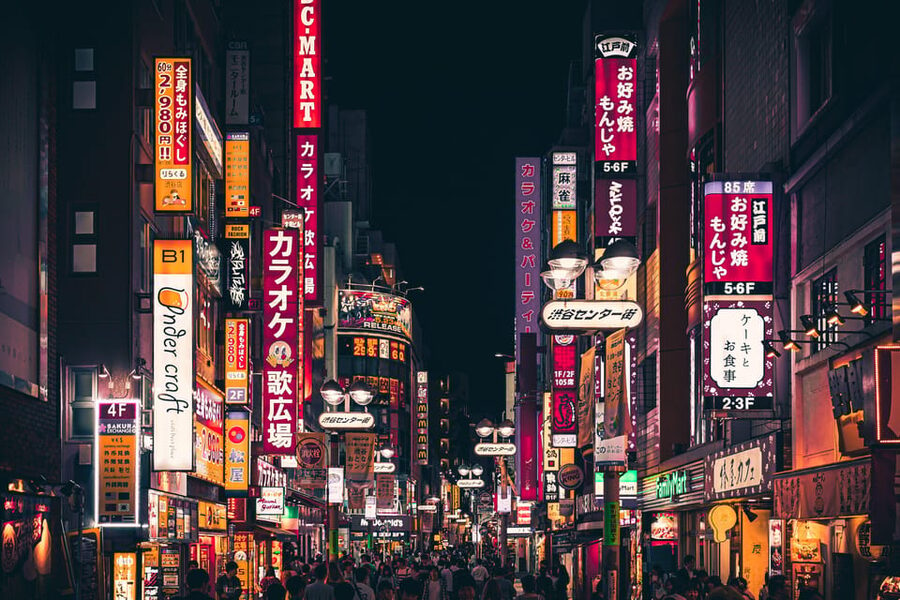
Asakusa gives you a side of Tokyo that feels very different from the neon streets and glass towers elsewhere in the city. The district grew around Sensoji, whose story reaches back 1,400 years, yet much of what you see today has been rebuilt after earthquakes, fires, war, and air raids.
That tension is one of the tour’s best subjects. The buildings may look old, but the district has repeatedly been renewed through donations from ordinary people. Your guide can help you see Asakusa not as a preserved museum, but as a living neighborhood that keeps old customs while adapting to modern Tokyo.
The route also lets you watch the district change block by block. Along the river, you get open views and city landmarks. Near Kaminarimon and Nakamise-dori, the crowds grow thicker and the shopfronts more theatrical. Around Denboin Street and Rokku, the mood shifts again, with older streets and reminders of Asakusa’s role as an entertainment center.
I would place this tour early in a Tokyo visit. After three and a half hours, you will have a better sense of where to return for food, souvenirs, temple visits, and evening wandering.
A few more Tokyo tours and experiences worth a look


Starting beside the Sumida River
The meeting point is Burger King Asakusa Azumabashi, near Azumabashi Bridge. The tour starts at 1:30 pm, and the first stop is the Sumida River, where Asakusa’s story begins.
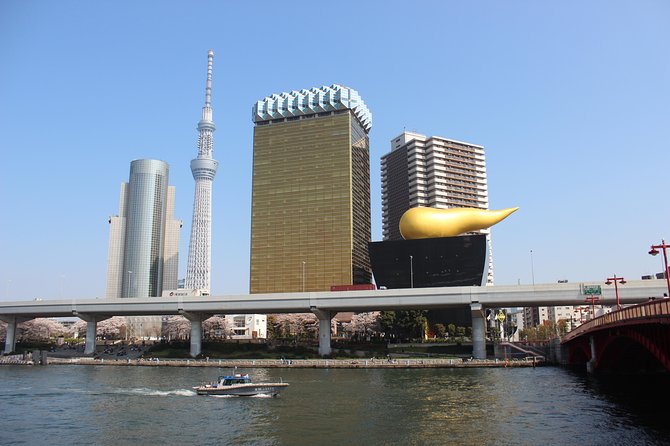
From across the bridge, you can see Tokyo Skytree and the Asahi Breweries headquarters, including the famous golden flame object. This opening gives you a useful orientation to the area. Instead of starting inside the most crowded temple approach, you begin with space to look around and understand Asakusa’s position beside the river.
The river is also a good place for the guide to explain why waterways mattered to Tokyo’s growth. The stop lasts about 15 minutes, so do not expect a long riverside walk. It is mainly a visual introduction and a chance to get your bearings before the route turns toward the center of Asakusa.
Bring water, especially in warm weather. Vending machines are available, but a bottle in your bag is simpler.
Asakusa Culture Tourist Information Center and the city from above
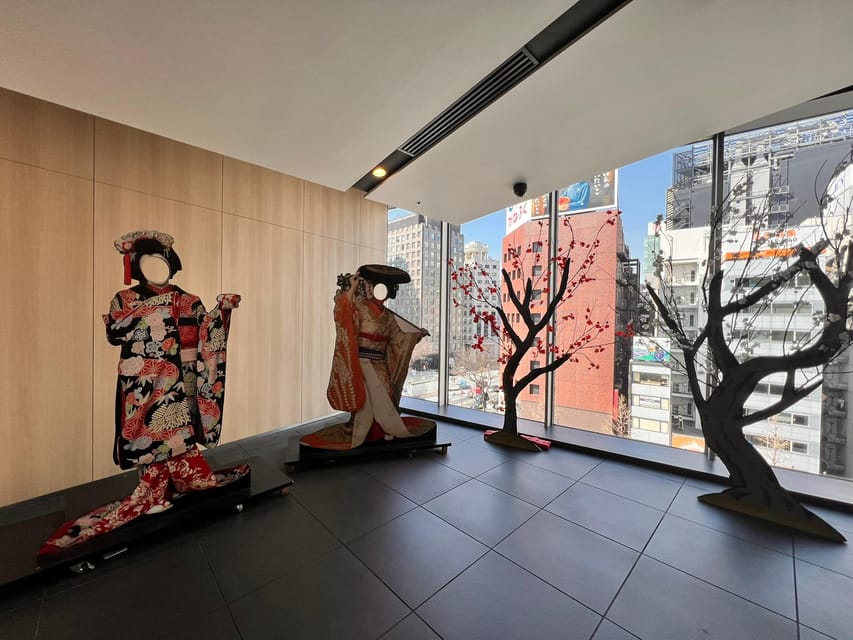
The next walk leads to the Asakusa Culture Tourist Information Center, one of the newer buildings in the district. The stop lasts about 30 minutes and is more than a place to collect maps.
The center is also a sightseeing attraction, with an eight-story structure that gives you a different view of the old district. The contrast is useful: traditional gates and temple roofs sit below, while Tokyo Skytree rises beyond them. I like this stop because it helps you read Asakusa as a mixture of old streets and modern city planning.
Your guide can point out landmarks before you enter the busiest part of the route. That matters because once you reach Kaminarimon, it becomes easy to focus only on the huge lantern and the crowd around it.
Kaminarimon Gate and the 250-meter Nakamise approach
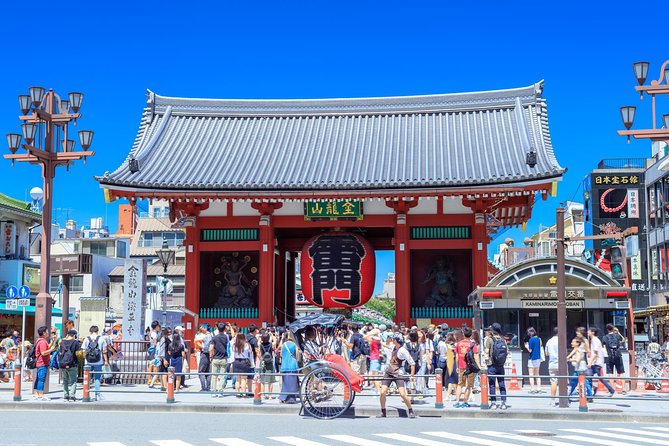
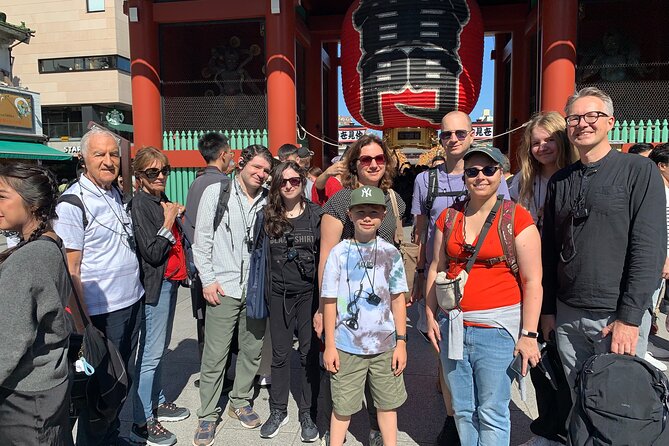
Kaminarimon means Thunder Gate, and its enormous red lantern is one of Asakusa’s most familiar sights. The gate is the outer entrance to the Sensoji complex, and the tour spends about 15 minutes here.
You will hear about the statues and the gate’s place in the temple approach. This is also where the crowd can become a real factor. The area is popular, and the noise may make it hard to follow a guide who speaks too softly or too quickly. The supplied earphone system is meant to address that problem by sending the guide’s voice to each participant, but it may not solve every issue in a tightly packed area.
From Kaminarimon, the group continues down Nakamise-dori, a roughly 250-meter shopping street leading toward Sensoji. Shops sell souvenirs, traditional goods, and food, while stalls offer quick snacks as you walk.
This is not simply shopping time. A good guide explains what the items are, which sweets are worth trying, and where you might return later. You will likely taste several Japanese treats during the tour, with examples including melon pan, rice dumplings, rice crackers, sweet puffed rice, and possibly other local sweets. The selection is included, but other food and drinks are not.
Nakamise can be crowded enough to slow everyone down. Keep your belongings close, stay within sight of the guide, and avoid treating the first shop you see as your only chance to buy something. The tour’s value here is the explanation and filtering, not a private shopping experience.
Hozomon Gate and the main Sensoji grounds
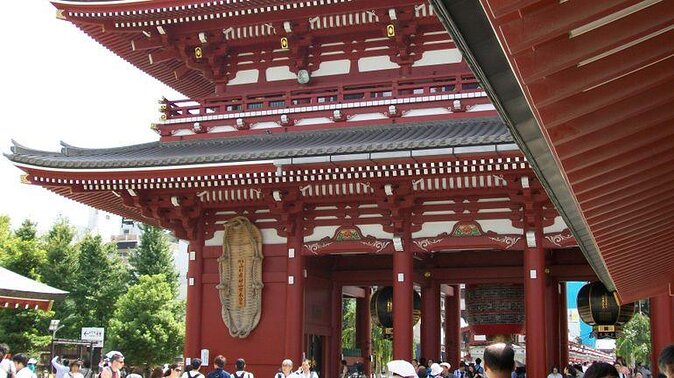
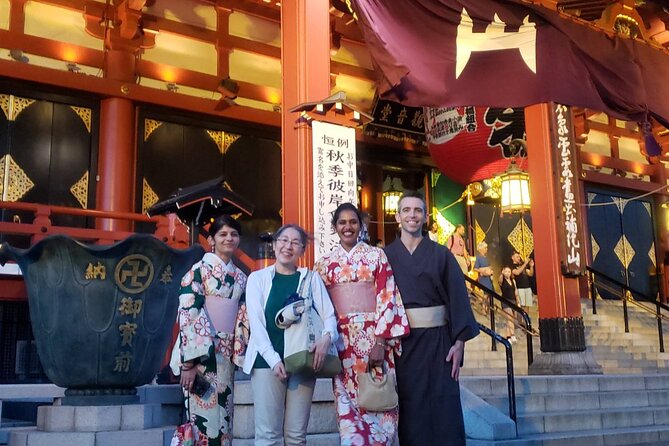
At the end of Nakamise-dori, you reach Hozomon, the inner gate of the temple approach. This two-story structure is sometimes overshadowed by Kaminarimon, but it deserves a close look.
The guide spends about 15 minutes here, helping you understand the layout of the temple grounds. The gate leads toward Sensoji’s main hall and the five-story pagoda. Because the tour follows the route in order, you get a clear sense of how the ceremonial approach unfolds.
The five-story pagoda is 53 meters high and is described as Japan’s second-highest pagoda. It was built in 942 and holds Buddha’s ashes. Details like this are easy to miss when you are trying to take photographs and move with the crowd, so having someone explain the site adds real value.
Other historical tours in Tokyo

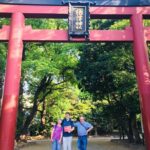
Sensoji Temple, Buddhism, and the two fishermen
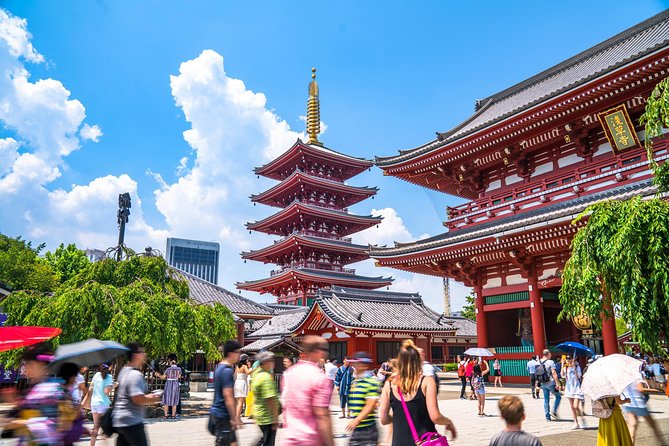
The largest stop is Sensoji Temple, with about 45 minutes in the main temple area. This is the heart of the afternoon.
The founding story centers on two fisherman brothers who found a statue of Kannon in the Sumida River. That discovery led to the temple’s creation and shaped Asakusa’s place in Tokyo’s religious and civic life. The guide also connects the temple to Japan’s later modernization, giving the story a wider frame than a simple date and architectural description.
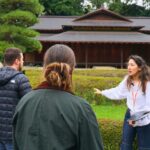
You will have time to look at the main hall, pagoda, gates, and surrounding grounds. The guide can explain Buddhist customs and how to behave respectfully at a temple. Ask questions here. The small group makes it easier to pause for discussion, and past guide names associated with especially strong tours include Sachi, Aki, Yasu, Emiko, Amy, and Taka.
The quality of the afternoon depends heavily on how clearly the guide presents the material. Most accounts describe guides who are friendly, patient, and well prepared, with Sachi and Aki receiving repeated praise for detailed explanations and calm help with photographs. Taka is described as a nationally licensed guide who can handle broader questions about Japanese culture, food, language, and daily life.
Still, the experience is not perfectly uniform. One poorly received tour involved a guide whose English was difficult to follow. Another visitor found the explanations too fast, too soft, and too detailed. Those concerns are worth taking seriously, especially if you have hearing difficulties or prefer a light, simple introduction.
Asakusa Shrine and the meeting of Buddhist and Shinto traditions
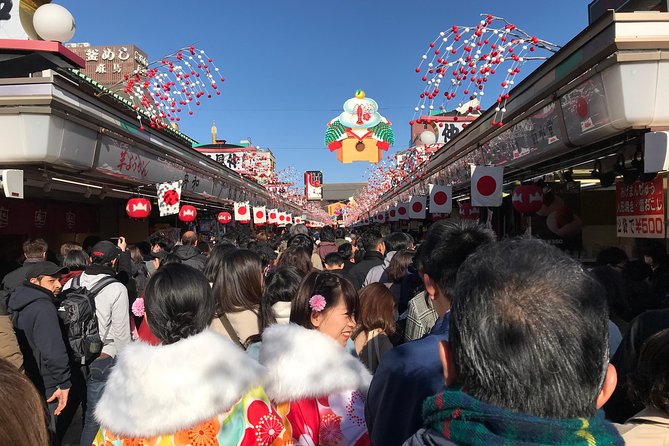
Asakusa Shrine is a short, 15-minute stop, but it may be the most useful for understanding Japanese religion.
The shrine shares the broader Sensoji grounds with the Buddhist temple. To many first-time visitors, that pairing seems strange, since Buddhism and Shinto are often introduced as separate traditions. Your guide explains their connection and why both the shrine and temple have long shared origins and worshipers.
This is where a guided visit becomes more than architecture. You learn how religious life in Japan has often allowed traditions to overlap rather than forcing a strict choice between them. You can also ask about shrine customs, temple customs, and the differences in how people approach each place.
The stop is short, so do not expect a long religious lecture. Its strength is the connection to what you have just seen at Sensoji.
Denboin Street and the old Rokku entertainment quarter
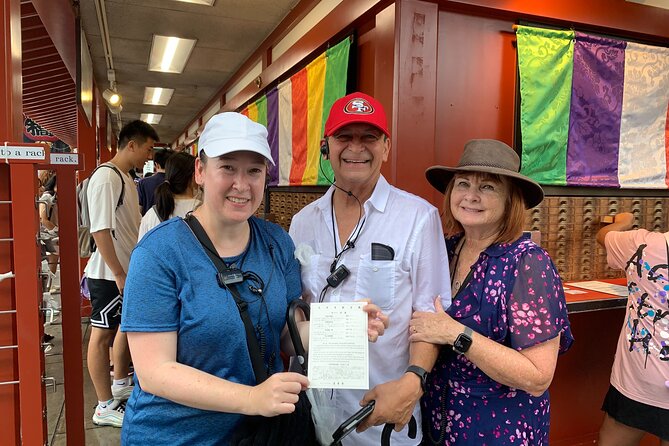
After the grand temple grounds, the route moves into Denboin Street and the Rokku area for about 45 minutes. This change of mood is welcome.
Rokku was Asakusa’s traditional entertainment district. The walk here looks at the area through the Meiji period and into the present day, with older buildings, restaurants, shopping streets, and reminders of the neighborhood’s long connection to theater and leisure.
This final section is less about famous monuments and more about reading the streets. The guide can point out places to eat, drink, and shop, including advice on local restaurants and izakayas. That practical information may be the most useful part of the tour if you plan to return to Asakusa later without a guide.
Some people will love the slower look at side streets and old-town details. Others may find 45 minutes too long if they are mainly interested in Sensoji. One critical experience felt the route took too long before reaching the temple, while another found that shopping received more attention than desired. Be clear about your interests at the start. A good guide can adjust the conversation, but the tour is designed as a history walk, not a fast temple visit.
The activity ends back at the meeting point. Plan for roughly 5 pm, assuming the tour runs its full advertised length.
What the $91.17 price buys you
At $91.17 per person, this is not a cheap way to see Sensoji. You can enter the temple grounds and walk Nakamise-dori without paying an admission fee. If you only want photographs, a self-guided visit costs much less.
The price makes more sense if you use the guide well. You are paying for a small group, English explanations, a structured route, snack samples, local food and shopping advice, and the chance to ask questions about religion, history, language, and customs. The maximum of eight is important. It is much easier to hear a person and ask follow-up questions in a group this size than in a large bus tour.
Several strong guide experiences center on the personal touch: help taking photographs, answers to many questions, and practical assistance such as finding luggage lockers. Those details are not guaranteed, but they show the kind of service the format can provide.
You do not receive hotel pickup, hotel drop-off, or general food and drinks. The included snack selection is modest, so budget separately for any meal or extra treats. I see the tour as good value for a first visit when you want context, not as the best deal for repeat visitors who already know Asakusa.
Timing, comfort, and who should book
The afternoon start works well if you want a slower morning or need time to reach Asakusa from another part of Tokyo. The route involves a moderate amount of walking, and comfortable shoes are essential. The tour operates in all weather, so bring suitable clothing and a water bottle.
The route is recommended for adults because of its historical focus, but families are welcome. Children under six can join free, though they do not receive the included items. Teenagers may enjoy it more than you expect if they like food, unusual facts, and the chance to ask questions. One family with three teenagers found the history engaging enough to spark interest in learning more.
I would choose this tour for:
- First-time visitors to Asakusa
- Adults who want Buddhism and Shinto explained in plain English
- Families with older children or teenagers
- People who want restaurant and shopping suggestions
- Anyone who prefers a small group to a large guided outing
I would skip it if you want a short, independent visit, dislike shopping streets, or have little patience for detailed historical explanation. Crowds and street noise can affect how easy it is to listen, even with the earphones.
Booking and cancellation details
Confirmation is provided at booking, and last-minute reservations are accepted up to two hours before the 1:30 pm start when space remains. The tour is near public transportation, and most people can take part.
You can cancel for a full refund up to 24 hours before the start time. Changes or cancellations inside that 24-hour window are not accepted for a refund. The minimum number of participants applies, so if the activity is canceled for that reason, you are offered another date or experience, or a full refund.
Should you book the Asakusa 1,400-year history exploration?
Book it if you want Sensoji to make sense rather than simply appear in your camera roll. The route gives you the river, the gates, the temple, the shrine, the shopping approach, and the old entertainment streets, while the small group leaves room for questions.
The strongest reason to go is the guide. Sachi, Aki, Yasu, Emiko, Amy, and Taka are among the guides associated with warm, informative outings, but delivery can vary. Use the earphones, speak up if the pace is too fast, and tell the guide whether you want more history, more food advice, or more time for photographs.
At $91.17, this is best treated as a paid orientation to Asakusa. You will pay more than you would for a walk on your own, but you gain structure, cultural context, included sweets, and advice that can shape the rest of your Tokyo stay. For a first visit, I think that is a fair trade.
FAQ
How long does the Asakusa history tour last?
The tour lasts approximately 3 hours and 30 minutes. It starts at 1:30 pm and ends back at the meeting point at about 5 pm.
Where does the tour start and finish?
The meeting point is Burger King Asakusa Azumabashi near Azumabashi Bridge in Taito City, Tokyo. The activity ends back at the same meeting point.
What places are included on the walking route?
The route includes the Sumida River, Asakusa Culture Tourist Information Center, Kaminarimon Gate, Nakamise Shopping Street, Hozomon Gate, Sensoji Temple, Asakusa Shrine, and Denboin Street in the Rokku area.
Are food samples included?
Yes. A selection of Japanese sweet snacks is included. Examples include melon pan, rice dumplings, rice crackers, and sweet puffed rice. Other food and drinks are not included.
How large is the tour group?
The maximum group size is eight people. This small group is intended to make it easier to hear the guide and ask questions.
Is the tour suitable for children?
Families are welcome, although the historical focus is recommended mainly for adults. Children younger than six may join without charge, but they are not entitled to the included snacks or other inclusions.
What happens if I need to cancel?
You can cancel at least 24 hours before the local start time for a full refund. Cancellations or changes made less than 24 hours before the start time are not accepted for a refund.
More Historical Tours in Tokyo
More Asakusa Tours in Tokyo
More tours in Tokyo we've reviewed












Asakusa Tours, compared.
 ★ 4.8Tokyo: Japanese Dance Cabaret Theater Asakusa-Kaguwa TicketFrom $492 hours
 ★ 4.7Tokyo: Meiji Shrine, Asakusa, Skytree Bus Tour and CruiseFrom $12210 hours
 ★ 4.9Tokyo: Roll and Authentic Sushi Making Class in AsakusaFrom $581h 40m
 ★ 4.8Tokyo: Asakusa Walking Tour with Sensoji Temple VisitFrom $222 hours
 ★ 5.0Tokyo Asakusa Rickshaw TourFrom $42
 ★ 4.5Tokyo Panoramic 1 Day: Meiji Shrine, Asakusa, Odaiba and SKYTREE®From $85