Reviewed · TEA CEREMONY & MATCHA
Sweets Making and Kimono Tea Ceremony at Tokyo Maikoya
The most memorable part of this Asakusa experience is the switch from spectator to participant. You do not simply watch a tea ceremony. You choose traditional clothing, help shape Japanese sweets, prepare matcha, and sit through the formal ceremony while wearing a kimono.
In This Article
- Key points to know before booking
- Why this Asakusa activity works so well
- Choosing a kimono and getting ready
- Making wagashi with your own hands
- Understanding the matcha ceremony
- Photo time in traditional clothing
- Group size, pace, and personal attention
- What the $112.29 price really covers
- Who will get the most from Maikoya
- Practical planning for your visit
- Should you book this tea ceremony?
- FAQ
- Where does the experience begin?
- What time does the activity start?
- How long does the experience last?
- Is transportation included?
- What is included in the price?
- Can children attend?
- Are photos allowed during the ceremony?
- What is the cancellation policy?
I especially like the hands-on wagashi session and the chance to learn what the tea ceremony gestures mean, rather than treating them as a photo backdrop. The small setting, with a stated limit of about 10 participants, also gives instructors time to help with the sweets and kimono dressing. The main consideration is that the sweets are shaped and decorated rather than made entirely from raw ingredients, and photography is limited during some ceremony moments.
Key points to know before booking

- Kimono dressing comes before the ceremony: Choose a kimono, obi, and hair accessory, with traditional hairstyling available as part of the experience.
- Wagashi making is practical but simple: You typically color and shape prepared sweet dough into two designs, then eat the sweets with matcha.
- Kurumi has received special praise: Her patient, friendly instruction is particularly helpful during the delicate sweets-making work.
- The experience lasts about two hours: It begins at 11:30 a.m. and finishes back at the Maikoya meeting point in Asakusa.
- Photo time is built in: You can take pictures in several settings, including an outdoor terrace, but tripods are not allowed.
- Children under seven cannot attend: This rule applies to the whole booking if a child under seven is in your group.
Why this Asakusa activity works so well

Tokyo offers plenty of polished cultural activities, but many leave you watching from the side. Maikoya’s format is more involving. In roughly two hours, you take part in several connected customs: clothing, confectionery, tea preparation, etiquette, and photography.
That combination gives the experience a clear rhythm. First comes the visual transformation of putting on a kimono. Then you work with your hands by making wagashi, the small traditional sweets commonly served with matcha. Finally, the activity slows down for the tea ceremony, where the earlier lessons begin to make sense.
I see this as a good first encounter with Japanese tea culture. You receive enough explanation to understand why the ceremony is formal, but you are not expected to spend an entire day studying every rule. The tone is welcoming and suitable for families, couples, and solo visitors who want a cultural activity that is easy to fit into a Tokyo schedule.
Maikoya is at 1-chōme-12-2 Asakusa, in Taito City. You make your own way there, and the activity ends at the same place. Since transportation and hotel pickup are not included, allow time to reach the tea house before the 11:30 a.m. start.
A few more Asakusa tours and experiences worth a look

Choosing a kimono and getting ready
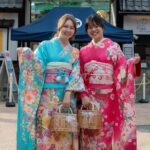
The kimono portion is more than a quick costume change. You choose from available kimonos, then select an obi and hair accessory. Staff help dress you and arrange the outfit, and several people have found this preparation to be one of the most enjoyable parts of the visit.
Women can also have their hair styled in a traditional up-do with a decorative flower. Men and boys can wear traditional clothing as well, making this a practical choice for families who want everyone included in the photographs.
The fitting is worth allowing a little patience. A kimono is structured clothing, and the obi is tied firmly to keep the outfit in place. That can feel snug, especially if you are used to loose holiday clothes. The reward is that the clothing gives the ceremony more meaning and makes the photos far more distinctive than ordinary sightseeing snapshots.
Sizing concerns are understandable, but the staff have accommodated a range of body types according to the experience feedback. Still, the available selection can vary by day, so you should approach the choice as selecting from what is on hand rather than ordering a particular pattern in advance.
The clothing also changes how you sit and move. You will be asked to follow the staff’s instructions, particularly during the ceremony. Comfortable attention is more useful here than rushing through the fitting.
Making wagashi with your own hands

The sweets session is the most playful section. Wagashi are traditional Japanese confections often served alongside matcha, and their shapes can reflect flowers, seasons, or other simple designs.
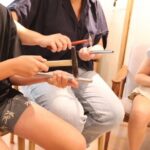
You typically make two sweets. The process is not a full confectionery class from the first ingredient onward. Instead, the prepared dough is colored and shaped by hand. That may sound modest, but it is exactly the right level for a short cultural activity. You can focus on form, color, and careful handling without needing specialist equipment or a long recipe.
The work takes more patience than you might expect. Small differences in pressure change the shape, and the finished sweets are meant to look neat as well as taste good. Kurumi, one of the instructors named in the feedback, is praised for giving calm, patient help while participants work through the details.
You receive the ingredients and utensils, and the finished sweets are eaten with matcha later. One account also notes that you leave with one of the sweets you prepared. Since the precise take-home arrangement may vary, ask the staff at the start if keeping one is important to you.
This part suits children old enough to follow careful instructions, teenagers, and adults who enjoy craft activities. It is also a useful counterpoint to the formal tea ceremony. After concentrating on the shape of a sweet, you are more attentive to the small movements involved in preparing tea.
Understanding the matcha ceremony

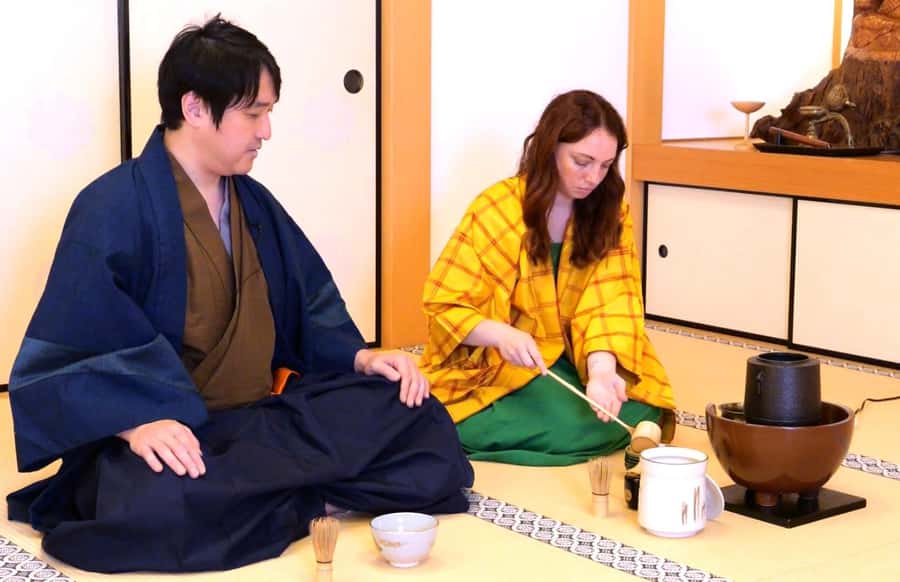
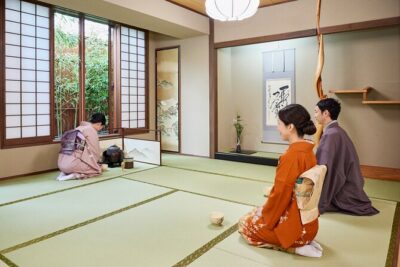
The tea ceremony is the quieter half of the experience. You learn basic etiquette and the cultural meaning behind the movements, then prepare and enjoy matcha with your wagashi.
Do not expect a casual cup of green tea served with a quick explanation. The ceremony follows a formal pattern, and the instructor demonstrates how to behave in the tearoom. You learn where to sit, how to receive the tea, and how to approach the sweets. The exact level of participation can depend on the group and the tea master’s instructions.
The ceremony is also explained in relation to calm and meditation. That context helps you see why the ritual values attention, order, and respect. Even if you do not remember every step, you come away with a better sense of why the tea ceremony is performed so deliberately.
Matcha has a stronger, more concentrated flavor than ordinary brewed green tea. The sweetness of wagashi balances it, which is why the two are traditionally served together. You receive green tea and water as part of the activity, with the sweets ingredients and utensils included.
Photography and video may be restricted during parts of the ceremony. Follow the tea master rather than trying to record every movement. The point of this section is to be present and attentive, and the staff provide time for pictures before or after the formal portion.
Photo time in traditional clothing

Photography is a major part of the appeal, and Maikoya provides guided opportunities to take pictures. You may pose in the tea house and in an outdoor garden or terrace setting, with traditional accessories such as an umbrella available in some scenes.
You can ask the staff to take pictures for you. This is useful for couples and families who would otherwise need to rely on a timer. Tripods are not allowed, so do not plan the session around one.
The photo time also gives you a chance to appreciate the kimono without the pressure of sitting through the ceremony. Move carefully and listen to instructions about where to stand. The outfit is formal and can restrict your stride, so this is not the time for hurried posing.
I would treat the photos as a welcome extra, not the entire reason to book. The best value comes from the combination of dressing, sweets, and tea. If you want a dedicated professional kimono photo shoot, this two-hour activity may feel too focused on cultural instruction. If you want a few memorable images tied to an actual ceremony, it fits well.



Group size, pace, and personal attention

The experience is designed as a small-group activity. The description gives a maximum of 10 participants, while the additional booking information gives a maximum of 12. Because those numbers differ, confirm the expected group size when reserving if space is important to you.
Even with a group near the stated limit, the activity has a personal feel because several parts require individual help. Kimono dressing, hair arrangement, and sweets shaping all work better when instructors can move around the room and answer questions.
The pace is steady rather than rushed. You have enough time to get dressed, make the sweets, learn about the ceremony, take photos, and drink the tea. At the same time, two hours is not long enough for an extended lesson in Japanese tea history or confectionery technique.
That balance makes the activity easy to add to a day in Asakusa. You can visit other sights before or after, but remember that the start time is fixed at 11:30 a.m. Plan your nearby sightseeing around the appointment rather than arriving at the meeting point after a long cross-city detour.
What the $112.29 price really covers

At $112.29 per person, this is not a bargain tea break. You are paying for a bundled cultural session that includes kimono dressing, hair styling or accessories where offered, ingredients and utensils for sweets making, green tea, water, instruction, and photo opportunities.
The value improves if you would otherwise book separate kimono rental, a sweets class, and a tea ceremony. In that case, Maikoya puts several activities in one visit and removes the need to coordinate different providers.
The price is less attractive if you only want to taste matcha or take a few kimono photographs. A large part of the cost reflects staff time, dressing assistance, and the small-group format. You also pay for convenience and a structured introduction to customs that can be difficult to understand when encountered alone.
Families should calculate the total carefully, since the fee is per person. The activity has been particularly well suited to families with older children and teenagers, but children under seven cannot enter the venue. If anyone in your party is younger than seven, the whole group cannot reserve this experience.
Who will get the most from Maikoya

I would recommend this activity to you if you want a friendly introduction to Japanese culture without committing to a full-day class. It is especially suitable for:
- Couples who want shared photos and a calm cultural activity
- Families with children aged seven and older
- First-time visitors curious about matcha and wagashi
- Solo visitors who prefer an organized, social setting
- Anyone who enjoys crafts, clothing, and food as part of cultural learning
It is less suitable if you dislike formal sitting, do not want to wear traditional clothing, or hope to make wagashi entirely from scratch. The sweets work is a guided decorating and shaping session, not a professional pastry course.
You should also know that the ceremony is not designed around unrestricted photography. If filming is your main aim, the tea master’s rules may frustrate you. The experience asks you to put the phone away at certain points.
Practical planning for your visit
The meeting point is Kimono Tea Ceremony MAIKOYA Asakusa, 1-chōme-12-2 Asakusa, Taito City, Tokyo 111-0032. It is near public transportation, but transportation itself is not included.
Use the mobile ticket and booking confirmation, and arrive with enough time to locate the tea house. The activity starts at 11:30 a.m. and returns to the meeting point at the end, so you do not need to arrange a separate return transfer.
Wear something that allows staff to dress you comfortably. The supplied information does not give a detailed clothing rule, so follow the venue’s instructions on the day. Expect to remove bulky outer layers during the kimono fitting.
Keep valuables secure. One particularly useful reminder comes from an incident in which a wallet was left at the studio and later recovered after staff stayed open to help. That was a happy ending, but checking your seat and dressing area before leaving is still the wiser plan.
Free cancellation is available up to 24 hours before the local start time for a full refund. Cancellations or changes made inside that window are not refunded or accepted.
Should you book this tea ceremony?
I would book it if you want more than a staged photograph. The strongest part of Maikoya is the way the pieces connect: you dress in traditional clothing, shape the sweets, learn why they accompany matcha, and then take part in the ceremony with a better understanding of what you are seeing.
The $112.29 price is fair for the amount included, particularly for families or couples who value instruction and photographs. It is not the right choice for a quick, low-cost tea tasting, and the wagashi work is simpler than a full cooking class.
Choose this experience for a warm, accessible introduction to Japanese customs in Asakusa. Confirm the group-size limit if you need a very small class, respect the photography rules, and leave room in your schedule for the kimono fitting to unfold at a relaxed pace.
FAQ
Where does the experience begin?
It begins at Kimono Tea Ceremony MAIKOYA Asakusa, located at 1-chōme-12-2 Asakusa, Taito City, Tokyo 111-0032, Japan.
What time does the activity start?
The scheduled start time is 11:30 a.m.
How long does the experience last?
The activity lasts approximately two hours.
Is transportation included?
No. Transportation, hotel pickup, and hotel drop-off are not included. You meet at the tea house and finish at the same location.
What is included in the price?
The experience includes the kimono wearing session, ingredients and utensils for making Japanese sweets, green tea, and water.
Can children attend?
Children under seven cannot enter the tea ceremony venue. If a child under seven is in your party, the group cannot reserve this experience.
Are photos allowed during the ceremony?
Photography and video may be limited during parts of the ceremony. Tripods are not allowed, and you should follow the tea master’s instructions.
What is the cancellation policy?
You can cancel at least 24 hours before the local start time for a full refund. Cancellations or changes made less than 24 hours before the start are not accepted or refunded.
More Tea Ceremony & Matcha in Asakusa
More tours in Asakusa we've reviewed




Tea Ceremony & Matcha, compared.
 ★ 5.0Matcha Making Class in Tokyo with Authentic Japanese Sweets SetFrom $21
 ★ 5.0Kimono Tea Ceremony at Tokyo, Asakusa MaikoyaFrom $55
 ★ 5.0Tokyo: Traditional Tea Ceremony with a Tea MasterFrom $381 hour
 ★ 4.5Dynamic Tokyo: Tokyo Tower, Tea Experience, Bay Cruise Day TourFrom $99
 ★ 4.9Tokyo: Matcha Making Experience with Mochi Sweets in AsakusaFrom $221 hour
 ★ 4.7Tokyo: Matcha and Kimono ExperienceFrom $57