Reviewed · ASAKUSA TOURS
Kimono rental in Asakusa Tokyo
The best part of this Asakusa experience is that kimono dressing becomes more than a quick costume change. Staff help with the layers, obi, hairstyle, hair ornaments, sandals, and handbag, then you can walk through Tokyo’s oldest district dressed for the part. Add the matcha lesson and a photo session near Sensoji Temple, and you have a compact cultural outing with plenty of room for your own exploring.
In This Article
- Key points
- Dressing for Asakusa, not just putting on a robe
- What happens during the two-hour appointment
- The matcha lesson adds meaning to the outfit
- Walking from YUI to Sensoji Temple
- The 30 or 60-minute photo option
- What the $42.70 price really covers
- The care that makes this suitable for families
- Weather, seasons, and clothing choices
- Who should book this Asakusa experience
- Practical details before you reserve
- Should you book Kimono Rental YUI?
- FAQ
- Where does the kimono rental experience start?
- Where does the activity end?
- How long does the experience take?
- Is matcha tea included with kimono rental?
- Can children participate?
- Is photography included?
- Are hair styling and accessories included?
- Can wheelchair users take part?
I like the wide choice of clothing, from easy-to-wear light kimono and summer yukata to traditionally made silk styles. I also like that the hair styling and accessories are included, since those details make the finished look feel complete. The main drawback is that the advertised $42.70 price does not cover every extra: makeup, some accessories, large luggage storage, and matcha are separate costs.
Key points
- Walk in your kimono until 17:30: After dressing, you can explore Asakusa at your own pace before returning the clothing.
- Photo sessions are optional: Add 30 or 60 minutes with a professional photographer around Sensoji Temple and the Sumida River.
- Hair and finishing touches are included: Staff provide a suitable hairstyle, hair accessories, geta sandals, and a traditional handbag.
- Children and wheelchair users are welcome: Kids’ kimono and kimono options for wheelchair users are available.
- Small standard group size: The activity lists a maximum of five people, so larger groups should contact the shop before booking.
- Matcha requires careful plan checking: Kimono rental alone does not include tea or sweets, and matcha is not served to children under seven.
Dressing for Asakusa, not just putting on a robe
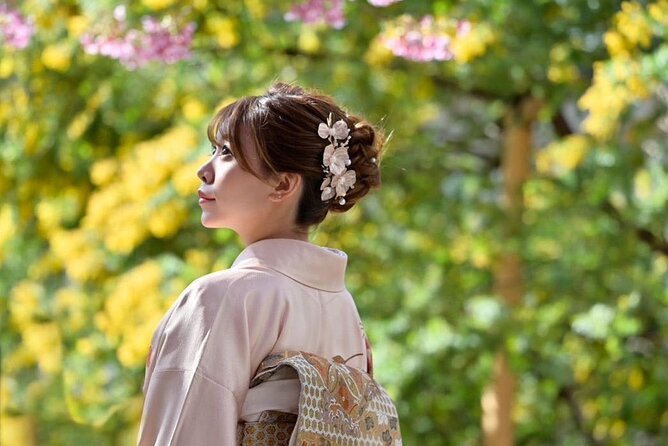
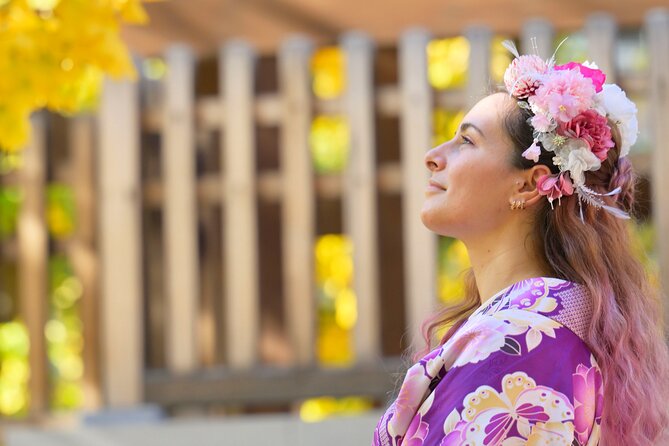
Kimono dressing takes patience. The garment is wrapped, tied, and adjusted with care, and the obi belt gives the outfit its shape. At Kimono Rental YUI, the staff also arrange your hair and add colorful accessories, so the final appearance is more than a rented robe over street clothes.
That care matters because Asakusa is one of Tokyo’s most recognizable settings for traditional dress. You are close to Sensoji Temple, old-style shopping streets, narrow back lanes, and the Sumida River. A kimono fits the surroundings in a way that a quick studio costume can’t quite match.
You can choose a kimono or a summer yukata. A yukata is lighter and generally easier to wear in warm weather, while the more formal options may suit a special occasion or a portrait session. The shop also offers traditionally made silk kimono for official occasions, though you should expect any higher-level selection or special accessory to be checked when you arrive.
The selection appears to cover adults and children. Children as young as one year old can take part, and the shop has kimono options for wheelchair users. That makes this a useful choice for families who often find cultural dress-up activities limited by age or mobility.
A few more Asakusa tours and experiences worth a look
What happens during the two-hour appointment
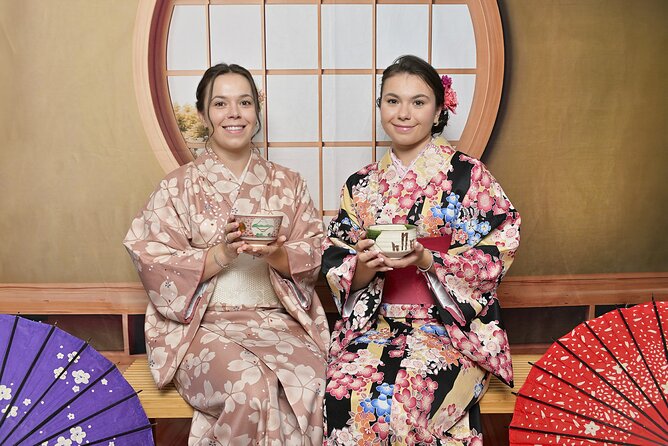
The experience takes about two hours, though the clothing may be kept for much longer. The meeting point is at 1-chōme-16-2 Asakusa in Taito City, and the activity finishes back there when you return the kimono.
First, you select your outfit. Take a moment here. Color and pattern matter in photographs, but comfort matters just as much if you plan to walk around Asakusa afterward. Ask about the lighter options if you are visiting in warm weather or want to spend several hours outdoors.
The staff then dress you and arrange your hair. Hair styling is included, along with hair accessories, geta sandals, and a traditional handbag. Men’s hair styling is not included, so male participants should plan to arrange their own hair if that is important to them.
Makeup is also not included. You can pay for it separately at your own expense, or arrive ready for photographs. The included styling is useful, but it is not a full beauty package.
Some extra accessories, such as obijime, cost an additional 550 yen. Large suitcases are not included in the rental price either. Storage costs another 550 yen, so leave big luggage at your hotel or use another storage option if possible.
The matcha lesson adds meaning to the outfit
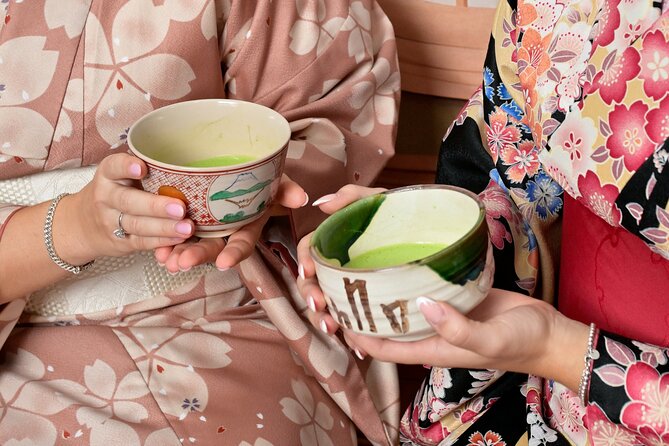
The tea portion is described as a short lesson on how to enjoy Japanese matcha properly. It introduces the etiquette and spirit around tea, rather than treating matcha as just a sweet drink or photo prop.
This is a good pairing with the kimono. The clothing shows how much thought goes into appearance, while the tea lesson introduces the quiet manners and hospitality that shape the ceremony. You learn through a small, manageable activity rather than a long formal program.
Pay close attention to the plan you choose. Kimono rental plans do not include matcha tea or sweets. The tea experience needs to be part of the selected option or arranged as an additional service. The supplied details also state that children under seven are not served matcha because it contains caffeine. One family with children as young as four was able to enjoy the tea experience, but you should confirm exactly what younger children will receive before booking.
The tea lesson may be the most worthwhile part for anyone interested in Japanese customs. The clothing is visually striking, but the tea etiquette gives the outing cultural context. It also provides a calmer pause before you head outside for photographs or a walk.
Walking from YUI to Sensoji Temple
Once dressed, you can explore Asakusa on your own until 17:30. That extended rental period is one of the strongest features here. You are not pushed straight back into ordinary clothes after a brief photo stop.
Sensoji Temple is the natural focus. Its large temple grounds and nearby streets offer the setting most people picture when they think of traditional Tokyo. The photographer, if you book that add-on, knows the area and can guide you to photogenic locations around the temple and the Sumida River.
You will need to remember that you are walking in geta, the wooden Japanese sandals supplied with the outfit. They complete the look, but they may not be as easy as modern shoes over a long afternoon. Keep your pace sensible, and consider how much walking you want to do before choosing a more formal outfit.
The freedom to wander also lets you set your own rhythm. You can take pictures with family, stop at shops, and see Asakusa without staying with a group. The tradeoff is that you must manage the kimono carefully and return to the shop on time.
The 30 or 60-minute photo option
The photo session is an add-on, not part of every rental plan. You can choose either 30 or 60 minutes with a professional photographer. The shorter session suits someone who mainly wants a few polished portraits near Sensoji Temple. The longer option gives you more time for different back streets, temple views, and river-area settings.
This option makes sense if you are traveling with family or as a couple and want photographs of everyone together. Taking self-timer pictures in a kimono is possible, but it rarely captures the details of the outfit as well as a photographer can.
The photographer is familiar with the nearby locations and can introduce you to spots around Sensoji and the Sumida River. That local guidance is useful because the most attractive background may be on a quieter side street rather than directly in front of the main temple entrance.
Edited photo data is sent for download within a week. Do not expect the finished images immediately at the shop. If you are leaving Japan soon, check that the delivery timing works for you and that you provide the correct contact details.
The photo option does add to the cost, but it may be better value than paying for a separate portrait session elsewhere. You are already dressed, styled, and in one of Tokyo’s most suitable settings. The key question is how much you value finished photographs compared with simply taking your own pictures during the day.

What the $42.70 price really covers
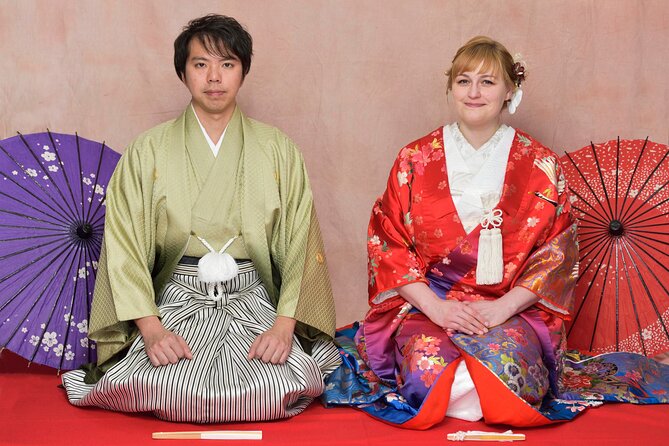
At $42.70 per person, the base price is reasonable for a short cultural activity in central Tokyo, especially because it includes the kimono or yukata, obi, dressing help, hair styling, hair accessories, footwear, and handbag.
The price is less simple than it first appears. You may need to budget extra for:
- Large luggage storage, 550 yen
- Special accessories such as obijime, 550 yen
- Makeup, at your own expense
- Men’s hair styling, at your own expense
- Matcha tea and sweets if your selected rental plan does not include them
- The optional 30 or 60-minute photography session
I would compare plans carefully before paying. A low base price is useful if you want the clothing and a walk around Asakusa. If you want tea, professional photographs, makeup, and special accessories, the final amount will be higher.
Group discounts are available, which may help families or friends booking together. The standard maximum is five people. One large family of seven arranged their visit directly with the shop, but that should not be treated as the normal booking limit. Contact the provider before making plans for a larger party.
The care that makes this suitable for families
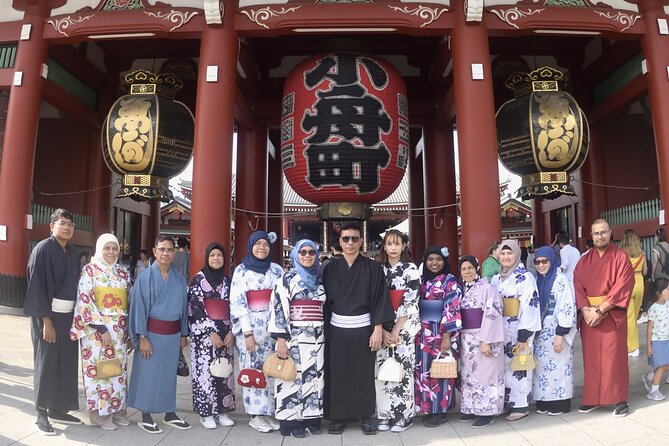
The strongest feature for families is the staff’s patient approach to dressing. A child has to stand still while several layers are adjusted, and younger children may find the process tiring. The shop has worked with children from age one and offers children’s kimono, so families have more flexibility than at many formal cultural activities.
A family can also combine different levels of participation. Adults may choose a more formal kimono, older children might prefer a colorful style, and younger children can be dressed in a simpler outfit. You should still allow enough time for everyone to be ready, especially in a larger party.
The tea portion needs a little more planning for children. Matcha is not served to anyone under seven, so ask what the younger members of your group can take part in. The supplied experience details include a family that enjoyed tea with children, but caffeine restrictions remain part of the service.
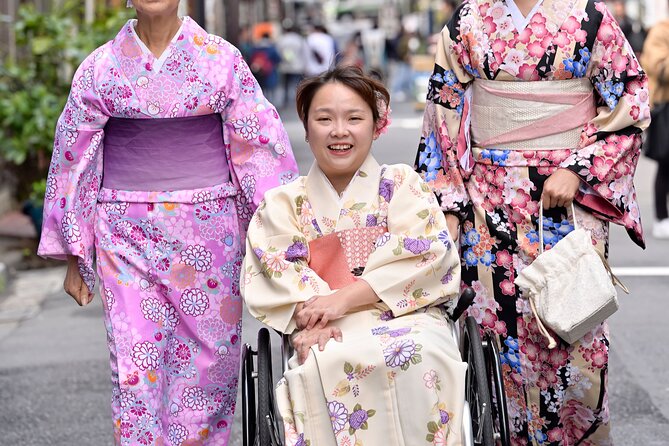
Wheelchair users can participate, and the shop has kimono options designed for wheelchair use. This is an important practical point, though the details do not explain the exact dressing process or route conditions. If you use a wheelchair, contact the shop in advance to discuss the garment, transfer needs, and the planned photo route.
Service animals are allowed, and the shop is near public transportation. Most people can participate, but the clothing, sandals, and walking route make it sensible to think honestly about comfort and mobility.
Weather, seasons, and clothing choices
The experience works in different seasons because the shop offers different types of kimono and yukata. A summer yukata may be the sensible choice in hot weather, while a heavier or more formal kimono can suit cooler months.
Weather also affects the photo plan. The shop has a studio, so photographs can still take place if outdoor conditions are poor. That gives the add-on more value, since your portraits do not depend entirely on a clear day.
Outdoor photographs can change with the season. Cherry blossoms, autumn leaves, temple streets, and winter light create different settings. One portrait session in late December included red leaves and backlighting, while another took place during cherry blossom season. You cannot order a particular season on demand, but the area offers something different throughout the year.
If you plan to walk for the rest of the day, choose comfort over the most elaborate outfit. If your main goal is a short photo session and tea lesson, you may prefer a more formal style. Tell the staff what you want to do after dressing so they can help match the outfit to your plans.
Who should book this Asakusa experience
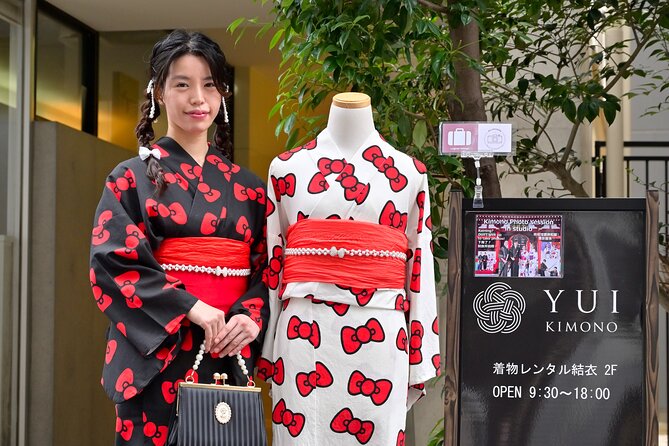
I would recommend it most strongly to first-time visitors who want an easy introduction to Japanese dress and tea customs without committing to a full-day cultural course. It also suits couples, friends, and families who want photographs in a setting that feels distinctly Tokyo.
It is a good fit if you like hands-on activities. You are not just watching a ceremony or standing beside a display. You choose clothing, get dressed, learn basic tea etiquette, and then take the experience into the streets.
Families should check the five-person limit and the matcha rule for children under seven. Large groups may need to contact the shop directly. Anyone with a tight schedule should also allow time for dressing, photography, walking, and returning the outfit by 17:30.
I would be less enthusiastic if you dislike restrictive clothing, wooden sandals, or being photographed. The experience is built around appearance and tradition. It is not simply a quick rental counter where you put on a garment and leave in five minutes.
Practical details before you reserve
The meeting point is 1-chōme-16-2 Asakusa, Taito City, Tokyo 111-0032. The activity ends at the same location, so you do not need to arrange a separate return point.
You receive booking confirmation at the time of reservation. Free cancellation is available if you cancel at least 24 hours before the scheduled start time. Cancellations or changes made less than 24 hours before the start are not accepted for a refund, and cut-off times follow Tokyo local time.
The activity has a maximum of five people under its standard terms. Group discounts may apply, but a discount does not remove the group-size limit. Contact Kimono Rental YUI, the provider listed as 着物レンタル結衣, if your party is larger or has special needs.
Wear something that makes changing easy. The supplied information does not specify a required base outfit, so the practical approach is to avoid bulky clothing and arrive ready for the dressing process. If you want makeup, arrange it yourself or ask about the extra service before arrival.
Should you book Kimono Rental YUI?
Book it if you want a flexible Asakusa outing that combines dressing, a small cultural lesson, and the chance to walk through the district in traditional clothing. The included hair styling, accessories, sandals, and handbag make the base price more useful than a bare clothing rental.
Add the photographer if finished portraits matter to you, especially for a couple or family visit. Choose 30 minutes for a compact session and 60 minutes if you want several locations around Sensoji and the Sumida River.
Skip it if you want a formal, extended tea ceremony or a fully inclusive beauty package. Matcha, sweets, makeup, some accessories, and certain styling services may cost extra. For most people who understand those limits, this is a friendly, practical way to add a memorable cultural hour to an Asakusa day.
FAQ
Where does the kimono rental experience start?
It starts at 1-chōme-16-2 Asakusa, Taito City, Tokyo 111-0032, Japan.
Where does the activity end?
The activity ends back at the meeting point after you return the kimono.
How long does the experience take?
The appointment lasts about two hours, but you can explore Asakusa in the rented kimono until 17:30 before returning it.
Is matcha tea included with kimono rental?
Kimono rental plans do not include matcha tea or sweets. Check that the plan you select includes the tea experience if you want it.
Can children participate?
Yes. Children over one year old can participate, and children’s kimono are available. Matcha is not served to children under seven because it contains caffeine.
Is photography included?
Photography is available as an add-on. You can choose a 30 or 60-minute session with a professional photographer around Sensoji Temple, the Sumida River, and nearby streets.
Are hair styling and accessories included?
Hair styling, hair accessories, geta footwear, and a traditional handbag are included. Makeup, men’s hair styling, and some accessories such as obijime cost extra.
Can wheelchair users take part?
Yes. Kimono options for wheelchair users are available. Service animals are also allowed, and the shop is near public transportation.
More Asakusa Tours in Asakusa
More tours in Asakusa we've reviewed


Asakusa Tours, compared.
 ★ 4.8Tokyo: Japanese Dance Cabaret Theater Asakusa-Kaguwa TicketFrom $492 hours
 ★ 4.7Tokyo: Meiji Shrine, Asakusa, Skytree Bus Tour and CruiseFrom $12210 hours
 ★ 4.9Tokyo: Roll and Authentic Sushi Making Class in AsakusaFrom $581h 40m
 ★ 4.8Tokyo: Asakusa Walking Tour with Sensoji Temple VisitFrom $222 hours
 ★ 5.0Tokyo Asakusa Rickshaw TourFrom $42
 ★ 4.5Tokyo Panoramic 1 Day: Meiji Shrine, Asakusa, Odaiba and SKYTREE®From $85