Reviewed · ASAKUSA TOURS
Art Japanese Fan Painting Experience in Tokyo Asakusa
A plain Japanese fan becomes your own souvenir in this relaxed Asakusa craft class. You choose a folding sensu or round uchiwa, then decorate it with stamps, watercolors, markers, and colored pencils. I like the freedom to make something personal, and I like that the small class, capped at eight people, gives staff time to help.
In This Article
- Key points to know before booking
- Turning a plain fan into a Japanese keepsake
- Choosing between a sensu and an uchiwa
- The step-by-step 50-minute craft session
- Why the small group size matters
- Making good use of the limited time
- A traditional object with modern creative freedom
- Price, location, and practical value
- Who will enjoy this Asakusa activity
- Booking timing and cancellation flexibility
- Should you book the fan painting class?
- FAQ
- Where does the Japanese fan painting experience take place?
- How long does the activity last?
- What type of fan can I decorate?
- Do I make the fan from scratch?
- What materials are available?
- Can beginners take part?
- Can I take the fan home?
- How many people can join the class?
- Is the meeting point also the end point?
- What is the cancellation policy?
The main catch is the clock. You have about 45 to 50 minutes, so a rough design in mind will help, especially if you do not think of yourself as artistic. The activity is simple, but careful artists may feel rushed while waiting for paint to dry.
Key points to know before booking
- Choose your fan: Pick either a traditional folding sensu or a round uchiwa.
- Make the design yourself: Use stamps, watercolors, markers, colored pencils, and other paints on a plain ready-made fan.
- Plan before you arrive: A quick idea for colors or a pattern helps you use the short session well.
- Get a personal souvenir: Once the paint dries, you can take your handmade fan home.
- Small group setting: The maximum group size is eight, with staff support for beginners.
- Good break from sightseeing: The class takes place at Pink. ASAKUSA Japanese Experience Cafe and BAR in Asakusa and lasts about 50 minutes.
Turning a plain fan into a Japanese keepsake
This experience takes a familiar Japanese object and gives you room to make it personal. You are not watching an artisan create a fan from raw materials. Instead, you decorate a plain, ready-made fan with your own design.
That distinction matters. If you want a lesson in the full craft of fan construction, this is not it. If you want to make a useful souvenir with your own hands, the format works well. You leave with something tied to your time in Tokyo, rather than another factory-made item from a shop shelf.
The central idea is a meeting of old and new. The sensu and uchiwa are traditional fan forms, while stamps and free-form painted designs make the activity easy for first-time crafters. You can create a pattern that looks distinctly Japanese, or simply use colors and shapes that suit you.
I like that there is no single correct result. A neat floral pattern, an autumn-colored design, or an abstract arrangement of stamps can all work. One participant created a fan using the colors of autumn, which is a good reminder that a simple seasonal theme can give your design direction.
A few more Asakusa tours and experiences worth a look
Choosing between a sensu and an uchiwa
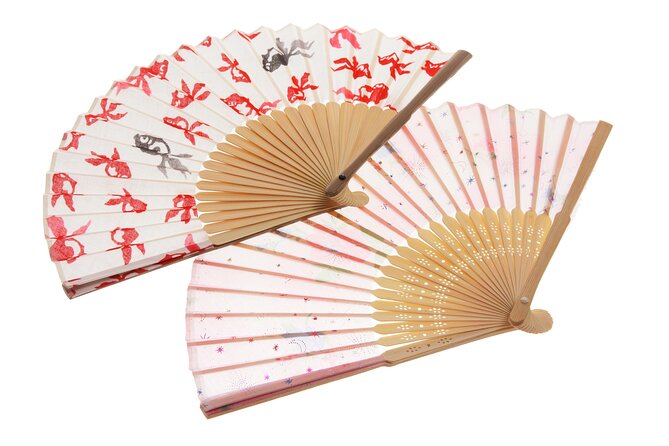
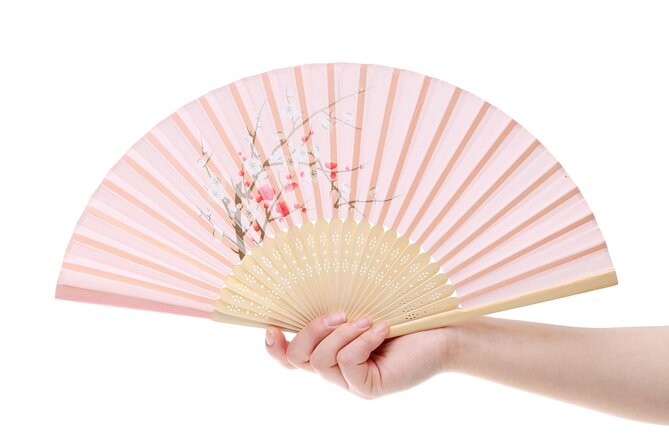
Your first decision is the type of fan. A sensu is the folding fan, made with several slats joined at one point. It is compact when closed and has the classic fan shape many people associate with Japanese culture.
An uchiwa is the round fan. It does not fold, so it has a larger fixed surface and may feel easier if you want room for a broad design. The shape also gives your artwork a different look. You can choose based on appearance, ease of painting, or how you plan to use the finished piece at home.
The choice is part of the fun, but it also affects your design process. A folding sensu gives you panels and curves to consider. An uchiwa offers one open area where a central image or pattern may be easier to place.
You do not need to bring an artistic plan worthy of a museum wall. Still, I suggest deciding on a basic idea before the class begins. Pick two or three colors, think of a simple theme, or save an image of a pattern you like. The short session goes quickly once you start working.
The step-by-step 50-minute craft session
The activity follows a clear sequence, which keeps the class approachable even if you have never painted a fan.
First, you choose your sensu or uchiwa. This is the moment to think about the kind of souvenir you want. A folding fan feels traditional and portable, while a round fan gives you a different canvas for your artwork.
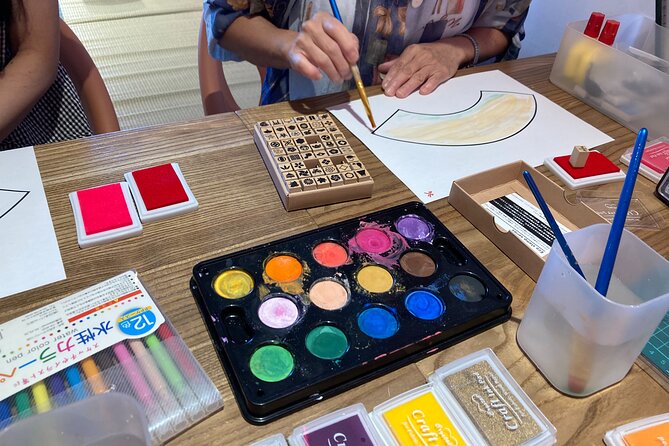
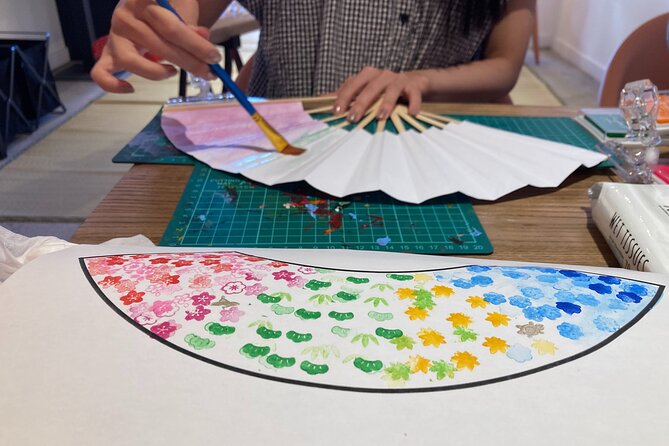
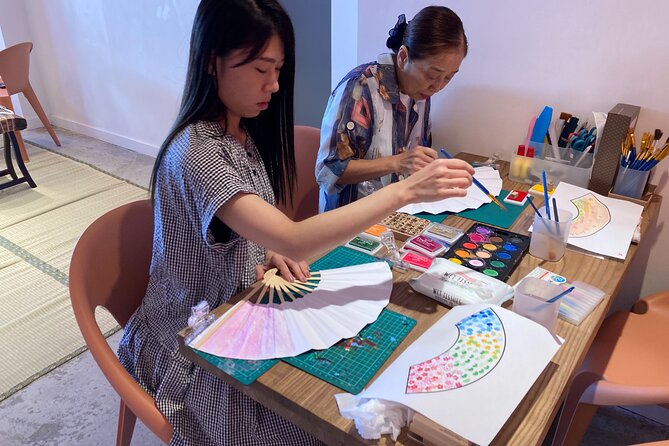
Next comes practice. You can draw a draft on a blank fan mold before putting paint on the finished item. This is useful if you are nervous about making a mistake. You can test the placement of stamps, work out the shape of a design, or check how your colors look together.
You may also skip the draft and paint directly on the fan. That option suits confident artists and people who prefer a loose, spontaneous result. It also saves a little time, which can matter during a short session.
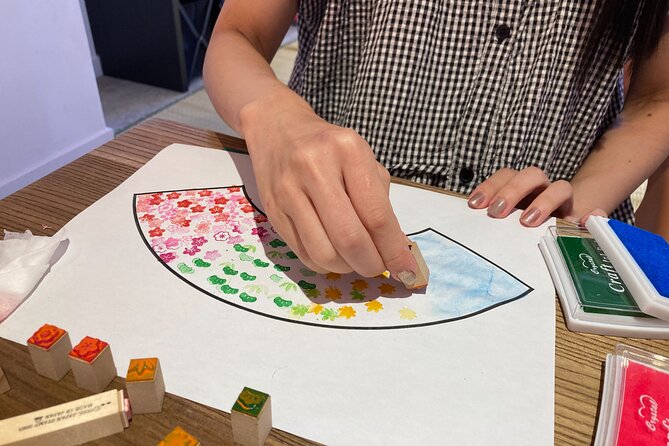
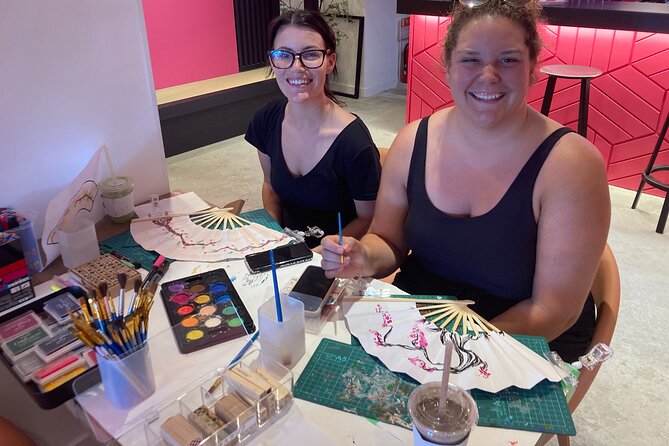
After planning, you decorate the ready-made plain fan. The materials include watercolors, stamps, colored pencils, markers, and other paints. Stamps are especially useful if you want repeated shapes without drawing each one by hand. You can combine stamped forms with freehand marks to keep the design from looking too uniform.
Staff are available to support you. Patricia is named in one experience account as a helpful teacher who also talked about Japanese culture and daily life in Japan. Another account notes that the assisting woman spoke five languages, though the available information does not identify her by name. Multilingual help can make the class easier for international visitors, but the exact staff member working your session may vary.
Finally, the fan needs time to dry. When it is ready, you take it home. The drying stage is part of the reason the class keeps its designs simple and its timing tight. Do not expect an elaborate multi-layer painting process. Think of this as a focused creative hour with a finished object at the end.
Why the small group size matters
The class allows no more than eight people. That is a useful limit for a hands-on activity. You have supplies in front of you, a fan that needs careful handling, and occasional questions about how to use the stamps or paints.
A small class also helps the mood. This is not a noisy group performance or a packed demonstration. The setting is Pink. ASAKUSA Japanese Experience Cafe and BAR, where the activity has a café and bar atmosphere rather than a formal art studio feel.
That setting can make the class a pleasant pause in a full day around Asakusa. One account specifically describes it as a relaxing break from the crowds and the usual rush between sights. I can see the appeal. A short craft class gives you permission to sit down, focus on one task, and stop checking the next item on your Tokyo schedule.
The staff may also take photos during the activity. One account notes that the helper took many photos and prepared drinks. These details are not guaranteed for every session, but they suggest that the class can feel social and personal, not just transactional.
Making good use of the limited time
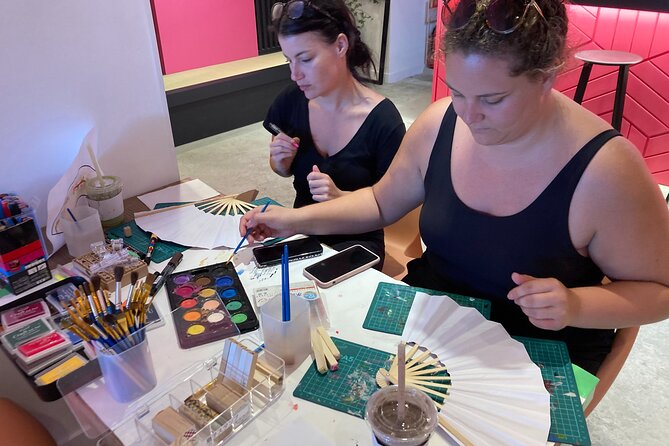
The most useful advice is simple: arrive with a plan. You are given time to practice, but the full session lasts only about 50 minutes, and one participant felt that the active painting time was closer to 45 minutes.
You do not need to sketch every detail in advance. A basic plan is enough:
- Choose a main color family.
- Decide if you want stamps, freehand painting, or both.
- Pick a simple theme, such as flowers, leaves, seasons, or geometric shapes.
- Leave some open space so the fan does not become crowded.
- Remember that a folding fan has panels and curves that affect your design.
If you are not comfortable drawing, stamps are your friend. They give you a repeatable shape and let you build a pattern quickly. Colored pencils and markers can add outlines or small details without the drying time of heavy paint.
If you are working with children, friends, or family, you may want each person to choose a different color scheme. That makes the finished fans easier to tell apart and turns the class into a shared activity. The available information confirms that most people can participate, but it does not give a specific minimum age or child policy, so check before booking if that point matters to you.




A traditional object with modern creative freedom
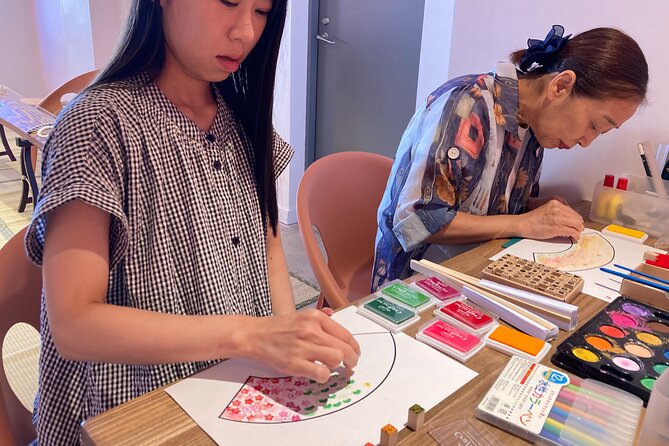
The fan has a practical purpose, creating a breeze, but this class treats it as both an object and a small work of art. The traditional shape gives your souvenir a strong connection to Japan. Your design gives it a personal story.
That balance is the best reason to choose this activity instead of buying a finished fan. A shop-bought fan may have more polished artwork, but your painted fan records where and how you made it. Even an imperfect brush mark can become part of the memory.
The activity also avoids the pressure of making a technically perfect piece. Staff support beginners, and the materials allow you to work with stamps, paint, and colored pencils rather than relying on advanced brush skills. I would still keep your design manageable. A fan covered in tiny details may be difficult to finish before the session ends.
The class is especially appealing if you have spent several days looking at temples, shops, and city streets but want a souvenir connected to your own effort. It gives you something to do, not just something to see.
Price, location, and practical value
The listed price is $24.71 per person. For roughly 50 minutes, that is not the cheapest way to pass time in Tokyo. You are paying for the fan, art materials, instruction, staff assistance, and the chance to take home a finished object.
The value improves if you care about the making process. A plain fan alone would cost less, but the point here is the guided activity and the personal design. You also avoid committing to a long workshop. The class fits into a sightseeing day without taking half a day away from Asakusa.
The meeting point is Pink. ASAKUSA Japanese Experience Cafe and BAR, at The Room Asakusa 4F, 1-chome-16-11 Asakusa, Taito City, Tokyo 111-0032. It is near public transportation, and the activity ends at the same location. Since the class takes place upstairs, allow enough time to find the building and reach the meeting point.
A mobile ticket is provided, which is handy if you are already using your phone for Tokyo plans. Confirmation arrives when you book. The group limit of eight helps keep the price tied to a more personal class rather than a large commercial workshop.
The venue has a toilet, but there is a step down to reach it. Most people can participate, though anyone concerned about steps or mobility should take this detail seriously and contact the provider before booking.
Who will enjoy this Asakusa activity
I would choose this class for several kinds of visitors.
It suits couples and friends who want a shared souvenir. Each person can make a different design, and the short format leaves plenty of time for other plans in Asakusa.
It also works for solo visitors. The staff support means you do not need to arrive with a group, and the creative task gives you an easy way to spend a quiet hour.
Families may like the hands-on format, especially if children enjoy colors and stamps. However, because no age requirements are provided, confirm the child policy before you reserve.
This is also a good choice for anyone who wants a break from crowded sightseeing. The class is indoors, focused, and calm. One person especially valued the chance to step away from the usual running around, which captures the experience well.
Art experts may find the activity basic. You work on a ready-made fan rather than learning how to build the frame, attach the paper, or create a traditional painted masterpiece. That is not a flaw, but it sets the right expectation.
Booking timing and cancellation flexibility
The activity is commonly booked about 12 days in advance. That does not mean you must reserve exactly 12 days ahead, but it suggests that adding it to your Tokyo plan early is sensible, especially if your sightseeing schedule has limited free periods.
Free cancellation is available if you cancel at least 24 hours before the start time. Cancellation within 24 hours is not refundable, and changes made in that period are not accepted. The cut-off follows local Tokyo time.
Since the class lasts less than an hour, it is easy to place between other Asakusa plans. Still, avoid booking it too close to another timed activity. Finding the building, getting upstairs, choosing your materials, and finishing your fan all take part of the available window.
Should you book the fan painting class?
Book it if you want a personal Japanese souvenir, a quiet creative break, and an activity that welcomes beginners. The small group, choice of fan styles, and mix of stamps and paints make it approachable without requiring serious art skills.
Skip it if you want a long traditional craft lesson or a detailed study of how fans are made. The class is about decorating a ready-made fan, and the short time means you should keep your design simple.
For most visitors, the best approach is to choose a basic color idea before arriving and treat the finished fan as a memory, not a test of artistic talent. At $24.71, the value comes from the time spent making it and the fact that you take home something nobody else designed in quite the same way.
FAQ
Where does the Japanese fan painting experience take place?
It takes place at Pink. ASAKUSA Japanese Experience Cafe and BAR, The Room Asakusa 4F, 1-chome-16-11 Asakusa, Taito City, Tokyo 111-0032.
How long does the activity last?
The experience lasts approximately 50 minutes. The active working time may be closer to 45 minutes, so plan your design promptly.
What type of fan can I decorate?
You can choose either a sensu, which is a folding fan, or an uchiwa, which is a round fan.
Do I make the fan from scratch?
No. You paint directly on a ready-made plain fan or uchiwa. The experience focuses on decorating the fan rather than constructing its frame or attaching the paper.
What materials are available?
You can use stamps, watercolors, markers, colored pencils, and other paints to create your design.
Can beginners take part?
Yes. Staff provide support, and most people can participate. You can also practice a design on a blank fan mold before painting the finished fan.
Can I take the fan home?
Yes. Once the paint has dried, you can bring your completed fan home.
How many people can join the class?
The activity has a maximum of eight participants.
Is the meeting point also the end point?
Yes. The activity ends back at the meeting point.
What is the cancellation policy?
You can receive a full refund if you cancel at least 24 hours before the experience start time. Cancellations or changes made within 24 hours are not accepted for a refund.
More Asakusa Tours in Asakusa
More tours in Asakusa we've reviewed




Asakusa Tours, compared.
 ★ 4.8Tokyo: Japanese Dance Cabaret Theater Asakusa-Kaguwa TicketFrom $492 hours
 ★ 4.7Tokyo: Meiji Shrine, Asakusa, Skytree Bus Tour and CruiseFrom $12210 hours
 ★ 4.9Tokyo: Roll and Authentic Sushi Making Class in AsakusaFrom $581h 40m
 ★ 4.8Tokyo: Asakusa Walking Tour with Sensoji Temple VisitFrom $222 hours
 ★ 5.0Tokyo Asakusa Rickshaw TourFrom $42
 ★ 4.5Tokyo Panoramic 1 Day: Meiji Shrine, Asakusa, Odaiba and SKYTREE®From $85