Reviewed · ASAKUSA TOURS
Mizuhiki Accessories Crafting in Asakusa Tokyo
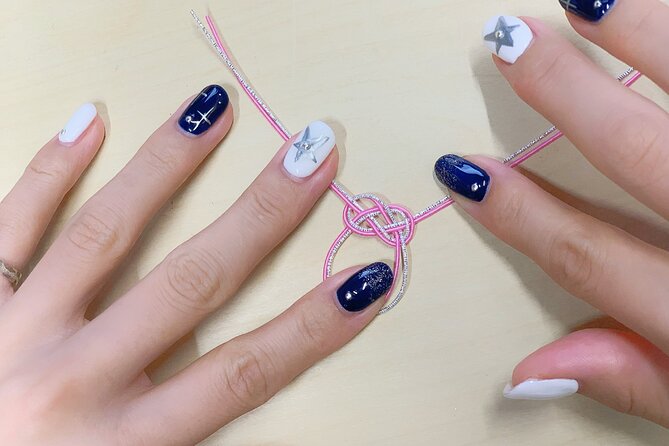
Mizuhiki turns a simple cord into a small piece of Japanese design. In this 50-minute Asakusa workshop, you learn the basic Awaji knot, choose your colors, and finish with an accessory you can carry home. It is a hands-on way to meet a tradition usually seen on gift envelopes and New Year decorations.
In This Article
- A Small Cord With a Big Meaning
- Finding Pink.Asakusa in the Fourth-Floor Cafe
- Starting With the Awaji Knot
- Choosing Colors and a Design
- Making Your Wearable Souvenir
- Patricia’s Teaching Style and Group Size
- What the $28.40 Price Buys You
- Practical Details Before You Book
- Who Will Enjoy This Asakusa Workshop
- Should You Book the Mizuhiki Experience?
- FAQ
- How long does the mizuhiki workshop last?
- Where does the workshop meet?
- What will I learn first?
- What can I make during the activity?
- Is the workshop suitable for beginners?
- How many people can join the class?
- Can I cancel for a full refund?
I like two things right away: the small group size keeps the class personal, and the finished item is light, useful, and easy to pack. Patricia is especially patient with beginners and can guide you in English. The one limitation is time. Fifty minutes gives you a satisfying introduction, not a full course in every mizuhiki technique.
- Learn the Awaji knot first, the foundation for the accessory designs.
- Choose from many mizuhiki colors and types, then select a sample design.
- Finish with earrings, a key chain, or a strap, depending on your choice.
- Work with Patricia, an encouraging instructor praised for clear, patient guidance.
- Meet at Pink.Asakusa on Orange Street, near public transportation in central Asakusa.
- Keep the group to eight people, a useful size for a craft class.
A Small Cord With a Big Meaning
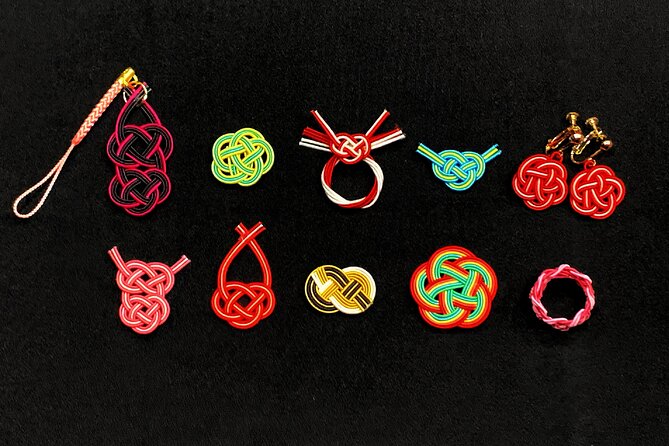
Mizuhiki is decorative cord used on both congratulatory and non-congratulatory envelopes in Japan. It also appears on gift covers, New Year decorations, decorative objects, accessories, and interior pieces.
The cord is pulled, shaped, and tied together. That joining gives mizuhiki a fitting meaning for a souvenir: bringing people together. You do not need to know every symbolic rule to enjoy the craft, but the background makes the knot feel more purposeful than a random decoration.
The lines are curved and delicate, yet the cord has enough structure to hold a shape. That balance is what makes the activity interesting. You are not simply assembling a prepared trinket. You are learning how a traditional material changes through tension, loops, and careful placement.
I also like the scale of the finished item. A handmade key chain, strap, or pair of earrings takes almost no room in your luggage. At $28.40 per person, the price covers an instructor-led activity and a small keepsake, making it a reasonable choice if you want something more personal than a standard shop purchase.
Finding Pink.Asakusa in the Fourth-Floor Cafe
The meeting point is Japanese Experience Cafe&BAR Pink.AsakusaJapan, at The Room Asakusa, 4F, 1-16-11 Asakusa, Taito City, Tokyo 111-0032. The location is on Orange Street in Asakusa and is near public transportation.
You finish at the same place, so there is no complicated transfer at the end. That matters in Asakusa, where you may already be fitting temples, shopping streets, and food stops into one day. The workshop can sit neatly between other plans instead of taking up half a day.
Give yourself enough time to locate the building and reach the fourth floor. The location is described as easy to find, but a short craft session works best when you arrive calm rather than hurrying in from another part of Tokyo.
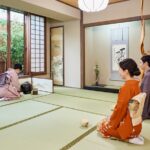
The setting is a cafe and bar rather than a formal schoolroom. That gives the activity a relaxed feel. A soft drink is also included, according to the experience details shared by the instructor, a small touch that makes the session feel less rigid.
A few more Asakusa tours and experiences worth a look

Starting With the Awaji Knot
The first task is learning the basic mizuhiki knot called the Awaji knot. This is the key teaching moment, because the shape introduces you to the way mizuhiki behaves in your hands.
At first, the cord may seem fussy. You need to control several curved sections while keeping the form neat. The instructor helps you through the steps, so beginners are not expected to arrive with craft experience. Patricia has been especially patient when explaining the technique and guiding people through the first knots.
Pay attention to how she holds the cord and where she applies pressure. Mizuhiki is not only about following a diagram. Small changes in tension affect the final shape, and watching the movement can be more useful than trying to memorize every step at once.
You should expect to make mistakes here. That is part of the point. The workshop gives you a short, practical introduction, and staff support means you can keep going rather than abandoning the knot after the first loose loop.
The class is suitable for most people, but anyone who dislikes close handwork may find the process fiddly. The cord work requires patience and attention. The reward comes when the loops begin to look balanced.
Choosing Colors and a Design
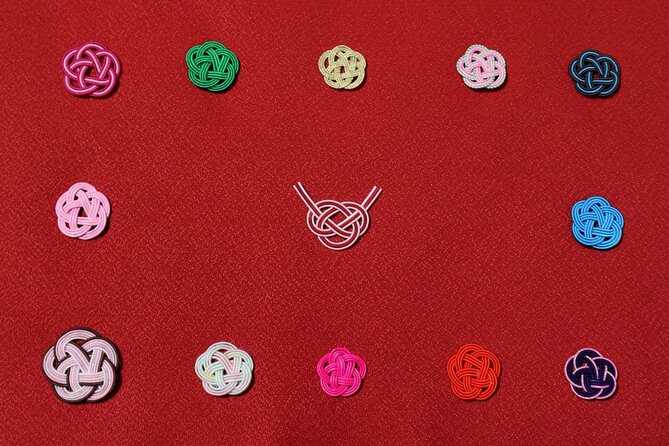
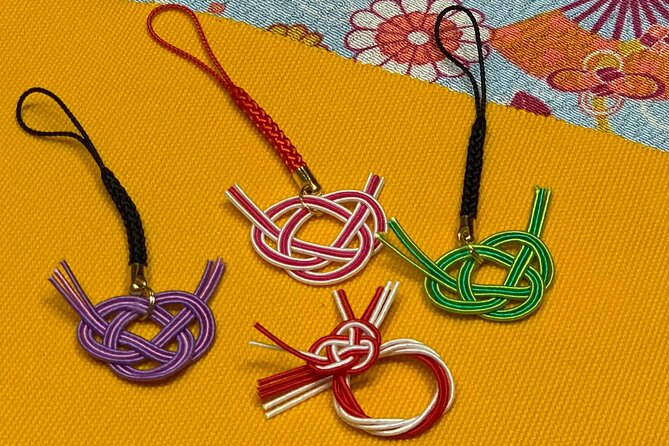
After the basic knot, you choose the mizuhiki colors you want to use. The class offers many colors and types, so this is where the finished piece starts to feel like your own.
You can select three colors if you wish to combine shades, as this option has been offered in the workshop. Think about the accessory before choosing. A small pair of earrings may suit a restrained combination, while a strap or key chain gives you a little more room to play with color.
You then choose a design from the samples. Seeing completed examples helps, especially if you are new to mizuhiki and do not yet know what the cord can become. The samples give you a target without forcing every person to make the exact same item.
This part also keeps the session accessible. You do not have to invent a design from scratch. You can choose a model that matches your skill level and then work toward it with help from the instructor.
The selection stage is brief, so do not spend all your time agonizing over colors. The purpose is to make a personal object while learning the basic craft, not to produce a museum piece. If you are buying the class for a child or a companion, the color choice may be one of the most enjoyable parts.
Making Your Wearable Souvenir
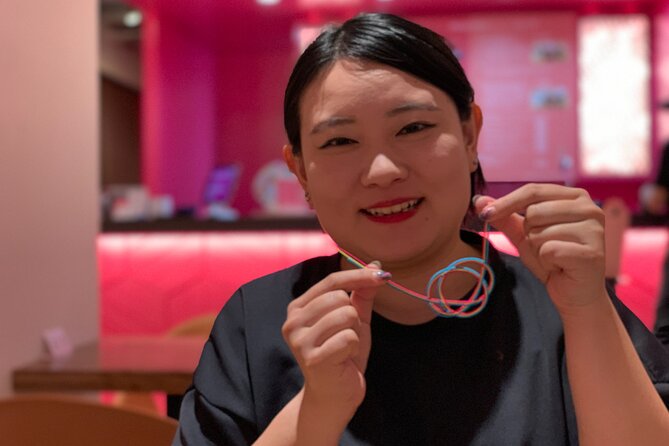
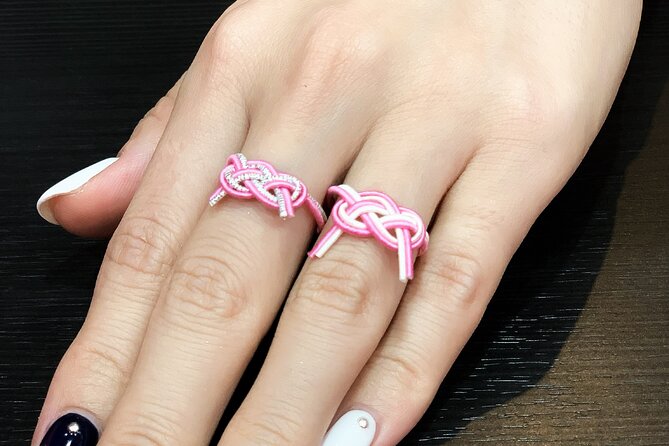
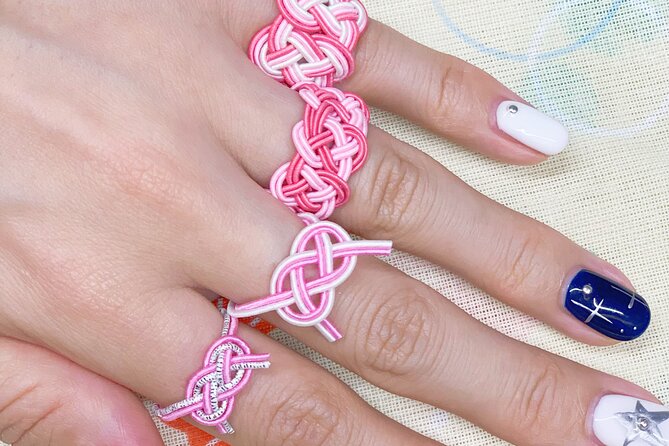
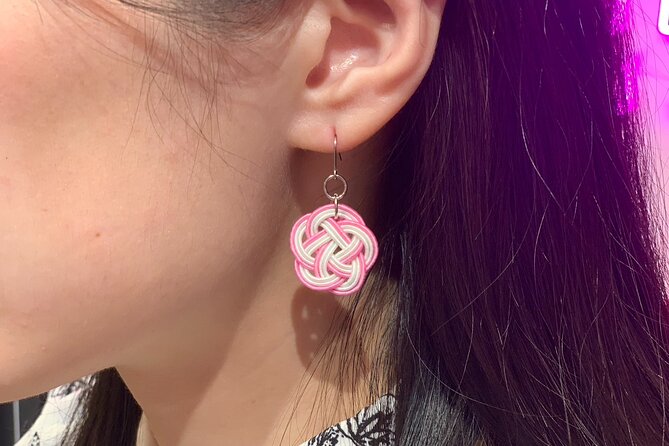
The final step is choosing how to finish the mizuhiki. You can make earrings, a key chain, or a strap. The listed options include earrings twice, but the practical choices are clear: earrings, a key chain, or a strap.
This choice affects who will get the most from the activity. Earrings make a personal accessory and suit someone who likes Japanese-inspired details. A key chain is a practical gift and may be easiest to use every day. A strap gives you another small object to attach or carry, though the exact use depends on the completed design.
The finished item is meaningful because you take part in its construction. You learn the knot, choose the colors, and work through the design with guidance. It is still a short workshop, but the object records a little of your time in Asakusa.
I would not book this expecting a long craft lesson or advanced instruction. The class is designed as an introduction. You will learn a foundation and complete one accessory, while more experienced makers can use the session as a starting point for future work.
One useful sign of the craft’s accessibility is that a first-time participant later bought mizuhiki materials at a nearby Daiso. That suggests the class can give you enough confidence to continue on your own. It does not promise mastery, but it may turn a passing curiosity into a hobby.
Patricia’s Teaching Style and Group Size
Patricia is the instructor named in the available experience information, and her strongest quality is patience. She guides participants through the knots, explains how the technique can develop, and supports people at different skill levels.
English support is available, which is important for a craft based on visual instructions and precise hand movements. You can ask questions as you work rather than simply copy the person beside you. The atmosphere is friendly and informal, helped by the cafe setting.
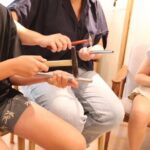
The maximum group size is eight. That is a good ceiling for this kind of class. A larger group could make it harder to get help when a knot slips or a cord becomes tangled. With eight or fewer people, the instructor has a better chance of checking your work and correcting small problems.
The group can still feel different depending on the booking. A one-to-one session is possible when attendance is light, and that offers more direct time with Patricia. A fuller group may feel more social, but you may wait briefly if several people need help at the same moment.




What the $28.40 Price Buys You
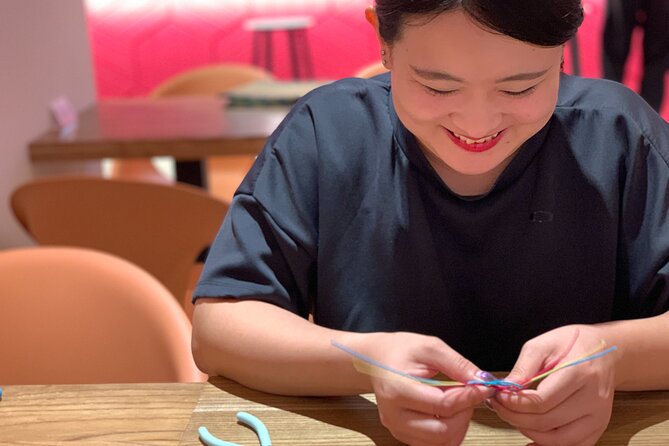
At $28.40, this is not the cheapest way to obtain a small Japanese accessory. You can find inexpensive souvenirs around Tokyo. The value here comes from the instruction, the hands-on process, and the fact that you make the item yourself.
The 50-minute duration keeps the cost and time commitment modest. You can fit the activity into an Asakusa day without surrendering a major sightseeing block. For a first introduction to mizuhiki, the price is fair, particularly if you value a guided cultural activity and want to leave with something small.
The value is less clear if you already know mizuhiki or mainly want a finished accessory. In that case, shopping may be faster. The class makes sense when you want to understand the knot and take part in the making.
It also works well for pairs or small groups who want a shared activity. You can compare color choices and designs, while each person produces a different result. The soft drink included adds a modest extra, but it should not be the main reason to book.
Practical Details Before You Book
Confirmation is provided when you book, and a mobile ticket is available. The meeting and ending point are the same, at Pink.Asakusa on the fourth floor of The Room Asakusa.
The activity is near public transportation, and most people can participate. There is a step down to the toilet, so note that detail if you need a completely step-free facility.
The class is usually booked about eight days ahead. That gives you a useful planning guide, especially if you want a particular date or are arranging several activities in Tokyo. The group limit of eight may also make advance booking sensible during busy periods.
Cancellation is free up to 24 hours before the start time for a full refund. Inside that 24-hour window, the payment is not refunded, and changes are not accepted. The cut-off follows local Tokyo time, so check the clock carefully if you are changing plans from another time zone.
Who Will Enjoy This Asakusa Workshop
I would recommend this activity to you if you like making things, want a quieter break from sightseeing, or prefer souvenirs with a personal story. It suits beginners because the basic knot comes first and staff support continues through the design.
It is also a strong choice for couples, friends, and families who want to do the same activity while choosing different colors and finishes. The small group limit helps the class stay manageable.
You may want to skip it if you have very limited time in Asakusa, dislike detailed handwork, or want a long lesson covering several advanced knots. The class promises a focused introduction and one accessory, not a full craft apprenticeship.
The cafe setting may appeal to you if you prefer an informal cultural activity. It is less suited to someone seeking a silent, traditional workshop atmosphere. That contrast is not a flaw, but it is worth knowing before you book.
Should You Book the Mizuhiki Experience?
Book it if you want a compact, affordable activity that teaches one genuine Japanese craft and sends you home with a handmade souvenir. Patricia’s patient guidance, English support, color choices, and group size make it approachable for first-timers.
I would place it in an Asakusa itinerary when you have about an hour between larger sights. Choose the workshop over simple souvenir shopping if the making matters as much as the final object. If you only want an accessory and have no interest in learning the knot, spend the $28.40 elsewhere.
For most beginners, the balance is good: modest cost, short duration, useful location, and a finished piece that carries more meaning because you tied it yourself.
FAQ
How long does the mizuhiki workshop last?
The activity lasts approximately 50 minutes.
Where does the workshop meet?
It meets at Japanese Experience Cafe&BAR Pink.AsakusaJapan, located on the fourth floor of The Room Asakusa at 1-16-11 Asakusa, Taito City, Tokyo 111-0032.
What will I learn first?
You will first learn the basic Awaji mizuhiki knot.
What can I make during the activity?
You can finish your mizuhiki as earrings, a key chain, or a strap.
Is the workshop suitable for beginners?
Yes. Staff support beginners, and most people can participate. Patricia guides you through the knot and the rest of the process.
How many people can join the class?
The maximum group size is eight people.
Can I cancel for a full refund?
Yes. You can cancel at least 24 hours before the start time for a full refund. Cancellations or changes made within 24 hours are not accepted, and the payment is not refunded.
More Asakusa Tours in Asakusa
More tours in Asakusa we've reviewed






Asakusa Tours, compared.
 ★ 4.8Tokyo: Japanese Dance Cabaret Theater Asakusa-Kaguwa TicketFrom $492 hours
 ★ 4.7Tokyo: Meiji Shrine, Asakusa, Skytree Bus Tour and CruiseFrom $12210 hours
 ★ 4.9Tokyo: Roll and Authentic Sushi Making Class in AsakusaFrom $581h 40m
 ★ 4.8Tokyo: Asakusa Walking Tour with Sensoji Temple VisitFrom $222 hours
 ★ 5.0Tokyo Asakusa Rickshaw TourFrom $42
 ★ 4.5Tokyo Panoramic 1 Day: Meiji Shrine, Asakusa, Odaiba and SKYTREE®From $85