Reviewed · TOURS
Japanese Garden & Western Architecture: Akasaka exploration tour
A 400-year-old garden, a palace built for visiting kings and presidents, and a broad avenue framed by golden ginkgo trees give this private Akasaka tour a welcome change of pace from central Tokyo’s towers. The route links gardens, government history, and Meiji-era art in three to four hours.
In This Article
- Key points to know
- Why Akasaka makes a fine break from central Tokyo
- Hotel New Otani Japanese Garden: a calm 40-minute start
- Akasaka Palace: the tour’s biggest historical stop
- Meiji Memorial Picture Gallery: art and national memory
- Jingu Gaien’s ginkgo avenue: a photogenic finish
- What the private format adds
- Walking, timing, and the extra cost
- Who should book this Akasaka walk
- Should you book it?
- FAQ
- How long does the Akasaka exploration tour last?
- Is this a private tour?
- Where does the tour start?
- Where does the tour finish?
- Is Akasaka Palace admission included?
- Are transportation costs included?
- Does the tour include a meal?
- What should I wear?
- Can the route change?
I like the relaxed focus on Japanese culture and history, especially when a guide such as Mutsuko Takano, Ume, Sayaka, or Ayako explains details you could easily miss alone. I also like the flexible private format, which lets you ask questions and spend more time at a favorite stop. The main drawback is cost: at $82.42 per person, you still pay about ¥2,000 extra for Akasaka Palace, and the route involves plenty of walking.
Key points to know
- A 400-year-old Japanese garden: Hotel New Otani’s garden offers waterfalls, seasonal plants, ponds, and a calm opening to the tour.
- Akasaka Palace costs extra: Admission is ¥2,000 per person and is not included in the tour price.
- Private guiding makes the history personal: Only your group takes part, so you can ask about the Edo shogunate, the Meiji era, and modern Tokyo.
- The route finishes elsewhere: Begin at Akasaka-Mitsuke Station and finish near Gaiemmae Station.
- A good tour for history-minded walkers: The schedule combines outdoor scenery with the Meiji Memorial Picture Gallery and Akasaka Palace.
- Bring cash: Some places along the route do not accept credit cards.
Why Akasaka makes a fine break from central Tokyo
Akasaka gives you a different side of Tokyo without requiring a long ride out of town. The district connects the world of the Tokugawa shogunate with the government and cultural institutions that followed, all within a route of gardens, formal buildings, parks, and tree-lined streets.
The tour is built around that contrast. You move from a traditional Japanese garden to a European-looking state reception palace, then on to a museum devoted to the Meiji era. The final walk along Jingu Gaien’s ginkgo avenue brings the day back outdoors.
I like this range. A garden alone can become a pleasant but rather quiet hour. A palace alone can feel formal. Here, your guide can connect each place to a different chapter in Japan’s development, giving the walk a clear purpose rather than a string of unrelated photo stops.
The private format matters. You are not part of a large group following a flag through the streets. Your guide can explain a point again, answer questions about customs, or adjust the pace within the time available. Guides who have led this route include Mutsuko Takano, Ume, Sayaka, and Ayako. The quality of the experience will depend partly on who leads your group, but the strongest feedback points to warm, flexible guiding and clear English.
If you're still narrowing it down, here are other tours in Tokyo we've reviewed.

Hotel New Otani Japanese Garden: a calm 40-minute start
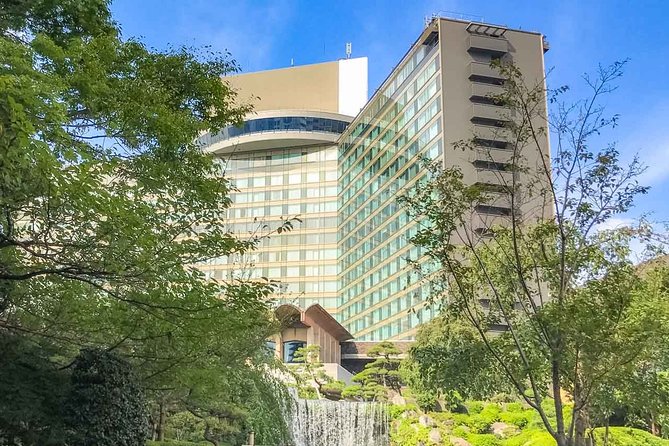
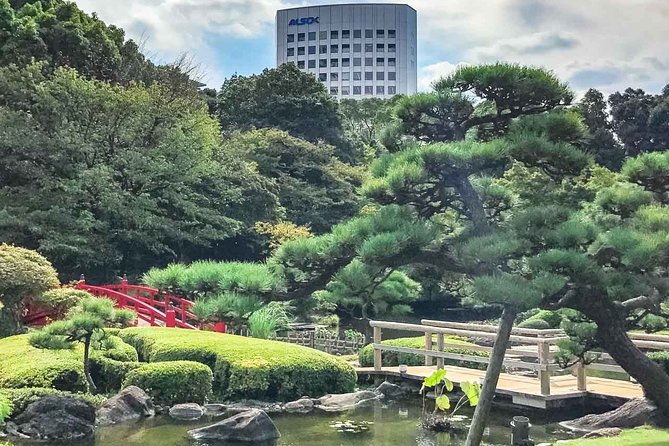
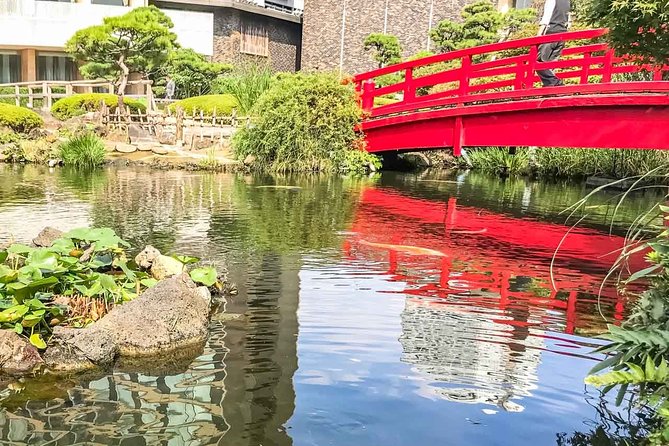
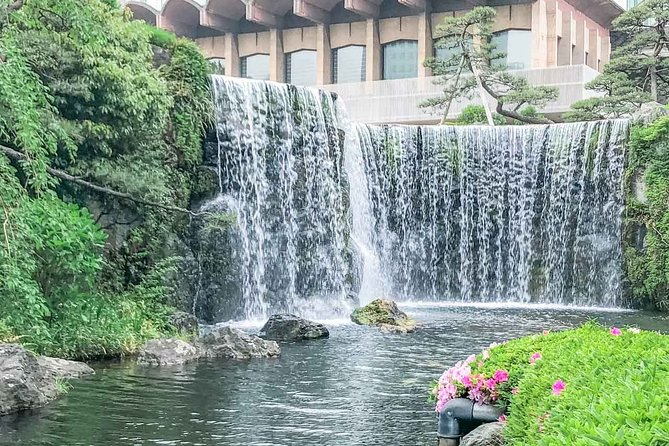
The first stop is the Japanese garden at Hotel New Otani, a landscaped site with about 400 years of history. You can expect waterfalls, a pond, seasonal plants, and the carefully arranged views associated with a traditional Japanese garden.
The timing is sensible. Forty minutes gives you enough room for a slow walk and photographs without making the garden the entire morning. Depending on the season, you might see cherry blossoms in spring, thick green growth in summer, or autumn illumination and seasonal color later in the year.
A guide adds value here because Japanese gardens are designed to reveal views gradually. Water, stone, trees, bridges, and open spaces each have a role, and a local explanation can help you notice how the garden is arranged. The setting also gives you a chance to pause before the more formal stops.
The garden is free to enter, which helps offset the extra cost later. It is also one of the most appealing parts of the outing for anyone who wants a quieter side of Tokyo. Keep your expectations measured, though. This is a hotel garden, not a full-day temple garden or a remote countryside retreat. Its appeal comes from its age, design, and convenient location.
One charming possibility is seeing seasonal Japanese dress and wedding photography. A visitor on the tour happened upon a newly married couple taking pictures in the garden, an encounter that captures how the setting is used as well as how it is viewed.
Akasaka Palace: the tour’s biggest historical stop
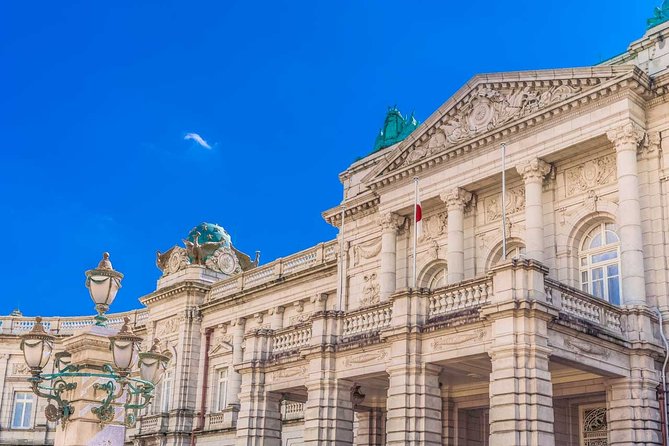
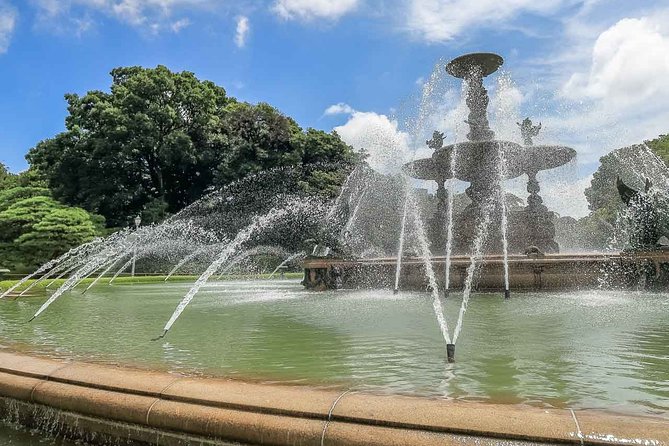
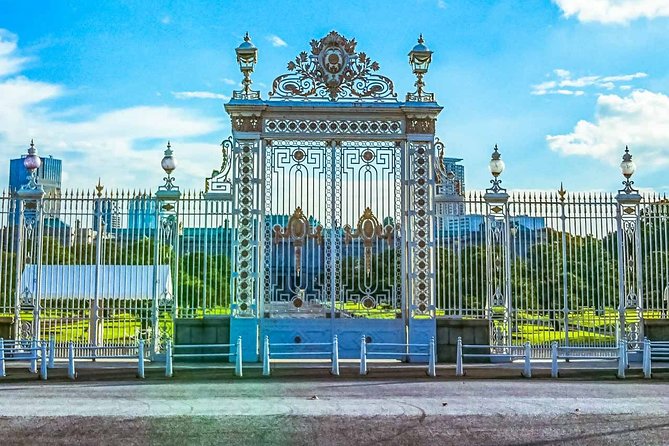
Akasaka Palace, also called the State Guesthouse, is the most formal stop on the route. Built to receive kings, presidents, and other international dignitaries, it has a grand appearance that can feel more like a European castle than a traditional Japanese residence.
The scheduled visit lasts about 50 minutes. That makes it the centerpiece of the tour, and rightly so. The palace shows how Japan presented itself on the world stage while also giving you a window into the country’s government and diplomatic life.
Admission costs ¥2,000 per person and is not covered by the $82.42 tour price. Include that in your budget from the start. The tour provider lists estimated additional costs at ¥2,000 per person, with no separate transport or meal cost included.
The palace opened to the public in 2016, according to the information provided for the tour. That detail helps explain why it may not appear on older Tokyo sightseeing plans. It is a particularly good stop for you if you enjoy architecture, politics, or modern Japanese history more than shrine-hopping.
A private guide can make the palace easier to understand. The building’s appearance is striking on its own, but context tells you why it exists and how it functions today. One guide, Ayako, was described as calm and flexible while new to the job, and the palace was the highlight for that group. That points to an important practical truth: you do not need a theatrical guide to enjoy this stop, but you do benefit from someone who can explain the setting clearly.
Check the day’s access before you go. The route may change if a site closes temporarily, and bad weather can alter transport, destinations, or walking paths.
Meiji Memorial Picture Gallery: art and national memory
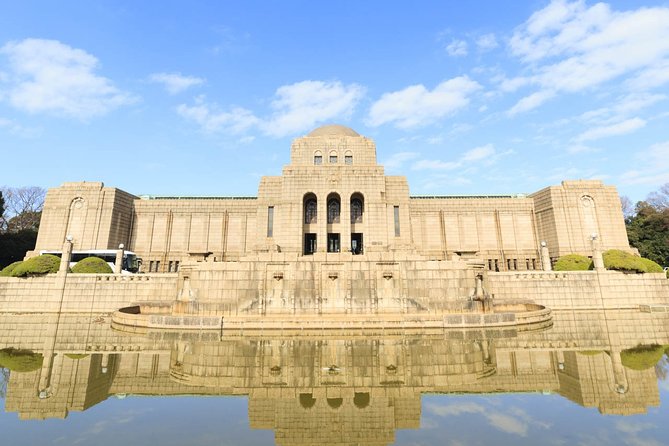
The Meiji Memorial Picture Gallery is housed in a distinctive dome-shaped building and focuses on the Meiji era. You will see paintings and murals connected with that period, along with a formal exterior visible from the entrance and the outer garden along Aoyama Street.
The scheduled visit is about 40 minutes. That is enough for an introduction, though not enough for an exhaustive museum visit. If you already have a strong interest in Meiji-era art or Japanese modernization, you may wish for more time. On a three to four-hour tour, however, the shorter visit keeps the route moving.
This stop balances the palace and garden nicely. The garden shows older Japanese design traditions. The palace reflects international ceremony and state power. The picture gallery turns your attention toward the Meiji period, when Japan was changing rapidly and presenting a new public identity.
I would pay attention to how your guide frames the paintings and murals. The value here is not only the images themselves, but the chance to connect them with the larger story of the era. Several guides have been praised for answering questions and explaining cultural background in a way that made the visit useful to people with a strong interest in history.
The museum may appeal less to you if you mainly want gardens and outdoor scenery. It is a structured indoor stop, and the route does not promise a long museum session. Still, it gives the tour more substance than a simple neighborhood walk.
Jingu Gaien’s ginkgo avenue: a photogenic finish
The final scheduled stop is the Jingu Gaien ginkgo tree-lined street. The avenue is one of Tokyo’s best-known seasonal scenes, with ginkgo trees forming an arch over the road.
The visit lasts about 20 minutes, so think of it as a short closing walk rather than a long park visit. In autumn, the trees can provide the most memorable photographs of the day. In other seasons, the avenue still offers a broad, orderly view and a pleasant change from dense city streets.
This stop also explains the tour’s ending point near Gaiemmae Station. You finish in a different part of Tokyo from where you began, which is useful if you plan to continue toward Aoyama or another western-central district.
The short timing means you should not book this tour solely for the ginkgo trees. Seasonal color depends on the date, and the stop may feel brief if you want a long photography session. As part of the full route, though, it works well: the day ends with open space and trees after the indoor palace and museum.


What the private format adds
This is a private activity, so only your group participates. That is the clearest reason to choose it over a cheaper shared walking tour.
You can ask your guide to spend more time on the Tokugawa shogunate, the Edo period, the Meiji era, architecture, gardens, or daily life in Tokyo. The information supplied for the experience highlights guides including Mutsuko Takano, Ume, Sayaka, and Ayako. Mutsuko was praised for speaking strong English, Ume for being professional and showing secret gardens and quiet streets, and Sayaka for answering many questions with enthusiasm.
Those details suggest a tour that works best when you take an active role. Ask questions. Point out what catches your eye. If the garden matters more to you than the museum, say so early. A private tour gives your guide room to respond, though the fixed schedule still includes four main stops.
Ayako’s first tour also offers a useful reminder: a newer guide may be calm and flexible but less polished than someone with more experience. The provider says it trains guides, and the practical lesson is simple: book this for access to a local guide and a flexible private outing, not for a guaranteed performance by one named person unless your booking specifically confirms that person.
Walking, timing, and the extra cost
The tour lasts approximately three to four hours. Transportation is listed as ¥0, so the route is designed around walking rather than paid transfers. Wear comfortable clothing and shoes. You will move between several sites, and the total walking can feel substantial even though each individual stop is manageable.
The meeting point is Akasaka-Mitsuke Station at 3-chōme-1-6 Akasaka, Minato City. The official finishing point is near Gaiemmae Station at 2-chōme-7-16 Kitaaoyama. Tell your guide if you want to change the finishing spot, but do not assume that every alternate ending will be possible.
At $82.42 per person, the price is easier to justify for a couple, family, or small private group that values personal attention. It includes the guide, the private tour, and the guide’s necessary expenses. It does not include the ¥2,000 Akasaka Palace admission, food, drinks, or other entrance fees that arise at the sites.
Group discounts are available, which may improve the value for a larger party. Since the activity is private, compare the total price for your group rather than looking only at the per-person figure. A solo visitor may find the cost high for a half-day walk, while a family that wants one guide and one shared pace may find it reasonable.
There is no dining stop. Bring water and eat before or after the tour if you need a full meal. Some locations do not accept credit cards, so carry Japanese yen even if you normally pay by card.
Who should book this Akasaka walk
I would choose this tour if you want a guided introduction to several types of Japanese history in one morning or afternoon. It suits you particularly well if you enjoy gardens, architecture, museums, and questions about the Edo and Meiji periods.
It is also a good fit for first-time visitors who want help making sense of Tokyo’s quieter institutions. The route does not focus on the city’s famous shopping districts or nightlife. Instead, it gives you a slower look at how gardens, official buildings, art, and public streets reflect different eras.
Families and small groups may appreciate the private setting, especially if members have different levels of interest. A guide can explain the same stop in simple terms or go further into political and cultural detail, depending on the group.
I would hesitate if your priority is a shrine-heavy tour, a food tour, or a completely effortless sightseeing day. The tour materials refer to shrines, gardens, and parks as part of the Akasaka experience, but the scheduled route centers on the four stops described above. You should also skip it if you dislike walking or want a tour with lunch included.
Free cancellation is available if you cancel at least 24 hours before the local start time. Changes or cancellations inside that window are not accepted for a refund. Bad weather may lead to changes in transport, destinations, or routes, and temporary closures can result in substitute stops.
Should you book it?
Book this Akasaka tour if you want a private, history-focused walk with a strong mix of outdoor scenery and formal cultural sites. The Japanese garden and Akasaka Palace are the main reasons to go, while the Meiji gallery and ginkgo avenue add useful context and seasonal appeal.
The price is fairer for a small group than for one person, and you should budget another ¥2,000 for the palace. If you value a flexible guide, can manage several hours on foot, and want to see a less obvious side of Tokyo, this is a thoughtful choice. If you want food, major shrines, or a low-cost group excursion, choose a different tour.
FAQ
How long does the Akasaka exploration tour last?
The tour lasts approximately three to four hours.
Is this a private tour?
Yes. Only your group participates in the private tour.
Where does the tour start?
The meeting point is Akasaka-Mitsuke Station, at 3-chōme-1-6 Akasaka, Minato City, Tokyo 107-0052, Japan.
Where does the tour finish?
The scheduled ending point is near Gaiemmae Station, at 2-chōme-7-16 Kitaaoyama, Minato City, Tokyo 107-0061, Japan.
Is Akasaka Palace admission included?
No. Akasaka Palace admission costs ¥2,000 per person and is paid separately.
Are transportation costs included?
The estimated transportation cost is ¥0. Any transportation costs incurred at visited locations are the customer’s responsibility.
Does the tour include a meal?
No. The tour does not include a dining stop, and food and drink costs are not included.
What should I wear?
Wear comfortable clothing because the tour involves a lot of walking.
Can the route change?
Yes. Bad weather may change transportation, destinations, or routes. A temporary closure may also lead to an alternative stop.
More tours in Tokyo we've reviewed

Tours, compared.
 ★ 5.0Mt Fuji and Hakone 1-Day Bus Tour Return by Bullet TrainFrom $163
 ★ 5.01-Day Tokyo Bus TourFrom $129
 ★ 5.0Tokyo: Shinjuku Food Tour (13 Dishes at 4 Local Eateries)From $86
 ★ 4.4Tokyo Mt Fuji 5th St & Hakone Cruise Bus Tour w/Bullet TrainFrom $15410 hours
 ★ 5.0Flagship 2-Hours Official Street Go-Kart Tour – Tokyo Bay ShopFrom $642 hours to 2 hours 30 minutes (approx.)
 ★ 4.7Tokyo: Mt. Fuji Tour, Hakone Ropeway, Owakudani, Lake AshiFrom $5410 hours