Reviewed · ASAKUSA
Tokyo: Customized Private Tour with a Local Guide
Tokyo’s biggest appeal is also its main challenge: there is simply too much to see. This private five-hour tour gives you a guide who can shape the day around your interests, from old Asakusa and Meiji Shrine to Harajuku, Shibuya, and Tsukiji. I like that your group has the guide to itself, and I like the chance to adjust the plan instead of following a fixed bus route.
In This Article
- Key points to know before booking
- Why a private Tokyo tour can make sense
- Senso-ji gives you Tokyo’s oldest starting point
- Meiji Jingu shifts the mood from city to forest
- Takeshita Street shows Tokyo’s youth culture
- Shibuya Crossing delivers the big city moment
- Tsukiji is best for food, not the old wholesale auction
- Five hours, no car, and a city-wide route
- What $350 is worth for your group
- The guide makes or breaks the experience
- Who should book this Tokyo walking tour
- Practical booking advice for a smoother day
- Should you book this private Tokyo tour?
- FAQ
- How long is the Tokyo private tour?
- How many people can join the private tour?
- What places are visited?
- Is transportation included?
- Does the tour include food and entrance fees?
- Where does the tour start and finish?
The price is $350 per group of up to six, which can be fair for a full private day of local help, especially with a larger group. The main caution is guide quality. One account describes a 21-year-old guide who offered little explanation and lost one member of a two-person group for about half an hour at the fish market, so you should set clear expectations before meeting.
Key points to know before booking
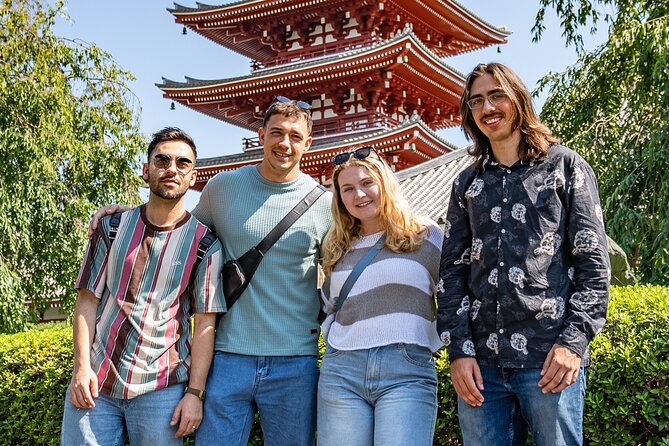
- Five major Tokyo areas in about five hours: The route covers Senso-ji, Meiji Shrine, Takeshita Street, Shibuya Crossing, and Tsukiji.
- Private access to a local guide: Only your group participates, with a maximum of six people.
- The plan can be discussed in advance: After booking, the guide contacts you through WhatsApp to talk through your interests and tour details.
- Walking is central: Hotel meet-up is offered, but no car is included. Public transport or other transportation costs are extra.
- The group price works best for several people: At the full six-person capacity, $350 works out to about $58 per person before transport, food, and optional admissions.
- Guide standards need attention: Ask who will guide you, how much commentary to expect, and how the group will stay together in crowded places.
Why a private Tokyo tour can make sense
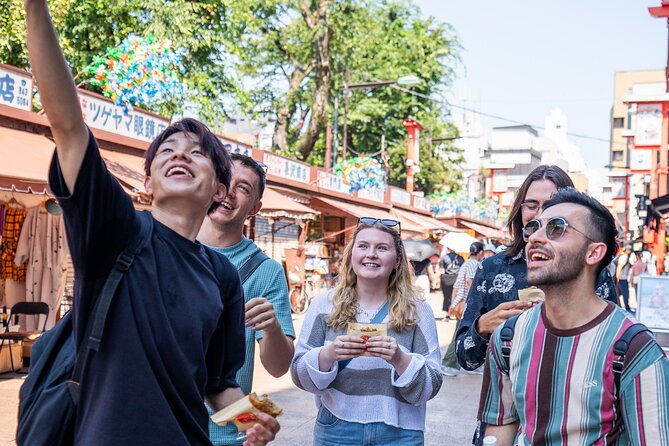
A first day in Tokyo can become a pile of disconnected sights. You may see a temple in the morning, a shrine after lunch, and a famous crossing at night without understanding how the city’s old and new sides fit together. A private guide can help link those pieces.
I like this format for families, small groups of friends, and first-time visitors who do not want to spend their arrival day studying train maps. You can tell the guide what matters most. That might mean more time on food, religion, shopping, photography, or Tokyo’s modern neighborhoods.
The five-hour length is useful, but it is also tight. The advertised plan gives roughly one hour to each stop, and the stops are spread across the city. Time spent moving between Asakusa, Harajuku, Shibuya, and Tsukiji reduces the time available at each place. You should think of this as a guided introduction, not a slow, detailed study of all five districts.
The biggest benefit is not simply reaching the famous places. It is having someone help you make choices. A good guide can tell you what deserves your attention, explain local customs, point out nearby streets, and keep the day moving when Tokyo’s crowds become confusing.
Other guided tours in Asakusa
Senso-ji gives you Tokyo’s oldest starting point
The tour begins at Senso-ji Temple in Asakusa, a natural place to start because it introduces you to Tokyo’s older character. The temple is described as more than 1,300 years old and is one of the city’s best-known religious sites.
You enter through the famous Kaminarimon area and walk along Nakamise-dori, the traditional shopping street leading toward the temple. The shops sell souvenirs and traditional goods, so this is a good place to get your first look at the visual style of old Tokyo. It is also a place where a guide’s explanation matters. Without context, you may see a gate, incense, statues, and a crowded approach without knowing how the visit fits into Japanese temple practice.
Plan to ask your guide how to behave at the temple, what the main buildings represent, and which parts are still active places of worship. That turns a quick photo stop into a more respectful visit.
The drawback is the crowd level. Senso-ji is iconic, so you should not expect a quiet introduction to Tokyo. The one-hour allocation can work for a first look, but you will not have time to linger over every shop or side street if the rest of the route stays on schedule.
Meiji Jingu shifts the mood from city to forest
The next major stop is Meiji Jingu Shrine, dedicated to Emperor Meiji and Empress Shoken. Its setting offers a sharp change from Asakusa. Instead of temple shops and a dense urban street, you walk through a large wooded approach toward a Shinto shrine.
That contrast is one of the strongest features of the route. In a short period, you see two different religious traditions and two different sides of Tokyo. Senso-ji feels tied to old commercial Asakusa, while Meiji Jingu provides a more restrained setting near Harajuku.
I would use this stop to ask practical questions about Shinto customs. Your guide can explain the proper way to approach the shrine, how to make an offering, and what the shrine’s connection to modern Japanese history means. The value here comes from learning what you are seeing, not merely passing through a green area.
The one-hour visit is enough for a general introduction, but the approach can take time. If your group walks slowly, has young children, or wants many photographs, you may need to shorten another stop. Discuss priorities with the guide before the morning begins.
The supplied information says admission is included at the listed stops, but the general terms also say entrance fees and activities may be optional costs for you and the guide. Ask for clarification before the tour so there is no confusion about what is covered.
Takeshita Street shows Tokyo’s youth culture
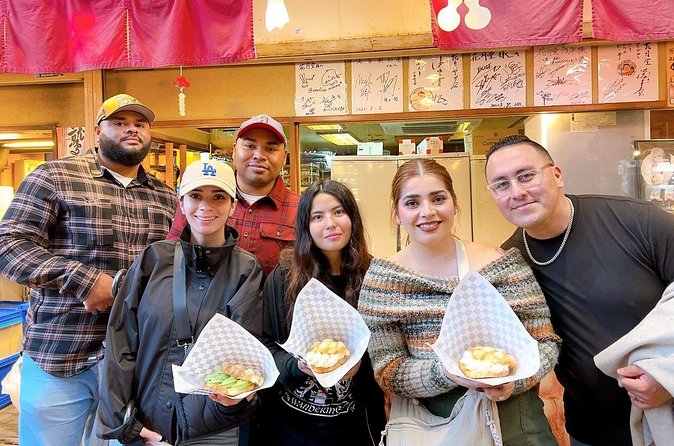
From Meiji Jingu, the tour moves into Takeshita Street, the Harajuku strip known for pop-up shops, unusual fashion, and youth culture. This is a useful counterpoint to the temples and shrine.
Takeshita Street is compact, busy, and easy to find, but it can feel much less relaxed than the earlier stops. You may find colorful shops, snack stops, and clothing aimed at younger shoppers. The description also points you toward nearby Omotesando, where the mood changes to high-end fashion and polished retail.
That pairing is smart. In a limited amount of time, you can compare two versions of Harajuku: Takeshita’s playful, youthful style and Omotesando’s more expensive, design-focused shopping scene. Tell your guide which side interests you most. If you care about fashion and people-watching, you may want to spend the full hour here. If shopping is not your priority, this is the easiest place to shorten.
You should also remember that a private tour does not include a shopping budget. Food, purchases, and any optional activities are your responsibility. If you want to stop for a snack, ask how that will affect the timing and whether the guide’s meal is also your responsibility.
Shibuya Crossing delivers the big city moment
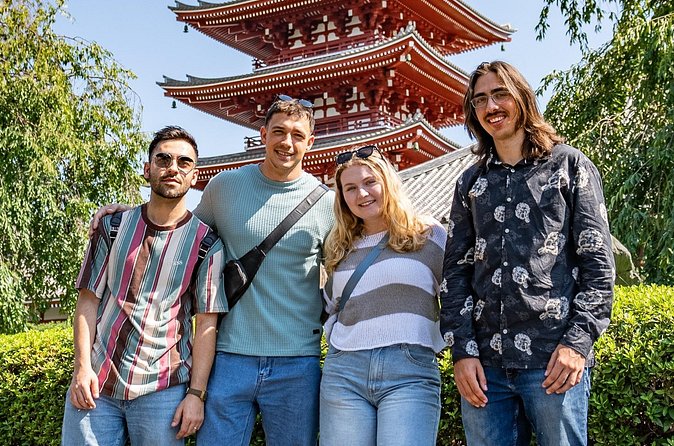
Shibuya Crossing is the tour’s clearest picture of modern Tokyo. When the signals change, pedestrians move across the intersection from several directions, with tall buildings and giant signs surrounding the scene. It is a quick, memorable way to see the city’s urban energy.
The stop also includes the Hachiko Statue and Shibuya Center Street. Hachiko is a well-known meeting point, while Center Street offers shopping and a closer look at Shibuya’s commercial side.
I like having a guide here because Shibuya can seem like a collection of signs and crowds. A guide can help you find the right approach, explain the Hachiko story, and point out where the main activity is. Since you have only about an hour, do not expect a long shopping session or a detailed exploration of every side street.
This is another stop where group control matters. The crossing and nearby streets can be crowded, and the experience described one serious problem at Tsukiji, where a guide lost one person from a two-person group for roughly 30 minutes. That detail makes a simple safety question worth asking: how will the guide keep everyone together, especially in crowded markets and intersections?
Other private tours in Asakusa





Tsukiji is best for food, not the old wholesale auction
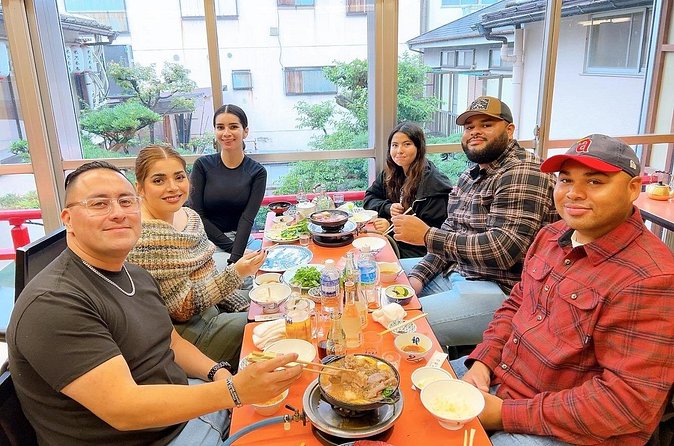
The final stop is Tsukiji Fish Market, but you should understand what Tsukiji is today. The main wholesale fish market moved to Toyosu, while the old Tsukiji area remains a popular place for seafood shops and food businesses.
That makes Tsukiji a useful stop for eating and browsing, but it is not the same as visiting the former wholesale market at its old scale. If you are hoping to see the original fish auction operation, ask the guide to explain what remains at Tsukiji and what moved elsewhere.
The hour can work well if you want to look at seafood shops or choose a bite to eat. Meals are not included, and the terms say you may also need to pay for the guide’s meal. Confirm that before ordering.
Tsukiji is also the stop where the walking format may be most demanding. Markets have tight passages, distractions, and many tempting food stops. Keep your group together and agree on a meeting point in case someone wants to browse separately. The negative account involving a lost friend is not a minor issue, so I would treat group supervision as part of the booking conversation.
Five hours, no car, and a city-wide route
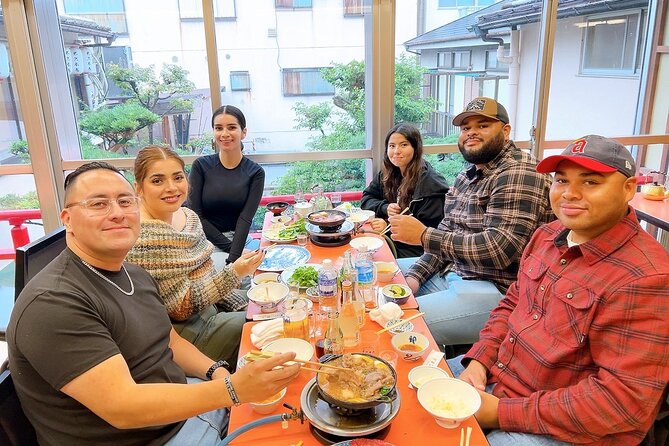
The tour is described as a private customized walking tour, with hotel meet-up offered and no car included. That distinction matters. You may begin at your hotel, but you should not expect a private vehicle to carry you between the five areas.
The stated meeting point is 1-chōme-2-1 Asakusa, Taito City, and the activity ends back there. If your hotel meet-up is arranged, confirm whether the guide will also return you to the hotel or bring you back to the stated meeting point.
Transportation costs are optional extras for you and the guide. Since the stops cover several parts of Tokyo, public transit may be needed. The exact transportation plan is not provided, so ask before the day starts:
- Which stops will require trains or buses?
- Who pays for the guide’s transportation?
- Does the five-hour period include travel time?
- Will the tour still end at the Asakusa meeting point?
These questions help you judge the real cost. The $350 headline price does not include all possible transit, meals, admissions, or activities.
The route is ambitious for five hours. You will get a broad taste of five important areas, but not a leisurely visit to each one. If you prefer a relaxed pace, ask the guide to remove one or two stops. Customization has real value only if you use it.
What $350 is worth for your group
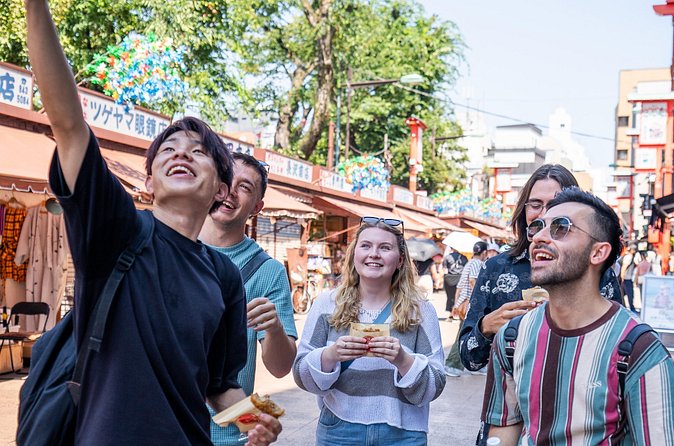
At $350 for up to six people, the price is easiest to justify with a full group. Six people would pay about $58 each before extra costs. A couple pays $175 each, which is much harder to defend unless personalized planning and a private guide are especially important to you.
The cost includes the professional local guide, the private format, and hotel meet-up according to the inclusions. It does not include a car, meals, optional transportation, or certain entrance fees and activities. That makes the final amount less predictable than the base price suggests.
I would compare the tour with two alternatives. First, you could visit these districts independently using Tokyo’s public transportation and save money, but you would need to plan the route and interpret the sights yourself. Second, you could book a shorter private experience focused on one or two neighborhoods and spend more time in each place.
This tour earns its value when you want a personal route across several districts and have enough people to share the cost. It is less compelling for a solo visitor or couple who already feel comfortable navigating Tokyo.
The guide makes or breaks the experience
A private tour has less protection from a weak guide than a large group tour. If the guide is thoughtful and prepared, you gain a flexible day with explanations matched to your interests. If the guide simply walks you from place to place, you have paid a high price for directions.
The experience information identifies the guide as a professional local guide, but it does not provide a name. After booking, the guide is expected to contact you through WhatsApp, and you need to provide your WhatsApp number. Use that exchange to ask direct questions rather than waiting until the meeting point.
Tell the guide what you want from the day. For example:
- I want cultural explanations, not only directions.
- I am most interested in temples and shrines.
- I want time for food at Tsukiji.
- I do not need much shopping.
- I have limited walking stamina.
- I want to keep all members of my group together.
You can also ask the guide to confirm the final order of stops. The listed order begins in Asakusa and ends at Tsukiji, but the exact plan is meant to be customized. A clear WhatsApp conversation is your best chance to turn a general route into a useful day.
The rating is strong overall at 4.8 from 16 ratings, with 94 percent recommending the experience. Still, the small sample and the detailed complaint about an inexperienced 21-year-old guide mean you should not assume every guide will provide the same standard. Ask for the guide’s name and background if that information is available.
Who should book this Tokyo walking tour
I see this tour working best for:
- First-time visitors who want a fast orientation to Tokyo
- Families or friend groups of up to six
- People who want a private guide rather than a shared group
- Visitors who want both traditional and modern Tokyo in one day
- Groups willing to use public transport and pay extra for food or transit
- People who value flexibility more than a slow, specialist tour
I would be more cautious if you dislike crowds, want long visits at each sight, or need a vehicle. The route includes famous and busy places, and five hours is not enough for an unhurried look at every neighborhood.
You should also reconsider if your group includes people who may separate easily in crowds. Tsukiji, Takeshita Street, and Shibuya require attention, and the reported loss of a group member for half an hour is a serious warning. Set a clear plan before the tour begins.
Practical booking advice for a smoother day
Book with at least a little advance planning. The experience is booked an average of 13 days ahead, so do not leave a preferred date until the last moment if your schedule is tight.
Provide an active WhatsApp number and check your messages after confirmation. Use the contact with the guide to agree on the meeting point, start time, transport plan, stops to prioritize, expected walking pace, and extra expenses.
The tour offers free cancellation if you cancel at least 24 hours before the local start time. Changes or cancellations inside that window are not accepted for a refund, so keep the deadline in mind.
At the start, confirm the return point. The stated end is back at the Asakusa meeting point, even though hotel meet-up is offered. Also confirm which admissions are included, since the stop descriptions and the general cost information are not perfectly clear on that point.
Should you book this private Tokyo tour?
Book it if you have a group of several people, want a private guide, and like the idea of combining old temples, a forest shrine, youth shopping, Shibuya’s famous crossing, and Tsukiji food shops in one day. The ability to shape the plan is the main reason to choose it.
Do not book it expecting a private car, included meals, or a slow tour of five districts. The price is strongest for six people and weaker for one or two. Before paying, ask who your guide will be and make clear that you want explanations, not just a walk between landmarks.
For the right group, this can be an efficient first look at Tokyo. Its success depends heavily on preparation and on the individual guide, so use the WhatsApp contact to make the plan specific.
FAQ
How long is the Tokyo private tour?
The experience lasts approximately five hours.
How many people can join the private tour?
The tour is private for your group, with up to six people included in the $350 group price.
What places are visited?
The planned stops are Senso-ji Temple, Meiji Jingu Shrine, Takeshita Street, Shibuya Crossing, and Tsukiji Fish Market.
Is transportation included?
No car is included. Transportation may be arranged as an optional extra, and transportation costs for you and the guide are not included in the base price.
Does the tour include food and entrance fees?
Meals are not included. Entrance fees and activities may also be optional costs for you and the guide, so confirm the exact coverage before the tour.
Where does the tour start and finish?
The stated meeting point is 1-chōme-2-1 Asakusa, Taito City, Tokyo. The activity ends back at the meeting point, although hotel meet-up is offered.
More Private Tours in Asakusa
More Guided Tours in Asakusa
More tours in Asakusa we've reviewed



Asakusa, compared.
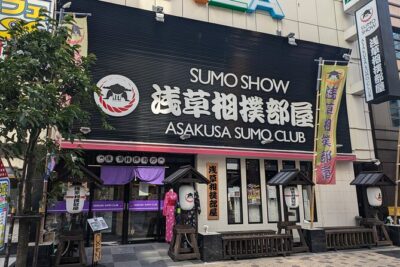 ★ 5.0Tokyo Sumo Entertainment Show with Chicken Hot Pot and PhotoFrom $106
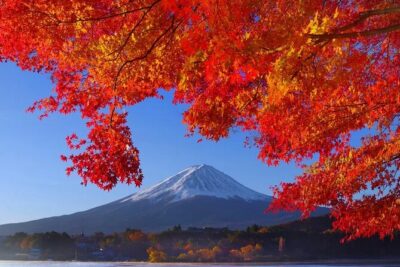 ★ 5.0Mt Fuji Private Day Trip from Tokyo with English speaking driverFrom $464
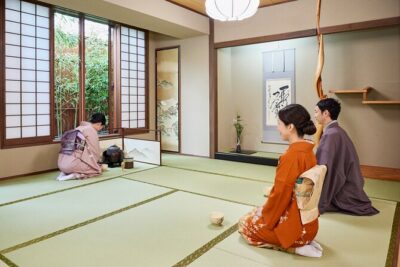 ★ 5.0Kimono Tea Ceremony at Tokyo, Asakusa MaikoyaFrom $55
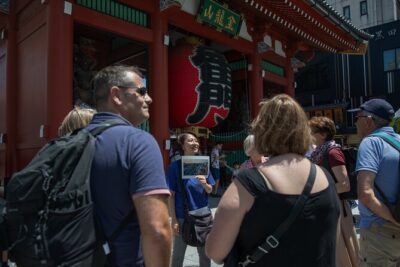 ★ 5.0Asakusa Senso-ji Temple and Old Tokyo Walking TourFrom $20
 ★ 5.0Skip the lines Basic Ticket at SAMURAI NINJA MUSEUM TOKYOFrom $28
 ★ 5.0Private Craft Your Own Ring Handmade Experience in Asakusa, TokyoFrom $21