Reviewed · TOKYO
Geisha Entertainment Experience in Tokyo
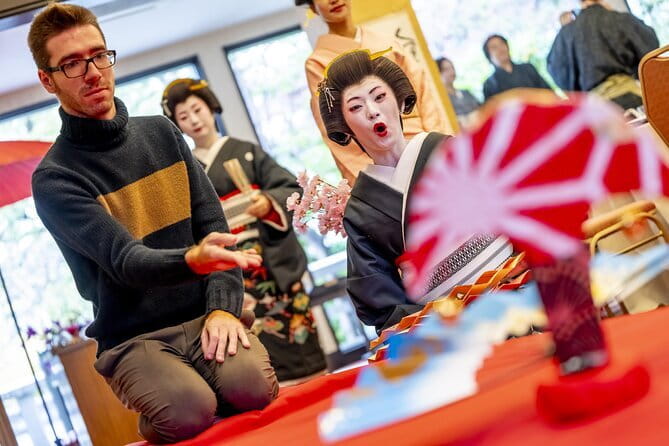
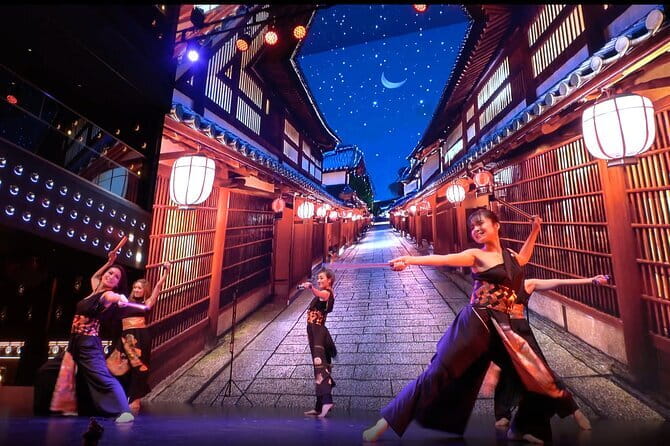
Tokyo’s geisha arts are not something you usually stumble across while sightseeing. At Fukagawa Odori Gekijyo, inside the grounds of 400-year-old Tomioka Hachimangu Shrine, you sit close to the action as geisha dance, play shamisen, explain their customs, and lead traditional party games. It feels more personal than watching a large stage show.
In This Article
- Key points to know before booking
- Geisha arts in a shrine precinct
- What happens during the 30 to 70 minutes
- Dance, shamisen, and explanations that add meaning
- The ozashiki party is more than a performance
- Food choices: from matcha to Fukagawa meshi
- Is $82.24 a fair price?
- Finding the venue and planning your visit
- Who will enjoy this most
- Should you book the Geisha Entertainment Experience?
- FAQ
- Where does the geisha experience take place?
- How long does the experience last?
- What food is included with each course?
- Do all courses include the ozashiki geisha entertainment?
- Is transportation included?
- Can I cancel or change my booking?
I like the choice of food, from a full Edo-style kaiseki meal to local clam rice or simply sweets and matcha. I also like the short format: 30 to 70 minutes gives you a cultural experience without consuming half your day.
The main caution is practical rather than artistic: the venue can be difficult to find, and the English translator was not available for one booking. The staff still helped make the presentation understandable, but you should arrive with the meeting details saved on your phone.
Key points to know before booking
- Four hundred years of setting: The performance takes place within the precincts of Tomioka Hachimangu Shrine, a place tied to Fukagawa’s Edo-period identity.
- Three food levels: Choose kaiseki cuisine with a drink, Fukagawa meshi with a side dish, or Japanese sweets with matcha.
- A real participation element: The ozashiki experience includes traditional games, not just sitting quietly through a dance recital.
- Shorter than a typical meal show: The UME course lasts about 30 minutes, TAKE about 45 minutes, and MATSU about 70 minutes.
- English support can vary: Performances are explained, but one booking took place without the English translator, so a translation app may be useful.
- Optional five-hour car hire: The TAKE course with hire includes a car and English-speaking driver after the noon experience.
Geisha arts in a shrine precinct
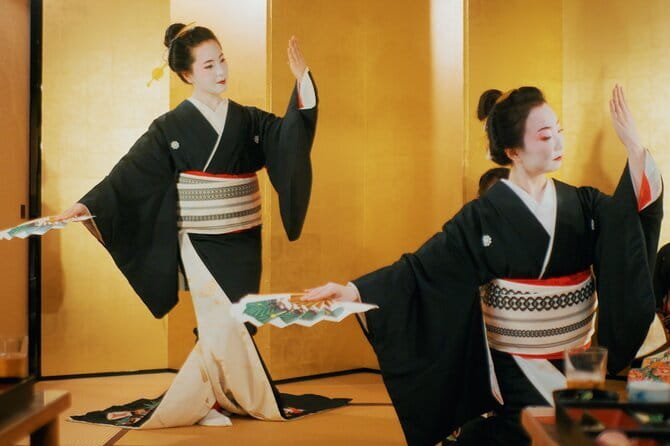
The setting gives this experience much of its character. Tomioka Hachimangu Shrine was built 400 years ago and is associated with Fukagawa during the Edo period. The performance venue sits within the shrine grounds, so the cultural experience begins before the dancers appear.
This is useful context. You are not being taken to a generic dinner theater with a Japanese theme. The location connects the entertainment to a part of Tokyo shaped by traditional festivals, local food, religious practice, and old neighborhood culture.
The show takes place at Fukagawa Odori Gekijyo. Expect traditional dance and shamisen music, followed by explanations and audience participation. The style is social rather than formal. The aim is to recreate an ozashiki, a Japanese entertainment party where people eat, watch skilled performers, ask questions, and have fun.
That distinction matters. If you want a silent theatrical performance from a distant seat, this may feel more interactive than expected. If you want to understand how geisha entertainment works and take part in a few customs yourself, the format works well.
If you're still narrowing it down, here are other tours in Tokyo we've reviewed.


What happens during the 30 to 70 minutes
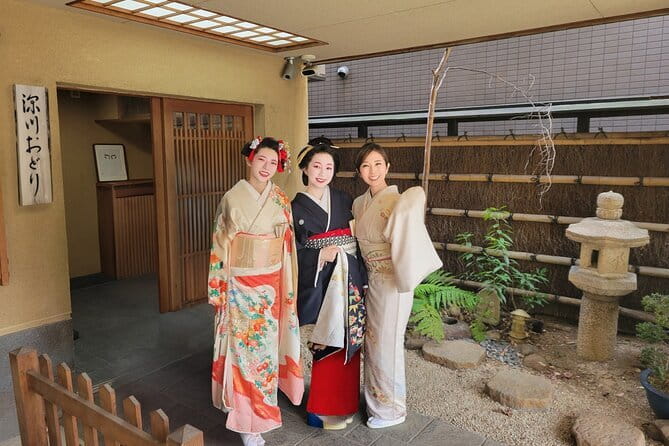
The exact program depends on the course you select, but each option includes admission, the performance, and a souvenir. The main difference is the food, the amount of time, and whether the ozashiki participation is included.
The UME course is the quickest choice. It lasts about 30 minutes and includes Japanese sweets, matcha, the performance, admission, and a souvenir. This suits you if your Tokyo schedule is tight or if you mainly want to see the dancing and sample a tea-related tradition.
The UME course does not include the ozashiki geisha entertainment experience listed with the MATSU and TAKE options. That makes it a lighter introduction. You will still see the performance and have the tea and sweets, but you should not book it expecting the fullest party-style interaction.
The TAKE course lasts around 45 minutes. It includes Fukagawa meshi and a side dish, the performance, admission, a souvenir, and the ozashiki entertainment. Fukagawa meshi is a local specialty: rice cooked with clams in a savory broth.
This is likely the best middle option for many people. You get a substantial local dish rather than only a sweet, but you avoid the longer meal format of MATSU. The food also gives the experience a strong connection to Fukagawa itself.
The MATSU course lasts about 70 minutes and includes Edo kaiseki cuisine, a drink, the performance, the ozashiki experience, admission, and a souvenir. Kaiseki is a traditional multi-part Japanese meal, so this is the most food-focused option and the one that takes the largest block of your day.
I would choose MATSU if the meal is central to your plans and you want the fullest version of the program. Choose TAKE if you want the cultural interaction and a local specialty without committing to a longer course meal. Choose UME if you want a compact cultural stop.
Dance, shamisen, and explanations that add meaning
The dancing is the visual heart of the program. Geisha performances depend on controlled movement, careful posture, and small gestures rather than the broad, high-energy style of a modern stage show. The effect is graceful and quiet, with the details becoming more interesting as you learn what they mean.
Shamisen music adds another layer. This traditional three-stringed instrument helps set the rhythm and mood of the dances. Seeing the music and movement together gives you a better sense of the skill involved than a brief photo opportunity ever could.
Explanations are part of the appeal. The program introduces the history of geisha and tea in Japan, and each dance is translated during the performance when language support is available. That helps you understand the customs instead of simply watching unfamiliar movements and guessing at their purpose.
English support deserves a clear note. One booking took place when the English translator was away, and the group used a phone translation app to follow along. That did not prevent people from enjoying the show, but you should not assume every spoken detail will be delivered in fluent English on every date.
I would save the venue information, booking confirmation, and a translation app before leaving your hotel. This is especially sensible because one person had trouble locating the building even after using the provided link.
The ozashiki party is more than a performance
The ozashiki portion is what separates the longer courses from a simple dance demonstration. You are invited to take part in traditional Japanese games and interact with the performers. The mood is welcoming and playful, not stiff or museum-like.
You may be asked to follow unfamiliar rules or customs, but the point is to participate rather than perform perfectly. The staff create a gentle environment, and explanations help you understand why certain actions are done in a particular way.
This part also makes the experience a good fit for families and mixed-age groups. One person can focus on the dance, another on the music, and another on the games and food. The intimate format gives you more of a chance to ask questions than a large cultural show would normally allow.
The UME course does not include this entertainment element. If games, conversation, and direct involvement are important to you, book TAKE or MATSU.
Food choices: from matcha to Fukagawa meshi
Food is not just an add-on here. Each menu changes the character of the experience.
With MATSU, the Edo kaiseki course and drink turn the visit into a full cultural meal. This is the most leisurely choice and offers the broadest food component. It also costs more in time, since the session lasts about 70 minutes.
TAKE gives you Fukagawa meshi and a side dish. Clams cooked into savory rice reflect the local character of the neighborhood and offer something more specific than a standard Japanese lunch. For many people, this will offer the strongest balance between food and entertainment.
UME includes Japanese sweets and matcha. This is a natural choice if you want a lighter sitting, prefer a tea-centered experience, or already have lunch plans elsewhere in Tokyo.
A useful detail comes from the experience itself: staff made an effort to help a visitor find vegan food afterward, even walking with that person to a restaurant. That does not mean every dietary need is automatically covered during the course, so you should not assume the included meals can be changed. Still, it suggests that asking politely for help with food plans may be worthwhile.



Is $82.24 a fair price?
At about $82.24 per person, this is not a bargain if you compare it with a short temple visit or a basic tea tasting. The price makes more sense when you count what is bundled into the longer choices: admission, live dance, shamisen, explanations, traditional games, a souvenir, and either a full kaiseki meal or local Fukagawa meshi.
MATSU offers the most complete package, but the value depends on how much you care about the meal. If you mainly want to see geisha dance, paying for the longest course may not be necessary.
TAKE is probably the most practical value for a first visit. It includes the ozashiki entertainment, a local specialty, and a souvenir while taking about 45 minutes. You get the central cultural elements without dedicating a full meal period.
UME is the least expensive style of commitment, though the supplied price is listed per person for the experience rather than broken out by course. It is the sensible pick for a short schedule, but it leaves out the ozashiki entertainment.
The optional TAKE course with hire changes the calculation. After the noon geisha experience, you can use a hire car for up to five hours to explore Tokyo on your own, with an English-speaking driver. That could be useful if you want to connect the performance with several distant sights, but it is a separate option and should be judged as transportation value, not simply as part of the show.
Finding the venue and planning your visit
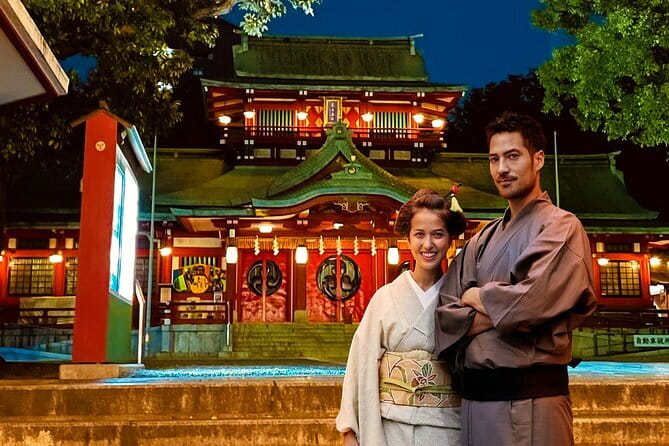
The activity is near public transportation, but the venue can be hard to locate. Tomioka Hachimangu Shrine is the important landmark, and the facility is within its precincts. Do not treat the theater name alone as enough navigation information.
I would plan to arrive early enough to check the shrine grounds and locate the exact entrance without rushing. Keep your mobile ticket ready, since the experience uses mobile admission.
The main geisha experience begins at 12:00 for the hire-car version. Afterward, the car and English-speaking driver are available for up to five hours of independent Tokyo sightseeing. The standard courses are much shorter, with UME at 30 minutes, TAKE at 45 minutes, and MATSU at 70 minutes.
Confirmation is sent within 48 hours of booking, subject to availability. Since the activity is non-refundable and cannot be changed after booking, check your date, course, and arrival plan carefully before paying.
The experience is listed as suitable for most people, and it is near public transportation. Specific accessibility details are not provided, so you should contact the provider before booking if you need particular physical accommodations.
Who will enjoy this most
I would recommend this to you if you want more than a photograph in a kimono or a quick glimpse of traditional dance. The combination of performance, food, history, tea, and games gives you several ways to connect with Japanese culture.
It suits first-time visitors who want an approachable introduction. The atmosphere is intimate and welcoming, and the hosts explain the customs rather than expecting you to know the rules already.
Families can also make good use of the interactive format. The games add fun for people who might find a formal recital too quiet, while the dance and shamisen provide substance for adults interested in traditional arts.
Food-focused visitors should compare TAKE and MATSU carefully. TAKE gives you Fukagawa meshi, while MATSU offers a fuller Edo kaiseki meal and drink. Tea lovers or anyone with only a short opening in the schedule should consider UME.
I would hesitate to book this if you need a guaranteed fully English-language presentation, since translator availability may vary. I would also skip it if your only goal is a large-scale show with elaborate staging. This is a small cultural encounter, not a theater spectacle.
Should you book the Geisha Entertainment Experience?
For most visitors who want a personal introduction to geisha arts, yes, this is worth considering, especially the TAKE course. It combines dancing, shamisen, local food, games, and a setting linked to old Fukagawa in less than an hour.
Choose MATSU when the meal is part of the reason you are going. Choose UME when time is short and you mainly want sweets, matcha, and the performance. Add the hire-car option only if five hours of private Tokyo transport fits your sightseeing plan.
The two things I would prepare for are the difficult-to-find venue and possible limits on English translation. Save the directions, arrive early, and keep a translation app handy. With those small safeguards, this offers a pleasant and unusually direct way to encounter traditional Japanese entertainment.
FAQ
Where does the geisha experience take place?
It takes place at Fukagawa Odori Gekijyo, within the precincts of Tomioka Hachimangu Shrine in Tokyo.
How long does the experience last?
The UME course lasts about 30 minutes, the TAKE course about 45 minutes, and the MATSU course about 70 minutes.
What food is included with each course?
MATSU includes Edo kaiseki cuisine and a drink. TAKE includes Fukagawa meshi, a local clam rice dish, and a side dish. UME includes Japanese sweets and matcha.
Do all courses include the ozashiki geisha entertainment?
No. The ozashiki entertainment experience is included with MATSU and TAKE. It is not included with UME.
Is transportation included?
The standard experience is near public transportation, but transportation is not listed as included. A separate TAKE course with hire includes a car and an English-speaking driver for up to five hours after the noon experience.
Can I cancel or change my booking?
No. The experience is non-refundable and cannot be changed for any reason. Confirmation is sent within 48 hours of booking, subject to availability.
More tours in Tokyo we've reviewed




Tokyo, compared.
 ★ 5.0Mt Fuji and Hakone 1-Day Bus Tour Return by Bullet TrainFrom $163
 ★ 5.01-Day Tokyo Bus TourFrom $129
 ★ 4.6Tokyo: teamLab Planets TOKYO Digital Art Museum Entry TicketFrom $251 day
 ★ 4.0Mt Fuji & Hakone Cruise, Drum Show Bullet Train 1 Day from TokyoFrom $149
 ★ 5.0Tokyo: Shinjuku Food Tour (13 Dishes at 4 Local Eateries)From $86
 ★ 4.4Tokyo Mt Fuji 5th St & Hakone Cruise Bus Tour w/Bullet TrainFrom $15410 hours