Reviewed · TSUKIJI MARKET TOURS
Tsukiji: Unlimited Sake Tasting Experience
The fun here is not simply drinking as much sake as possible. It is learning how wildly different one bottle can taste from the next, all in a small private salon in Tsukiji. You may sample about 20 to 30 varieties during the session, with as many as 50 to 60 available.
In This Article
- Key points before you book
- A rare chance to taste beyond standard bar sake
- Finding Sake Lovers Inc in Tsukiji
- How the sake tasting unfolds
- Why temperature is one of the best lessons
- Snacks make the drinking more comfortable
- The small-group atmosphere matters
- What you may learn about sake production
- Is $54 good value?
- Who should book this experience?
- Small details that help you enjoy it
- Should you book the Tsukiji sake tasting?
- FAQ
- How long does the sake tasting last?
- How many kinds of sake can I try?
- Is the tasting conducted in English?
- Where is the meeting point?
- Is food included?
- Can children attend?
I like the progressive tasting and the chance to try sake warm, chilled, and at other temperatures. I also like the friendly teaching style. Hosts such as Mako, Yuki, and Kyoko have helped beginners feel at ease, even when they know almost nothing about sake.
The main thing to watch is the timing. The experience is listed as 90 minutes, while some of the description refers to two hours. The number of pours can also vary with the group and pace, so treat the bottle count as a range rather than a promise.
Key points before you book

- Up to 50 to 60 bottles available: You will taste a broad selection from breweries around Japan, though the number of pours may vary.
- A lesson as well as a tasting: Your English-speaking host explains brewing, breweries, sake styles, and the story behind each bottle.
- Temperature changes matter: Comparing the same type of sake at different temperatures shows how aroma, sweetness, and finish can shift.
- Small snacks are provided: Cheese, rice crackers, and similar bites help clear your palate and show how sake works with food.
- Private Tsukiji salon: The meeting point is Sake Lovers Inc., inside a red brick building on the fourth floor.
- Best for curious drinkers: It suits beginners and sake fans, but it is not suitable for pregnant women or wheelchair users.
A rare chance to taste beyond standard bar sake

Many first-time visitors meet sake in one of two ways: a tiny cup beside sushi, or a cheap bottle ordered without much thought. This tasting gives you a better starting point. Instead of treating sake as one uniform drink, the host guides you through its range.
Some pours may be gentle and sweet. Others can be dry, bitter, full-bodied, or unexpectedly fragrant. One of the most useful lessons is that sake is not defined by a single flavor. Rice, water, yeast, polishing, brewing choices, age, and serving temperature all affect the result.
That makes the session practical. You are not just sampling alcohol in Tokyo. You are building a vocabulary for ordering sake later in a restaurant. Afterward, you should have a clearer idea of whether you prefer something light and delicate, fruity and fragrant, dry and crisp, or deeper and more forceful.
The activity takes place at a private salon operated by Sake Lovers Inc. It is not described as a large public bar or a crowded production facility. That smaller setting helps the host answer questions and adjust the pace to the group.
A few more Tokyo tours and experiences worth a look

Finding Sake Lovers Inc in Tsukiji
The meeting point is Sake Lovers Inc. サケ・ラバーズ株式会社. Look for the red brick building, enter through the main entrance, and take the elevator to the fourth floor. The first door on the left is number 405.
This is one of those Tokyo meeting points where a little care saves time. The building address alone may not feel obvious if you are hurrying through Tsukiji, so allow enough time to identify the red brick exterior and find the correct elevator. You are not looking for a street-front tasting room with a large sign.
The exact starting time depends on availability. The booking information gives a 90-minute duration, which is the safest figure to use when planning the rest of your day. Since another part of the description refers to two hours of unlimited tasting, I would avoid scheduling a tight appointment immediately afterward.
There is no hotel pickup or drop-off. You make your own way to the salon and leave from there, which is normal for a city tasting but worth remembering if you are building a full day around Tsukiji Market.
How the sake tasting unfolds

Your host begins by setting the scene. You learn about sake brewing, the role of rice and water, and the basic background behind the bottles in front of you. The aim is not to bury you in technical terms. It is to give you enough information to understand what you are tasting.
Each bottle comes with its own brewery, region, and story. The host explains those details before you sample it, so the tasting has a clear rhythm: introduction, pour, sip, discussion, then the next style.
The order is useful. A progressive tasting lets your palate move through different flavors instead of jumping randomly from a light sake to a heavy one and back again. Hosts such as Kyoko have led tastings in a step-by-step format, while Mako has adapted explanations to the group’s existing experience.
If you already know a little about sake, you will not be treated as a complete beginner. If you are starting from zero, you will have room to ask basic questions without feeling out of place. That flexibility is one reason the experience works for mixed groups.
The number of samples is not fixed in the material provided. Several sessions have included around 20 sakes, while another included about 30. The salon has as many as 50 to 60 kinds available, but that does not mean you will drink a full glass of every bottle in 90 minutes.
That distinction matters. Unlimited describes access to the tasting during the session, not a guaranteed sample of every bottle on the shelves. Your host controls the flow, and responsible pacing is part of enjoying the experience.
Why temperature is one of the best lessons
Sake is often served cold outside Japan, but temperature can change the character of the drink. During this session, you try sake at different temperatures and compare the results directly.
A chilled pour may seem sharper, cleaner, or more aromatic. A warmer pour can feel softer, rounder, or more expressive. The exact result depends on the sake, which is the point of the exercise. You are learning that serving temperature is not just a matter of personal habit.
This is one of the most useful parts for future meals. If you order sake in a Tokyo restaurant, you can ask questions with more confidence. You may even discover that a style you disliked when cold tastes much better when served warmer.
The tasting format also makes it easier to notice small changes. You do not need to be an expert with a trained palate. You simply compare one sip with another and pay attention to what changes in the aroma, texture, sweetness, and finish.
Snacks make the drinking more comfortable

Cheese, rice crackers, and other small snacks are available during the tasting. Food is not included as a full meal, so arrive having eaten or plan lunch and dinner separately.
The snacks serve two purposes. First, they give you something to eat between pours, which is important during an alcohol tasting. Second, they show how sake behaves with food. A salty rice cracker may make a dry sake seem different, while cheese can bring out another side of a fuller pour.
Do not book this expecting a sake-and-dinner event. The food is there to support the tasting, not replace a meal. If you are visiting Tsukiji, you can easily make this one part of a larger food-focused day, but keep the tasting’s alcohol content in mind when planning.
Water is also available during the session. Drink it regularly and take the tasting at a steady pace. With so many samples on offer, restraint is what lets you remember the flavors rather than simply feel the effects.



The small-group atmosphere matters
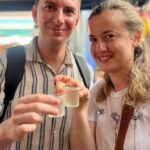
The salon’s scale can change the whole experience. Some sessions have had only one or three participants, creating something close to a private lesson. Other groups have been small enough for people from different countries to talk and compare favorites.
That intimacy is a real advantage if you want to ask questions. You can pause over a bottle, explain what you like, or ask why two sakes taste so different. A large tasting room might offer more energy, but it would be harder to get this level of personal attention.
The mood is friendly rather than formal. Hosts including Mako and Yuki have been praised for making the setting comfortable and welcoming. Kyoko has also led a progressive tasting with clear explanations of the breweries and styles.
You should still expect some variation. The host, group size, and exact bottle selection may depend on the date. The activity is in English, but the personality of the session will naturally change from one host to another.
What you may learn about sake production
The brewing explanation gives useful context without requiring you to become a sake scholar. You learn how the drink is made and why the brewing process influences the final taste.
The host also connects production to the bottle in your glass. That is valuable because a label can otherwise feel like a wall of unfamiliar Japanese words. Once you hear about the brewery and its approach, you have a reason to pay attention to the taste.
The session also corrects a common misunderstanding: sake is not simply Japanese wine. It is a brewed beverage, more closely related to beer in how starch is converted during production, though its flavor and serving traditions are its own.
You do not need to memorize every term. The practical goal is to recognize patterns. Some bottles may taste soft and approachable, while others are dry, bitter, deep, or aromatic. By the end, you should be better prepared to describe what you want at a restaurant.
Is $54 good value?
At $54 per person, this is not a cheap way to have a drink. It is a guided tasting and an introductory lesson, with access to a large selection of sake and small snacks included.
The value improves if you are new to sake. Buying several bottles or ordering random glasses at restaurants could cost plenty without teaching you why they differ. Here, the host gives you a framework, and you can sample styles from breweries around Japan in one sitting.
It also makes sense for a sake fan who wants to find less familiar bottles. One session included varieties that participants had never encountered before, and the selection can include bottles from local sake enthusiasts’ networks and smaller producers.
Still, this is not the best use of $54 if you only want a single drink in a stylish room. You are paying for guided access, explanation, variety, and the chance to compare styles side by side. If you do not enjoy alcohol tastings or rarely drink, the cost may not feel worthwhile.
The included food is limited to snacks, so factor in the cost of a separate meal. I would plan lunch before or dinner after, rather than assuming the tasting will fill your appetite.
Who should book this experience?
I would recommend it to first-time sake drinkers, couples, friends, and solo visitors who want a social activity with a clear learning element. It is also a good choice for anyone who has tried only inexpensive sake and wants to give the drink another fair chance.
It works particularly well for people who feel uncertain ordering sake in Japan. You will taste enough variety to identify some personal preferences, and the temperature comparison gives you a useful question to ask at your next meal.
Repeat visitors can enjoy it too. One returning participant found new sakes on a later visit, which is possible because the available bottles and tasting order can change.
This is less suitable if you want a quiet meal, a formal lecture, or a tour of an active brewery. It is also not appropriate for pregnant women. The activity is listed as unsuitable for wheelchair users, so check your needs carefully before booking.
Families can attend, but children will not be served alcohol. If you bring children, you must bring their own nonalcoholic drinks. For most families, the experience will make more sense if the adults can focus on the tasting without needing to supervise young children.
Small details that help you enjoy it
Use the first pours as reference points rather than trying to choose a favorite immediately. Your palate may change as you compare sweet, dry, light, and fuller styles.
Ask about temperature when you like a bottle. A sake that seems ordinary when chilled may become much more appealing at another serving temperature.
Keep notes on the bottles you enjoy. The selection is large, and remembering a label later can be difficult. Bottles are not necessarily all available for purchase at the salon, so do not assume you can take home every favorite.
One participant had trouble finding a few preferred bottles for sale afterward. If you discover a sake you love, ask the host about its name, brewery, and where it may be found in Japan. That small step can save you from trying to reconstruct the label later.
Finally, pace yourself. The point is comparison, not speed. Eat the snacks, drink water, and give each pour enough attention to notice what makes it different.
Should you book the Tsukiji sake tasting?
Book it if you want a friendly, small-scale introduction to Japanese sake and like the idea of tasting many styles in one place. The strongest part is the combination of personal instruction, temperature comparisons, and a wide bottle selection.
At $54, it offers good value for a curious drinker who would otherwise be guessing at restaurant menus. It is less compelling for someone seeking a full meal or a simple bar visit.
I would allow extra time around the stated 90 minutes because the description also refers to two hours. Choose it early in your Tokyo stay if you want to use what you learn at later meals, and arrive ready to taste slowly rather than chase a record number of samples.
FAQ
How long does the sake tasting last?
The activity is listed as 90 minutes. Another description refers to two hours of unlimited tastings, so allow some flexibility and confirm the current timing when you book.
How many kinds of sake can I try?
The salon has about 50 to 60 different kinds available. Individual sessions have included around 20 to 30 samples, depending on the group and tasting pace.
Is the tasting conducted in English?
Yes. The listed host or greeter language is English, and the activity includes explanations of sake brewing, breweries, and the bottles being sampled.
Where is the meeting point?
Meet at Sake Lovers Inc. サケ・ラバーズ株式会社, in the red brick building. Take the elevator to the fourth floor, then use the first door on the left, number 405.
Is food included?
A selection of snacks such as cheese and rice crackers is available during the tasting. A full meal is not included, so plan separate food before or after the activity.
Can children attend?
The experience is family-friendly, but children will not be served alcohol. If you bring children, you must provide their own nonalcoholic drinks. Pregnant women and wheelchair users should not book this activity.
More Tsukiji Market Tours in Tokyo

More tours in Tokyo we've reviewed












Tsukiji Market Tours, compared.
 ★ 5.0Tokyo Tsukiji Fish Market Food and Culture Walking TourFrom $99
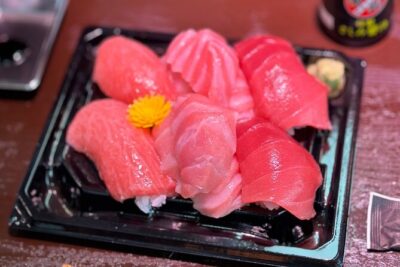 ★ 5.0Tokyo: Tsukiji Fish Market Food and Walking tourFrom $30
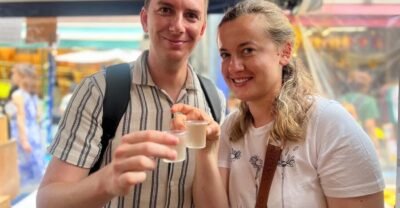 ★ 4.9Tokyo: Tsukiji Fish Market Guided Walking TourFrom $222 hours
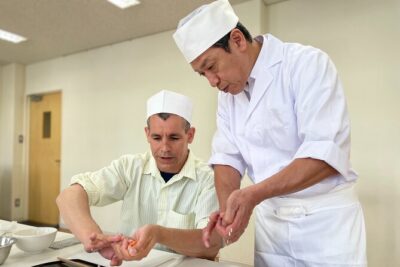 ★ 5.0Tokyo Sushi Making Class in Tsukiji with Professional ChefFrom $49
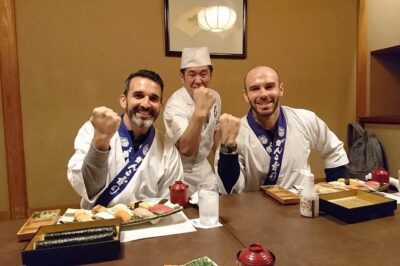 ★ 5.0Tsukiji Fish Market Guided Tour and Sushi Making with Pro ChefFrom $104
★ 4.7Tokyo: Tsukiji Fish Market Food and Culture Walking TourFrom $963 hours
★ 5.0Tsukiji Fish Market Guided Tour and Sushi Making with Pro ChefFrom $104
★ 4.7Tokyo: Tsukiji Fish Market Food and Culture Walking TourFrom $963 hours