Reviewed · MARKETS
Traditional Antiques Market Tour Tokyo
Tokyo’s shrine markets offer a far more interesting souvenir hunt than a row of airport shops. With Sayuki, a geisha guide who may be an apprentice geisha, you look through stalls of antiques, collectables, kimono robes, samurai swords, geisha pillows, and other traditional Japanese goods.
In This Article
- Key Points Before You Book
- Shrine Stalls Instead of Standard Souvenir Shops
- Starting at Tomioka Hachiman Shrine at 9 a.m.
- What the Two-Hour Market Visit Is Like
- Why Bargaining Help Matters
- The $170.60 Price and Group Value
- The Market-Date Problem You Must Take Seriously
- Who Will Get the Most From This Outing
- Booking Advice for a Mobile-Ticket Experience
- Should You Book the Traditional Antiques Market Tour?
- FAQ
- Where does the tour start?
- What time does the tour begin?
- Where does the tour finish?
- How long does the experience last?
- Who guides the tour?
- What can I look for at the market?
- Does the tour include bargaining help?
- Is there an entrance fee for the market?
- Can I cancel or change the booking?
I like the cultural setting at Tomioka Hachiman Shrine, and I like having a guide bargain for you when prices and customs are not clear. The main drawback is serious: the market is not held every week, yet the tour has been listed for weekly departures. Confirm the market date before you commit.
I also like the small-group price when four people share it: $170.60 works out to about $42.65 per person for two to three hours. But for one person, the same price is a much bigger spend, especially with a strict non-refundable policy and a reported case in which the market was not operating.
Key Points Before You Book
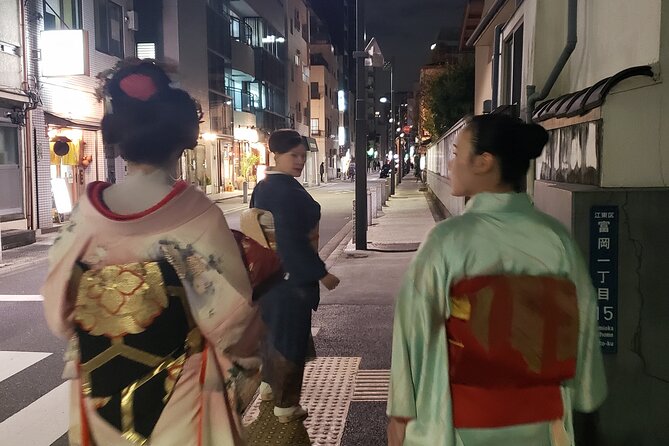
- Shrine-market setting: Meet at Tomioka Hachiman Shrine in Koto City, a specific and easy-to-identify starting point.
- Geisha guide: Sayuki leads the outing, and she may be an apprentice geisha.
- Traditional finds: Look for kimono robes, samurai swords, geisha pillows, antiques, and collectables.
- Bargaining help: Your guide is expected to bargain on your behalf and help you pay a fair price.
- Short morning outing: The experience begins at 9 a.m. and lasts about two to three hours, with the market visit itself listed at two hours.
- Check the date first: A market may not take place every week, creating the biggest practical risk with this booking.
Shrine Stalls Instead of Standard Souvenir Shops
The appeal here is simple: you are not being led through a regular shopping district. You are heading to an outdoor market held around a Tokyo shrine, where the goods may include old Japanese objects, collectables, clothing, and decorative items.
That setting matters. A shrine market can connect shopping with Japanese arts and culture in a way a souvenir store rarely does. You are not simply choosing a manufactured trinket from a shelf. You might find a kimono robe with a pattern you would not see in a modern shop, or an old object whose use and meaning need explanation.
I would set your expectations carefully. The available information does not promise a fixed list of stalls or a guaranteed selection. Antique markets change from one date to the next, and the exact goods depend on what sellers bring. Treat the outing as a search, not a prearranged shopping list.
The most distinctive part is the guide. Sayuki is identified as a geisha guide, though the guide on your departure may be an apprentice geisha. That gives the tour a cultural angle beyond simple purchasing. You can ask about the kinds of objects found at the market and learn about Tokyo’s flea-market scene while you browse.
Other shopping tours in Tokyo



Starting at Tomioka Hachiman Shrine at 9 a.m.
The meeting point is Tomioka Hachiman Shrine, at 1-chōme-20-3 Tomioka, Koto City, Tokyo 135-0047. The tour begins at 9 a.m. and ends back at the same meeting point.
That fixed start is useful if you are planning the rest of your day. A two-hour market visit should leave time for another Tokyo activity, although the total duration is given as approximately two to three hours, so I would not schedule a tight appointment immediately afterward.
You should arrive ready to walk. Comfortable shoes are specifically advised, and that is sensible for an outdoor market where you may move between shrine grounds and several stalls. The meeting point is near public transportation, but no particular train or subway route is provided, so you will need to check your own route to Tomioka Hachiman Shrine.
The shrine location also gives the experience a clear sense of place. You are beginning at a named religious site rather than an anonymous shopping center. Still, the shrine itself is the meeting point, not a promised sightseeing stop with a separate guided tour. The main activity is the market visit.
What the Two-Hour Market Visit Is Like
The stated itinerary consists of one market stop around one of Tokyo’s outdoor shrines. The visit lasts about two hours, with the overall activity described as two to three hours.
During that time, you can browse antiques and collectables and ask Sayuki about what you are seeing. The point is not speed. You have time to compare pieces, decide what appeals to you, and consider how practical an item will be to carry home.
Possible finds include traditional wares such as samurai swords and geisha pillows, along with kimono robes and other Japanese items. The wording is important: these are examples of goods that may be available, not guaranteed purchases. If you have your heart set on one particular item, this tour cannot promise that you will find it.
I would bring a clear idea of your budget and luggage space. Antique shopping can tempt you into buying something large, fragile, or difficult to explain at customs. The experience details do not provide packing or shipping services, so assume you are responsible for your purchases after the tour.
The outing may work especially well for someone who prefers objects with a connection to Japanese culture rather than standard souvenirs. It can also suit a group that enjoys browsing without needing every stop planned in advance.
Why Bargaining Help Matters
The tour includes bargaining on your behalf. That is one of its most practical features.
Flea-market prices can be hard to judge when you do not know the local buying habits or the value of an old object. Language differences can make a simple question about price feel awkward. Having Sayuki negotiate may make the process easier and help you avoid paying more than a fair amount.
The phrase save big bucks should not be taken as a guarantee of a specific discount. The value of the bargaining service depends on the item, the seller, and the starting price. What you are really paying for is assistance with the conversation and the confidence to make an offer.
You should still decide what you are willing to pay before bargaining begins. Your guide can negotiate, but only you know whether a particular kimono, collectable, or decorative piece is worth buying. A fair price is not always the lowest price, especially with unusual antiques.
This feature also adds a social element. Shopping becomes a guided exchange rather than silent browsing. If you are uncomfortable bargaining alone, the assistance may be worth more than the merchandise savings.
The $170.60 Price and Group Value
The listed price is $170.60 per group of up to four people. If four people participate, the cost is about $42.65 each. For a two-to-three-hour private group outing, that can be reasonable, especially if you value the geisha guide and bargaining help.
The calculation changes sharply for smaller groups. Two people pay about $85.30 each, while a solo participant carries the entire $170.60 cost. I would consider this primarily a good-value option for a group of four or for shoppers who place a high value on personal guidance.
The price covers the guided experience and bargaining assistance. There are no market entry fees listed, and admission to the market is not included because the market itself has no stated entrance charge. You should budget separately for anything you buy.
The larger issue is not the price alone. It is the risk that the market may not be operating on the selected date. A documented booking problem involved a departure when no market was being held at the shrine. Attempts to reach the operator reportedly went unanswered, and a refund had to be requested through Viator support.
That is not a small inconvenience. You could spend time crossing Tokyo to reach a market that is not there. Since the experience is non-refundable and cannot be changed for any reason, I would confirm the market schedule and the departure directly before booking, even if the calendar shows availability.
A few more Tokyo tours and experiences worth a look





The Market-Date Problem You Must Take Seriously
This is the tour’s central weakness. The market at the shrine is not held every week, but the activity has been listed as available every week.
That mismatch can turn a promising morning into an expensive dead end. The provided information does not give a reliable recurring market schedule, so I cannot tell you which dates are safe. The practical answer is to contact Sayuki and verify that a market will take place on your exact date and at the advertised meeting point.
I would not make a non-refundable payment until that point is clear. Keep a written confirmation if you receive one. Also make sure the operator confirms what happens if the market is canceled or does not take place.
This warning does not erase the appeal of the experience. It changes how carefully you should book it. The market schedule is not a minor detail tucked into the fine print. It determines whether the main activity exists at all.
Who Will Get the Most From This Outing
I think this tour suits you best if you enjoy browsing, collecting, and asking questions about traditional objects. It is particularly appealing for a group of up to four friends or family members who can share the group cost.
It may also suit you if you find bargaining uncomfortable. Sayuki’s help can remove some of the pressure and let you focus on the objects rather than on negotiating every price.
You should be comfortable with uncertainty. The market’s exact stalls and merchandise are not fixed in the information provided. This is not the right choice if you need a guaranteed samurai sword, a specific kimono, or a carefully timed shopping itinerary.
The experience is also not ideal for anyone who cannot walk comfortably for a morning market visit. Comfortable walking shoes are required advice, and the group may include as many as 20 people, even though the advertised price is for a group of up to four. That difference is worth clarifying before booking if you expect a private experience.
Most people can participate, and service animals are allowed. The tour is near public transportation, but no detailed access information is supplied beyond that.
Booking Advice for a Mobile-Ticket Experience
Confirmation is received at the time of booking, and the experience uses a mobile ticket. That makes the ticket itself easy to carry, but it does not solve the market-date concern.
Save the confirmation on your phone and check the meeting address carefully. Tomioka Hachiman Shrine is in Koto City, and Tokyo is large enough that an incorrect assumption about the neighborhood can cost you time.
Because the start time is 9 a.m., plan your route in advance. Give yourself enough time to reach the shrine without rushing. You will want comfortable shoes and enough room in your bag for small purchases, but do not assume that large or fragile antiques can be transported easily.
The non-refundable policy deserves special attention. You cannot cancel or amend the experience for a refund. That makes direct date verification even more important than it would be for a flexible tour.
Should You Book the Traditional Antiques Market Tour?
I would book this only after confirming that an actual market will be held at Tomioka Hachiman Shrine on your chosen morning. If the date is verified, the outing offers a distinctive way to shop for Japanese objects, learn from Sayuki, and get help with bargaining.
For four people, the price is easier to justify. For one person, I would book only if the geisha-guided cultural context and negotiation help are central to your plans. If you want a guaranteed market, fixed merchandise, or flexible cancellation, choose a different shopping activity.
The potential rewards are personal and memorable finds, not a checklist of sights. The risk is also unusually clear. Confirm the market first, then decide if the chance to search for kimono, collectables, samurai swords, or geisha pillows is worth the commitment.
FAQ
Where does the tour start?
The tour starts at Tomioka Hachiman Shrine, 1-chōme-20-3 Tomioka, Koto City, Tokyo 135-0047, Japan.
What time does the tour begin?
The stated start time is 9 a.m.
Where does the tour finish?
The activity ends back at the meeting point at Tomioka Hachiman Shrine.
How long does the experience last?
The tour lasts approximately two to three hours. The market visit itself is listed as two hours.
Who guides the tour?
Sayuki provides the guide. The guide may be an apprentice geisha.
What can I look for at the market?
Possible items include antiques, collectables, kimono robes, samurai swords, geisha pillows, and other traditional Japanese wares.
Does the tour include bargaining help?
Yes. The experience includes having the guide bargain on your behalf and help you pay a fair price.
Is there an entrance fee for the market?
No market entrance fee is listed. Anything you buy is not included in the tour price.
Can I cancel or change the booking?
No. The experience is non-refundable and cannot be changed for any reason.
More Markets in Tokyo
More Shopping Tours in Tokyo
More tours in Tokyo we've reviewed








Markets, compared.
 ★ 5.0Tokyo Tsukiji Fish Market Food and Culture Walking TourFrom $99
 ★ 5.0Tokyo: Tsukiji Fish Market Food and Walking tourFrom $30
 ★ 4.9Tokyo: Tsukiji Fish Market Guided Walking TourFrom $222 hours
 ★ 5.0Tsukiji Fish Market Guided Tour and Sushi Making with Pro ChefFrom $104
★ 4.7Tokyo: Tsukiji Fish Market Food and Culture Walking TourFrom $963 hours
 ★ 5.0Tsukiji Fish Market: Street Food & Culture Walking TourFrom $33