Reviewed · TEMPLES & MEDITATION
Personal prayer at Meiji Shrine!
Meiji Shrine’s personal prayer tour takes you beyond the usual torii-and-photo visit. You’ll learn how to approach a Shinto shrine, purify your hands and mouth, write down a personal wish, and sit inside the Kagura Hall while priests perform an ancient ceremony with gagaku court music and a miko dance.
In This Article
- Key points to know before booking
- Why this Meiji Shrine visit feels different
- Meeting beneath the second torii
- Learning shrine etiquette on the approach
- Purifying at the fountain and worshipping publicly
- Choosing your wish and filling out the Japanese form
- Inside the Kagura Hall: bells, drums, and gagaku
- Sacred offerings, sake, and the ofuda
- What the $98 price really covers
- Who will get the most from this prayer tour
- Timing, weather, and cancellation details
- Should you book Personal Prayer at Meiji Shrine?
- FAQ
- How long does the personal prayer tour last?
- Where does the tour meet?
- Is the shrine prayer fee included in the $98 price?
- Does the tour include help with the Japanese prayer form?
- What happens during the personal prayer?
- Do I receive anything after the ceremony?
- Can I cancel for a full refund?
I like two things here: the guide makes unfamiliar customs less intimidating, and the prayer gives your visit a clear personal purpose. You also receive an ofuda, a sacred paper amulet carrying your wishes. The main drawback is cost: $98 per person covers the guide and translation, but the shrine’s 5,000-yen prayer fee is extra.
The 90-minute visit is private for your group, which makes it easier to ask questions and get help with the Japanese application form. You should be comfortable sitting upright on tatami flooring, and you’ll want to arrive on time since a previous scheduling mistake caused one visitor to miss the expected support.
Key points to know before booking
- Your prayer is personal: Choose an intention such as family safety, health, safe travel, marriage, business success, or academic achievement.
- The ceremony includes gagaku and miko dance: Ancient court music, bells, drums, flutes, and a shrine maiden’s dance give this visit more depth than a standard shrine stop.
- The 5,000-yen shrine fee is separate: The $98 tour price pays for the private guide and translation help, not the prayer itself.
- You meet under the second torii: The starting point is at Meiji Shrine’s big torii, near Yoyogi and Shibuya.
- The forms are in Japanese: Your guide helps you complete the application, including your name, address, and chosen prayer.
- Tatami sitting matters: This is not a good choice if you have pain sitting upright for part of a ceremony.
Why this Meiji Shrine visit feels different
Most visits to Meiji Jingu are self-guided. You walk through the great torii, follow the forested approach, rinse at the purification fountain, and watch people offer a coin and bow at the main shrine. That visit can be rewarding, but the meaning of each step may remain unclear.
This tour gives those actions a structure. You first receive an explanation of the torii, the sake and wine barrels, and the waka poem displayed near the entrance. Then you learn the proper way to walk through the shrine approach and pass the gates before taking part in the public worship ritual.
The key difference comes inside the Kagura Hall. Your guide helps you apply for an individual blessing, then explains what is happening as shrine priests purify the space and perform the ceremony. You are not simply watching a cultural show. You are taking part in a formal prayer, with your own stated intention recorded on the application.
That makes this a good match for you if you want more than photographs. It is also useful if Shinto customs feel confusing or if you would like a calm, meaningful pause in the middle of Tokyo.
A few more Tokyo tours and experiences worth a look


Meeting beneath the second torii
The tour begins at the big torii at 1-1 Yoyogikamizonochō, Shibuya, Tokyo 151-8557. More specifically, you meet beneath the second torii gate. This detail matters because Meiji Shrine’s grounds are broad, and a vague meeting point could waste precious time.
Your first 15 minutes focus on the entrance. The guide explains the unusual features of the torii, the displays of sake barrels and wine barrels, and the waka poem placed prominently at the front. You can take photographs here, and the guide can help with pictures.
This is a useful opening because the torii is not just a backdrop. It marks the transition into the shrine grounds, and the guide gives you a way to notice details you might otherwise walk past. The barrel displays also provide a quick visual introduction to offerings connected with the shrine.
You should treat the meeting time seriously. One booking went badly after the visitor was running about eight minutes late and could not reach the greeter by phone or text. The provider later apologized and explained that the person assigned had misunderstood the schedule and was dealing with a serious personal problem. That was an unusual failure, but it gives you a practical lesson: arrive early, keep the meeting instructions handy, and do not assume a short delay will be easy to fix.
Learning shrine etiquette on the approach
From the second torii, you walk toward the third torii and the inner shrine area. This section takes about 15 minutes and covers the manners used on the approach.
Your guide explains how to walk along the path and how to pass through the torii gates. The tour specifically addresses common mistakes made by foreign visitors, so you are not left guessing about the ritual. The guide also points out more waka poems and buildings along the way, with time for photographs.
I like this part because it keeps etiquette practical. You do not need a long lecture on Shinto before you can participate respectfully. Instead, you learn what to do at the moments when it matters: entering through the torii, walking toward the shrine, and preparing for worship.
The photo opportunities continue here, but the pace is not built around sightseeing alone. If you want to stop at every angle for pictures, you may need to keep an eye on the clock. The main purpose of the walk is to prepare you for the prayer, not to provide a full architectural tour of every corner of Meiji Jingu.
Purifying at the fountain and worshipping publicly
At the purification fountain, you clean your hands and mouth before entering the main shrine area. The tour guide shows you the method, then leads you through the form of worship used by the general public.
That ritual involves offering a coin, making two bows, clapping twice, and finishing with one bow. The guide explains the order and directs you away from areas where photographs are not allowed.
This 10-minute stop is short, but it gives you a chance to practice before the more formal prayer. You are not only hearing about Shinto customs. You are following them in the actual shrine setting, under the guidance of someone who can correct small uncertainties.
Keep your camera put away when instructed. The tour includes photographs at several outdoor points, but the shrine has restricted areas, and the ceremony itself is not presented as a photo opportunity. A respectful visit means accepting those limits.
Choosing your wish and filling out the Japanese form
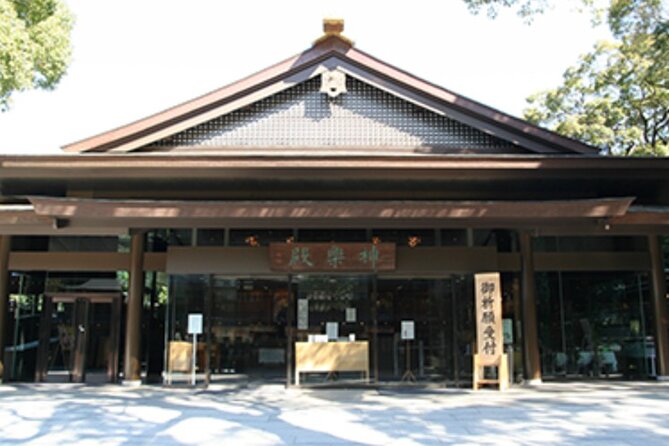
The next stage takes place at the Kagura Hall, where individual blessings are arranged. At the entrance, you complete an application form and choose the intention for your prayer.
The listed purposes include:
- World peace
- Household safety
- Travel safety
- Recovery from illness
- Business success
- Finding a good match
- Safe childbirth
- Academic achievement
You also write your address and name. The forms are available only in Japanese, but translation and application assistance are included in the tour price. This is one of the clearest practical reasons to book with a guide. Without help, the language barrier could make the process stressful or lead to an incomplete form.
The shrine’s prayer offering begins at 5,000 yen, paid separately from the $98 tour cost. The wording indicates that this is the fee for the personal prayer itself. Amulets and other items purchased privately also cost extra.
Here is how I would judge the value. If you only want to see Meiji Shrine, $98 plus the prayer fee is a lot for a 90-minute visit. If you want a guided ritual, translation help, and access to a formal personal blessing, the price becomes easier to understand. You are paying for the guide’s time and for help with a process that is otherwise difficult to navigate in Japanese.
Think about your intention before you arrive. The prayer choices cover common needs, but the experience will feel more focused if you already know what you want to write.




Inside the Kagura Hall: bells, drums, and gagaku
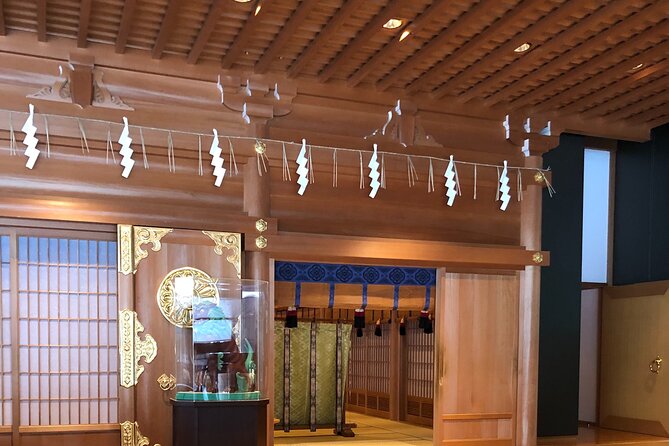
Once the application is complete and the offering has been submitted, you move to the altar area in the Kagura Hall. The ceremony takes about 20 minutes.
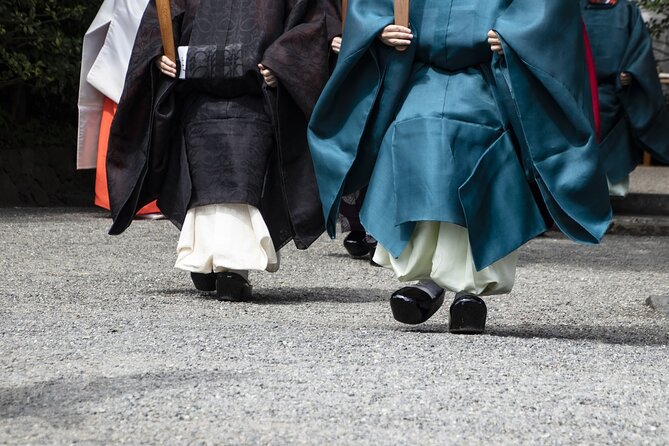
A drum marks the start. Shrine priests in traditional clothing use sacred tools during a purification ritual. The sound and formal movements create a quiet break from the ordinary pace of Tokyo. The purpose, as presented in the ceremony, is to cleanse you and prepare your heart for the prayer.
Gagaku follows. This ancient court music uses traditional instruments, including drums and flutes, and is recognized by UNESCO as Intangible Cultural Heritage. You should not expect a concert in the modern sense. The music is ceremonial, measured, and tied to the religious setting.
A miko, or shrine maiden, performs a dance in traditional clothing. The dance and music are not separate entertainment added to the tour. They form part of the prayer ceremony, which is why the experience can feel more solemn than a cultural demonstration.
The ceremony takes place in a tatami room. You should be able to sit upright for the required period. The tour is not recommended for people who have pain sitting straight, so consider that carefully before you book. There is no indication that chairs or alternate seating are available.
Photography rules also matter here. Your guide tells you where cameras are not allowed, and you should expect to watch rather than document parts of the ceremony.
Sacred offerings, sake, and the ofuda
After the prayer, the ritual concludes with sacred offerings called shinsen and sacred sake called omiki. The shinsen is often nori, or seaweed, which you take home as a souvenir. It is understood as an offering that has been presented to the deities and then shared with participants.
At the exit, you receive a small cup. A shrine maiden pours omiki for you to drink on the spot. The ceremony treats this as a way to share in the offerings and pray for good health and related blessings.
You also receive an ofuda, an amulet filled with your wishes and connected with the power of the day’s prayer. The ofuda is one of the most meaningful parts of the experience because it gives you a physical reminder of the intention you brought to the shrine.
Do not confuse this included item with privately purchased amulets. The tour information says that amulets and similar purchases are not included, so budget separately if you want additional shrine items.
When the prayer is finished, your group disperses at the Kaguraden exit. The experience does not continue as a guided tour of the wider shrine grounds, so plan any extra Meiji Jingu sightseeing before or after the scheduled 90 minutes.
What the $98 price really covers
The listed price is $98 per person. That covers the private activity, information, and translation of the application form. It does not cover the shrine’s personal prayer fee, which starts at 5,000 yen, or extra amulets.
The private format improves the value for couples, families, or a small group with a shared purpose. You can ask questions without competing with a large crowd, and the guide can give direct help with the Japanese paperwork. If you are alone, the price is harder to justify unless the personal prayer is the main reason for your Meiji Shrine visit.
The 65-day average advance booking figure suggests that you should not treat this as a last-minute add-on, particularly if your Tokyo dates are fixed. Confirmation is provided at booking, and the ticket is mobile, so you do not need to collect a paper voucher.
The experience takes about 1 hour 30 minutes. The route involves walking from the second torii to the third torii and then to the Kagura Hall, so wear shoes that are comfortable for the approach. The key physical issue is not long-distance walking but sitting upright during the ceremony.
Who will get the most from this prayer tour
I would recommend this for you if:
- You want a formal Shinto prayer rather than only a shrine visit.
- You are curious about ritual but do not read Japanese.
- You have a specific wish related to health, family, travel, study, work, marriage, or safety.
- You prefer a private guide who can explain etiquette as you go.
- You can sit upright on tatami flooring.
- You are willing to pay the separate 5,000-yen prayer fee.
I would think twice if your main goal is a quick look at Meiji Shrine, extensive photography, or a flexible walk around the grounds. The tour follows a set sequence, includes restricted photography areas, and spends much of its time on ritual rather than sightseeing.
It may also be less suitable if you are uncomfortable with religious participation. The prayer includes purification, worship, sacred music, dance, offerings, and sake. You are not simply observing from a distance.
Timing, weather, and cancellation details
This experience is near public transportation, and the meeting point is at the shrine’s big torii. The tour requires good weather. If poor weather causes cancellation, you are offered another date or a full refund.
You can cancel for a full refund up to 24 hours before the start time. Changes or cancellations made less than 24 hours before the start are not accepted for a refund. The cut-off follows Tokyo local time.
Because one past booking suffered from a guide communication problem, I would save the meeting details and arrive early. The provider apologized for that incident, but an apology does not recover a missed ceremony. A little extra time at the torii is the sensible choice.
Should you book Personal Prayer at Meiji Shrine?
Book it if you want the personal prayer to be the center of your Meiji Jingu visit. The combination of translated paperwork, formal purification, gagaku, miko dance, sacred offerings, omiki, and an ofuda gives you access to a side of the shrine most independent visitors will not reach.
Skip it if you only need a short cultural stop or if $98 plus 5,000 yen feels too high for 90 minutes. You can visit Meiji Shrine without this service, but you will not receive the same guided explanation or personal ceremony.
For the right person, this is a thoughtful and unusual Tokyo activity. Arrive early, plan your prayer intention, bring the extra shrine fee, and be ready to sit quietly and respectfully. If those conditions suit you, the tour offers a focused way to connect your visit with a personal wish.
FAQ
How long does the personal prayer tour last?
The experience lasts approximately 1 hour 30 minutes.
Where does the tour meet?
You meet under the second torii gate at Meiji Shrine’s big torii, at 1-1 Yoyogikamizonochō, Shibuya, Tokyo 151-8557.
Is the shrine prayer fee included in the $98 price?
No. The personal prayer fee is paid separately to the shrine and starts at 5,000 yen.
Does the tour include help with the Japanese prayer form?
Yes. Information and application form translation fees are included, and the guide assists you with the Japanese form.
What happens during the personal prayer?
You write down your prayer intention, then attend a ceremony with purification by shrine priests, gagaku court music, a miko dance, sacred offerings, and sacred sake.
Do I receive anything after the ceremony?
Yes. You receive an ofuda, along with sacred offerings such as nori. You also receive a small cup of omiki to drink at the exit.
Can I cancel for a full refund?
Yes. You can cancel at least 24 hours before the start time for a full refund. If poor weather cancels the experience, you are offered another date or a full refund.
More Temples & Meditation in Tokyo
More tours in Tokyo we've reviewed












Temples & Meditation, compared.
 ★ 4.7Tokyo: Meiji Shrine, Asakusa, Skytree Bus Tour and CruiseFrom $12210 hours
 ★ 4.8Tokyo: Asakusa Walking Tour with Sensoji Temple VisitFrom $222 hours
 ★ 4.5Tokyo: Kamakura & Enoshima Day Trip including Temple TicketsFrom $589 hours - 570 minutes
 ★ 4.5Tokyo: Nikko Toshogu Shrine and Kegon Waterfall TourFrom $8410h 30m
 ★ 4.5Tokyo Panoramic 1 Day: Meiji Shrine, Asakusa, Odaiba and SKYTREE®From $85
 ★ 5.0Asakusa Senso-ji Temple and Old Tokyo Walking TourFrom $20