Reviewed · UENO & YANAKA WALKS
Walking Tour: Yanaka,Nezu& Sendagi: Tea Ceremony & Old Tokyo
Yanaka, Sendagi, and Nezu offer a side of Tokyo that many first-time visitors miss. This walking tour takes you through old wooden streets, temple grounds, a cemetery, an art museum, and a traditional tea house, ending with one of Tokyo’s prettiest shrines. The tea ceremony, served in antique bowls with wagashi, is the day’s special treat.
In This Article
- Key points before you book
- Why Yanesen feels different from modern Tokyo
- Starting at Nippori Station
- Yanaka Cemetery and the old Shitamachi mood
- The tea ceremony with antique bowls
- Wandering through Yanaka’s local streets
- Asakura Museum of Sculpture
- Lunch and free time in Yanaka
- Sendagi, temples, and a slower pace
- Nezu-jinja, the final major sight
- What the $135 price gets you
- The guides and the feel of the day
- Who should book this walking tour
- Should you book Yanaka, Nezu, and Sendagi?
- FAQ
- Where does the tour begin?
- Should I go to Nippori Station or Nishi-Nippori Station?
- How long does the tour last?
- What language is the tour conducted in?
- Is the tea ceremony included?
- Is admission to the Asakura Museum of Sculpture included?
- Is lunch included?
- What neighborhoods does the tour visit?
- Can I cancel for a full refund?
I like the small-scale feel of Yanesen, where the city slows down and the old Shitamachi character remains easy to see. I also like the mix of stops: you get art, nature, religious sites, local streets, and a cultural activity rather than six hours of shrine-hopping.
The main drawback is simple: this is a full day on foot, and the $135 price does not list lunch as included. You should be ready for steady walking and budget separately for your midday meal.
Key points before you book
- Antique tea bowls make the tea ceremony unusual: You drink tea from selected old bowls, enjoy wagashi, and may see the tea house owner’s artwork connected to the bowls.
- Yanesen shows a quieter side of Tokyo: Yanaka, Nezu, and Sendagi retain much of their old Shitamachi character despite sitting close to the modern city center.
- The itinerary has useful variety: Expect a cemetery, temples, park and nature areas, a museum, local streets, a shrine, and free time.
- The Asakura Museum adds an art and architecture stop: Admission is included, along with a guided visit.
- The guide shapes the day: English-speaking guides such as Jeff and Beth have led the walk, with a friendly, conversational approach.
- Meet at the correct station: The start is outside Nippori Station’s West exit, not Nishi-Nippori Station.
Why Yanesen feels different from modern Tokyo
Tokyo can seem dominated by towers, bright signs, crowded crossings, and fast trains. Yanesen gives you a different picture. The name combines Yanaka, Nezu, and Sendagi, three neighboring districts in the city’s old Shitamachi, or lower-city, area.
Here, the appeal is not one famous sight. It is the way the pieces fit together. You move through a district shaped by temples, shrines, artists, small streets, older homes, and local customs. The tour gives you enough context to understand why these neighborhoods feel unlike the better-known parts of Tokyo.
I especially like this kind of introduction to the city because it shows that Tokyo is not one single urban experience. You can spend the morning among historic religious sites and traditional buildings, then return to a major station and be back in the modern city within minutes.
The guide matters here. Yanesen is easy enough to walk through, but the meaning of a cemetery gate, a temple district, or a street lined with older homes is not always obvious. A local English-speaking guide can connect the physical setting with the story of Shitamachi life.
A few more Tokyo tours and experiences worth a look


Starting at Nippori Station
The tour begins at 10:30 outside Nippori train station’s West exit. After coming through the ticket gates, look for a red information board and a post box directly in front of you.
Pay close attention to the station name. You need Nippori Station, not Nishi-Nippori Station. They are separate stations, and arriving at the wrong one could create an awkward start to a walking day.
Nippori is a practical meeting point for this route because it puts you near Yanaka from the outset. There is no long transfer into the sightseeing area once the tour begins. From the meeting point, you walk for about 10 minutes before reaching the first main stop.
Wear shoes you can comfortably use for several hours. The schedule includes multiple walking sections, a cemetery visit, time in local streets, a walk through Sendagi, and a shrine visit. The route is not presented as a strenuous hike, but it is more active than a bus tour or a short neighborhood stroll.
Yanaka Cemetery and the old Shitamachi mood
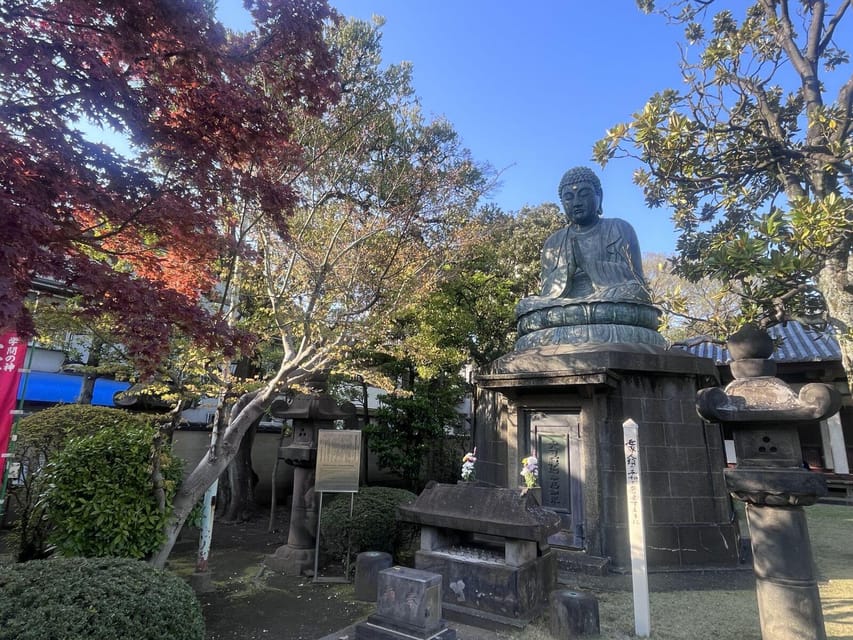
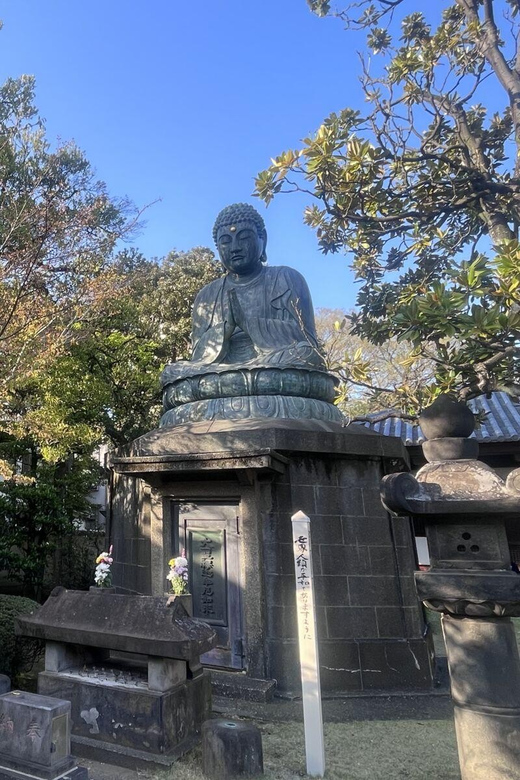
The first listed stop is Yanaka Cemetery, where you spend about 30 minutes with the guide. A cemetery may sound like a quiet opening, but it makes sense here. Yanaka is closely tied to temples, memorial culture, and the older character of Tokyo.
This stop helps you read the neighborhood. Instead of rushing straight toward a headline attraction, you begin with a place that reflects the district’s long religious and community life. The guide can also point out details you might otherwise walk past.
The cemetery is a place for respectful observation, not noisy sightseeing. Keep your voice low and follow the guide’s lead about where to walk and when photography is appropriate.
For me, the value of this stop is its tone. It puts you into old Tokyo gradually. You are not simply checking off a famous building. You are seeing how sacred spaces and residential districts exist close together.
The tea ceremony with antique bowls
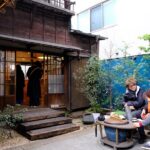
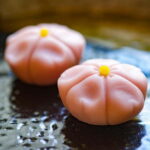
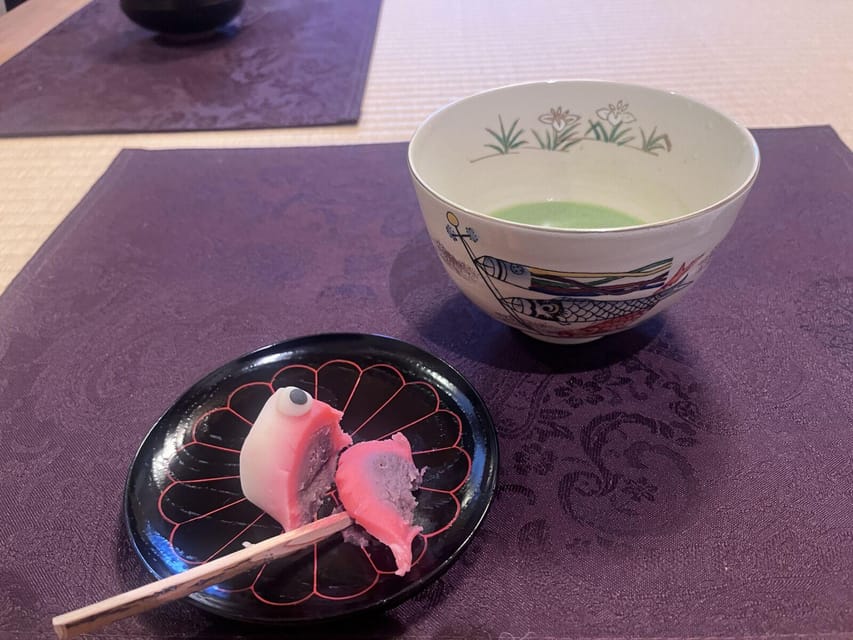
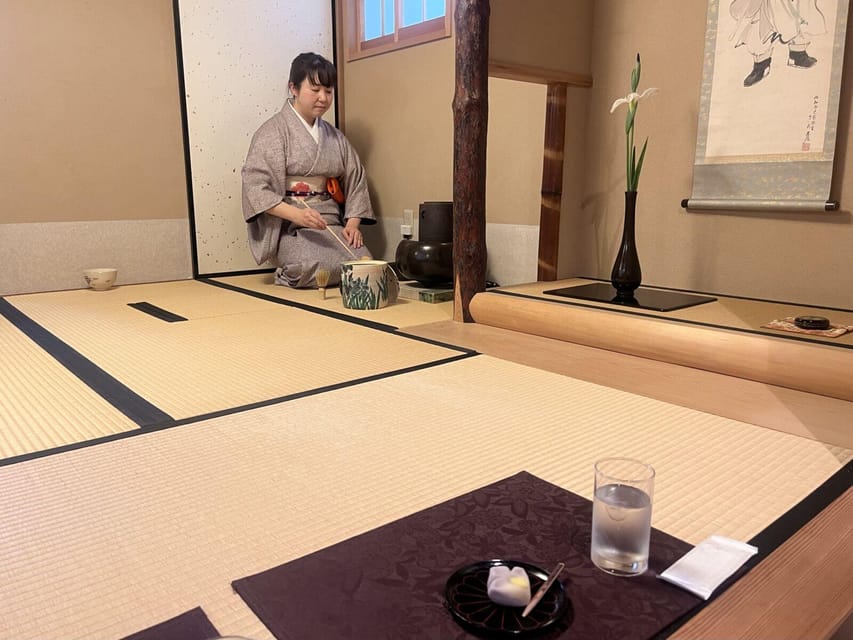
The tea ceremony is the emotional center of the day. It is listed as a one-hour secret stop that includes a food tasting, and the supplied details describe tea served in antique tea bowls with wagashi, the small traditional sweets commonly paired with tea.
This is more than a quick cup of green tea. The bowls are part of the experience. Their age and individuality give the ceremony a sense of connection to earlier generations, while the wagashi provides a small but important taste of Japanese hospitality.
One especially unusual detail is the tea house owner’s drawing. The owner has created a portrait connected to the antique tea bowls selected for the ceremony. That kind of personal touch gives the stop a human side that a standard demonstration may lack.
The atmosphere also depends heavily on the guide and the host. Beth, one of the guides associated with this tour, is described as bringing energy and care to the day, while Jeff’s approach is more like a friendly conversation during a walk. Those details suggest that the experience is not built around a stiff lecture.
You should still set your expectations correctly. This is a one-hour cultural stop within a much longer neighborhood tour, not a full formal course in tea ceremony technique. You will learn and take part, but the greater value is the setting, the antique bowls, the wagashi, and the chance to appreciate the ritual at a relaxed pace.
Wandering through Yanaka’s local streets
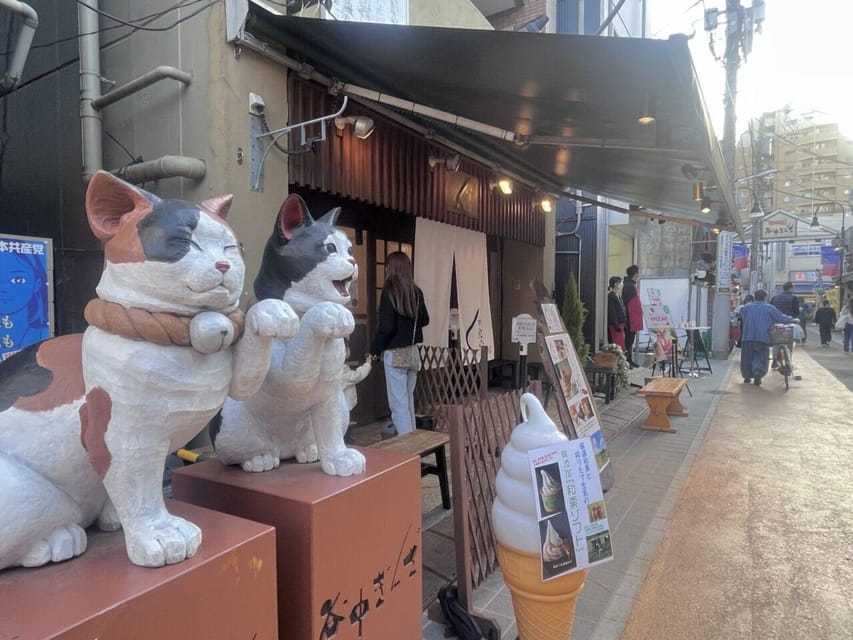
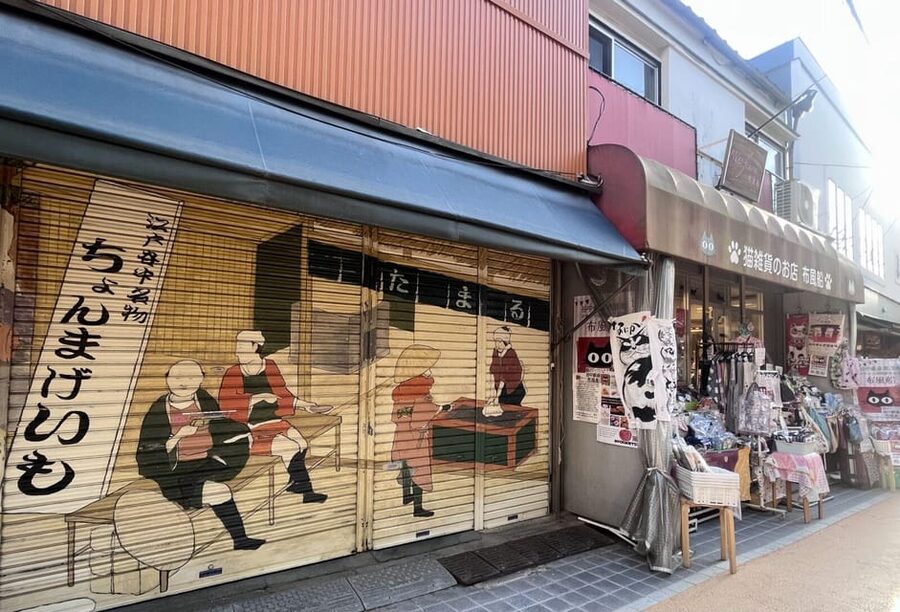
After the tea stop, the tour continues through Yanaka, with about 80 minutes for guided exploration and free time. This is where the old neighborhood character gets room to breathe.
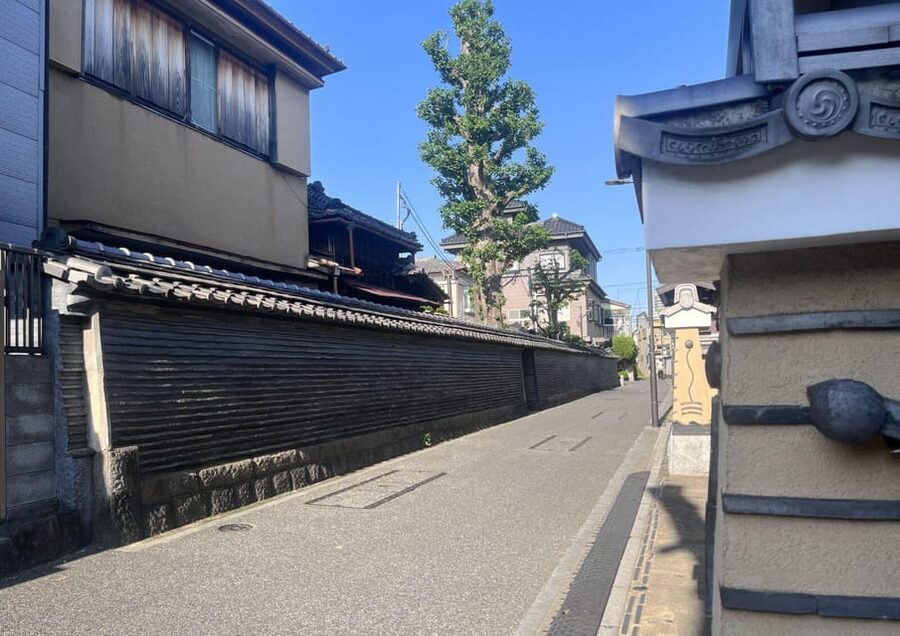
Yanaka is described as historic and artistic, with a cozy atmosphere that feels far removed from some of Tokyo’s more famous districts. You can expect the guide to point out traditional architecture and local details while giving you time to look around at your own pace.
Free time is important here. A tightly scheduled route can make every neighborhood feel the same, but a pause lets you notice the small differences in streets, storefronts, homes, and temple approaches. You may find that the strongest memory comes from a simple lane or corner rather than a single major sight.
The tour also includes a food tasting earlier in the day, but the information does not specify every tasting item. Treat it as a chance to try something local rather than a full food tour.
A few more Tokyo tours and experiences worth a look




Asakura Museum of Sculpture
The Asakura Museum of Sculpture gives the day a clear art focus. Admission is included, and the guided visit lasts about an hour.
The museum fits naturally into Yanaka’s artistic identity. Rather than treating the district only as an old-fashioned neighborhood, the route shows its connection to working artists and creative life. That balance is useful. You get a look at traditional Tokyo, but not a frozen version of the past.
The museum also provides a change of pace. After walking outdoors and taking in religious sites and local streets, an indoor art visit gives you time to slow down and look closely.
The highlights describe views of Tokyo from a rooftop terrace. That is a worthwhile contrast with the narrow streets below. From above, you can place Yanaka within the wider city and see how close this quiet district is to Tokyo’s larger urban core.
The museum visit is guided, so you do not need to arrive with prior knowledge of the artist or collection. If art museums are not usually your priority, the one-hour length keeps this from taking over the whole day.
Lunch and free time in Yanaka
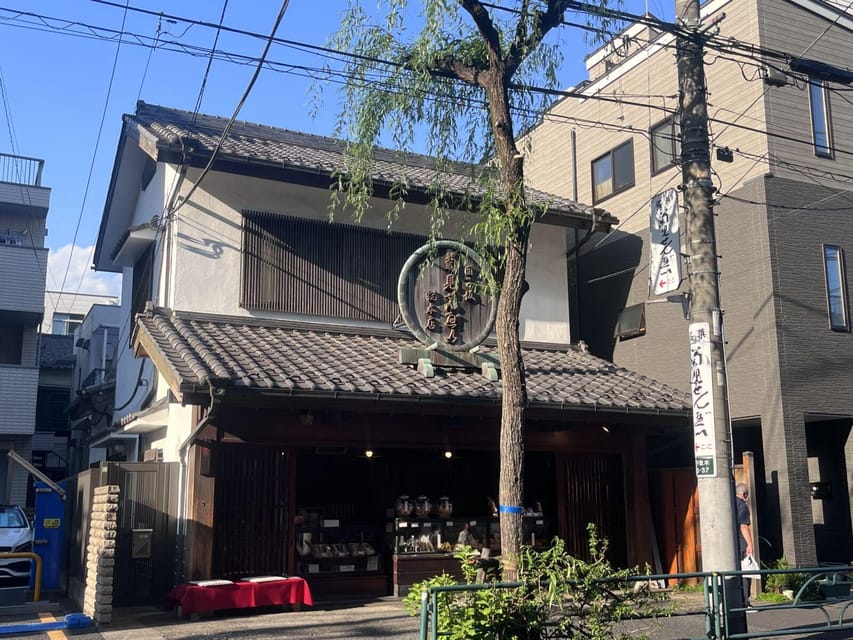
The itinerary allows about an hour for lunch and free time back in Yanaka. Lunch is not listed among the included items, so plan to pay for your own meal.
That arrangement gives you flexibility. You are not locked into a set restaurant or menu, and you can use the break to choose what suits you. The tradeoff is that the final cost of the day will be higher than the $135 tour price if you need to buy lunch and drinks.
Ask your guide for help if you are unsure where to eat. The tour is designed around local neighborhoods, and the guide can help you make the most of the break. Still, the supplied details do not promise a specific restaurant, meal, or food budget, so do not book this expecting an included lunch.
The hour also gives your feet a useful rest before the later walk through Sendagi and Nezu. That matters on a full-day walking route.
Sendagi, temples, and a slower pace
The Sendagi section takes about 40 minutes and focuses on a guided walk through the neighborhood. Sendagi is known for temples and park areas, adding more greenery and open space to a route that might otherwise feel centered on buildings and streets.
This part of the tour helps show how the Yanesen districts connect. Yanaka, Sendagi, and Nezu are not isolated attractions. They form a broad old Tokyo area where shrines, temples, homes, parks, and small businesses sit close together.
The route’s pace should suit you if you prefer context over speed. You are not being driven from one sight to another. You walk between areas, allowing the character of the district to change gradually.
That same format may not suit someone who wants to cover a long list of major Tokyo landmarks in one day. This tour is about one part of the city, and its rewards come from looking closely rather than racing widely.
Nezu-jinja, the final major sight
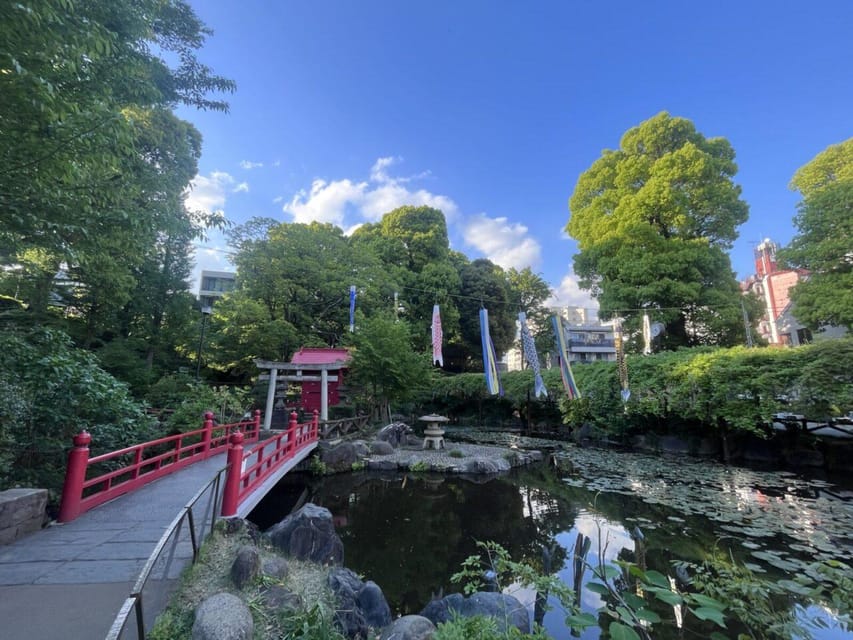
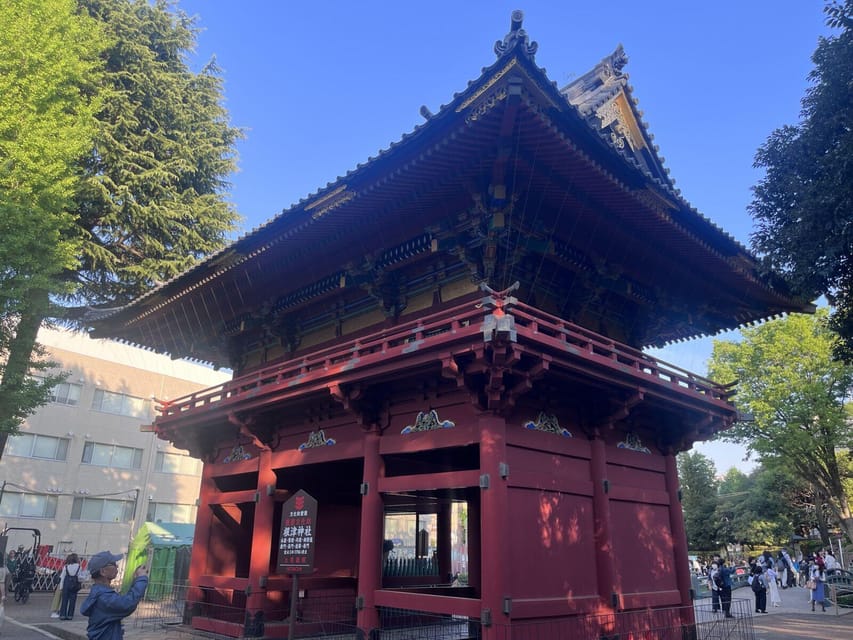
The final main stop is Nezu-jinja, one of Tokyo’s most beautiful shrines. You spend about an hour there with the guide.
Nezu-jinja provides a strong finish because it brings together many of the themes introduced earlier: religious tradition, old Tokyo, careful architecture, and a peaceful setting within a huge modern city. After the quieter streets of Yanaka and Sendagi, the shrine gives the route a clear landmark.
The guide can help you understand how to behave respectfully at a Shinto shrine and explain what you are seeing. You should follow instructions about where to stand, when to take photographs, and how to avoid interrupting worship.
An hour is enough time to take in the shrine without making the visit feel rushed. It also gives you a final chance to compare the three districts. Yanaka feels artistic and residential, Sendagi brings temples and park space, and Nezu adds a major shrine to the mix.
The tour returns to Nippori Station after the shrine visit. The exact end time is not provided, so avoid booking a tight evening reservation unless you have plenty of leeway.
What the $135 price gets you
At $135 per person, this is not the cheapest way to walk around Tokyo. You are paying for a full day with a local English-speaking guide, the tea ceremony, and admission to the Asakura Museum of Sculpture.
The value depends on how much help you want interpreting the area. You could walk through Yanaka, Sendagi, and Nezu independently, but you would need to research the neighborhoods, find the tea ceremony, arrange the museum visit, and connect the route yourself.
The tea ceremony is the strongest reason to consider the price. Drinking tea from antique bowls, enjoying wagashi, and seeing the tea house owner’s artwork give the day something you cannot get from a normal self-guided stroll.
The museum admission is included, but lunch is not listed as included. You also need to arrange your own transport to and from Nippori Station. For a visitor who values local explanation and a planned cultural experience, the price is reasonable. For someone who only wants to see the streets and shrines, it may feel high.
The guides and the feel of the day
The available guide language is English. Jeff and Beth are names connected with the guiding team, and their styles sound particularly suited to this route.
Jeff’s approach is described as conversational, making the day feel like a friendly walk rather than a formal lecture. Beth is associated with a lively, thoughtful day that responded to personal interests and shared information about both old and present-day Japan.
Of course, a guide’s personality can vary from one departure to another. Still, this tour seems to place real weight on human interpretation, which is important in Yanesen. The streets themselves are pleasant, but the explanations help you understand why the area matters.
The tour has received a rating of 5 from three reviews, so the sample is small. I would treat that as encouraging but not as proof that every group will have the same experience. Your own enjoyment will depend partly on your interest in walking, local history, tea, art, and neighborhood details.
Who should book this walking tour
I would choose this tour if you have already seen some of Tokyo’s major sights and want a quieter, more traditional district. It also works well as an introduction to old Tokyo if you prefer local streets and cultural settings to shopping centers and high-rise viewpoints.
It suits you especially well if you:
- Enjoy walking through residential districts
- Want a guided tea ceremony rather than only a shrine visit
- Like combining art, architecture, nature, and food
- Prefer a full day focused on one connected area
- Want an English-speaking guide to explain customs and local history
You may want another type of tour if you have limited time in Tokyo, dislike long walks, or want lunch and transport included in one price. Families with young children should also consider the full-day format and the quiet, respectful nature of the cemetery, museum, and shrine stops.
Book as early as needed for your schedule, but the reservation terms are flexible: you can cancel up to 24 hours before the activity for a full refund, and reserve now while paying later. Check the available start time, since the tour is valid for one day and availability controls the departure.
Should you book Yanaka, Nezu, and Sendagi?
Book it if you want Tokyo to feel like more than a collection of famous sights. The combination of old streets, the Asakura Museum, Sendagi’s temples and park areas, Nezu-jinja, and the antique-bowl tea ceremony gives you a thoughtful day in a less obvious part of the city.
The deciding factor is the walking. You will spend much of the day moving between neighborhoods, and lunch is your own expense. If that sounds appealing, $135 buys a well-shaped cultural day with a guide and two meaningful inclusions. If you want a fast, landmark-heavy tour, save your money for another option.
FAQ
Where does the tour begin?
It begins at 10:30 outside the West exit of Nippori train station. Look for a red information board and a post box directly in front of the ticket gates.
Should I go to Nippori Station or Nishi-Nippori Station?
You must go to Nippori Station. The meeting point is not at Nishi-Nippori Station.
How long does the tour last?
The activity is listed as lasting one day. The exact ending time is not provided.
What language is the tour conducted in?
The tour has a live English-speaking guide.
Is the tea ceremony included?
Yes. The tea ceremony is included in the tour price.
Is admission to the Asakura Museum of Sculpture included?
Yes. Admission to the Asakura Museum of Sculpture is included.
Is lunch included?
Lunch is not listed among the included items. The itinerary provides about one hour for lunch and free time in Yanaka, so you should plan to pay for your own meal.
What neighborhoods does the tour visit?
The route covers Yanaka, Sendagi, and Nezu, together known as Yanesen. It also includes Yanaka Cemetery, the Asakura Museum of Sculpture, and Nezu-jinja Shrine.
Can I cancel for a full refund?
You can cancel up to 24 hours in advance for a full refund. You can also reserve now and pay later to keep your plans flexible.
More Walking Tours in Tokyo




More Tea Ceremony & Matcha in Tokyo
More Ueno & Yanaka Walks in Tokyo
More tours in Tokyo we've reviewed












Ueno & Yanaka Walks, compared.
 ★ 5.0Eat and Drink Like a Local: Tokyo Ueno Food Tour-Taverns&RamenFrom $95
 ★ 4.5The Old Quarter of Tokyo – Yanaka Walking TourFrom $40
 ★ 5.0Yanaka Walking Tour: Historic and Traditional District of TokyoFrom $72
 ★ 4.8Tokyo: Old Quarter Yanaka Walking TourFrom $323 hours
 ★ 5.0Tokyo: Food Tour in Ueno with 10+ Tastings of Japanese ClassicsFrom $142
 ★ 4.9Tokyo:Stroll in Old traditional culture towns~Yanaka & NezuFrom $293h 30m