Reviewed · UENO & YANAKA WALKS
The Old Quarter of Tokyo – Yanaka Walking Tour
Yanaka gives you a Tokyo that most visitors miss: wooden houses, temple bells, narrow lanes, neighborhood gardens, and a shopping street where daily life matters more than neon signs. This three-hour walk begins at Nippori Station and ends at Yanaka Ginza, linking several religious and historic sites on foot.
In This Article
- Key points to know
- Why Yanaka feels unlike central Tokyo
- Starting at Nippori Station and meeting old Tokyo
- Tennoji Temple and the Yanaka Buddha
- Yanaka Cemetery and everyday Buddhist customs
- Ueno-Sakuragi Atari and the old wooden homes
- Enju-ji Temple and the god of strong legs
- Nezu Shrine and its tunnel of red torii
- Hebimichi and the quieter residential lanes
- Yanaka Ginza, the best place to finish hungry
- What the $40 price really buys you
- Guides, pace, and the practical walking experience
- Who should book the Yanaka walk
- Booking and cancellation details
- Should you book it?
- FAQ
- How long does the Yanaka Walking Tour last?
- Where does the tour begin?
- Where does the tour end?
- How many people can join the tour?
- Is food included in the tour price?
- Is the tour conducted in English?
- Can I cancel for a full refund?
I like the small group of no more than 10 people, which gives you room to ask questions and hear the guide clearly. I also like the way the walk connects religion with ordinary life, from the Buddhist customs at Yanaka Cemetery to the red torii gates at Nezu Shrine and snacks at the local market.
The main consideration is the weather. You will be outside for about three hours, and Tokyo heat can be serious. Comfortable shoes, a hat, and sun protection are sensible, especially after one group found the walk hot and humid at 35 degrees Celsius.
Key points to know
- See a quieter side of Tokyo: Yanaka feels more residential and traditional than Ginza, Omotesando, or Tokyo’s major shopping districts.
- Follow a useful route: The walk starts at Nippori Station and finishes at Yanaka Ginza, a practical place for food and browsing.
- Learn how Buddhism and Shinto fit together: Temples, shrines, cemetery customs, and local beliefs all appear along the route.
- Expect strong guide involvement: Aya, Junko, Rei, Mei, Mami, Kiyo, and Polina are among the guides praised for clear English, patience, humor, and local knowledge.
- Keep extra money for snacks: Food, drinks, and personal purchases are not included in the $40 price.
- Prepare for uneven outdoor walking: Most people can take part, but this is a real walking tour, not a vehicle-based sightseeing loop.
Why Yanaka feels unlike central Tokyo
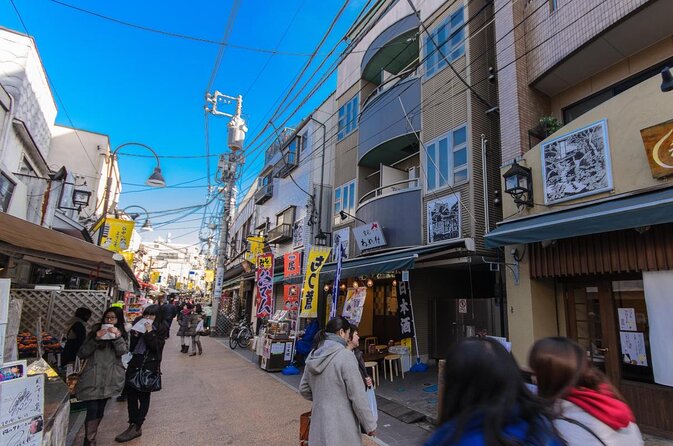
Tokyo can seem built from towers, department stores, train stations, and crowds. Yanaka offers a useful counterpoint. It is not frozen in the past, but its older wooden homes, small temples, family shops, and narrow residential lanes give you a better sense of how a neighborhood functions beyond the city center.
Some buildings in the area survived the World War II bombings and earlier fires and disasters. That does not mean every street looks old, nor should you expect an open-air museum. The appeal comes from the mix: a modern city surrounding an older district that still has local businesses and places of worship.
I find this kind of walk valuable early in a Tokyo visit. It gives you cultural context before you spend the rest of your time racing between major sights. It also makes the city feel less like a list of famous stops and more like a collection of neighborhoods, each with its own pace.
The route is conducted in English and usually stays intimate, with a maximum of 10 people. That matters here because Yanaka’s appeal is found in details. A guide can point out a religious custom, explain a house style, or answer a question without trying to manage a large crowd.
A few more Tokyo tours and experiences worth a look


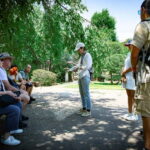
Starting at Nippori Station and meeting old Tokyo
The meeting point is outside Nippori Station at 2 Chome-19 Nishinippori in Arakawa City. Nippori is near public transportation, making the start reasonably practical, but you should allow time to find the exact meeting spot and arrive ready to walk.
The tour does not begin with a grand monument. That is part of its strength. You move into Yanaka gradually, leaving the station area and entering streets where the scenery changes through small details rather than a dramatic gateway.
Your guide sets the tone by explaining the neighborhood and pointing out what you would likely pass without noticing on your own. Guides such as Aya have used laminated photographs to make historical explanations easier to follow, while other guides, including Junko and Rei, have been praised for answering questions carefully and connecting the past with present-day life.
Do not expect a lecture delivered at full speed. The best use of this tour is to ask about things you notice: religious objects, household customs, local architecture, food shops, or how Buddhist and Shinto practices appear side by side.
Tennoji Temple and the Yanaka Buddha
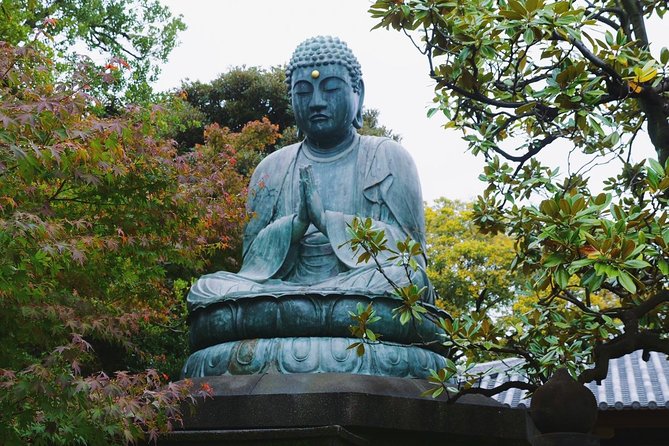
The first formal stop is Tennoji Temple, where you see the Yanaka Buddha, created in 1690. The stop lasts about 15 minutes and admission is listed as free.
This is a brief introduction to the area’s Buddhist traditions. The statue itself is the visual focus, but the guide’s explanation gives it more meaning. You learn about the temple’s past and gain a starting point for understanding how religion has shaped the neighborhood.
I like this opening because it avoids throwing you straight into abstract history. You begin with something you can see, then use it to ask larger questions about Japanese religious life.
Fifteen minutes is enough for an explanation and photographs, but not enough for a long, quiet visit. If you prefer spending half an hour at every temple, this route may feel brisk. The tradeoff is that you see several different parts of Yanaka within three hours.
Yanaka Cemetery and everyday Buddhist customs
From Tennoji, the walk continues into Yanaka Cemetery for about 15 minutes. Admission is free, and the guide explains what a Japanese cemetery is like and what customs local people follow.
This stop gives the tour a more grounded cultural angle. You are not simply looking at old graves. You are learning how people approach remembrance, family, and religious space in Japan. The cemetery also adds a quieter pause to the route, with a different mood from the shops and shrines later in the day.
You should approach this part respectfully. It is a place connected with real families and religious practice, not merely a photo stop. The guide helps explain the setting so you can observe without treating it like a curiosity.
The cemetery visit is short, so it works best as an introduction rather than a detailed study. If your main interest is Japanese funerary customs, you will want to ask questions during the stop and make use of the guide’s personal knowledge.
Ueno-Sakuragi Atari and the old wooden homes
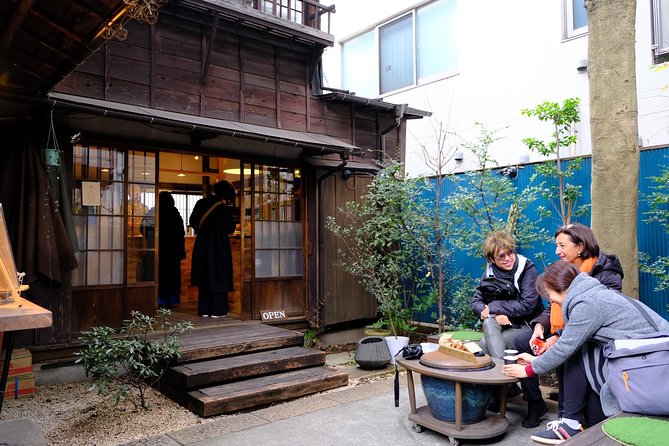
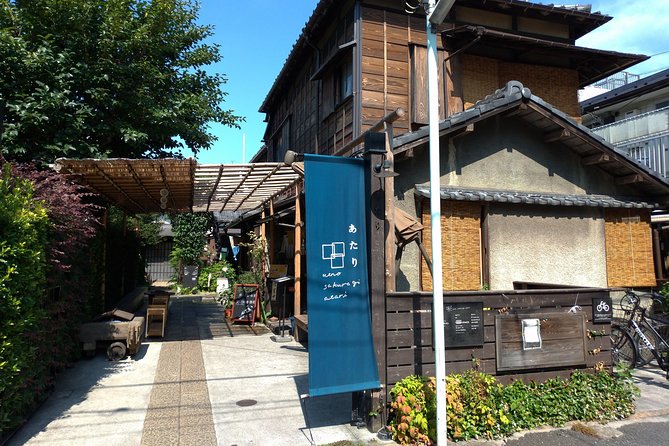
Ueno-Sakuragi Atari provides a pleasant change of pace. About 80-year-old wooden houses have been renovated as a cafe, bakery, and beer hall, creating a community space for local people. The stop lasts around 15 minutes, and purchases are not included.
This is one of the tour’s most useful details because it shows how old buildings can remain part of modern neighborhood life. You are not only looking at preserved architecture. You are seeing former homes adapted for eating, drinking, and meeting friends.
The stop is also a natural break in the walk. You might find something to eat or drink here, but do not count on those purchases being covered by the tour price. Food and drinks are extra throughout the experience.
The itinerary also includes a 100-year-old cider tree described as a Yanaka symbol. This is a small detail, but it gives the area a local marker beyond temples and shrines. Ask your guide about it, since the tree’s importance is tied to neighborhood identity rather than headline sightseeing.
Other walking tours we've reviewed in Tokyo




Enju-ji Temple and the god of strong legs
The next stop, Enju-ji Temple, lasts about five minutes. It is unusual because the temple enshrines a deity associated with strong legs rather than the more familiar Buddhist figures you may expect.
Wooden boards carry wishes from people with foot problems. This gives you a direct look at the way religious practice can respond to ordinary physical concerns. The stop is quick, but the idea is memorable and easy to understand.
Admission is listed as not included, so keep in mind that the tour price does not cover every possible site-related expense. The information provided does not specify a separate entrance charge, so your guide or booking details are the best source for the current arrangement.
This is not a place where you will spend a long time sightseeing. Its value is in the story and in the chance to see a less familiar part of Japanese belief.
Nezu Shrine and its tunnel of red torii
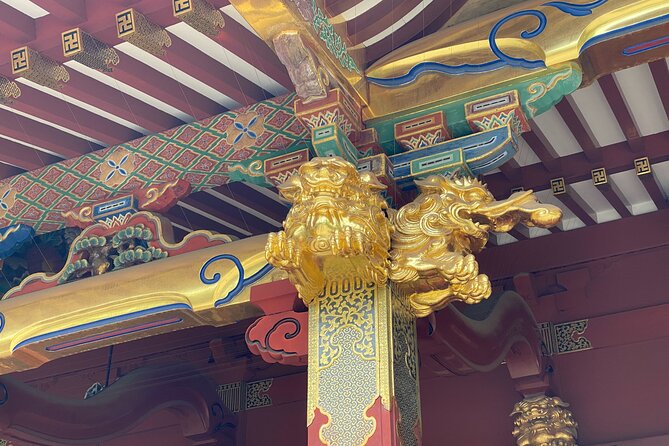
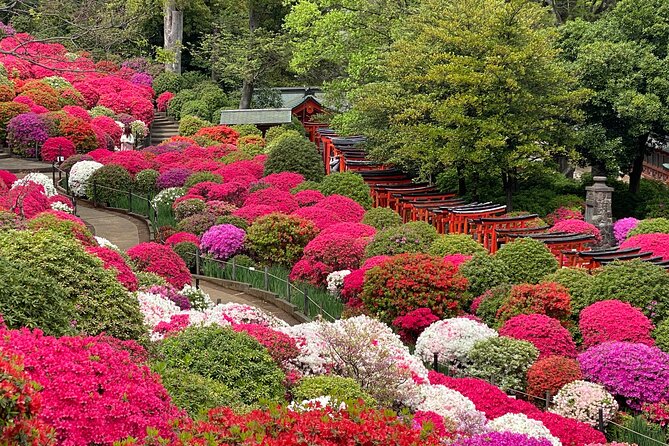
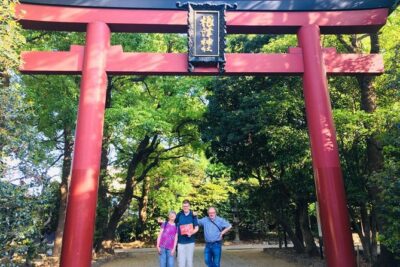
Nezu Shrine receives about 20 minutes, with free admission. It is one of the strongest visual stops on the route, thanks to its rows of red torii gates, often compared with the famous gates at Fushimi Inari Shrine in Kyoto.
The shrine gives you a chance to take photographs, but the guide also explains shrine etiquette. That practical instruction is important. Knowing how to behave at a Shinto shrine makes the visit more comfortable and respectful, especially if you have not been to Japan before.
You will likely get the clearest contrast between the area’s Buddhist and Shinto traditions here. Earlier, you encountered a Buddhist temple and cemetery. At Nezu Shrine, you see a Shinto setting, its gates, rituals, and visual language. The route helps you understand that these traditions can exist within the same neighborhood and within everyday Japanese life.
Twenty minutes is enough to see the main features and learn basic manners. It is not a full shrine visit with time for every corner. If photography is important to you, keep your camera ready but do not let it distract from the guide’s explanation.
Hebimichi and the quieter residential lanes
The walk then passes through Hebimichi, a back street in a residential area. This is one of those segments that may look modest on a map but can be central to the experience.
You see Japanese daily life at close range rather than only visiting official attractions. The road leads through the kind of setting you might not choose by yourself, especially if you are following a standard first-time Tokyo route.
There is no major admission ticket or grand viewpoint here. Instead, pay attention to the homes, narrow streets, and changes in pace. The guide can explain what you are seeing and help you avoid turning a residential area into a noisy photo stop.
This part also explains why going with a local guide has value. You can walk through a back street independently, but you may not know what makes it worth noticing. A guide provides the context that turns an ordinary lane into part of the story of Yanaka.
Yanaka Ginza, the best place to finish hungry
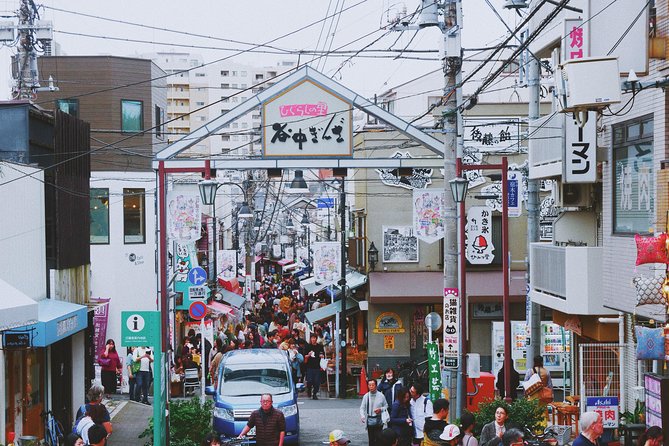
The walk ends at Yanaka Ginza Shopping Street in Taito City, around 3 Chome-13-1 Yanaka. The stop lasts about 20 minutes, though you may want to stay longer after the formal tour ends.
Here you learn about local shops and normal Japanese shopping habits. You can try street food, sweets, and other local products, but all food and drinks cost extra. This is a good arrangement for a walking tour because you choose what interests you instead of paying for a fixed tasting menu.
The ending also gives you practical freedom. You can browse, eat, and continue exploring at your own pace. If you have dinner plans elsewhere, you can leave after the tour. If you are hungry, Yanaka Ginza gives you an easy place to extend the afternoon.
The market is not just a final photo stop. It completes the route’s main idea. You have seen temples, a cemetery, old houses, a residential lane, and a shrine, then finish where people shop and eat. That connection between tradition and ordinary life is what makes the walk feel more useful than a simple monument checklist.
What the $40 price really buys you
At $40 per person, this is not the cheapest way to walk around Yanaka. You can visit many of the outdoor areas independently for little or no admission cost.
The price makes more sense if you value interpretation. You are paying for an English-speaking local guide, a planned route, cultural explanations, help with shrine etiquette, and the chance to ask questions in a group capped at 10 people. The guide’s role is especially important at places such as Enju-ji and Yanaka Cemetery, where the meaning is less obvious than the scenery.
The tour also saves planning time. You do not need to map a route between Nippori, Tennoji, the cemetery, Ueno-Sakuragi Atari, Enju-ji, Nezu Shrine, Hebimichi, and Yanaka Ginza. You simply follow the sequence and concentrate on the neighborhood.
Food, drinks, personal expenses, and optional gratuities are not included. Add a little spending money if you want to sample food at Yanaka Ginza or stop at the cafe, bakery, or beer hall at Ueno-Sakuragi Atari.
Guides, pace, and the practical walking experience
The guide names associated with this experience include Aya, Junko, Rei, Mei, Mami, Kiyo, and Polina. The most consistent strengths are clear English, patience, local familiarity, and a willingness to answer questions. One guide has been described as living in the neighborhood, which can add useful personal context to the route.
The tour is designed for most people, but it remains a three-hour outdoor walk. Wear comfortable shoes. Bring sun protection and a hat during hot weather, and remember that Tokyo can feel humid.
The pace has been described as comfortable, with a break around the middle. Still, the itinerary has several stops packed into three hours, so do not expect long free periods at each temple or shrine.
The tour includes photo opportunities throughout. Guides such as Aya have offered to take pictures, which can be helpful if you are traveling alone or want the whole group in a shot. That is a small service, but it makes the experience feel more personal.
Mobile tickets are provided, and confirmation is received at booking. Service animals are allowed, and most people can participate. Because the route uses public streets, temple grounds, a cemetery, and shopping lanes, you should be prepared for a normal city walk rather than a fully controlled attraction.
Who should book the Yanaka walk
I would choose this tour if you have already seen, or plan to see, Tokyo’s major modern districts and want a quieter contrast. It is also a good first or second day activity if you want basic cultural guidance before visiting more temples and shrines on your own.
You are likely to enjoy it most if you like:
- Neighborhoods more than giant attractions
- Local history explained in plain English
- Religious customs and everyday Japanese life
- Small groups and time for questions
- Walking, photography, and casual food stops
It may be less suitable if you want a fast tour of Tokyo’s famous landmarks, a focused food tour, or a deep visit inside each temple. The experience is broad rather than intensive, and several stops are short.
The route also suits people who want an easy finish to the day. Ending at Yanaka Ginza means you can continue eating and shopping without having to find another district.
Booking and cancellation details
The experience costs $40 per person, lasts about three hours, and accepts a maximum of 10 participants. It begins at Nippori Station and ends at Yanaka Ginza, so plan your onward journey from the second location rather than back at the station.
Free cancellation is available if you cancel at least 24 hours before the local start time. Changes or cancellations made less than 24 hours before the start are not accepted for a refund. The walk depends on good weather, and if poor weather causes cancellation, you are offered another date or a full refund.
Should you book it?
Book this walk if you want Tokyo to feel more human and less like a parade of famous districts. For $40, the strongest value comes from the guide’s explanations, the small group, and the carefully linked route through temples, homes, quiet lanes, and local shops.
I would especially recommend it to first-time visitors who want cultural context, couples or families who prefer a slower morning or afternoon, and repeat visitors looking for a different part of the city. Bring good shoes, water, sun protection, and a little cash for Yanaka Ginza.
Skip it if you only have one short day in Tokyo and need to focus on iconic sights. But if you can spare three hours, Yanaka offers a calm, thoughtful change of pace, and a better look at the city beyond its bright center.
FAQ
How long does the Yanaka Walking Tour last?
The tour lasts approximately three hours.
Where does the tour begin?
It begins at Nippori Station, at 2 Chome-19 Nishinippori, Arakawa City, Tokyo 116-0013, Japan.
Where does the tour end?
The tour ends at Yanaka Ginza, at 3-chōme-13-1 Yanaka, Taito City, Tokyo 110-0001, Japan.
How many people can join the tour?
The maximum group size is 10 participants.
Is food included in the tour price?
No. Food, drinks, and personal expenses are not included. You can purchase local foods and sweets at Yanaka Ginza, and purchases at Ueno-Sakuragi Atari are also separate.
Is the tour conducted in English?
Yes. The experience includes an English-speaking local guide.
Can I cancel for a full refund?
Yes, if you cancel at least 24 hours before the experience start time. If poor weather causes the tour to be canceled, you are offered a different date or a full refund.
More Walking Tours in Tokyo
More Ueno & Yanaka Walks in Tokyo
More tours in Tokyo we've reviewed












Ueno & Yanaka Walks, compared.
 ★ 5.0Eat and Drink Like a Local: Tokyo Ueno Food Tour-Taverns&RamenFrom $95
 ★ 5.0Yanaka Walking Tour: Historic and Traditional District of TokyoFrom $72
 ★ 4.8Tokyo: Old Quarter Yanaka Walking TourFrom $323 hours
 ★ 5.0Tokyo: Food Tour in Ueno with 10+ Tastings of Japanese ClassicsFrom $142
 ★ 4.9Tokyo:Stroll in Old traditional culture towns~Yanaka & NezuFrom $293h 30m
 ★ 5.0Yanaka Historical Walking Tour in Tokyo’s Old TownFrom $81