Reviewed · TOURS
GoKart Tokyo: Oldtown Tour |8 Tour Destinations in 100 mins
Tokyo sightseeing rarely gets more direct than this: you sit low in a street-legal go-kart and drive from the Tokyo Skytree to Sensoji Temple in one 100-minute circuit. The route links old Tokyo districts, major landmarks, and busy central streets without asking you to change trains every few stops.
In This Article
- Key points before you book
- Why this route gives you a different view of Tokyo
- Starting near Yotsugi and the Tokyo Skytree
- Tokyo Skytree: a strong first landmark
- Japanese Sword Museum and the old-city mood
- Ryogoku Kokugikan, where sumo shapes the district
- Tokyo Station and the Imperial Palace
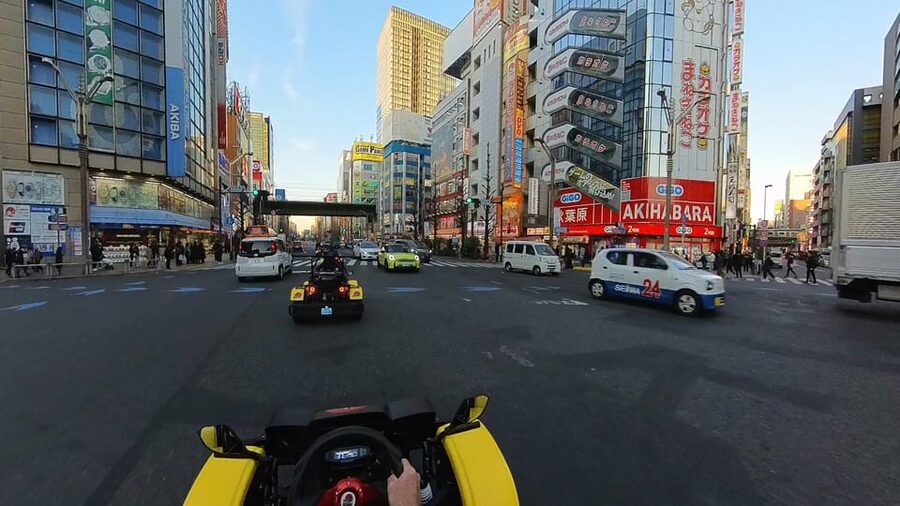
- Akihabara: Tokyo’s electric and pop-culture center
- Ueno and the shift toward old Tokyo
- Asakusa and Sensoji Temple provide the finale
- The guide makes the ride easier for beginners
- What you receive, and what costs extra
- Driving documents can make or break your booking
- Who should choose this Tokyo go-kart tour?
- Should you book the Oldtown Tour?
- FAQ
- How long is the GoKart Tokyo Oldtown Tour?
- Where does the tour start and finish?
- Which landmarks are included?
- What driving documents do overseas visitors need?
- Are photos and videos included?
- Is the tour suitable for children?
- Can I cancel for a refund?
I like the small-group format, limited to 10 people, and the fact that guides such as Sater, Travis, and Hiro help with directions and driving instructions. I also like that photos and video are provided as souvenirs, with fuel, insurance, drinks, a costume, and the kart included in the price.
The main catch is practical: you need the correct Japanese license or driving documents before you arrive, and the tour does not provide hotel pickup, meals, locker space, or the required Micro SD card. It is also not suitable for children under 18, wheelchair users, or anyone who cannot meet the driving rules.
Key points before you book
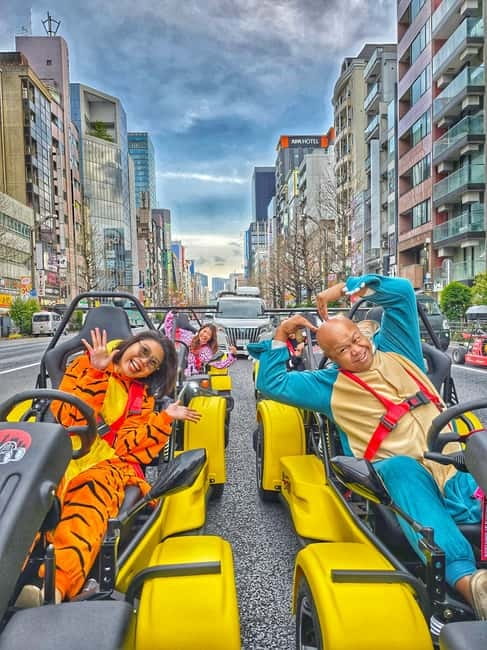
- Eight landmark areas in 100 minutes: See Skytree, the Japanese Sword Museum, Ryogoku, Tokyo Station, the Imperial Palace, Akihabara, Ueno, and Asakusa on one moving tour.
- A small group keeps the ride manageable: The group limit is 10 participants, useful when you need to follow a guide through city traffic.
- Bring more than your ordinary license: Most overseas visitors need a passport, valid local license, and a 1949 Geneva Convention International Driving Permit.
- Photos and video are part of the package: The camera equipment is free, but you must purchase a Micro SD card for the files.
- The start point is near Yotsugi Station: Allow 8 to 10 minutes on foot from the station on the Keisei Line.
- The best fit is an adult driver who wants a fast city overview: This is a sightseeing ride and a driving activity, not a temple visit or museum tour.
Why this route gives you a different view of Tokyo
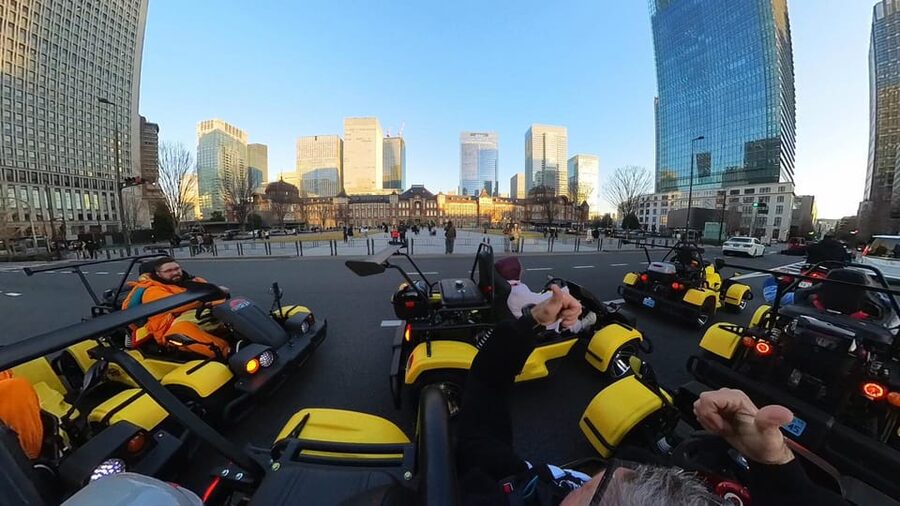
The Oldtown Tour is less about spending time inside attractions and more about seeing how Tokyo’s districts connect. In 100 minutes, you move from the Skytree area to sumo country, central Tokyo, electronics-focused Akihabara, Ueno, and old Asakusa.
That makes the tour useful early in a Tokyo stay. You get a quick sense of the city’s scale and can note places you may want to revisit by train or on foot. You should not expect long visits at each landmark. The schedule is built around driving, scenic views, and brief guided context.
The price is $98 per person. That is not a cheap transport option, but it covers the kart, fuel, guide, costume, drinks, accident insurance, and use of the photo and video equipment. For you, the value comes from combining a city tour with a hands-on activity and a record of the ride, rather than paying simply to be driven around.
The small group helps justify the price. With no more than 10 participants, it should be easier to hear instructions and stay with the group than on a large coach tour. Still, you are paying for a novelty experience, so choose this if the go-kart ride matters as much as the landmarks.
If you're still narrowing it down, here are other tours in Tokyo we've reviewed.

Starting near Yotsugi and the Tokyo Skytree
Kartzilla Go Kart Tokyo is an 8 to 10-minute walk from Yotsugi Station, served by the Keisei Line. The facility has clear signage, and the operator advises calling if you have trouble finding it. There is no hotel pickup, so you need to plan your own route to the start.
The tour begins close to the Tokyo Skytree, which gives the opening stretch an immediate sense of scale. The Skytree is one of Tokyo’s most recognizable sights, and seeing it while driving gives you a more active first chapter than simply arriving at an observation deck.
You receive the kart, safety and driving guidance, and your costume at the facility. The karts are described as well maintained and comfortable to drive, but you still need to treat this as a real driving activity. Follow the guide’s instructions closely, especially when the group is moving through city streets.
Tokyo Skytree: a strong first landmark
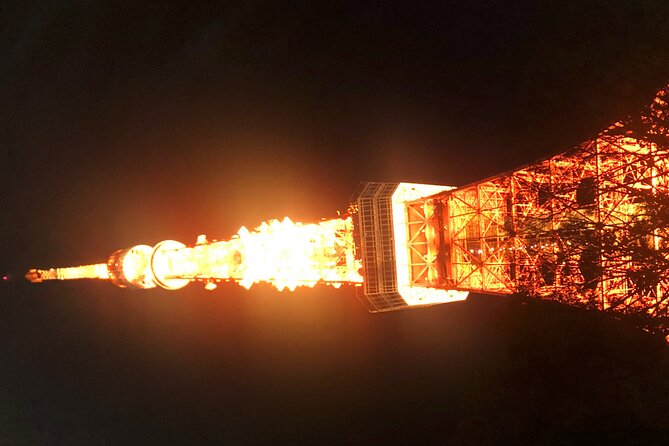
The Tokyo Skytree is the route’s clearest visual marker. Its height makes it easy to recognize, and the nearby area offers scenic views as you begin the circuit.
The tour does not list time to enter the Skytree, so think of this as an outside sighting and scenic drive. If you want the observation decks, shopping complex, or aquarium associated with the Skytree area, plan a separate visit.
For a first look at Tokyo, this stop works well because it gives you an immediate reference point. You are not just hearing a guide name the city’s tallest tower. You are approaching it as part of a live street route.
Japanese Sword Museum and the old-city mood
Next comes the Japanese Sword Museum. This adds a quieter, more traditional note to a route that later includes Tokyo Station and Akihabara.
The museum is a guided sightseeing point on the drive, not a scheduled museum visit according to the tour details. That distinction matters. If Japanese sword craftsmanship is a major interest, you will need separate time to visit the museum properly. On this tour, the value is in seeing it as part of the older cultural side of Tokyo.
The stop also helps break up the landmark list. You get more than towers and major transport buildings. The route points toward Tokyo’s craft, martial, and historical traditions as well as its modern city identity.
Ryogoku Kokugikan, where sumo shapes the district
Ryogoku Kokugikan is Tokyo’s famous sumo stadium. Even if you are not attending a tournament, the area gives the drive a strong connection to one of Japan’s best-known sports.
You should treat the stadium as a scenic and guided stop rather than a sumo event. The experience does not include tickets or time inside the arena. If you want a full sumo experience, check the tournament calendar and make a separate plan.
For me, this is one of the more useful stops because it shows how a neighborhood can be tied so closely to one tradition. It also fits naturally with the Oldtown theme, giving the route a cultural focus before it moves toward central Tokyo.


Tokyo Station and the Imperial Palace
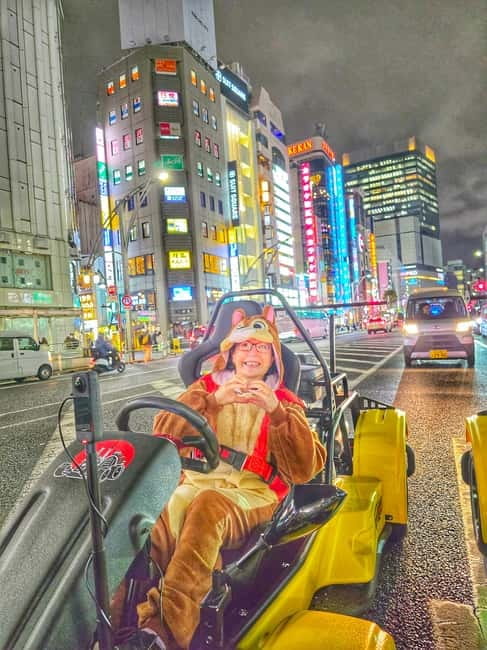
The drive then reaches Tokyo Station, one of the capital’s most recognizable transport landmarks. Its location helps show the contrast between the lower-rise old districts near the start and the formal central core of Tokyo.
The itinerary pairs Tokyo Station with the Imperial Palace. That combination is sensible for a short city tour: one stop represents modern rail travel and business Tokyo, while the other connects with Japan’s imperial institution and central grounds.
Again, you are seeing these places from the road. The tour does not promise an entry visit to the station’s interior or the palace grounds. If you want palace gardens or a close look at the station building, put those on another day.
The benefit here is speed. You can cover two major central landmarks without spending half a day navigating between them. The tradeoff is that your view will be brief and guided rather than self-paced.
Akihabara: Tokyo’s electric and pop-culture center
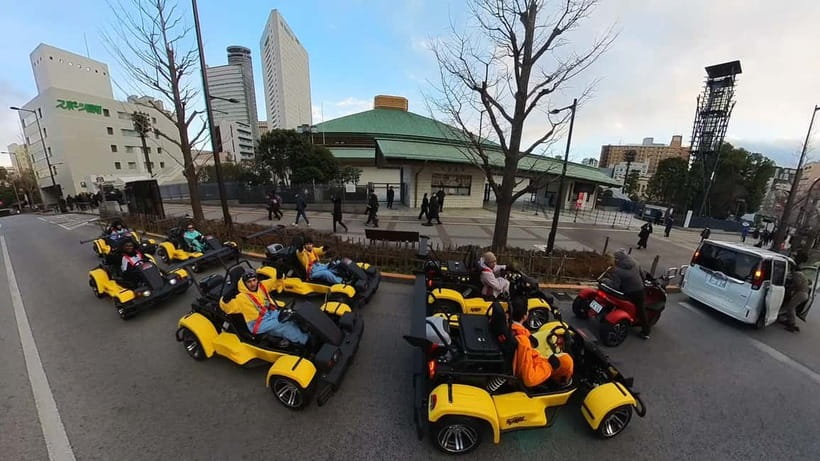
Akihabara brings a sharp change in tone. The district is famous for electronics, anime, manga, games, and other elements of modern Japanese popular culture.
The tour gives you a moving look at Akihabara rather than shopping time. You will not have room to browse stores, compare electronics, or search for a particular character figure while keeping to a 100-minute route.
That is not a flaw if you view the stop as an introduction. The go-kart format lets you see the district as part of the city’s wider fabric. If Akihabara is high on your personal list, return later by train, when you can walk at your own pace.
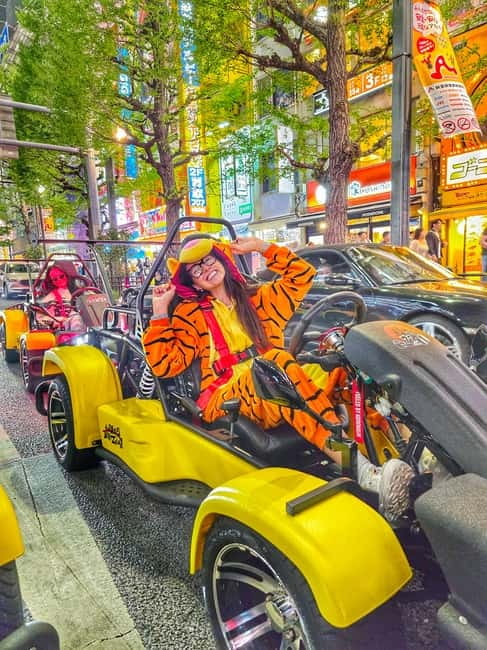
This is also a point where the costume may attract attention. Costumes are included, but you should keep the focus on safe driving and following the guide, not on posing or stopping whenever you see an interesting shop.
Ueno and the shift toward old Tokyo
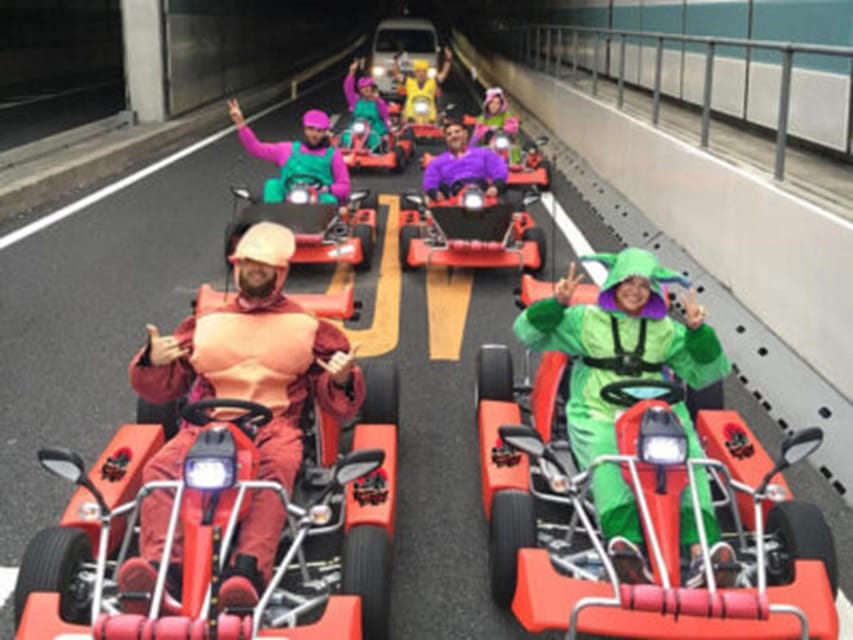
Ueno is another useful link between the city’s cultural districts and its older neighborhoods. The tour includes a guided drive and scenic views here, but it does not specify entry to a museum, park, or zoo.
That means you should not book this as a substitute for a full Ueno visit. Instead, use the ride to get your bearings. You can decide later if you want more time in Ueno’s museums, market streets, or park area.
I like this part of the route because it keeps the day from becoming a parade of only famous structures. Ueno helps you see a district with its own pace and purpose, even though the tour moves through it quickly.
Asakusa and Sensoji Temple provide the finale
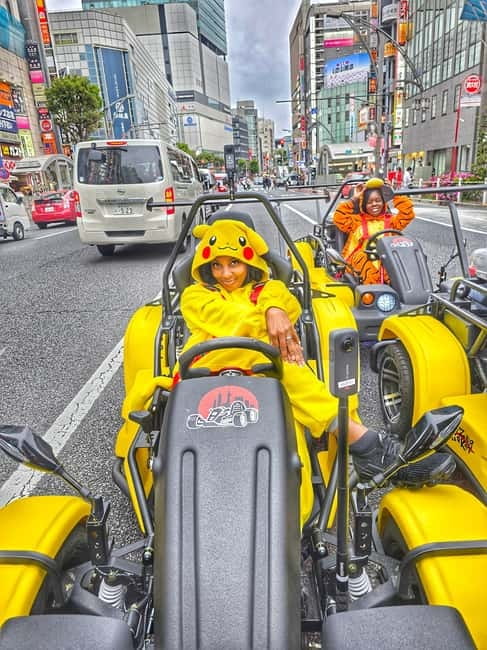
The final major destination is Asakusa, home to the famous Sensoji Temple. This is the tour’s clearest old-Tokyo finish, and it pairs naturally with the Skytree, which is nearby in the broader eastern Tokyo area.
The itinerary calls for a guided drive, scenic views, and a return to Kartzilla. It does not include temple admission or a long walk through the grounds. Plan a separate Asakusa visit if you want to see the gate, Nakamise shopping street, or temple complex at a slower pace.
Even as a drive-by destination, Sensoji gives the circuit a satisfying shape. You begin near a modern tower and end near one of Tokyo’s best-known traditional sights. The route then returns to the facility, rather than leaving you at an inconvenient final stop.
The guide makes the ride easier for beginners
You do not need to be a seasoned kart driver to consider this activity. The operator describes the karts as comfortable and well maintained, and the guides provide instructions before and during the ride.
The small group is important here. A maximum of 10 people gives the guide a better chance to keep the group together and make directions clear. English, German, Japanese, and Persian are available, so check that the language offered at your chosen start time suits you.
Specific guides named in the tour feedback include Sater, Travis, and Hiro. Sater and Travis were praised for clear guidance and for taking many photos, while Hiro helped with a driving-license translation issue. Those details point to the parts of the job that matter most: clear road instructions, practical help, and keeping the experience comfortable for first-time participants.
The feedback also highlights a strong sense of safety during the ride. That is encouraging, but you remain responsible for meeting the license rules and driving carefully. A guide can explain the route, but cannot replace your attention on the road.
What you receive, and what costs extra
The package includes:
- A street-legal go-kart
- Fuel
- A tour guide
- A costume
- Accident insurance
- Drinks
- Free use of photo and video equipment
The photo and video arrangement needs special attention. The equipment is free, but the Micro SD card is not included and must be purchased. If you want the promised files, budget for that card and ask about the process at the facility.
There is no food or meal included, and food and drinks are not allowed in the vehicle. Backpacks are also not allowed, and locker space is not included. Keep your arrival kit small and confirm where you can leave anything you cannot carry.
The tour ends back at Kartzilla Go Kart Tokyo. That is convenient if you have luggage or another plan in the same area, but you should still allow time after the stated 100 minutes before scheduling a tight connection.
Driving documents can make or break your booking
Bring your passport and the correct driving documents. Japanese nationals and foreign residents of Japan need a valid license issued in Japan.
If you live outside Japan, you need your passport, a valid local driver’s license, and an International Driving Permit issued under the 1949 Geneva Convention. Not every international permit is accepted, so check the convention requirement rather than assuming any IDP will work.
Citizens of Switzerland, Germany, France, Belgium, Monaco, and Taiwan may drive with a Japanese translation of their license. The operator asks you to contact them a month in advance if you need help with that translation. US Forces personnel can drive with a SOFA Permit, or with a state license plus an active-duty uniformed military ID.
This is the most important booking detail. Do not wait until the morning of the tour to discover that your documents do not meet Japanese rules. If your paperwork is uncertain, contact the operator before paying.
Who should choose this Tokyo go-kart tour?
I would recommend it to an adult who wants a lively overview of Tokyo and enjoys being part of the activity rather than sitting in a bus. It suits a first or second visit, especially if you want to connect several districts before returning to selected areas on foot.
It also works for a couple or small group that values photos and video. The guides take pictures during the experience, and the compact group makes it easier to remain part of the action.
I would not choose it if your main goal is museum time, temple visits, shopping, or detailed historical interpretation. You will see many places, but only from a moving tour with limited time at each one.
The activity is not suitable for children under 18, drivers under 18, wheelchair users, visually impaired people, or people over 95. Pets, baby carriages, alcohol, drugs, bare feet, backpacks, and food or drinks in the vehicle are not allowed.
You can cancel up to 24 hours in advance for a full refund, and the reserve-now, pay-later option keeps your plans flexible. Check the available starting times before building the rest of your day around the ride.
Should you book the Oldtown Tour?
Book it if you want eight Tokyo destination areas in one fast, memorable circuit, and you are comfortable driving in a guided group. The route, costumes, photo support, and named guides such as Sater, Travis, and Hiro give it more personality than a standard sightseeing transfer.
Skip it if you need long visits inside the Japanese Sword Museum, Sensoji Temple, the Imperial Palace area, or any other stop. The $98 price is fair for a combined driving activity and guided city overview, but it is harder to justify if you only want landmark access.
Before booking, verify your driving documents, leave your backpack behind, bring your passport, and allow time to walk from Yotsugi Station. Get those details right, and this can be a fun way to see Tokyo’s old and modern sides in a single morning or afternoon.
FAQ
How long is the GoKart Tokyo Oldtown Tour?
The tour lasts 100 minutes. Starting times vary, so you need to check availability when booking.
Where does the tour start and finish?
It starts and ends at Kartzilla Go Kart Tokyo. The facility is about an 8 to 10-minute walk from Yotsugi Station on the Keisei Line.
Which landmarks are included?
The route includes Tokyo Skytree, the Japanese Sword Museum, Ryogoku Kokugikan, Tokyo Station, the Tokyo Imperial Palace, Akihabara, Ueno, and Asakusa with Sensoji Temple.
What driving documents do overseas visitors need?
Overseas visitors who are not residents of Japan need a passport, a valid local driver’s license, and an International Driving Permit issued by a signatory to the 1949 Geneva Convention.
Are photos and videos included?
The photo and video equipment is provided for free, but you must purchase a Micro SD card for the files.
Is the tour suitable for children?
No. The activity is not suitable for children under 18 or drivers under 18.
Can I cancel for a refund?
Yes. You can cancel up to 24 hours in advance for a full refund.
More tours in Tokyo we've reviewed












Tours, compared.
 ★ 5.0Mt Fuji and Hakone 1-Day Bus Tour Return by Bullet TrainFrom $163
 ★ 5.01-Day Tokyo Bus TourFrom $129
 ★ 5.0Tokyo: Shinjuku Food Tour (13 Dishes at 4 Local Eateries)From $86
 ★ 4.4Tokyo Mt Fuji 5th St & Hakone Cruise Bus Tour w/Bullet TrainFrom $15410 hours
 ★ 5.0Flagship 2-Hours Official Street Go-Kart Tour – Tokyo Bay ShopFrom $642 hours to 2 hours 30 minutes (approx.)
 ★ 4.7Tokyo: Mt. Fuji Tour, Hakone Ropeway, Owakudani, Lake AshiFrom $5410 hours