Reviewed · MORNING
Private Tokyo Early Morning Tour with English-Speaking Guide
Tokyo rewards early risers, and this five-hour private tour makes a strong case for setting the alarm. You move from Shibuya Crossing and Meiji Jingu to Akihabara and Senso-ji before the day reaches full speed. The route packs in seven major sights, with your guide handling directions and local transport.
In This Article
- Key Points
- Why an Early Start Makes Sense in Tokyo
- Shibuya Crossing and the Hachiko Meeting Point
- Meiji Jingu: A Quiet Hour in Harajuku
- Takeshita Street and the Fast Look at Harajuku
- Kanda Shrine and a Change of Tokyo’s Mood
- Akihabara in 30 Minutes
- Ameyoko’s Market Energy in Ueno
- Senso-ji and the Finish in Asakusa
- What the Private Guide Adds
- Is the $97.22 Price Good Value?
- Who Should Book This Morning Tour?
- Should You Book It?
- FAQ
- How long does the Tokyo morning tour last?
- Where does the tour start?
- Where does the tour end?
- Is this a private tour?
- Is the guide English-speaking?
- Are temple and shrine admission fees included?
- Do I need to pay for public transportation?
- Are food and drinks included?
- What happens if I arrive late?
- Can I cancel for a full refund?
I like the personal format, since your group gets the guide’s full attention rather than following a flag through a crowd. I also like the mix of famous places and contrasting districts, from a Shinto shrine in the forest to anime shops and an old market street. The main drawback is the pace: seven stops in five hours means you will see many places, but you will not have time for long shopping sessions or leisurely meals.
Key Points
- Early start, lower crowds: Visit Shibuya, Harajuku, and Senso-ji before the busiest part of the day.
- Private attention: Only your group joins the tour, with an English-speaking local guide.
- Seven very different stops: The route covers Shibuya, Meiji Jingu, Harajuku, Kanda, Akihabara, Ueno, and Asakusa.
- Walking plus public transit: You pay about ¥900 per person for transport, and you should expect plenty of time on foot.
- Useful extras included: Temple and shrine admission fees are covered, and professional photos are taken during the tour.
- Convenient finish: The tour ends at Asakusa Pier, close to Senso-ji and Tokyo Skytree.
Why an Early Start Makes Sense in Tokyo
Tokyo is easier to handle before the crowds build. This tour starts at the Hachiko Statue in Shibuya, then works east across the city. By beginning early, you get a calmer look at busy places that can feel packed later in the morning.
That timing matters most at Shibuya Crossing and Senso-ji. Both are famous for their crowds, but both feel more manageable when you are not competing with the full afternoon rush. In summer, an early departure also helps you avoid the worst heat. One tour response specifically noted that starting early was especially useful in July, before the crowds and heat set in.
You should still expect a brisk morning. Seven stops and several train or subway rides leave little spare time. The guide keeps the day moving, which is useful in Tokyo, but you should not expect extended time inside shops, cafés, or museums.
Other guided tours in Tokyo
Shibuya Crossing and the Hachiko Meeting Point
The meeting point is the Hachiko Statue, at 2 Chome-1 Dogenzaka near Shibuya Station. Hachiko is one of Tokyo’s best-known meeting spots, but the station area can be confusing, so arrive early and identify the statue before the start time.
From there, you visit Shibuya Scramble Crossing for about 20 minutes. When the signals change, people cross from several directions at once. It is a simple sight, but one that captures Tokyo’s scale and rhythm better than a quick photograph from a train window.
Your guide can help you choose a good place to watch and take photos. The stop is short, so treat it as a first look rather than a full Shibuya visit. If you want department stores, observation decks, or a longer look at the surrounding streets, plan to return on your own.
The tour has a strict late-arrival rule. If you miss the meeting time, you cannot join later and will not receive a refund. For this reason, I would reach Shibuya with enough time to find Hachiko, especially if you are unfamiliar with the station.
Meiji Jingu: A Quiet Hour in Harajuku
The tour then gives you about an hour at Meiji Jingu Shrine. This is one of the best changes of mood on the route. After Shibuya’s bright signs and moving crowds, the shrine’s wooded setting offers a quieter walk and a chance to slow down.
Meiji Jingu honors Emperor Meiji and Empress Shoken. Your guide can explain the Shinto setting and help you understand basic shrine etiquette, such as how to approach the main area respectfully. Admission to the shrine is included, and there is no separate entrance charge listed for this stop.
An hour is a useful amount of time here. You can walk through the grounds, see the shrine buildings, and pause for photographs without turning the visit into a race. Wear comfortable shoes, since this is a walking experience and the route includes plenty of time outdoors.
The contrast between the shrine and the city around it is the point. You do not need to be a religious visitor to appreciate the shift from urban noise to a place designed for quiet attention.
Takeshita Street and the Fast Look at Harajuku
Takeshita Street receives about 20 minutes. This narrow, well-known shopping street is associated with youth fashion, unusual boutiques, colorful sweets, and Harajuku’s playful style.
The short stop works best as an introduction. You can look at the shops, see the street’s bold character, and get your bearings before moving on. It is not enough time for serious shopping, and the guide will need to keep the group on schedule.
If Takeshita Street is a priority for you, note what catches your eye and return later. The tour’s value here is not a shopping spree. It is the chance to place Harajuku in the wider story of Tokyo, alongside the calmer Meiji Jingu only a short distance away.
That pairing is smart. You see both sides of the district in one morning: a major shrine with a peaceful setting and a shopping street built around youth culture and novelty.
Kanda Shrine and a Change of Tokyo’s Mood
Kanda Shrine gets about 20 minutes. Also called Kanda Myojin, it is a historic Shinto shrine linked with prosperity and protection. It is especially associated with businesspeople, and its connection with anime fans gives it a different feel from Meiji Jingu.
This is another short orientation stop. Your guide can point out what makes Kanda Shrine distinct and explain its place in local life. Admission fees for temples and shrines are included in the tour, so you do not need to budget a separate entry charge here.
The 20-minute visit will suit you if you want variety. If you prefer detailed religious or architectural study, it will feel brief. The tour is designed to show you a broad slice of Tokyo, not to give each site a full academic treatment.
Other private tours in Tokyo

Akihabara in 30 Minutes
Akihabara is next, with about 30 minutes to explore Tokyo’s electric town. The district is known for electronics, anime, gaming, collectibles, otaku goods, and maid cafés.
The guide is useful here because Akihabara can seem like a wall of signs and shops. You can get a clearer sense of the district’s focus, see the main shopping streets, and decide if you want to return for a longer visit.
Thirty minutes is enough for a first pass, not enough for a serious electronics purchase or a careful search for collectibles. If you have a particular item in mind, ask your guide for directions and return later with more time.
Akihabara also gives the tour a welcome break from shrine visits. The route does not present Tokyo as one single experience. It moves between tradition, fashion, technology, commerce, and popular culture.
Ameyoko’s Market Energy in Ueno
Ameya-Yokocho, usually shortened to Ameyoko, gets about 20 minutes. This shopping street in Ueno grew from a postwar black market and now offers seafood, snacks, clothing, and souvenirs.
It is a good place to see a more practical, market-based side of Tokyo. The route is not limited to polished landmarks. You also get a taste of a street built around everyday buying and selling.
Again, the stop is short. You might spot a snack or souvenir worth returning for, but you should not count on having time to browse every stall. Food and drinks are not included, so anything you buy is your own expense.
This is one reason the tour works well as a first morning in Tokyo. You finish with a list of places to revisit, rather than trying to complete every possible activity in one rushed visit.
Senso-ji and the Finish in Asakusa
The final major stop is Senso-ji, where you spend about an hour. Founded in the seventh century, Senso-ji is Tokyo’s oldest and best-known Buddhist temple. Its Kaminarimon Gate and Nakamise Street make it one of the city’s most recognizable sights.
The hour gives you time to see the gate, walk along the traditional shop-lined approach, and visit the temple area. Your guide can help explain what you are seeing and assist with the practical details of moving through a busy temple complex.
Senso-ji is often crowded, but the early schedule gives you a better chance of seeing it before the day reaches its peak. It is still a major attraction, so do not expect solitude. The reward is the sense of arrival in Asakusa, one of Tokyo’s most historic sightseeing districts.
The tour ends at Tokyo Cruise Asakusa Pier, at 1-1-1 Hanakawado. That finish is convenient. You can find a meal nearby, continue exploring Asakusa, ask the guide for directions to your next stop, or consider Tokyo Skytree, which is also close by.
What the Private Guide Adds
A private guide changes the rhythm of this route. You are not waiting for a large group to gather, and the guide can respond to your interests within the limits of the schedule.
The guide also handles the hard part of Tokyo sightseeing: moving between districts. You use public transportation and walk between sites, with the fare costing about ¥900 per person. That amount is not included in the tour price, so keep it separate from the booking cost.
English-speaking guidance is included, along with professional photos taken during the tour. This is useful if you want your whole group in the pictures instead of relying on quick selfies. Yukou is one of the guides associated with the experience, and the tour’s response describes him as attentive to making sure groups understand how to take part at each location.
The private format is most valuable for couples, families, or small groups who want to ask questions and adjust the emphasis. It is less useful if you prefer to wander alone or spend a long time in one neighborhood.
Is the $97.22 Price Good Value?
At $97.22 per person, the price is reasonable if you value a private guide and an efficient first look at Tokyo. The five-hour route covers seven major areas, and temple and shrine admission fees are included.
You also receive professional photos, which adds a practical benefit. The price does not include food, drinks, or public transportation, so add about ¥900 per person for transit and allow extra money for snacks or shopping.
The value depends on your preferred travel style. If you were already comfortable navigating Tokyo and planned to visit these areas independently, the tour may cost more than doing it yourself. You would also have more freedom to stay longer at Takeshita Street or Akihabara.
If this is your first Tokyo visit, the price buys structure, local help, and a strong overview in one morning. You finish in Asakusa with the rest of the day open, which makes the tour easier to fit into a short stay.
The experience has a five-star rating from 22 reviews and a 100 percent recommendation rate. That does not remove the need to match the tour with your own pace, but it supports the idea that the early schedule, friendly guiding, and efficient route are its strongest features.
Who Should Book This Morning Tour?
I would choose this tour if you have limited time in Tokyo and want to cover several headline sights without spending your first day learning the transit system.
It also suits you if you enjoy having context at shrines and temples, want help with photographs, or are traveling with people who prefer a private outing. A moderate level of physical fitness is needed because this is a walking tour that uses public transportation.
You should think twice if you want deep shopping time, long meals, or a slow visit to each site. The schedule is full, and the short stops at Shibuya, Takeshita Street, Kanda Shrine, and Ameyoko leave little room for lingering.
Wear comfortable shoes, arrive early at Hachiko, bring water, and keep your transport fare ready. In warm months, the early start is especially helpful. The cancellation policy allows a full refund when you cancel at least 24 hours before the start time, but late changes are not accepted.
Should You Book It?
Book this tour if you want a well-organized introduction to Tokyo, especially on your first morning in the city. The combination of private guidance, early timing, shrine visits, pop-culture districts, and a convenient Asakusa finish gives you a useful overview without wasting time on transit mistakes.
Skip it if your ideal day means choosing one neighborhood and exploring it slowly. For everyone else, this is a practical way to see a lot before lunch, with enough personal attention to make Tokyo feel less confusing.
FAQ
How long does the Tokyo morning tour last?
The tour lasts approximately five hours.
Where does the tour start?
It starts at the Hachiko Statue near Shibuya Station, at 2 Chome-1 Dogenzaka, Shibuya, Tokyo 150-0043.
Where does the tour end?
The tour ends at Tokyo Cruise Asakusa Pier, at 1-1-1 Hanakawado, Taito City, Tokyo 111-0033.
Is this a private tour?
Yes. Only your group participates in the private activity.
Is the guide English-speaking?
Yes. A local English-speaking guide is included. Yukou is one of the guides associated with the tour.
Are temple and shrine admission fees included?
Yes. Admission fees for the temples and shrines visited during the tour are included.
Do I need to pay for public transportation?
Yes. Public transportation costs about ¥900 per person and are not included in the tour price.
Are food and drinks included?
No. Food and drinks are not included.
What happens if I arrive late?
If you are late for the meeting time, you cannot join the tour and will not receive a refund.
Can I cancel for a full refund?
Yes. You can receive a full refund if you cancel at least 24 hours before the experience start time. Cancellations or changes made less than 24 hours ahead are not accepted.
More Morning in Tokyo


More Private Tours in Tokyo
More Guided Tours in Tokyo
More tours in Tokyo we've reviewed












Morning, compared.
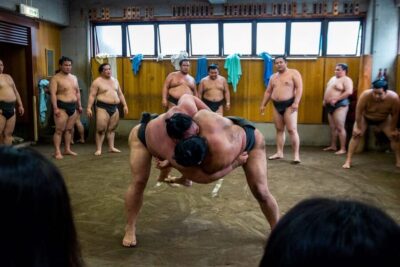 ★ 4.8Tokyo: Sumo Morning Practice Viewing TourFrom $8190 minutes - 2 hours
 ★ 4.4Tokyo: Sumo Morning Training VisitFrom $771 hour
 ★ 4.7Tokyo: Visit Sumo Morning Practice with English GuideFrom $962 hours
 ★ 4.8Tokyo: Sumo Morning Practice Tour at Sumida CityFrom $1162 hours
 ★ 5.0Tokyo Sumo Morning Practice Tour at StableFrom $83
 ★ 4.5Tokyo Ryogoku Sumo Morning Practice + Photo Shoot with WrestlersFrom $98