Reviewed · PRIVATE
Tokyo, Shaped Around You: A Private Experience with a Local
Tokyo can feel like several cities packed into one. One minute you are beneath the giant screens of Shibuya, and the next you are in a quiet lane beside a small temple. This private City Unscripted experience lets you choose which side of Tokyo to see, with a local host shaping the route around your interests, pace, and energy.
In This Article
- Key things to know before booking
- What this private Tokyo experience really offers
- Starting in Harajuku and finding your bearings
- Shibuya for neon, crowds, and organized chaos
- Asakusa and Sensō-ji Temple
- Yanaka for old wooden homes and a slower pace
- Kappabashi Street or the Tokyo Skytree district
- Ginza for polished streets and specialty shops
- Shinjuku, from observation decks to izakaya lanes
- How good is the local guidance?
- Walking, trains, and the real cost
- Who should book this experience?
- Should you book Tokyo, Shaped Around You?
- FAQ
- How long does the Tokyo private experience last?
- Is this a private tour?
- Is the route fixed?
- Where does the experience start?
- Where does the experience end?
- Can the host meet me at my accommodation?
- Is transportation included?
- Are food, drinks, and entrance fees included?
- Can I cancel for a full refund?
I like two things right away: the pre-tour planning gives your guide a clear idea of what you want, and the flexible pace lets you linger, change direction, or take a break. Guides such as Shoko, Tomo, Amir, Chiara, Noah, and Toshi have helped visitors mix famous sights with less obvious neighborhoods.
The catch is that you are not paying for a fixed list of attractions. Food, entry fees, and transportation cost extra, and the quality of the cultural explanation can depend on the individual host. One weaker experience involved limited English and thin historical detail, so your pre-tour conversation matters.
Key things to know before booking
- Private route, not a standard sightseeing circuit: Your host builds the day around your interests instead of following one fixed path.
- Strong for first-day orientation: Several hosts help with trains, IC cards, station navigation, restaurant choices, and basic Tokyo planning.
- Choose your Tokyo: You might focus on temples and markets, pop culture and fashion, food, gardens, shopping, or quiet old neighborhoods.
- Walking is the main activity: Public trains or taxis may be used between areas, but transportation is not included.
- Flexible length: The experience lasts about two to five hours, making it useful for a short introduction or a longer first-day outing.
- Good value for small private groups: At $107.62 per person, the price makes the most sense when you want personal help rather than a large group tour.
What this private Tokyo experience really offers
The main product here is not a particular monument. It is local guidance.
You complete a short questionnaire after booking, sharing your interests, must-see places, food preferences, and travel style. Your host then contacts you before the day. This is useful in Tokyo, where the biggest challenge is often not finding things to do, but choosing among too many good options.
You can ask for traditional sights, neighborhood wandering, shopping, food, architecture, pop culture, or practical help with the city’s train system. You can also combine these. A family, for example, could spend time learning the trains, visiting the Pokémon Center, and finding animal cafés. A history-minded couple could focus on shrines, temples, and older districts.
The flexible format also helps if your energy changes. Tokyo walking can be tiring, especially when stations involve long corridors, stairs, and crowded platforms. A good host can shorten the route, add sitting breaks, or change the plan when a particular neighborhood is not holding your interest.
That flexibility is one of the strongest reasons to book. It also means you should communicate clearly before the experience. If you simply say that you want to see Tokyo, you may receive a pleasant but less focused outing.
Other private tours in Tokyo

Starting in Harajuku and finding your bearings
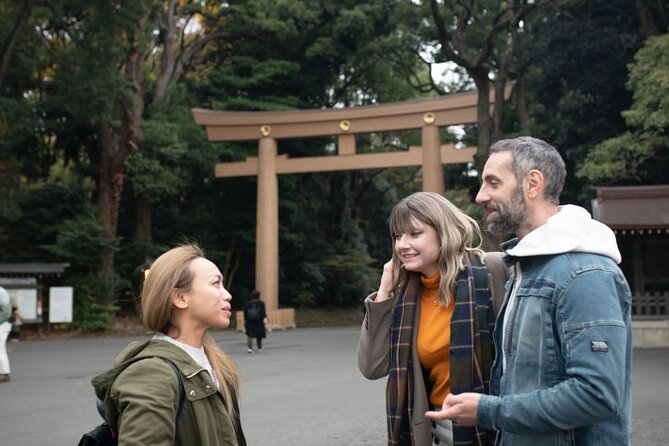
The listed meeting point is NewDays Harajuku near the Omotesando Exit. This puts you in a useful part of the city from the start, with Harajuku, Meiji Shrine, Omotesando, and Shibuya within reach.
The exact opening route depends on your choices. You might head toward Takeshita Street, where fashion shops and youth culture crowd the narrow pedestrian thoroughfare. Or you could move toward Meiji Shrine, where wooded paths create a sharp change from the commercial streets nearby.
Harajuku works well as a first stop because it shows Tokyo’s contrasts quickly. You get fashion, pop culture, religious tradition, and wide boulevards within a compact area. The drawback is that Takeshita Street can feel crowded and commercial, especially if you want a quiet introduction to Japan.
A local host can add useful context here. Instead of simply pointing at a shrine or shop, you can ask about customs, clothing, food, language, or how the district fits into modern Tokyo. The depth will depend on your host, so ask in advance for a guide comfortable discussing history and culture if that is important to you.
Shibuya for neon, crowds, and organized chaos
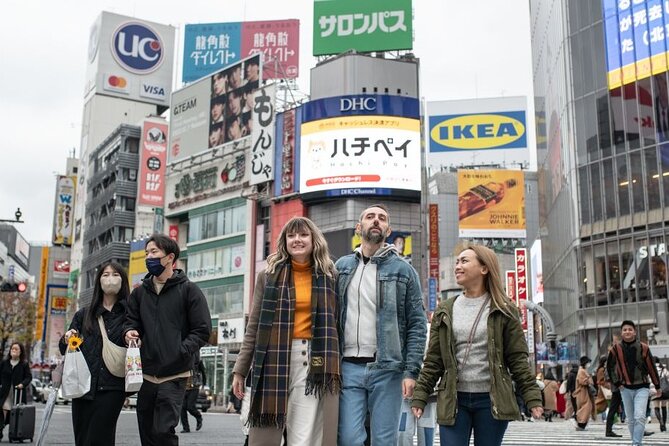
Shibuya is the obvious choice if you want Tokyo at full volume. The famous crossing gives you a quick lesson in the city’s scale and rhythm, with several streams of people moving through the intersection while giant screens glow above the surrounding buildings.
Your host can help you make sense of the district beyond the crossing. Shibuya includes lively shopping streets, restaurants, nightlife, and pockets that are easy to miss if you only take a photograph and leave.
This stop suits first-time visitors who want a classic Tokyo scene. It is also a good place to ask your host for restaurant suggestions, especially if you want something more local than the most visible chains.
I would not make Shibuya the whole experience. The crossing is exciting, but it is not a complete picture of Tokyo. Pairing it with Asakusa, Yanaka, or a market gives you a better sense of how the city balances speed with tradition.
Asakusa and Sensō-ji Temple
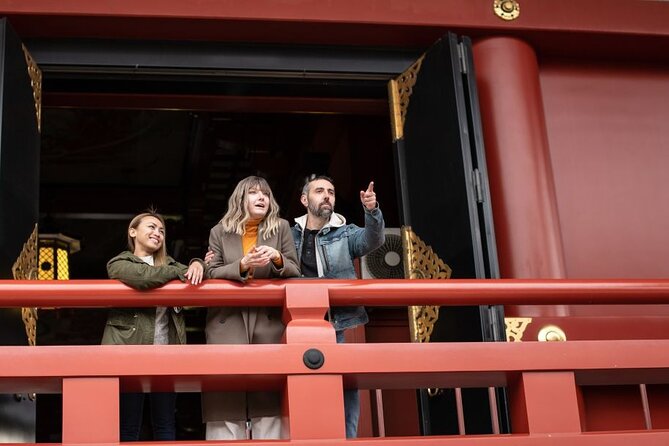
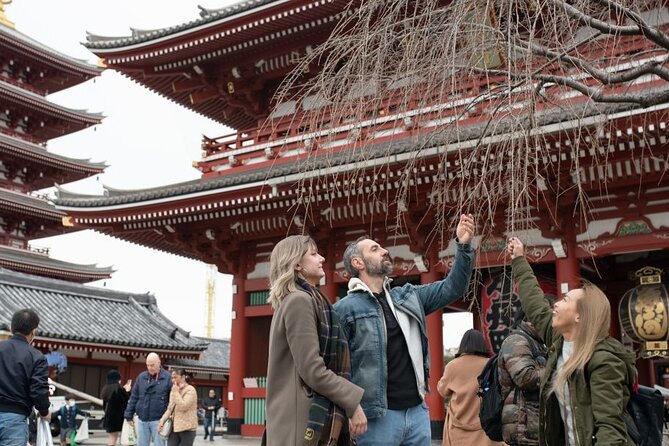
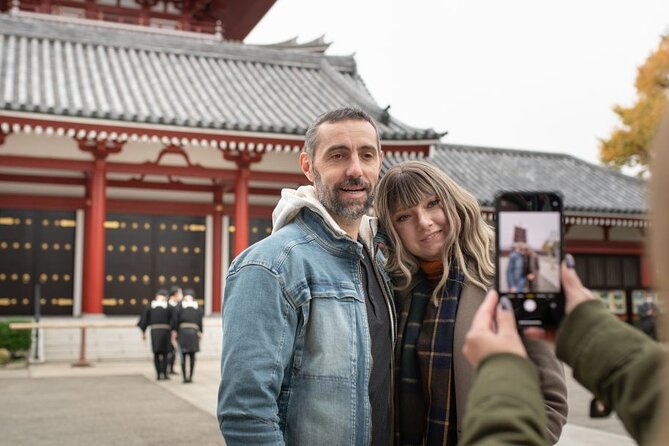
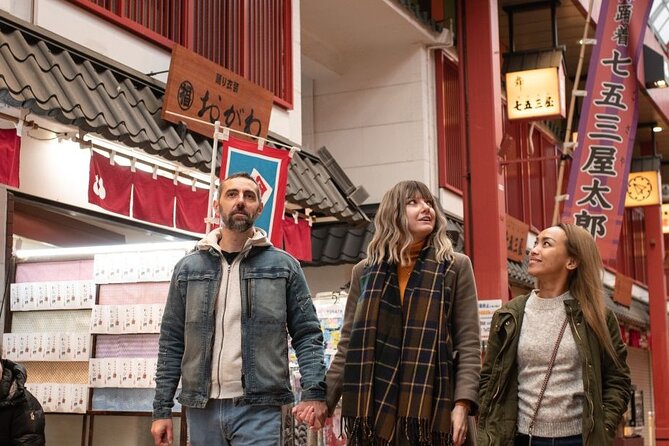
Asakusa is one of the best choices for a traditional introduction. Sensō-ji Temple draws crowds, but the surrounding streets and smaller lanes can offer a calmer look at the district’s older character.
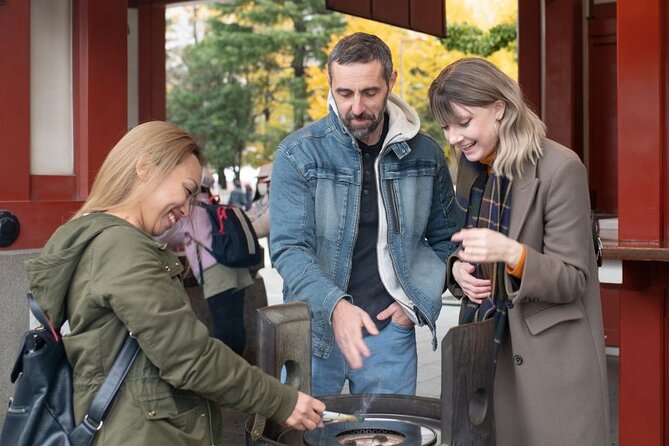
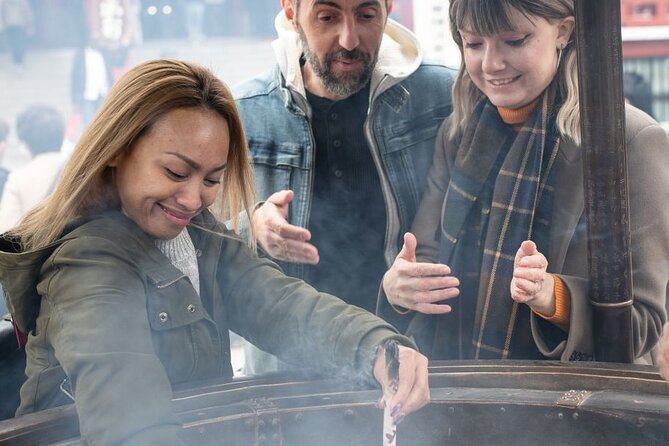
Expect a mix of temple architecture, souvenir shops, food stalls, and streets with a more historic feel than Shibuya or Ginza. Your host can explain basic temple customs and point out details you might otherwise pass without noticing.
This area is especially useful if you want cultural context rather than a quick photograph. You can ask about the difference between temples and shrines, how people behave at religious sites, and how old neighborhoods fit into present-day Tokyo.
The practical drawback is crowding around the most famous temple approaches. Your host cannot remove the crowds, but can steer you toward backstreets and quieter corners. If you have only two hours, Asakusa may be a better use of time than trying to cross several far-flung districts.
Yanaka for old wooden homes and a slower pace
Yanaka offers a different Tokyo. Quiet temples, traditional wooden houses, small cafés, and family-run shops create a gentler rhythm than the major shopping districts.
I would choose Yanaka if you have already seen the biggest sights or if you want a neighborhood walk with fewer large attractions. It is a place to notice small details: the scale of the lanes, the feel of older homes, and the way local businesses serve the people who live nearby.
This is also a strong choice for photographers and anyone who prefers ordinary city life to major landmarks. The tradeoff is simple: Yanaka does not deliver the same immediate spectacle as Shibuya or Tokyo Skytree. Its appeal comes from atmosphere and conversation.
A private guide helps here because the district’s value is not always obvious from a map. Your host can explain what you are seeing and help connect the quiet streets to Tokyo’s past and present.
Kappabashi Street or the Tokyo Skytree district
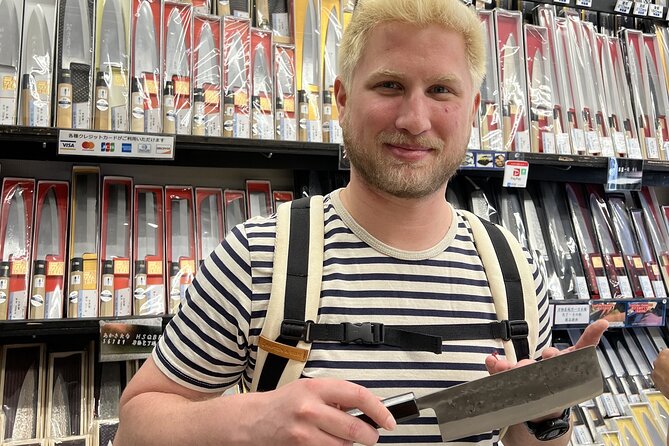
The experience can include Kappabashi Street, a famous shopping area for professional kitchen goods. You might find handcrafted knives, ceramics, restaurant supplies, and Japan’s famous plastic food models, the realistic displays used outside many eateries.
Kappabashi is a fine pick for cooks, design fans, and shoppers who want something more specific than department-store souvenirs. Keep in mind that purchases are not included in the tour price, and knife shopping may require attention to luggage and airline rules.
Another possible choice is the district around Tokyo Skytree. The tower itself is an obvious city landmark, while the nearby area offers a look at Tokyo beyond the central business districts. The supplied details do not promise tower admission, so treat entry as an optional extra to discuss with your host.
These two choices show why the questionnaire matters. Kappabashi serves a particular interest. Skytree suits someone seeking a major modern sight and a different part of the city. You may not have time for both during a short session.
Ginza for polished streets and specialty shops
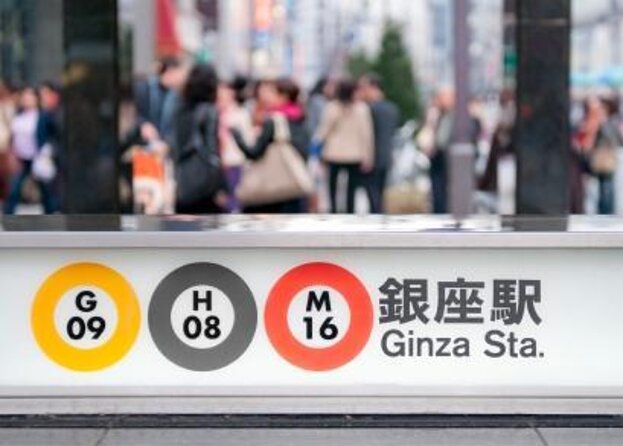
Ginza presents Tokyo’s elegant side. Department stores, luxury boutiques, traditional specialty shops, and broad streets make it a natural choice for shoppers and visitors interested in modern Japanese design.
A host can help you look past the polished storefronts. Ask about long-running shops, local products, food halls, or the links between old merchant traditions and present-day luxury retail.
Ginza is less suitable if your priority is a low-cost food crawl or a quiet neighborhood walk. It can also feel formal compared with Yanaka or the narrow restaurant lanes of Shinjuku. Still, it gives your experience useful range, especially if you want to understand Tokyo’s different styles of urban life.
Shinjuku, from observation decks to izakaya lanes
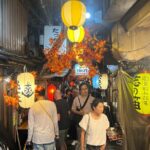
Shinjuku changes character block by block. Skyscrapers and major stations give way to narrow alleys, small bars, and nostalgic izakaya districts.
Your host may guide you to an observation deck, if that fits your plan, or focus on the older lanes where Tokyo feels more intimate. Food and drink can be chosen during the experience, but you pay separately.
Shinjuku is a strong evening choice, though the tour’s flexible start time should be confirmed with your host if nightlife or dinner is central to your plan. It is also a useful area for visitors who want help navigating a large station and understanding how the district fits together.
The limitation is distance. Tokyo neighborhoods are spread out, and a private walking experience cannot cover all of Shinjuku, Shibuya, Asakusa, Harajuku, and Yanaka in a few hours. Pick one or two main areas instead of trying to collect every name on the list.
How good is the local guidance?
The highest praise goes to hosts who communicate early, adjust the plan, and make Tokyo easier to use. Tomo helped with hotel pickup, IC card setup, trains, and dinner ideas. Lauren stayed with a group long enough to help them board the correct train. Hiroko tailored a family day around young children and even supplied a Japanese script for a nut allergy.
Those details matter more than a long speech about landmarks. Tokyo’s rail network can be confusing at first, and a calm explanation on day one may save time for the rest of your trip. Restaurant help can be equally useful when menus or ordering customs feel unfamiliar.
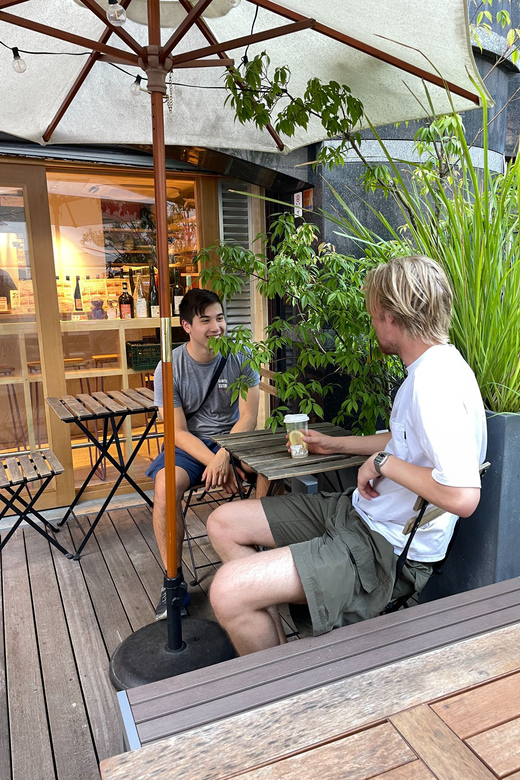
Several hosts are praised for warmth and conversation. A good private outing should feel less like being marched between checkpoints and more like spending time with an informed local friend. Just keep your expectations realistic: hosts vary, and one experience received criticism for weak English and limited knowledge of Tokyo’s past.
You can reduce that risk by stating your priorities clearly. Say if you want serious cultural explanation, family support, food help, shopping advice, or simple orientation. Ask your host to confirm the plan and language comfort before the day.
Walking, trains, and the real cost
The price is $107.62 per person. That is a fair rate for a private two to five hour experience if you value personal planning and practical help, especially for a first day in Tokyo.
It is not an all-inclusive sightseeing package. You pay separately for food, drinks, attraction tickets, and transportation during the outing. Public trains or local taxis may be used between districts, and the exact cost can be discussed with your host after booking.
The route is primarily on foot. That is a strength because Tokyo’s character often appears in side streets, station neighborhoods, shopfronts, and small temples that a private vehicle would miss. It is also a real physical demand, so tell your host if you need regular sitting breaks or a slower pace.
Pickup may be available from your accommodation if it is centrally located. Otherwise, plan to meet at the Harajuku NewDays location. The experience ends back at the meeting point, so leave enough time afterward to reach your next reservation.
The group discount feature may improve the price for larger private parties, though the exact saving is not provided. Since only your group participates, the cost is easier to justify when several people share the guide’s time.
Who should book this experience?
I would recommend it most strongly for first-time visitors, families, couples with specific interests, and anyone uneasy about Tokyo’s trains. It also works well for a short stay, when you want a local to help you make good choices quickly.
Families should use the questionnaire to explain ages, food needs, walking limits, and must-see interests. The experience has shown it can support a mix of practical learning and child-friendly stops, but you should not assume every host offers the same suggestions.
Food-focused visitors can ask for markets, local lunch, restaurant advice, or food districts. Shoppers can request Kappabashi, Ginza, Harajuku, or specialty stores. History fans should ask for temples, shrines, Yanaka, and a host with strong cultural knowledge.
Independent repeat visitors may find less value here if they already know Tokyo’s transport system and have a detailed plan. You are paying for conversation, local judgment, and flexibility, not admission to a special attraction.
You can cancel for a full refund up to 24 hours before the start time. Changes or cancellations inside that window are not accepted or refunded. Service animals are allowed, the meeting point is near public transportation, and the activity is private.
Should you book Tokyo, Shaped Around You?
Book it if you want a personal introduction to Tokyo, not a fixed checklist. The best use of the experience is to combine one or two major sights with practical local help: learning the train system, finding a good lunch, understanding shrine etiquette, or reaching a neighborhood you would not choose on your own.
I especially like it for the first day of a Tokyo trip. A host such as Tomo, Lauren, Hiroko, or Amir can help you get oriented, while guides such as Noah, Chiara, Toshi, and Shoko have been praised for cultural explanation and warm conversation.
Do not book it expecting every famous district in one afternoon, included meals, or guaranteed expert-level history. Give your host clear direction, allow for extra transport costs, and choose a realistic route. At $107.62 per person, it is good value when the guidance saves you time and makes the city feel manageable.
FAQ
How long does the Tokyo private experience last?
The experience lasts approximately two to five hours.
Is this a private tour?
Yes. Only your group participates in the activity.
Is the route fixed?
No. The experience is shaped around your interests, preferred pace, and must-see places. There is no guaranteed fixed list of attractions.
Where does the experience start?
The listed meeting point is NewDays Harajuku near the Omotesando Exit in Tokyo’s Jingūmae area.
Where does the experience end?
The activity ends back at the meeting point.
Can the host meet me at my accommodation?
The host can meet you at your accommodation if it is centrally located.
Is transportation included?
No. This is mainly a walking experience. Public transportation or local taxis may be used, but those costs are extra.
Are food, drinks, and entrance fees included?
No. Food, drinks, and entry fees are not included. You can choose them with your host during the experience and pay separately.
Can I cancel for a full refund?
Yes. You can cancel at least 24 hours before the start time for a full refund. Cancellations or changes made less than 24 hours before the start time are not accepted or refunded.
More Private Tours in Tokyo
More tours in Tokyo we've reviewed












Private, compared.
 ★ 5.0Tokyo 6hr Private Tour with Government-Licensed GuideFrom $155
 ★ 5.0Private Tour to Mt. Fuji and Hakone (Fully Licenced Operator)From $497
 ★ 5.0Tokyo Customized Private Tour (Must See Places in 1 Day)From $145
 ★ 4.8Tokyo: Private City Highlights Tour with Local GuideFrom $1064 - 8 hours
 ★ 5.0Private Custom Tour: Tokyo in a DayFrom $159
 ★ 5.0Tokyo 4hr Private Tour with Government-Licensed GuideFrom $109