Reviewed · LUNCH EXPERIENCES
Tokyo: Hidden Gems Guided Bike Tour with Lunch
Tokyo’s best stories are often found away from the main station exits. This five-hour bike tour links the old districts of East Tokyo, from Asakusa’s famous Kaminarimon Gate to the sumo streets of Ryogoku and the temple quarter of Fukagawa. You ride beside the Sumida River, see Tokyo Skytree from a bridge, and stop to consider how ordinary people lived during the Edo period.
In This Article
- Key points to know before booking
- Why this bike route shows you a different Tokyo
- Meeting at Asakusabashi and learning the rules
- Bandai, anime figures, and the first look at Asakusa
- Crossing the Sumida River with Skytree in view
- Ryogoku, sumo country, and a local lunch
- Fukagawa Fudo-son and everyday Buddhist practice
- Life 150 years ago at the Fukagawa Edo Museum
- A short café stop before returning to Asakusabashi
- Is $96 a fair price for five hours?
- Who should book this Tokyo cycling tour?
- My verdict: book it for the connections between places
- FAQ
- Where does the Tokyo bike tour begin?
- Where does the tour end?
- How long does the experience last?
- Is lunch included?
- Is the bike rental included?
- Is admission to the Fukagawa Edo Museum included?
- What language is the tour offered in?
- How many people are in the group?
- Can vegetarians join the tour?
- Are children allowed to participate?
- What should I bring?
- Can the tour be cancelled because of weather?
I like two things right away: the route mixes famous sights with local neighborhoods, and the price includes a bike, lunch, museum admission, and insurance. Guide Shogun has also earned praise for keeping the ride moving while giving useful historical context. The main drawback is simple: five hours on a bike may feel long if you are not comfortable cycling in city traffic, and vegetarian lunch choices are limited.
Key points to know before booking

- The route covers three old East Tokyo districts: Asakusa, Ryogoku, and Fukagawa.
- Guide Shogun leads the ride in English, with a short traffic-safety briefing before departure.
- Lunch, bike rental, insurance, and Fukagawa Edo Museum admission are included in the $96 price.
- The group is limited to five participants, though another small group may join.
- The ride is for people at least 150 centimeters tall and age 15 or older.
- You return to Asakusabashi Station, making it easy to continue sightseeing afterward.
Why this bike route shows you a different Tokyo

A first visit to Tokyo often centers on Shibuya, Shinjuku, and the neon-packed streets around major stations. This tour takes a quieter, older route through the city’s eastern districts, where temples, river views, sumo traditions, and Edo-era neighborhoods fit together in one day.
That mix matters. You still see major sights such as Senso-ji and Kaminarimon, but you do not spend the entire day standing in front of them. Cycling lets you cover more ground than a walking tour without spending the day underground on trains.
You should also expect an active sightseeing day rather than a gentle ride between photo stops. The tour lasts five hours, and the itinerary includes several visits on foot. All cycling levels are welcome, but you should be comfortable mounting a bike, riding through an urban setting, and following a guide’s instructions.
The small group size is a real advantage. With a maximum of five participants, it should be easier to hear explanations, ask questions, and keep the ride together. It also gives the guide more room to adjust the pace, though the route and timing can change because of traffic, weather, or local operating conditions.
Other cycling tours in Tokyo
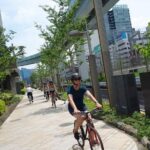
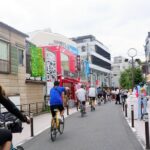
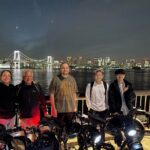
Meeting at Asakusabashi and learning the rules
The tour begins outside Exit A3 at Asakusabashi Station on the Toei Asakusa Line. Look for the guide waiting outside the exit. This is an important detail in Tokyo, where the wrong station exit can put you several blocks from the meeting place.
Before riding, you receive a short explanation of Japanese traffic rules. Do not treat this as filler. Tokyo cycling has its own rhythm, and a quick briefing helps you understand how to ride safely and politely. The tour starts on time, and you cannot join later if you miss the group, so allow extra time for finding the station exit.
The bikes are included, but your clothing is not. Wear comfortable shoes and clothes that allow easy movement. You cannot leave luggage at the bike office, so store larger bags in a station locker before arriving. This is one of the few practical nuisances of the experience, but it is easy to avoid with a little planning.
Bandai, anime figures, and the first look at Asakusa

The first stop is the Bandai headquarters, where large figures of well-known anime characters such as Dragon Ball and Doraemon provide an easy photo opportunity. It is a playful beginning and a reminder that Tokyo’s popular culture is not confined to one entertainment district.
From there, the ride continues toward Asakusa, one of Tokyo’s most recognizable old quarters. The area has attracted visitors since the Edo period, from 1603 to 1868, and it remains one of the city’s strongest places for seeing traditional religious architecture alongside modern city life.
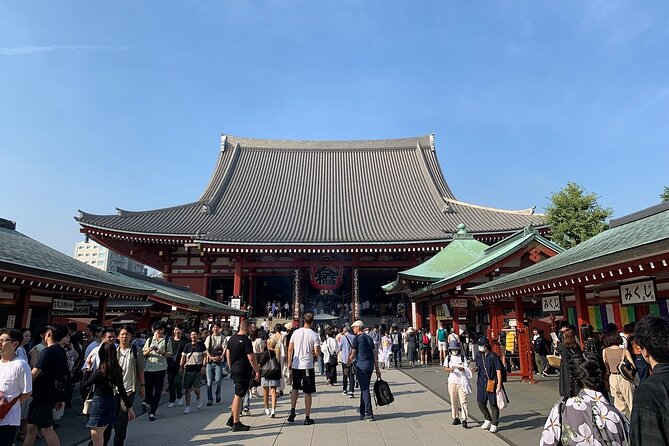
At Kaminarimon, you stop for about 10 minutes. The giant gate is one of Tokyo’s classic images, with its large lantern marking the entrance to the approach toward Senso-ji. This will be one of the more crowded portions of the route, so do not expect solitude. The value here is that you can see the famous sight without spending hours making your way through the district on foot.
The visit to Senso-ji lasts about 30 minutes. A local guide adds context to the temple and explains what you are seeing, which is useful if this is your first introduction to Japanese Buddhism. You will also have time to look around rather than simply pause for a photograph.
Still, Asakusa is a popular stop for good reason, and crowds are part of the bargain. The tour’s promise is not that every stop is empty. Instead, the bike route helps you move beyond the most visited gate and temple to see a broader slice of East Tokyo.
Crossing the Sumida River with Skytree in view

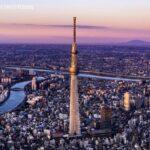
After Asakusa, you ride across a bridge with views toward the Sumida River and Tokyo Skytree. At 634 meters, Skytree is the world’s tallest radio tower, and it gives this part of the city a clear visual landmark.
The river crossing is one of the tour’s most appealing transitions. You move from Asakusa’s temple district toward Ryogoku, with the water and tower opening up the view. It is also a good example of why cycling works well here. You experience the change between neighborhoods as a journey, not as a sudden arrival after a train ride.
Traffic and weather can affect the exact route. The itinerary may be rearranged, and the guide may alter the ride for safety. That flexibility is sensible in Tokyo, where a busy road or poor weather can quickly change the feel of a cycling day.
Ryogoku, sumo country, and a local lunch

Ryogoku is known as Tokyo’s sumo district, and the tour spends time walking around the area to introduce its connection with Japan’s national sport. Even without a tournament taking place, the neighborhood gives you a useful setting for understanding sumo as part of local culture.
The lunch stop lasts about 45 minutes at a local restaurant. Lunch is included, which makes the $96 price easier to assess. You are not paying separately for a meal, museum ticket, bike, and insurance after the fact. The meal also breaks up the physical part of the day at a sensible point.
You should plan around dietary limits. Vegetarian choices are limited because many Japanese restaurants are not fully set up for vegetarian menus. If you do not eat meat or fish, ask about the available options before booking. Additional food and drinks can be purchased, but they are not included.
One useful feature is the absence of a forced shopping stop. Some sightseeing outings build in a warehouse or sales pitch. This one does not, so your time stays focused on neighborhoods, temples, food, and history. That gives the day a more relaxed purpose, even though the schedule itself is fairly full.
Other guided tours in Tokyo
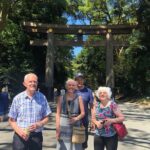
Fukagawa Fudo-son and everyday Buddhist practice

After lunch, you cycle to Fukagawa and visit Naritasan Fukagawa Fudo-do, a Buddhist temple. The stop lasts about 35 minutes and gives the day a different religious perspective from Senso-ji.
The guide explains how people worship in daily life, which helps you notice the practical side of a Japanese temple visit. Rather than treating the site only as an old building, you get a look at how religious customs remain part of ordinary routines.
This stop is likely to appeal most if you enjoy seeing how a place is used, not just how it looks. The tour does not present temples as museum pieces. You have a chance to observe the setting, understand some of its role, and ask questions in English.
As with any temple visit, respectful behavior matters. Comfortable shoes are useful because the tour includes walking as well as riding, and you may need to follow the guide’s instructions about where to stand or how to behave.
Life 150 years ago at the Fukagawa Edo Museum

The Fukagawa Edo Museum is the most directly historical stop on the route. You spend about 45 minutes inside, looking at how people lived in the Edo period, roughly 150 years ago.
This museum is valuable because it moves the tour beyond grand buildings and famous figures. You see the streets and homes of ordinary Edo residents, giving you a clearer idea of daily life in the period than a short explanation at a temple could provide.
The museum admission is included in the tour price. That matters because the visit provides a solid indoor section after several hours outside. If the weather turns uncertain, the itinerary may shift, but the tour can also be cancelled when conditions are unsafe for cycling.
The exact order of stops may change if a location is closed or traffic affects the route. If one place cannot be visited, the operator says an alternate location will be attempted. It is best to view the listed schedule as a well-planned outline rather than a minute-by-minute promise.
A short café stop before returning to Asakusabashi

The final listed stop is a local café for about 15 minutes. It is a brief pause before cycling back to Asakusabashi Station, the same place where you began.
Do not expect a long café experience. Fifteen minutes is enough for a quick drink or rest, but not for a leisurely meal. Its purpose is to let you regroup before the final ride.
The tour ends at the meeting point, which is convenient if you want to continue exploring. From there, you can use the station to reach another part of Tokyo without arranging a separate pickup.
Is $96 a fair price for five hours?

At $96 per person, this is not Tokyo’s cheapest way to see Asakusa. A self-guided train and walking day would cost much less. The better question is what the guided structure saves you in time and research.
The fee includes the rental bike, an English-speaking guide, lunch, insurance, and entry to the Fukagawa Edo Museum. You also get a planned route linking several districts that would require separate decisions about trains, walking directions, meal arrangements, and historical sites.
I see the strongest value in the combination of transport and interpretation. You are not just renting a bike, and you are not just following a guide through one neighborhood. The tour connects Asakusa, Ryogoku, and Fukagawa in one half-day, with history and local customs explained along the way.
The value drops if you already know East Tokyo well, dislike group schedules, or want to spend a long time at each temple. It may also feel less attractive if lunch restrictions are important to you. But for a first visit, the included services make the price reasonable, especially when you want a structured introduction without a shopping stop.
Who should book this Tokyo cycling tour?
I would recommend it to adults and older teenagers who want to see more than Tokyo’s headline sights. It suits you if you enjoy local history, can manage five hours of cycling and walking, and prefer a small group over a large bus tour.
The tour is also a good match if you want a guide to explain religious customs and the Edo period in plain English. Guide Shogun has been praised for keeping a good pace and showing interesting parts of Tokyo, so the experience should appeal to people who want an active day with steady sightseeing rather than long lectures.
It is less suitable for children under 15, anyone under 150 centimeters tall, or people who are uneasy cycling in city traffic. It is also not the best choice if you require a broad vegetarian menu or plan to carry luggage with you.
The tour can be cancelled for unsafe weather. If rain is likely, keep your plans flexible and consider travel insurance, as recommended for the activity.
My verdict: book it for the connections between places
Book this tour if you want East Tokyo explained as a connected story. You will see the famous face of Asakusa, the sumo identity of Ryogoku, the religious life of Fukagawa, and the homes of Edo-era residents in one organized ride.
Skip it if you want a slow temple day, a private guide, or complete control over lunch and timing. For the right rider, though, the mix of bike travel, local food, museum history, and a small English-speaking group gives you a useful five-hour introduction to Tokyo beyond the usual city-center circuit.
FAQ
Where does the Tokyo bike tour begin?
It begins outside Exit A3 at Asakusabashi Station on the Toei Asakusa Line. The guide will be waiting outside the exit.
Where does the tour end?
The tour returns to Asakusabashi Station, the same meeting point used at the start.
How long does the experience last?
The cycling tour lasts five hours. Starting times vary, so you need to check availability when booking.
Is lunch included?
Yes. Lunch at a local restaurant in the Ryogoku area is included in the price.
Is the bike rental included?
Yes. A rental bike is provided as part of the experience.
Is admission to the Fukagawa Edo Museum included?
Yes. The museum entry fee is included.
What language is the tour offered in?
The tour is conducted in English by a live guide.
How many people are in the group?
The tour is limited to five participants, although there may be other participants joining the activity.
Can vegetarians join the tour?
Vegetarians can join, but choices are limited because many Japanese restaurants are not fully prepared to provide vegetarian menus.
Are children allowed to participate?
The tour is not suitable for children under 15 years old. Participants must also be at least 150 centimeters tall.
What should I bring?
Bring comfortable shoes. Do not bring luggage, because it cannot be stored at the rental bike office. Use station lockers before the tour if needed.
Can the tour be cancelled because of weather?
Yes. The activity may be cancelled when weather conditions are unsuitable for safe cycling. The itinerary can also change because of traffic, weather, or site operations.
More Lunch Experiences in Tokyo
More Guided Tours in Tokyo
More Cycling Tours in Tokyo
More tours in Tokyo we've reviewed
Lunch Experiences, compared.
 ★ 4.6From Tokyo: Snow Monkey 1 Day Tour with Beef Sukiyaki LunchFrom $1511 day
 ★ 4.8Tokyo: Sumo Experience and Chanko Nabe LunchFrom $95
 ★ 4.5Tokyo: Tsukiji Fish Market Tour with 6 Stops & Seafood LunchFrom $943 hours
 ★ 4.6Tokyo: 1 Day Bus Tour with Meiji-Jingu,Odaiba,lunch&SkytreeFrom $839 hours - 570 minutes
 ★ 4.9Tokyo: Full-Day Tour w/Tea Experience,Buffet Lunch & CruiseFrom $105
 ★ 5.0Mt. Fuji, Oishi Park & Arakurayama Pagoda Bus Tour with LunchFrom $99