Reviewed · TEA CEREMONY & MATCHA
Tokyo: Full-Day Tour w/Tea Experience,Buffet Lunch & Cruise
Tokyo’s grand sights can feel scattered across the city, but this full-day outing ties them together in one tidy route. You’ll see the Imperial Palace, Senso-ji Temple, Odaiba, Tokyo Tower, and Tokyo Bay without having to puzzle out several train lines or reserve separate tickets.
In This Article
- Key points to know before booking
- Why this Tokyo day tour works
- The Imperial Palace Plaza, Tokyo’s formal opening act
- Senso-ji and the Nakamise shopping arcade
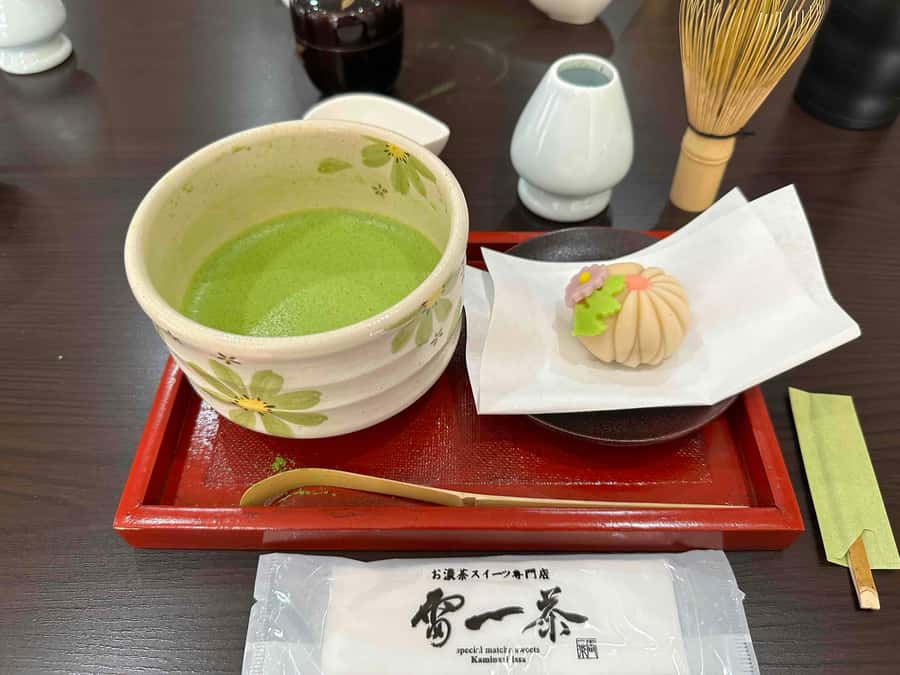
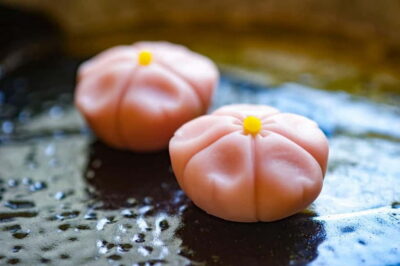
- Matcha sweets and a casual tea ceremony
- Odaiba, Hilton buffet, and Tokyo Bay
- The Symphony Cruise beneath Rainbow Bridge
- Tokyo Tower and the final city view
- Guides, buses, and the rhythm of the day
- Is $105 a fair price?
- Who should book this experience?
- Should you book the Tokyo full-day tour?
- FAQ
- How long does the tour last?
- Where does the tour start?
- Where does the tour finish?
- Is hotel pickup included?
- Is lunch included?
- Is the tea ceremony included?
- Is the Tokyo Bay cruise included?
- Is Tokyo Tower admission included?
- Is the tour wheelchair accessible?
- What should I bring?
I like the excellent value: for $105, your day includes a guide, bus transportation, buffet lunch at the Hilton Tokyo Odaiba, a bay cruise, tea experience, and Tokyo Tower admission. I also like the human touch provided by guides such as Mina, Aki, Atsushi, Keiko, and Yuka, who add cultural background and keep the long day moving.
The tradeoff is pace. You’ll cover a lot of ground, but stops are timed, and the Imperial Palace visit is mainly an exterior look at the plaza. Also note that the bus requires you to manage a few steps, even though the activity is described as wheelchair accessible.
Key points to know before booking
- Five major Tokyo areas in one day: The route links the Imperial Palace, Asakusa, Odaiba, Tokyo Bay, and Tokyo Tower.
- A real meal, not a snack stop: Lunch is a buffet at the Hilton Tokyo Odaiba, a major reason the price works well.
- Tea with a local flavor: The experience at Matcha Sweets Kaminari-Issa combines a casual tea ceremony with time around Nakamise.
- The cruise changes your view of Tokyo: You pass beneath Rainbow Bridge and see the bay from the water.
- Guides make a big difference: Mina, Aki, Atsushi, Keiko, and other Hato Bus guides are praised for clear explanations, humor, patience, and careful timekeeping.
- Plan for a long, structured day: Expect about 9 to 9.5 hours, with limited free time at each stop.
Why this Tokyo day tour works
Tokyo is not one compact sightseeing district. The Imperial Palace sits near the city center, Senso-ji is in Asakusa, Odaiba is across Tokyo Bay, and Tokyo Tower is elsewhere again. A self-guided route covering all four areas would take planning, transfers, and some attention to the clock.
This tour solves that problem with a bus and a fixed schedule. You meet at one of two possible starting points, either Hato Bus Shinjuku Station East Exit or the Hato Bus Tokyo office, depending on the option you book. The tour ends back at the Hato Bus Tokyo office.
I see this as a strong first-day choice if you want orientation rather than a slow, deeply focused visit to one neighborhood. You receive a broad look at Tokyo’s imperial, Buddhist, modern, commercial, and waterfront sides in one outing.
The English-speaking guide is an important part of the experience. Guides such as Mina and Atsushi are praised for explaining customs, history, and everyday cultural details while keeping people informed about the next stop. A good guide also matters on a packed day because the bus, walking sections, meal, cruise, and tower visit all need to stay on schedule.
A few more Tokyo tours and experiences worth a look

The Imperial Palace Plaza, Tokyo’s formal opening act
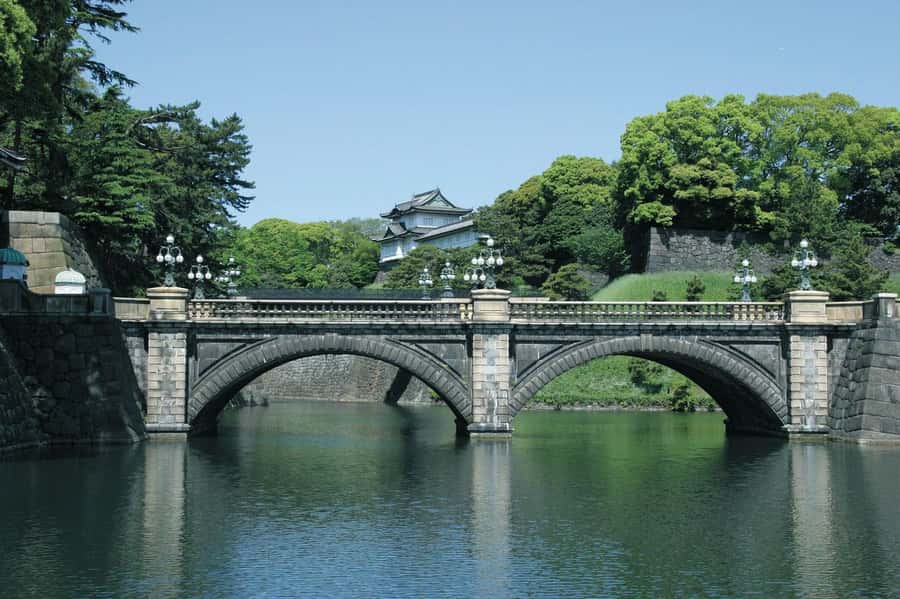
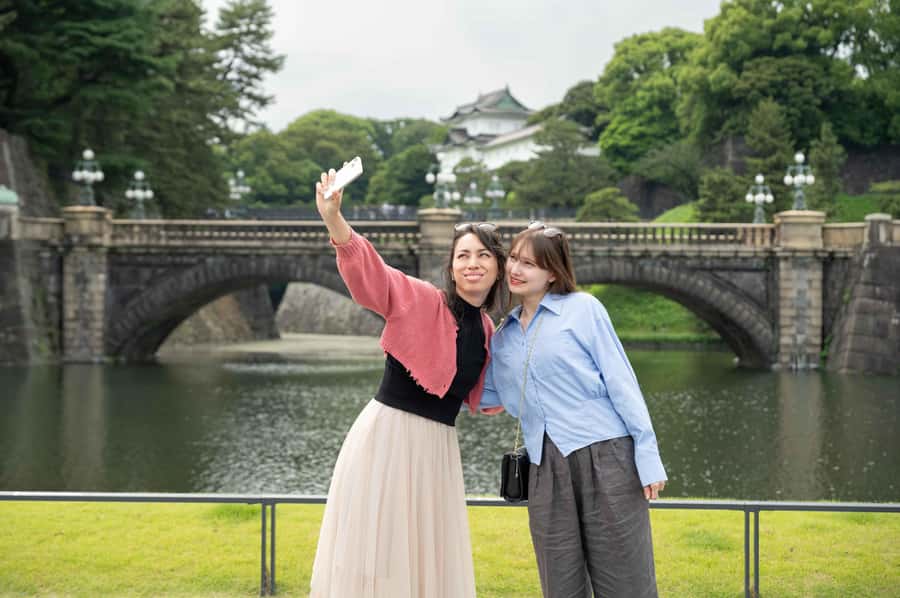
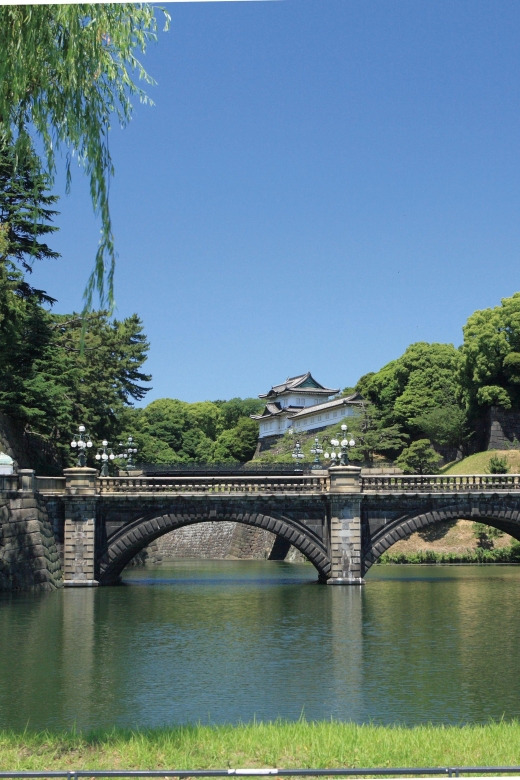
The first sightseeing stop is the Imperial Palace Plaza, where you view the emperor’s residence and surrounding grounds from outside. The setting gives you a calm introduction to Tokyo, with broad open space and an important connection to Japan’s present-day imperial institution.
Keep your expectations in check. This is a photo stop and guided visit of about 40 minutes, not an interior palace tour. You will not tour the emperor’s private residence, and the visit may feel brief if you hoped for a more detailed look at palace buildings.
Still, the stop earns its place. It gives the day a ceremonial beginning before the route shifts to the narrow lanes and temple crowds of Asakusa. Your guide can also provide context that helps the rest of the day make more sense, especially when Japanese tradition and modern city life begin appearing side by side.
Senso-ji and the Nakamise shopping arcade
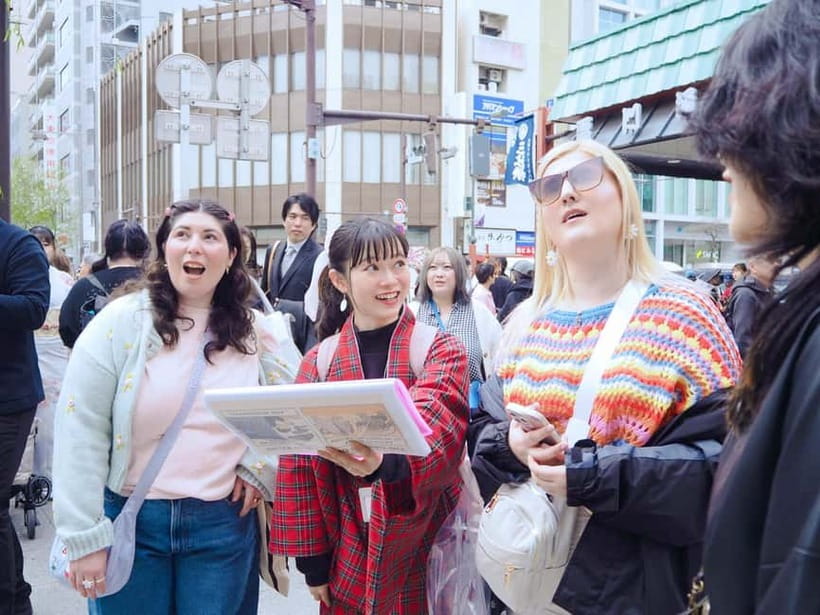
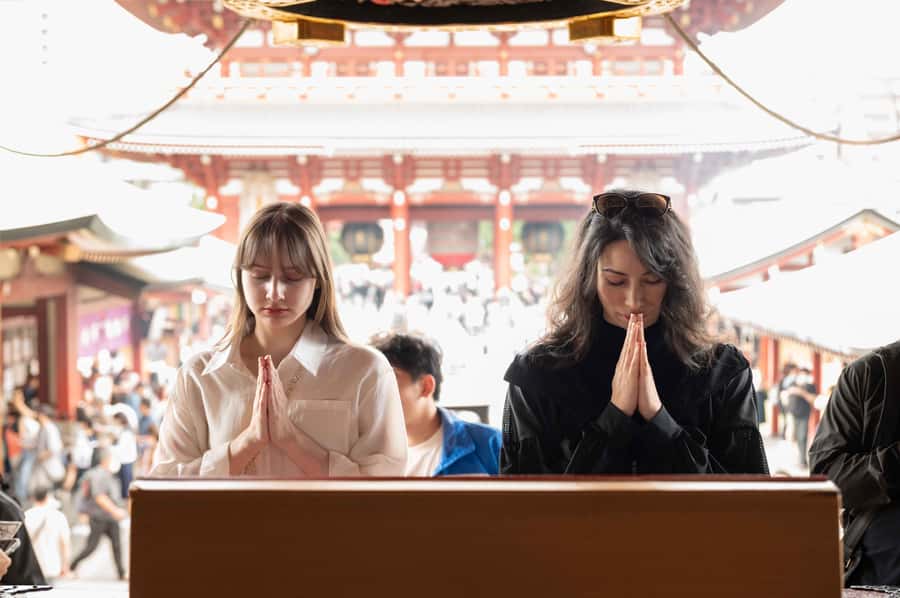
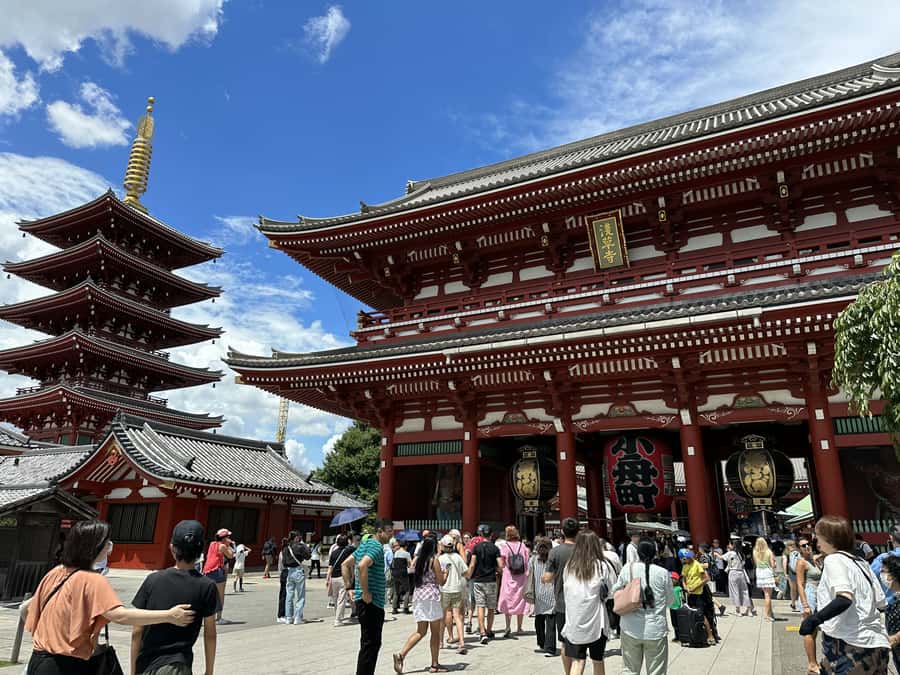
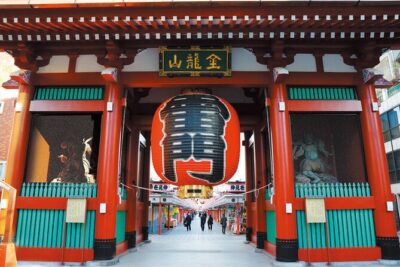
In Asakusa, you visit Senso-ji, Tokyo’s oldest Buddhist temple. This is one of the day’s most rewarding stops because it combines a major religious site with a traditional shopping street and a chance to sample local specialties.
You have about 50 minutes for the temple and surrounding area. That is enough to see the main approach, take photographs, browse Nakamise, and get a feel for Asakusa, but it is not enough for a relaxed shopping expedition.
Nakamise leads toward Senso-ji with small shops selling sweets, souvenirs, and traditional goods. This is the place to try Tokyo specialties and observe the lively flow of people around one of the city’s best-known temples. Keep some room in your bag, but do not count on having time to compare every shop.
The guide helps here by pointing out what you are seeing rather than leaving you to decode the temple grounds alone. You still have free time, so you can browse or take photos, but the visit remains part of a larger schedule.
Matcha sweets and a casual tea ceremony
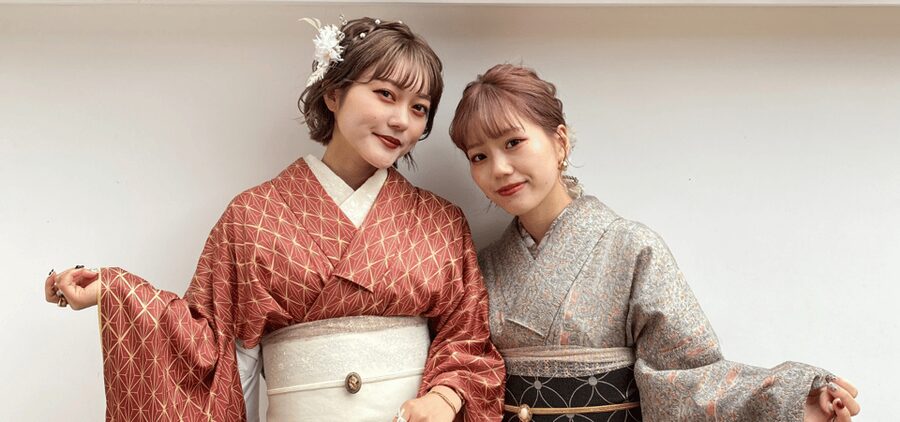
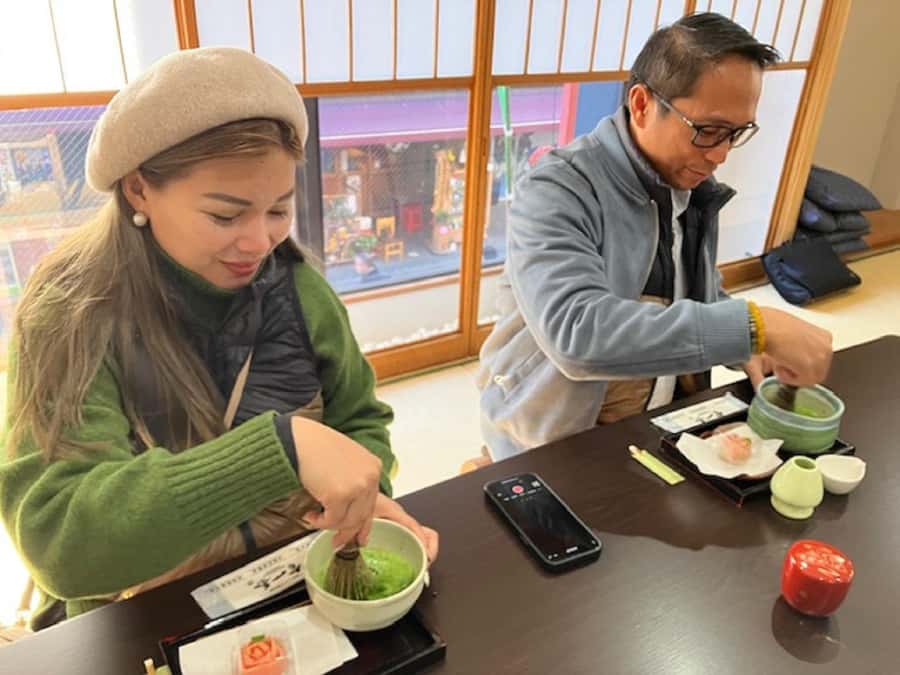
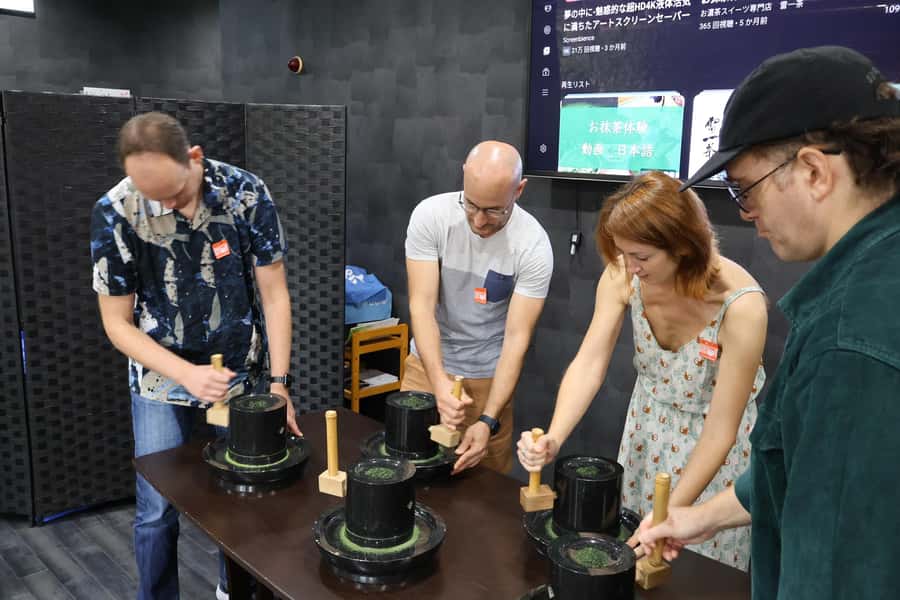
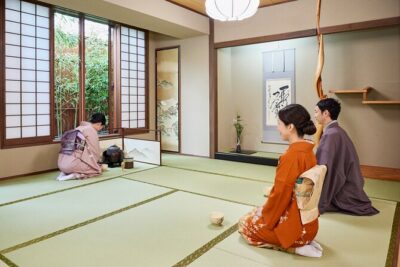
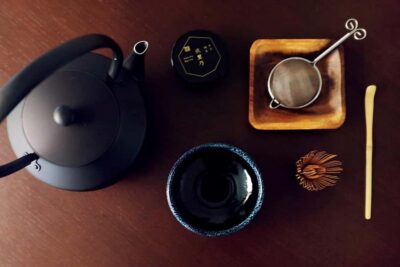
The tea experience takes place at Matcha Sweets Kaminari-Issa, near the Nakamise area. It lasts about 50 minutes and combines a guided tea activity with a taste of Japanese matcha culture.
This is described as a casual tea ceremony, so do not expect a formal, highly ritualized performance lasting several hours. Instead, you can expect an approachable introduction to tea preparation and a chance to sip fragrant Japanese tea while learning about the custom.
The setting is useful because it follows the temple visit. You first see a major Buddhist site and its traditional shopping arcade, then pause for tea and sweets before moving on. That break gives the day a welcome change of rhythm.
The experience also adds something a standard bus sightseeing route often lacks. You are not only looking at buildings from the pavement or bus window. You get a small, hands-on cultural moment that helps connect the sights with daily Japanese customs.
Odaiba, Hilton buffet, and Tokyo Bay
The bus continues toward Odaiba, a shopping and entertainment district built on a man-made island in Tokyo Bay. The route passes by Rainbow Bridge, with about five minutes set aside for the bridge itself as a drive-by landmark.
Odaiba gives you around 50 minutes for a visit, photographs, and some free time. It is a modern contrast to Asakusa’s temple lanes and the Imperial Palace’s formal surroundings. You might use the stop for bay views, shopping, or a quick look at the district before lunch.
The meal is served at the Hilton Tokyo Odaiba and lasts about one hour. This is one of the tour’s strongest practical features. A proper buffet is far more useful than losing time searching for lunch in an unfamiliar district, especially on a day with several fixed departures.
The buffet is a clear value point at this price. Several people specifically praise the food selection, desserts, and overall quality, while one description calls the meal first class. Alcoholic drinks are not included, so budget separately if you want one.
Because the lunch takes place at a hotel, the meal also offers a comfortable pause in the middle of a busy sightseeing day. You can sit down, eat at your own pace, and reset before the cruise.
A few more Tokyo tours and experiences worth a look

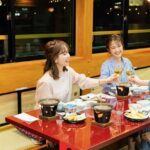
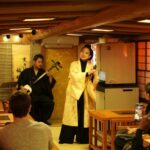
The Symphony Cruise beneath Rainbow Bridge
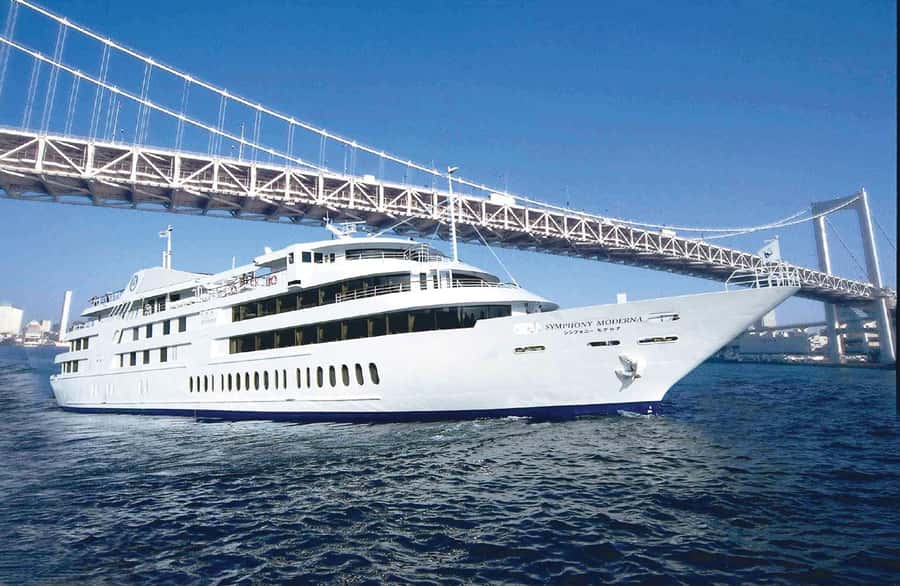
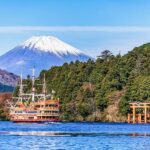
After lunch, you board the Symphony Cruise for about 50 minutes. The boat carries you through Tokyo Bay and beneath Rainbow Bridge, giving you a different angle on Odaiba, the waterfront, and the city’s modern infrastructure.
I like this part because it is the sort of experience people often skip when planning Tokyo on their own. You may spend your day visiting temples, towers, and shopping districts, then realize you have seen very little of the city from the water. Here, the cruise is already built into the route.
The boat ride also provides a quieter stretch after the bus and walking stops. You can sit, look outward, and let the city pass by instead of following another guide through a crowded site. The cruise includes coffee and tea service in the activity details, and one tour description also refers to onboard entertainment with a professional singer, though the exact onboard program may vary.
This is not a long harbor voyage. At 50 minutes, it is best viewed as a scenic interlude rather than a full cruise excursion. Its value comes from the change of viewpoint and the ease of having it included in the day.
Tokyo Tower and the final city view
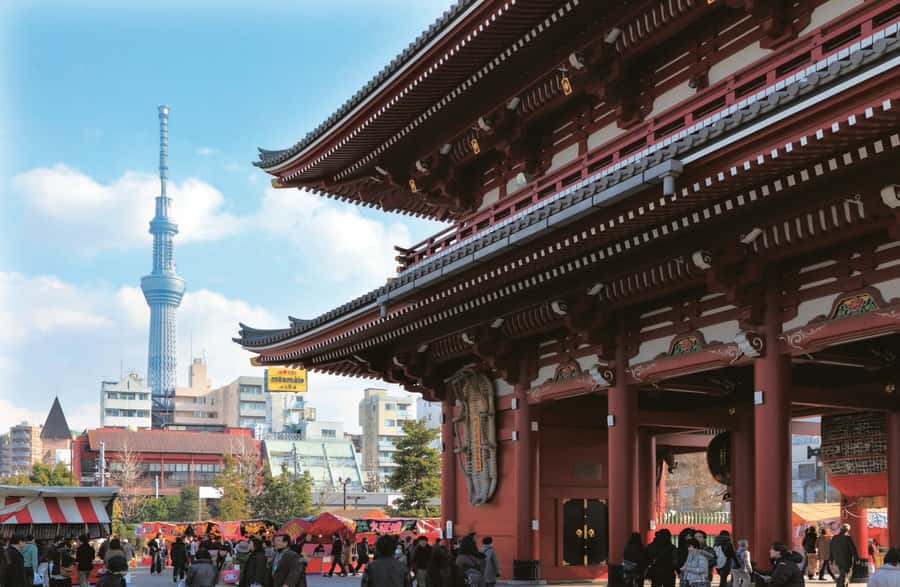
The last major stop is Tokyo Tower, where you have about 45 minutes for a guided visit, free time, and panoramic views. Entry is included, so you do not need to arrange a separate ticket.
Tokyo Tower offers the classic high-up look at the capital. After seeing the city at street level, from a bus, and from Tokyo Bay, you finish by looking over it from above. On a clear day, the view can help you understand how widely Tokyo spreads.
The 45-minute visit is enough for the observation experience, photographs, and a quick look around. It is not a long stop for lingering over every view or waiting through extended lines, so follow the guide’s timing carefully.
Ending at Tokyo Tower gives the itinerary a strong visual finish. The palace offers formality, Senso-ji offers tradition, Odaiba offers modern Tokyo, the cruise offers the waterfront, and the tower ties those pieces together from above.
Guides, buses, and the rhythm of the day
The tour runs for 9 to 9.5 hours, so guide quality matters. Mina is repeatedly praised for her clear cultural explanations, humor, and personal attention. Aki is noted for being kind and attentive, while Atsushi is described as calm, entertaining, and easy to hear on the bus.
Keiko is praised for keeping the itinerary well paced and adding personal and historical details. Saiki-San is noted for repeating the schedule and expectations, which is especially helpful on a long day with many transitions.
These details matter more than they may seem. A guide who tells you when to return to the bus, where to meet, and what comes next can prevent the small stresses that often spoil a tightly planned day. Several accounts also describe the tour as punctual and well organized.
Transportation is by bus, and hotel pickup and drop-off are not included. You need to reach the designated starting point yourself. Wear comfortable clothing and shoes, bring a camera, and remember that you will need to manage some steps while boarding and leaving the bus.
The activity is marked wheelchair accessible, but the practical limitation is clear: you must be able to go up and down the bus steps. One participant used a wheelchair and received help from the driver and guide, but that assistance should not be treated as a guarantee for every departure. If mobility is a concern, confirm the arrangement before booking.
Is $105 a fair price?
At $105 per person, the package is strong for a full day in Tokyo. You are paying for transport, an English-speaking guide, the tea experience, buffet lunch, Tokyo Bay cruise, and Tokyo Tower admission.
The value is strongest if you want convenience and variety. Buying the lunch, tower entry, cruise, and transport separately would take time and could approach the tour price before adding the benefit of a guide. The Hilton buffet is particularly important because it turns lunch into part of the plan rather than another decision in the middle of a busy day.
The value is less obvious if you prefer long, unstructured visits. You will spend only 40 to 50 minutes at most stops, and the Imperial Palace is an exterior visit. Someone focused on temple photography, detailed shopping, or a slow tea lesson may find the schedule too brisk.
The tour also offers free cancellation up to 24 hours in advance and a reserve-now, pay-later option. Those policies make it easier to fit the outing into a changing Tokyo schedule.
Who should book this experience?
I would recommend it to first-time visitors who want to see the city’s headline sights without managing the route alone. It also suits families and older visitors who value a guided schedule, included lunch, and regular transportation between districts.
It is a good fit for anyone with only one open day in Tokyo. You will not become an expert in every neighborhood, but you will gain a useful first picture of how the city’s imperial, religious, modern, waterfront, and commercial areas connect.
You may want another plan if your main goal is shopping in Asakusa, touring palace interiors, or spending half a day at Tokyo Tower. The schedule gives you a taste of each area, not unlimited time in any one of them.
Should you book the Tokyo full-day tour?
Book it if you want maximum sightseeing with minimum planning. The combination of Senso-ji, tea, a Hilton buffet, a bay cruise, and Tokyo Tower gives you more variety than a simple city bus loop, and the price is sensible for what is included.
Skip it if you dislike fixed timetables or prefer to linger. For everyone else, especially on a first Tokyo visit, this is a practical way to cover the city’s major contrasts in one well-managed day. Check the starting point carefully, wear comfortable clothes, and be ready to move when the guide calls time.
FAQ
How long does the tour last?
The tour lasts approximately 9 to 9.5 hours. Starting times vary, so check availability when booking.
Where does the tour start?
The available starting points are Hato Bus Shinjuku Station East Exit and the Hato Bus Tokyo office. The exact meeting point depends on the option booked.
Where does the tour finish?
The activity ends back at the Hato Bus Tokyo office.
Is hotel pickup included?
No. Hotel pickup and drop-off are not included, so you must reach the assigned meeting point.
Is lunch included?
Yes. A buffet lunch at the Hilton Tokyo Odaiba is included. Alcoholic drinks are not included.
Is the tea ceremony included?
Yes. The tour includes a Japanese tea experience at Matcha Sweets Kaminari-Issa, with a casual tea ceremony and tea tasting.
Is the Tokyo Bay cruise included?
Yes. The package includes a Tokyo Bay cruise lasting about 50 minutes. The route passes beneath Rainbow Bridge.
Is Tokyo Tower admission included?
Yes. Entry to Tokyo Tower is included, with about 45 minutes for the visit and city views.
Is the tour wheelchair accessible?
The activity is listed as wheelchair accessible, but you must be able to manage a few steps when getting on and off the bus. Confirm your needs before booking.
What should I bring?
Bring a camera and wear comfortable clothes. Comfortable footwear is also a sensible choice for the temple and shopping arcade visits.
More Boat Tours & Cruises in Tokyo
More Bay & River Cruises in Tokyo
More Tea Ceremony & Matcha in Tokyo


More tours in Tokyo we've reviewed












Tea Ceremony & Matcha, compared.
 ★ 5.0Matcha Making Class in Tokyo with Authentic Japanese Sweets SetFrom $21
 ★ 5.0Kimono Tea Ceremony at Tokyo, Asakusa MaikoyaFrom $55
 ★ 5.0Tokyo: Traditional Tea Ceremony with a Tea MasterFrom $381 hour
 ★ 4.5Dynamic Tokyo: Tokyo Tower, Tea Experience, Bay Cruise Day TourFrom $99
 ★ 4.9Tokyo: Matcha Making Experience with Mochi Sweets in AsakusaFrom $221 hour
 ★ 4.7Tokyo: Matcha and Kimono ExperienceFrom $57