Reviewed · WALKING TOURS
Explore the Local “Non-touristy” Side of Tokyo: Jujo and Akabane Walking Tour
Tokyo’s local character comes into focus along the walk from Jūjō to Akabane. You’ll browse a long-standing shopping arcade, pass a quiet neighborhood park, see the remains of a 15th-century castle, and finish among old-fashioned izakayas where locals may be having a drink in the afternoon. This is everyday Tokyo, not a greatest-hits parade.
In This Article
- Key points at a glance
- Why Jūjō and Akabane make a good Tokyo walk
- Jūjō Ginza: Tokyo’s everyday shopping street
- Shimizuzaka Park and a short pause among trees
- Inatsuke Castle remains and the story of Ōta Dōkan
- Akabane Ichibangai and Tokyo’s old pub culture
- What the guide adds to the experience
- Is $71.53 a fair price?
- Who should book this walk?
- Should you book the Jūjō and Akabane walk?
- FAQ
- How long does the Jūjō and Akabane walking tour last?
- Where does the tour begin?
- Where does the tour end?
- What time does the tour start?
- How large is the group?
- Are food and drinks included?
- Is transportation included?
- What happens if I need to cancel?
I like the small size, with no more than eight people, and I like the way the route mixes food, history, and ordinary neighborhood life. The 500-shop Jūjō Ginza arcade is the main prize, while the castle remains give the walk a useful link to Tokyo’s past. The main limitation is the price, since food, drinks, and transportation are extra.
Key points at a glance
- Jūjō Ginza’s 500 shops: Spend about an hour among prepared foods, fresh foods, clothing, and other local stores.
- A calm change of pace: Shimizuzaka Park offers 20 minutes among trees, a pond, and a 52-meter roller slide.
- A small piece of samurai-era Tokyo: See the Inatsuke Castle remains and a statue of Ōta Dōkan, associated with Edo Castle.
- Akabane’s daytime drinking culture: Walk through Ichibangai, a street lined with several dozen pubs and izakayas.
- A genuinely small group: The activity is private, with only your group taking part, and the advertised maximum is eight people.
- A practical afternoon route: Meet at Jūjō Station at 3 pm and finish at the ticket gate of Akabane Station.
Why Jūjō and Akabane make a good Tokyo walk
Tokyo can feel polished, crowded, and carefully packaged for sightseeing. This route takes you into Kita City, where the pleasures are smaller and more ordinary: a food stall, a neighborhood shop, a local park, and a row of pubs that may already be open before dinner.
I like this kind of outing because it gives you things to look at without forcing every stop to be a major monument. The point is not to collect famous sights. You’re watching how a part of Tokyo shops, eats, relaxes, and remembers its past.
The route lasts about three hours and runs from Jūjō Station to Akabane Station. That makes the walk easy to pair with the rest of your day, though you should allow enough energy for a moderate amount of walking. The tour begins at 3 pm, a useful time for seeing the shopping street in the afternoon and reaching Akabane’s izakaya area when it has its own social rhythm.
The experience is described as a private activity, meaning only your group participates. The group size is capped at eight, so you can ask questions without trying to get a guide’s attention from the back of a large crowd. That matters here. The best parts of this walk depend on small observations and conversation, not on standing in front of a grand building while a guide delivers a speech.
Other walking tours we've reviewed in Tokyo

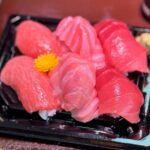
Jūjō Ginza: Tokyo’s everyday shopping street
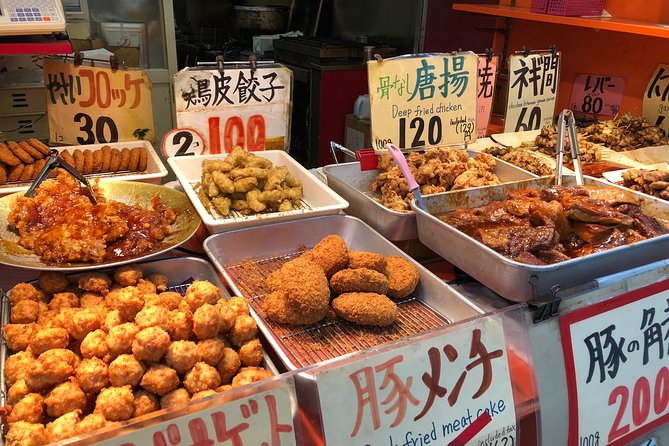
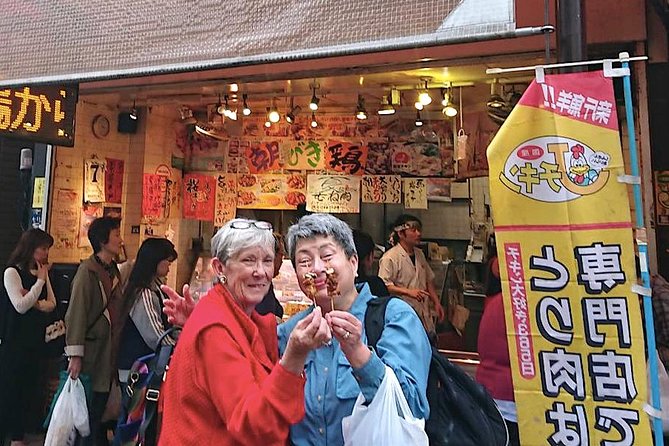
The first stop, Jūjō Ginza Shopping Arcade, receives about an hour. It is known as one of Tokyo’s three best old shopping streets and contains around 500 shops selling prepared food, fresh food, clothing, and other daily goods.
This is where the tour earns much of its value. You are not simply walking past store fronts. Your guide can explain what you’re seeing, point out unusual wares, and introduce you to the local character of the street. The arcade gives you a chance to compare Tokyo’s neighborhood shopping culture with the department stores and glossy districts found on more familiar routes.
Food is likely to be the most rewarding part for curious eaters. The tour price does not include food or drinks, so bring some yen or another accepted payment method if you want to buy something. You may find prepared dishes, snacks, or fresh ingredients that are hard to understand from a quick look alone. A guide’s explanation can help you decide what is worth trying and how these foods fit into local life.
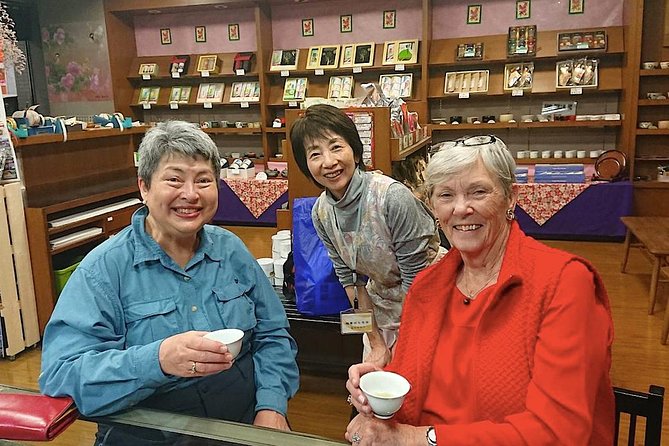
One particularly positive account of the experience praised the food information and tastings, along with tea tasting. Those elements are worth asking about when you meet your guide, but you should not assume every bite or drink is included in the $71.53 price. The published inclusions cover local taxes and a local guide, not meals or beverages.
The arcade may be the strongest stop for anyone who wants an authentic sense of Tokyo without spending much time in formal attractions. It is also the place where the pace can become less predictable. Shops, food displays, and small details can tempt you to pause, and the hour may feel short if you enjoy browsing.
Shimizuzaka Park and a short pause among trees
After the shopping arcade, the walk continues to Shimizuzaka Park for about 20 minutes. The park is described as a quiet green space with trees, a pond, a square, and a 52-meter roller slide for children.
This stop changes the mood. After an hour among shops and food, you get room to slow down and see where local residents spend time away from the commercial streets. I appreciate the inclusion of a modest park because it prevents the route from becoming one long sequence of storefronts.
For families, the roller slide may be a welcome feature, though the short stop means you should not expect a long play session. For adults, the park is more about seeing a neighborhood setting than checking off a major attraction. The pond, trees, and open space offer a simple contrast to central Tokyo’s dense streets.
The park also shows why a guide can be useful on a local route. Without context, you might walk through, take a quick look, and move on. With an explanation of how the park serves its community, the stop becomes part of the larger picture of daily life in Tokyo.
Inatsuke Castle remains and the story of Ōta Dōkan
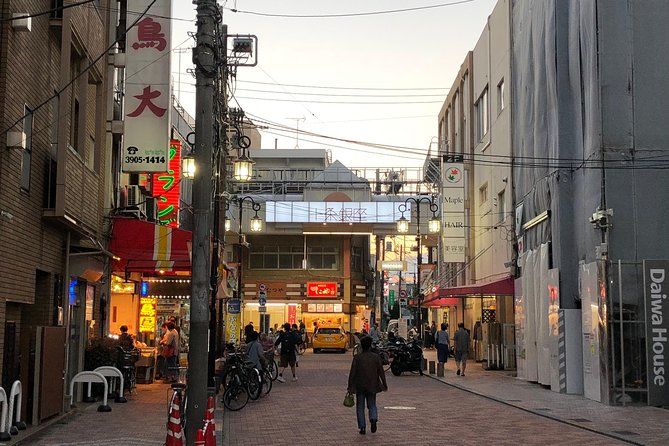
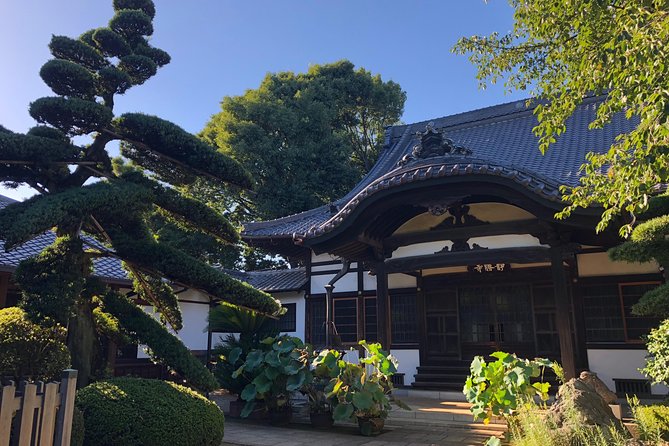
The next stop lasts about 15 minutes. Inatsuke Castle remains are linked to Ōta Dōkan, the 15th-century warlord known for building Edo Castle. The site sits at an altitude of about 21 meters, and a statue of Ōta Dōkan is also located here.
Do not arrive expecting a complete castle. These are remains, not a preserved fortress with rooms, gates, and dramatic walls. The value is in the connection to Tokyo’s early political history and in seeing how traces of that past sit within a modern neighborhood.
I like this brief historical stop because it gives the route some depth without turning the afternoon into a formal history lecture. Ōta Dōkan is an especially useful figure for understanding the area’s past, since his name is tied to Edo Castle, the foundation of the city that later became Tokyo.
The details provided for the stop say admission is not included. That wording means you should check the exact access arrangements before setting out, particularly if you are counting every yen. The stop itself is short, so it works best as a compact history lesson rather than the central reason to book the tour.
Akabane Ichibangai and Tokyo’s old pub culture
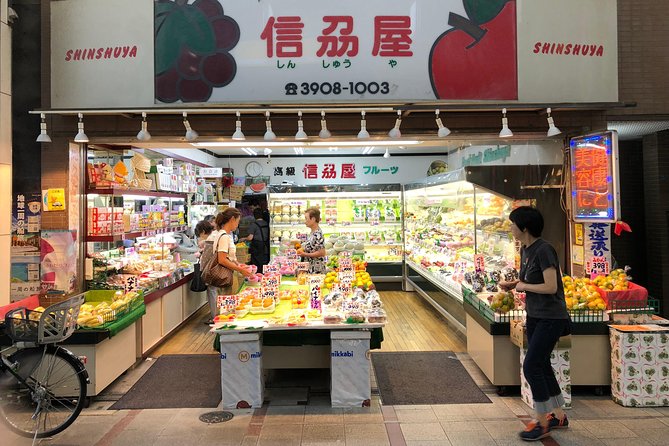
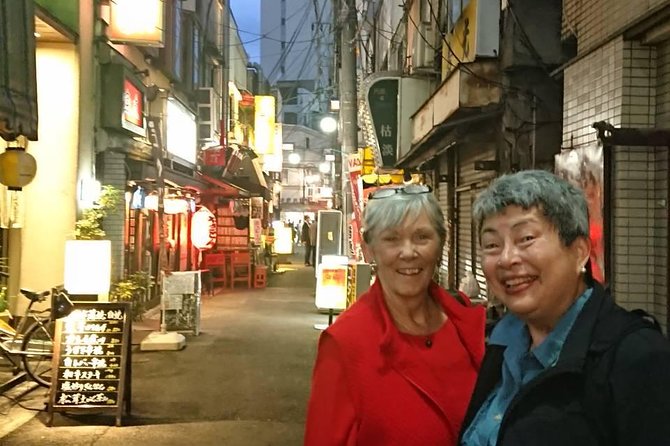
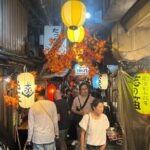
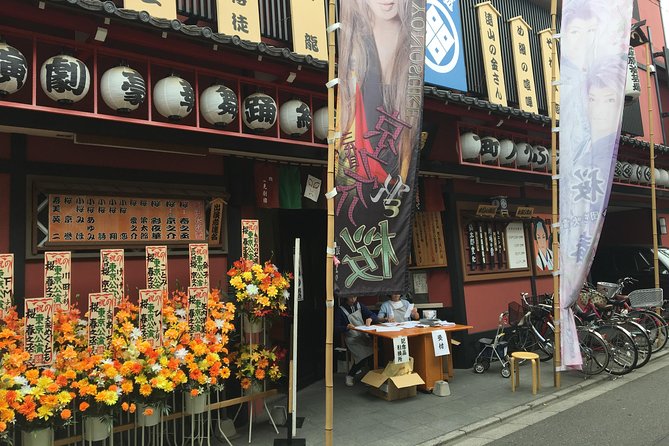
The final stop is Akabane Ichibangai Shopping Street, where you spend about 40 minutes. The street contains several dozen pubs and izakayas, many of which open at noon. It is not unusual to see older men enjoying sake in the middle of the afternoon at a familiar local place.
This is the route’s most distinctive finish. Many Tokyo walks end at a shrine, a viewpoint, or a shopping complex. Here, you finish by looking at a social tradition that can feel much less staged: neighborhood drinking and conversation during daylight hours.
You should treat the stop as cultural observation unless your guide explains that tasting or ordering is part of your specific outing. Food and drinks are not included in the price. If you choose to buy something, any purchase is your responsibility.
Akabane Ichibangai is also a useful place to think about the limits of a short tour. Forty minutes is enough to see the street, hear about its customs, and perhaps decide if you want to return later. It is not enough for a long pub crawl or a full meal. If you want to stay for dinner, you can continue on your own after the tour ends at Akabane Station.
The ending is convenient. You do not have to retrace your steps to Jūjō, and Akabane Station gives you a clear point from which to continue your evening. The tour does not include transportation to or from the attractions, so you are responsible for reaching Jūjō Station and arranging anything after Akabane.

What the guide adds to the experience
The route is simple enough to walk independently. You can find a shopping arcade, park, historic remains, and pub street without joining a tour. The guide’s value comes from interpretation and introductions.
You’ll learn what kinds of goods matter in the arcade, how local shops fit into neighborhood life, and why a street full of daytime izakayas is worth noticing. Those details are difficult to get from a map or a quick internet search.
Fumiko is specifically associated with this experience. If she leads your walk, ask her about food, tea, temple customs, offerings, prayers, and the history of daily life in Japan. One account of her guiding highlights those subjects, including tea tasting and instruction about making offerings and prayers. Since the route information does not promise each of these elements on every departure, consider them possible additions rather than guaranteed inclusions.
That distinction is important. The strongest version of this tour depends on the guide’s ability to bring the places to life. A good conversation can turn a shop display or a small historical marker into something memorable. If you prefer a tightly scripted sightseeing program with guaranteed tastings, major monuments, and a fixed list of activities, this may feel too informal.
Is $71.53 a fair price?
At $71.53 per person, this is not a cheap neighborhood stroll. You still pay separately for food, drinks, and transportation, so your total cost will be higher if you snack along Jūjō Ginza or stop for a drink in Akabane.
The value comes from the private format and the guide’s time. If you are traveling with a small group, having the walk limited to your party can make the cost easier to justify. You get a route tailored to your questions rather than a large group moving from point to point.
I would also judge the price by how much you enjoy local context. If you want to understand what you are seeing, ask about food customs, shopping habits, neighborhood history, and the drinking street. If you only want attractive sights to photograph, you may find the cost harder to defend because several stops are modest.
Group discounts may be available, which could improve the value for a larger party. The activity is generally booked well ahead, with an average booking lead time of 68 days. That suggests you should reserve early if the afternoon time and small-group format matter to you.
Who should book this walk?
I would recommend it to you if you have already seen some of Tokyo’s famous districts and want a quieter, more local afternoon. It also suits repeat visitors, curious eaters, families interested in the park, and anyone who enjoys learning through ordinary places.
The tour is a good fit for people who like to ask questions. A small group gives you more room to discuss what you see, and the mix of food, history, and neighborhood culture keeps the walk varied.
You should have a moderate level of physical fitness. The information provided does not give a precise distance or a detailed accessibility description, so contact the provider before booking if walking conditions are a concern. You’ll also need to make your own way to Jūjō Station and from Akabane Station.
This is less suitable if you want a major landmark tour, a formal food tour with guaranteed tastings, or a fully covered package with transportation and refreshments included. The experience is about seeing Tokyo from street level, with some flexibility and some extra spending along the way.
Should you book the Jūjō and Akabane walk?
Book it if you want Tokyo’s smaller stories: the shopkeeper’s display, the neighborhood park, the warlord’s statue, and the older drinkers gathering at an afternoon izakaya. Jūjō Ginza is the main reason to go, while Akabane provides an unusual and memorable finish.
The $71.53 cost makes the most sense for a private group that values a personal guide and wants help understanding local customs. Bring money for food and drinks, wear comfortable shoes, and arrive at Jūjō Station before the 3 pm start.
If you want a polished list of famous sights, choose another Tokyo tour. If you want a three-hour look at how a less-visited part of the city shops, rests, remembers, and socializes, this is a worthwhile choice.
FAQ
How long does the Jūjō and Akabane walking tour last?
The tour lasts approximately three hours.
Where does the tour begin?
It begins at Jūjō Station in Kita City, Tokyo.
Where does the tour end?
The walk ends at the ticket gate of Akabane Station.
What time does the tour start?
The scheduled start time is 3 pm.
How large is the group?
The activity is private, so only your group participates. The small-group format has a maximum of eight people.
Are food and drinks included?
No. Food and drinks are not included in the tour price.
Is transportation included?
No. Transportation to and from the attractions is not included. Hotel pickup and drop-off are also not included.
What happens if I need to cancel?
You can receive a full refund if you cancel at least 24 hours before the experience begins. Cancellations or changes made less than 24 hours before the start time are not accepted for a refund.
More Walking Tours in Tokyo

More tours in Tokyo we've reviewed












Walking Tours, compared.
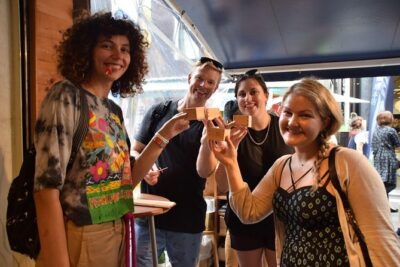 ★ 5.0Tokyo Tsukiji Fish Market Food and Culture Walking TourFrom $99
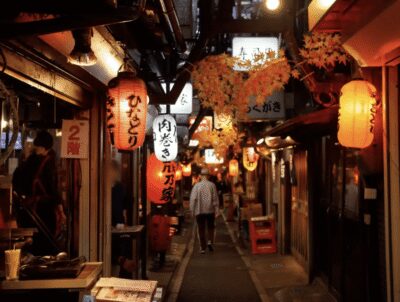 ★ 4.9Tokyo: Shinjuku Local Bar and Izakaya Guided Walking TourFrom $343 hours
 ★ 5.0Tokyo: Tsukiji Fish Market Food and Walking tourFrom $30
 ★ 4.8Tokyo: Asakusa Walking Tour with Sensoji Temple VisitFrom $222 hours
 ★ 4.9Tokyo: Tsukiji Fish Market Guided Walking TourFrom $222 hours
 ★ 4.7Tokyo Castle & Imperial PalaceーShogun Walking TourFrom $232 hours