Reviewed · TEA CEREMONY & MATCHA
Tokyo: Traditional Tea Ceremony with a Tea Master
The best part of this Tokyo tea ceremony is that you do not simply sit and watch. You taste several distinct teas, learn why water temperature matters, then whisk your own matcha with traditional tools under the calm eye of a tea master. It is a compact lesson in Japanese tea culture, held at Ocharu across from Tokyo University.
In This Article
- Key points at a glance
- What makes this tea ceremony different
- Finding Ocharu across from Tokyo University
- The welcome cup: Shizuoka wakocha and a tea cake
- Gyokuro sencha, tea leaves, and seasonal wagashi
- Making matcha with traditional tools
- Genmaicha brings the hour to a gentle close
- What you actually learn in one hour
- The certificate, photo, and tea shop
- Is $38 a fair price?
- Who should book this experience?
- Practical details before you reserve
- Should you book the Ocharu tea ceremony?
- FAQ
- How long does the Tokyo tea ceremony last?
- How much does the experience cost?
- Where is the tea ceremony held?
- How do I find the meeting point?
- What language is the activity conducted in?
- Which teas will I taste?
- Is food included?
- Do I get to make my own matcha?
- What do I receive at the end?
- Is the activity wheelchair accessible?
I especially like the four-tea progression, from fruity Shizuoka wakocha to thick, savory Gyokuro and comforting genmaicha. The seasonal wagashi from Ougiya also gives the hour a fine sense of place. My one caution is practical: the session is short, and the room is not suitable for wheelchair users. Finding the green OCHARU sign can also take a little care, since it is high on the building.
Key points at a glance
- Taste four very different Japanese teas, including rare wakocha, top-grade Gyokuro sencha, matcha, and genmaicha.
- Whisk your own matcha, using traditional utensils with step-by-step help from an English-speaking tea master.
- Try seasonal wagashi from Ougiya, a long-established confectioner known for delicate Japanese sweets.
- Learn the small details that change flavor, including brewing temperatures, tea-growing regions, and proper manners.
- Finish with useful keepsakes, including a certificate and group photograph.
- Pair it with Tokyo University or the nearby zoo, both easy additions to a day in this part of the city.
What makes this tea ceremony different
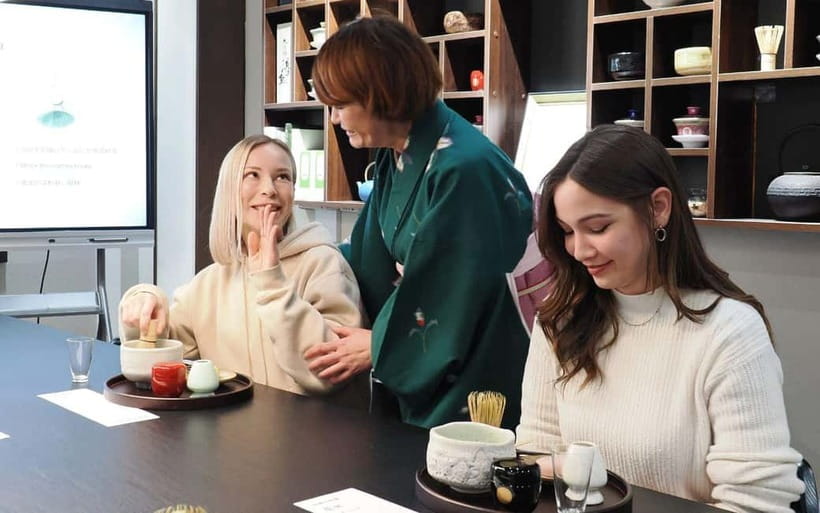
Many visitors picture a Japanese tea ceremony as a formal performance with strict silence and little room for questions. Ocharu takes a more relaxed approach. You still learn the etiquette and meaning behind the preparation, but the format leaves room for conversation, humor, and hands-on practice.
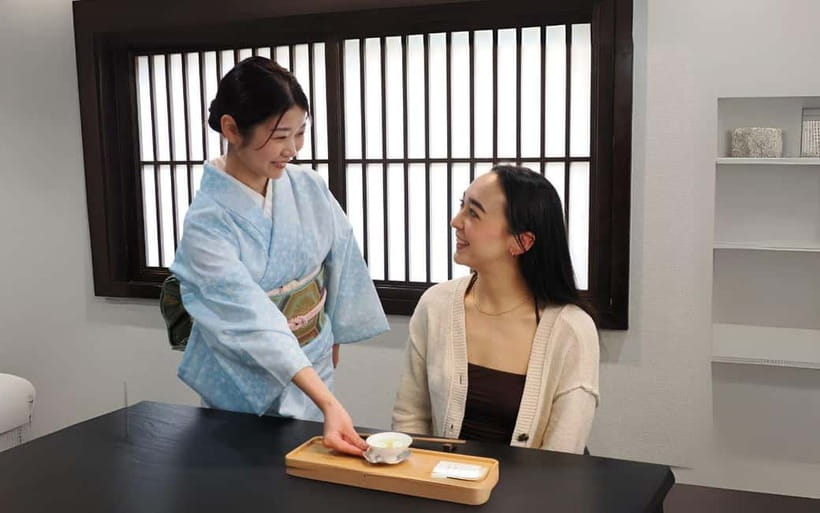
That balance is one of the experience’s strongest points. Guides such as Akiko and Shinichi have been praised for clear explanations, patience, and an easy manner. The English instruction is designed for first-time visitors, and the tea master explains each step without assuming you already know Japanese customs.
You will not spend the full hour making matcha. Instead, the session is built as a tasting journey. Each tea shows a different side of Japanese production and drinking culture, so you can compare flavor, aroma, texture, and brewing style rather than treating green tea as one single category.
The setting is the Ocharu Tea Ceremony Room, directly opposite Tokyo University. That location gives you a useful sightseeing anchor. You can combine the activity with a walk near the university, a visit to the zoo, or time around nearby Nezu. The tea room itself is clean and specially arranged for the session, with traditional tools presented for close viewing and use.
A few more Tokyo tours and experiences worth a look

Finding Ocharu across from Tokyo University
The meeting point is marked by a green OCHARU logo on the building. Arrive about five minutes early so you can check in without cutting into the one-hour session.
The sign may be higher than you expect. One useful tip is to stop at the tea shop on the ground floor if you are unsure. Some visitors have walked past the entrance more than once because they were looking at eye level. The activity is easy to combine with Tokyo University and the zoo, but allow extra time if you are approaching from an unfamiliar station.
The location is not presented as a traditional Kyoto-style teahouse or an old temple room. Its value is different. You get a purpose-built place where the tea tools, ingredients, and explanations are arranged for learning. That makes it a practical choice if you want cultural context without committing half a day to a formal ceremony.
The welcome cup: Shizuoka wakocha and a tea cake
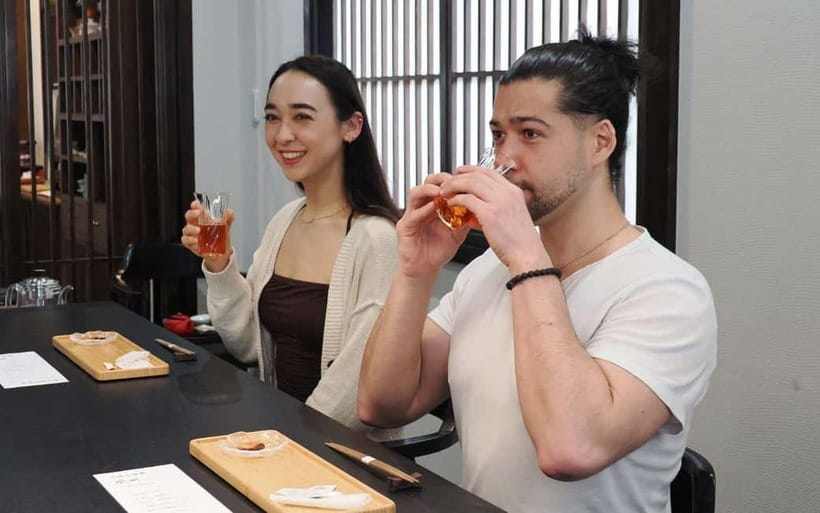
The session begins with wakocha, a Japanese black tea from Shizuoka. Japan is best known abroad for green tea, so this opening cup makes a useful first point: Japanese tea is not limited to sencha and matcha.
Wakocha has fruity and floral notes, and it is served with a traditional tea cake. The pairing gives you something familiar, black tea, alongside a distinctly Japanese flavor profile. You can pay attention to the difference between the tea’s fragrance and its finish, then see how the sweetness of the cake changes your impression of the drink.
This first tasting is also a gentle start for people who do not drink much green tea. If your companion is not a tea enthusiast, the variety of flavors and the informal teaching style may make the experience easier to enjoy than a ceremony focused only on matcha.
Gyokuro sencha, tea leaves, and seasonal wagashi
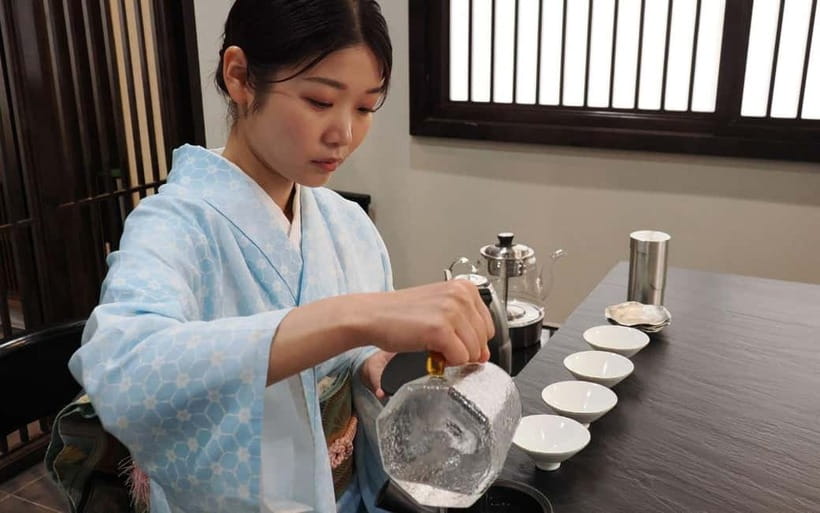
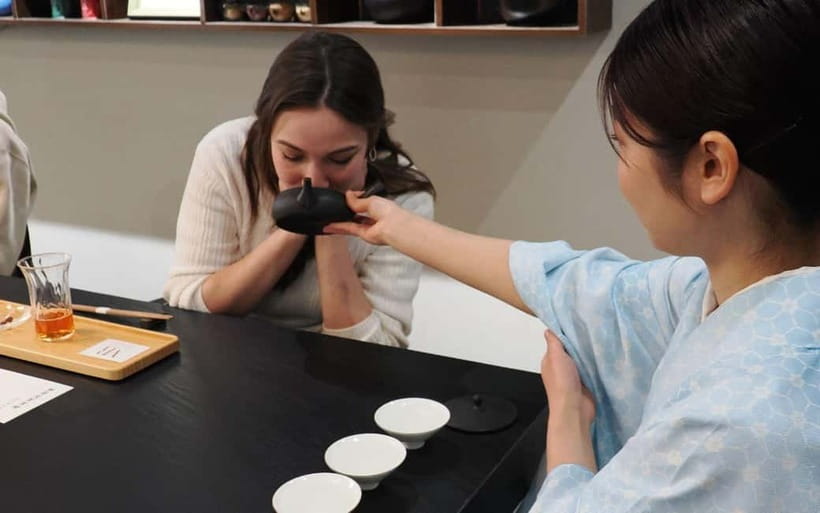
Next comes Gyokuro, one of Japan’s highest grades of sencha. The tea master brews it for you, explaining how it differs from more everyday green teas and why careful preparation matters.
Gyokuro is valued for its concentrated flavor and smooth, savory character. The brewing method is part of the lesson. Water temperature affects taste, and the tea master explains this rather than treating the process as a mysterious ritual. If you usually pour boiling water over every tea, this is a useful correction.
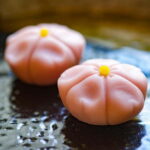
The tasting includes seasonal wagashi from Ougiya. These sweets are not just a snack on the side. Japanese tea service often pairs a sweet with a bitter or savory drink, and wagashi helps prepare your palate for tea. The appearance also changes with the season, adding a small visual detail to the hour.
A particularly unusual touch is the chance to taste the brewed tea leaves. That may sound odd at first, but it shows that the leaves still have flavor and texture after steeping. It is the sort of small detail that turns a standard tasting into a lesson you are likely to remember.
Making matcha with traditional tools

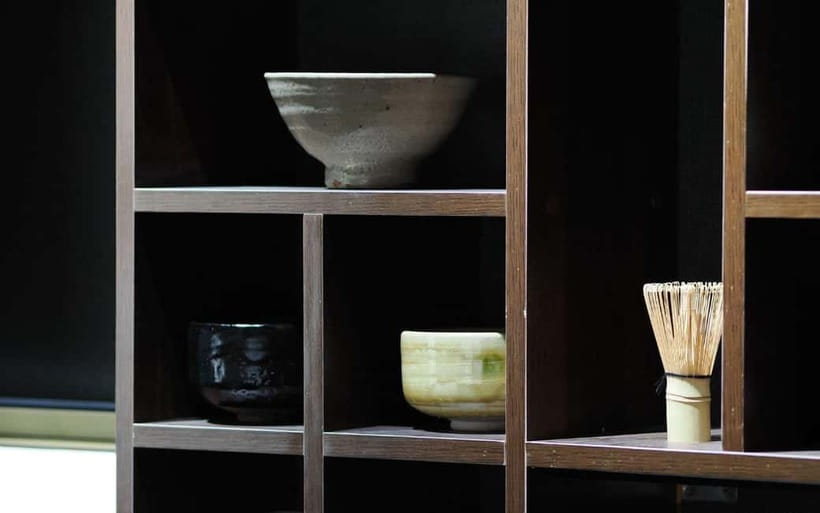
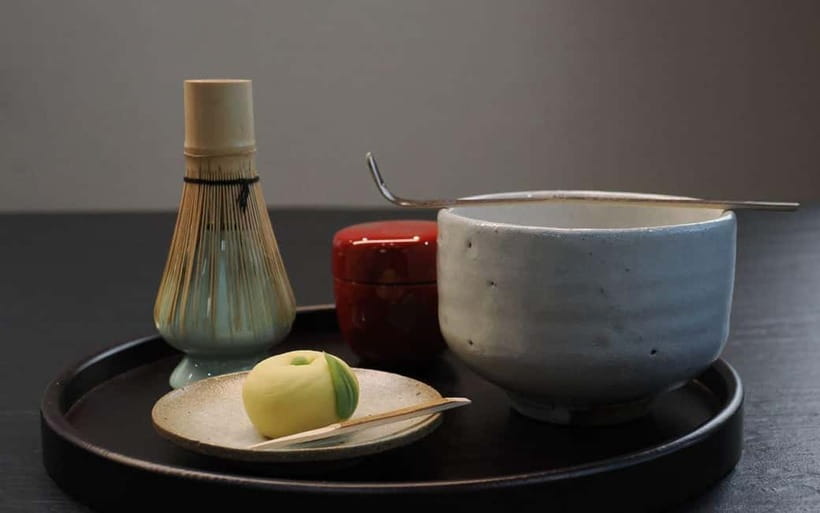
The hands-on matcha section is the heart of the activity. The tea master gives you a bowl, bamboo whisk, and the other tools needed to prepare the drink. You are shown how to handle them, add the matcha, and whisk it into a frothy cup.
The pace is patient, which matters if you have never used a chasen, the traditional bamboo whisk. You do not need perfect technique. The point is to understand the movement, the order of preparation, and the care built into the ritual.
You also learn how matcha should be presented and enjoyed. Small manners, such as how to receive the bowl and how to drink it, are explained in plain English. The ceremony remains approachable rather than stiff, so you can ask questions about tea, Japanese customs, language, or the city.
The matcha itself may taste more intense than the sweetened matcha drinks served in cafes. That is part of the lesson. You experience the tea as a prepared ingredient with a strong, grassy flavor, not as a dessert beverage.
The session also works well for families with older children. A 10-year-old was specifically included in one session, and the guide made an effort to involve the child. Still, the activity is primarily a seated cultural lesson, not a high-energy attraction, so children need to be comfortable listening and taking part carefully.


Genmaicha brings the hour to a gentle close
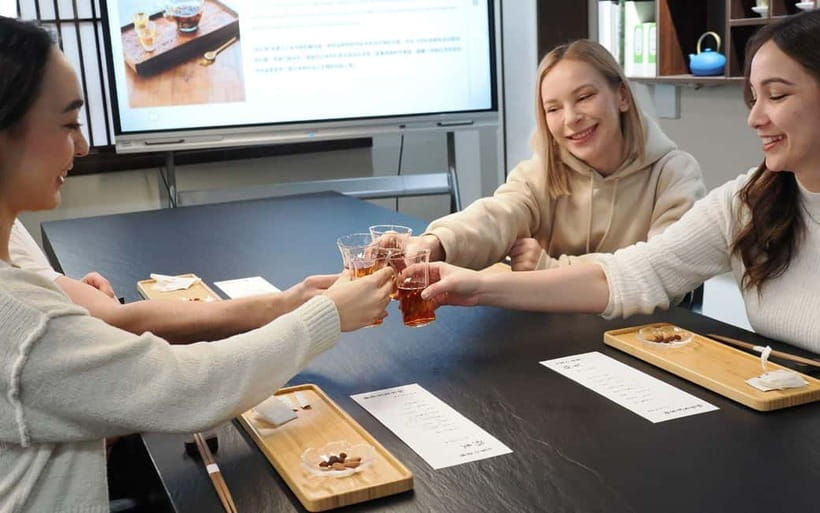
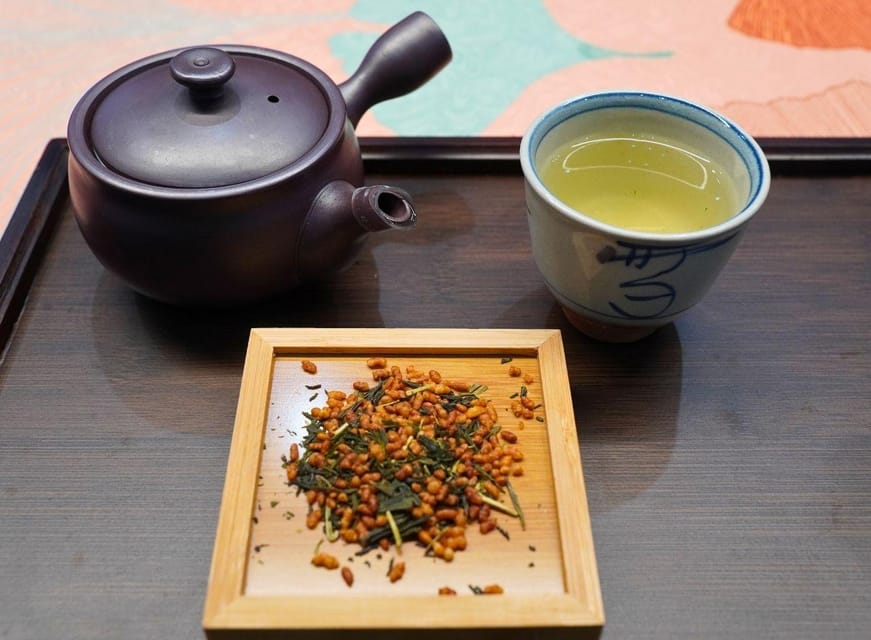
The final cup is genmaicha, a blend of sencha and roasted rice from Niigata Prefecture. Its toasted aroma and softer character provide a comfortable finish after the stronger flavors of Gyokuro and matcha.
This closing tea helps you see how Japanese tea fits different moods and occasions. Gyokuro feels refined and concentrated. Matcha is hands-on and ceremonial. Genmaicha is warmer and more casual, with the roasted rice adding a familiar, nutty note.
The sequence is well judged for a 60-minute activity. You get contrast without spending too long on any one preparation. Some sessions have lasted closer to 50 minutes, so do not plan a tightly timed train connection immediately afterward.
What you actually learn in one hour
The most useful teaching goes beyond naming the teas. You learn about the regions they come from, the difference between sencha and matcha, the role of water temperature, and the customs around serving and drinking.
The tea master also explains the place of tea in Japanese culture and the background of the ceremony. The approach is conversational, so the session can move from tea production to questions about daily life in Japan, local customs, or even favorite films. That relaxed conversation is a plus if you prefer a personal lesson to a silent demonstration.
English is the stated language. Most available feedback describes the instruction as clear and easy to follow, though one person found an accent somewhat challenging. If you have trouble catching a phrase, ask the guide to repeat it. The format allows questions, and the hosts are used to explaining unfamiliar terms.
This is not a full study of Japanese tea schools or a detailed historical lecture. It is a well-sized introduction. In one hour, you come away knowing what makes several teas different and why the preparation matters.
The certificate, photo, and tea shop
At the end, you receive a certificate of completion and a group photo. The certificate can be a fun memento, especially for children or anyone marking a first experience with Japanese tea. One person noted that their name was written in Japanese, adding a personal touch.
The photograph is taken as a group keepsake, so it is worth being ready before leaving. You can also keep some of the small utensils used during the session, depending on the arrangements of your particular class. One visitor was pleased to keep the chopsticks.
There is a small cafe downstairs where you can drink matcha and buy tea to take home. This is not part of the core activity, but it is useful if you want to extend the experience or choose a souvenir with a direct connection to what you tasted. Some visitors also noticed unusual drinks such as green tea beer in the shop area.
You should not feel obliged to buy anything. The tea shop is best treated as an optional extra, not a hidden cost. If you do want tea for home, tasting several varieties first gives you a better basis for choosing.
Is $38 a fair price?
At $38 per person, the activity is good value if you want more than a photo opportunity. You receive several tastings, seasonal wagashi, a guided matcha preparation, cultural explanation, access to the tea room, a certificate, and a group photo.
The price also compares favorably with the time commitment. You do not have to give up a full morning or afternoon. The one-hour format fits neatly between sightseeing stops, and the location opposite Tokyo University gives you an easy way to build a larger day around it.
The main limit is depth. If you already study Japanese tea ceremony or want a long, highly formal tea-school performance, this may feel introductory. You are paying for access, instruction, tasting, and participation rather than a rare ceremonial spectacle.
For a first visit to Japan, I think the value is strongest. You taste teas you may not encounter in an ordinary cafe, learn basic manners, and gain enough context to recognize better tea experiences later in your trip.
Who should book this experience?
I would recommend it to:
- First-time visitors who want a clear introduction to Japanese tea culture
- Tea drinkers who enjoy comparing flavor and brewing methods
- Couples looking for a calm activity between city sights
- Families with children old enough to listen and handle the utensils carefully
- Visitors staying near Tokyo University, the zoo, or the Nezu area
- Anyone who wants a short cultural activity rather than a long formal tour
It is less suitable if you need wheelchair access, dislike seated instruction, or want a ceremony conducted in complete silence. The relaxed style includes conversation, questions, and occasional humor.
The activity is also a good choice for someone who thinks they do not like tea. The four styles are different enough that you may find one you prefer. Even a non-tea-drinking companion can take part in the preparation and enjoy the sweets and cultural background.
Practical details before you reserve
The session costs $38 per person and lasts about one hour. English instruction is provided, and starting times vary, so check availability when booking.
You can cancel up to 24 hours before the activity for a full refund. A reserve-now, pay-later option is also available, which helps if your Tokyo schedule is still changing.
Arrive five minutes early. Look for the green OCHARU logo, but scan above street level if you do not see it right away. If you are lost, the tea shop on the ground floor can help confirm that you are in the right place.
The activity is not suitable for wheelchair users. No special tea equipment is required, since the needed tools are supplied in the tea room.
Should you book the Ocharu tea ceremony?
Yes, if you want a friendly, hands-on introduction rather than a formal performance. The strongest reasons are the range of teas, the chance to whisk your own matcha, the careful pairing with Ougiya wagashi, and the clear explanations about water, regions, and etiquette.
I would reserve it early in a Tokyo itinerary. The hour gives you a quiet change of pace after crowded shopping streets, while the nearby university and zoo make it easy to keep sightseeing afterward. Just allow a little time to find the high green sign and do not expect a long, traditional ceremony.
At $38, this is a sensible cultural splurge. You leave with new tea vocabulary, a better sense of Japanese manners, a certificate, and perhaps a packet of tea for home. For most first-time visitors, that is a useful and memorable hour.
FAQ
How long does the Tokyo tea ceremony last?
The advertised duration is one hour. Some sessions may finish closer to 50 minutes, so avoid scheduling an immediate connection afterward.
How much does the experience cost?
The price is $38 per person.
Where is the tea ceremony held?
It takes place in the Ocharu Tea Ceremony Room, in a building opposite Tokyo University in Tokyo, Japan.
How do I find the meeting point?
Look for the green OCHARU logo on the building. The sign may be high up, so look above eye level. The tea shop on the ground floor can also help you confirm the location.
What language is the activity conducted in?
The instructor provides the experience in English.
Which teas will I taste?
You will taste Shizuoka wakocha, Gyokuro sencha, matcha that you prepare yourself, and genmaicha made with sencha and roasted rice from Niigata Prefecture.
Is food included?
Yes. The experience includes a welcome tea cake and seasonal wagashi from Ougiya.
Do I get to make my own matcha?
Yes. The tea master guides you through matcha preparation using traditional tools and utensils.
What do I receive at the end?
You receive a certificate of completion and a group photo. Depending on the session arrangements, you may also keep small items such as chopsticks.
Is the activity wheelchair accessible?
No. The experience is not suitable for wheelchair users.
More Tea Ceremony & Matcha in Tokyo

More tours in Tokyo we've reviewed












Tea Ceremony & Matcha, compared.
 ★ 5.0Matcha Making Class in Tokyo with Authentic Japanese Sweets SetFrom $21
 ★ 5.0Kimono Tea Ceremony at Tokyo, Asakusa MaikoyaFrom $55
 ★ 4.5Dynamic Tokyo: Tokyo Tower, Tea Experience, Bay Cruise Day TourFrom $99
 ★ 4.9Tokyo: Matcha Making Experience with Mochi Sweets in AsakusaFrom $221 hour
 ★ 4.7Tokyo: Matcha and Kimono ExperienceFrom $57
 ★ 4.9Tokyo: Asakusa Kimono Dressing and Matcha ExperienceFrom $562 hours