Reviewed · CRAFT WORKSHOPS
Tokyo: Kintsugi Art Repair Workshop
Kintsugi turns a crack into the most noticeable part of a ceramic piece. In this 90-minute Tokyo workshop, you repair pottery with putty, sanding, adhesive, and gold-colored paint, then take home a handmade souvenir rather than another bought-in-a-shop trinket.
In This Article
- Key points
- Turning Broken Pottery Into Gold
- A Quiet Workshop at Nihonbashi Mutoh Main Store
- What Happens During the 90 Minutes
- Bringing Your Own Vessel
- The English Instruction and Small-Class Advantage
- Why the $125 Price Can Make Sense
- What You Take Home
- Who Will Enjoy This Activity Most
- Practical Details Before You Book
- Should You Book the Tokyo Kintsugi Workshop?
- FAQ
- How long does the kintsugi workshop last?
- How much does the workshop cost?
- Where does the workshop meet?
- Is the workshop available in English?
- Can I bring my own broken pottery?
- What age is this activity suitable for?
- Can I use the finished piece for food?
I like the small group of five and the calm, careful teaching. I also like the easy time commitment: you can reach the Nihonbashi meeting point in about 15 minutes by subway from Asakusa and still have most of your day free. The possible catch is that this is a shortened workshop, not the full months-long lacquer process used in traditional kintsugi.
Key points

- A hands-on repair: You work through the visible stages, from fitting pieces together to filling gaps, sanding, and painting the seams.
- English support: The workshop includes English instruction or interpretation, with Hijiri singled out for patient, clear teaching.
- A very small class: Groups are limited to five, and some sessions may feel almost private.
- A useful Tokyo souvenir: You leave with a ceramic piece you repaired yourself.
- Strict time limits: The session lasts 90 minutes and cannot be extended for unfinished work.
- Best for older teens and adults: Participants must be at least 13, and minors need a guardian.
Turning Broken Pottery Into Gold

Kintsugi is the Japanese art of repairing broken or chipped pottery with lacquer and highlighting the repaired seams with gold. The point is not to hide damage. The crack becomes part of the object’s visible story.
That idea gives this workshop more weight than a standard craft class. You are not simply painting a bowl or decorating a souvenir. You are helping restore a ceramic object and learning why a repaired item can be prized for its flaws.
The workshop uses a practical, shortened version of the process. Traditional kintsugi can take about a month, while this class gives you a finished piece in roughly an hour to an hour and a half. That makes it workable during a Tokyo holiday, but it also means you should not expect to master every traditional material or curing stage in one sitting.
The end result is primarily decorative. You can use the piece to hold dry food, but it is not intended for wet food or heavy daily use. Think of it as a small piece of art with a function, rather than a newly restored dinner plate.
A few more Tokyo tours and experiences worth a look
A Quiet Workshop at Nihonbashi Mutoh Main Store
The meeting point is Nihonbashi Mutoh Main Store, at 1-8-13 Nihonbashihoncho in Chuo City. The workshop takes place in a shop setting that also sells kintsugi works, ceramics, lacquerware, tenugui, bento boxes, chopstick sets, and chopstick rests.
That shop is part of the appeal. You get a look at finished Japanese craft before or after your own work, and you may find a small gift to take home. Several participants particularly enjoyed the store itself, which adds a bit of browsing to what would otherwise be a tightly focused class.
The setting is described as quiet and peaceful. That matters here. Kintsugi involves small pieces, fine lines, and steady hands. You will get more from it in a calm room than in a noisy, crowded activity center.
Arrive at least five minutes early. The workshop begins promptly, and the end time does not move if you arrive late or work slowly. Since the meeting point is in Nihonbashi, allow extra time to navigate the station and nearby streets, especially if you are coming from Asakusa with a full day already planned.
What Happens During the 90 Minutes

The exact order can vary with the object and the instructor, but the class introduces the basic repair sequence. You choose from available ceramic pieces or, if arranged for the workshop, work on a suitable item you bring yourself.
For a broken piece, the first job is to fit the fragments together. One participant described the process as taping the broken puzzle back into place before applying the proper adhesive. This stage rewards patience. If the pieces do not line up, later steps will not look right.
Small gaps or chips are filled with putty. You may also replace missing sections, depending on the size of the damaged area and the time available. The instructor guides you through how much material to use, giving you supplies gradually and replenishing them when needed rather than placing a large amount in front of you.
After the filler sets enough for the class, you sand the surface to make it smoother. This is not the flashy part of kintsugi, but it helps determine how clean the final seam will look. The workshop gives you a chance to practice the actual repair work instead of simply applying gold to a finished crack.
The final step is painting the seams with metallic color. This is where the repair becomes visible and decorative. You will probably notice that the gold does not make every mistake disappear. Instead, it gives the piece a deliberate, handmade character.
The class is guided closely. In some sessions, one instructor demonstrates in Japanese while another provides English interpretation. Hijiri is specifically praised for being patient, kind, and clear, and other instructors have also been described as attentive and encouraging.
Some classes may move faster than others. One participant finished in about 35 minutes and felt the session offered more of a quick introduction than a detailed lesson in traditional kintsugi. That is a useful warning: the advertised length is up to 90 minutes, not a promise that every class will use every minute.
Bringing Your Own Vessel

You may be able to bring a cherished ceramic vessel for repair, which gives the activity a stronger personal connection. Restoring a cup, bowl, or small dish from home can make the finished object more meaningful than working on a supplied piece.
There are firm limits. The item must be ceramic, no larger than 15 centimeters in diameter and 15 centimeters high. It should have one or two cracks. Chipped or cracked mug handles cannot be repaired, and larger or more complicated damage may not be finished during the session.
If you bring an item, choose something manageable. A small bowl with a clean break is a better candidate than a large vessel with several missing sections. The class cannot be extended, and a piece requiring extensive reconstruction may need more time than the workshop allows.
You should also understand the difference between a workshop repair and a museum-quality restoration. The class teaches the visible process and gives you a finished decorative object. It does not promise a fully cured, food-safe vessel for everyday use.
If you prefer not to risk a favorite possession, use one of the provided pieces. You still learn the steps and leave with something you made yourself. For most people on a short holiday, this is the simpler choice.
The English Instruction and Small-Class Advantage

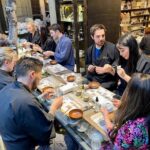
The group limit is five people. That is small enough for the instructor to watch your technique and help when a seam, chip, or painted line goes wrong. It also keeps the room quieter than a large workshop.
Some sessions have only two participants, creating a near-private class. Others have three or five people. The class can include a mix of first-time participants and professionals working nearby, which gives you a chance to see more advanced pottery repair without needing to take a professional course.
English support is available. The format may include an English-speaking instructor or an English interpreter working alongside a Japanese instructor. The language arrangement is part of the charm, but it may not feel like a long English lecture about Japanese art.
If you want a detailed academic talk on the philosophy and history of kintsugi, prepare before you arrive. The workshop focuses on doing the work. You receive explanations during the repair, but most of your time goes toward handling the material and following the steps.
That balance suits me. Kintsugi makes more sense when you see the technique in your own hands. Still, anyone booking mainly for a long cultural presentation should adjust expectations.
A few more Tokyo tours and experiences worth a look




Why the $125 Price Can Make Sense

At $125 per person, this is not a cheap craft stop. The price needs to be judged against what it includes: a professional instructor, all workshop materials, English support, a small group, and a finished souvenir.
You are also paying for access to a specialized Japanese craft in central Tokyo. Buying a ceramic bowl is easy. Learning how to repair one, under guidance, and taking home the result is a different kind of purchase.
The value is strongest if you care about the process. You get to practice fitting broken pieces, filling gaps, sanding, and applying metallic paint. If you only want a quick souvenir, the price may feel high compared with buying a finished item in the shop.
The small class improves the value. You are not left to copy a demonstration from the back of a crowded room. You can ask for help, receive correction, and work at a pace that suits your hands, within the fixed end time.
The shop also gives you a chance to browse Japanese craft goods. That does not make the class cheaper, but it adds context and may save you a separate stop if you want small gifts such as tenugui or tableware.
What You Take Home

You leave with the piece repaired during the class. The exact shape and appearance depend on the object, the crack, and your own work. That variation is a strength. No two finished pieces should look exactly alike.
The souvenir is more personal than a factory-made item because you take part in each stage. You may see a slightly uneven gold line or a patch of filler that is not perfectly smooth. Those marks are part of the learning process, and they fit the spirit of kintsugi better than a flawless imitation would.
Some repairs need time to cure. If your piece is not ready to handle fully at the end, staff can box it for protection. One participant noted that a project needed about a week to cure and was packed carefully for the journey home.
Plan how you will carry it. The workshop provides the materials and souvenir, but you are responsible for getting the finished ceramic safely back to your accommodation and then home. Keep it protected from pressure inside your luggage.
Because the piece is mainly decorative, display it somewhere you can appreciate the repair. It can hold dry food, but do not treat it as a replacement for a new, fully practical kitchen vessel.
Who Will Enjoy This Activity Most

This workshop suits you if you want a quieter cultural activity between temples, shopping, and major sights. The 90-minute format fits neatly into a Tokyo itinerary, and the central Nihonbashi location makes it easier to combine with other stops in the city.
It is especially good for couples, friends, and solo participants who like making things with their hands. The small group gives the session an intimate feel without requiring a full private booking.
It also works well for visitors looking for a meaningful souvenir. You do not simply purchase a piece of Japanese art. You create a repaired object and learn a technique that you can remember long after your trip.
The minimum age is 13. Minors must attend with a guardian, so this is not a children’s craft activity. Younger children may also find the fine repair work and fixed schedule difficult, even apart from the age rule.
You should skip it if you want a long, technical course in traditional lacquer work. The workshop gives you an approachable introduction, not a month-long apprenticeship. You should also think twice about bringing a precious family heirloom unless its size and damage clearly fit the rules.
Practical Details Before You Book

Wear comfortable clothes. The activity is hands-on, and you will be working at a table through several small stages.
All materials are provided, so you do not need to bring tools or supplies. If you bring your own vessel, confirm that it meets the ceramic, size, crack, and handle restrictions.
The workshop is limited to participants age 13 and older. English is available, and the group size is capped at five people.
Cancellation is free up to three days before the scheduled start for a full refund. Check the available start times when booking, since the 90-minute session runs at set times and begins promptly.
The product image is illustrative, so the piece available during your class may differ from what you see online. That is normal for a hands-on craft activity, where the available ceramic shapes and finished patterns can vary.
Should You Book the Tokyo Kintsugi Workshop?
Book it if you value patient instruction, a small class, and a souvenir with a story. The strongest parts are the close guidance, the peaceful setting, the chance to work with real repair steps, and the compact schedule.
At $125, it is best viewed as a specialist cultural lesson rather than a casual craft project. You are paying for instruction and access to a traditional Japanese technique, not just the final bowl or ceramic piece.
For the best result, arrive early, choose a simple object, and expect a shortened modern workshop rather than the full traditional process. If that sounds right, this is a thoughtful way to spend 90 minutes in Tokyo and return home with something only you could have made.
FAQ
How long does the kintsugi workshop last?
The workshop lasts 90 minutes. The activity begins at the scheduled time and cannot be extended for participants who have not finished.
How much does the workshop cost?
The price is $125 per person. The fee includes the professional instructor, experience costs, materials, and a souvenir piece.
Where does the workshop meet?
The meeting point is Nihonbashi Mutoh Main Store, in the Nihonbashi Mutoh Main Store building at 1-8-13 Nihonbashihoncho, Chuo City, Tokyo, postal code 1030023.
Is the workshop available in English?
Yes. English instruction or interpretation is provided. The class may include a Japanese-speaking instructor working with an English-speaking instructor or interpreter.
Can I bring my own broken pottery?
You may bring your own ceramic vessel if it fits the workshop requirements. It can be up to 15 centimeters in diameter and 15 centimeters high, with one or two cracks. Mug handles with chips or cracks cannot be repaired.
What age is this activity suitable for?
The workshop is for participants age 13 and older. Minors must be accompanied by a guardian.
Can I use the finished piece for food?
The completed piece can hold dry food, but it is mainly intended for decoration. It should not be treated as a fully practical everyday food vessel.
More Workshops & Classes in Tokyo
More Craft Workshops in Tokyo

More tours in Tokyo we've reviewed












Craft Workshops, compared.
 ★ 4.8Chopstick Making Workshop in GinzaFrom $251 hour
 ★ 5.0Kintsugi Experience: Art of Golden Joinery in TokyoFrom $59
Tokyo: Shinjuku Chopstick Making ClassFrom $121 hour
★ 5.0Kintsugi Experience: Art of Golden Joinery in TokyoFrom $59
Tokyo: Shinjuku Chopstick Making ClassFrom $121 hour
 ★ 5.0Private Craft Your Own Ring Handmade Experience in Asakusa, TokyoFrom $21
 ★ 5.0Authentic Pure Gold Kintsugi Workshop with Master Taku in TokyoFrom $142
 ★ 5.0Tokyo: Calligraphy on Kanji Fan & Scroll with DrinkFrom $531h 20m


![[1 Group Only] Tokyo Shibuya Food Tour for Family - Center-gai: food, conversation, and a local view](https://tokyoezine.com/wp-content/uploads/2026/08/1-group-only-tokyo-shibuya-food-tour-for-family.jpg)