Reviewed · SUMO EXPERIENCES
Tokyo – Grand Sumo Tournament
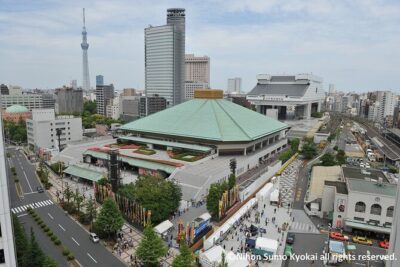
The biggest draw here is simple: you get inside Ryogoku Kokugikan for a real Grand Sumo Tournament, where the crowd reacts with the force of a major league sports audience. Sumo is not just two athletes pushing in a ring. It carries formal movements, religious meaning, strict ritual, and a powerful sense of national identity.
In This Article
- Key points before you book
- What you are really buying at Ryogoku Kokugikan
- Why sumo feels different from an ordinary match
- Finding the meeting point at 10:00 am
- Inside the tournament: what makes it worthwhile
- The difference between tournament day and a culture program
- Is $565 a fair price?
- What the mixed experiences tell you
- Who should book this experience?
- Practical details worth keeping in mind
- Should you book it?
- FAQ
- Where does the Tokyo sumo experience take place?
- What is the meeting point?
- What time does the experience start?
- How long does the activity last?
- Is admission included?
- Is transportation included?
- Is a tour guide included?
- Which dates are available in Tokyo?
I like the guaranteed admission and the chance to see Japan’s most famous traditional sport in its home setting. I also like the choice of upgraded seats, since your view matters a great deal in a sport where a match can end in seconds.
The main caution is value. At $565 per person, this is expensive for a roughly two-hour, ticket-only experience with no guide or transportation. You should also read the details carefully, since some related sumo programs include cultural walks or demonstrations, while this booking promises tournament admission only.
Key points before you book
- Tokyo dates are January 11 to 25 and May 10 to 24, 2026, with the tournament held at Ryogoku Kokugikan.
- Admission is included, but transportation and a tour guide are not.
- The event begins at 10:00 am, with the meeting point at Ryogoku Edo NOREN near Ryogoku Station.
- A paper ticket is provided, so this is not a guided entry with an electronic pass.
- Upgraded seats are available for an extra fee, a useful option if you want a closer view.
- A full tournament is a very different product from a sumo culture walk, so check exactly what you are buying.
What you are really buying at Ryogoku Kokugikan
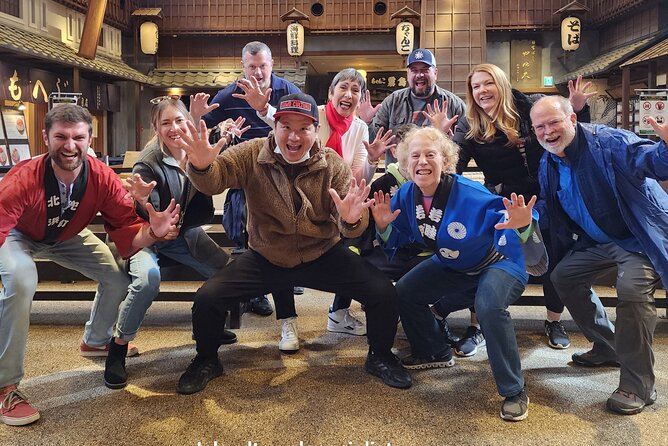
This experience is best understood as a reserved ticket to a live sporting event, not as a traditional guided tour. You meet at Ryogoku Edo NOREN at 10:00 am, receive or use your paper ticket, and attend the tournament at the nearby Kokugikan arena. The activity is listed as ending back at the meeting point, but the supplied details do not describe a guided return or organized transportation.
That distinction matters. The description uses words such as learn, culture, and immerse, but the practical details say ticket only and no tour guide. You should not expect a guide to explain each bout from your seat, lead you through the building, or take you to a training stable.
What you do receive is access to an event that can be difficult to arrange on your own. Tournament tickets are popular, and this booking is made well in advance on average, around 38 days before the date. For many people, that convenience is the reason to consider it.
The tournament dates supplied for Tokyo are January 11 to 25, 2026, and May 10 to 24, 2026. The March dates, March 8 to 22, 2026, are in Osaka rather than Tokyo. Check the city and date with care before paying.
A few more Tokyo tours and experiences worth a look
Why sumo feels different from an ordinary match
A sumo bout is short, but the time around it is full of ceremony. The wrestlers enter the ring, perform formal gestures, and prepare with movements that can seem slow when compared with the sudden force of the bout itself.
The sport has links to both Shinto and Buddhist practice. Salt, gestures, the raised ring, and the formal conduct around the match give the event a ritual quality. You are watching competition, but you are also seeing a public expression of Japanese custom.
The crowd is part of the experience. Sumo spectators cheer, react loudly, and follow the wrestlers with real loyalty. The atmosphere can feel more like a major professional sports game than a quiet museum visit. If you enjoy shared crowd energy, this is a strong reason to go.
If you expect constant action, adjust your expectations. The bouts themselves may be over quickly. Much of the pleasure comes from the buildup, the ceremony, the changing rhythm of the program, and the sight of the wrestlers preparing to face one another.
Finding the meeting point at 10:00 am
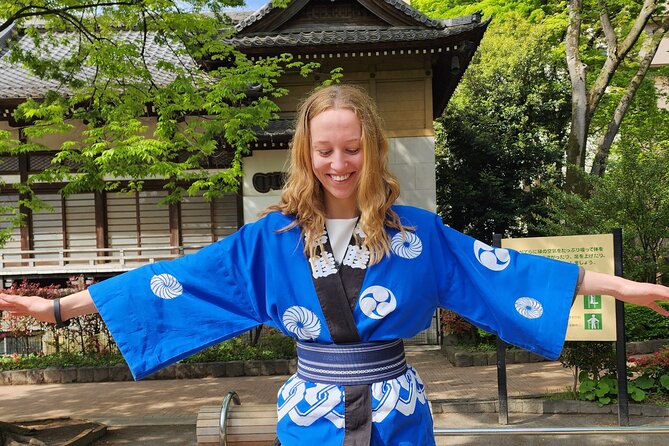
The meeting point is Ryogoku Edo NOREN, at 1-chome 3-20 Yokoami, Sumida City, Tokyo 130-0015. It is near public transportation, which makes the area practical to reach, but transportation is not included in the price.
Arrive with enough time to find the meeting point and sort out your paper ticket. The supplied start time is 10:00 am, and the experience lasts about two hours. Since there is no guide listed for this event, you should not count on an orientation once you arrive.
The meeting point is a useful choice because Ryogoku is Tokyo’s sumo district. Even before entering the arena, you are in an area closely tied to the sport. You can use the neighborhood to build a fuller morning around the match, but the organized experience itself does not promise a restaurant visit, museum tour, temple stop, or district walk.
That is one place where the details need careful reading. Some sumo activities connected with this provider have included hosts such as Ken, Shin, or Kevin, along with temple visits, training demonstrations, and explanations of sumo culture. Those formats are not the same as the ticket-only tournament experience described here.
Inside the tournament: what makes it worthwhile
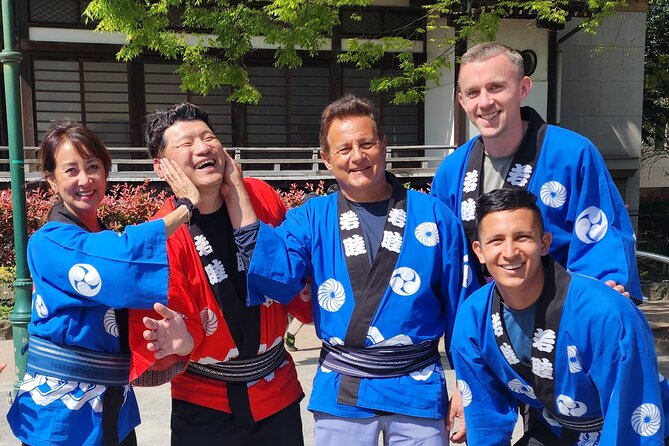
The strongest part of this booking is access to the real event. You are not watching a staged demonstration or a short lesson. You are seeing professional sumo in the arena, surrounded by people who understand the sport and care about its results.
You may find the spectacle surprisingly formal. Wrestlers do not simply walk in, fight, and leave. Their movements, preparation, and presence in the ring are part of the appeal. Even if you know little about rankings or technique, you can follow the basic drama: balance, timing, force, and the effort to push an opponent beyond the ring.
I would spend a little time learning the basic rules before you go. The details supplied for this booking do not include an explanation session, so a small amount of preparation will help. Knowing that a bout can be won by forcing an opponent out or making any part of the body other than the feet touch the ground gives you a better eye for the action.
Seat location matters. The option to upgrade is worth considering if the price fits your budget, especially if you want to see footwork and ring movements clearly. At a large arena, a cheaper seat may still give you the atmosphere, but a distant view can make the wrestlers seem smaller and the technical details harder to follow.
The difference between tournament day and a culture program
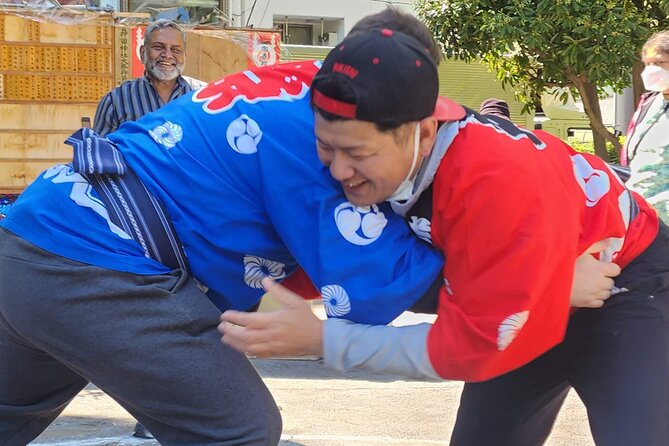
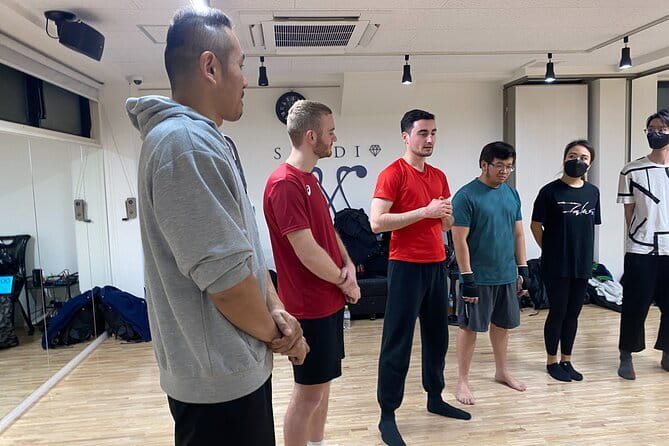
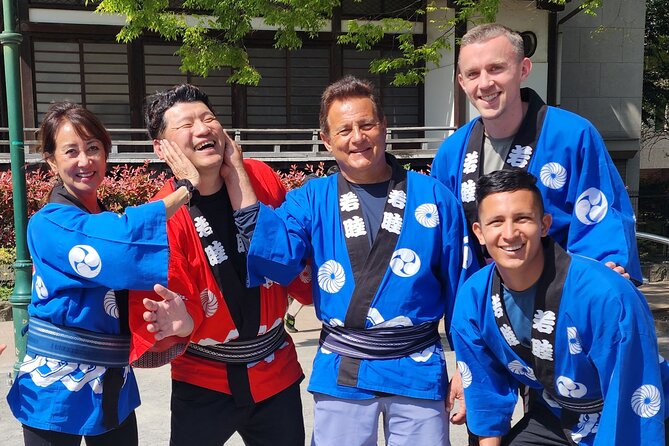
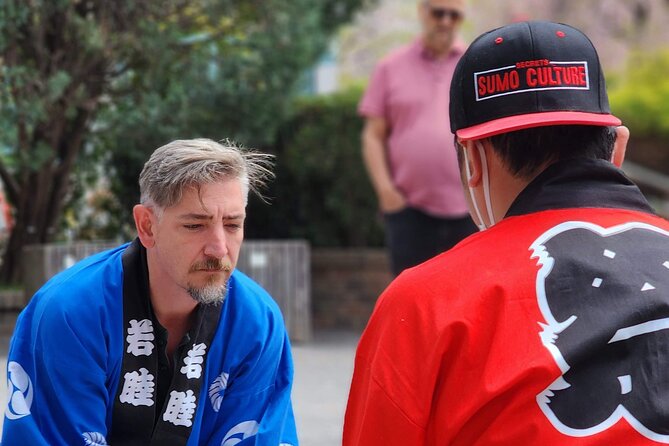
Several accounts connected to sumo experiences in the same area describe a much more hands-on format. Ken and Shin have hosted sessions covering basic sumo moves, the sport’s religious links, and personal stories. Some sessions have included a professional sumo athlete, practice in a ring used for professional training, photos in sumo clothing, and the chance for a participant to push against an instructor.
Another format included a walk through the Ryogoku district, a Buddhist temple, a Shinto shrine, a Japanese garden, a local sports center, the Kokugikan, and an udon lunch. One account described seeing about eight sumo wrestlers training for around half an hour, followed by a photo opportunity.
Those details may sound appealing, but you should not assume they are part of this booking. The current event information specifically says admission ticket, paper ticket, no guide, and no transportation. The ticket gets you to the tournament. It does not promise access to a stable, a training session, a temple, a museum tour, lunch, or a wrestling lesson.
This is also important because sumo training schedules can change. Training sessions are not the same as tournament days, and access to stables is restricted. A ticket to a public tournament should not be treated as a promise of backstage access.


Is $565 a fair price?
The price is $565 per person, which places this firmly in the splurge category. The cost can make sense if attending a Grand Sumo Tournament is one of your main reasons for visiting Japan and you value having admission arranged before you arrive.
It makes less sense if you are mainly seeking an explanation of sumo culture. There is no guide included in the stated format, and the activity is only about two hours. You are paying for access and convenience, not for a long lesson or a full-day neighborhood experience.
I would compare the price with your other Tokyo plans. If you are already spending heavily on special events, ask if you need an upgraded seat. If this is your one major traditional Japanese sports experience, paying more for a better view may be worthwhile.
The price also requires clear expectations. A costly ticket can still be good value when it delivers the exact event you want. It becomes poor value when you expect a guided cultural program and receive only admission. Here, the safest approach is to purchase it as a premium tournament ticket, not as a guided sumo introduction.
What the mixed experiences tell you
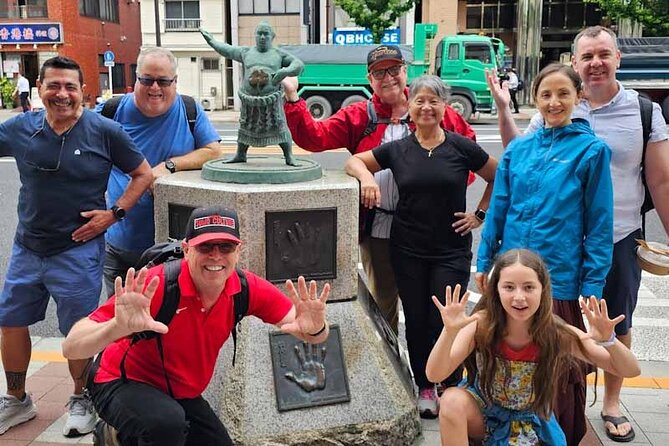
The overall rating is 4.6 from 76 ratings, with many strong accounts praising the warmth of Ken and Shin, the cultural explanations, and the chance to meet a real sumo athlete. Families especially appreciated the interactive side of the culture programs, including basic moves and carefully supervised physical demonstrations.
Some people found the personal stories and explanations about Buddhist and Shinto customs memorable. Others valued help with finding a good view or suggestions for lunch in the Ryogoku area. Those are useful signs if you are considering one of the provider’s guided sumo formats.
But there are also serious warnings about mismatched expectations. One account expected to see wrestlers training inside a stable and instead saw a single athlete demonstrate outdoors. A noise complaint ended that demonstration early. Another account described schedule changes, missed training, and a program that felt more cultural than athletic.
The practical lesson is clear: confirm the exact format before booking. For this particular experience, the supplied information supports a tournament ticket in Tokyo or Osaka. It does not support a promise of stable access or training.
Who should book this experience?
You should consider it if you love live sports, want to see sumo in Japan, and prefer having a popular event arranged in advance. It also suits you if you can enjoy a match without needing constant translation or a host beside you.
Families and first-time visitors may like the simple structure. You meet at one place, attend the event, and finish in roughly two hours. Most people can participate, and service animals are allowed. The maximum group size is listed as 20, although the ticket-only format means you may have little direct contact with the group.
It is less suitable if you want a long cultural lesson, a training visit, or personal instruction. You should also think twice if the $565 price would make you resent a short event, even if the atmosphere is excellent.
Practical details worth keeping in mind
Confirmation is issued at booking. The experience is near public transportation, but you must arrange your own route to the meeting point and back. No transportation is included.
The ticket is a paper ticket. Keep it safe and confirm how and where it will be provided, since the supplied details do not explain the handoff process.
The activity is listed as non-refundable and unchangeable for any reason. That is a major financial consideration at this price, so check your dates carefully before you commit.
The 2026 Tokyo dates are January 11 to 25 and May 10 to 24. Osaka has the March 8 to 22 tournament dates. Do not assume that a Tokyo booking can be moved to Osaka or to another tournament period.
Should you book it?
Book this if your goal is a live Grand Sumo Tournament in Tokyo, and you are comfortable paying a high price for prearranged admission, a paper ticket, and the excitement of the arena.
Do not book it expecting Ken, Shin, or another guide to teach you sumo, take you to a stable, arrange transportation, or lead you to a temple. Those features belong to other formats associated with sumo culture, not to the ticket-only details provided here.
For a sumo fan, the event itself may be unforgettable. For everyone else, I would first decide how much you value the live atmosphere and then consider the seat upgrade carefully. At $565, clarity is more important than hype.
FAQ
Where does the Tokyo sumo experience take place?
The tournament takes place at Ryogoku Kokugikan in Tokyo.
What is the meeting point?
The meeting point is Ryogoku Edo NOREN, 1-chōme 3-20 Yokoami, Sumida City, Tokyo 130-0015.
What time does the experience start?
The listed start time is 10:00 am.
How long does the activity last?
The activity lasts approximately two hours.
Is admission included?
Yes. Admission to the tournament is included.
Is transportation included?
No. Transportation is not included, so you must make your own way to and from the meeting point.
Is a tour guide included?
No. This is listed as a ticket-only event with no tour guide.
Which dates are available in Tokyo?
The Tokyo tournament dates are January 11 to 25, 2026, and May 10 to 24, 2026. The March 8 to 22, 2026 dates are in Osaka.
More Sumo Experiences in Tokyo

More tours in Tokyo we've reviewed












Sumo Experiences, compared.
 ★ 4.8Tokyo: Sumo Show Experience with Chicken Hot Pot and a PhotoFrom $1032 hours
 ★ 4.8Tokyo: Sumo Show and Dining ExperienceFrom $7990 minutes - 2 hours
 ★ 5.0the SUMO showFrom $89
 ★ 5.0Tokyo Sumo Entertainment Show with Chicken Hot Pot and PhotoFrom $106
 ★ 4.6Tokyo: Sumo Tournament Tour with Chair Seat TicketsFrom $141
 ★ 5.0Tokyo Grand Sumo Tournament Viewing Tour with TicketsFrom $124