Reviewed · SUSHI MAKING CLASSES
Master the art of Sushi : Toyosu Market Tour & Tuna Cutting
The main event is a live tuna-cutting session with a sushi chef. You see how a large fish is broken down, compare fatty, middle, and lean cuts, then use the tuna to make nigiri for lunch. That hands-on finish gives this Tokyo food tour more substance than a simple market walk.
In This Article
- Key points at a glance
- Why the tuna cutting makes this tour different
- Starting at Toyosu Market at 7 a.m.
- Tsukiji Jogai Market for eating and shopping
- The move to Azabujuban takes planning
- Learning the tuna cuts before making nigiri
- What the $297.23 price really covers
- Who will get the most from this morning
- Timing, tickets, and cancellation details
- Should you book the Toyosu tuna tour?
- FAQ
- Where does the tour start?
- What time does the tour begin?
- Where does the tour end?
- How long does the experience last?
- Is lunch included?
- Is a guide included?
- Are subway and bus fares included?
- How many people can join?
- Can I buy fish or sushi during the market visits?
- What is the cancellation policy?
I like the chance to see both Toyosu and Tsukiji, since each market shows a different side of Tokyo’s seafood trade. I also like the small maximum group of six, plus the chance to buy and sample sushi and fish along the way.
The main caution is the route. The tour uses public transportation between markets and Azabujuban, and one participant found the travel time longer than expected, especially in hot weather. Subway and bus fares are not included, so budget a little extra money and energy.
Key points at a glance

- A 3-kilogram tuna becomes lunch: Watch the chef separate fatty, middle, and lean sections, then taste and prepare them in different ways.
- Toyosu comes first at 7 a.m.: You visit the wholesale market early, when the seafood trade is the focus.
- Tsukiji adds a more casual food stop: Browse small shops, eat as you walk, and compare old Tsukiji with the newer Toyosu complex.
- The group is limited to six people: That should make it easier to see the demonstration and ask questions.
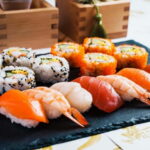
- Lunch is included: The meal features tuna and sushi made during the experience.
- Transportation costs are extra: You travel by subway or bus, with the tour ending in Azabujuban.
Why the tuna cutting makes this tour different

Tokyo has no shortage of sushi classes and food walks. This one earns its higher price by putting the fish itself at center stage.
Instead of only eating finished sushi, you watch a chef handle a whole tuna and explain the parts that matter to sushi lovers. The session covers fish selection, freshness, and sushi-grade standards, topics that can otherwise remain vague when you order at a restaurant.
The scale of the fish matters, too. The demonstration involves roughly three kilograms of tuna. You can compare fatty, middle, and lean sections, then try different ways of eating them before making nigiri. That turns lunch into a lesson in texture and flavor, not just a quick meal.
I would book this for someone who already likes sushi and wants to understand it better. It also works for a curious first-timer, but the strongest value comes if you enjoy asking why one cut costs more than another or how freshness affects the final bite.
The guide may be Amy, whose friendly and personable style was singled out in the feedback provided for the tour. Since guides can vary, treat the name as a useful possibility rather than a promise. The important point is the format: an English-speaking guide accompanies you from the market visits to the restaurant session.
A few more Tokyo tours and experiences worth a look
Starting at Toyosu Market at 7 a.m.
Your meeting point is Shijo-mae Station, at 6 Chome-3 Toyosu in Koto City. The early start is not decorative. Toyosu is Tokyo’s main wholesale fish market, and beginning at 7 a.m. places you there during the working part of the morning.
With the guide, you visit the wholesaler market and can purchase fish. This is the place to focus on the seafood trade itself: how fish is presented, what buyers look for, and how a wholesale market differs from a restaurant or retail food hall.
Admission to this part is free, but your own purchases are extra. The description does not promise a fixed tasting menu at Toyosu, so think of shopping and sampling here as an opportunity rather than a guaranteed set of dishes.
You should arrive ready to walk and pay attention. A market visit can feel brief if you expect a long guided lecture, since the listed time at Toyosu is about 45 minutes. Its value comes from the setting and the guide’s explanations, not from a large number of formal activities.
Toyosu replaced Tsukiji as Tokyo’s main wholesale market, so it represents the city’s modern seafood operation. The later visit to Tsukiji helps put that change in context. You see the newer wholesale center first, then move to the older market district for a more informal food stop.
Tsukiji Jogai Market for eating and shopping
The second stop is Tsukiji Jogai Market, the outer market area associated with Tsukiji. You visit different shops, eat while walking, and have time to browse.
This section feels less like a behind-the-scenes wholesale tour and more like a street-food outing. You might find small portions, ingredients, prepared foods, and sushi-related shops, but the exact purchases depend on what you choose. Bring some spending money if you want to buy food beyond what is included.
The guide helps you compare Tsukiji with Toyosu. That comparison is one of the smarter features of the experience. Toyosu is the successor to Tsukiji’s wholesale operation, while Tsukiji Jogai continues as a public-facing market district with shops and food.
The scheduled time is about one hour, including travel time. That last detail matters. You are not getting a full hour of eating and shopping with no interruption. The stop has to cover transportation as well as the market itself.
I would keep your expectations practical. This is not a quiet sit-down meal, and it is not a private shopping appointment. It is a chance to sample the atmosphere, see how the two markets differ, and pick up a bite before the main class.
The move to Azabujuban takes planning

The final stop is in Azabujuban, at 3-chome 3-4, where you work with a sushi chef in a Japanese restaurant. The tour ends here.
Public transportation is used during the experience, and subway or bus fares are not included. One important piece of practical feedback is that the movement between destinations can take more than an hour in total. That may feel tiring, particularly during hot weather.
The published duration is about four hours, but the three listed stops add up to roughly three hours and 15 minutes before allowing for all movement. In real terms, your morning includes market time, food stops, transfers, and the sushi session. Leave room in your day rather than booking a tight appointment immediately afterward.
I would wear comfortable shoes, carry water, and keep your schedule flexible. Those are simple steps, but they matter more here than on a tour that stays in one neighborhood.
The route also means you see several parts of Tokyo in one morning. If you prefer a slow visit with plenty of time at one market, the transfers may frustrate you. If you like connecting different food districts and do not mind public transportation, the route gives the tour a broader feel.
Learning the tuna cuts before making nigiri

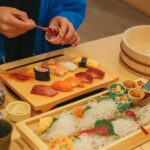
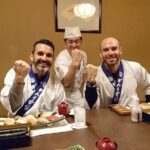
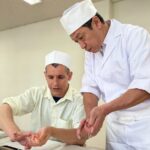
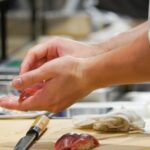
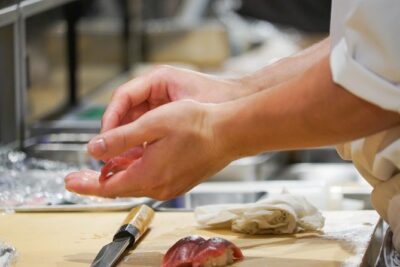
At Azabujuban, the experience becomes a proper food lesson. A sushi chef demonstrates how to cut tuna and prepare nigiri, then you take part in the process.
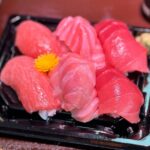
The useful part is the comparison. Fatty, middle, and lean tuna do not offer the same texture or taste, and sampling them side by side makes that easier to understand. You also get to try different ways of eating the tuna, rather than treating every piece as interchangeable.
The class includes tuna and sushi made by the group, which becomes your lunch. That is a clear advantage over a class where you prepare food but still need to find a meal afterward.
You should not expect a professional sushi apprenticeship in 90 minutes. The listed time at Azabujuban is about one hour and 30 minutes, so the session is designed as an introduction. You observe the chef, practice selected steps, and eat what you make.
Still, this is where the tour delivers its most memorable detail. Cutting tuna gives you a practical sense of the work behind a sushi counter. The activity also offers tips you can try at home, though the supplied information does not specify a full recipe or equipment list.
The small group should help here. With no more than six participants, you have a better chance of seeing the knife work and taking part than you would in a large class. If you have questions about texture, freshness, or preparation, this is the right time to ask.
Other shopping tours in Tokyo
What the $297.23 price really covers

At $297.23 per person, this is not a budget market walk. The price makes more sense if you use all parts of the experience: two market visits, an English-speaking guide, a tuna-cutting demonstration, hands-on sushi preparation, and lunch.
The included meal is important. You are not paying only for access and explanations, then buying lunch separately. Tuna and sushi prepared during the class are included, although food you choose to buy at Toyosu or Tsukiji is extra.
The group limit also affects the value. A six-person maximum gives the tour a more personal format and should make the chef session easier to follow. For someone who wants a private tour, however, six people is small but not necessarily private.
Transportation is the main extra cost. Subway or bus fares are not included, and the route involves more than one neighborhood. The fares themselves should not transform the budget, but you should remember them when comparing this with a single-location sushi class.
I would call the price reasonable for a serious sushi fan who values access to the tuna session and the included lunch. I would call it expensive for someone who mainly wants to browse a market and eat a few snacks. The more interested you are in tuna cuts and sushi technique, the easier it is to justify.
Who will get the most from this morning

This experience fits you best if you:
- Want to see Toyosu and Tsukiji in one outing
- Enjoy sushi and want to understand tuna cuts
- Prefer a guided food experience to exploring markets alone
- Like hands-on activities, not just demonstrations
- Are comfortable starting early and using public transportation
- Value a small group and an included lunch
It is also a good choice for families or mixed-age groups if everyone can manage the walking and transfers. The activity information says most people can participate, but it does not give detailed accessibility information, so anyone with mobility concerns should confirm the practical details before booking.
I would be more cautious if you dislike early starts, hot-weather transfers, or eating while walking. The route asks you to move from Toyosu to Tsukiji and then to Azabujuban, rather than staying in one compact area.
Timing, tickets, and cancellation details

The start time is 7 a.m., and the meeting point is at Shijo-mae Station near Toyosu Market. The experience ends in Azabujuban, not back at the starting point, so plan your next journey from there.
A mobile ticket is provided. Confirmation is sent within 48 hours, subject to availability, and the group is limited to six people. The tour has a 98 percent recommendation rate and a 4.9 rating from 60 reviews, which supports the idea that the core format works well, especially the guide-led food lesson and tuna preparation.
You can cancel for a full refund up to 24 hours before the local start time. Changes or cancellations inside that window are not accepted for a refund. Poor weather or failure to meet the minimum number of participants can lead to a different date or a full refund.
The weather condition is worth noting because the tour includes outdoor market visits and public transportation. If rain or other poor conditions cancel the activity, you are offered another date or a full refund.
Should you book the Toyosu tuna tour?
I would book it if the tuna-cutting class is the reason you are interested. Watching the chef separate different cuts, tasting them, and making nigiri gives you something that a standard market stroll cannot provide.
I would skip it if your main goal is a relaxed visit to Toyosu or Tsukiji. The early start, transfers, extra transportation costs, and $297.23 price are harder to defend when you only want to browse and snack.
For the right person, this is a focused Tokyo food morning with a clear theme. Go for the fish knowledge, the small group, and the included lunch. Just arrive prepared for a four-hour route that crosses the city rather than a short walk around one market.
FAQ
Where does the tour start?
It starts at Shijo-mae Station, near Toyosu Market, at 6 Chome-3 Toyosu, Koto City, Tokyo 135-0061.
What time does the tour begin?
The start time is 7 a.m.
Where does the tour end?
The tour ends in Azabujuban at 3-chome 3-4, Minato City, Tokyo 106-0045.
How long does the experience last?
The tour lasts approximately four hours.
Is lunch included?
Yes. Lunch includes tuna and sushi made during the experience.
Is a guide included?
Yes. An English-speaking guide is included.
Are subway and bus fares included?
No. Transportation within the tour uses the subway or bus, and those fares are not included.
How many people can join?
The maximum group size is six participants.
Can I buy fish or sushi during the market visits?
You can purchase fish at the Toyosu wholesaler market and have opportunities to buy and sample market sushi. Those personal purchases are not listed as included.
What is the cancellation policy?
You can cancel at least 24 hours before the start time for a full refund. Cancellations or changes made less than 24 hours before the start time are not refunded or accepted. Cancellations caused by poor weather or failure to meet the minimum group size offer a different date or a full refund.
More Markets in Tokyo
More Shopping Tours in Tokyo
More Sushi Making Classes in Tokyo
More tours in Tokyo we've reviewed












Sushi Making Classes, compared.
 ★ 5.0Sushi Making Tokyo Roll and Authentic Japanese Sushi ClassFrom $59
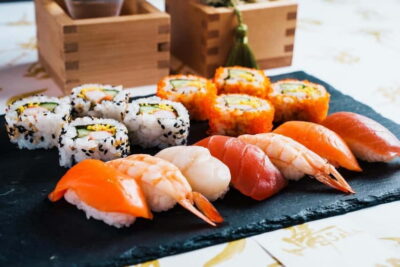 ★ 4.9Tokyo: Roll and Authentic Sushi Making Class in AsakusaFrom $581h 40m
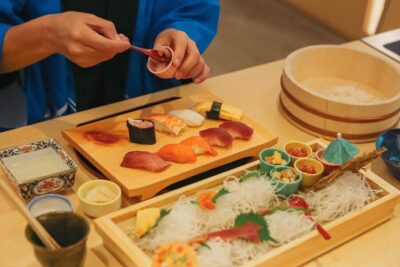 ★ 4.9Tokyo: Sushi Making Class in a Happi Coat near a Famous SpotFrom $421h 30m
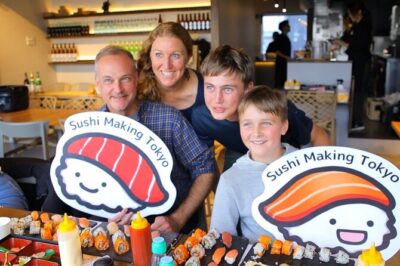 ★ 5.0Sushi Making Tokyo! Popular Maki Sushi & Japanese Sushi(+Recipe!)From $63
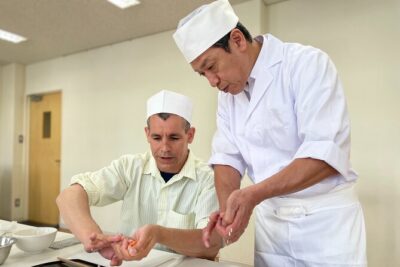 ★ 5.0Tokyo Sushi Making Class in Tsukiji with Professional ChefFrom $49
 ★ 5.0Tokyo Night Foodie Tour in Shinjuku – Seasonal Sushi, Wagyu BeefFrom $111