Reviewed · PRIVATE DRIVERS
Private Memorable Tokyo Tour with English Speaking Driver
Tokyo is enormous, and this private 10-hour car tour gives you a practical way to cover its far-flung sights in one day. You can move from Tsukiji’s food stalls to Senso-ji, Akihabara, Meiji Shrine, and Shibuya without learning several train routes or hauling bags through stations.
In This Article
- Key points to know before booking
- Why this tour works for a one-day Tokyo visit
- The real meaning of private chauffeur service
- Tsukiji Market starts the day with food and movement
- Senso-ji gives you Tokyo’s oldest major temple
- Tokyo Skytree supplies the big city view
- The Imperial Palace is best treated as a short garden visit
- Akihabara packs electronics and pop culture into 30 minutes
- Odaiba’s Statue of Liberty is a bonus photo stop
- Meiji Shrine offers a quieter change of pace
- Shibuya Crossing and Takeshita Street show modern Tokyo
- Tokyo Tower is a ten-minute photograph
- teamLab Planets is possible only if the clock allows
- What $600 means for the value
- Timing, crowds, and the best way to plan the day
- Who should book this Tokyo tour
- Should you book it?
- FAQ
- How long does the Tokyo private tour last?
- What time does the tour start?
- Where does the tour begin?
- Where does the tour end?
- How many people can join the private vehicle?
- Is this a guided tour?
- Are attraction admission fees included?
- Can I enter the Imperial Palace?
- Are the Statue of Liberty and teamLab Planets guaranteed stops?
- Can the itinerary change during the day?
- What is the cancellation policy?
I like the flexible schedule, especially for families and first-time visitors. I also like that the driver can help with photos and explain the city when arranged, with guides such as Mazar, Ryan, David, Irfan, and Abdul Waheed praised for patience and clear English. The main catch is important: this is not automatically a guided sightseeing tour. Without an added guide, you may get transport and drop-offs rather than detailed explanations.
Key points to know before booking

- Ten major Tokyo stops in one long day: The route can include Tsukiji, Senso-ji, Skytree, the Imperial Palace, Akihabara, Odaiba, Meiji Shrine, Shibuya, Harajuku, Tokyo Tower, and teamLab Planets.
- A private vehicle saves mental energy: You avoid public transport changes and travel only with your own group of up to five people.
- The itinerary is a wish list, not a guarantee: Traffic, crowds, and waiting times can lead to skipped or changed stops.
- The driver is not automatically a guide: Add a guide at extra cost if you want site-by-site commentary and historical context.
- Skytree and teamLab cost extra: The major admission fees are not included, and teamLab Planets is listed only as a possible stop if time allows.
- The price works best for a full group: At $600 per vehicle, five people pay about $120 each, while a solo or couple booking pays far more per person.
Why this tour works for a one-day Tokyo visit

The best thing about this outing is its reach. Tokyo’s sights are scattered across separate districts, and this route links old Asakusa, modern Shibuya, youth-focused Harajuku, electronics-heavy Akihabara, and waterfront Odaiba in one day.
That is a lot for 10 hours, so you should think of the tour as a broad introduction, not a slow, detailed visit to every neighborhood. You will collect snapshots of Tokyo and decide where you want to return later.
The private format helps in ways that are easy to underestimate. Your group can adjust the order, skip a stop, spend longer shopping, or change plans when a crowded site becomes unpleasant. One family used the flexibility to give the children more shopping time, while another group found the fish market a highlight.
The vehicle also matters if your group includes older relatives, young children, or anyone tired after a long flight. You will still walk at the sights, but you are not spending the day figuring out stations, platforms, transfers, and exits.
Other private tours in Tokyo

The real meaning of private chauffeur service
The tour begins at 9 a.m. in Shinjuku City and ends back at the meeting point. Pickup is offered, and the activity is private, so only your group participates. The vehicle accommodates up to five people, with larger groups possible for an added charge.
Your driver should speak English, but the service does not automatically include a formal guide. This distinction affects the value more than any other detail. A driver may take you to a temple, point out where to enter, wait while you explore, and help with timing. A paid guide is the better choice if you want a running account of Tokyo’s religious traditions, imperial past, neighborhoods, and architecture.
Several drivers have earned strong praise for being courteous, patient, flexible, and good at explaining the city. Mazar was noted for explaining time expectations and taking photos. Ryan was praised for tailoring the day to the group. David, Irfan, and Abdul Waheed also received warm comments for their service.
Still, do not assume every booking includes the same person or the same level of commentary. If explanations are central to your day, request a guide when booking and confirm the extra fee.
Tsukiji Market starts the day with food and movement
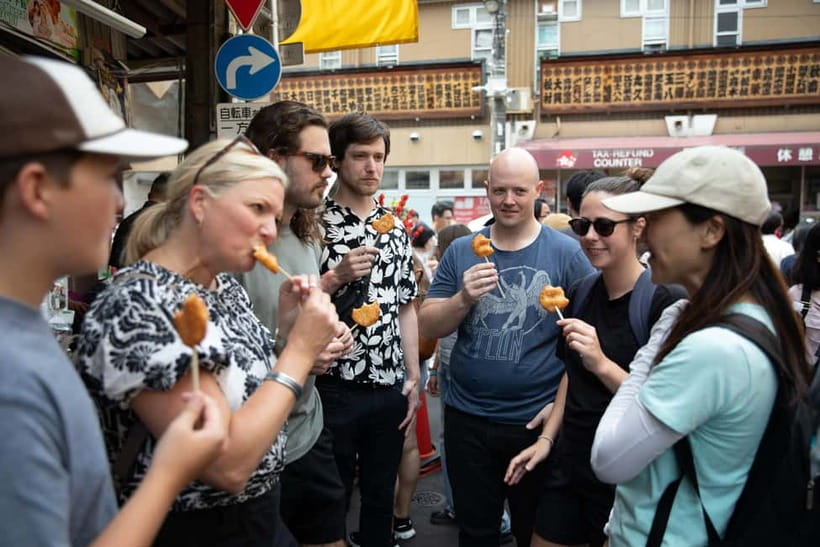
The 45-minute visit to Tsukiji is a lively opening. The former wholesale fish market has become a major food destination, with stalls and small shops offering an easy introduction to Japanese ingredients and street food.
You have no admission fee here, but 45 minutes goes quickly. Use the time for a focused walk and a snack rather than expecting a full market tour. If you want to sample several foods, ask the driver how much time is available before you wander too far.
This stop received especially strong praise as a highlight of the day. It gives you a more immediate Tokyo experience than a photo stop at a tower. Go with an appetite, but keep track of the clock.
Senso-ji gives you Tokyo’s oldest major temple
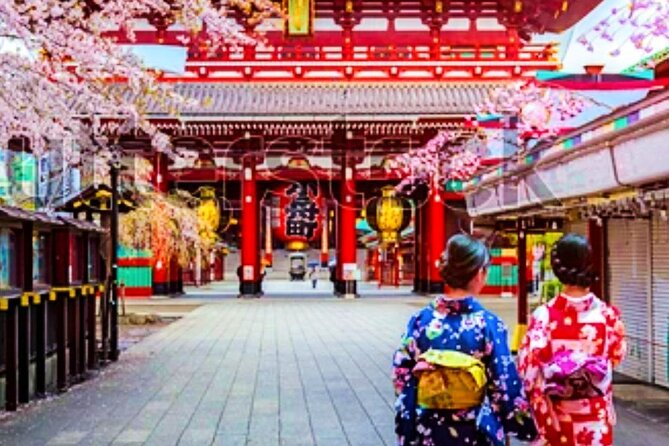
From Tsukiji, the route moves to Asakusa and Senso-ji, Tokyo’s oldest religious building. The temple is colorful, popular, and surrounded by the famous approach through Kaminarimon Gate and Nakamise shopping street.
Your one-hour visit allows time for the main temple area and a look at the surrounding shops. It may not allow a quiet, unhurried examination of every detail, especially at busy times. The private car removes the problem of getting there, but it cannot remove the crowds once you arrive.
I would give Senso-ji priority even if the schedule has to shrink elsewhere. This is one of the stops that connects modern Tokyo with older religious customs, and it offers more atmosphere than a quick exterior photograph.
Tokyo Skytree supplies the big city view

The Tokyo Skytree stop is scheduled for one hour, but admission is not included. If you want to go up, you will need to purchase a ticket separately, and the time available may depend on queues and traffic.
The observation decks offer wide views from high above the city. On a clear day, you can use the height to understand Tokyo’s scale, with major districts spreading in every direction. On a hazy or rainy day, the cost may feel harder to justify, especially since you are already paying for a packed route.
Ask your driver about the day’s traffic before committing to the tower. If the line is long, you may prefer more time at Senso-ji, Akihabara, or Harajuku.
A few more Tokyo tours and experiences worth a look

The Imperial Palace is best treated as a short garden visit
The Imperial Palace is the residence of Japan’s Imperial Family and occupies the site of Edo Castle, once the seat of the Tokugawa shoguns. The planned 45-minute stop focuses on the East Gardens, which you can visit without a booking.
Do not expect to walk into the palace itself. Entry to the palace requires advance reservation, according to the tour information. Without that reservation, the East Gardens can feel like a broad park visit rather than a guided historical experience.
This stop has a practical drawback: the gardens involve walking, and without a guide you may not know which walls, gates, or foundations deserve your attention. If your time is tight, you may prefer to use these 45 minutes for Tokyo Tower or another neighborhood. If you enjoy gardens and old castle remains, keep it on the route.
Akihabara packs electronics and pop culture into 30 minutes

Akihabara is Tokyo’s famous electronics and anime district. Its shops range from small stalls to large retailers such as Yodobashi Multimedia Akiba, with manga, anime, video games, and specialty goods filling the area.
The scheduled half hour is enough for a quick look or one targeted purchase. It is not enough for serious shopping. If your group includes anime fans or gadget hunters, ask to trade time from a less important stop.
The private format helps here because you can set a clear goal before getting out. Decide if you want electronics, collectibles, manga, or simply a short look at the district. Otherwise, 30 minutes can disappear before you have found the shop you wanted.
Odaiba’s Statue of Liberty is a bonus photo stop
Odaiba has an 11-meter replica of the Statue of Liberty, with Rainbow Bridge behind it. The stop is free and planned for 30 minutes, but it is possible only if time permits.
This is a photo opportunity rather than a major sightseeing stop. It makes sense for visitors who want a waterfront picture or have a particular interest in Odaiba. It is an easy candidate to skip if Tokyo’s older districts matter more to you.
Traffic can make Odaiba costly in time, so keep your expectations modest. The replica is a fun visual surprise, not a replacement for the original sights elsewhere in the city.
Meiji Shrine offers a quieter change of pace
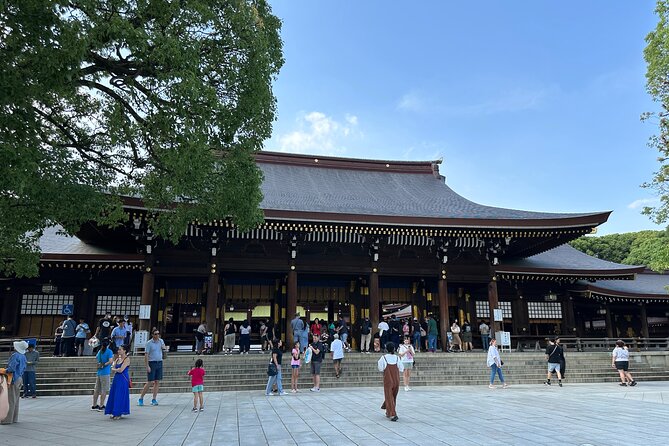
Meiji Jingu sits in a forested area in the center of Tokyo and honors Emperor Meiji and Empress Shoken. The planned visit lasts 30 minutes.
That may be enough to reach the main shrine area and see the setting, but it leaves little room for a slow walk through the grounds. The wooded approach is part of the appeal, so you may feel rushed if traffic has already eaten into the schedule.
I like keeping Meiji Shrine on the route because it breaks up the concrete, shopping, and screens. It also gives you a look at Shinto worship in a setting that feels very different from Senso-ji.
Shibuya Crossing and Takeshita Street show modern Tokyo
The Shibuya Crossing stop lasts about 20 minutes. You will have time for photographs and a quick look at the famous scramble outside Shibuya Station, where huge waves of pedestrians cross together.
Twenty minutes is enough for the iconic scene, not for exploring Shibuya’s shops or viewpoints. If you want a particular observation spot, tell the driver ahead of time, since the schedule is tight.
Takeshita Street in Harajuku receives a fuller hour. This youth-focused shopping street is known for unusual clothing, accessories, sweets, and crepes. It is one of the better places to let your group split its interests briefly, with some people shopping and others sampling snacks.
The street can be crowded, and the atmosphere is loud and commercial. That is part of the point. You are seeing a slice of Tokyo youth culture, not a traditional neighborhood.
Tokyo Tower is a ten-minute photograph
The itinerary lists only 10 minutes at Tokyo Tower, so treat this as a roadside or exterior photo stop. It is not enough time for an observation-deck visit.
One detail needs correcting: Tokyo Tower is not the 634-meter tower described in the supplied information. That height belongs to Tokyo Skytree. Tokyo Tower is the older red communications tower inspired by the Eiffel Tower, completed in 1958.
If you want to go up Tokyo Tower, the schedule would need a major change. You might ask to remove the Imperial Palace gardens or another short stop, but the tour does not promise that this can be arranged.
teamLab Planets is possible only if the clock allows
teamLab Planets offers rooms where you walk through water and gardens filled with flowers. The experience includes four large exhibition spaces and two gardens, but admission is not included.
It is listed as a possible stop, not a guaranteed part of the day. With a 30-minute allocation and a long route already planned, you should not book this tour solely to visit teamLab Planets. If teamLab is a priority, plan a separate visit or confirm the timing and ticket arrangements before booking.
This is one of the clearest examples of the tour’s limits. The route can show you many parts of Tokyo, but it cannot provide a full visit at every attraction.
What $600 means for the value
The price is $600 per group of up to five people. That works out to $120 per person for a full group, $150 each for four people, $200 each for three, or $300 each for two.
For five people, the price can be reasonable when you value a private vehicle, pickup, route planning, and the ability to adjust the day. You are also paying to avoid public transport logistics across a very large city. Families often gain the most because the car offers a place to regroup between stops.
For one or two people, the cost is harder to defend unless convenience is your top concern or you have only one day in Tokyo. Public transport is usually the better value for independent visitors who enjoy planning and do not mind walking.
The extra cost of a guide also changes the calculation. If you want substantial commentary, add that expense before comparing this with a conventional guided tour.
Timing, crowds, and the best way to plan the day
The 10-hour duration includes commuting time. That phrase matters. You are not receiving 10 hours at the sights. Traffic, parking, queues, and crowded streets can reduce the time available for exploration.
The operator may change the route, skip stops, or adjust the order to handle congestion and long waits. That flexibility is sensible, but you should arrive with priorities. I would rank your must-sees before the morning begins.
A useful order might be:
- Senso-ji and Tsukiji for traditional Tokyo and food
- Meiji Shrine, Shibuya, and Harajuku for modern city life
- Skytree or teamLab Planets if paid attractions matter most
- Akihabara for focused shopping
- Odaiba and Tokyo Tower only if time remains
Allow room for the driver to make changes. The more stops you demand, the more each one becomes a short sample.
Who should book this Tokyo tour
I would consider this tour for a family, a group of friends, or a party of up to five with only one free day in Tokyo. It also suits people who want a private ride, dislike changing trains, or need a flexible plan.
It is less suitable for an independent couple who wants long meals, slow shrine visits, or serious shopping. It is also a poor match if you expect a traditional guide included in the base price.
The strongest version of the experience comes from setting priorities and confirming the guide question before paying. Ask for the most suitable driver, state whether you need detailed commentary, and decide which three or four stops matter most.
Should you book it?
Book it if your goal is to see a wide range of Tokyo with minimal transport hassle, especially with four or five people sharing the cost. The private vehicle, flexible timing, and English-speaking driver can make a single packed day much easier.
Skip it if price matters more than convenience, or if you want to spend an hour or more at each sight. In that case, choose two districts and explore them on foot and by train.
The key is to buy this as a private transport-based introduction, not as a fully guided tour. Add a guide if you want history and interpretation, and treat Odaiba and teamLab Planets as optional rather than guaranteed. Free cancellation is available until 24 hours before the start time, while poor weather may lead to a different date or a full refund.
FAQ
How long does the Tokyo private tour last?
The tour lasts approximately 10 hours, including commuting time between stops.
What time does the tour start?
The scheduled start time is 9 a.m.
Where does the tour begin?
The meeting point is in Shinjuku City, Tokyo. Pickup is offered.
Where does the tour end?
The activity ends back at the meeting point.
How many people can join the private vehicle?
The listed price covers up to five people in one group. A larger group can be arranged for an additional cost.
Is this a guided tour?
The base experience is not automatically a guided tour. It provides an English-speaking driver and private transportation. A guide can be arranged for an additional cost.
Are attraction admission fees included?
Admission is free at Tsukiji Market, Senso-ji Temple, the Imperial Palace East Gardens, Akihabara, the Statue of Liberty photo stop, Meiji Shrine, Shibuya Crossing, and Takeshita Street. Tokyo Skytree and teamLab Planets admission are not included.
Can I enter the Imperial Palace?
You can visit the East Gardens without booking. Entering the palace itself requires a prior reservation.
Are the Statue of Liberty and teamLab Planets guaranteed stops?
No. Both are possible only if time allows.
Can the itinerary change during the day?
Yes. Traffic, crowds, and long waits may lead to a changed order, skipped stop, or altered itinerary.
What is the cancellation policy?
You can cancel up to 24 hours before the start time for a full refund. Changes or cancellations made less than 24 hours in advance are not accepted for a refund. The experience may be moved or fully refunded if poor weather causes cancellation.
More Private Drivers in Tokyo
More Private Tours in Tokyo

More tours in Tokyo we've reviewed












Private Drivers, compared.
 ★ 5.0Mt Fuji Private Tour with English Speaking DriverFrom $415
 ★ 5.0Mt Fuji Private Day Trip from Tokyo with English speaking driverFrom $464
 ★ 4.5Mt. Fuji & Hakone Private Day Tour with English-Speaking DriverFrom $453
 ★ 4.5Haneda Airport (HND) Private Transfer to Central TokyoFrom $104
 ★ 4.5Mt. Fuji, Hakone Full-Day Private Tour with English Driver GuideFrom $495
 ★ 5.0Mt. Fuji Day Trip from Tokyo with English Speaking Driver GuideFrom $497