Reviewed · GO-KARTS
GINZA: Go Kart Experience with NEO GINZA
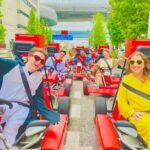
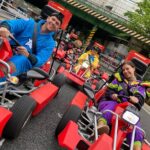
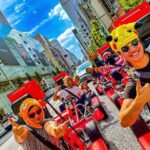
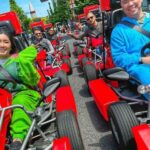
Tokyo sightseeing rarely gets more theatrical than this: you cruise through Ginza in a small themed go-kart, dressed as a lion, cartoon-style character, or another playful costume, while Tokyo Tower and Kabuki-za provide the backdrop. Two guides lead the small group, helping you handle the route and taking photos along the way.
In This Article
- Key points to know before booking
- Why this Ginza go-kart ride feels different
- Starting at 新富町一丁目ビル
- Choosing a costume and getting ready
- Zojoji Temple and the first city views
- Tokyo Tower from a low, open-air seat
- The Imperial Palace outer gardens
- Tokyo Station and the changing cityscape
- Kabuki-za and the finish in Ginza
- What the guides add to the hour
- Day ride or night ride?
- Is $64 a fair price?
- Who should book this ride?
- My call: book it for fun, not for a full tour
- FAQ
- How long does the Ginza go-kart experience last?
- Which landmarks does the route pass?
- Are costumes and photographs included?
- What driving documents do I need?
- Can children or non-drivers join?
- What is the group size?
I like the open-air view and the sharp change of pace from a bus tour. You see the city from street level, with a full view around you, and the hour includes several major sights. I also like the small group limit of six, plus the choice of a night ride, when Tokyo Tower glows above the streets. The main catch is practical: you need the correct Japanese driving documents before you arrive, and the one-hour route is a quick look rather than a full sightseeing tour.
Key points to know before booking

- Tokyo Tower after dark: Night departures give you a lit-up city view and a memorable pass beneath Tokyo Tower.
- Six people maximum: A small group makes it easier to follow the two guides and receive personal help.
- Costumes are included: Pick a fun outfit at the shop before setting off, with options suited to a photo-heavy ride.
- Five major sights in one hour: The route passes Zojoji Temple, Tokyo Tower, the Imperial Palace outer gardens, Tokyo Station, and Kabuki-za.
- Photos are part of the package: The guide takes pictures during the ride and shares them afterward.
- Driving paperwork is essential: Most participants need a physical 1949 Geneva Convention International Driving Permit, not a digital copy.
Why this Ginza go-kart ride feels different

This is not a quiet way to study Tokyo. You are sitting low, moving with traffic, wearing a costume, and seeing the city from an unusually exposed position. That is exactly the appeal.
The route begins at 新富町一丁目ビル, near the Ginza area, and returns to the same place after 60 minutes. The two staff members guide the group through the city. English and Japanese support is available, and the small group size keeps the ride from feeling like a convoy of dozens of carts.
I like the mix of sightseeing and silliness. You are not simply driving in circles on a closed course. The route connects central Tokyo sights, so you get a moving view of temples, government grounds, railway architecture, and Ginza’s theater district.
The costumes add a second layer to the outing. You can choose something playful before leaving, then smile for photographs at the stops. This is an activity built for people who want a story to tell and pictures to prove it.
Still, you should know what you are booking. The route passes the sights rather than offering long visits inside them. You will stop for photos and receive guided sightseeing, but this is not the right choice if you want detailed time at Zojoji Temple, the Imperial Palace, or Kabuki-za.
A few more Tokyo tours and experiences worth a look
Starting at 新富町一丁目ビル
Plan to arrive ready to drive. The activity includes the 60-minute kart ride, insurance, costume use, photo service, and English and Japanese-speaking staff. Hotel pickup and drop-off are not included, so you must make your own way to the starting point.
The staff will help prepare the group before departure. Since the ride takes place on public roads, the paperwork matters as much as the costume choice. You need your physical passport or ID card and the correct driving permit or translation.
For most countries, that means a physical International Driving Permit issued under the 1949 Geneva Convention. It must come from the same country that issued your domestic license. An online permit obtained while you are already in Japan is not accepted.
There are special rules for several license holders. Drivers from Switzerland, Germany, France, Taiwan, Belgium, or Monaco need an official Japanese translation from the Japan Automobile Federation, rather than an International Driving Permit. You must carry the physical domestic license, official translation, and physical passport.
Licenses from countries not covered by the 1949 Geneva Convention, including China, Indonesia, Mexico, Qatar, and Saudi Arabia, are not permitted for driving in Japan under the stated rules. Check your documents before booking, since this is not a problem that can be fixed at the shop on the day.
Choosing a costume and getting ready

The costume choice is part of the fun, not a small extra. You can pick a character-style outfit or another humorous costume, then head into Ginza looking like you have wandered out of a playful street parade.
A costume works best if you are comfortable being noticed. The ride is designed around photo moments, and the guide may capture you beside major sights. If you prefer to blend into the crowd, this activity may feel a little too public.
Wear practical clothes underneath and choose flat, secure footwear. High heels and slippers are not allowed. Alcohol and drugs are also prohibited, and cellphones cannot be used during the activity.
The cellphone rule is worth noting because you may normally rely on your phone for photos or directions. Here, the included photo service handles the main picture-taking during the ride. A GoPro and SD card are not included, so any GoPro rental would be an additional expense.
Zojoji Temple and the first city views
Zojoji Temple is one of the most appealing early sights on the route because it gives the ride a sudden sense of contrast. Tokyo’s modern roads and office buildings meet a traditional Buddhist temple setting, creating a scene that feels distinctly central Tokyo.
You pass by with a guided view and a photo stop rather than a full temple visit. That means you can appreciate the setting and take pictures without spending a large part of the hour on foot.
The tradeoff is time. If Zojoji Temple is high on your list, plan a separate visit on another day. The go-kart ride gives you a quick look from the road, but it does not replace walking through the temple grounds.
Tokyo Tower from a low, open-air seat
Tokyo Tower is the route’s big visual reward. From a go-kart, you are lower to the ground and exposed to the surrounding streets, so the tower appears as part of the city rather than as a distant object viewed from a platform or bus window.
The guides pass by the tower and stop for photographs. Several riders chose the night outing specifically for this section, and the lit tower adds a strong city-at-night feel. If you like illuminated landmarks and photographs with a little drama, I would choose an evening departure when available.
The ride beneath or near Tokyo Tower also shows why the guides matter. You are not left to work out the route alone. The two-person support setup helps the small group stay together and makes the drive feel more controlled.
Of course, this is still a road activity. Traffic, signals, and the pace of the route shape what you see. You should expect a scenic pass and photo opportunity, not unlimited time to frame the perfect shot.
A few more Tokyo tours and experiences worth a look

The Imperial Palace outer gardens
The Imperial Palace section gives you a different view of central Tokyo. The outer gardens are associated with broad open spaces and the formal heart of the capital, a change from the tighter streets around Ginza and Tokyo Station.
The experience includes sightseeing and a photo stop while passing by. You will not enter the palace grounds as part of this hour, so think of this section as a visual introduction.
I find this kind of passing view useful early in a Tokyo visit. It helps you connect several central districts in one outing. You see how the palace area sits between major commercial and transport centers, then continue toward Tokyo Station.
Tokyo Station and the changing cityscape

Tokyo Station is one of the route’s strongest architecture stops. The station area gives you a look at a major transport hub and a more formal urban setting before the route returns toward Ginza.
The itinerary lists a photo stop, guided sightseeing, and scenic views on the way. As with the other landmarks, the value comes from seeing the station as part of a moving city route. You get a quick impression of the area without committing to a long station visit.
This is also where expectations matter. A one-hour ride cannot explain every building or district in detail. If you want a close look at the station facade, station halls, or nearby shops, save time for a separate walk.
Kabuki-za and the finish in Ginza
Kabuki-za brings the ride back to the character of Ginza. Its theater facade gives the final stretch a distinct cultural marker, and it is a fitting stop for a tour that mixes costumes, city streets, and Japanese landmarks.
You pass by, take photographs, and enjoy the scenery before returning to 新富町一丁目ビル. The route does not include a kabuki performance or interior visit. If you want to attend a show, that requires a separate ticket and plan.
Ending near Ginza also makes the timing useful. You can continue with dinner, shopping, or an evening walk after the ride, though the activity itself does not include any meals or onward transportation.
What the guides add to the hour
The guides are more than route leaders. They keep the small group moving safely, point out buildings and monuments, and help create the photo record. One guide named Patrick received especially strong praise for explaining Tokyo sights, talking about local culture and daily life, and suggesting other places to visit.
The two-guide format is a real benefit. A lead guide can focus on the road while the support guide helps the group and takes pictures. That arrangement is more reassuring than setting off alone, especially for anyone new to driving in Tokyo.
The included photography also changes how you use the hour. You can focus on the route instead of trying to handle a camera while driving. Smile brightly at the stops, since the guide is there to capture the costume, cart, and landmark together.
Do not expect a formal lecture at every stop. The strongest part of the commentary appears to be the informal mix of sightseeing notes, local suggestions, and conversation. That suits this activity better than a long historical talk would.
Day ride or night ride?
Both options offer the same basic route, but the mood can differ sharply.
A daytime departure should give you clear views of the buildings, temple setting, palace area, and street details. It may suit you if you want to study the architecture and see the city in ordinary working light.
A night departure turns the ride into more of a city spectacle. Tokyo Tower is lit, Ginza has a different visual energy, and the costume photographs can feel more theatrical. Several riders found the evening setting especially memorable, and I can see why. The open-air carts, illuminated tower, and central streets make a one-hour ride feel like a compact night out.
The booking information says to check availability for start times, so you should not assume that every departure time is offered every day. If night is your first choice, check before arranging the rest of your evening.
Is $64 a fair price?
At $64 per person, this is not the cheapest way to see Tokyo landmarks. A regular walk or public train ride costs far less, and a one-hour route gives you only brief contact with each sight.
The value comes from the combination. Your price includes the kart experience, insurance, costume, two language-support options, guide service, and photo shooting. You also get a small group capped at six people, rather than a large vehicle full of passengers.
I would compare it with a standard sightseeing tour, not with ordinary transport. A bus may cover more commentary in comfort, but the kart offers an open-air, street-level view and a more memorable way to connect the landmarks. You are paying for the activity and the photos as much as for the sightseeing.
The value is strongest if you want a fun break from museums and temples, enjoy dressing up, and care about taking home distinctive pictures. It is weaker if your main goal is detailed history, long stops, or the lowest possible cost.
Who should book this ride?
This activity suits adults and young adults who are comfortable driving and want something playful in the middle of a Tokyo itinerary. It can work well for couples, friends, and small groups who want shared photos and a short burst of excitement.
It also suits repeat visitors. If you have already seen Tokyo from trains and sidewalks, the road-level view changes your sense of the central districts.
You should skip it if you do not have a driver’s license, cannot obtain the required Japanese driving document, or are under 18. You should also think twice if you dislike public attention, costumes, or driving on city streets.
The ride is not suitable for high heels or slippers, and you cannot use a cellphone during the activity. Those details sound minor, but they affect how you prepare.
Cancellation is flexible up to 24 hours before departure for a full refund, and you can reserve now and pay later. Those terms help if your Tokyo schedule is still shifting, but they do not remove the need to sort out the driving paperwork first.
My call: book it for fun, not for a full tour
I would book the NEO GINZA go-kart ride if I wanted a memorable hour, strong city photos, and a fresh view of Tokyo’s central sights. The best reasons are the six-person limit, two-guide support, included costume and photographs, and the chance to see Tokyo Tower lit up at night.
I would not book it as my only sightseeing activity in Ginza. Zojoji Temple, the Imperial Palace outer gardens, Tokyo Station, and Kabuki-za all receive brief pass-by treatment. Use this ride as an energetic addition to a Tokyo visit, then return to the places that deserve time on foot.
Before paying, confirm that your driving documents meet Japan’s exact rules. If they do, and you are ready to smile, steer, and be seen, this is one of the more unusual ways to spend an hour in central Tokyo.
FAQ
How long does the Ginza go-kart experience last?
The experience lasts 60 minutes, including the guided drive through the Ginza area and the listed sightseeing stops.
Which landmarks does the route pass?
The route passes Zojoji Temple, Tokyo Tower, the Imperial Palace outer gardens, Tokyo Station, and Kabuki-za in Ginza.
Are costumes and photographs included?
Yes. Costume use and photo shooting by the guide are included. GoPro rental and an SD card are not included.
What driving documents do I need?
Most participants need a physical International Driving Permit in booklet form that follows the 1949 Geneva Convention. Drivers from Switzerland, Germany, France, Taiwan, Belgium, and Monaco need an official Japanese translation of their license from the Japan Automobile Federation instead. You must carry the required physical documents and your physical passport.
Can children or non-drivers join?
Participants must be at least 18 years old and have a driver’s license. People without a driver’s license cannot take part.
What is the group size?
The activity is limited to six participants, with live guidance available in English and Japanese.
More Go-Kart Tours in Tokyo
More Ginza Tours in Tokyo


More tours in Tokyo we've reviewed












Go-Karts, compared.
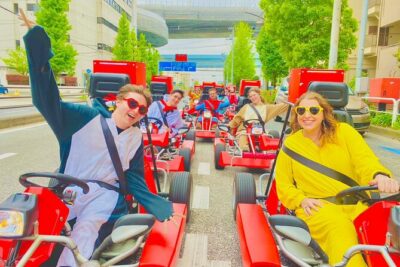 ★ 5.0Flagship 2-Hours Official Street Go-Kart Tour – Tokyo Bay ShopFrom $642 hours to 2 hours 30 minutes (approx.)
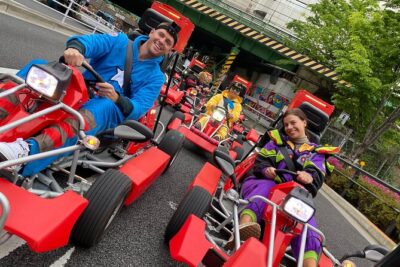 ★ 5.0Official Street Go-Kart in ShibuyaFrom $76
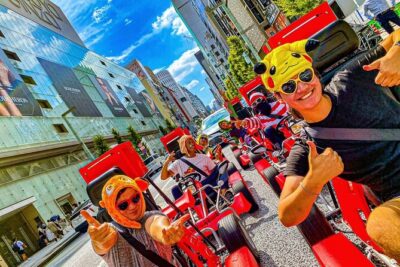 ★ 5.0Official Street Go-Kart Tour – AkihabaraFrom $61
 ★ 5.0Tokyo Go Kart: Asakusa, Skytree, and Akihabara **IDP MUST**From $99
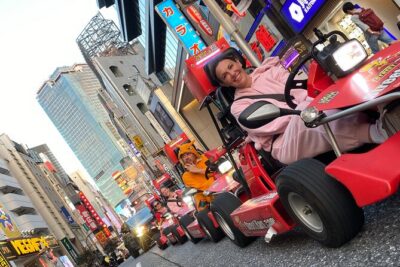 ★ 5.0Shibuya Official Street Go-Kart in Shibuya AnnexFrom $69
 ★ 4.6Tokyo: Asakusa and Skytree Go-Kart Tour and Photo ShootFrom $67

![[Private]Shinjuku Golden Gai Bar Hopping w/ Japanese Local Guide - Walking through Kabukicho after dark](https://tokyoezine.com/wp-content/uploads/2026/08/private-shinjuku-golden-gai-bar-hopping-w-japanese-local-guide.jpg)