Reviewed · SUMO EXPERIENCES
Authentic Sumo Experience in Tokyo: Enter the Sanctuary
The best part of this experience is that you do not just watch sumo from a distant stadium seat. You enter a former working stable in Kawasaki, see the dining room and bath, sit close to the ring for morning practice, and then try the movements yourself with sumo wrestlers.
In This Article
- Key points to know before booking
- Why this Kawasaki sumo visit feels different
- Meeting at Shin-Kawasaki Station
- Inside a former sumo stable
- Morning practice from close range
- Trying the exercises and entering the ring
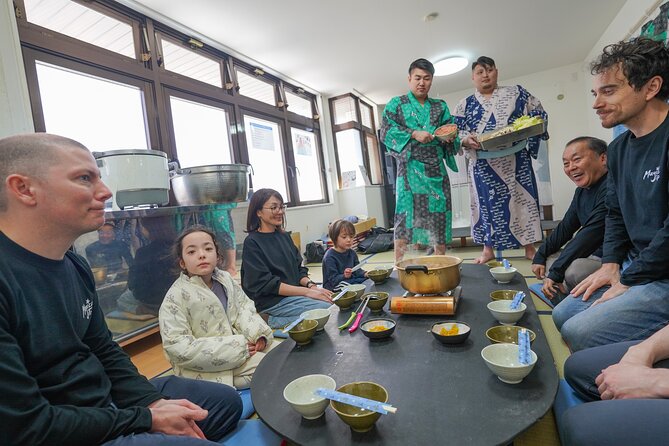
- Chanko-nabe with the wrestlers
- What the $171.12 price includes
- Weather, clothing, and the pace of the morning
- Who should book this sumo experience
- Should you book it?
- FAQ
- Where does the sumo experience take place?
- Where do I meet the guide?
- What time does the experience start?
- How long does the experience last?
- Is lunch included?
- Can I participate in sumo training?
- What spaces will I see at the stable?
- Are photos included?
- Can I bring a suitcase?
- What is the cancellation policy?
I like the honest look at daily stable life, and I like the lunch because chanko-nabe turns the lesson into a shared meal. Guides such as Charlie, Jim, Lily, and Fuji have been praised for clear English and warm, lively teaching.
The main drawback is the early, strict schedule. You meet at 9:30 a.m., but the stable’s practice culture begins much earlier, and arriving more than five minutes late can mean missing the tour without a refund. Dietary requests also need advance notice, and allergy-free meals cannot be guaranteed.
Key points to know before booking
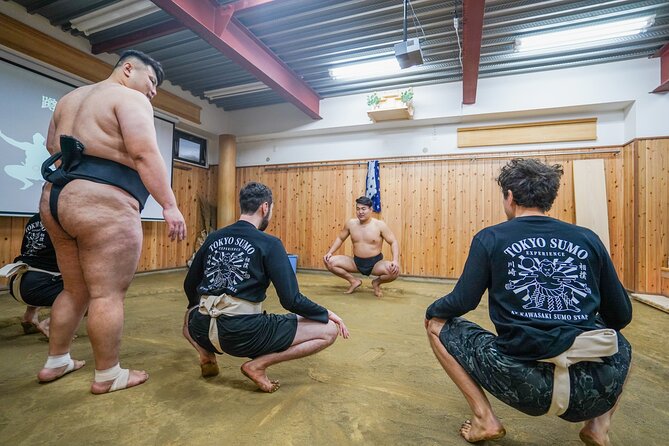
- Watch practice from the edge of the ring: You sit close to a morning training session in a stable officially used until 2022.
- Tour the wrestlers’ working spaces: See the dining room, bath, and practice area, not just a staged performance room.
- Try the training yourself: Learn basic sumo movements and, if you wish, step into the ring for a friendly challenge.
- Share a real chanko-nabe lunch: Help make chicken dumplings and eat around a table once used in the sumo room.
- Small group, personal feel: The maximum group size is 15, with a certified MagicalTrip guide providing commentary and photos.
- Good value for an active cultural outing: The $171.12 price includes the experience, lunch, guide, photos, and an original T-shirt.
Why this Kawasaki sumo visit feels different
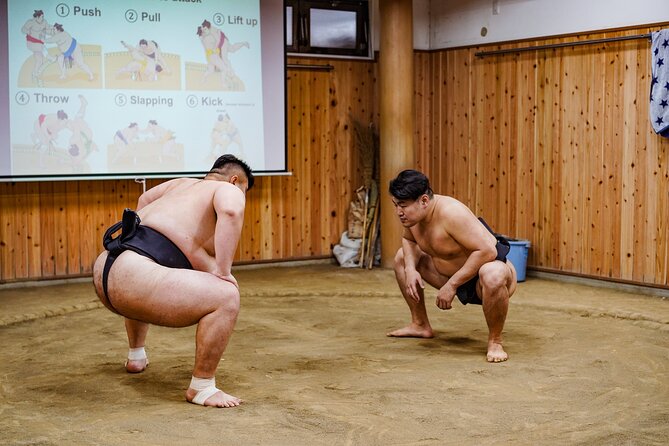
Sumo is easy to see in Tokyo, but much harder to understand from the spectator seats. A tournament shows the final product: two wrestlers enter the ring, perform formal rituals, and push or throw one another out. It does not show how they live, eat, train, or spend their mornings.
This four-hour-and-ten-minute visit fills in those missing pieces. You meet at Shin-Kawasaki Station and head to a real sumo stable in Kawasaki, a quieter setting outside central Tokyo. The building was officially used until 2022, giving the visit a genuine connection to working sumo life rather than a theater-style presentation.
Your guide explains the customs and traditions before taking you through the stable. You see the dining room, bath, and practice area. These details matter because sumo is not simply a sport with a short match. The stable is also a home, training center, kitchen, and social world.
I especially like that the experience gives you time to observe before asking you to participate. The tone begins with history and explanation, then moves into demonstrations, exercises, and conversation. That gradual change helps families and first-time visitors settle in.
A few more Kawasaki tours and experiences worth a look
Meeting at Shin-Kawasaki Station
The listed meeting time is 9:30 a.m. at Shin-Kawasaki Station, with the meeting address given as Kiyoken, 1-chome-2-1 Kashimada, Saiwai Ward, Kawasaki. The instructions also identify Shin-Kawasaki Station as the place to meet your local guide, so check your confirmation carefully for the exact point.
Punctuality is not a minor detail here. The group leaves on time, and the operator says that more than five minutes late without contact counts as a cancellation. You cannot join later, reschedule, or receive a refund after missing the group.
Allow extra time for the train journey and finding the correct station exit. Large suitcases are not permitted, so leave heavy luggage at your accommodation or in an appropriate storage facility before setting out.
The transfer to the stable is part of the practical setup. One account describes a station pickup followed by a comfortable van ride, while another notes that a taxi was included in the price. The exact vehicle may vary, but you should expect arranged transport rather than having to find the stable alone.
Inside a former sumo stable
The room tour is one of the strongest parts of the visit. You see the spaces where wrestlers eat, bathe, and train, then learn how these rooms fit into the daily rhythm of the stable.
The dining room is especially useful to see before lunch. Later, you eat around a table that was actually used in the sumo room, so the meal connects to the place instead of feeling like a separate restaurant stop.
The bath and practice area also help explain why sumo has such a distinct culture. You are not only learning rules for a bout. You are seeing a place built around discipline, shared routines, and physical training.
The stable was officially used until 2022, so conditions may not look exactly as they did during its active period. That is worth keeping in mind. This is a chance to enter a former working setting, not a promise that you will see an active tournament stable in full operation.
Morning practice from close range
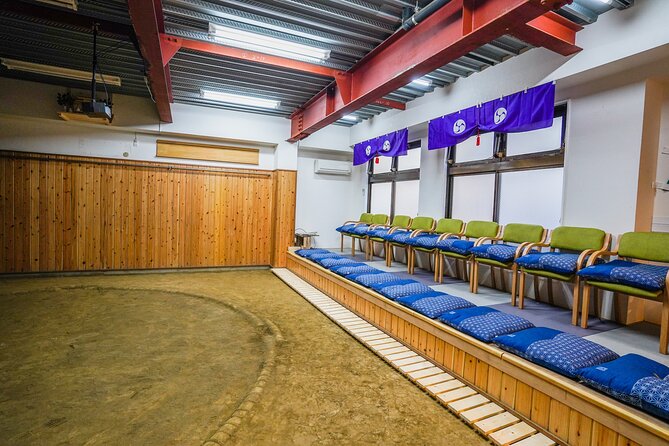
The practice session is the heart of the visit. Sumo morning training usually begins around 7 a.m. and lasts three to four hours, though your scheduled experience begins later. The program places you in front of the ring to watch the session, giving you a close view of the repeated exercises and serious physical effort behind a short match.
Sumo training has continued in recognizable form since the Samurai era. That long connection gives the movements extra meaning, but you do not need prior knowledge to follow the session. Your guide provides context, and the demonstrations make the basic ideas easier to grasp.
Expect the mood to begin quietly and seriously. Several people have found the opening lesson more formal than expected, especially before the wrestlers begin interacting with the group. That is a feature, not a flaw, if you want a respectful introduction to sumo culture.
The atmosphere generally becomes more playful once the exercises begin. The wrestlers use humor while showing the movements, and the guide helps explain what you are seeing. English-language guidance has been praised, with Charlie, Jim, Lily, and Fuji each singled out for friendly and clear instruction at different sessions.
Trying the exercises and entering the ring
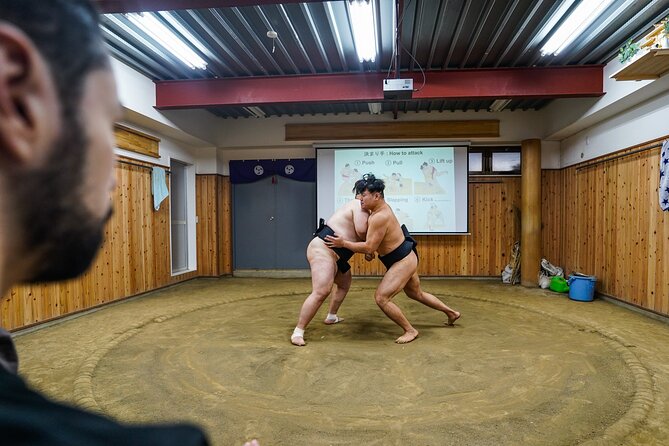
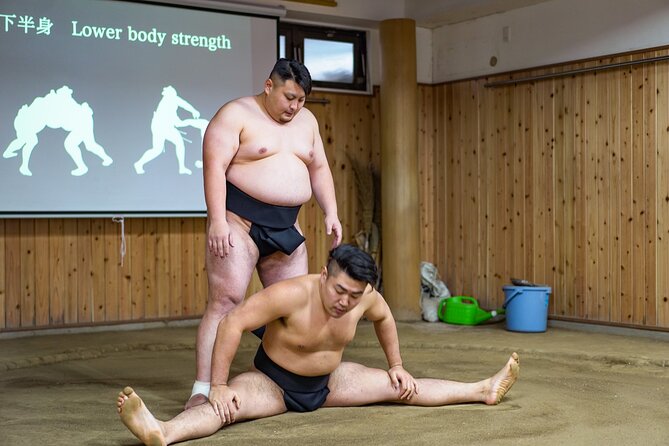
After watching, you can take part in sumo movements with the wrestlers. The supplied details do not require you to participate, so you can observe if you prefer. That makes the outing workable for mixed groups, including families with different comfort levels.
The practice is more about fun and first-hand understanding than serious athletic instruction. You might learn how a stance feels, try a basic push, or test your balance against a much larger opponent. Some participants have found the exercise less useful as formal training, but very entertaining, especially for children and teenagers.
You may also get the chance to challenge a sumo wrestler in the ring. This is not a competitive bout in the normal tournament sense. It is a controlled demonstration that lets you feel how difficult it is to move someone trained in this sport.
Do not underestimate the physical side. Sumo wrestlers are powerful athletes, and even a simple exercise can leave you warm and tired. Wear comfortable clothing, bring water, and do not feel pressured to take part in every activity.
Chanko-nabe with the wrestlers
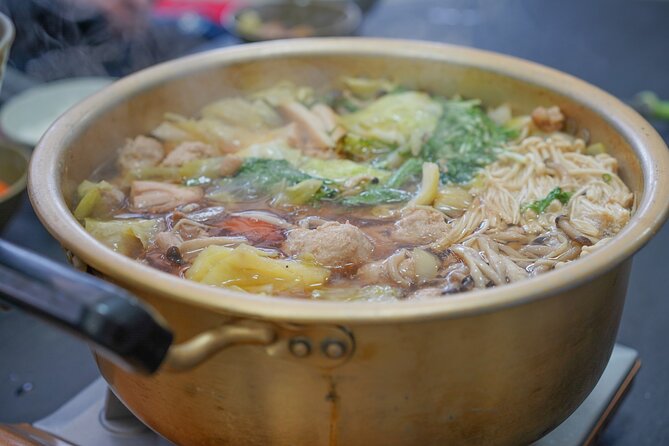
Lunch is included, and it is more than a convenient meal after the training. You help make chicken dumplings for chanko-nabe, the hot-pot dish commonly associated with building a sumo wrestler’s large physique, then eat together around the stable table.
The meal gives you the best chance to ask questions in a relaxed setting. The wrestlers are available to talk, and the shared food changes the mood from demonstration to conversation. Several accounts single out the chanko-nabe as a highlight, with one child reportedly eating four bowls.
The lunch is also practical. A four-hour activity with physical participation is easier to enjoy when food is included. Additional food and drinks are not covered, so bring money if you want anything extra.
If you have allergies or dietary needs, contact the operator at least one day before the tour. Same-day requests cannot be handled. The kitchen does not belong to MagicalTrip, and the operator cannot promise an allergy-free meal or guarantee substitutions, so people with serious food allergies should consider this limitation carefully.
What the $171.12 price includes
At $171.12 per person, this is not a cheap sightseeing stop. It is priced as a small-group cultural activity with arranged transport, a guide, a meal, hands-on instruction, photos, and a T-shirt.
The value comes from the combination. A standard sumo match can give you the thrill of competition, but it will not normally take you into a stable, introduce you to wrestlers, or let you try the exercises. Here, you receive several connected parts of the sumo world in one morning.
The group maximum is 15 people. That is large enough for a lively session but small enough for the guide and wrestlers to involve individuals. The T-shirt is a simple extra, while the tour photos are useful if you want a record without spending the whole time taking pictures.
I would not book this for a quick photo opportunity. The price makes more sense if you care about the customs, training, meal, and personal contact. For a family or a long-time sumo fan, the hands-on access can justify the cost. For someone who only wants to watch a match, a tournament ticket may be a better fit.
Weather, clothing, and the pace of the morning
Summer in Japan can be hot and humid, and the operator specifically advises bringing water and wearing a hat to reduce the risk of heatstroke. You will spend time moving between the station, transport, and stable, and the activity itself can be physical.
Wear clothes that allow easy movement if you plan to join the exercises. You can still attend without participating, but loose, comfortable clothing will make the morning easier either way.
The schedule lasts about 4 hours and 10 minutes, with the activity ending back at the meeting point. Leave room in your day for the full duration and transport. Do not plan a tight connection or an important timed reservation immediately afterward.
Free cancellation is available up to 24 hours before the start time for a full refund. Changes or cancellations inside that 24-hour window are not accepted, and no-shows are not refunded. The stable can also cancel unexpectedly a few days before the tour, in which case you should be offered another date or experience, or a full refund.
Who should book this sumo experience
I would recommend it most strongly to anyone who wants more than a photograph outside a sumo arena. The stable tour, practice session, meal, and chance to speak with wrestlers give you a fuller picture of the sport.
Families should find plenty to hold their attention. Children can watch the demonstrations, try the movements, and take part at their own level. Teenagers may especially enjoy the ring challenge and the informal lunch.
Long-time sumo fans will appreciate the setting and the chance to ask questions directly. The experience also works for couples, friends, and solo participants because the small group and shared meal create natural conversation.
It is less suitable if you need a flexible schedule, have serious dietary restrictions, dislike physical participation, or are uncomfortable with an early and highly punctual meeting. You can choose not to wrestle, but you cannot choose to arrive late.
Should you book it?
Book this if you want a close, active introduction to sumo rather than a passive show. The strongest reasons are the former stable, close-up morning practice, friendly instruction from wrestlers, and chanko-nabe lunch at a working sumo table.
At $171.12, it asks a fair amount, but the package includes the guide, transport arrangements, lunch, photos, and T-shirt. I would call it good value for a family, dedicated sumo fan, or anyone seeking a cultural experience that reaches beyond Tokyo’s usual sights.
Skip it if your priority is watching a formal tournament match, keeping costs low, or maintaining a loose morning schedule. For everyone else, this is a rare chance to see how sumo life fits together, then test a little of that demanding world yourself.
FAQ
Where does the sumo experience take place?
The experience takes place in Kawasaki, Kanagawa, at a real sumo stable that was officially used until 2022.
Where do I meet the guide?
You meet the guide at Shin-Kawasaki Station. The listed meeting address is Kiyoken, 1-chome-2-1 Kashimada, Saiwai Ward, Kawasaki.
What time does the experience start?
The stated start time is 9:30 a.m.
How long does the experience last?
The experience lasts approximately 4 hours and 10 minutes and ends back at the meeting point.
Is lunch included?
Yes. A sumo wrestler’s lunch featuring chanko-nabe is included.
Can I participate in sumo training?
Yes. Participants who wish to take part can try sumo movements with the wrestlers and may have the chance to enter the ring.
What spaces will I see at the stable?
The room tour includes the dining room, bath, and practice area.
Are photos included?
Yes. Tour photos are included, along with an original designed T-shirt.
Can I bring a suitcase?
No. Large luggage, including suitcases, is not permitted on the tour.
What is the cancellation policy?
You can cancel at least 24 hours before the start time for a full refund. Cancellations made less than 24 hours before the start time, late arrivals, and no-shows are not eligible for a refund.
More Sumo Experiences in Kawasaki
More tours in Kawasaki we've reviewed
Sumo Experiences, compared.
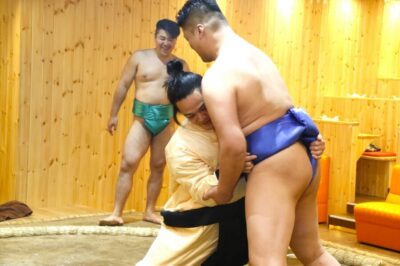 ★ 4.8Tokyo: Sumo Show Experience with Chicken Hot Pot and a PhotoFrom $1032 hours
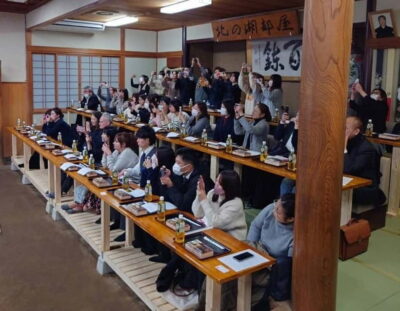 ★ 4.8Tokyo: Sumo Show and Dining ExperienceFrom $7990 minutes - 2 hours
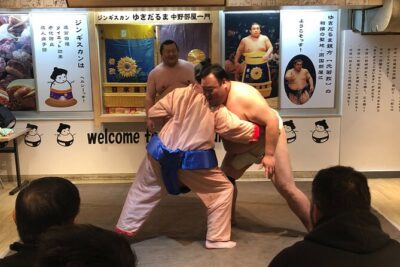 ★ 5.0the SUMO showFrom $89
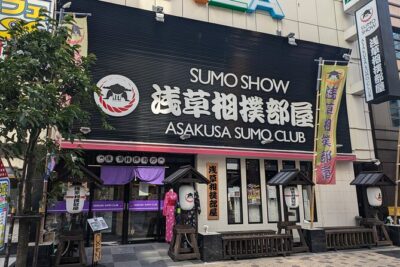 ★ 5.0Tokyo Sumo Entertainment Show with Chicken Hot Pot and PhotoFrom $106
 ★ 4.6Tokyo: Sumo Tournament Tour with Chair Seat TicketsFrom $141
 ★ 5.0Tokyo Grand Sumo Tournament Viewing Tour with TicketsFrom $124