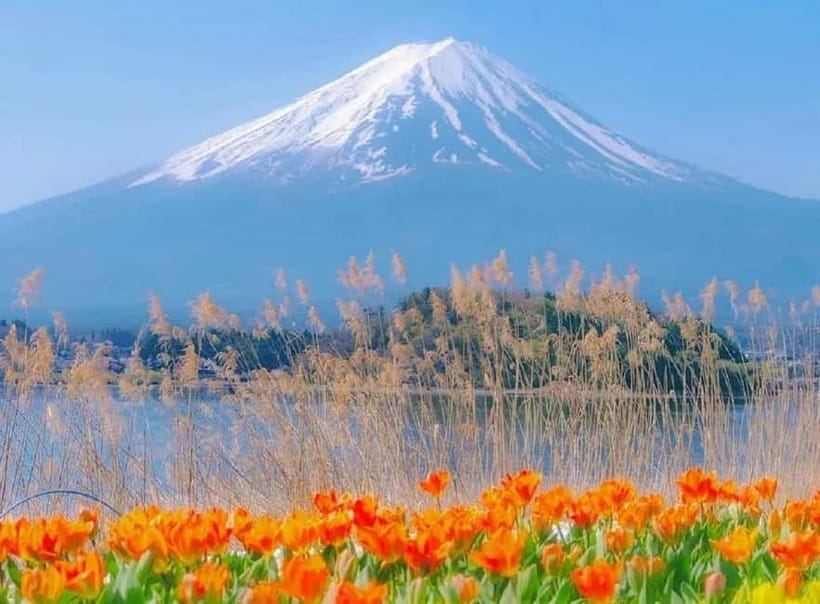
Reviewed · MT FUJI DAY TRIPS
Mt Fuji Top 5 Spots Day Tour: Arakurayama Park,Oshino Hakkai
Mount Fuji is the star, but the real pleasure of this day is seeing how many different faces the mountain can have. From the famous red pagoda above Fujiyoshida to a quiet spring village and an ordinary Lawson convenience store, you get both postcard views and glimpses of everyday Japan.
In This Article
- Key points to know before booking
- Why this Fuji day trip works
- Arakurayama Sengen Park and the 397-step climb
- Hikawa Clock Shop and the Stairway to Heaven street
- Oshino Hakkai’s eight clear springs
- Lawson Kawaguchiko, an ordinary shop with a famous view
- Oishi Park and the seasons around Lake Kawaguchi
- The guide and the shared-bus rhythm
- Timing, traffic, and what to pack
- Who should book this day trip
- Should you book it?
- FAQ
- Where does the Mount Fuji tour start?
- What time does the tour begin and end?
- Is lunch included?
- Which languages are available?
- Can I see Mount Fuji in every season?
- Does the tour always visit Oishi Park?
- What should I bring?
- What happens if I arrive late?
I like the range of viewpoints and the way the guide helps with photos, meeting times, and local tips. I also like the price: at $53 per person, transport, tolls, parking, a driver, and a multilingual guide make this a strong value for a first Fuji visit.
The catch is the long road day. You can spend about five hours in the vehicle, and Fuji may hide behind clouds. Traffic can also shorten stops or delay your return, so do not book an evening train, flight, or important dinner reservation too tightly.
Key points to know before booking
- 397 steps to the classic view: Arakurayama Sengen Park gives you the famous Chureito Pagoda and Mount Fuji composition, but the climb requires comfortable shoes.
- Oshino Hakkai brings a quieter pause: The eight clear springs, village paths, and water views provide a change from crowded photo stops.
- Several stops are built for pictures: Hikawa Clock Shop, Lawson Kawaguchiko, Oishi Park, and the pagoda each frame Fuji in a different way.
- Season changes the final stop: Summer brings lavender at Oishi Park, autumn brings red kochia or maple leaves, and spring may bring cherry blossoms.
- Guides make the busy day easier: Names vary, but guides including Anna, Sawaki, Linda, Peter, and Sia are noted for clear instructions, local facts, and taking photos.
- Lunch costs extra: Bring food, carry cash, or follow the guide’s restaurant suggestion during the roughly 45-minute lunch break.
Why this Fuji day trip works
A Mount Fuji visit from Tokyo is simple on a map and less simple in practice. The mountain area is far from central Tokyo, roads clog on weekends and clear-weather days, and the best viewpoints are spread across Fujiyoshida, Oshino, and Kawaguchiko.
This tour solves the transport problem in one sweep. You meet at either JR Tokyo Station’s Marunouchi South Exit or Tokyo Mode Gakuen, then ride in an air-conditioned tourist vehicle toward the Fuji area. The first transfer takes about two and a half hours, so use the time to rest, watch the city give way to open country, and keep your phone ready for the guide’s final meeting instructions.
The day is designed around photographs, but it is not only a photo hunt. You see a Shinto shrine, a hillside pagoda, an old-style town street, spring-fed ponds, a lakeside park, and a very modern convenience store. That mix gives the excursion more character than a single observatory stop.
At $53, I see the value mainly in the logistics. You are not paying for an expensive meal or a private vehicle, but you are getting the driver, fuel, highway tolls, parking, and guide. For a shared group tour, that is a sensible way to cover a wide area without wrestling with local buses or coordinating several train connections.
A few more Tokyo tours and experiences worth a look
Arakurayama Sengen Park and the 397-step climb
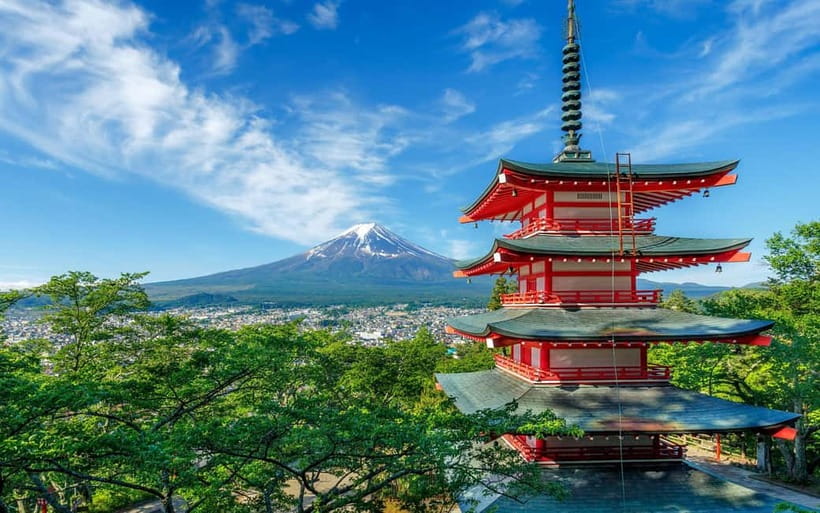
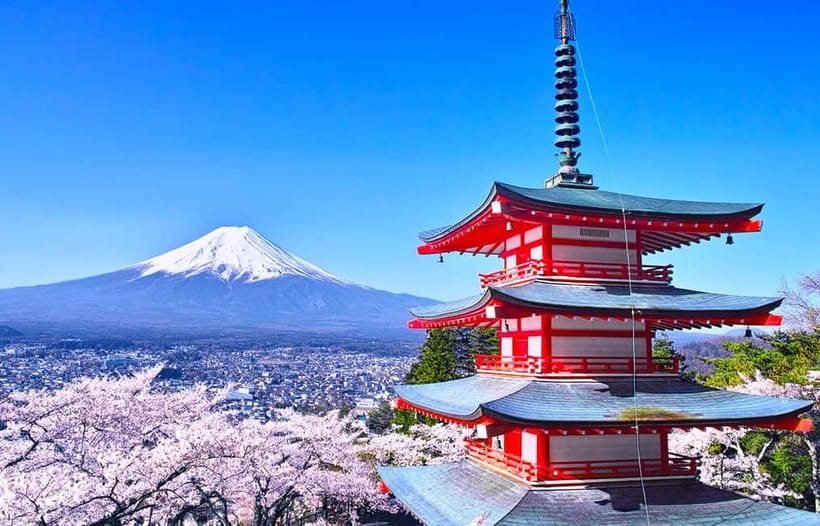
The first major stop is Arakurayama Sengen Park, reached after the long ride from Tokyo. This is the view many people picture when they think of Fuji: the snow-capped mountain behind the five-story Chureito Pagoda, with Fujiyoshida spreading below.
The climb is the main physical task of the day. The park has 397 steps, and the schedule allows about an hour for the stop, including the Arakura Fuji Sengen Shrine, the walk upward, and the pagoda area. You do not need hiking equipment, but comfortable shoes are a must. The steps can feel demanding if you rush them after sitting on the bus.
Take your time at the shrine before pushing to the upper viewpoint. The shrine gives the stop a proper cultural setting, while the pagoda platform delivers the big visual reward. In spring, cherry blossoms may soften the scene. Autumn brings colored leaves, and winter often gives the cleanest chance of seeing Fuji with snow on its summit.
The timetable also lists roughly 15 minutes for the shrine and about 10 minutes for the pagoda itself. That means the stop is carefully timed, not a long free morning in the park. You should go straight to the main viewpoint once the guide explains the meeting time, then take extra pictures on the way down if time allows.
Crowds are part of the deal. This is one of Fuji’s best-known viewpoints, and the narrow photo areas can be busy. Your guide may help you find the right angle or take pictures, a small service that matters when you are traveling alone or with a family group.
Hikawa Clock Shop and the Stairway to Heaven street
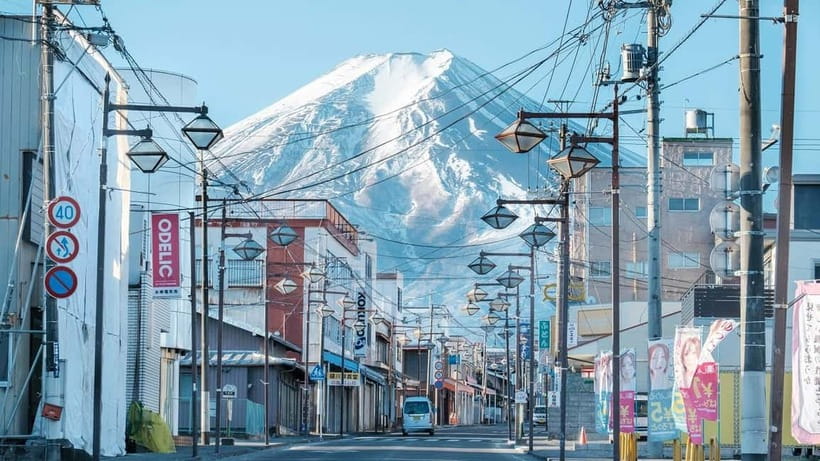
The Hikawa Clock Shop stop is shorter and more unusual. You walk along a quiet Fujiyoshida street where the road seems to point toward Mount Fuji. At the right angle, the ordinary storefronts and utility lines frame the mountain in a distinctly Japanese town scene.
This is not a formal viewing platform. It is a street photo stop, so the experience depends heavily on weather, traffic, and your position. The scheduled visit lasts about 20 minutes, enough for pictures and a quick look around, but not enough for a slow neighborhood wander.
Use care here. The appeal comes from photographing a real working street, not a closed attraction built for tourists. Stay out of the road, follow the guide’s instructions, and remember that local residents use this area. The mountain may be hidden by cloud, but the street composition can still be interesting on its own.
I appreciate this stop because it breaks up the famous-viewpoint pattern. You are not always looking at Fuji from a park or lake. Sometimes you are simply standing in a town street and noticing how the mountain shapes daily life.
Oshino Hakkai’s eight clear springs
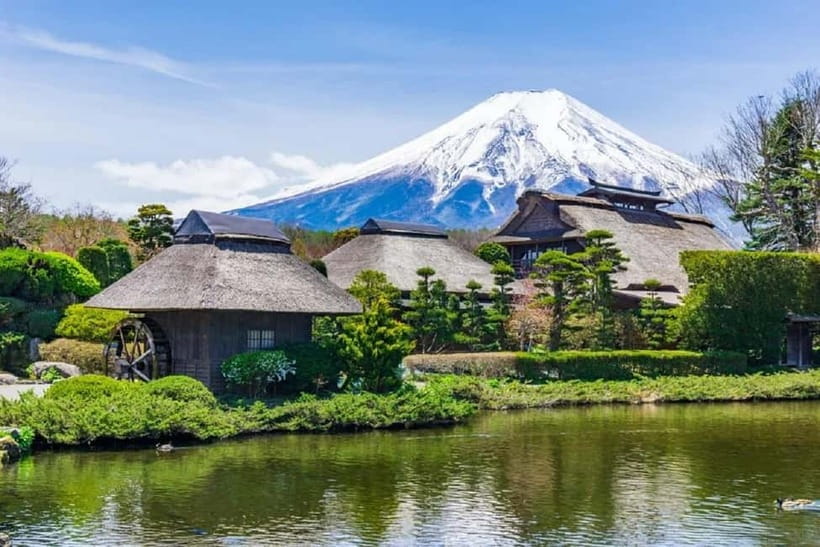
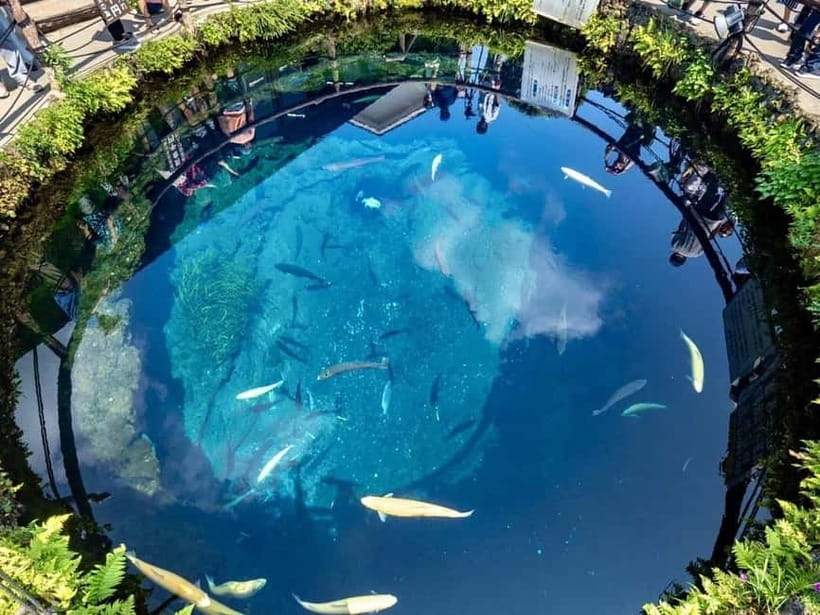
Oshino Hakkai is the most restful stop of the day. The village is known for eight clear springs fed by snowmelt from Mount Fuji. Water, small ponds, traditional buildings, paths, and mountain views create a slower setting after the busy pagoda and street-photo stops.
You have about 90 minutes here, making it the longest sightseeing stop. That matters. There is enough time to walk, take pictures, browse the small shops, and find lunch without sprinting from one viewpoint to another.
The water is the main attraction. Look for the springs and the reflections, but also notice the way the village is arranged around them. The setting feels more grounded than a single scenic platform. You get a taste of a rural community shaped by Fuji’s water, not just a backdrop for your camera.
Lunch is not included. The schedule allows about 45 minutes at a local restaurant or lunch stop, but you pay for your own food. You can bring something from Tokyo, buy food at the attractions, or ask the guide for a restaurant recommendation. Bring cash because some restaurants and scenic-area shops may not accept every payment method.
Do not expect Oshino Hakkai to be empty or untouched. It is a popular stop with souvenir shops and other visitors. Still, the springs give you a welcome chance to slow down, and the 90-minute visit is generous compared with the shorter photo stops elsewhere.
Lawson Kawaguchiko, an ordinary shop with a famous view
The Lawson convenience store near Kawaguchiko Station is a curious Fuji landmark. The shop itself is not historic or special, but its street view has become popular because Mount Fuji rises behind the low, familiar storefront.
You get about 20 minutes for the picture. This is a quick stop, and the best approach is to follow the guide rather than wander off looking for a different angle. Be especially careful crossing the street. The photo is not worth stepping into traffic.
Weather matters here more than at almost any stop. If Fuji disappears, you are left with a convenience store and a busy roadside setting. That sounds underwhelming, but the stop is brief and easy to treat as a fun visual contrast: a global chain store in front of Japan’s most recognizable mountain.



Oishi Park and the seasons around Lake Kawaguchi
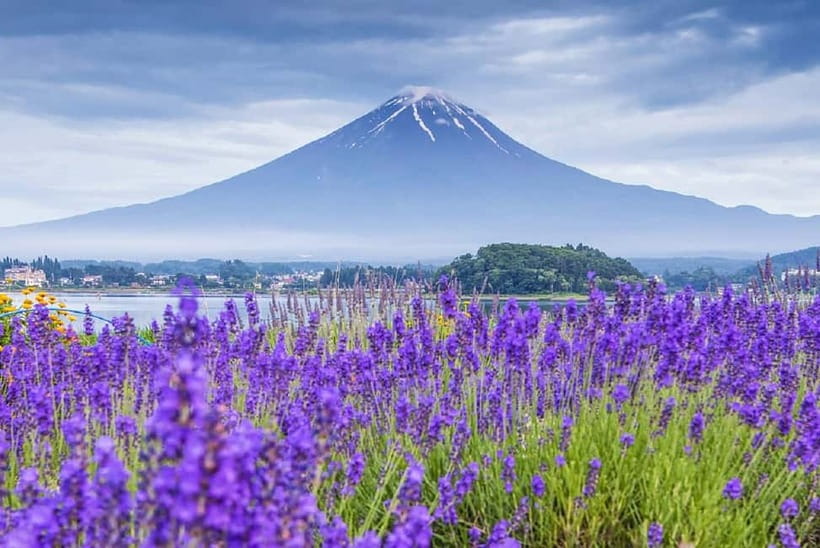
Oishi Park is scheduled for about 50 minutes and provides a more open setting near Lake Kawaguchi. The park is especially worthwhile for seasonal color.
In summer, lavender fields add purple tones in front of Fuji. The Kawaguchiko Herb Festival runs from June into October, according to the tour information, though the exact appearance of the flowers depends on timing and conditions. In autumn, red kochia grass can change the foreground, giving your Fuji pictures a warmer look.
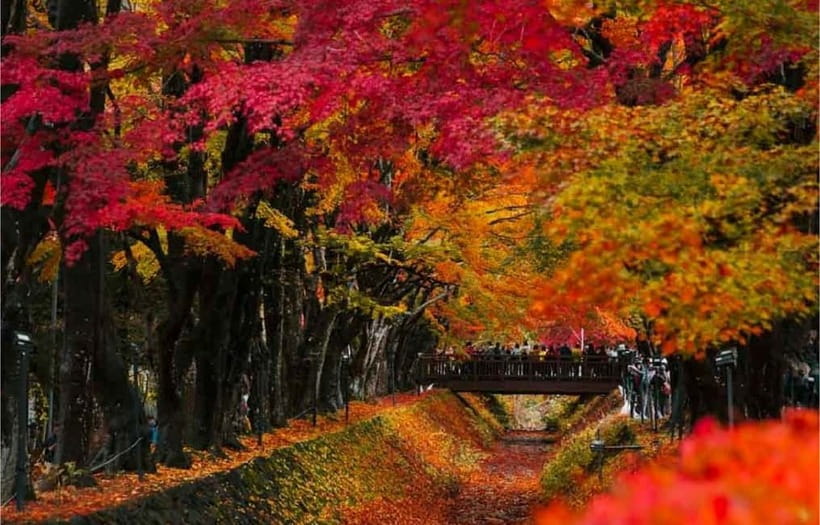
The plan can change by season. Around late October to November 20, the tour may replace Oishi Park with the Kawaguchiko Maple Corridor. Around the spring cherry blossom period, it may instead visit the Kawaguchiko Cherry Blossom Festival. These substitutions make sense because the best foreground is often seasonal, but you should understand that you may not see every listed stop in one outing.
The Maple Corridor offers fiery red leaves with Fuji and the lake, while the spring festival combines cherry blossoms, water, and the mountain. The timing dates are approximate, and weather can affect flowering and leaf color. Think of these as seasonal possibilities, not guarantees.
Oishi Park also gives you a chance to browse or buy small items before the return journey. As with the other attractions, shop purchases are personal expenses and the shops are independent of the tour company.
The guide and the shared-bus rhythm
The guide may be Anna, Sawaki, Linda, Peter, Sia, or another member of the multilingual team. Guides work in Chinese, English, and Japanese, and the strongest part of the service is practical: clear meeting instructions, reminders about departure times, local information, and help taking photographs.
Anna is repeatedly praised for taking good pictures, explaining the stops, and keeping a large group together with patience. Sawaki is described as energetic, funny, and good at making the long rides more enjoyable with facts and small games. Linda is noted for her lively manner and careful instructions. Peter is valued for keeping the day smooth and giving useful information. These details give you a fair sense of what the guiding can add, while remembering that your individual guide will vary.
This is a shared tour with people from several countries. Explanations may be repeated in more than one language, and the group can move at the pace of its slowest member. Be ready to meet at the vehicle on time. Late arrivals and no-shows are not refunded.
The guide’s photo help is a real benefit for solo visitors. It also helps couples and families avoid taking the same awkward arm’s-length picture at every stop. If you have a particular photo in mind, ask early and be specific, but do not hold up the group.
Timing, traffic, and what to pack
The official day runs for about 10 hours. The group starts at 8:00 AM at JR Tokyo Station or 8:30 AM at Tokyo Mode Gakuen, with a return planned around 6:30 PM. Arrive at least 15 minutes early. The vehicle will not wait for latecomers.
The two long transfers are the part to prepare for. Traffic can delay the return, especially on Japanese weekends, in peak seasons, or after poor weather. A delay can also reduce time at an attraction, change the order of stops, or lead to a cancellation in severe conditions.
I would not schedule anything important after this tour. Leave room for dinner and avoid connecting transport that depends on the stated return time. Bring water, comfortable shoes, and cash. A small snack is sensible because lunch is your responsibility and the schedule is busy.
The mountain area can feel different from Tokyo, so pack layers even if the city feels mild. The tour information specifically emphasizes weather uncertainty, and that uncertainty affects the central attraction: Fuji itself. You can visit all five spots and still see only clouds.
Who should book this day trip
This tour suits you if you have limited time in Tokyo and want a broad first look at Mount Fuji without planning the transport yourself. It is also a good fit for solo visitors who want a guide to take pictures, families who prefer a single vehicle, and anyone who values several viewpoints over a long stay at one place.
It is less suitable if you dislike fixed schedules, crowded photo locations, or long coach rides. You will not have unlimited time at Arakurayama, Oshino Hakkai, or Oishi Park, and lunch is not a planned part of the price.
The tour works best when you treat Fuji as a bonus rather than a promise. On a clear day, the sequence of views can be exceptional. On a cloudy day, the shrine, village, seasonal parks, and town streets still give you something to see, but the main reason for booking is naturally the mountain.
Cancellation is free up to 24 hours before departure, and you can reserve without paying immediately if that option is available when you book. Check the meeting point attached to your chosen option, then watch for the email sent around 9:00 PM the night before with your guide, driver, and vehicle details. Check your spam folder and keep your phone accessible.
Should you book it?
I would book this tour if you want the most efficient way to collect Fuji’s signature views in one day for $53. The combination of Chureito Pagoda, Oshino Hakkai, Hikawa Clock Shop, Lawson, and a seasonal Kawaguchiko stop gives you variety, while the guide and driver remove much of the usual hassle.
I would skip it only if you need a relaxed pace or must return to Tokyo at an exact hour. For everyone else, arrive early, bring lunch money, wear good shoes, and keep your schedule open. The mountain controls the final result, but the itinerary gives you several good chances to meet it.
FAQ
Where does the Mount Fuji tour start?
You can meet at JR Tokyo Station’s Marunouchi South Exit or at Tokyo Mode Gakuen. The exact meeting point depends on the option you book.
What time does the tour begin and end?
The listed start times are 8:00 AM at JR Tokyo Station and 8:30 AM at Tokyo Mode Gakuen. The planned return to Tokyo is around 6:30 PM, but traffic may cause delays.
Is lunch included?
No. You need to bring food, buy lunch at one of the attractions, or eat at a restaurant recommended by the guide. Lunch costs are not included.
Which languages are available?
Guiding is available in Chinese, English, and Japanese. The tour is shared with people from several countries, so explanations may be given in multiple languages.
Can I see Mount Fuji in every season?
The tour operates in different seasons, but Fuji visibility depends on weather. Clouds can block the mountain even when the other attractions remain open.
Does the tour always visit Oishi Park?
Not always. During autumn, the schedule may use the Kawaguchiko Maple Corridor instead. During the spring cherry blossom period, it may visit the Kawaguchiko Cherry Blossom Festival instead of Oishi Park.
What should I bring?
Bring comfortable shoes, water, and cash. Food is also useful because lunch is not included.
What happens if I arrive late?
The vehicle will not wait for latecomers, and there is no refund for a late arrival or no-show. Arrive at least 15 minutes before your assigned meeting time.
More Mt Fuji Day Trips in Tokyo
More tours in Tokyo we've reviewed


Mt Fuji Day Trips, compared.
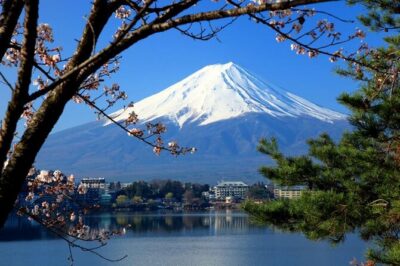 ★ 5.0Mt Fuji and Hakone 1-Day Bus Tour Return by Bullet TrainFrom $163
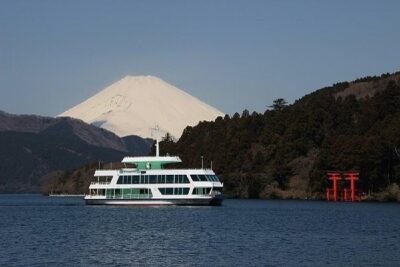 ★ 4.0Mt Fuji & Hakone Cruise, Drum Show Bullet Train 1 Day from TokyoFrom $149
 ★ 4.4Tokyo Mt Fuji 5th St & Hakone Cruise Bus Tour w/Bullet TrainFrom $15410 hours
 ★ 4.5From Tokyo: Mount Fuji Full-Day Sightseeing TripFrom $6810 hours
 ★ 4.7Tokyo: Mt. Fuji Tour, Hakone Ropeway, Owakudani, Lake AshiFrom $5410 hours
 ★ 4.4Tokyo:Mt.Fuji,Kawaguchiko Oishi Park,Arakurayama Sengen ParkFrom $5410 hours