Reviewed · SUMO EXPERIENCES
Tokyo: Authentic Sumo Wrestling Experience with Lunch
The best part of this four-hour outing is simple: you do not just watch sumo on a screen or from a distant seat. You sit beside the ring during morning practice, learn the movements, and can step into the ring for a playful bout with a real rikishi. I especially like the chance to see the stable’s dining room, bath, and training area, places normally hidden from casual visitors. I also like the lunch, since making chicken dumplings for chanko-nabe gives the meal a hands-on link to sumo life.
In This Article
- Key points at a glance
- Why this feels different from watching sumo in Tokyo
- Meeting at Shin-Kawasaki Station
- Inside the former sumo stable
- Watching practice from the edge of the ring
- Learning the rules before entering the ring
- The optional bout with a rikishi
- Making chanko-nabe with the wrestlers
- Photos, handprints, and the included T-shirt
- Is $166 a fair price?
- Who should book this experience?
- Should you book it?
- FAQ
- Where does the sumo experience meet?
- How do I identify the guide?
- How long does the experience last?
- Is the tour conducted in English?
- How far is Shin-Kawasaki from Tokyo Station?
- How far is Shin-Kawasaki from Yokohama Station?
- Can I wrestle with a sumo wrestler?
- Is lunch included?
- Can dietary requests be accommodated?
- Is the experience wheelchair accessible?
- What happens if I arrive late?
- What is included besides lunch and the stable visit?
The main consideration is physical. You may be invited to copy training movements and wrestle, though participation is optional. The stable is not fully accessible to wheelchairs or strollers, and the experience is not recommended for people with heart problems, high blood pressure, colds, or other pre-existing medical conditions. The meeting point and four-hour schedule also demand punctuality.
Key points at a glance
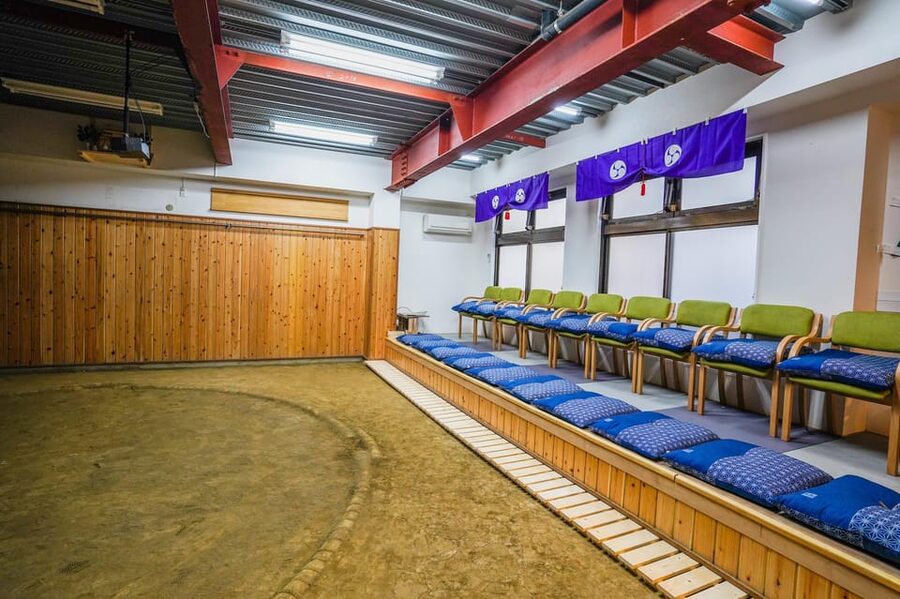
- Morning practice from ring-side seats: Watch the opening movements, drills, and bouts at close range inside a former official sumo stable.
- A real look at stable life: See the dining room, bath, and practice space while your English-speaking guide explains customs and daily routines.
- Optional sumo bout: Try the stance and techniques, then challenge a wrestler if you want. The wrestlers adjust the activity for fun.
- Chanko-nabe lunch: Make chicken dumplings and eat the hearty stew around a table once used in the sumo room.
- Personal mementos: Take photos, make an ink handprint on paper, and receive a T-shirt.
- Easy rail access: Meet outside the only ticket gate at Shin-Kawasaki Station, about 20 minutes from Tokyo Station and 10 minutes from Yokohama Station.
Why this feels different from watching sumo in Tokyo
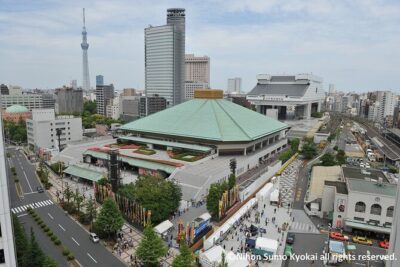
A tournament at Ryogoku gives you the spectacle of professional sumo. This experience gives you the working side of the sport: the quiet early practice, repeated drills, formal movements, and close contact with the people who train in that world.
The stable was officially used until 2022, so you are visiting a genuine sumo setting rather than a theater built only for tourists. You see the rooms that support the sport, including the dining area and bath, then sit directly in front of the ring for practice.
That closeness matters. From a ringside position, you can see how much force goes into a simple push, how low the wrestlers stay, and how much balance is needed to remain upright. Sumo can look slow on television, but the speed and impact become clearer when a bout happens a few feet away.
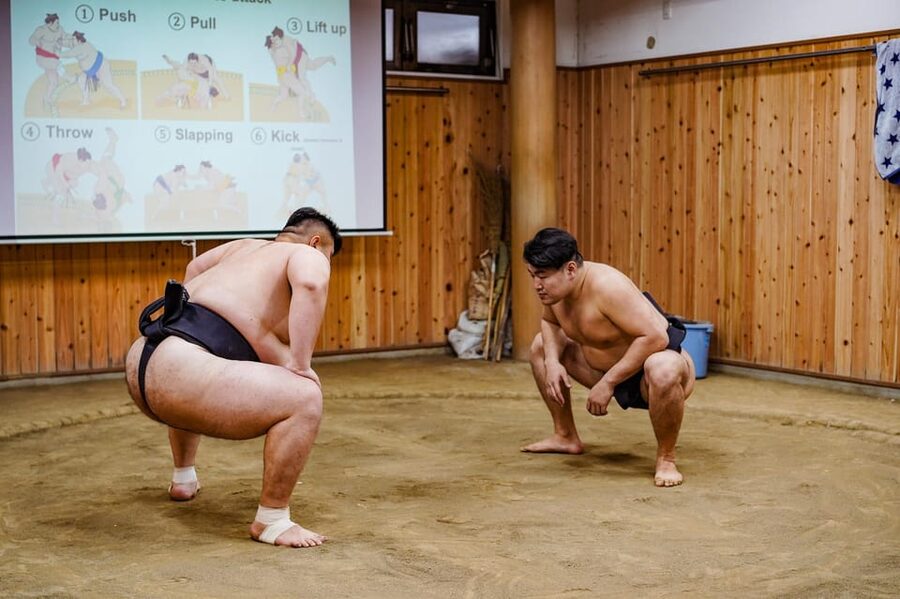
You do not need prior knowledge. The guides explain the rankings, rules, customs, and training routine in English. Masao has used slides and demonstrations to make the different stances and levels of the sumo system easier to understand, while Charlie and Mayu have been praised for keeping the explanations friendly and clear.
A few more Kawasaki tours and experiences worth a look
Meeting at Shin-Kawasaki Station
Your meeting point is just outside the ticket gate at Shin-Kawasaki Station, in front of the Kiyoken shumai shop. There is only one ticket gate, which makes the station easier to navigate than many large Tokyo stations. Look for a guide holding a red or orange Magical Trip sign.
This tour is based in Kawasaki, not central Tokyo. That is worth noting when you plan your morning. The stable is about 20 minutes from Tokyo Station and roughly 10 minutes from Yokohama Station, so it works particularly well if you are staying in Yokohama or planning to visit both cities.
One useful detail is that the starting point is not the stable itself. You meet the guide first and then travel as a group to the sumo location. The supplied schedule identifies Kiyoken outside Shin-Kawasaki as both the start and return point.
Arrive early. The tour begins on time, and if you miss the group because you are late, you cannot join later, reschedule, or receive a refund. Tokyo rail stations can take longer to navigate than expected, especially if you are carrying luggage or changing lines, so give yourself a generous margin.
Inside the former sumo stable
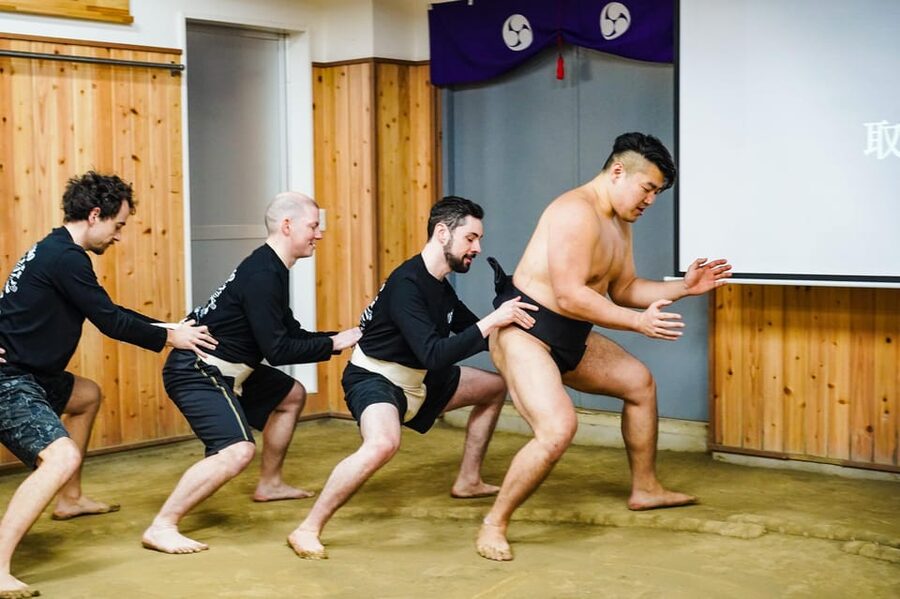
The first part of the visit sets up the sport before the physical activity begins. Your guide explains the customs and structure of sumo, then shows you the dining room, bath, and practice area.
This is useful because sumo is not only a contest held in a ring. The stable is a living system with its own hierarchy, meals, training habits, and daily rhythm. The dining room helps you understand why food is such a central part of sumo culture. The bath and practice room show that the wrestlers’ lives revolve around shared routines rather than separate private facilities.
You will hear about the different levels in the sumo pyramid and the typical training schedule. That background gives meaning to what you watch next. A foot stamp, crouch, or pushing drill is not random warm-up movement. Each action has a role in building balance, leg strength, timing, or ring control.
The stable’s past official use also adds context. This is not a modern arena with seats arranged for a show. The setting feels closer to the sport’s daily work, which makes it a better choice for anyone interested in how sumo operates away from tournament days.
Watching practice from the edge of the ring
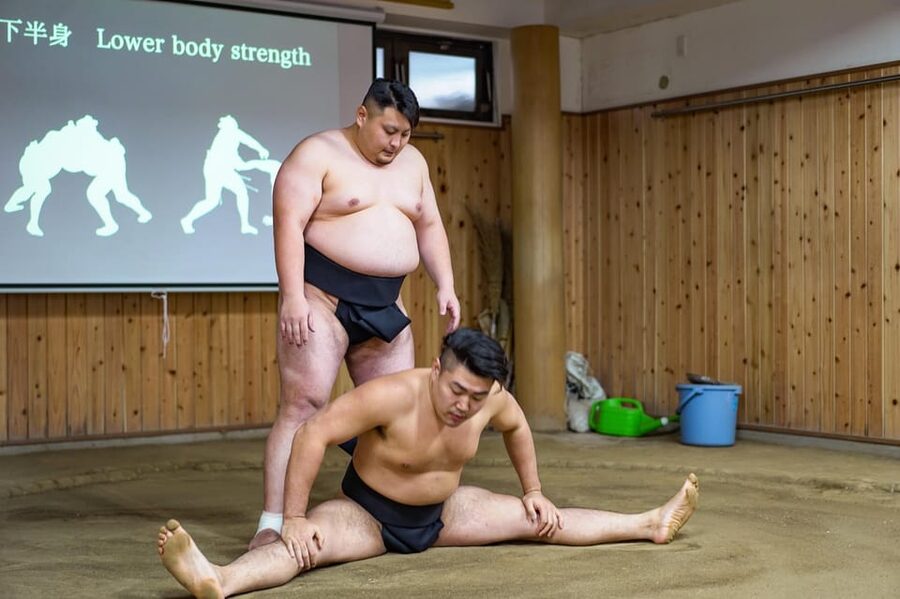
Morning practice is the quiet center of the experience. You take a seat right in front of the ring and watch how the session begins, what movements the wrestlers use, and how they build toward bouts.
This portion may feel slower at first. One participant described the opening as slow, but also found that the four hours passed quickly once the group got involved. That is a fair expectation. Sumo training includes repetition, preparation, and observation, not nonstop matches.
The slower pace is also part of the value. You have time to notice the difference between a formal starting position and the sudden burst of a bout. You can watch the wrestlers repeat basic movements before seeing them apply those skills against each other.
Your guide remains important here. A good explanation turns an unfamiliar sequence into something you can follow. Instead of seeing only two large people pushing, you learn why wrestlers lower their center of gravity, how they try to move an opponent, and what can end a match.
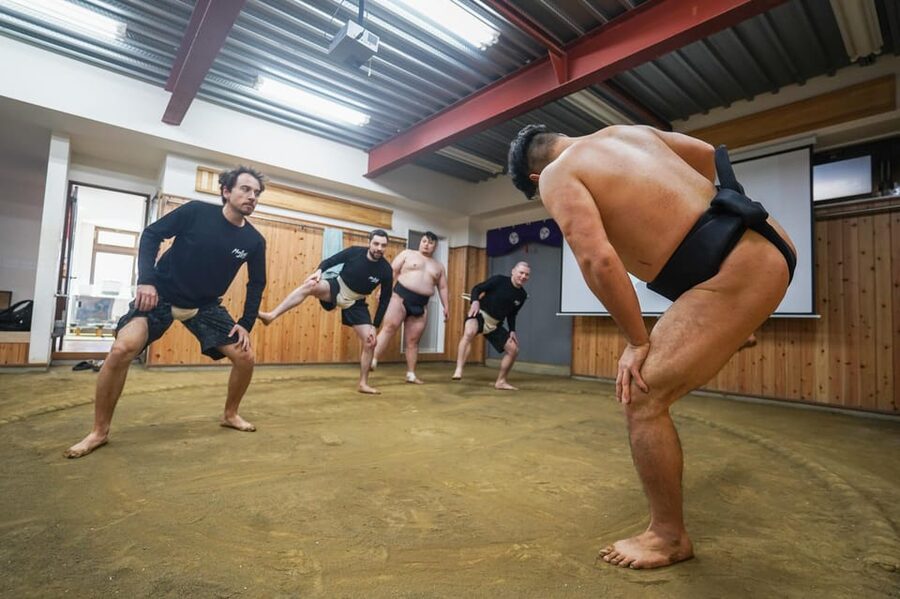
After watching, you get a chance to copy the movements. This is where the experience shifts from demonstration to participation. The exercises are designed for people with little or no sumo background, but you should still take them seriously and follow the guide’s instructions.
Learning the rules before entering the ring
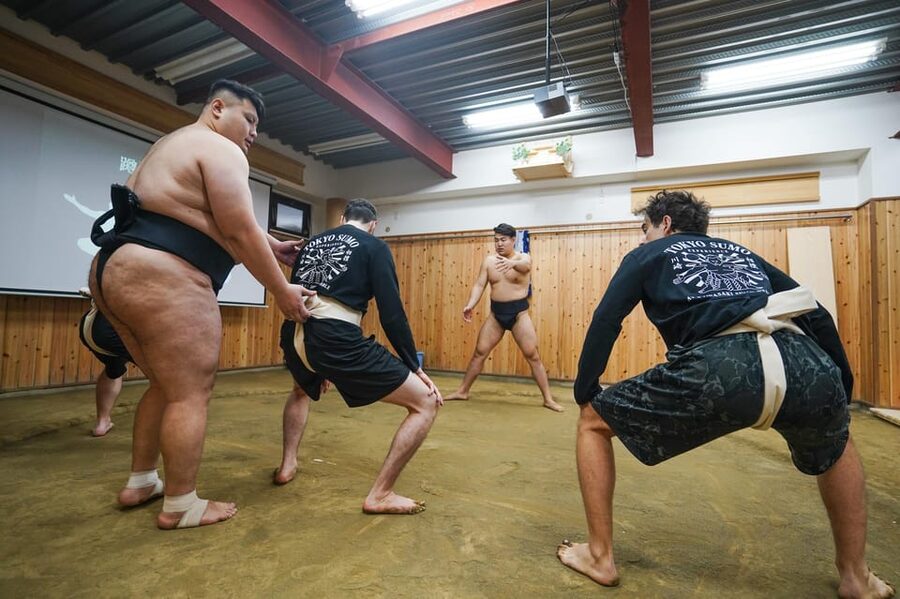
The next section explains sumo rules, moves, and techniques. The wrestlers demonstrate how a match begins, giving you a close look at the ritual before anyone is asked to participate.
That order works well. You first see the professionals, then receive the explanation, then try a simplified version yourself. It prevents the physical activity from becoming a random photo opportunity. You understand what you are attempting, even if your technique is far from polished.
The guides also help create an easy atmosphere for families and first-time visitors. The tone is educational but not stiff. The wrestlers are described as friendly, patient, and funny, and several participants found their good humor made the bouts less intimidating.
If you choose to wrestle, expect a controlled and playful encounter rather than a serious contest. The wrestlers can clearly overpower most visitors, and that difference in strength is part of the joke. You may wear a loincloth for the bout, while other photo opportunities include yukata or kimono dress-up, depending on the session.
You never have to enter the ring. You can watch the demonstrations, try the movements, and enjoy the explanations without wrestling. That makes the activity workable for people who want cultural access but do not want physical contact.
The optional bout with a rikishi
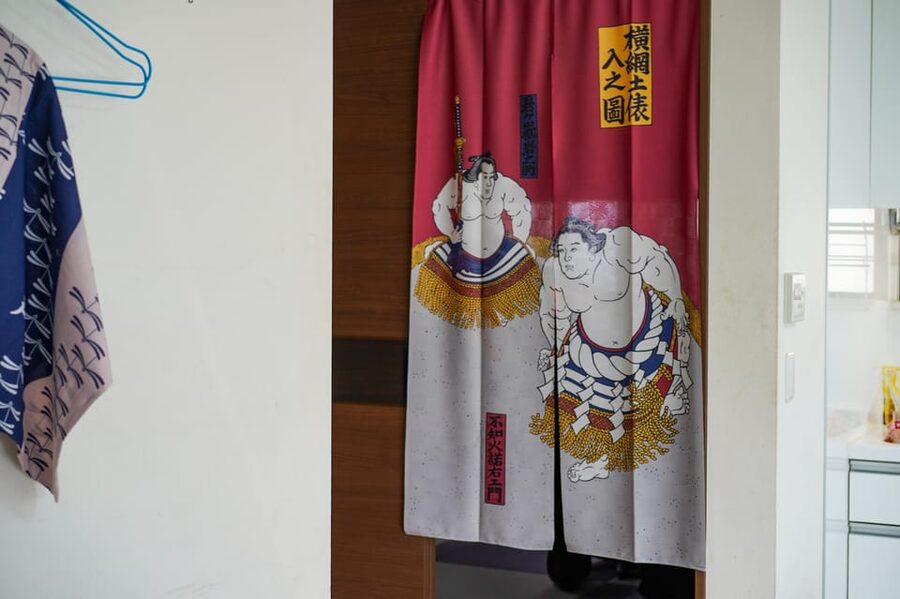
The bout is the most memorable part for many people, but it is also the part that deserves the clearest warning. Sumo wrestlers are much stronger than the average visitor, even when they are being gentle. You may find the experience funny and humbling, but it is not a test of equal strength.
Follow the staff’s instructions and do not treat the match as a chance to prove yourself. The appeal comes from feeling the wrestler’s balance and resistance for a few seconds, not from winning. Several families and couples have enjoyed it, and beginners can take part without knowing the sport in advance.
If you have a medical condition, high blood pressure, a heart problem, or a cold, skip the physical portion or choose another activity. The experience is not recommended for people with those conditions, and it is not a good match for anyone with significant mobility problems.
The physical space also matters. Some parts of the stable are not suitable for wheelchairs or strollers. If you have walking difficulties, the operator recommends a private tour instead, but you should still confirm that the setting meets your needs before booking.
Making chanko-nabe with the wrestlers
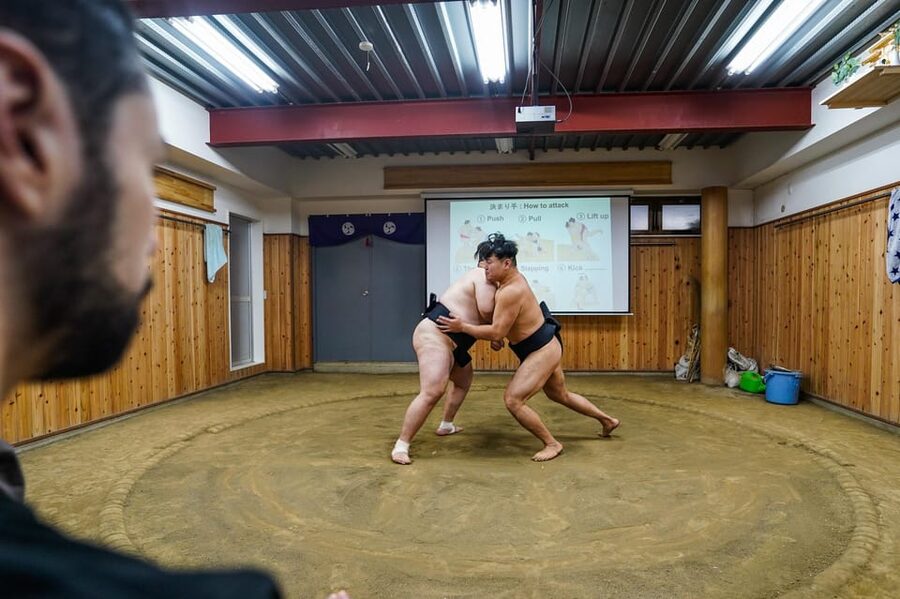
After the practice and bouts, you sit down for lunch. Chanko-nabe is the classic stew associated with sumo wrestlers, and this session lets you make chicken dumplings before eating together around a table actually used in the sumo room.
The meal is more than a convenient lunch stop. It explains how food fits into the wrestler’s routine and gives you time to ask questions without the noise and movement of the practice session. The dish has been described as hearty and satisfying, with the soup receiving especially strong praise.
The shared table also changes the tone. The wrestlers are no longer demonstrating a sport in the ring. You can talk with them, ask about their experiences, and enjoy a relaxed exchange. Their humor helps bridge the language and cultural gap, while the English-speaking guide can clarify questions when needed.
Tell the operator about dietary requests or allergies at least one day before the tour. Vegetarian meals have been arranged when requested in advance, but allergy-free food cannot be guaranteed because the meals are prepared in kitchens that do not belong to MagicalTrip. Same-day requests may not be possible, and substitutions are not guaranteed at every stop.
Additional food and drinks are not included. The lunch itself is included, so most people should not need much extra, but plan to pay separately if you want anything beyond the provided meal.
Photos, handprints, and the included T-shirt
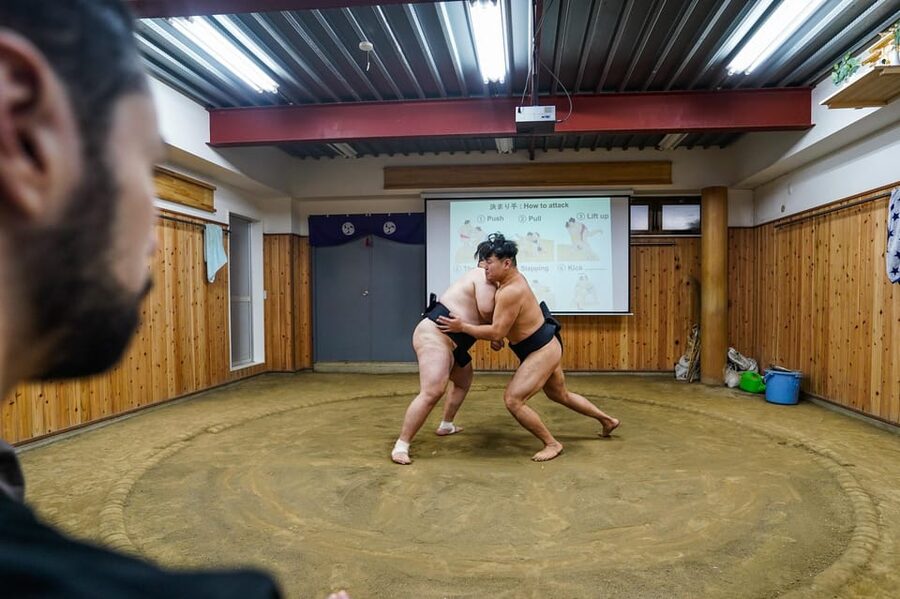
The closing activities add a light souvenir angle. You can take pictures with the wrestlers, pose in traditional clothing such as a yukata or kimono when offered, and make a memorial ink handprint on paper.
You also receive tour photos and a T-shirt. These inclusions help justify the price for people who want a physical reminder of the day rather than only a meal and a short demonstration.
There is one small point to watch. One participant felt that the sales pitch for extra items, including T-shirts and kimono-related products, was an unwanted ending. The included T-shirt is part of the package, but you should not feel obliged to buy anything additional. Treat those products as optional souvenirs.
Is $166 a fair price?
At $166 per person, this is not a cheap lunch excursion. It is also not simply a meal with a costumed performance. The price covers a four-hour English-language experience, transport to and from the meeting point as arranged for the group, access to a former official stable, guided explanations, practice viewing, optional participation, lunch with wrestlers, photos, and a T-shirt.
For comparison purposes, the strongest value comes from the access. You are paying to enter a working sumo setting, sit close to training, and speak with wrestlers over lunch. If you only want to see a match, a tournament ticket or televised bout may make better financial sense. If you want direct contact and context, this outing offers more than a standard spectator experience.
It is particularly good value for a first visit to Japan when you want one activity that combines culture, food, conversation, and comedy. The session can also replace several smaller activities: a sumo introduction, a cooking moment, a traditional clothing photo, and a cultural talk.
The value drops if you dislike group activities, physical demonstrations, or structured explanations. It also drops if you are mainly interested in watching long stretches of serious practice and do not care about lunch, photos, or the optional bout.
Who should book this experience?
I would recommend it to families with older children, couples, friends, and adults who want a clear introduction to sumo. You do not need to understand the sport before arriving, and the guide builds the lesson from basic customs to rules, movements, and practice.
It is also a good fit if you are staying near Yokohama or want a short trip outside central Tokyo. Shin-Kawasaki is easy to identify, and the meeting point has only one station gate.
I would be more cautious if you need full wheelchair or stroller access, have mobility limitations, or cannot tolerate physical exertion. People with heart problems, high blood pressure, colds, or other pre-existing medical conditions should not book this activity without checking with a medical professional and the operator.
Bring curiosity and comfortable clothing. You can decline the bout, but you will get more from the experience if you are willing to try at least a few of the training movements and ask questions at lunch.
Should you book it?
Book this if you want sumo as a human experience, not just a sport on a schedule. The strongest features are the close view of morning practice, the chance to try the movements, and the shared chanko-nabe meal with wrestlers.
Skip it if you want a quiet museum visit, a formal tournament, or a low-cost food tour. For most physically able visitors who want an entertaining and informative introduction, the combination of access, instruction, humor, and lunch makes the $166 price reasonable.
FAQ
Where does the sumo experience meet?
Meet just outside the only ticket gate at Shin-Kawasaki Station, in front of the Kiyoken shumai shop.
How do I identify the guide?
The guide will hold a red or orange sign marked Magical Trip.
How long does the experience last?
The experience lasts four hours, including the stable visit, practice viewing, activities, and lunch.
Is the tour conducted in English?
Yes. The tour includes a live English-speaking guide.
How far is Shin-Kawasaki from Tokyo Station?
The meeting point is about 20 minutes from Tokyo Station.
How far is Shin-Kawasaki from Yokohama Station?
The meeting point is about 10 minutes from Yokohama Station.
Can I wrestle with a sumo wrestler?
Yes, participants who want to can enter the ring for a bout with a sumo wrestler. Taking part is optional.
Is lunch included?
Yes. Lunch includes chanko-nabe, and you can make chicken dumplings before eating with the wrestlers.
Can dietary requests be accommodated?
Tell the operator about dietary requests or allergies at least one day before the tour. Vegetarian food has been arranged in advance, but allergy-free meals and substitutions cannot be guaranteed.
Is the experience wheelchair accessible?
Some locations are not accessible to wheelchairs or strollers. The experience is not recommended for people with mobility problems, and a private tour is suggested for people with walking difficulties.
What happens if I arrive late?
The tour starts on time. If you miss the group because you are late, you cannot join the tour, reschedule, or receive a refund.
What is included besides lunch and the stable visit?
The price includes the guide, sumo stable visit, lunch with sumo wrestlers, tour photos, and a T-shirt. Additional food and drinks are not included.
More Sumo Experiences in Kawasaki
More tours in Kawasaki we've reviewed
Sumo Experiences, compared.
 ★ 4.8Tokyo: Sumo Show Experience with Chicken Hot Pot and a PhotoFrom $1032 hours
 ★ 4.8Tokyo: Sumo Show and Dining ExperienceFrom $7990 minutes - 2 hours
 ★ 5.0the SUMO showFrom $89
 ★ 5.0Tokyo Sumo Entertainment Show with Chicken Hot Pot and PhotoFrom $106
 ★ 4.6Tokyo: Sumo Tournament Tour with Chair Seat TicketsFrom $141
 ★ 5.0Tokyo Grand Sumo Tournament Viewing Tour with TicketsFrom $124