Reviewed · PRIVATE
Private Tour by Car in Tokyo
Tokyo is too large for a quick checklist, and this private car tour tackles that problem by putting your group of up to six in one vehicle for 10 hours. I like the door-to-door transport, especially for families, older visitors, or anyone who would rather not change trains across town. I also like the freedom to shape the day around your priorities, from temples and gardens to anime shops and fish-market lunch.
In This Article
- Key points to know before booking
- Is a private car the right way to see Tokyo?
- What the $520.85 group price really buys
- Senso-ji and Tokyo Skytree: old Asakusa beside the modern city
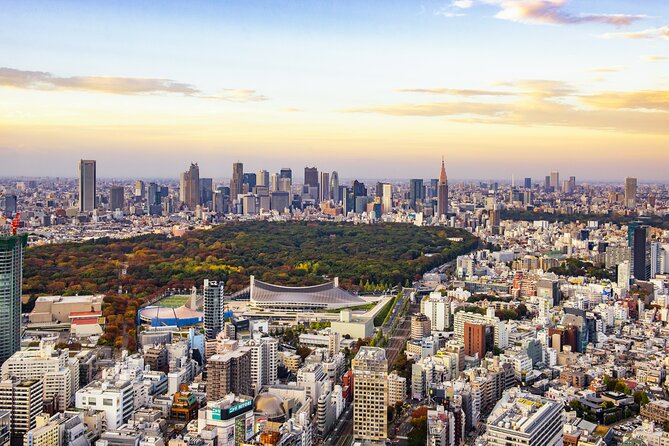
- Meiji Shrine, Yoyogi Park, and Takeshita Street
- Shibuya Crossing in a quick 30 minutes
- Odaiba and the Rainbow Bridge cruise question
- Tsukiji Outer Market is the natural lunch stop
- The Imperial Palace area and Edo Castle ruins
- Tokyo Tower and Akihabara
- Tokyo National Museum needs more than 30 minutes
- The guide question is the make-or-break issue
- Timing, comfort, and practical limits
- Who should book this private Tokyo day?
- Should you book it?
- FAQ
- How long does the private Tokyo car tour last?
- How many people can join the private tour?
- Is hotel pickup available?
- What is included in the price?
- Are Tokyo Skytree tickets included?
- Are Tokyo Tower and Tokyo National Museum tickets included?
- Is lunch included?
- Can I change the itinerary?
- What happens if the Odaiba cruise cannot operate?
The catch is important: this can feel like a chauffeur service rather than a guided sightseeing tour. Some drivers, including Ahsan, Ashan, Sikandar, Adil, and Goraya, have earned praise for being friendly, helpful, and informative, but other passengers received little commentary or local direction. Clarify what kind of guide you are getting before paying.
Key points to know before booking

- Ten hours in a private vehicle: Your group alone uses the air-conditioned car, with fuel, highway tolls, and private transport included.
- A flexible Tokyo route: You can add or remove destinations, rather than follow a fixed sightseeing schedule.
- A wide spread of sights: The day can cover old Asakusa, Meiji Shrine, Shibuya, Tsukiji, the Imperial Palace area, Tokyo Tower, and Akihabara.
- Guide quality can vary: Strong experiences praise Ahsan, Ashan, Sikandar, Adil, and Goraya, while poor experiences describe drivers who mainly dropped passengers off.
- Paid admissions are extra: Tokyo Skytree, Tokyo Tower, and Tokyo National Museum entry are not included, and lunch at Tsukiji is your expense.
- Weather and schedule matter: The Odaiba cruise can be replaced by another stop, and Tuesday cruise suspensions from September affect the plan.
Is a private car the right way to see Tokyo?

The chief benefit is not luxury. It is time and energy.
Tokyo’s rail system is excellent, but the city’s major sights are spread across separate districts. A day that combines Senso-ji, Meiji Shrine, Tsukiji, the Imperial Palace, Tokyo Tower, and Akihabara can require several train rides, station walks, and careful timing. A private car cuts out much of that work.
You are picked up, driven between areas, and returned according to the arrangement made for your group. That is useful if you have limited time in Tokyo, are traveling with children, or have mobility needs. One highly positive experience specifically praised the guides for helping a couple who moved slowly and used a cane.
Still, a car cannot beat the train everywhere. Tokyo traffic can be slow, and a vehicle usually drops you near a sight rather than carrying you through it. At Senso-ji, Tsukiji, Meiji Shrine, and the Imperial Palace grounds, you still walk. The car is a practical link between neighborhoods, not a magic way to avoid Tokyo’s crowds.
Other private tours in Tokyo

What the $520.85 group price really buys
The listed cost is $520.85 per group of up to six, not per person. For six people, that works out to about $87 per person before admissions and lunch. For two people, the per-person cost is much higher.
The price includes the air-conditioned vehicle, private transportation, petrol and gas, highway tolls, and a modern, clean vehicle. That makes the comparison with taxis or ride-hailing less simple than it first appears. You are paying for a full 10-hour block, not just separate trips between attractions.
The value depends on how well the day is handled. A strong driver can collect you at your hotel, adjust the order around traffic, help with practical details, and make a far-flung day manageable. A weak driver can leave you standing at a curb with no useful explanation, which makes the price hard to defend.
Admissions are separate. Tokyo Skytree, Tokyo Tower, and Tokyo National Museum each list an additional fee, with the stated exclusions under $20 for Skytree and under $6 for the tower and museum. Lunch is also extra, and Tsukiji is the natural place to eat. Before booking, decide if you want a sightseeing guide or simply a private car and driver. That single question determines the value more than the vehicle itself.
Senso-ji and Tokyo Skytree: old Asakusa beside the modern city
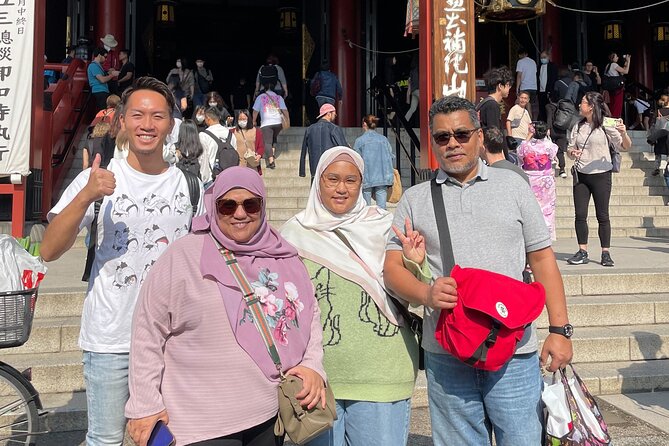
Senso-ji is the day’s best introduction to old Tokyo. The temple is free to enter, and the surrounding approach gives you time to browse souvenirs and try small snacks such as dango and agemanjyu, a deep-fried sweet filled with bean paste.
The suggested hour is enough for a first look, a few photos, and a short wander through the shopping street. It is not enough for a slow exploration of every side lane in Asakusa. If you want to shop or eat here, tell the driver early because every extra stop reduces time elsewhere.
Tokyo Skytree is nearby and offers a very different view of the city. The planned hour does not include admission, so decide in advance if you want to go up. Entry lines, ticket availability, and the time spent in the tower can affect the rest of the day.
There is also a small planning oddity here. Asakusa is described around both Senso-ji and Skytree, but the full itinerary includes many other districts. You will get more from this pairing if you treat the temple as your main visit and choose Skytree only if an observation-deck view matters to you.
Meiji Shrine, Yoyogi Park, and Takeshita Street

Meiji Jingu Shrine gives the schedule a quieter, more wooded setting. It was completed in 1920 and is dedicated to the deified spirits of Emperor Meiji and Empress Shoken. The site connects modern Japanese history with traditional shrine customs.
The shrine itself is free, and one hour gives you a useful visit without turning the stop into a long walk. Yoyogi Park and Takeshita Walking Street are optional additions. Takeshita Street is the place to look for youth fashion, cosplay, and the colorful street culture associated with Harajuku.
These three areas do not provide the same experience. Meiji Shrine is calm and ceremonial, Yoyogi Park is open and green, and Takeshita Street is commercial and youthful. If you want all three, ask for a realistic time plan. They are close enough to pair, but not so close that you can linger everywhere and still reach the later stops.
Shibuya Crossing in a quick 30 minutes

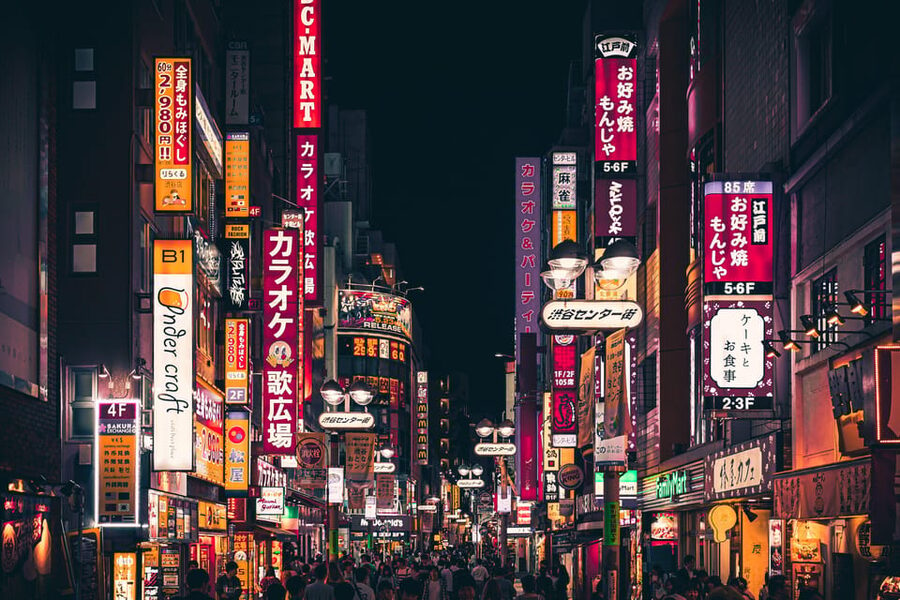
Shibuya Crossing is a short stop, only about 30 minutes, but it gives you one of Tokyo’s clearest modern images. When the signal changes, streams of people cross from several directions, with towers and giant signs rising around the intersection.
The tour description points out its use in films, music videos, newscasts, and animated programs. That media connection explains why the crossing attracts so many cameras, but the real appeal is simply seeing Tokyo’s city rhythm up close.
Thirty minutes works for crossing, taking photographs, and looking for a viewing point. It does not leave much room for Shibuya shopping or a relaxed café break. Ask where the vehicle will meet you afterward. A precise pickup point matters in a crowded district.
Odaiba and the Rainbow Bridge cruise question

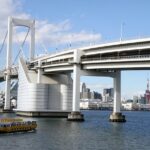
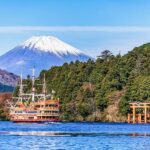
Odaiba is planned as a brief 30-minute stop with a cruise beneath Rainbow Bridge and views toward Tokyo’s high-rise center. That sounds attractive, but this part of the day is the least certain.
The cruise can be changed because of weather, traffic, or events. From September, the cruise is suspended every Tuesday, with Fukagawa Edo Museum or Hamarikyu Gardens used as alternatives. In that case, you will not go to Odaiba.
This is not a flaw by itself. Tokyo activities often depend on weather and operating schedules. It is simply something you need to understand before setting your expectations. If the cruise is a major reason for booking, confirm the operating plan for your date.
Tsukiji Outer Market is the natural lunch stop

Tsukiji Outer Market is one of the strongest stops for a first Tokyo visit. The old wholesale market function moved elsewhere, but the outer market remains a place for seafood restaurants, cooked dishes, raw fish, and small food stalls.
The itinerary allows about an hour, including lunch at your own expense. That is enough for a focused meal and a quick look, but the market can feel crowded and confusing if you arrive without a plan. The driver may take you to the area, but you should not assume that someone will lead you through every lane or choose your food.
This is one of the clearest places where the driver-guide distinction matters. A helpful guide can point out what to try and keep the stop moving. A chauffeur-only experience may leave you to work out the market by yourself.
The Imperial Palace area and Edo Castle ruins

The East Gardens of the Imperial Palace occupy the site of Edo Castle, and the remaining foundations and historic structures offer a glimpse of Tokyo’s shogun-era center. The gardens are free, with seasonal flowers and open space that provide a break from dense city streets.
The schedule gives this area an hour. That is a sensible amount of time for the East Gardens, though the grounds require walking. You can also visit the Imperial Palace’s Outer Garden and Niju-bashi Bridge, but the plan indicates that the visit may focus on either the East Garden or Niju-bashi.
Do not confuse a visit to the palace grounds with entering the Imperial residence. The current Imperial family lives there, but this sightseeing plan centers on the gardens, bridge, and former castle site. Ask which section is included on your day so you know where to meet the car.
Ueno Park is another possible addition, with about 30 minutes suggested. It is especially known for cherry blossoms. Because it is an optional stop, it works best as a seasonal swap rather than another item added to an already full route.
Tokyo Tower and Akihabara
Tokyo Tower is given only 30 minutes, which makes it mostly a photo stop unless you pay to go inside. Its appeal is visual: the familiar orange and white tower brings a retro touch to a city better known for glass towers and giant screens.
The entry fee is not included and is listed as under $6. If you want to visit an observation level, allow more time than a quick exterior stop and accept that another destination may need to go.
Akihabara also receives 30 minutes. This is a useful taste of Tokyo’s electronics, anime, manga, gachapon, and gaming culture. It is not enough for serious shopping, but it can show you the character of the district and help you decide if you want to return on your own.
The same advice applies to both stops: choose your purpose. A photograph at Tokyo Tower and a quick look at Akihabara fit the schedule. Museum visits, shopping, and observation decks need a slower day.
Tokyo National Museum needs more than 30 minutes
The Tokyo National Museum is Japan’s oldest museum, founded in 1872. Its collection covers Japanese art and objects from ancient times through the modern period, including nearly 100 national treasures. Around 3,000 works are displayed at a time.
The suggested visit is only 30 minutes, and admission is not included. That is enough to see a few highlights, not enough to understand the museum as a whole. If Japanese art is a main interest, make this a priority and remove several short stops.
The museum is most useful when you want context. After seeing shrines, castle grounds, gardens, and modern neighborhoods, its galleries can help connect those sights to wider periods of Japanese culture. But it is a poor choice as a rushed final checkbox.
The guide question is the make-or-break issue
The strongest experiences came from drivers who were punctual, friendly, flexible, and willing to adjust the plan. Ahsan was praised for making a thoughtful schedule and helping a couple move at a comfortable pace. Ashan was described as a capable guide in several positive accounts, including a rainy-day visit. Sikandar was praised for explaining the areas visited, while Adil was singled out for warmth, patience, and handling Tokyo traffic well.
Goraya also received credit for careful driving and changing the plan to find cherry blossoms when the season did not match the original expectation. These examples show what the service can be when the assigned person acts as both driver and guide.
The negative side is too serious to ignore. Some experiences involved late arrival, poor English communication, GPS dependence, missed turns, unfamiliarity with the city, or no explanation at the sights. One passenger expected a licensed sightseeing guide and instead received a driver who dropped the group near attractions and left them to explore alone. Another vehicle problem led to a cancellation after the group had already started the day, although a replacement and refund were offered.
The safest approach is to contact the operator before the tour and ask three direct questions:
- Will the assigned person provide commentary at each site?
- Is the person a guide as well as a driver?
- Can you request an English-speaking driver familiar with Tokyo?
The answer may vary by date and staff availability. Do not rely only on the word private. Private describes your vehicle and group, not necessarily the depth of guiding.
Timing, comfort, and practical limits
The tour lasts about 10 hours, but the suggested stops add up to a demanding day. Several visits are only 30 minutes, and Tokyo traffic can change the order. You will get the best result by choosing a few priorities instead of trying to inspect every destination.
Pickup is offered, and confirmation arrives at booking. The vehicle is air-conditioned, private, and described as modern and clean. Service animals are allowed, most people can participate, and the experience is near public transportation, though the main point is that you travel by private vehicle.
Be precise about luggage, walkers, or other equipment. A reported vehicle problem involved a partially foldable walker and insufficient seating. Even when a vehicle is described as suitable for six, usable space can change with mobility equipment. Put those details in writing before the day begins.
The tour offers free cancellation up to 24 hours before the start time. Changes or cancellations inside that window are not accepted for a refund. Cutoff times use Tokyo local time.
Who should book this private Tokyo day?
I would consider it for a family group, a small group of up to six, or anyone who finds Tokyo’s train transfers tiring. It can also work well for a first day when you want a broad orientation, provided your driver is genuinely able to explain the city.
It is less suitable if you want a specialist guide at temples and museums, a food tour through Tsukiji, or long visits inside Skytree and the Tokyo National Museum. Public transport is often better for one neighborhood at a time, and a licensed specialist guide may be a better use of money for serious cultural sightseeing.
Should you book it?
Book this tour if your priority is private transport, flexible routing, and seeing several distant parts of Tokyo in one day. At $520.85 for up to six people, it can be fair value when the group is full and the driver is prompt, helpful, and able to give real commentary.
I would not book without confirming the guiding standard. Ask for an English-speaking driver-guide, request the vehicle size in writing, and agree on your top three or four sights. If the operator can meet those points, the car can make a huge city feel manageable. If you only need explanations and temple context, choose a proper walking or specialist guide instead.
FAQ
How long does the private Tokyo car tour last?
The experience lasts approximately 10 hours.
How many people can join the private tour?
The private vehicle is for one group of up to six people.
Is hotel pickup available?
Yes, pickup is offered. The supplied information does not specify every eligible pickup location, so confirm your hotel when booking.
What is included in the price?
The price includes an air-conditioned vehicle, private transportation, petrol and gas, highway tolls, and a modern, clean vehicle.
Are Tokyo Skytree tickets included?
No. Tokyo Skytree admission is not included, with the listed additional fee under $20.
Are Tokyo Tower and Tokyo National Museum tickets included?
No. Entry to both Tokyo Tower and Tokyo National Museum is separate, with each listed fee under $6.
Is lunch included?
No. Lunch is at your own expense, and Tsukiji Outer Market is the suggested lunch location.
Can I change the itinerary?
Yes. The tour is described as fully customized, so you can add or remove destinations according to your preferences.
What happens if the Odaiba cruise cannot operate?
The cruise may be replaced because of weather, traffic, or events. From September, the cruise is suspended every Tuesday, when Fukagawa Edo Museum or Hamarikyu Gardens is used as an alternative.
More Private Tours in Tokyo
More tours in Tokyo we've reviewed












Private, compared.
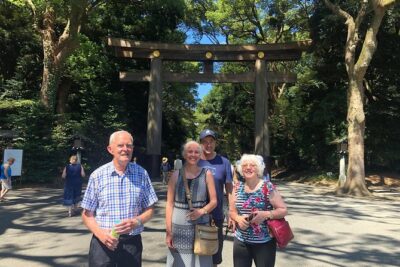 ★ 5.0Tokyo 6hr Private Tour with Government-Licensed GuideFrom $155
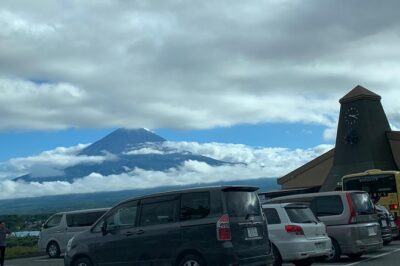 ★ 5.0Private Tour to Mt. Fuji and Hakone (Fully Licenced Operator)From $497
 ★ 5.0Tokyo Customized Private Tour (Must See Places in 1 Day)From $145
 ★ 4.8Tokyo: Private City Highlights Tour with Local GuideFrom $1064 - 8 hours
 ★ 5.0Private Custom Tour: Tokyo in a DayFrom $159
 ★ 5.0Tokyo 4hr Private Tour with Government-Licensed GuideFrom $109