Reviewed · SUMO EXPERIENCES
Tokyo Sumo Morning Practice: Witness the Life of a Wrestler
You sit only a few feet from professional sumo wrestlers as they push, slap, and throw one another across the practice ring. This is not a staged show. It is a working stable, with real athletes preparing for competition under the watch of their stablemaster.
In This Article
- Key points
- Why a Morning at a Sumo Stable Feels So Different
- Meeting the Guide and Walking to the Stable
- Removing Your Shoes and Taking a Floor Seat
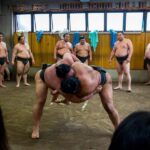
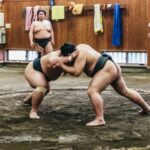
- Watching the Morning Practice Up Close
- Learning the Rules, Ranks, and Rituals
- The Possibility of Seeing a Yokozuna
- Photos After Practice
- What the $121 Price Really Buys
- Who Will Enjoy This Most
- Timing Your Tokyo Morning Carefully
- Etiquette That Matters Inside the Beya
- Should You Book This Sumo Morning Practice?
- FAQ
- Where does the sumo morning practice take place?
- Will the Yokozuna definitely be present?
- How long does the practice last?
- Can I take photos or videos?
- Can I leave the stable during practice?
- Do I need to sit on the floor?
- Is the tour suitable for wheelchair users or people with a cold?
I especially like the close seating and the guide’s live explanations through earbuds, which let you follow the action without breaking the stable’s strict silence. The chance to take photos with wrestlers afterward is another fine touch. The main drawback is comfort: you may sit on a floor cushion for nearly two hours, and you cannot leave halfway through practice.
Key points
- Watch training at a stable linked to a Yokozuna, though the champion’s attendance is not guaranteed on your date.
- Sit directly beside the practice ring and see the wrestlers’ strength, speed, and technique at close range.
- Learn the ranking system, rules, rituals, and stable life before practice begins.
- Listen to live commentary through earbuds, so you can understand the action while remaining silent.
- Take photos with wrestlers afterward, depending on the day’s practice schedule and stable arrangements.
- Plan for floor seating, bare feet, silence, and no bathroom break until the visit ends.
Why a Morning at a Sumo Stable Feels So Different

A professional sumo stable, or beya, is both a training hall and a home. Wrestlers live together under the direction of an oyakata, the stablemaster. They share meals, follow a strict ranking system, and divide household duties according to rank.
That structure gives this experience its special character. You are not simply watching athletes work out. You are seeing part of a demanding way of life that has rules for posture, manners, chores, meals, and daily training.
The stable visited on this tour is connected with a Yokozuna, the highest rank in sumo. Only one active wrestler can hold that title at a time, and his presence on the morning you visit is not promised. The stable also has an unusually high number of professional wrestlers, so the practice can include a wide range of ranks and body types.
I like this setting because it puts sumo in context. At a tournament, you see the polished public side: ceremonial entrances, formal costumes, banners, and a large crowd. Here, you see the work that comes first. The wrestlers repeat movements, test balance, and absorb hard contact long before the public bout.
A few more Tokyo tours and experiences worth a look
Meeting the Guide and Walking to the Stable

The exact meeting time and location can change by tour date. After booking, you receive the final details. You meet in front of the stable or at a nearby meeting point, where the guide carries a Japan Wonder Travel sign.
From the meeting point, the walk to the practice space can be short. One reported departure included a walk of about seven minutes. Still, do not treat this as a casual arrival. Use the restroom before meeting, keep your phone on silent, and arrive ready to follow the guide’s instructions.
An English-speaking guide gives you an introduction before you enter. Yuki, one guide named in the tour information, explains the stable, the ranking system, and the basics of sumo in a clear briefing. The guide also helps translate questions after practice, when that is possible.
The earbuds are a practical advantage. You can hear explanations while the wrestlers continue their work, rather than relying on a guide to speak loudly in a quiet room. This matters because the stable requires silence during training.
Removing Your Shoes and Taking a Floor Seat
Inside the stable, you remove your shoes. Seating may be on zabuton cushions placed on the floor, rather than on normal chairs. A folding-chair arrangement has also been used on some dates, so the setup can vary, but you should prepare for low seating and limited movement.
If you have stiff knees, back problems, or trouble getting up from the floor, this may be a serious concern. The experience is not suitable for wheelchair users, and the long seated period can be harder than the price or walking distance suggests.
The room itself is part of the lesson. You are close enough to hear feet strike the floor and bodies collide. That closeness also means you must behave carefully. Do not stretch your legs toward the ring, since showing the soles of your feet to the wrestlers is considered rude.
You also cannot leave during practice. Use the restroom beforehand, silence your cellphone, and settle in for the full session. Food, sunglasses, flash photography, and video recording are not allowed.
Watching the Morning Practice Up Close

The training begins with preparation and repeated exercises. Wrestlers work on the movements that make sumo more than a test of size. You may see them practice pushing, bracing, balance, footwork, and throws as they work with sparring partners.
The sound is striking. Contact is heavy, but the action is often quick. A wrestler must read a partner’s movement, place his feet well, and use leverage before the opponent can gain control. From a few feet away, you notice details that can disappear in a large tournament arena.
Practice is not arranged for easy viewing. There may be pauses, individual exercises, and periods when only part of the room is active. That is a benefit if you want the real routine, but a drawback if you expect a nonstop demonstration.
The session usually lasts around 75 to 105 minutes based on reported schedules, though the total experience can be longer. One departure lasted about an hour and 45 minutes, while another was described as a three-hour experience that included additional time around the stable. The practice can finish earlier or later depending on what the wrestlers are doing that morning.
I would not book this if you need a tightly timed attraction before a train or restaurant reservation. The stable controls the pace, not the tour company.
Learning the Rules, Ranks, and Rituals

The guide’s introduction helps you understand what you are seeing. Sumo has a strict hierarchy, and a wrestler’s rank affects his duties inside the stable as well as his place in competition.
Lower-ranked rikishi handle much of the daily work. They may run errands, clean, prepare meals, and assist higher-ranked wrestlers with personal tasks. The stable is a shared household, but it is not an equal one. Rank shapes daily life.
The guide also explains the sport’s customs and rituals. That background is valuable because the practice itself may look repetitive at first. Once you know the purpose of the movements and the importance of rank, small actions become easier to read.
Sumo is often called Japan’s national sport, but this visit shows why it is also a social institution. The training, food, living arrangements, and etiquette all fit together. You get more from the morning when you treat it as a look at Japanese sporting culture, not just a chance to see large men collide.
A few more Tokyo tours and experiences worth a look

The Possibility of Seeing a Yokozuna

The stable is one where a Yokozuna trains, which is a major reason for the price and limited access. But the champion may not be present. The schedule, health, competition calendar, and stable routine decide who trains on a particular morning.
Do not book this with the promise that you will see one specific wrestler. Book it because the stable itself offers rare access. If the Yokozuna is there, it can be a memorable bonus. One morning, Terunofuji was present and instructing, while Enho was also at the stable but spent most of the time exercising separately rather than entering the practice ring.
That example also shows why expectations matter. Even when a famous wrestler is in the building, he may not be the focus of the session. The most rewarding part is watching the whole training system, from lower-ranked wrestlers to senior figures.
Photos After Practice

Photography rules are strict during training. You cannot use flash, and video recording is not permitted. The room must remain quiet, so your phone should be silent, including any camera shutter sound.
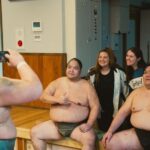
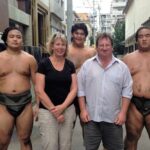
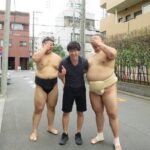
After practice, there may be a group photo with wrestlers. The arrangement depends on the stable’s schedule and how the session ends. On one morning, photos were taken outside with four wrestlers, including Enho. On another, the group photographed inside with the wrestlers in front of the ring after training finished.
This is a photo opportunity, not a long meet-and-greet. You should be ready to follow directions and keep the process moving. The guide may also translate questions, giving you a short chance to ask about the sport or the wrestlers’ routine.
I value this part because it gives the morning a friendly finish. Still, the photo should be treated as an extra. The core experience is the silent practice, not personal access to each wrestler.
What the $121 Price Really Buys

At $121 per person, this is not a cheap way to fill a morning. You are paying for access to a place that most independent visitors cannot enter, plus an English-speaking guide who explains an unfamiliar sport in real time.
The value is strongest for people who already have an interest in sumo, Japanese customs, or behind-the-scenes cultural experiences. The close seating changes the experience completely. You are not watching from a distant arena seat, and you are not seeing a performance created for tourists.
The price is harder to justify if you only want a quick introduction to sumo. A tournament ticket, museum visit, or public demonstration may offer more flexibility, though none provides the same look at an active stable’s daily work.
I also would not compare this with an ordinary sightseeing tour. The stable’s rules limit comfort and freedom. You cannot eat, film, chat, stretch your legs toward the ring, or leave whenever you wish. Those limits are part of the cost of seeing the real routine.
Who Will Enjoy This Most

I recommend the experience most strongly for:
- Sumo fans who want to watch serious training at close range
- First-time visitors who want a cultural activity beyond temples and shopping
- People who enjoy observing work routines rather than staged performances
- Travelers comfortable sitting quietly on a floor cushion
- Visitors willing to follow Japanese etiquette carefully
It may not suit young children who cannot remain silent, people with a cold, or anyone who needs regular bathroom access. Dietary restrictions cannot be accommodated, and food is not part of the stated inclusions.
The group size can be modest. One reported morning had around 10 to 12 participants. A smaller group helps everyone see the ring, but the room is still a working space, not a private theater.
Timing Your Tokyo Morning Carefully

The timing can vary, so leave room around the tour. A 9:30 departure and a 10:30 departure may not end at exactly the same point in the practice schedule. One later morning appeared to finish close to the wrestlers’ end of training, which allowed photos inside with the full group.
The activity ends back at the meeting point. Since the practice may run shorter or longer, avoid booking a timed attraction immediately afterward. Keep your plans simple, and you will enjoy the morning more.
Wear clothing that allows you to sit comfortably. You also need to remove your shoes, so clean socks are a sensible choice. Avoid bringing food or anything that might make noise while you sit.
Etiquette That Matters Inside the Beya
The stable is a place of work and residence, not a theater. Silence is required while the wrestlers practice, and your phone must remain on silent. Do not record video, use flash, or make sudden movements for a better picture.
The rule about your feet may seem unusual, but it is easy to follow. Keep your legs folded or positioned respectfully, and do not point your soles toward the ring.
You may see behavior that feels unfamiliar or intense. Training is demanding, and stable discipline is strict. One morning included a lower-ranked wrestler being disciplined in a way that some people may find upsetting. It was not presented as a normal part of every visit, and even the guide was surprised by it. If you are uncomfortable seeing harsh sporting discipline, keep this possibility in mind.
Should You Book This Sumo Morning Practice?
Book it if you want a close, serious look at sumo as a sport and a way of life. The best features are the working stable, the near-ring seating, the clear briefing, and the live commentary through earbuds. The photo with wrestlers is a welcome bonus.
Skip it if you want a flexible, casual attraction or cannot sit quietly on the floor for an extended period. Also, do not book solely to see the Yokozuna, since his attendance cannot be confirmed before the morning itself.
For the right visitor, $121 buys access that is difficult to arrange alone. Go in with patience, follow the stable’s rules, and you will see far more than a simple wrestling demonstration.
FAQ
Where does the sumo morning practice take place?
It takes place at a real Tokyo sumo stable linked to a Yokozuna. The exact location and meeting time can vary by tour date, with final details sent after reservation.
Will the Yokozuna definitely be present?
No. The stable is where the Yokozuna trains, but it is not known until the morning whether he will attend practice.
How long does the practice last?
The length can vary according to the day’s training. Reported sessions range from about 75 minutes to nearly two hours, while the full experience can sometimes last longer.
Can I take photos or videos?
Photography is allowed under strict conditions, including the photo opportunity after practice. Flash photography and video recording are not allowed, and cellphone shutter sounds must be turned off.
Can I leave the stable during practice?
No. You cannot leave in the middle of the practice, so use the restroom before arriving at the meeting point.
Do I need to sit on the floor?
You should be prepared to sit on a zabuton floor cushion for the practice. Folding chairs have been used on some dates, but seating arrangements can vary.
Is the tour suitable for wheelchair users or people with a cold?
No. The experience is listed as unsuitable for wheelchair users and people with a cold. Dietary restrictions also cannot be accommodated.
More Morning in Tokyo
More Sumo Experiences in Tokyo

More tours in Tokyo we've reviewed












Sumo Experiences, compared.
 ★ 4.8Tokyo: Sumo Show Experience with Chicken Hot Pot and a PhotoFrom $1032 hours
 ★ 4.8Tokyo: Sumo Show and Dining ExperienceFrom $7990 minutes - 2 hours
 ★ 5.0the SUMO showFrom $89
 ★ 5.0Tokyo Sumo Entertainment Show with Chicken Hot Pot and PhotoFrom $106
 ★ 4.6Tokyo: Sumo Tournament Tour with Chair Seat TicketsFrom $141
 ★ 5.0Tokyo Grand Sumo Tournament Viewing Tour with TicketsFrom $124