Reviewed · SHIBUYA TOURS
Tokyo: Shibuya Highlights Walking Tour & Secret View Spot
The clever part of this Shibuya tour is that it gives you both sides of the district. You get the famous spectacle of Shibuya Crossing, then step into quieter corners, food alleys, and a local view of the city that is easy to miss on your own.
In This Article
- Key Points to Know Before You Book
- Why This Shibuya Walk Works Well
- Meeting Hachiko Beside Shibuya Station
- Crossing the Famous Shibuya Scramble
- Shibuya Scramble Square and the City View
- Nonbei Yokocho, Shibuya’s Narrow Food Alley
- Miyashita Park, an Urban Break
- Center-Gai and Shibuya’s Youth Culture
- Shibuya Mark City and the Return Walk
- What $23 Really Gets You
- Pace, Weather, and Who Should Book
- Should You Book This Shibuya Walking Tour?
- FAQ
- Where does the Shibuya walking tour start?
- How do I identify the guide?
- How long does the tour last?
- What is the price?
- Which languages are available?
- Is Shibuya Crossing included?
- Does the tour include food or drinks?
- Is transportation included?
- Is the tour wheelchair accessible?
- What happens if it rains?
- Can I cancel for a full refund?
- Do I have to pay when I reserve?
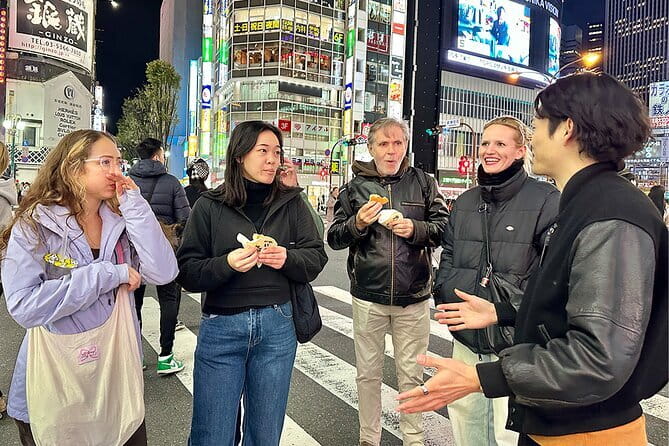
I like the way the tour combines major sights with practical help. Guides such as Mao, Sakura, Ayaka, Noa, and Sota have helped visitors with restaurant ideas, train navigation, photo spots, Japanese customs, and even what to order. I also like the compact 90-minute route, which gives you a useful introduction without taking half a day.
The main consideration is pace. You cover many places in a short time, and Shibuya is crowded, noisy, and full of traffic signals and stairs in places. You will not have time for a full meal or long shopping stops, and food and drinks are not included.
Key Points to Know Before You Book
- Start at Hachiko: Meet in front of SHIBU HACHI BOX near the Hachiko Gate of JR Shibuya Station.
- See Shibuya from above: The route includes Shibuya Scramble Square, and guides can point you toward useful views of the crossing.
- Visit local food lanes: Nonbei Yokocho offers a more intimate contrast to Shibuya’s huge signs and modern towers.
- Get useful Tokyo advice: Guides often help with restaurants, ramen, shopping, train travel, photos, and local etiquette.
- Good value at $23: You are paying mainly for orientation and local context, not meals, transport, or attraction tickets.
- Rain or shine: Bring an umbrella or raincoat if the forecast looks wet.
Why This Shibuya Walk Works Well
Shibuya can feel like several cities stacked on top of each other. At street level, you have giant video screens, fashion stores, packed sidewalks, and the famous crossing. A few minutes away, you can find narrow lanes, small eateries, and tucked-away spaces where young Tokyo residents meet.
That contrast is the real reason to book this walk. You could visit Hachiko and cross the intersection without a guide. You could also walk through Center-Gai and Miyashita Park alone. The value comes from having someone explain what you are seeing, point out places you might otherwise pass, and help connect the district’s past with its current pop culture.
The guides speak English and Japanese. Names praised for clear English and friendly explanations include Sota, Noa, Mao, Ayaka, Sakura, Hannah, Tomo, and Yuki. Your guide will depend on the departure, but the activity is designed around a local guide rather than an audio recording or a fixed script.
I would book this near the beginning of a Tokyo stay. The route gives you a feel for how Shibuya is arranged, and the food and transport advice can help with the rest of your visit. It is also a sensible first activity if the thought of navigating Shibuya Station alone feels daunting.
A few more Tokyo tours and experiences worth a look


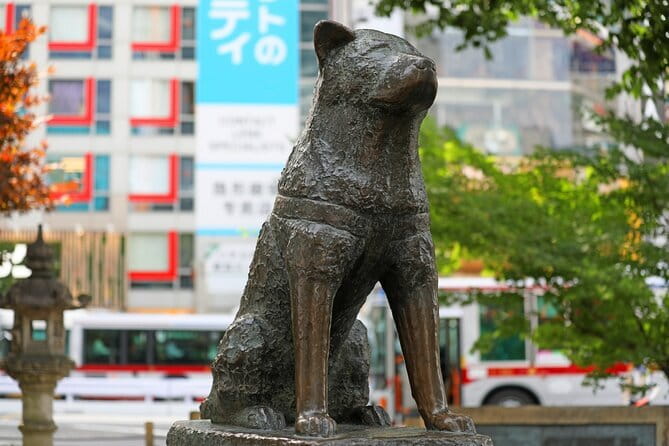
Meeting Hachiko Beside Shibuya Station
The tour begins in front of SHIBU HACHI BOX, at 2-1-1 Dogenzaka, Shibuya-ku. It is near the JR Shibuya Station Hachiko Gate and Tokyo Metro Exit A8.
This is a logical starting point because Hachiko is one of Shibuya’s best-known meeting places. It is also a busy spot, so give yourself time to find the correct exit and look for the guide holding a Local Guide Stars sign. One person specifically found the guide difficult to identify at the meeting point, so do not simply wait near the station and assume you are in the right place.
Hachiko is more than a photo stop. The guide uses the statue to explain the area’s background and its place in modern Tokyo. You can expect a short introduction here before the group moves into the main flow of Shibuya.
Because this is a public meeting area, keep an eye on your belongings and arrive ready to walk. The activity is listed as wheelchair accessible, but the route moves through crowded urban spaces, so it is sensible to confirm any specific access needs when booking.
Crossing the Famous Shibuya Scramble
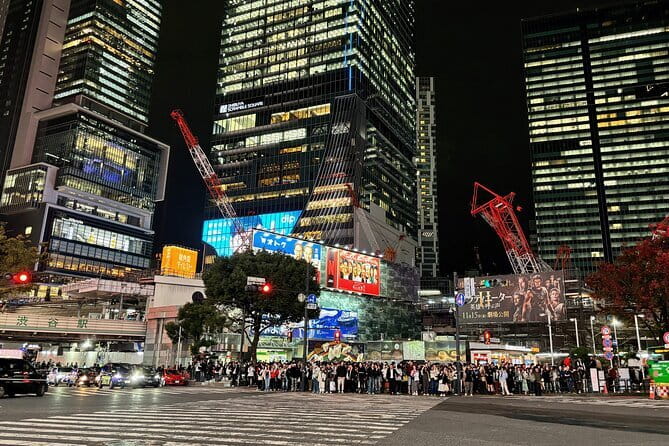
Next comes Shibuya Crossing, the scene most people picture when they think of Tokyo. When the traffic stops, pedestrians move in several directions across the intersection. From ground level, the experience is less about one grand monument and more about being part of a carefully managed human tide.
The crossing visit lasts about 10 minutes. That is enough for an explanation, a few photographs, and a chance to cross, but not enough to linger through many signal changes. Your guide can help you understand where to stand and when to move.
The guide can also help with photos. Several guides have taken pictures for participants, which is useful because the crossing is not easy to photograph while you are walking through it. If you want a clean shot of the whole intersection, ask about the nearby upper-level viewpoints.
Shibuya Scramble Square and the City View
The stop at Shibuya Scramble Square lasts around 10 minutes. This gives the tour a change of height and pace after the crossing. The building is one of the modern landmarks that has reshaped the station area, and it provides a useful way to understand just how dense Shibuya is.
The secret view spot is one of the tour’s most appealing details. A guide can show you a place to look down toward the crossing without waiting in a long line, according to the experience provided by participants. Treat this as a guide-led viewpoint rather than a guaranteed admission to a paid observation deck. The exact view and access may depend on the route and conditions that day.
This stop is particularly helpful for photographers. From above, the crossing becomes a pattern of movement rather than a wall of people. You also get a better sense of the surrounding towers, roads, and station complex.
Nonbei Yokocho, Shibuya’s Narrow Food Alley
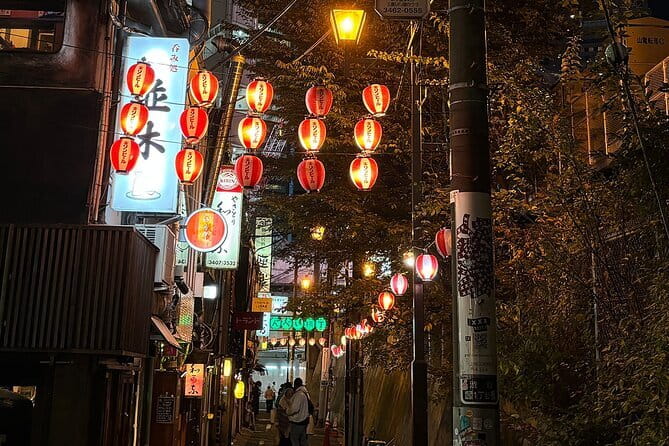
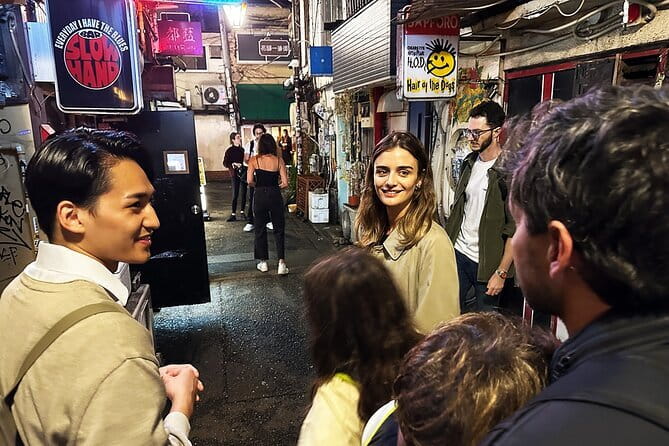
Nonbei Yokocho, or Drunkard’s Alley, offers a sharp change from the polished towers around the station. Its narrow lanes are lined with small eateries and drinking spots. It is the kind of place that can be hard to understand from a map because the charm comes from the tight scale and local atmosphere.
The visit is planned for about 10 minutes, so you should not expect to sit down for a meal. Instead, you get a quick look at a more intimate side of Shibuya and a chance to ask your guide how the area works.
Food is not included, but the guide may suggest places to eat later. Mao, Tomo, Noa, and several other guides have given restaurant recommendations, including ramen and local-style restaurants. One useful pattern from the tour is that the best meal advice often comes after you explain what you like, rather than simply asking for the most famous restaurant.
Other walking tours we've reviewed in Tokyo



Miyashita Park, an Urban Break
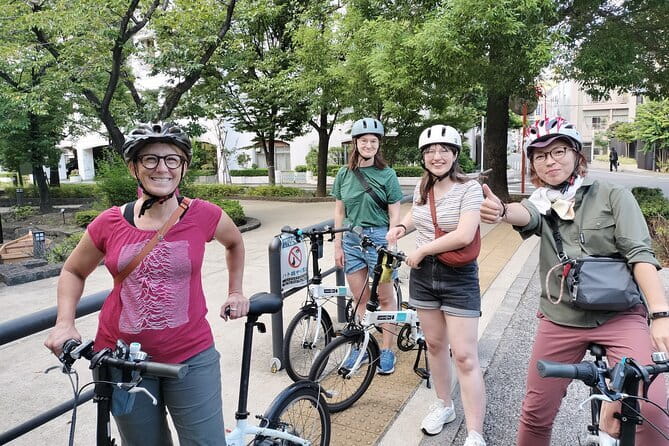
Miyashita Park receives the longest single stop, about 20 minutes. This modern urban park gives you a break from the packed station district and shows how Tokyo has turned limited city space into a place for recreation, shopping, and social life.
The park is popular with young people, making it a good place to discuss present-day Shibuya rather than only its past. Your guide can explain how the area fits into the district’s changing identity, including the mix of public space, shops, and gathering places.
I like this part of the route because it prevents the tour from becoming a parade of intersections. You get a place to pause, look around, and talk. In hot weather, the break can also help. One participant appreciated moving in and out of air-conditioned areas during a summer walk.
Still, Miyashita Park is not a quiet garden in the traditional Japanese sense. It is an urban park in a busy district. If you are hoping for temples, old wooden buildings, or a calm natural setting, this is not that kind of stop.
Center-Gai and Shibuya’s Youth Culture
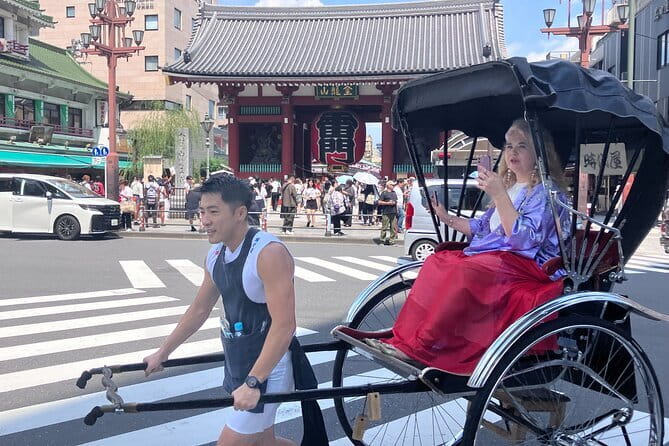
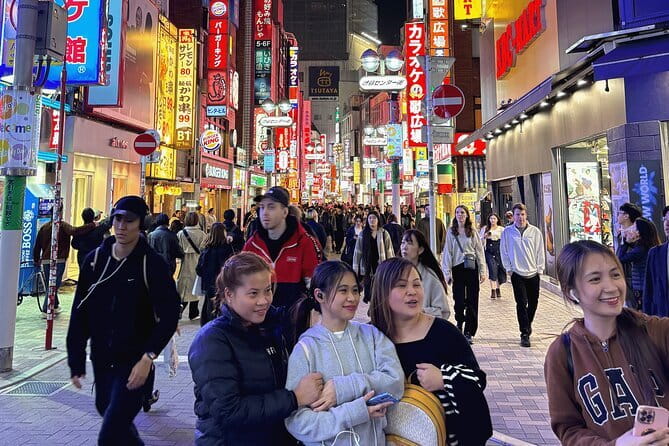
The tour then spends about 20 minutes around Shibuya Center-Gai. This is where Shibuya’s youth culture is most visible. Neon-lit restaurants, bars, clothing shops, signs, and crowds create the district’s famous energy.
The timing matters. At night, the area becomes especially lively, but even daytime visits can feel intense. A guide helps you read the scene without getting swallowed by it. You can ask about Japanese fashion, food choices, nightlife customs, and the local habits that are not obvious to someone seeing the area for the first time.
This is also a useful place for shopping advice. The route does not include dedicated shopping time, but guides can point out the types of stores and streets that fit your interests. If you want to return later, make a note of the places your guide recommends.
Do not expect a slow stroll here. You will be walking through active commercial streets, and the group may need to pause at the edge of crowds. Wear comfortable shoes and keep your route flexible if you plan to continue exploring after the tour.
Shibuya Mark City and the Return Walk
The final major stop is Shibuya Mark City, with about 20 minutes planned there before the group returns to SHIBU HACHI BOX. This part of the route helps tie the district together because Mark City connects transport, shopping, and the wider station area.
It is also a useful point for questions. Guides have helped people work out train routes and decide where to eat next. Yuki even continued helping a participant after the scheduled walk, but you should treat that as personal kindness rather than part of the guaranteed service.
The tour finishes where it began. That makes it easier to continue independently, return to the station, or follow a restaurant suggestion nearby. Since hotel pickup and drop-off are not included, you will need to make your own way to and from the meeting point.
What $23 Really Gets You
At $23 per person, this is a reasonably priced orientation walk. You are not paying for a museum entrance, meal, private car, or observation deck ticket. You are paying for a local person to organize the route, explain the surroundings, and help you make better use of your time in Shibuya.
That is good value if you are new to Tokyo or uneasy about crowded city districts. A guide can save you time finding the right viewpoint, introduce you to streets you might skip, and give you advice that is useful for the rest of your trip.
The value is lower if you already know Shibuya well or prefer to explore without a schedule. You can see the crossing, Hachiko, Center-Gai, and Miyashita Park on your own. The tour earns its price through context and conversation, not exclusive access to major attractions.
Food, drinks, transportation, and hotel transfers cost extra. Plan to buy your own meal after the walk if a food recommendation catches your interest.
Pace, Weather, and Who Should Book
The route is short but full. In 90 minutes, you visit seven points or areas and return to the starting place. That makes it efficient, but it also means the tour is not designed for long stops, serious shopping, or extended photography.
I would recommend it to first-time Tokyo visitors, families, couples, solo visitors, and anyone who wants a friendly introduction to Shibuya. It also suits people who like to ask questions. The strongest guide experiences have included help with Japanese etiquette, restaurant choices, train travel, and photo-taking.
It may be less suitable if you want a slow food tour or a detailed architectural walk. It is also worth thinking about the weather. The tour runs rain or shine, so bring an umbrella or raincoat. On hot days, the amount of walking and the crowded streets may feel tiring, although the route includes indoor and air-conditioned stops.
The tour is available in English and Japanese, and it is wheelchair accessible. Free cancellation is available up to 24 hours before the activity, and you can reserve now and pay later, which helps if your Tokyo schedule is still shifting.
Should You Book This Shibuya Walking Tour?
Book it if you want to understand Shibuya quickly rather than simply take a photograph at the crossing. The best reasons are the local viewpoint, the practical restaurant and train advice, the chance to see Nonbei Yokocho and Miyashita Park, and the help finding a good view from above.
I would especially book it during your first few days in Tokyo. You can use the tour to get your bearings, then return to Center-Gai, the station area, or the food alleys later on your own.
Skip it if you already know Shibuya well or want a longer, food-focused experience. For most first-time visitors, though, $23 is a fair price for a compact introduction led by a local guide who can make this complicated district feel easier to read.
FAQ
Where does the Shibuya walking tour start?
It starts in front of SHIBU HACHI BOX at 2-1-1 Dogenzaka, Shibuya-ku, Tokyo 150-0043. The meeting point is near JR Shibuya Station Hachiko Gate and Tokyo Metro Exit A8.
How do I identify the guide?
The guide will be waiting with a Local Guide Stars sign.
How long does the tour last?
The walking tour lasts 90 minutes.
What is the price?
The listed price is $23 per person.
Which languages are available?
Live guiding is available in English and Japanese.
Is Shibuya Crossing included?
Yes. The tour includes a visit to Shibuya Crossing, described as the busiest crossing in the world.
Does the tour include food or drinks?
No. Food and drinks are not included.
Is transportation included?
No. Transportation is not included, and there is no hotel pickup or drop-off.
Is the tour wheelchair accessible?
Yes. The activity is listed as wheelchair accessible.
What happens if it rains?
The tour operates rain or shine. Bring an umbrella or raincoat in wet weather.
Can I cancel for a full refund?
Yes. You can cancel up to 24 hours in advance for a full refund.
Do I have to pay when I reserve?
No. The reserve-now, pay-later option allows you to book without paying immediately.
More Walking Tours in Tokyo
More Shibuya Tours in Tokyo


More tours in Tokyo we've reviewed












Shibuya Tours, compared.
 ★ 5.0Official Street Go-Kart in ShibuyaFrom $76
 ★ 5.0Shibuya Meltdown Nightlife Tour: All-You-Can-Drink Bar HoppingFrom $106
 ★ 4.9Tokyo: Street Kart Experience in ShibuyaFrom $99
 ★ 5.0Shibuya Official Street Go-Kart in Shibuya AnnexFrom $69
 ★ 5.0Tokyo: Shibuya Food Tour (13 dishes and 4 Eateries)From $77
 ★ 5.0Best of Shibuya Food TourFrom $217