Reviewed · SUSHI MAKING CLASSES
Sushi-Making Experience at ’Activity Maison Kissako’
Toyosu Market is more than a place to look at fish behind glass. On this early morning experience, you enter parts of Tokyo’s working wholesale market, shop for ingredients with a guide, and then take those ingredients into a sushi kitchen. The best part is the clear link between market, knife, rice, and plate.
In This Article
- Key points to know before booking
- Why this Tokyo sushi class feels different
- Starting at 7 a.m. with hotel pickup
- Entering Toyosu’s wholesale side
- Tea, wasabi, knives, and the tools behind sushi
- Choosing ingredients from Tokyo’s restaurant supply chain
- Learning to fillet fish and shape sushi
- Eating your own 10 to 12 pieces
- What the $283.11 price includes
- Who should book this experience
- Practical details that affect your morning
- Should you book the Toyosu sushi class?
- FAQ
- Where does the sushi-making experience take place?
- What time does the tour start?
- Is hotel pickup included?
- Is hotel drop-off included?
- How many pieces of sushi will I make?
- Does the experience include fish preparation?
- Can dietary requirements be accommodated?
- What happens if the tour is canceled?
I like the small group of up to 10 people, which gives the chef room to help beginners. I also like the visit to specialist shops, including a historic knife store and suppliers connected with famous restaurants. The main drawback is the price, $283.11 per person, and the 7 a.m. start. This is a serious half-day food experience, not a quick sushi lesson.
Key points to know before booking
- You visit Toyosu’s professional wholesale area: The first part includes five to seven stores that supply high-end restaurants, including Yamayuki.
- You shop before you cook: Tea, wasabi, vegetables, knives, and fish all get attention before the class begins.
- You prepare 10 to 12 pieces: The chef teaches both nigiri and gunkan sushi, with fish preparation included.
- Your meal comes from the market: You eat the sushi you make, with ingredients bought during the morning.
- Hotel pickup is included: The tour starts at 7 a.m., but hotel drop-off is not provided.
- The pace can be quick: Walking through the professional market area may require keeping up with the guide.
Why this Tokyo sushi class feels different
Many sushi classes begin with ingredients already portioned and neatly arranged. This one starts earlier, at the source. You see where professional restaurants buy their supplies, visit several specialist shops, and then use the morning’s purchases in class.
That order matters. It helps you understand sushi as a chain of decisions rather than a simple act of placing fish on rice. The quality of the fish matters, but so do the knife, the rice, the seasoning, the handling, and the timing.
The experience is aimed at beginners, so you do not need professional cooking skills. Still, the subject is treated with respect. You are not simply decorating rolls for a photograph. You learn how to open and fillet fish, then shape classic sushi under the direction of a working sushi chef.
The four-hour format gives the experience room to breathe. You have about two and a half hours in the market before the cooking session, followed by roughly 90 minutes at the sushi restaurant. That makes this a food-focused morning rather than a sightseeing stop squeezed between larger Tokyo attractions.
A few more Tokyo tours and experiences worth a look
Starting at 7 a.m. with hotel pickup
The day begins from your hotel lobby at 7 a.m. Hotel pickup is included, but you need to provide your hotel details when booking. Since there is no hotel drop-off, plan the rest of your day from the market area or expect to make your own way back.
The early start is not just a nuisance. It fits the rhythm of a wholesale market, where the useful action happens in the morning. You see Toyosu while professionals are sourcing products for restaurants, rather than arriving later when much of the working activity has quieted.
The transport is by an air-conditioned vehicle, which makes the early transfer easier, especially if you are still adjusting to Tokyo time. The meeting arrangement is simple, but do not treat 7 a.m. as a loose suggestion. The market portion follows a working schedule, and delays can cut into the shopping and class time.
Wear comfortable shoes. The professional section may require a quicker walking pace, and the first two stops involve moving between several businesses. You will get more from the experience if you are ready to keep moving and listen while walking.
Entering Toyosu’s wholesale side
Your first market segment lasts about 90 minutes. The guide takes you into the wholesale area, a section generally off-limits to casual sightseeing. You visit five to seven well-known stores, including Yamayuki, a supplier associated with Michelin-starred restaurants.
The value here is access and explanation. Toyosu is a large market, and without guidance, you could easily see only a fraction of what makes it important. A specialist guide helps point out the businesses and explains how they fit into Tokyo’s restaurant supply system.
You should not expect a staged fish auction show. One of the strongest points from the supplied comments is that the experience may offer a glimpse of the internal market and its working energy, but it does not include the tuna auction. If the auction is your main reason for booking, this is not the right product.
For everyone else, the wholesale visit has a more useful focus. You see the places where chefs and food professionals shop, then follow the process of selecting ingredients for your own meal. That connection makes the market visit feel purposeful.
The professional area can move quickly. If you want plenty of time for photographs or a slow look at every shop, you may find the pace brisk. Keep your attention on the guide and the group, especially in an area designed for business rather than tourism.
Tea, wasabi, knives, and the tools behind sushi
The second Toyosu section lasts about an hour and shifts attention from fish to the supporting trades that make sushi possible.
You visit a tea shop that supplies green tea to Sukiyabashi Jiro and other famous restaurants. You also see a greengrocer with a wasabi master known from the film Jiro Dreams of Sushi. These stops show that a sushi meal is not only about raw fish. Tea, condiments, produce, and service all shape the experience at the table.
The kitchenware store and historic knife shop are especially useful for beginners. A knife is not a minor detail in sushi preparation. It affects how fish is cut, how cleanly it is handled, and how the final piece looks and feels.
The knife shop dates back to the Tsukiji era, linking today’s Toyosu market with the older market district. You do not need to buy anything for the visit to be worthwhile. The point is to see the specialist tools that professional cooks rely on and to understand why sushi preparation takes practice.
This section also gives you a break from the fish-focused part of the morning. It adds context without turning the tour into a general Tokyo shopping trip. The stops are selected around food production, and each one supports the cooking session that follows.
Choosing ingredients from Tokyo’s restaurant supply chain
The market shopping is one of the most appealing parts of the experience because you are not cooking from a fixed class menu with anonymous ingredients. The guide helps source products from shops that supply top Tokyo restaurants.
That does not mean you should expect every ingredient to be personally selected by a celebrity chef. The useful point is that the shopping takes place in a real professional setting, and the food becomes part of your lesson later.
The guide also helps bridge the gap between what you see and what you eat. A market can be confusing for first-time visitors. You may notice unfamiliar fish, tools, or produce without knowing how they are used. Here, the class gives the market visit a clear purpose.
The experience includes ingredients and beverages, so you do not need to budget separately for the meal itself. The package also includes a specialized market and sushi guide, cooking instruction, and the final sushi meal.

Learning to fillet fish and shape sushi
The main class takes place at a sushi restaurant in the seventh block of Toyosu Market. The restaurant is run by a fish wholesaler from the market, which keeps the lesson tied to the place you have just explored.
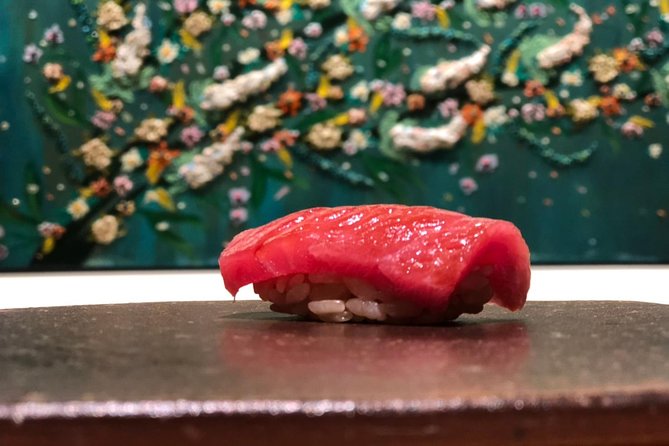
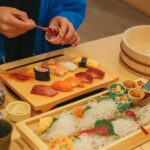
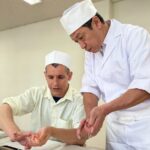
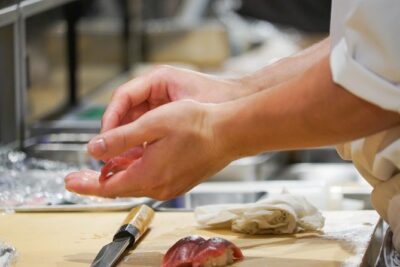
A sushi chef guides you through the preparation of 10 to 12 pieces. The menu includes nigiri and gunkan sushi, giving you practice with two different forms. Nigiri requires careful shaping of rice and a clean placement of fish. Gunkan has a different structure, with a seaweed wrapper supporting its topping.
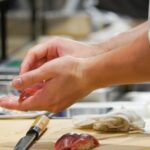
The class also includes opening and filleting fish. For a beginner, this is likely to be the most demanding part. A professional sushi knife makes the work look easy, but the technique depends on control and clean cuts. You should expect instruction, not instant mastery.
The chef’s role is important here. The strongest praise for this experience centers on the sushi instructors being professional and friendly, and on the session being well organized. That combination matters more than a flashy kitchen. Beginners need clear demonstrations and calm correction.
You make your own food, but the lesson is not presented as a test. The goal is to understand the process and enjoy the result. If your pieces look less uniform than the chef’s, that is normal. The real value is learning what your hands need to do.
Eating your own 10 to 12 pieces
At the end, you eat the sushi you prepared as the meal. The schedule describes this as breakfast, while the included services call it a supreme sushi lunch. Either way, it is the meal that closes the morning, not an extra stop afterward.
The ingredients are described as top quality, and the food is sourced through the market visited earlier. That gives the final plate a sense of place. You have seen the suppliers, handled the ingredients, and then taken part in the preparation.
The meal is also a useful test of what you learned. You can compare your shaping and knife work with the chef’s example, while noticing how much the rice, fish, and garnishes contribute to the final bite.
Beverages are included. One supplied comment also highlights sake tasting as a strong part of the morning. Since the minimum drinking age in Japan is 20, younger participants should not expect to take part in alcohol service. The available information does not specify the exact sake arrangement for every departure, so ask when booking if this matters to you.
What the $283.11 price includes
At $283.11 per person, this is expensive for a cooking class. The value depends on how much you want from the morning.
You are paying for more than instruction at a kitchen counter. The price includes hotel pickup, an air-conditioned vehicle, a specialized guide, access to Toyosu market visits, ingredients, the cooking class, beverages, and the finished meal. The group is limited to 10 people, which should make personal help more realistic than in a large class.
You are also paying for access to a professional side of Toyosu that is not normally open to casual visitors. The market context is a major part of the cost. If you only want to learn basic sushi rolling, a cheaper neighborhood class may suit you better.
If you care about sushi, seafood sourcing, Japanese kitchen tools, and the working side of Tokyo food culture, the package offers better value. You get a half-day program with several connected parts rather than a single recipe lesson.
The high rating, 4.9 out of 5 from 197 ratings, and 98 percent recommendation figure suggest a consistently strong experience. Those numbers do not remove the price concern, but they support the idea that the program is carefully run.
Who should book this experience
I would recommend this to first-time sushi makers who want more than a standard cooking demonstration. You get direct instruction, but also a look at the market and the shops that support serious Japanese cooking.
It suits food-focused visitors, couples, small groups, and curious cooks. The maximum of 10 people is helpful for anyone who wants a chance to work with the chef rather than simply watch.
It also works well for people who have already visited central Tokyo’s tourist areas and want a different side of the city. Toyosu is not just a photo stop. You see a place connected to daily restaurant trade, then turn that food system into lunch.
This may not suit you if you dislike early mornings, cannot walk at a quick pace, or want a relaxed market stroll. It is also a poor choice if the tuna auction is essential, since the auction is not part of the experience.
Vegetarian, vegan, kosher, halal, and allergy arrangements are available, but you must contact the provider to arrange them. Do this before you go, rather than assuming the kitchen can make changes at the last moment.
Practical details that affect your morning
The experience lasts about four hours and begins at 7 a.m. Confirmation is normally sent at booking. If you book within 12 hours of the start, confirmation comes as soon as possible and depends on availability.
The tour operates near public transportation, but the included transport is hotel pickup rather than hotel return. The pickup detail matters most if you are staying far from central Tokyo or have an early afternoon booking elsewhere.
Most people can take part, but remember that the market portion is active and the walking speed may be quick. Keep your belongings manageable and wear shoes that are comfortable for several hours on your feet.
The experience is non-refundable and cannot be changed for any reason. Book only when your plans are firm. If bad weather forces cancellation, you are offered another date or a full refund. The same applies if the minimum number of participants is not reached, with a different date or experience also offered.
Should you book the Toyosu sushi class?
Book it if you want a serious, well-organized introduction to sushi that begins at the market and ends with your own meal. The combination of wholesale access, specialist shops, fish preparation, and chef-led cooking is the reason to choose this experience.
Skip it if you want a cheap lesson, a late start, or a tuna auction. The price is high, and the morning is structured around professional market activity rather than a slow sightseeing pace.
For the right person, the strongest feature is the complete chain: you see the suppliers, learn about the tools and ingredients, prepare 10 to 12 pieces, and eat what you made. That makes this a practical food experience, not just a market visit with a cooking add-on.
FAQ
Where does the sushi-making experience take place?
The experience takes place in Tokyo and focuses on Toyosu Fish Market. The cooking session is held at a sushi restaurant in the seventh block of the market.
What time does the tour start?
The tour starts at 7 a.m. from your hotel lobby.
Is hotel pickup included?
Yes. Hotel pickup is included, and you should provide your hotel details when booking.
Is hotel drop-off included?
No. Hotel drop-off is not included.
How many pieces of sushi will I make?
You will make approximately 10 to 12 pieces, including nigiri and gunkan sushi.
Does the experience include fish preparation?
Yes. You learn to open and fillet fish with guidance from an experienced sushi chef.
Can dietary requirements be accommodated?
Vegetarian, vegan, kosher, halal, and allergy arrangements are available. You need to contact the provider to arrange the appropriate option.
What happens if the tour is canceled?
If poor weather causes cancellation, you will be offered a different date or a full refund. If the minimum number of participants is not reached, you will be offered a different date or experience, or a full refund.
More Sushi Making Classes in Tokyo
More tours in Tokyo we've reviewed












Sushi Making Classes, compared.
 ★ 5.0Sushi Making Tokyo Roll and Authentic Japanese Sushi ClassFrom $59
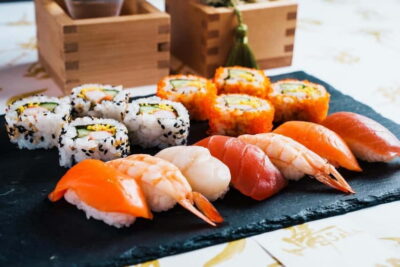 ★ 4.9Tokyo: Roll and Authentic Sushi Making Class in AsakusaFrom $581h 40m
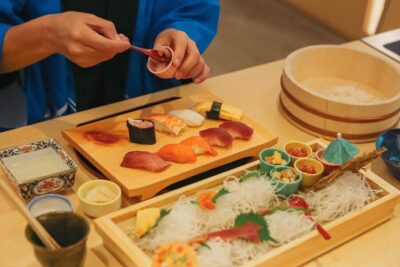 ★ 4.9Tokyo: Sushi Making Class in a Happi Coat near a Famous SpotFrom $421h 30m
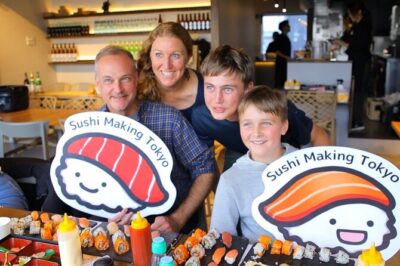 ★ 5.0Sushi Making Tokyo! Popular Maki Sushi & Japanese Sushi(+Recipe!)From $63
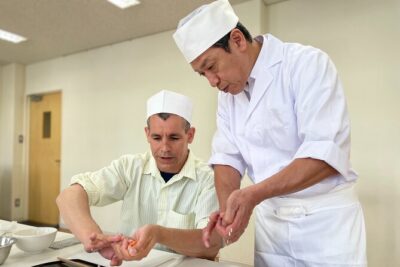 ★ 5.0Tokyo Sushi Making Class in Tsukiji with Professional ChefFrom $49
 ★ 5.0Tokyo Night Foodie Tour in Shinjuku – Seasonal Sushi, Wagyu BeefFrom $111