Reviewed · TOURS
Tokyo Toilet Tour
Tokyo’s public toilets are far more interesting than they sound. On this private 3.5-hour walk, you’ll see transparent cubicles by Shigeru Ban, work by Toyo Ito and Tadao Ando, and several neighborhood facilities that turn an everyday need into public design.
In This Article
- Key details to know before you book
- Why Tokyo’s toilets make a worthwhile walking tour
- Starting at Yoyogi Fukamachi Mini Park
- Miyashita Park and Tadao Ando’s design
- Crossing Shibuya without making it the main event
- Nabeshima Shoto Park and Kengo Kuma
- The Ebisu finish: three designers and a change of neighborhood
- How much walking is involved?
- What the private price means for your group
- Who will enjoy this unusual Tokyo route?
- Booking and day-of-tour details
- Should you book the Tokyo Toilet Tour?
- FAQ
- How long does the Tokyo Toilet Tour last?
- How many people can join the private tour?
- Who guides the tour?
- Where does the tour begin?
- Where does the tour end?
- Which architects are represented on the route?
- Does the tour include Shibuya Crossing?
- Is transportation included?
- Is lunch included?
- Are admission tickets required for the stops?
- What physical fitness level is recommended?
- Is cancellation free?
I like the way this tour gets you off the usual Tokyo route and into small parks, quiet residential streets, and local corners of Shibuya. I also like the personal format: guide Ken can explain the architects and the Shibuya City project without forcing you into a large group. The main drawback is that you’ll spend much of the tour walking, and the experience is best suited to people who already have some interest in architecture, Perfect Days, or unusual city planning.
Key details to know before you book
- See five distinctive toilet projects: The route includes designs connected with Shigeru Ban, Toyo Ito, Tadao Ando, Kengo Kuma, Fumihiko Maki, Kashiwa Sato, and Nao Tamura.
- Walk from Yoyogi to Ebisu: The tour begins at Yoyogi Fukamachi Mini Park and finishes at Ebisu Station, with Shibuya Crossing along the way.
- Meet guide Ken: He explains the Shibuya City project, the architects, and the neighborhoods you pass through.
- Book privately for up to four people: The price is $223.34 per group, so the per-person cost drops sharply when you fill all four places.
- Expect about three and a half hours: The listed stops take roughly 110 minutes in total, with the remaining time used for walking and explanation.
- Bring a reasonable level of fitness: Private transportation and lunch are not included, and the route is built around walking between locations.
Why Tokyo’s toilets make a worthwhile walking tour
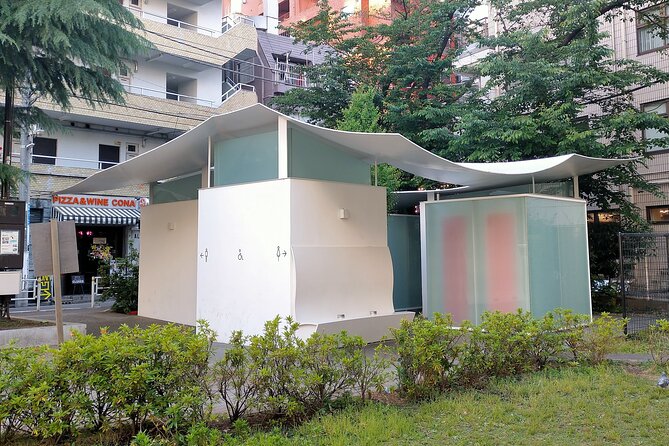
The Tokyo Toilet project gives this unusual tour a clear purpose. Instead of simply checking off famous sights, you follow a series of public facilities designed by major Japanese architects and artists. These buildings sit in ordinary parks and neighborhoods, so the walk also shows you a side of Tokyo that a standard sightseeing route can miss.
That setting matters. A landmark palace or shrine is meant to attract attention. These toilets were created to serve people using parks and streets every day. Their design asks a practical question: can a public facility be clean, welcoming, easy to use, and visually thoughtful at the same time?
You will not spend three hours looking at toilet doors. The appeal comes from the contrast between the designs, the people behind them, and the streets connecting them. One stop is near a small Shinto shrine. Another sits in a redeveloped district between Shibuya and Harajuku. Later, the route moves into a quiet residential area and then south to Ebisu.
Guide Ken is an important part of the experience. He explains the history of the Shibuya City project and the architects involved, adding context that would be hard to gather from simply walking past the facilities alone. The private setup also gives your group room to ask questions or adjust the pace.
If you're still narrowing it down, here are other tours in Tokyo we've reviewed.

Starting at Yoyogi Fukamachi Mini Park
The walk begins at Yoyogi Fukamachi Mini Park, at 1-chome-54-1 Tomigaya in Shibuya. This is a useful starting point because the first two stops introduce the project through very different examples.
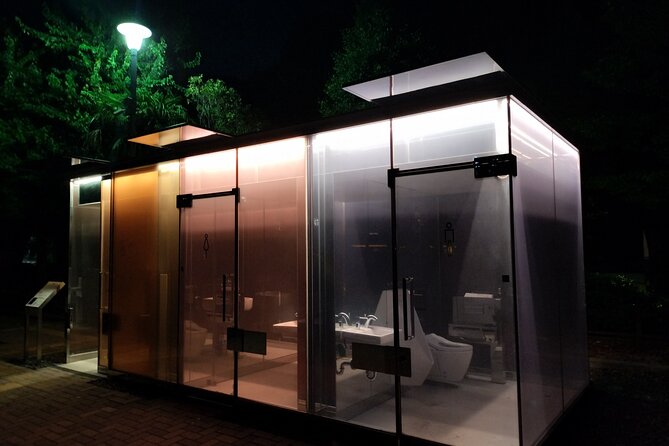
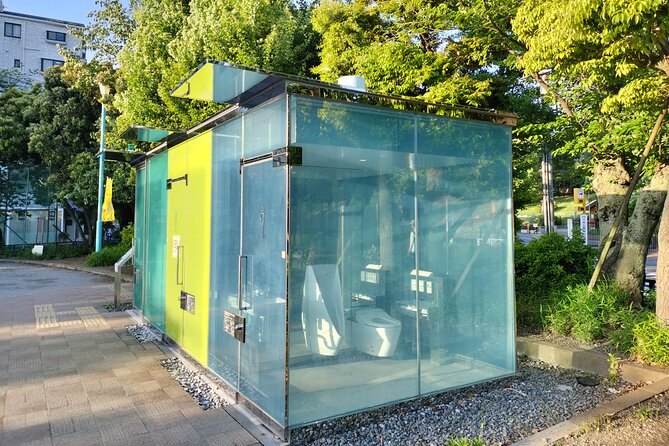
At Yoyogi Fukamachi Mini Park, you’ll see the transparent cubicle designed by Shigeru Ban. You’ll also see a nearby toilet associated with Toyo Ito, close to Yoyogi Hachimangu Shrine. The stop lasts about 30 minutes, and admission is free.
The transparent design is the attention-grabber. Its colored glass walls are intended to make the facilities look open when unoccupied, while providing privacy once in use. The idea is practical, visual, and a little surprising. It gives Ken a good opening topic: public toilets need to feel safe and inviting, but they also need privacy.
The shrine adds another layer to the stop. You are not viewing architecture in a museum or a specially built design district. You are looking at public facilities beside a small Shinto site, in a neighborhood where people go about daily routines.
This location also has a film connection. It is where the main character takes a lunch break in Wim Wenders’ Perfect Days. If you are a fan of the film, this first stop will carry extra meaning. If you have not seen it, the location still works as an introduction to the project, but the movie reference may be less important to you.
Miyashita Park and Tadao Ando’s design
The second stop is Miyashita Park, where you’ll see a toilet designed by Tadao Ando. The stop lasts around 30 minutes, giving you time to look at the design and hear about the area’s recent redevelopment.
This part of the route shows Tokyo changing in real time. Miyashita Park lies between Shibuya and Harajuku, an area that has seen major redevelopment over the past five years. The surroundings are more modern and heavily visited than the quiet park near Yoyogi, so the contrast is useful.
Ando’s involvement gives the stop architectural weight, but the tour remains grounded in how the facility fits into a public park. You can consider the details rather than simply photographing the exterior. Ken’s explanations help connect the building to the wider project and to the district around it.
The practical point is that the tour does not treat each toilet as an isolated object. You see how design changes with location. A facility in a redeveloped urban park has different demands from one beside a neighborhood shrine.
Crossing Shibuya without making it the main event
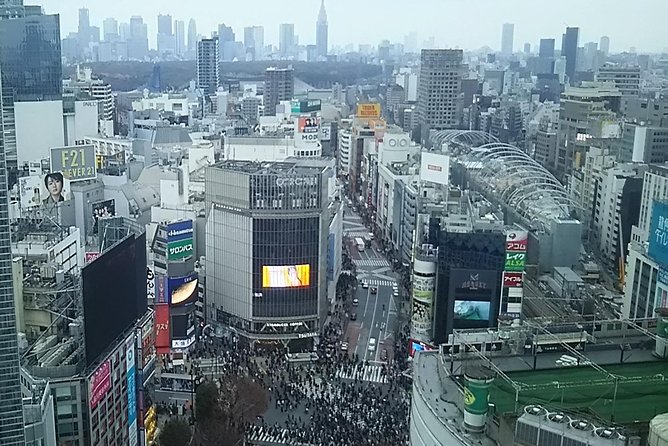
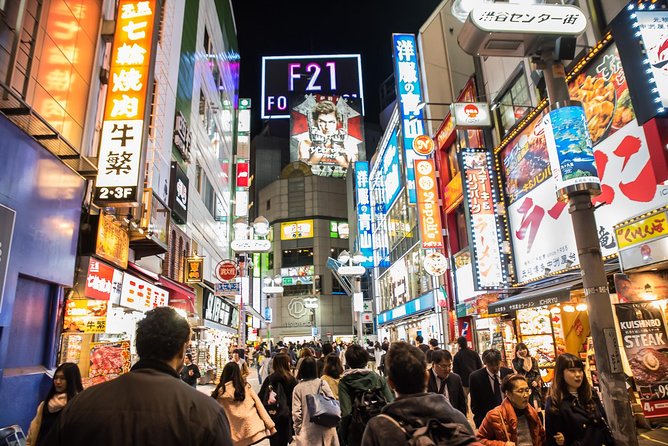
The route includes a brief crossing of Shibuya Crossing. The stop is listed at about five minutes and is not directly part of the Tokyo Toilet project.
That short pause is enough. Shibuya Crossing is one of Tokyo’s most recognizable public spaces, but this tour wisely uses it as a link between quieter locations rather than making it the whole experience. You’ll cross the intersection on the way to the next toilet, then move away from the main station area.
This is one of the route’s strengths. You get a quick look at a famous Tokyo scene, but the focus remains on the less obvious streets and parks around it. If you want a long photo stop or a detailed lesson about Shibuya Crossing, this tour does not promise that. If you want to experience it as part of a broader walk, the five-minute pause fits well.
Nabeshima Shoto Park and Kengo Kuma
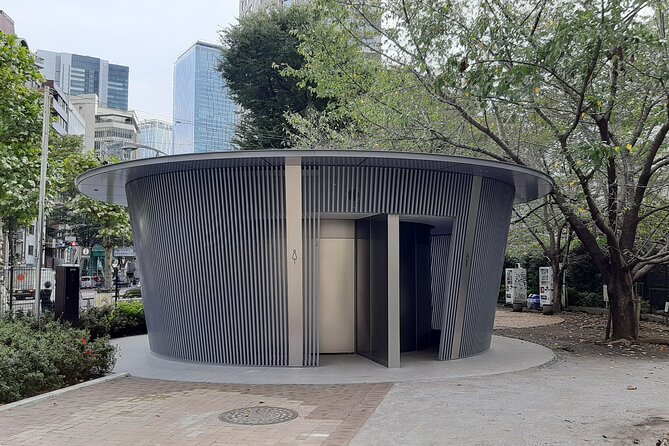
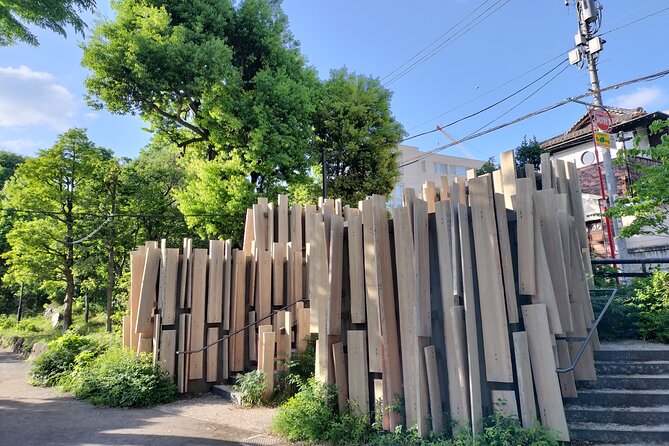
From Shibuya, the route continues to Nabeshima Shoto Park, about a kilometer from the main station. The toilet here was designed by Kengo Kuma, and the stop lasts about 15 minutes.
This is the quietest setting on the route. Nabeshima Shoto Park sits in a residential area, away from the visual rush of the station. That change in mood is part of the point. You see how the same public design project reaches beyond the busiest commercial streets.
The shorter stop makes sense. Fifteen minutes is enough to see the facility and discuss its setting, but it does not leave much room for a long visit. You should think of this as one chapter in a walking tour rather than a destination where you will linger.
The walk to this location is also a reminder that Tokyo is best understood at street level. The distance from Shibuya’s main station to a calmer residential district is not great, yet the feel changes quickly. This is one of the places where the tour offers more than a list of famous names.


The Ebisu finish: three designers and a change of neighborhood
The final group of facilities is in Ebisu. Here, you’ll see toilets connected with Fumihiko Maki, Kashiwa Sato, and Nao Tamura. The stop lasts around 30 minutes, and the tour ends at Ebisu Station.
Ebisu is one station south of Shibuya, so the ending is convenient if you plan to continue sightseeing, meet friends, or return to your hotel. The station is served by the JR Yamanote Line and the Tokyo Metro Hibiya Line.
This final stop gives the tour a strong finish because several designers are represented in one neighborhood. By this point, you have already seen how the project appears beside a shrine, in a redeveloped park, near a famous crossing, and in a residential district. Ebisu adds another urban setting and lets you compare the approaches you have seen.
The end point also makes the tour easy to combine with the rest of your day. You are not returned to the starting point, so plan your schedule around finishing in Ebisu. That is helpful for some plans, but less convenient if you left luggage or other belongings near Yoyogi.
How much walking is involved?
The tour lasts approximately three hours and 30 minutes. The five listed stops account for about 110 minutes, which leaves roughly 100 minutes for walking, transitions, and conversation.
That is not a nonstop march, but it is a walking tour. The route connects Yoyogi, Miyashita Park, Shibuya, Nabeshima Shoto Park, and Ebisu, and one description of the experience specifically highlights walking between locations as a way to see less touristy parts of Tokyo.
You should be comfortable walking through city streets and parks for several hours. A moderate level of physical fitness is recommended. Wear shoes you can walk in comfortably, and remember that private transportation is not included.
The private format gives you some control over the pace. A family may need more time at certain stops, while an architecture fan may want to ask more questions. The tour is described as customizable, though the supplied route gives a clear five-stop plan. If a particular stop matters most to you, ask about the day’s focus when arranging the experience.
What the private price means for your group
The cost is $223.34 per group of up to four people. For four people, that works out to about $55.84 each for three and a half hours with a private guide. For two people, the cost is about $111.67 each, and a solo participant pays the full group price.
That makes the tour easiest to justify when you can share it with three other people. Families, couples traveling with friends, and small groups get the strongest value because they receive private attention without paying a separate fee for every person.
The price does not include lunch or private transportation. Admission to the listed stops is free, so there are no entrance fees waiting along the route. Your main extra cost is getting to the starting point and handling any food or drinks you want before or after the walk.
I would compare this with the cost of a general Tokyo city tour. You are not paying for a long list of major attractions. You are paying for a focused route, an unusual subject, and Ken’s explanations. That is good value if you want a personal introduction to the project, but less so if your priority is seeing the Imperial Palace, Tsukiji Market, Meiji Jingu Shrine, or other major sights named in the broader tour description.
Who will enjoy this unusual Tokyo route?
This tour suits a first-time Tokyo visitor who wants an organized introduction without joining a large group. It works particularly well for people interested in architecture, urban design, photography, or Perfect Days.
Families can benefit from the private format because the group can set its own pace. Couples and solo visitors may also prefer the direct attention of a private guide, especially if they want to ask detailed questions about the architects or the city project.
You should think twice if this is your only Tokyo sightseeing tour and you want the classic headline attractions. The route does not focus on temples, markets, palace grounds, or museum interiors. It gives you a narrow but memorable look at Shibuya and Ebisu.
I also would not choose it for anyone who dislikes walking or has difficulty staying on foot for several hours. The tour has free admission at each stop, but that does not make it physically easy. The time between stops is part of the experience.
Booking and day-of-tour details
Confirmation is sent within 48 hours of booking, subject to availability. The activity uses a mobile ticket, and it operates near public transportation.
Meet at Yoyogi Fukamachi Mini Park, 1-chome-54-1 Tomigaya, Shibuya, Tokyo 151-0063. The tour ends at JR Ebisu Station, at 1 Chome-5 Ebisuminami, Shibuya, Tokyo 150-0022.
You can cancel for a full refund if you do so at least 24 hours before the local start time. Changes or cancellations made inside that 24-hour window are not accepted for a refund.
Since the route ends in a different neighborhood, plan the rest of your day from Ebisu rather than Yoyogi. That one-way design is convenient if you want to continue south, but it is worth noting before you book.
Should you book the Tokyo Toilet Tour?
Book it if you want a private, offbeat walk that connects major Japanese architects with ordinary city life. The route offers five distinct stops, a quick Shibuya Crossing moment, small parks, neighborhood streets, and a finish at a useful train station. Guide Ken adds the context that makes the facilities worth more than a quick photograph.
The best value comes when four people share the $223.34 group price. I would also recommend it to Perfect Days fans, since the Yoyogi stop connects directly with the film.
Skip it if your first priority is a broad introduction to Tokyo’s famous sights, or if walking for about three and a half hours sounds tiring. For the right audience, though, this is a clever way to see how Tokyo treats even its most ordinary public spaces.
FAQ
How long does the Tokyo Toilet Tour last?
The tour lasts approximately 3 hours and 30 minutes.
How many people can join the private tour?
The price covers one private group of up to four people.
Who guides the tour?
The guide named in the tour information and guest feedback is Ken, from Tanaka’s Tokyo Tours.
Where does the tour begin?
The meeting point is Yoyogi Fukamachi Mini Park, 1-chome-54-1 Tomigaya, Shibuya, Tokyo 151-0063, Japan.
Where does the tour end?
The tour ends at Ebisu Station, 1 Chome-5 Ebisuminami, Shibuya, Tokyo 150-0022, Japan.
Which architects are represented on the route?
The route includes work by Shigeru Ban, Toyo Ito, Tadao Ando, Kengo Kuma, Fumihiko Maki, Kashiwa Sato, and Nao Tamura.
Does the tour include Shibuya Crossing?
Yes. You cross Shibuya Crossing for about five minutes on the way to the next location, although it is not part of the Tokyo Toilet project.
Is transportation included?
No. Private transportation is not included. The experience is built around walking between the locations.
Is lunch included?
No. Lunch is not included.
Are admission tickets required for the stops?
Admission at the listed stops is free.
What physical fitness level is recommended?
A moderate level of physical fitness is recommended because the route involves walking between several locations.
Is cancellation free?
Yes. You can receive a full refund if you cancel at least 24 hours before the experience start time. Cancellations or changes made less than 24 hours before the start time are not accepted for a refund.
More tours in Tokyo we've reviewed












Tours, compared.
 ★ 5.0Mt Fuji and Hakone 1-Day Bus Tour Return by Bullet TrainFrom $163
 ★ 5.01-Day Tokyo Bus TourFrom $129
 ★ 5.0Tokyo: Shinjuku Food Tour (13 Dishes at 4 Local Eateries)From $86
 ★ 4.4Tokyo Mt Fuji 5th St & Hakone Cruise Bus Tour w/Bullet TrainFrom $15410 hours
 ★ 5.0Flagship 2-Hours Official Street Go-Kart Tour – Tokyo Bay ShopFrom $642 hours to 2 hours 30 minutes (approx.)
 ★ 4.7Tokyo: Mt. Fuji Tour, Hakone Ropeway, Owakudani, Lake AshiFrom $5410 hours