Reviewed · SUSHI MAKING CLASSES
Sushi Cooking Class: AKEMI’s SUSHiKiTCHEN in Tokyo
At Akemi’s Sushikitchen, sushi is not served across a polished restaurant counter. You step into a quiet Tokyo home near Sasazuka and learn to prepare four kinds of sushi with chef Akemi. The class covers rice, fish, terminology, etiquette, and the story behind the food before you sit down to eat your own work.
In This Article
- Key points to know
- A Tokyo sushi class inside a Sasazuka home
- What happens during the two-and-a-half-hour lesson
- Four sushi preparations give the class useful range
- Kyoto rice and Tokyo fish make the meal part of the lesson
- Food customs are part of the cooking
- Small numbers mean real instruction
- Is $105.68 a fair price for this sushi lesson?
- Getting to Sasazuka and planning your booking
- Who will enjoy Akemi’s Sushikitchen most?
- Should you book this sushi cooking class?
- FAQ
- Where does the sushi cooking class take place?
- How long does the activity last?
- Who teaches the sushi class?
- How many types of sushi will I make?
- How large is the class?
- What ingredients are used?
- Will I eat the sushi I prepare?
- Is the class suitable for people who have never made sushi?
- Can I cancel for a full refund?
I like the very small class size, which gives Akemi time to guide your hands instead of leaving you to copy a demonstration from the back of a crowded room. I also like the care behind the ingredients, from specially ordered Kyoto rice to fish bought through Toyosu and Tsukiji markets.
The main consideration is the price, about $105.68 per person, for roughly two and a half hours. That is more than a casual sushi meal, so the value depends on how much you want the lesson, personal attention, and home setting, not just a plate of sushi.
Key points to know
- Learn four sushi styles: The class gives you more than one way to shape and prepare sushi.
- Cook in a Tokyo home: The setting feels personal and calm rather than like a restaurant school.
- Study with chef Akemi: She has seven years of restaurant experience and completed an Edomae Sushi Technique Acquisition Course at Tokyo Sushi School.
- Taste carefully sourced ingredients: Rice comes from Kyoto supplier Hachidaime Gihey, established in 1787, while fish is sourced from Toyosu and Tsukiji.
- Keep the group small: The class description limits lessons to five students, while the booking information lists a maximum of six travelers.
- Finish by eating your own sushi: The lesson ends with a meal made by the people in the room.
A Tokyo sushi class inside a Sasazuka home

The first thing that makes this class different is the address. You meet at Tamanosato Sasazukaten, 1-chōme-56-18 Sasazuka, in Shibuya, then enter a residential part of Tokyo for a lesson in Akemi’s home.
That change of setting matters. You are not simply watching a chef work in a commercial kitchen. You are learning in the kind of personal space where food, conversation, and everyday Japanese customs can sit together. The class offers a quieter side of Tokyo, away from the city’s better-known shopping streets and restaurant districts.
Akemi leads the cooking, and Dan is part of the friendly hosting team. Akemi has seven years of experience in Japan’s restaurant industry and completed formal Edomae sushi training at Tokyo Sushi School. Her English skills make the class suitable for visitors who want clear explanations rather than a lesson built around gestures and guesswork.
I would choose this setting if you want food instruction with a local, home-based feel. If your ideal sushi experience is an expert preparing each piece while you watch in silence, a sushi counter may suit you better. Here, the point is participation.
A few more Tokyo tours and experiences worth a look
What happens during the two-and-a-half-hour lesson
The activity lasts about two hours and 30 minutes, and it ends where it begins. The class is arranged as a complete introduction, not just a short rolling demonstration followed by a meal.
You can expect the lesson to cover sushi history, useful Japanese terms, preparation methods, and eating manners. The cooking portion then brings those ideas into practice as you make four types of sushi under Akemi’s direction.
The exact order of each stage is not specified, so I would not arrive expecting a fixed restaurant-style course with timed stops. Instead, think of the class as a hands-on kitchen session. You receive an explanation, try a technique, get corrections, and move on to the next preparation.
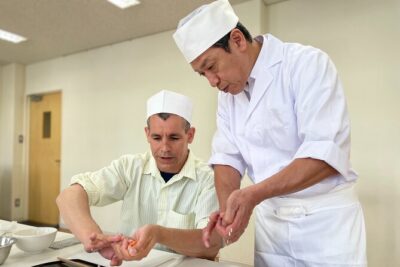
That format is especially useful if you have never made sushi. Sushi can look simple when an experienced chef does it, but rice temperature, pressure, shape, and proportion all affect the result. Personal guidance helps you understand what your hands should be doing, not just what the finished piece should look like.
The lesson ends with you eating what you prepared. That gives the class a clear payoff, but it also makes the activity more than a demonstration. Your meal is part of the lesson, and mistakes become easier to accept when you can see how a small change in technique affects the final bite.
Four sushi preparations give the class useful range

You make four types of sushi during the session. The supplied details do not name each style, so I would avoid booking this with a specific set of sushi shapes in mind. The useful point is the range: you are not repeating one simple roll for two hours.
Different forms call for different handling. Rice must be portioned and shaped with care, while fish and other toppings need attention to placement and balance. Making several styles lets you see how sushi changes from one form to another.
Akemi also introduces ingredients and flavors that you might not meet by ordering a standard supermarket sushi tray. The fish, known in sushi terminology as neta, is sourced directly from fish markets in Toyosu and Tsukiji. Those names matter because they connect the lesson to Tokyo’s long-running seafood trade, rather than treating sushi as a generic international dish.
You should still keep your expectations sensible. This is a short class, not professional chef training. You will gain practical techniques and a better sense of sushi preparation, but mastery takes far longer than one afternoon.
Kyoto rice and Tokyo fish make the meal part of the lesson
Rice is the quiet foundation of sushi, and Akemi pays unusual attention to it. The class uses blended rice specially ordered from Hachidaime Gihey in Kyoto, a supplier established in 1787.
That detail is more than a nice story. Sushi rice affects texture, shape, and how the fish comes together. When you work with carefully selected rice, you get a clearer lesson in why the base matters. The class can show you that sushi is not simply raw fish placed on ordinary rice.
The fish is sourced from Toyosu and Tsukiji. You will not be shopping in those markets as part of the activity, but the ingredients connect your meal to two important Tokyo seafood names. Freshness and handling are central to sushi, so ingredient quality gives the cooking practice more meaning.
Akemi also introduces fresh flavors and ingredients you might otherwise miss. The details do not provide a full menu, and fish selections can depend on supply, so I would not assume a particular species or topping. What you can count on is that the class places real attention on the ingredients rather than treating them as decoration.
For anyone cautious about raw fish, the available information does not promise a specific alternative menu. If you have allergies, dietary restrictions, or concerns about particular seafood, ask before booking rather than assuming the class can adjust the meal.
Food customs are part of the cooking

The class includes Japanese food culture, sushi vocabulary, and traditional eating etiquette. This is one of its strongest features because sushi makes more sense when you understand the customs around it.
You may learn terms used for the rice, fish, and preparation methods, along with the language used at a sushi meal. Even a short vocabulary lesson can make a later restaurant visit less intimidating. You will recognize more of what appears on a menu and have a better idea of how sushi is discussed.
Etiquette instruction is also practical. Sushi is served in many settings, from informal conveyor-belt restaurants to highly formal counters. Knowing the basic customs helps you avoid treating every sushi meal as the same kind of event.
The history portion adds context without requiring you to become a food historian. Sushi has changed over time, and its modern form carries traces of technique, preservation, trade, and restaurant culture. Akemi’s lesson connects those ideas to the food you are preparing with your own hands.
I especially like that the cultural material is built into the cooking rather than offered as a detached lecture. You learn why a technique or term matters, then use it. That keeps the information useful.
Other cooking classes in Tokyo

Small numbers mean real instruction
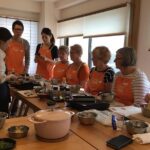
The class description limits lessons to a maximum of five students. The activity information gives a maximum of six travelers, so the exact cap is slightly inconsistent. Either way, this is designed as a small group rather than a large cooking workshop.
That matters more here than it would on a walking tour. Sushi preparation depends on hand movements, timing, and small adjustments. With a few people around the work surface, Akemi can watch how you handle the rice and guide you when something goes wrong.
A small group also changes the social side of the activity. You have time to ask about ingredients, Japanese meals, or restaurant customs. The home setting makes conversation a natural part of the class, and Dan helps create a welcoming atmosphere.
The tradeoff is that the class may feel less anonymous than a large tour. If you prefer to watch quietly without interaction, a small home lesson may ask more of you socially. For most people booking a cooking class, that personal contact is part of the reason to pay for it.
Is $105.68 a fair price for this sushi lesson?

At about $105.68 per person, this class is not the cheapest way to eat sushi in Tokyo. You can find filling meals for far less, especially at casual restaurants and conveyor-belt sushi shops.
The comparison is not quite fair, though. You are paying for food, instruction, an English-speaking chef, a small group, cultural explanation, and access to a private home setting. The meal you make is the final part of a two-and-a-half-hour activity, not the entire product.
I see the best value for you if you are curious about how sushi works and plan to eat more of it during your time in Japan. The terminology and etiquette can improve your later restaurant visits, while the hands-on practice gives you something you cannot get from simply ordering a set.
The value is weaker if you only want a quick meal or a polished presentation. You will do some work, make your own food, and spend time learning basics. That is the appeal, but it is also why the price should be judged as a class fee rather than a meal price.
The 100 percent recommendation rate and five-star rating are encouraging, but I would still base your choice on the format. The positive response centers on Akemi and Dan’s friendly home atmosphere, Akemi’s teaching, and fresh, delicious sushi. Those are exactly the qualities to prioritize when deciding.
Getting to Sasazuka and planning your booking
The meeting point is Tamanosato Sasazukaten at 1-chōme-56-18 Sasazuka, Shibuya, Tokyo 151-0073. The activity ends back at that same meeting point.
Sasazuka is in Tokyo’s Shibuya ward but is not the same as the famous Shibuya Crossing area. Give yourself enough time to reach the residential meeting point, especially if you are crossing the city from a sightseeing district. The listing notes that the location is near public transportation, which should help, but you should still check the route before leaving.
A mobile ticket is provided, and booking confirmation arrives at the time of booking. The activity is often booked 49 days ahead on average, so I would reserve early if your Tokyo dates are fixed, especially if you want a particular day.
Free cancellation is available if you cancel at least 24 hours before the start time. Changes or cancellations inside that window are not accepted for a refund, and the cut-off follows Tokyo local time.
Service animals are allowed. The supplied details do not provide a full accessibility description, so contact the provider if you need specific information about the home entrance, seating, or kitchen setup.
Who will enjoy Akemi’s Sushikitchen most?
I would recommend this class to first-time sushi makers, food-focused visitors, and anyone who likes to understand the customs behind a dish. It also suits people who prefer a personal lesson to a large commercial cooking school.
Families and mixed-experience groups may appreciate the hands-on format, although the small class size means you should make sure the booking arrangement works for your party. The class is also a good choice if you want a quieter Tokyo activity in a residential neighborhood.
You may want another option if you need a guaranteed vegetarian, allergy-friendly, or cooked-food menu, since those adjustments are not stated. You may also prefer a restaurant meal if your priority is watching a specialist create sushi while you remain a diner.
Should you book this sushi cooking class?
Book it if you want to make four kinds of sushi, learn the language and manners around the food, and spend time with a chef in a Tokyo home. Akemi’s restaurant background, formal Edomae training, carefully sourced rice and fish, and small class format give the lesson substance.
Skip it if you are mainly searching for the lowest-cost sushi meal or a formal counter experience. At $105.68, the class earns its price through instruction and access, not quantity.
For the right reader, this is a thoughtful way to connect a famous Japanese food with the people, techniques, and everyday customs behind it. You leave with a meal you prepared yourself and a better eye for what happens the next time sushi arrives in front of you.
FAQ
Where does the sushi cooking class take place?
The class takes place in Akemi’s Tokyo home in a quiet residential area near Sasazuka. The meeting point is Tamanosato Sasazukaten, 1-chōme-56-18 Sasazuka, Shibuya, Tokyo 151-0073, Japan.
How long does the activity last?
The class lasts approximately two hours and 30 minutes.
Who teaches the sushi class?
Chef Akemi teaches the class. She has seven years of experience in Japan’s restaurant industry and completed the Edomae Sushi Technique Acquisition Course at Tokyo Sushi School. Dan is also part of the hosting team.
How many types of sushi will I make?
You will learn to make four types of sushi. The specific types are not listed in the supplied details.
How large is the class?
The lesson is described as limited to a maximum of five students. The additional activity information lists a maximum of six travelers, so the exact maximum should be confirmed if group size is important to you.
What ingredients are used?
Akemi uses blended rice specially ordered from Hachidaime Gihey in Kyoto, established in 1787. Fresh fish, called neta, is sourced from the Toyosu and Tsukiji fish markets.
Will I eat the sushi I prepare?
Yes. The lesson ends with a meal made by the participants.
Is the class suitable for people who have never made sushi?
Yes. The class is designed to provide personal guidance, and the supplied information specifically states that beginners can take part.
Can I cancel for a full refund?
Yes, if you cancel at least 24 hours before the experience start time. Cancellations or changes made less than 24 hours before the start time are not refunded or accepted.
More Cooking Classes in Tokyo
More Cooking Classes in Tokyo
More Sushi Making Classes in Tokyo
More tours in Tokyo we've reviewed












Sushi Making Classes, compared.
 ★ 5.0Sushi Making Tokyo Roll and Authentic Japanese Sushi ClassFrom $59
 ★ 4.9Tokyo: Roll and Authentic Sushi Making Class in AsakusaFrom $581h 40m
 ★ 4.9Tokyo: Sushi Making Class in a Happi Coat near a Famous SpotFrom $421h 30m
 ★ 5.0Sushi Making Tokyo! Popular Maki Sushi & Japanese Sushi(+Recipe!)From $63
 ★ 5.0Tokyo Sushi Making Class in Tsukiji with Professional ChefFrom $49
 ★ 5.0Tokyo Night Foodie Tour in Shinjuku – Seasonal Sushi, Wagyu BeefFrom $111