Reviewed · TOURS
Intro to Japan Tour: 8-day Small Group
Japan comes into focus quickly on this 8-day small-group journey. You move from neon-lit Shibuya and fresh seafood at Tsukiji to ancient temples, a National Treasure castle, a preserved Edo-period post town, sumo, and Osaka street food. It is a broad first look at Japan, not a stay-in-one-city holiday.
In This Article
- Key points at a glance
- What kind of Japan trip is this?
- Day 1: Shibuya Crossing starts with Tokyo energy
- Day 2: From Senso-ji to sumo in Ryogoku
- Day 3: Bullet train to Inuyama Castle
- Day 4: Tsumagojuku and the old Nakasendo route
- Day 5: Kiyomizu-dera and Kyoto’s Higashiyama streets
- Day 6: Golden Temple, red torii gates, and Osaka street food
- Day 7: Free time in Tokyo, with an optional art outing
- Day 8: Checkout and Narita Airport
- What $5,748 buys you, and what to confirm
- Who should book this small-group Japan route?
- FAQ
- How long is the Japan tour?
- Where does the tour start?
- Where does the tour end?
- What is the price?
- How many people can join the group?
- Who are the guides?
- Is the tour suitable for every fitness level?
- Is public transportation nearby?
- Which admission tickets are included?
- Can I cancel or change the booking?
- Should you book it?
I like the maximum group size of eight, which should make personal help and flexible pacing possible. I also like the mix of major sights and less typical stops, especially Tsumagojuku and the sumo tournament. The main drawback is the price, $5,748 per person, while the supplied details do not spell out every included meal, hotel, or transport cost. You should ask for a full cost breakdown before paying.
Key points at a glance
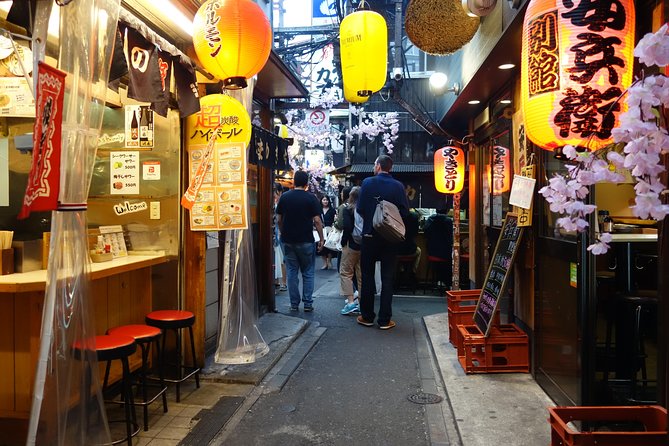
- Eight people maximum: A small group gives Becki and Shawn more room to adjust the day around the group’s interests.
- Japan beyond Tokyo: You see Tokyo, Nagoya, the Kiso Valley, Kyoto, and Osaka in one tightly packed week.
- Bullet train and original castle: The trip includes a high-speed train ride to Nagoya and a visit to Inuyama Castle, one of Japan’s 12 original castles.
- Sumo is built into the plan: A scheduled visit to Ryogoku Kokugikan adds a distinctly Japanese sporting and cultural experience.
- Food is part of the route: Tsukiji seafood and Osaka takoyaki give you chances to eat your way through the trip.
- One free day in Tokyo: Day 7 leaves space for shopping, extra sights, or an optional art and architecture outing.
What kind of Japan trip is this?
This is a fast-moving introduction rather than a slow cultural retreat. In eight days, you cover several major regions and see a useful cross-section of modern Japan, Buddhist and Shinto sites, traditional streets, food districts, sumo, and historic architecture.
That range is the tour’s strongest feature. You do not spend every day checking off the same sort of attraction. One day may put you under thousands of red torii gates, while another takes you through a rural post town or into a noisy Osaka food district.
The pace will suit you if you want help making sense of Japan on a first visit. A maximum of eight people also matters here. Japan’s train stations, city streets, and temple approaches can feel confusing when you are on your own, so a compact group led by Becki and Shawn may make the movement between places easier.
The pace will not suit everyone. You have long sightseeing days, several city changes, and a demanding combination of walking, trains, temples, shopping streets, and uneven historic areas. The stated fitness requirement is moderate, so comfortable shoes and a willingness to keep moving are important.
If you're still narrowing it down, here are other tours in Tokyo we've reviewed.

Day 1: Shibuya Crossing starts with Tokyo energy
The first scheduled stop is Shibuya Crossing, with an hour of free time. This is a smart opening scene because it gives you Tokyo at full volume right away: wide streets, tall buildings, crowds moving in several directions, and one of the city’s best-known public spaces.
There is no admission fee, and the open time lets your guide shape the stop around the group. You might use it to watch the crossing, take photos, or get your first feel for Tokyo’s scale.
An hour is enough for an introduction, but not enough for a full exploration of Shibuya. Think of this as a short orientation, not a neighborhood tour. If shopping, cafes, or side streets matter to you, note that Day 7 is your better chance to return to Tokyo areas at your own pace.
Day 2: From Senso-ji to sumo in Ryogoku
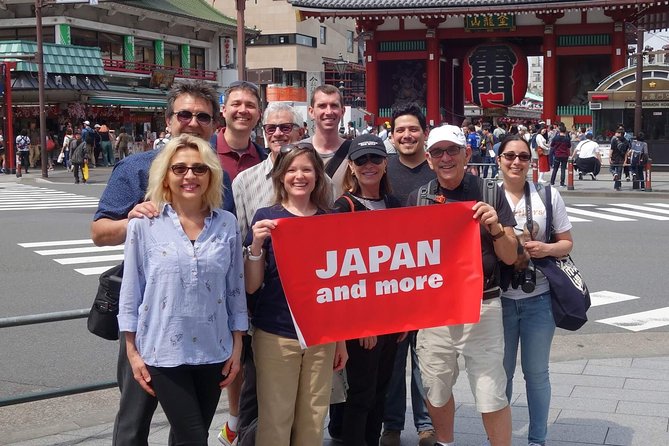
Day 2 brings together three very different Tokyo experiences. At Senso-ji in Asakusa, you visit Tokyo’s oldest Buddhist temple, founded in 645. The two-hour stop gives you time to take in the temple grounds and explore the surrounding area rather than simply stepping out for a photograph.
Asakusa offers an older side of Tokyo, with traditional religious architecture and streets built around the temple approach. It is a useful counterpoint to Shibuya’s modern city scene. The temple visit is free, which helps keep the day focused on place and atmosphere rather than ticketed attractions.
You then head to the old Tsukiji Outer Market for an hour. The market is known for vendors selling fresh seafood, and it is the clearest food-focused stop in Tokyo on this schedule. I would arrive ready to sample something if the opportunity arises, but the details do not specify which tastings or meals are included.
The short market visit gives you a taste of the area without taking over the day. If you love food markets, you may wish the schedule allowed more time. Still, pairing Tsukiji with Senso-ji gives you a good contrast between temple tradition and everyday eating.
The day finishes at Ryogoku Kokugikan, where you see the Tokyo Grand Sumo Tournament. Two hours is enough to make sumo a major part of the day, rather than a quick cultural footnote. The admission ticket is included, an important point because this is the only listed stop on Day 2 with a stated ticket charge.
The itinerary does not provide the tournament date or seating details, so you should confirm exactly what event and admission arrangement apply to your departure. Sumo can be one of the most memorable experiences on a first Japan trip, but the quality of the experience depends on the event schedule and seat location.
Day 3: Bullet train to Inuyama Castle
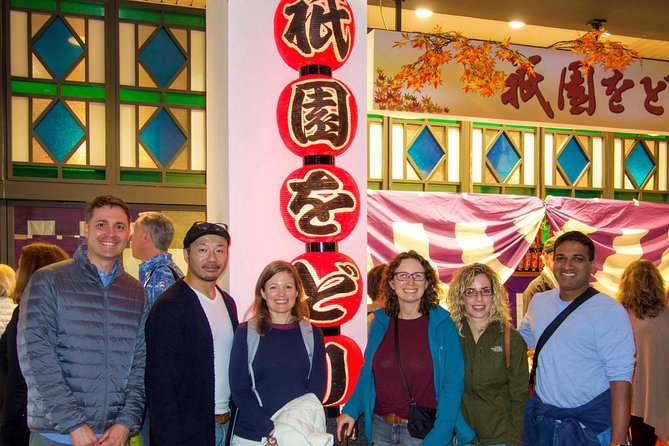
On Day 3, you ride the Japanese bullet train to Nagoya before visiting Inuyama Castle. The train ride is not just a way to get from one place to another. It gives you a look at the speed and order of long-distance rail travel in Japan, a useful part of the country’s modern identity.
The main destination is Inuyama Castle, one of only 12 original castles remaining in Japan. It is also designated a National Treasure. That makes this more than a reconstructed castle display. The two-hour visit gives you time to appreciate an authentic historic structure and its setting.
Inuyama is a strong choice for a compact Japan tour because it offers something different from Tokyo’s temples and Kyoto’s famous shrines. The tradeoff is that the day appears centered on one main stop, so the value will depend partly on how much you enjoy castle architecture and historic sites.
Admission is included. The details do not specify the full rail arrangements, so ask whether the bullet train fare and any other transport costs are covered in the $5,748 price.
Day 4: Tsumagojuku and the old Nakasendo route
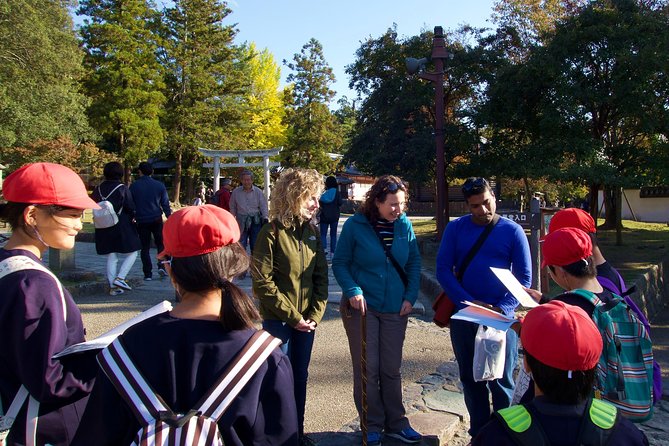
Tsumagojuku may be the most distinctive stop on the entire journey. This beautifully preserved post town lies in the Kiso Valley and once served people traveling the Nakasendo Trail, the Edo-period route linking Tokyo and Kyoto.
The two-hour visit lets you step away from the big-city rhythm and see a traditional settlement connected with travel before Japan’s modern rail network. The appeal is not one single monument. It is the preserved street, the old town setting, and the sense of how people once moved between the country’s major cities.
This is the kind of stop that gives the trip texture. You have already seen Tokyo’s crowds and a major castle. Tsumagojuku offers a quieter view of Japan and a chance to notice building styles, town planning, and the scale of historic travel.
The attraction has no stated admission charge. You should still expect walking, and the tour’s moderate fitness requirement applies particularly well to a day in a preserved old town. The schedule only allows two hours, so do not expect a long Nakasendo walk unless the guides adjust the plan for your group.


Day 5: Kiyomizu-dera and Kyoto’s Higashiyama streets
Day 5 gives you four hours at Kiyomizu-dera and in the Higashiyama District. This is one of the fuller sightseeing blocks of the tour, and rightly so. Kiyomizu-dera is a World Heritage Site, while the nearby district is filled with old wooden houses and small shops.
The value here comes from combining a major temple with the streets around it. You are not simply entering a religious site, taking a picture, and leaving. You have time to walk through one of Kyoto’s best-known traditional areas and see how shops, homes, and historic buildings shape the experience.
This will likely be one of the busiest parts of the trip. Famous Kyoto sites can draw large crowds, and the old streets can feel tight when many people are moving through them. The schedule cannot guarantee quiet conditions, but four hours gives Becki and Shawn some room to guide the group at a sensible pace.
Temple admission is included. You should wear shoes that are comfortable for several hours on foot, since this stop combines temple grounds with neighborhood walking.
Day 6: Golden Temple, red torii gates, and Osaka street food
Day 6 is the most packed sightseeing day. It starts at Kinkaku-ji, the Golden Temple, for one hour. This World Heritage Site is famous for its gold-covered exterior and the way the building is presented against its surrounding grounds.
One hour is a focused visit. You can see the main sight and take in the setting, but you will not have a leisurely half-day here. That short timing may suit you if you prefer variety, though anyone who likes gardens, architecture, or careful photography may want more breathing room.
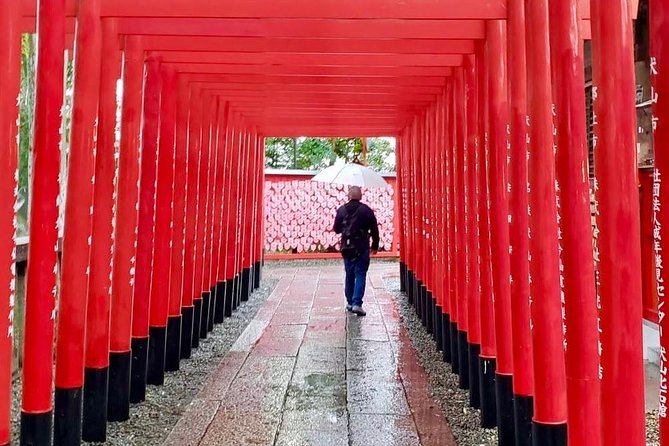
Next comes Fushimi Inari-taisha Shrine, with two hours to walk through thousands of red torii gates. This is one of Kyoto’s most recognizable sights, but it is also more than a single photo stop. The gates create a long route up the hillside, and you can decide how far your legs and schedule allow you to go.
The shrine itself has no stated admission fee. Two hours gives you a meaningful walk, though not necessarily time to cover the full route. Bring water and expect this to be one of the more physically active sightseeing periods.
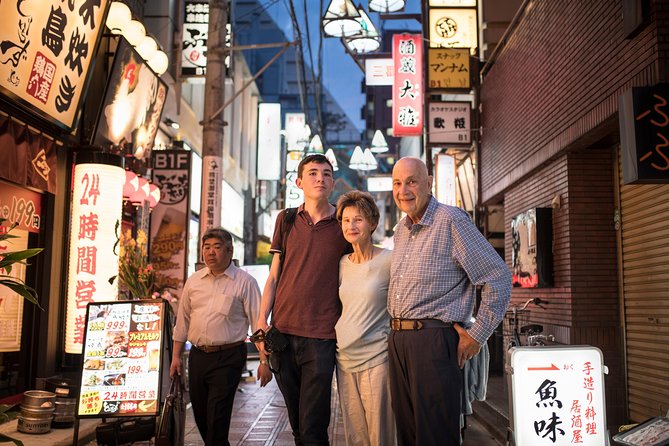
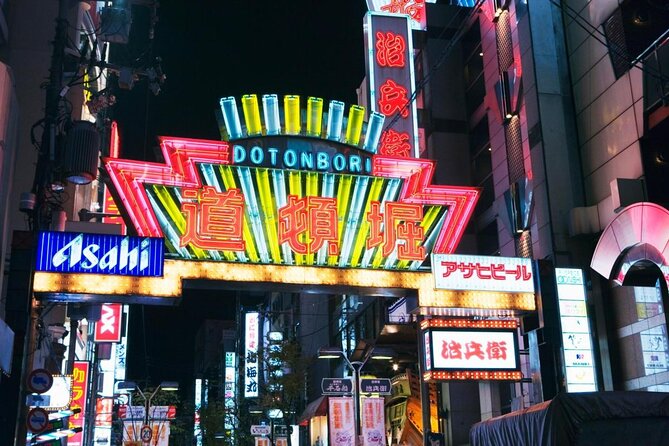
The final stop takes you to Dotonbori in Osaka for two hours. Here the focus shifts from temples and shrines to bright signs, walking streets, pop culture, and Osaka food. You have a good chance to try takoyaki, the city’s famous octopus-filled snack.
Dotonbori is a good place to end a busy day because it feels informal and social. You can look around, eat, and enjoy a very different side of Japan. The details do not say that takoyaki or other food is included, so budget separately for eating.
The sequence is ambitious. Kinkaku-ji, Fushimi Inari, and Dotonbori are all worthwhile, but you should expect a full day with little idle time. That is a fair trade if your goal is to see a lot in one week.
Day 7: Free time in Tokyo, with an optional art outing
Day 7 gives you eight hours in Tokyo to explore on your own and finish shopping. This free day is important because the first six days are tightly planned. You can use it to revisit a favorite area, rest, buy gifts, or fill a gap in your personal wish list.
An optional outing may include Tokyo Station’s architecture, the electronics district of Akihabara, and a boutique Sumie Art Gallery. Sumie is a Japanese ink painting technique, and the gallery visit includes a chance to learn about how it is done.
This optional plan broadens the tour once again. Tokyo Station offers architecture, Akihabara brings electronics and pop culture, and Sumie adds a hands-on artistic angle. The supplied details do not say whether this excursion has an extra charge or how long each stop lasts, so confirm those points before choosing it.
I like having this flexible day at the end. It gives you a chance to catch up after the tour’s fast pace and lets Becki and Shawn respond to the group’s interests. It also means the trip does not end with one last forced sightseeing circuit.
Day 8: Checkout and Narita Airport
The final day includes hotel checkout and a visit to the Narita International Airport Terminal 1 observation deck. The stated time is two hours, and admission is included.
An airport observation deck is an unusual final stop. It can give you a calm place to watch aircraft and close out the trip before departure, but it is not a replacement for extra Tokyo sightseeing. The practical value depends on your flight time and airport schedule, so confirm how the transfer and timing fit your departure.
The experience ends back at the meeting point, with Tokyo listed as the start location. The details do not provide a hotel name or a precise airport transfer plan, so those are sensible questions to ask before booking.
What $5,748 buys you, and what to confirm
At $5,748 per person, this is a major purchase. The value is strongest if you want a small group, personal guidance, and a ready-made route through several parts of Japan. Planning this combination of Tokyo, Nagoya, the Kiso Valley, Kyoto, Osaka, rail travel, temple visits, sumo, and airport logistics on your own would take substantial time.
The maximum of eight people is a real part of the value. Becki and Shawn have more ability to answer questions, adjust the day, and help with the practical side of moving through Japan than a large coach group would.
Still, the price cannot be judged properly without a list of inclusions. The supplied information identifies several included admission tickets, including Inuyama Castle, Ryogoku Kokugikan, Kiyomizu-dera, Kinkaku-ji, and the Narita observation deck. Other visits are free. It does not clearly state whether hotels, meals, bullet train tickets, local transport, airport transfers, or the optional Day 7 outing are included.
Before paying, ask for:
- A full list of included and excluded costs
- The hotel locations and room arrangements
- Details of the bullet train fare
- The exact sumo event and seating
- The cost and schedule of the optional Day 7 excursion
- The airport transfer plan on Day 8
The cancellation rule is strict: the experience is non-refundable and cannot be changed for any reason. That makes it especially important to confirm dates, inclusions, and availability before booking.
Who should book this small-group Japan route?
I would recommend it to a first-time Japan visitor who wants a wide introduction without handling every train, ticket, and route alone. It is also a good match for families or friends who value personal help and want a trip that mixes major sights with more unusual choices.
The route suits you if you enjoy:
- Moving between cities rather than staying in one base
- Temples, shrines, castles, and traditional streets
- Food stops and local specialties
- A small group with named guides
- Full sightseeing days
- A little free time at the end for shopping and personal interests
You may prefer a slower independent trip if you want long meals, extended walks, or several quiet days in Kyoto. You may also find the price hard to justify if lodging, meals, and major transport are extra.
The five available ratings are all at the top level, with particular praise for the organization, personal care, friendly guiding, and the way the tour fits many sides of Japan into limited time. Becki and Shawn are repeatedly identified as the people who make the experience personal, helpful, and easygoing. That is the strongest reason to consider this trip, provided the final price includes enough of the expensive logistics.
FAQ
How long is the Japan tour?
The experience lasts approximately eight days.
Where does the tour start?
The tour starts in Tokyo, Japan.
Where does the tour end?
The activity ends back at the meeting point.
What is the price?
The listed price is $5,748 per person.
How many people can join the group?
The tour has a maximum of eight travelers.
Who are the guides?
The guides identified with the experience are Becki and Shawn of Japan and More.
Is the tour suitable for every fitness level?
The stated requirement is a moderate level of physical fitness.
Is public transportation nearby?
Yes. The experience is described as being near public transportation.
Which admission tickets are included?
Admission is listed as included for Ryogoku Kokugikan, Inuyama Castle, Kiyomizu-dera Temple, Kinkaku-ji Temple, and the Narita International Airport Terminal 1 observation deck.
Can I cancel or change the booking?
No. The experience is non-refundable and cannot be changed for any reason.
Should you book it?
Book this tour if you want Japan at a quick but thoughtful pace, with Tokyo, Kyoto, Osaka, a rural post town, a castle, sumo, food districts, and a small group led by Becki and Shawn. The mix is unusually broad for eight days, and the free Tokyo day helps keep the schedule from feeling completely locked down.
I would not book until you receive a clear breakdown of what the $5,748 covers. If hotels, meals, bullet train tickets, local transport, and the optional excursion are included, the personal service and planning may offer solid value. If many of those costs are extra, compare the total with a self-guided trip or a less expensive small-group option before committing.
More tours in Tokyo we've reviewed












Tours, compared.
 ★ 5.0Mt Fuji and Hakone 1-Day Bus Tour Return by Bullet TrainFrom $163
 ★ 5.01-Day Tokyo Bus TourFrom $129
 ★ 5.0Tokyo: Shinjuku Food Tour (13 Dishes at 4 Local Eateries)From $86
 ★ 4.4Tokyo Mt Fuji 5th St & Hakone Cruise Bus Tour w/Bullet TrainFrom $15410 hours
 ★ 5.0Flagship 2-Hours Official Street Go-Kart Tour – Tokyo Bay ShopFrom $642 hours to 2 hours 30 minutes (approx.)
 ★ 4.7Tokyo: Mt. Fuji Tour, Hakone Ropeway, Owakudani, Lake AshiFrom $5410 hours