Reviewed · MT FUJI DAY TRIPS
Private Mount Fuji and Hakone sightseeing Day trip with guide
The main appeal here is simple: you can see Mount Fuji and Hakone in one long day without figuring out trains, buses, or several separate tickets. Your guide collects you at your Tokyo hotel, drives the group in an air-conditioned vehicle, and adjusts the route around weather, traffic, and your interests.
In This Article
- Key points to know before booking
- What this private Mount Fuji day is really selling
- Choosing between Fuji only and Fuji plus Hakone
- Lake Kawaguchi and Oishi Park: the best first look at Fuji
- Oshino Hakkai: ponds, thatched roofs, and rural Fuji
- The 5th Station: getting close to the mountain
- Shrines and Chureito Pagoda: the cultural side of Fuji
- Saiko Iyashi no Sato Nenba and a glimpse of old Japan
- Owakudani and Lake Ashi: Hakone’s volcanic finale
- Your guide can make or break the day
- Timing, tickets, lunch, and comfort
- Who should book this private day trip?
- Should you book it?
- FAQ
- How long does the tour last?
- How many people can join the private tour?
- Does the tour include pickup and drop-off?
- Can I choose the itinerary?
- Are the ropeway and cruise tickets included?
- Is lunch included?
- What happens if the weather is poor?
I like the private pace and the choice of a minivan or larger commuter van for groups of up to five. I also like the chance to stop at less commercial places such as Kitaguchi Hongu Fuji Sengen Shrine or Saiko Iyashi no Sato Nenba. The catch is important: you must choose between a Fuji-area itinerary and a Fuji plus Hakone itinerary, and the day can feel rushed if you try to fit everything in.
Key points to know before booking
- Mount Fuji views depend on weather: The 5th Station and Lake Kawaguchi are wonderful on a clear day, but clouds can hide the peak.
- You choose the route: A Fuji-only day allows more time at shrines, lakes, pagodas, and villages. Adding Hakone means accepting a faster pace.
- Private transport saves effort: Hotel pickup and drop-off remove several awkward connections from Tokyo.
- The guide quality matters: Ali is praised for clear communication, local information, and flexibility, while other accounts raise concerns about guiding and driving standards.
- Major activities cost extra: Ropeway rides, sightseeing cruises, lunch, and some admission fees are not included.
- Start early if possible: Traffic toward Mount Fuji can eat into your sightseeing time, especially on busy days.
What this private Mount Fuji day is really selling
This is not simply a sightseeing loop. It is a way to trade Japan’s public transport network for a private vehicle and a custom plan.
From Tokyo, Mount Fuji and Hakone are possible by train and bus, but the connections take thought. Some viewpoints are far apart, and getting from one rural stop to another can be slow. With this tour, you leave from your hotel and return there around 6:30 p.m., with transportation time included in the roughly 10-hour day.
The private format is most useful for a family, two couples, or a small group with mixed interests. One person can photograph Fuji, another can explore a shrine, and the group can decide how long to stay. You are not tied to a large coach schedule.
The price is $400 per group, not per person, for up to five people. That makes the arithmetic fairly good for a full group, at $80 each before optional tickets and food. For one or two people, it is a much bigger spend than public transport, but you are paying for the vehicle, hotel pickup, a private day, and flexibility.
There is one planning trap. The suggested stops cover far more ground than comfortably fits into one day. You should decide before pickup if you want Fuji-area sights only or a Fuji and Hakone combination. Trying to include Lake Kawaguchi, Oshino Hakkai, Chureito Pagoda, the 5th Station, Hakone Ropeway, Owakudani, and Lake Ashi can turn the day into a sequence of short photo stops.
A few more Tokyo tours and experiences worth a look
Choosing between Fuji only and Fuji plus Hakone
The Fuji-only route is the better choice if your priority is seeing the mountain and spending time around the Fuji Five Lakes. A typical plan can include Lake Kawaguchi, Kachi Kachi Ropeway, Kitaguchi Hongu Fuji Sengen Shrine, Oshino Hakkai, Oishi Park, Arakurayama Sengen Park and Chureito Pagoda, or Saiko Iyashi no Sato Nenba.
This route gives you more room to linger. You can walk by a lake, climb to the pagoda, examine a shrine, and stop for photos without watching the clock every few minutes.
The Fuji and Hakone route offers more variety. You could see Lake Kawaguchi and the 5th Station, then continue to Owakudani and Lake Ashi. You get volcanic scenery, a crater lake, and the chance to ride the Hakone Ropeway or a sightseeing boat.
The price for that variety is distance. Fuji and Hakone are separate sightseeing areas, and traffic can be unpredictable. I would choose the combined route only if your main goal is to sample both regions in one day. If you want quiet walks and a better chance to appreciate local places, stay around Mount Fuji.
Lake Kawaguchi and Oishi Park: the best first look at Fuji
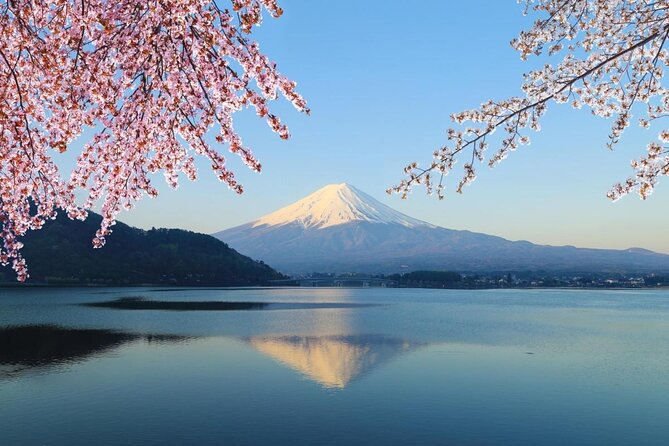
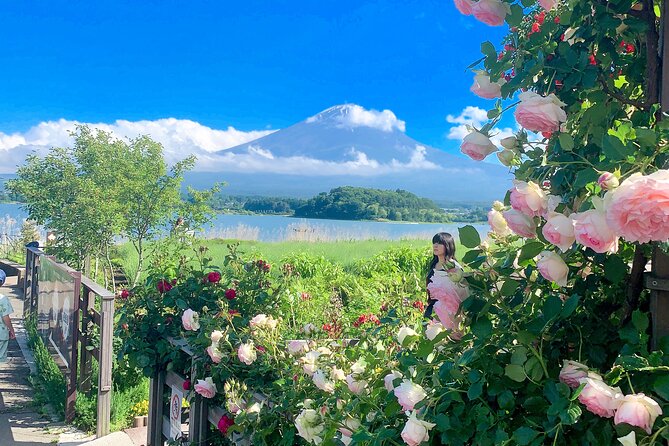
Lake Kawaguchi is one of the five lakes around Mount Fuji and one of the most reliable places for broad mountain views when the weather cooperates. The lakefront gives you open sightlines, while Oishi Park is especially useful for photographs of Fuji across the lake.
Oishi Park is planned as a 30-minute stop, so think of it as a viewpoint rather than a long park visit. It works well early in the day, when you want that classic Fuji frame before moving on.
Kachi Kachi Ropeway adds a higher viewpoint, but its ticket is not included. The ride is optional, and you should ask your guide about current conditions and how much time it will take. If the queue is long, the extra admission and waiting time may not suit a tightly packed itinerary.
Mount Fuji is famously shy. Even when the surrounding area is bright, the summit may be hidden by cloud. The tour can still be worthwhile, but you should not treat a clear peak as guaranteed. A guide who responds sensibly to weather can make a big difference by shifting the order of stops.
Oshino Hakkai: ponds, thatched roofs, and rural Fuji
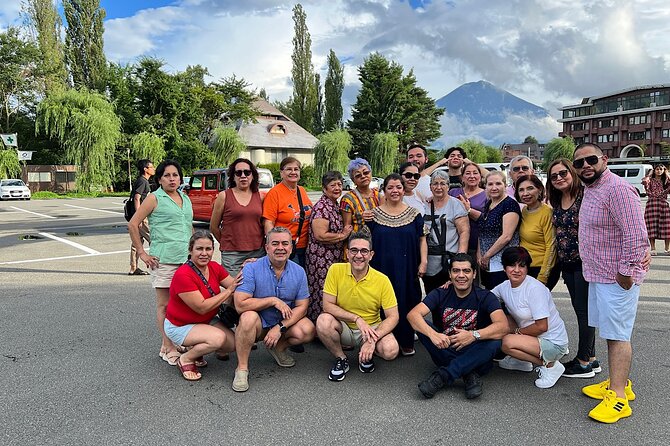
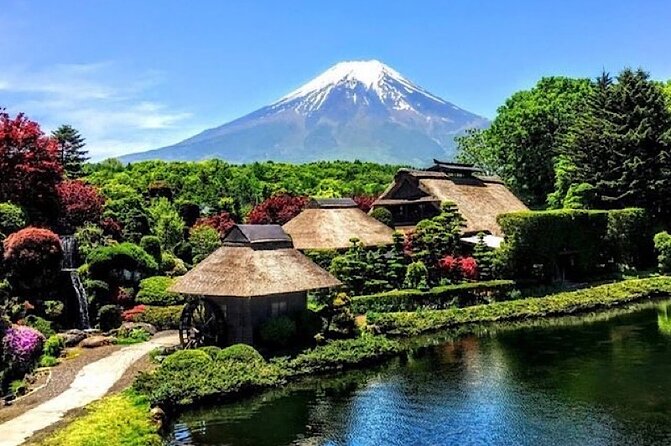
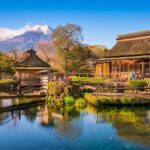
Oshino Hakkai gives the day a different mood. Its eight clear ponds are fed by snowmelt from Mount Fuji, and the site is surrounded by traditional thatched-roof buildings, food stalls, and small cultural displays.
The planned visit is about an hour, which is enough to walk around and take in the setting. I like this stop because it provides more than another mountain photo. You see a rural side of the region, with water, old-style buildings, and a calmer sense of place.
It can also be busy, so an early arrival helps. Keep your expectations realistic: this is a popular attraction, not an untouched village. Still, the ponds and Fuji views give it a strong reason to be on a Fuji-only route.
The 5th Station: getting close to the mountain
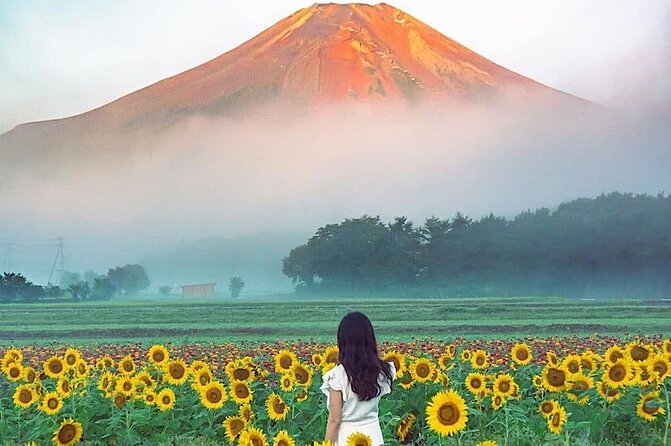
The Mt. Fuji Subaru Line 5th Station sits at about 2,300 meters, or roughly 7,546 feet. It is a road-accessible point on the mountain and a common starting place for summer climbers.
You do not need to climb Fuji to appreciate the stop. Restaurants, shops, and facilities make it an easy way to reach a high point by vehicle. On a clear day, the views over the surrounding area can be excellent.
The stop is listed at only 30 minutes, and admission is not included. Access can also depend on weather and road conditions. If the summit is covered in cloud, you may get atmosphere rather than the grand view you hoped for. Ask the guide early in the day if the 5th Station is open and worth the drive.
A few more Tokyo tours and experiences worth a look
Shrines and Chureito Pagoda: the cultural side of Fuji
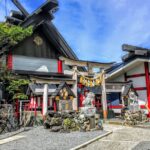
Kitaguchi Hongu Fuji Sengen Jinja is a large Shinto shrine on the north side of Mount Fuji. Its setting gives you a break from scenic lookouts and a chance to see a place tied to worship of the mountain.
The shrine is associated with Konohanasakuya-hime, the Shinto goddess of Mount Fuji, and is said to date to the first century. You can expect a peaceful, wooded setting and a more reflective stop than the lakefront attractions.
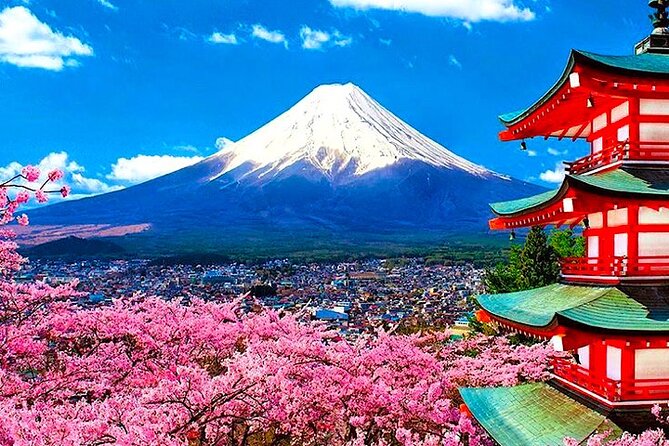
Chureito Pagoda, in Arakurayama Sengen Park, is one of Japan’s most recognizable Fuji viewpoints. The five-storied pagoda overlooks Fujiyoshida City, with Mount Fuji behind it when the skies are clear.
There is a price for that famous view: 398 steep steps lead up the hill. The scheduled stop is about an hour, so wear shoes you can walk in and tell your guide if stairs will be difficult for anyone in your group. Cherry blossom season, usually around mid-April, is particularly attractive, but the pagoda can be crowded then.
Saiko Iyashi no Sato Nenba and a glimpse of old Japan
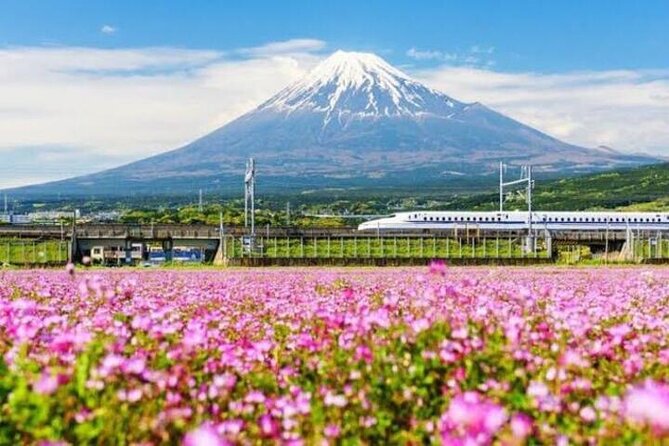
Saiko Iyashi no Sato Nenba sits on the western shore of Lake Saiko. The traditional thatched-roof houses were rebuilt after the original village was destroyed by a typhoon-related landslide in 1966.
Today, the houses serve as shops, restaurants, museums, and craft displays. You can learn about local work such as silk production and see how the region presents its older rural traditions.
Admission is not included, and the suggested stop lasts about an hour. I would choose this village over another viewpoint if you want cultural texture in the day. It gives you something to look at when Fuji disappears behind cloud.
Owakudani and Lake Ashi: Hakone’s volcanic finale
Owakudani is a volcanic valley formed by an eruption of Mount Hakone about 3,000 years ago. Sulphur vents and hot springs remain part of the setting, giving the area a strong volcanic character.
The planned stop is only 30 minutes, so you will get a quick look rather than a long walk. If you want to ride the Hakone Ropeway, the ticket is extra and the timing must be discussed with your guide. The ropeway is one of the main reasons to add Hakone, but it can make the schedule tighter.
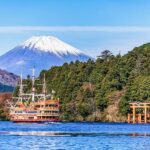
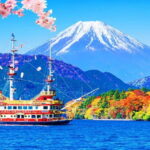
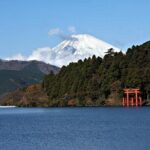
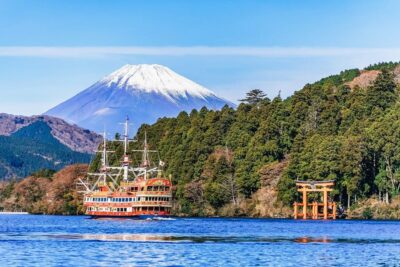
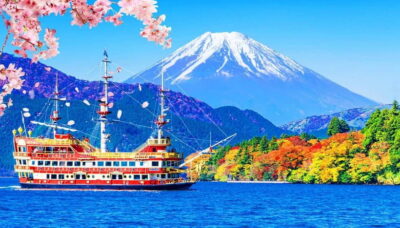
Lake Ashi is a crater lake along the southwestern wall of Mount Hakone’s caldera. Its shores include Hakone Shrine, walking routes, hot springs, and traditional inns. The lake is also known for sightseeing boats designed like pirate ships.
A cruise ticket is not included. On a clear day, the boat can provide good views toward Mount Fuji, but the lake is still worthwhile for its setting and Hakone atmosphere. With one hour scheduled, you should choose between a short lakeside visit and a cruise rather than trying to do everything.
Your guide can make or break the day
The experience includes an English-speaking guide, but the practical meaning of that phrase depends on the person assigned. Ali is specifically praised for explaining Mount Fuji and the surrounding area, adjusting pickup during a marathon, and adding extra stops when time allowed. Goraya is also described as a caring driver who helped shape a pleasant day.
At the same time, some bookings raise serious concerns about limited commentary, weak English, slow routing, and unsafe driving. One account describes dangerous behavior behind the wheel, including speeding, swerving, running red lights, and apparent drowsiness. Those claims are not minor service complaints.
I would handle this by setting expectations at pickup. Ask for the day’s route, confirm which stops matter most, and speak up if the driving feels unsafe. The best guide for this format is not just someone who knows the roads. You need a person who can explain what you are seeing, communicate clearly, and make sensible choices when traffic or weather changes the plan.
Timing, tickets, lunch, and comfort
The vehicle is air-conditioned, private, and sized to your group. A minivan is available, with a larger commuter van for bigger groups. Hotel pickup and drop-off are included, which is especially useful after a long day outside Tokyo.
Lunch is not included, nor are tickets for the ropeways, Lake Ashi cruise, or other paid activities. Bring enough money for food and optional admissions, and decide which paid attraction matters most before the day begins.
The tour runs about 10 hours, including driving. That sounds generous until you add the distance from Tokyo and the spread-out stops. An early start is one of the most useful decisions you can make. It helps with traffic and crowds, and it gives you a better chance of reaching Fuji viewpoints before cloud cover builds.
The booking has free cancellation up to 24 hours before the start time. Changes or cancellations inside that window are not accepted for a refund. Because the trip requires good weather, a weather cancellation can lead to another date or a full refund.
Who should book this private day trip?
I would recommend it to a small group that values convenience and wants one vehicle for a complicated day. It is a good match for families, people with limited time in Tokyo, and anyone who prefers a custom route to a fixed bus excursion.
It also suits you if you want to choose between photography, shrines, village culture, or Hakone’s volcanic sights. The private setup gives you more control than a large group tour.
I would hesitate if your first priority is detailed guiding at every stop, or if you are uncomfortable with long drives and a changing itinerary. I would also avoid packing both Fuji and Hakone with every optional ride. Pick your top three or four sights and let the day breathe.
Should you book it?
Book this tour if private transport, hotel pickup, and flexibility are worth more to you than the lower cost of public transport. For five people, the $400 group price can be reasonable. For fewer people, compare it carefully with train and bus fares.
Choose the Fuji-only plan for better pacing and more time around the mountain. Choose Fuji plus Hakone only if variety matters most. Before departure, confirm the route, optional ticket costs, and the guide’s role as both driver and English-speaking escort.
The strongest version of this day includes an early start, a clear priority list, good weather, and a guide like Ali who communicates well and adjusts thoughtfully. Without those pieces, the tour can become an expensive drive between rushed viewpoints.
FAQ
How long does the tour last?
The experience lasts approximately 10 hours, including transportation time. Hotel drop-off is planned for around 6:30 p.m.
How many people can join the private tour?
The price covers one private group of up to five people. A minivan or a larger commuter van is used depending on group size.
Does the tour include pickup and drop-off?
Yes. Pickup and drop-off at your hotel are included, along with private transportation in an air-conditioned vehicle.
Can I choose the itinerary?
Yes. The day is customizable, but you need to choose either a Fuji-area itinerary or a Fuji and Hakone itinerary. You cannot reasonably expect to visit every suggested stop in one day.
Are the ropeway and cruise tickets included?
No. Tickets for activities such as the Kachi Kachi Ropeway, Hakone Ropeway, and Lake Ashi cruise are extra.
Is lunch included?
No. Lunch is not included in the tour price.
What happens if the weather is poor?
The experience requires good weather. If it is canceled because of poor weather, you can receive a different date or a full refund. For a regular cancellation, you must cancel at least 24 hours before the start time for a full refund.
More Guided Tours in Tokyo


More Hakone Day Trips in Tokyo
More Mt Fuji Day Trips in Tokyo

More tours in Tokyo we've reviewed












Mt Fuji Day Trips, compared.
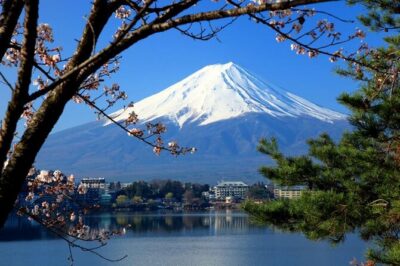 ★ 5.0Mt Fuji and Hakone 1-Day Bus Tour Return by Bullet TrainFrom $163
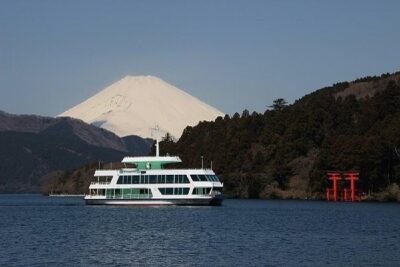 ★ 4.0Mt Fuji & Hakone Cruise, Drum Show Bullet Train 1 Day from TokyoFrom $149
 ★ 4.4Tokyo Mt Fuji 5th St & Hakone Cruise Bus Tour w/Bullet TrainFrom $15410 hours
 ★ 4.5From Tokyo: Mount Fuji Full-Day Sightseeing TripFrom $6810 hours
 ★ 4.7Tokyo: Mt. Fuji Tour, Hakone Ropeway, Owakudani, Lake AshiFrom $5410 hours
 ★ 4.4Tokyo:Mt.Fuji,Kawaguchiko Oishi Park,Arakurayama Sengen ParkFrom $5410 hours