Reviewed · CITY TOURS
Tokyo City 1-Day Private Tour with Bilingual Driver
Tokyo is a huge city, and this private tour gives you a practical way to cover its far-flung sights in one long day. You can move from Tsukiji’s food stalls to Asakusa, Meiji Shrine, Shibuya, and Odaiba without learning several train lines or hauling tired children and older relatives through busy stations.
In This Article
- Key points to know before booking
- Tokyo in one day, without mastering the rail map
- Tsukiji Fish Market: the best place to start hungry
- Asakusa and Senso-ji: Tokyo’s traditional face
- Imperial Palace: clarify the stop before you leave
- Meiji Jingu: a quiet break from the city
- Harajuku, Takeshita Street, Ebisu, and Shibuya
- Odaiba: two hours for Tokyo’s modern side
- The driver makes or breaks the day
- Timing, flexibility, and the cost of doing too much
- Who gets the best value from this private tour?
- Should you book the Tokyo private day?
- FAQ
- How long does the Tokyo private tour last?
- How many people can join the private tour?
- Does the tour offer pickup?
- Is this a shared group tour?
- What places are included in the planned route?
- Are admission tickets included?
- Can I customize the itinerary?
- Is the Imperial Palace Gardens visit included?
- Is the tour suitable for people who cannot walk long distances?
- What happens if bad weather cancels the tour?
- What is the cancellation policy?
I like the door-to-door pickup and the freedom to adjust the day. Guides such as Abdul, Maz, Shawn, Khan, and Junaid have been praised for being punctual, polite, flexible, and helpful with photos, dinner reservations, and family needs. The main concern is consistency: some drivers act like true guides, while others mainly provide safe transport and ask you where to go.
Key points to know before booking
- A full Tokyo sampler in 10 hours: Visit traditional markets, Buddhist and Shinto sites, palace grounds, shopping streets, and modern waterfront attractions in one day.
- Private transport for up to six people: The $425 group price can be good value for a family or small group, especially when walking and train changes are difficult.
- Flexible, but not entirely free-form: You can request changes, though timing matters. A long stop at one attraction may mean dropping another.
- Tsukiji is a strong opening stop: Give yourself time to browse food, produce, kitchen goods, and small places to eat.
- Ask exactly what Imperial Palace visit means: The plan may bring you to the palace area or entrance, but access to the Imperial Gardens is not guaranteed.
- Guide quality matters: Confirm in advance how much sightseeing commentary and personal accompaniment your assigned driver will provide.
Tokyo in one day, without mastering the rail map
This is not a standard walking tour. It is a private sightseeing day by car, built around a suggested route that links Tokyo’s major districts. That distinction matters.
Tokyo’s trains are excellent, but the city’s attractions are spread across different areas. Tsukiji is east of the Imperial Palace, Asakusa is farther northeast, Meiji Shrine and Harajuku are west, and Odaiba sits across Tokyo Bay. Public transport can get you everywhere, but station walks, transfers, escalators, and crowds eat up time.
With a vehicle, you can rest between stops and keep bags, shopping, or mobility equipment with you. That is especially useful for older family members, children, and anyone recovering from a long flight. One family even used the tour during an 11-hour layover and returned to the airport on time after seeing a long list of central Tokyo sights.
The tradeoff is that the car does not turn Tokyo into a drive-through museum. At most stops, you are dropped near the sight and explore on foot. The tour makes the city more manageable, but you still need comfortable shoes, patience, and a realistic plan.
At $425 for up to six people, the price works out to about $71 per person for six. For two people, it is a much more expensive day than trains and taxis. For a larger family or group, the private vehicle, pickup, and flexibility can make the price reasonable, particularly if you would otherwise need several taxis.
Other city tours we've reviewed in Tokyo


Tsukiji Fish Market: the best place to start hungry
The day commonly begins at Tsukiji, a traditional market area established in 1935. It sells seafood, vegetables, produce, kitchen goods, and other food-related items. Although the wholesale fish market moved to Toyosu, Tsukiji remains a useful place to experience Tokyo’s food culture at street level.
You get about an hour here. That is enough to browse, sample food, and look at the specialist shops, but it is not enough for a slow meal followed by extensive shopping. If you have just eaten breakfast, ask to begin elsewhere or shorten this stop. One poorly timed visit led to a wait at another attraction, so your appetite and opening hours should shape the order.
I would keep Tsukiji near the top of your list. It gives the day an immediate sense of place, and it is one of the stops most clearly suited to wandering rather than simply taking a photo. Ask your driver how much time you have before you leave the vehicle, since the pace of the stop affects the rest of the schedule.
Asakusa and Senso-ji: Tokyo’s traditional face
Asakusa is home to Senso-ji, a Buddhist temple dedicated to Kannon. The area also has additional temples, festival traditions, and streets lined with food and souvenir shops. It is one of the clearest places in this itinerary to see old Tokyo alongside the modern city.
The listed stop lasts about an hour. That gives you time to approach the temple, look around the surrounding streets, and take photographs. It is a short visit for a district with plenty to see, so do not expect a slow temple morning.
Some families have particularly enjoyed seeing people dressed in period-style clothing around Senso-ji. That sort of detail gives the stop more life than a quick look at the main gate. If you want time for snacks, shopping, and the temple itself, tell the driver before the day begins.
Asakusa also gives you a useful contrast with Odaiba later. Here, the appeal is religious tradition and older neighborhoods. At Odaiba, the focus shifts to artificial islands, technology, and modern entertainment.
Imperial Palace: clarify the stop before you leave
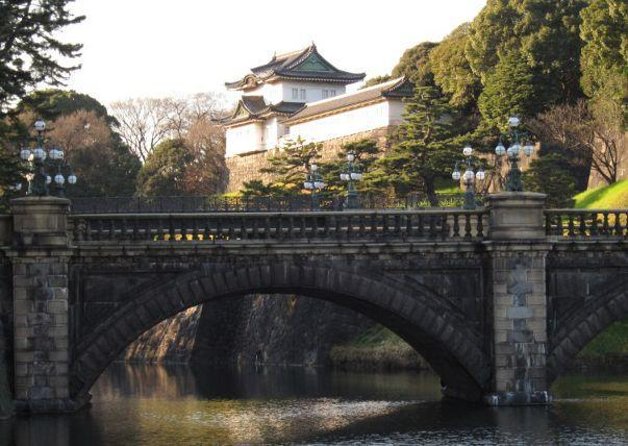
The Imperial Palace occupies a large park-like area in Chiyoda and is the Emperor’s usual residence. The tour assigns about an hour to this part of central Tokyo.
This is the stop that needs the clearest conversation before booking. The palace grounds are not simply open like an ordinary city park, and the included plan may mean a drop-off near the palace, a look at the outer area, or limited access to grounds. One family expected to enter the Imperial Gardens but was left at a corner instead. Another account explains that the driver had to remain with the car while the group walked for part of the visit.
Do not assume that a one-hour palace stop means a full visit inside the gardens. Ask what entrance or grounds access is planned, and ask if tickets or reservations are needed. One family was told tickets were unnecessary and later found the palace visit sold out for the day.
The palace area can still be worthwhile for its central setting and broad public spaces, but it is less satisfying if you expect a guided interior visit. If access matters to you, make it a firm pre-tour question rather than an assumption.
Meiji Jingu: a quiet break from the city
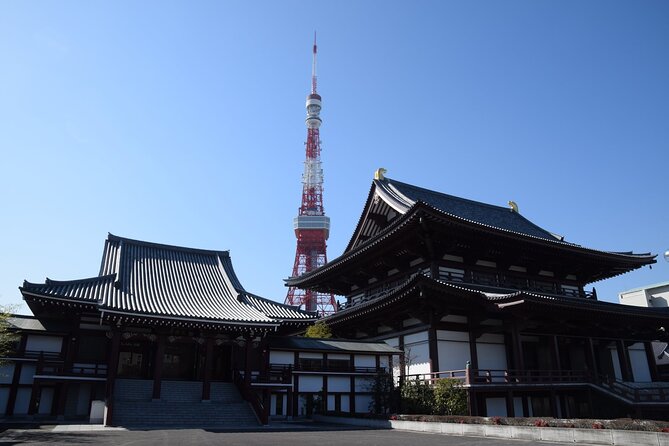
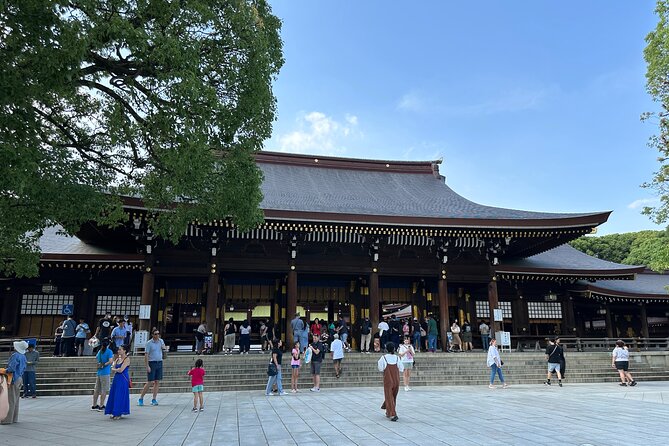
Meiji Jingu is a Shinto shrine in Shibuya dedicated to the deified spirits of Emperor Meiji and Empress Shoken. The shrine does not contain the emperor’s grave, which is elsewhere.
The one-hour stop offers a change of mood after the palace and city streets. Expect a shrine visit reached through a wooded setting, with time for a quiet walk and photographs. The tour description does not promise a particular ceremony or special event, so think of this as a chance to see a major Shinto site at your own pace.
This is one of the places where a guide can add real value. A driver who explains shrine customs, the setting, and the role of the imperial couple gives you more than a quick drop-off. Some guides, including Abdul and Junaid, have been praised for explaining history and culture during the day. Others have offered little background, so set your expectation early.
Other private tours in Tokyo


Harajuku, Takeshita Street, Ebisu, and Shibuya
The itinerary groups Shibuya, Harajuku, and Ebisu into about an hour, then gives Shibuya another 15 minutes. That sounds generous until you remember that these are different districts with different personalities.
Takeshita Street in Harajuku is a pedestrian shopping street lined with fashion shops, cafes, and restaurants. It is a good place for a short look at youth fashion, snacks, and small stores. You may find the street crowded and noisy, especially at busy times, so do not plan a relaxed meal and serious shopping inside the same one-hour window.
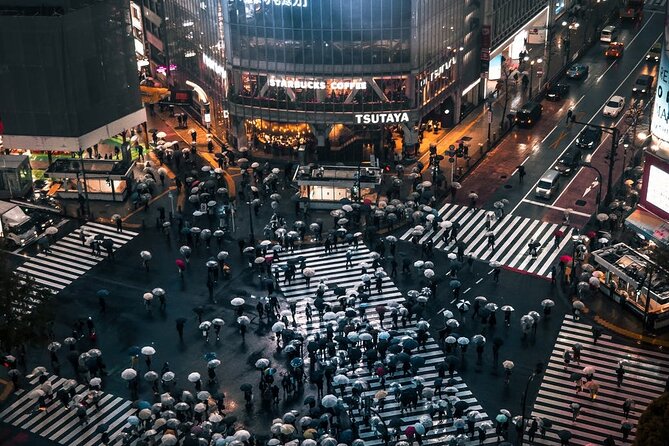
Shibuya adds Tokyo’s famous commercial center and crossing. The extra 15 minutes is enough for a quick look at the crossing and the Hachiko dog monument, both mentioned as part of a particularly full day. It is not enough to explore the district’s department stores or spend much time shopping.
I would decide in advance what matters most here. If your group wants photos and a quick taste of Harajuku, the schedule can work. If you want fashion shopping, a cafe, Shibuya Crossing, and Ebisu restaurants, you need to remove another stop or accept a rushed day.
Odaiba: two hours for Tokyo’s modern side
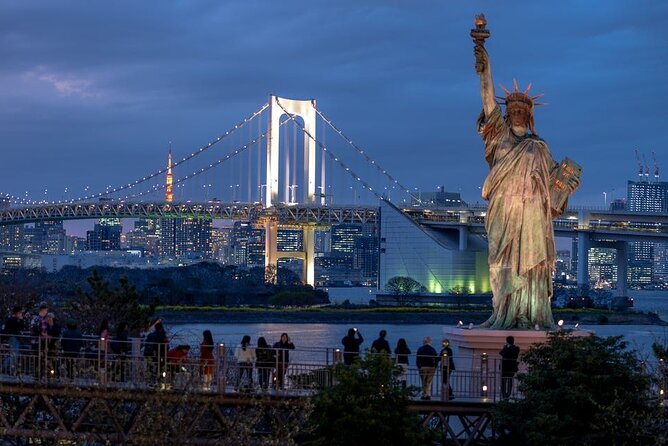
Odaiba is a high-tech entertainment district on an artificial island in Tokyo Bay. The plan allows about two hours, making it the longest scheduled stop.
You can look toward the bay from Seaside Park, consider views from the Daikanransha Ferris wheel, or visit the Miraikan science museum, known for its robot displays. The supplied plan does not include admission tickets, so paid attractions are separate from the $425 tour price.
Odaiba works well late in the day because it gives you room to choose. Families may prefer science and robots. Couples may want the waterfront or a Ferris wheel ride. Others may simply use the time for lunch and a walk.
The drawback is distance. Odaiba is not a quick add-on to central Tokyo, and traffic can affect how much time remains. If you have already spent too long at Tsukiji, the palace, or a shopping street, the driver may need to shorten this stop. Agree on priorities before the vehicle leaves in the morning.
The driver makes or breaks the day
The strongest reports about this tour focus on the person behind the wheel. Abdul has been praised for punctuality, photography, cultural explanations, and making children comfortable. Maz has been described as courteous, flexible, and willing to adjust plans during heavy rain. Shawn and Khan have also received praise for friendly service and useful city information.
Some drivers have helped with dinner reservations, suggested additional places, and adjusted a route for a child who wanted to visit a lucky cat museum. Those small acts can make a private day feel personal rather than mechanical.
But the service is not uniform. A few people found that their driver knew the roads but offered little explanation. One driver repeatedly asked the group where they wanted to go, even though the published route was already available. Another disagreement involved arriving late at a stop and losing time before a timed Skytree booking.
You can reduce this risk by sending a written plan before the day. Ask three direct questions:
- Will the driver accompany us at the sights or only drop us off?
- How much explanation will we receive during the drive and at each stop?
- Which attractions require timed tickets or advance reservations?
The tour is advertised as having a bilingual driver, but that does not guarantee the same level of guiding from every person assigned. If cultural interpretation is your main goal, state that clearly when booking.
Timing, flexibility, and the cost of doing too much
The listed stops add up to roughly seven hours and 15 minutes, leaving part of the 10-hour day for driving, parking, meals, and delays. That sounds sensible on paper, but Tokyo traffic and attraction opening times can change the rhythm.
You can customize the route, but customization has a cost. Move Tsukiji later because you are not hungry, and you may arrive at another sight before it opens. Spend extra time at Senso-ji, and Odaiba or Shibuya may become a shorter visit. The driver may also need to protect a timed booking, such as Tokyo Skytree, even if that means cutting another stop.
I like the freedom, but I would not treat the day as an unlimited list of Tokyo attractions. Pick two or three priorities and let the remaining stops fill out the day. For example, a family could focus on Tsukiji, Senso-ji, Meiji Jingu, and Shibuya, while a first-time group might prefer adding the palace area and Odaiba.
The tour has also worked during difficult weather. In heavy rain, Maz supplied umbrellas and shifted the plan toward indoor attractions. Still, outdoor stops can lose much of their appeal in poor conditions, and visibility from high viewpoints may be poor. The experience requires good weather, and if the operator cancels for that reason, you are offered another date or a full refund.
Who gets the best value from this private tour?
I would consider this tour first for:
- Families with young children who need breaks from trains and walking
- Groups with older relatives or limited mobility
- First-time visitors with only one full day
- Airport layover visitors who need a fixed return plan
- Groups of four to six who can share the $425 cost
- Visitors who want a flexible route rather than a large bus tour
It is less convincing for solo visitors or couples who are comfortable using Tokyo’s trains. It may also frustrate you if you expect a formally trained guide with detailed commentary at every attraction.
Most travelers can participate, and the tour offers pickup. It is near public transportation, but the point is to use private transport during the day. Confirm the pickup location and any airport timing in advance if your schedule is tight.
Free cancellation is available up to 24 hours before the start time for a full refund. Changes made inside that 24-hour window are not accepted, and late cancellations are not refunded.
Should you book the Tokyo private day?
Book it if your main goal is to see a lot of Tokyo with less walking and fewer transport hassles. A group of six can get solid value from the private vehicle, and the route gives you a useful first look at traditional, imperial, fashionable, commercial, and high-tech Tokyo.
Before paying, send your preferred route in writing and ask for a clear answer about the Imperial Palace, admissions, guide accompaniment, and timed attractions. Keep the day flexible, but choose your must-see stops. If the assigned driver is like Abdul, Maz, Shawn, Khan, or Junaid, you may get a warm and adaptable introduction to the city. If you receive a driver who mainly transports you, the tour becomes an expensive private taxi day.
For a large family, an older group, or a short layover, I would book with those questions settled. For an independent couple with several days in Tokyo, I would likely use trains and spend a full morning at fewer sights instead.
FAQ
How long does the Tokyo private tour last?
The tour lasts approximately 10 hours.
How many people can join the private tour?
The price covers one private group of up to six people.
Does the tour offer pickup?
Yes. Pickup is offered.
Is this a shared group tour?
No. Only your group participates in the activity.
What places are included in the planned route?
The route includes Tsukiji Fish Market, Asakusa, the Imperial Palace area, Meiji Jingu Shrine, Shibuya, Harajuku, Ebisu, and Odaiba.
Are admission tickets included?
The listed stops show free admission, but paid attractions in Odaiba, such as the Ferris wheel or Miraikan, are not stated as included. Confirm any separate tickets before visiting.
Can I customize the itinerary?
Yes. The tour is described as completely customizable, but changing the order or spending extra time at one attraction can mean shortening or removing another stop.
Is the Imperial Palace Gardens visit included?
You should not assume full access to the Imperial Gardens. Clarify the exact palace stop, entrance arrangements, and ticket requirements before booking.
Is the tour suitable for people who cannot walk long distances?
It can be a practical choice for older people and those who cannot walk for long periods because the group travels between sights by private vehicle. Walking is still required at the attractions.
What happens if bad weather cancels the tour?
If the operator cancels because of poor weather, you will be offered a different date or a full refund.
What is the cancellation policy?
You can cancel at least 24 hours before the start time for a full refund. Cancellations or changes made less than 24 hours before the start time are not accepted for a refund.
More 1-Day Tours in Tokyo
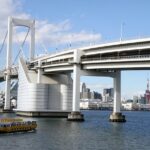


More Private Tours in Tokyo
More City Tours in Tokyo


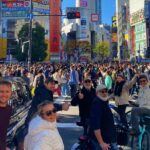
More tours in Tokyo we've reviewed












City Tours, compared.
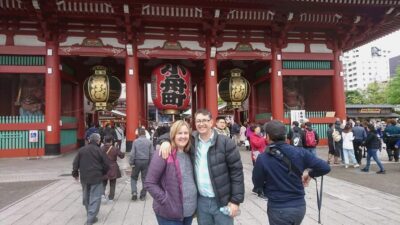 ★ 4.8Tokyo: Private City Highlights Tour with Local GuideFrom $1064 - 8 hours
 ★ 4.8Tokyo: 3-Hour Bike or E-Bike City Highlights TourFrom $453 hours
 ★ 4.8Tokyo: Sumo Morning Practice Tour at Sumida CityFrom $1162 hours
 ★ 4.5Private Haneda Airport (HND) to Central Tokyo City TransferFrom $119
 ★ 4.8Tokyo: 3-hour Guided E-Bike Tour of the City’s Hidden GemsFrom $65
 ★ 5.0Tokyo: 3-Hour Bike/E-Bike Tour of the City’s HighlightsFrom $63